Whether an F1 Labradoodle’s Coat Is a Gamble
When you're bringing home a new Labradoodle puppy, there's often a picture in your mind: a soft, wavy-coated companion, perhaps with that adorable teddy bear look, and most importantly, one that doesn't shed much, if at all. Many people specifically seek out an F1 Labradoodle, the first cross between a purebred Labrador Retriever and a purebred Poodle, hoping to capture the best of both worlds. But the truth is, the coat of an F1 Labradoodle can be a bit of a genetic lottery, leaving many owners surprised by what actually develops. This guide will deep-dive into why the F1 Labradoodle coat is so unpredictable, what different coat types you might encounter, and what that means for grooming and managing your beloved companion.
Understanding F1 Labradoodle Genetics and Coat Type
The term "F1" simply means "first generation," indicating that your Labradoodle is a direct cross between a purebred Labrador Retriever and a purebred Poodle. While this cross is often touted for its "hybrid vigor" and potential for a low-shedding coat, the genetic reality is far more complex than a simple 50/50 split implies for appearance. It's not like mixing two paint colors to get an exact shade; it's more like shuffling a deck of cards where you don't know which ones will come up.
What "F1" Really Means for Coat Inheritance
An F1 Labradoodle inherits one set of genes from its Labrador parent and one set from its Poodle parent. Both Labs and Poodles carry multiple genes that influence coat texture, length, and shedding. The Poodle side typically brings in the dominant genes for furnishings (the facial hair, beard, and mustache that give doodles their characteristic look) and a tightly curled, non-shedding coat. The Labrador, on the other hand, contributes genes for a shorter, smooth coat with minimal furnishings and a tendency to shed. In an F1 cross, these dominant and recessive genes are expressed in a way that can be highly variable.
Because the Poodle is dominant for furnishings and curl, many F1s will exhibit some degree of the desired "doodle" look. However, the exact expression is not guaranteed. You might have a pup that looks very Poodle-like, or one that strongly favors its Labrador parent, or something truly in between. This genetic blending is precisely why it's so difficult to predict the exact coat outcome in an F1 generation. It's a true toss-up, and that's where the gamble really lies.
The Genetic Dice Roll of Coat Type
The variability in F1 Labradoodle coats comes down to specific genes, primarily those for furnishings and shedding. Dogs need two copies of the "furnishings" gene (often denoted as F/F) to have the characteristic long facial hair, eyebrows, and a scruffy look. Poodles carry two copies of this dominant gene. Labradors, however, carry two copies of the "improper coat" gene (IC/IC), which results in a smooth face and minimal furnishings. An F1 Labradoodle, inheriting one gene from each parent, will always be F/IC, meaning they carry one copy of the furnishings gene. This typically results in some degree of furnishings, but the expression can still vary, and it doesn't guarantee a completely non-shedding coat.
Beyond furnishings, there are other genes that influence curl and shedding. The Poodle's tight curl is also dominant, but the degree of curl can range from loose waves to tight coils in an F1, depending on other modifying genes. Shedding itself is complex, influenced by multiple genetic markers. While a Poodle's coat is generally considered non-shedding, an F1 cross can still inherit shedding traits from the Labrador parent. This means even if your F1 has some furnishings and a wavy coat, they might still shed more than you anticipated, making the dream of a truly "hypoallergenic" dog a bit precarious. The Furnishings Gene Behind a Labradoodle's Beard is one of the key indicators of a low-shedding coat, but it's not the only factor.
The Spectrum of Labradoodle Coats: Hair, Fleece, and Wool
When we talk about Labradoodle coats, especially for F1s, it's not a one-size-fits-all description. There are generally three main coat types that can emerge, each with its own characteristics in terms of texture, shedding, and grooming needs. Understanding these types is crucial for setting realistic expectations for your F1 Labradoodle's appearance and maintenance.
Hair Coats: More Like a Labrador
The "hair coat" is perhaps the least desired outcome for many prospective Labradoodle owners, especially those seeking a low-shedding dog. This coat type strongly resembles the Labrador Retriever parent's coat: short, smooth, and prone to shedding. While it may still have a slight wave, it lacks the characteristic soft, shaggy or curly texture often associated with the Labradoodle breed. An F1 Labradoodle with a hair coat will have minimal to no furnishings (those lovely eyebrows, beard, and mustache) and will likely shed as much as a Labrador.
If your F1 puppy grows into a hair coat, don't despair! While it might not fit the "doodle" aesthetic, it's still a wonderful dog. The main difference will be in grooming expectations. You won't be battling mats, but you'll certainly be dealing with loose hair. Regular brushing, perhaps with a deshedding tool available on platforms like Amazon or Chewy, will be essential to manage shedding, particularly during seasonal changes. This coat type is usually the easiest to care for in terms of tangles, but it definitively busts the "non-shedding" myth for that particular F1 dog. The Hair Coat Labradoodle That Sheds covers this in more detail.
Fleece Coats: The Coveted "Doodle" Look
The "fleece coat" is often considered the holy grail for Labradoodle enthusiasts and breeders alike. It's soft to the touch, has a wavy or spiraling texture, and is typically low-shedding, making it a good option for many people with mild allergies. This coat is what most people picture when they think of a classic Labradoodle. It requires regular grooming to prevent matting, but it's generally easier to maintain than a wool coat.
An F1 Labradoodle has a decent chance of developing a fleece coat, especially if both parents contributed genes favorable to this texture. However, the degree of wave or curl within a fleece coat can vary significantly. Some fleece coats are quite loose and shaggy, while others can be tighter and more spiral-like. Regardless of the exact curl pattern, the defining characteristic is its soft, light texture. While not entirely "non-shedding" in the strictest sense, any shedding is usually minimal and consists of loose hairs trapped within the curls, rather than falling out all over your furniture. This means dedicated brushing is critical to remove those trapped hairs before they form mats. The Fleece Coat and Why Breeders Aim For It further explores the characteristics of this sought-after coat.
Wool Coats: Poodle-Like and High Maintenance
A "wool coat" in an F1 Labradoodle is essentially a Poodle coat, but often thicker. It's dense, tightly curled, and has a texture similar to lamb's wool. This coat type is almost universally non-shedding, making it a truly allergy-friendly option for many sufferers. However, this comes with a significant trade-off: extremely high grooming demands. Without consistent, diligent care, a wool coat will mat quickly and severely.
If your F1 Labradoodle develops a wool coat, be prepared for frequent professional grooming appointments or a substantial investment in time and tools for home grooming. These coats are prone to matting close to the skin, especially in friction areas like armpits, behind the ears, and around collars and harnesses. Even a few days without thorough brushing can lead to painful tangles. While it offers the benefit of very little shedding, the commitment to grooming is paramount. For owners dedicated to the upkeep, this coat type can be beautiful and truly non-shedding, but it's far from a wash-and-wear option. The Wool Coat Labradoodle and Its Upkeep delves into the intensive care these beautiful coats require.
Predicting an F1's Coat: The Unpredictability Factor
One of the biggest frustrations for prospective F1 Labradoodle owners is the sheer unpredictability of their puppy's future coat. While a breeder can sometimes offer a best guess, especially if they have experience with the specific parent lines, there's no crystal ball for an F1 cross. This "gamble" is precisely why many dedicated breeders eventually moved towards multi-generational breeding, but for the first cross, it's a genuine unknown.
The Furnishings Gene (F/IC): The Doodle's Signature Look
The presence of "furnishings" (the beard, mustache, and eyebrows) is arguably the most defining visual characteristic of a Labradoodle, distinguishing it from a Poodle-mix with a smooth face. This trait is controlled by a dominant gene, often referred to as the "F" (furnishings) gene, while its recessive counterpart is the "IC" (improper coat) gene. A purebred Poodle carries two copies of the dominant furnishings gene (F/F), while a Labrador carries two copies of the recessive improper coat gene (IC/IC).
Therefore, an F1 Labradoodle, inheriting one gene from each parent, will always have the genetic makeup F/IC. Because "F" is dominant, these F1 puppies should express furnishings to some degree. However, the exact expression can vary. Some F1s will have very obvious furnishings, while others might have only subtle beard and eyebrow growth, leading to a coat that still looks quite "Labby" even if it technically has furnishings. The biggest concern here is if you're hoping for that unmistakable doodle look; while most F1s will have it, the prominence isn't guaranteed. Moreover, the furnishings gene is strongly linked to reduced shedding, meaning F1s with good furnishings are more likely to be low-shedding. You can sometimes Whether a Labradoodle's Coat Type Can Be DNA Tested early on to confirm the presence of furnishings and other coat characteristics, which can give you a better idea.
Shedding Genes: More Than Just Furnishings
While the furnishings gene (F) is highly correlated with low shedding, it's not the only genetic player. Shedding is a polygenic trait, meaning multiple genes contribute to its expression. Even an F1 Labradoodle with clear furnishings might still exhibit some level of shedding due to other shedding-related genes inherited from its Labrador parent. It's a spectrum, not a binary on/off switch. Some F1s might shed minimal amounts, mostly trapped in their coats, while others might surprise their owners with a noticeable amount of loose hair around the house, especially during seasonal changes.
This is where the "gamble" aspect truly comes into play for allergy sufferers. While an F1 might be marketed as "hypoallergenic," the reality is that no dog is truly 100% hypoallergenic. The presence of some shedding genes from the Labrador side means that dander and hair can still be released into the environment, potentially triggering reactions in sensitive individuals. It’s why it’s always recommended for allergic families to spend time with the specific puppy or its parents to gauge a reaction, if possible. Even if the F1 displays the desired fleece coat, there's a nuanced difference in how much actual dander and hair might be released. What an Improper Coat Means on a Labradoodle is a term often used when the furnishings are absent, indicating a more shedding-prone coat, but even with furnishings, a slight gamble remains.
Puppy Coat Indicators: A Poor Predictor of the Adult Coat
One of the most common pitfalls for new F1 Labradoodle owners is trying to predict the adult coat based on their adorable, fluffy puppy. Puppy coats are notoriously deceptive. That soft, somewhat wavy fluffball you bring home at eight weeks might look nothing like its adult self a year later. Many puppies have a soft, fine coat that gives little indication of the density, curl, or shedding characteristics of their mature coat.
The true "coat change" often hits around 9-12 months of age. This is when the puppy coat begins to fall out, and the denser, adult coat grows in. During this period, owners can be overwhelmed by sudden matting and a seemingly endless amount of fluff coming off their dog. It's a critical time for grooming, as neglecting it can lead to severe mats. The Coat Change That Hits a Labradoodle at Nine Months is a significant event, and it's really only after this transition that you get a clear picture of your F1 Labradoodle's adult coat type, shedding tendency, and true grooming needs. Before then, any predictions are largely speculative, adding to the "gamble" of an F1.
What to Expect from an F1 Labradoodle's Coat in Practice
So, what does this genetic lottery mean for you as an F1 Labradoodle owner? It means being prepared for a range of possibilities, particularly concerning shedding and the inevitable grooming demands. Managing expectations is key to a happy partnership with your doodle, regardless of its coat type.
The Spectrum of Shedding in F1 Labradoodles
It's common to assume an F1 Labradoodle will be non-shedding, largely due to the Poodle's influence. However, as we've discussed, the reality is a spectrum. Some F1s will indeed be very low-shedding, comparable to a Poodle, with any loose hair being caught in their curls. These are the ones that are often cited as being "hypoallergenic" friendly. But others, due to a blend of genes, will shed moderately, similar to a lighter-shedding Labrador or even a regular shedding dog. This can be a huge surprise and disappointment for owners who specifically sought out a Labradoodle for its non-shedding reputation.
The amount of shedding can also fluctuate seasonally, even in lower-shedding F1s. Dogs often "blow their coats" during spring and fall, and while it might not be handfuls of hair like a Labrador, you'll still notice more loose hair than usual. It's important to differentiate between actual shedding and hair breakage due to matting or poor coat health. A matted coat will "shed" in clumps when brushed out, but this is a sign of neglect, not necessarily excessive shedding from the root. Understanding this spectrum means acknowledging that your F1 might not be the complete solution to shedding you hoped for. Whether a Labradoodle Sheds at All is a common question, and the answer, especially for F1s, is often "it depends."
Grooming Realities: More Than Just a Cute Look
Regardless of whether your F1 Labradoodle ends up with a hair, fleece, or wool coat, grooming will be a significant part of your routine. Even a hair-coated F1, while not prone to matting, will benefit from regular brushing to remove loose hair and keep its skin healthy. But for the fleece and wool coats, which are much more common and desired in F1s, grooming is not just important—it's absolutely critical.
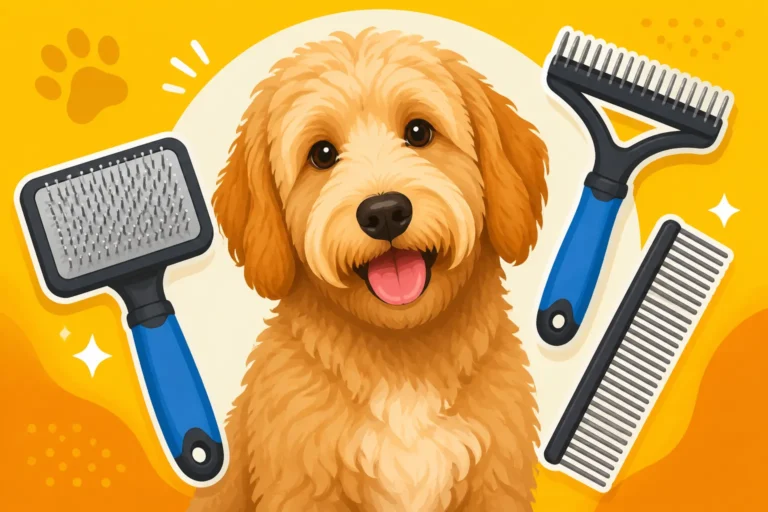
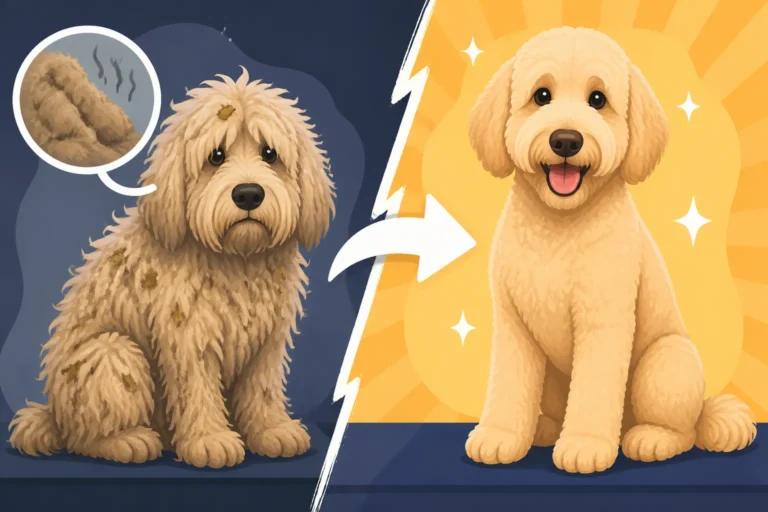
These coats are prone to matting. Mats are not just unsightly; they can be incredibly painful for your dog, pulling on their skin, restricting movement, and creating a breeding ground for skin infections. You'll need a dedicated set of tools: a good slicker brush, a metal comb that reaches to the skin, and potentially a dematting rake. Learning to Brushing a Labradoodle to the Skin, Not the Surface is essential. Simply brushing the top layer of the coat isn't enough; you need to systematically brush sections of hair, ensuring your comb can smoothly glide through the coat all the way down to the skin. This takes time—often 30-60 minutes several times a week, especially as their adult coat comes in around nine months. For many, a professional groomer is a non-negotiable expense every 6-8 weeks.
Allergy Considerations: The F1 Risk for Sensitive Homes
The primary reason many individuals look to Labradoodles, especially F1s, is the hope of finding an allergy-friendly dog. The Poodle side offers this promise, but the Labrador side complicates it. As discussed, the unpredictable nature of F1 coats means there's a real risk that your dog might still trigger allergies. If a major reason for getting a Labradoodle is severe allergies in the household, an F1 is indeed a gamble.
The issue isn't just the hair itself, but the dander (microscopic skin flakes) that sheds with it. The Poodle's continuously growing coat traps dander, preventing it from being released into the environment. If an F1 inherits more of the Labrador's shedding characteristics, more dander will be present in your home. Whether a Labradoodle Is Truly Hypoallergenic is a question with a nuanced answer, particularly for F1s. For highly allergic individuals, later generations (F1b or multigen) often offer more predictability because they have a higher percentage of Poodle genetics, and thus a greater likelihood of a non-shedding coat with furnishings. It's always best for allergic family members to have direct contact with the specific puppy they are considering, or at least its parents, to test for reactions before committing. Whether Dander or Hair Sets Off Allergies Around a Labradoodle is important to understand when assessing allergy triggers.
Managing an F1 Labradoodle's Unpredictable Coat
Since you can't truly predict what kind of coat your F1 Labradoodle will have, being prepared for anything is your best bet. This means establishing good grooming habits from day one, investing in the right tools, and understanding when to seek professional help.
Early Grooming Habits Are Crucial
No matter the eventual coat type, early exposure to grooming tools and handling will make your life, and your dog's, infinitely easier. Start with short, positive sessions as soon as your puppy comes home. Get them used to being touched all over, especially their paws, ears, and tail. Introduce a soft slicker brush and comb gently, offering high-value treats and praise. This isn't about getting the coat perfectly clean; it's about building a positive association with the process.
Practice having them lie on their side for brushing, gently hold their feet, and touch their face and ears. Even if they have a hair coat that doesn't mat, these sessions build trust and make future vet visits or professional grooming much less stressful. Starting Grooming Handling on a Labradoodle Puppy early can prevent a lifetime of struggle. Grooming is a bonding experience if approached correctly, and a well-behaved dog on the grooming table is a treasure.
Essential Grooming Tools for Every F1 Labradoodle Owner
You'll need a toolkit of grooming essentials to keep your F1 Labradoodle's coat in top condition. This isn't a "nice-to-have" list; it's a "must-have."
- Slicker Brush: A high-quality slicker brush with firm but flexible pins is your primary weapon against mats. It's excellent for removing loose undercoat and separating tangles.
- Metal Comb: A long-toothed metal comb, ideally with both fine and wide teeth, is indispensable. It's used to check your work after brushing with the slicker, ensuring you've reached all the way to the skin. This is where you'll find any hidden mats.
- Detangling Spray: A good detangling spray can make brushing much easier, especially on a longer, wavier coat. Apply it before brushing to help loosen knots.
- Nail Clippers or Grinder: Regular nail trims are vital. Overgrown nails can cause pain and lead to paw deformities.
- Ear Cleaner: Labradoodles are prone to ear infections due to their drop ears. A good vet-approved ear cleaner is a must.
- Shampoo and Conditioner: Choose a dog-specific, moisturizing shampoo and conditioner to keep the coat healthy and manageable.
Many of these items can be found conveniently on Chewy or Amazon, offering a wide selection and competitive pricing. Having these tools readily available means you're always prepared for daily maintenance.
Professional Grooming vs. DIY: Weighing Your Options
For fleece and wool-coated F1 Labradoodles, professional grooming is often a necessity, not a luxury. These coats can be challenging to manage, especially as they grow longer or during the dreaded "coat change." A professional groomer has the expertise, specialized equipment (like high-velocity dryers, which are crucial for drying doodles to the skin), and experience to keep your dog mat-free and comfortable. They can also offer advice on specific coat issues. Expect appointments every 6-8 weeks.
However, if you're committed and have the time, you can certainly learn to do a significant amount of grooming at home. This requires investing in professional-grade clippers, scissors, and a force dryer, in addition to mastering techniques like line brushing. Many owners opt for a hybrid approach: regular home brushing and bathing, with professional grooms every few months for a full trim and tidy-up. If you're considering home grooming, start with YouTube tutorials and perhaps even a local grooming class. Just remember, a bad home haircut is easily fixed, but painful mats are not. How Long Brushing a Labradoodle Takes Each Week will give you a realistic idea of the time commitment for home grooming.
Is an F1 Labradoodle the Right Choice for You?
Considering the unpredictability of an F1 Labradoodle's coat, it's worth taking a moment to reflect on whether this generation is truly the best fit for your household and expectations.
Assessing Your Needs and Lifestyle
Before committing to an F1 Labradoodle, honestly assess your priorities. Is a truly non-shedding, "hypoallergenic" coat your absolute top priority due to severe allergies? If so, the gamble of an F1 might be too high. You might find a later-generation Labradoodle (like an F1b or multigen) or even a purebred Poodle to be a more reliable choice, as these often have a more predictable, lower-shedding coat. What F1b Means on a Labradoodle describes a cross that is often bred back to a Poodle to increase the Poodle genetics.
Are you prepared for significant grooming? Even the most desirable fleece coats require consistent brushing to prevent matting. If you're looking for a wash-and-wear dog, a Labradoodle of any generation, but especially an F1, might not be the best fit. Your lifestyle should accommodate regular grooming sessions or the financial commitment of professional grooming. The cost of owning a Labradoodle is not just the initial purchase price, but the ongoing expenses of grooming, high-quality food (like the options from Ollie or Chewy), and veterinary care.
Breeder Transparency and What to Ask
When looking for an F1 Labradoodle, a reputable breeder will be transparent about the genetic gamble involved with coat types. They should not make absolute promises about a non-shedding coat for an F1. Instead, they should be able to tell you about the coat types of the parent dogs and previous F1 litters, if applicable, which can offer some indication of tendencies.
A good breeder will also perform genetic health testing on both parent dogs and should be able to provide documentation. While coat type isn't a health concern, asking about the parents' coat DNA panels (specifically for furnishings and shedding genes) can give you a clearer picture of the probabilities for the puppies. The Health Tests a Labradoodle Breeder Should Show often include genetic panels that encompass coat traits, so don't be afraid to ask. A breeder who dismisses questions about coat genetics or guarantees a specific coat type for an F1 might not be the most reliable source.
Exploring Later Generations for More Predictability
If the coat gamble of an F1 Labradoodle feels too risky for your circumstances, especially if allergies are a major concern, it's worth exploring later generations of Labradoodles. F1b Labradoodles (an F1 bred back to a Poodle) or multi-generational (Multigen) Labradoodles often offer a more predictable coat outcome. These generations have a higher percentage of Poodle genetics, which typically translates to more consistent furnishings, tighter curls, and a lower likelihood of shedding.
While F1 Labradoodles hold a special place as the original cross, the journey to a more consistent and predictable "Labradoodle" coat truly began with these subsequent generations. By breeding back to a Poodle or carefully selecting multi-generational parents, breeders can increase the chances of producing the desired low-shedding, wavy or curly fleece and wool coats that many owners envision. So, while an F1 is a wonderful dog, if predictability in coat type is paramount, looking beyond the first generation might be your best bet.
| Coat Type (F1 Labradoodle Potential) | Description | Shedding Level | Grooming Needs | Allergic Suitability |
|---|---|---|---|---|
| Hair Coat | Short, flat, smooth, like a Labrador. Minimal to no furnishings (beard/eyebrows). | High | Low frequency (weekly deshedding), but regular to manage loose hair. | Poor (likely to trigger allergies) |
| Fleece Coat | Soft, wavy, or spiraling texture. Has furnishings. Most common desired type. | Low | Moderate to High (daily/every other day brushing, professional groom every 6-8 weeks) | Fair to Good (may still trigger mild allergies in sensitive individuals) |
| Wool Coat | Dense, tightly curled, resembling lamb's wool. Has furnishings. | Very Low | High (daily thorough brushing, professional groom every 4-6 weeks to prevent severe matting) | Good (best for severe allergy sufferers, but no dog is 100% hypoallergenic) |
Disclaimer
This article is for general informational purposes only and does not constitute professional advice. Laws, prices and regulations vary by location and change over time. Consult a qualified professional for guidance on your specific situation.