Whether a Labradoodle Is Truly Hypoallergenic
Many aspiring Labradoodle owners come to this breed with the hope of finding a loving companion that won't trigger their allergies, only to sometimes discover that the reality isn't quite as straightforward as the "hypoallergenic" label might suggest. It's a common and deeply frustrating situation to fall in love with a dog's personality and looks, only to find your eyes itching and your nose running. This guide will unpack the truth about Labradoodles and allergies, helping you understand why some owners struggle and what steps you can take if you're an allergy sufferer hoping to share your home with one of these wonderful dogs.
Unpacking the "Hypoallergenic" Myth: What Really Causes Allergies?
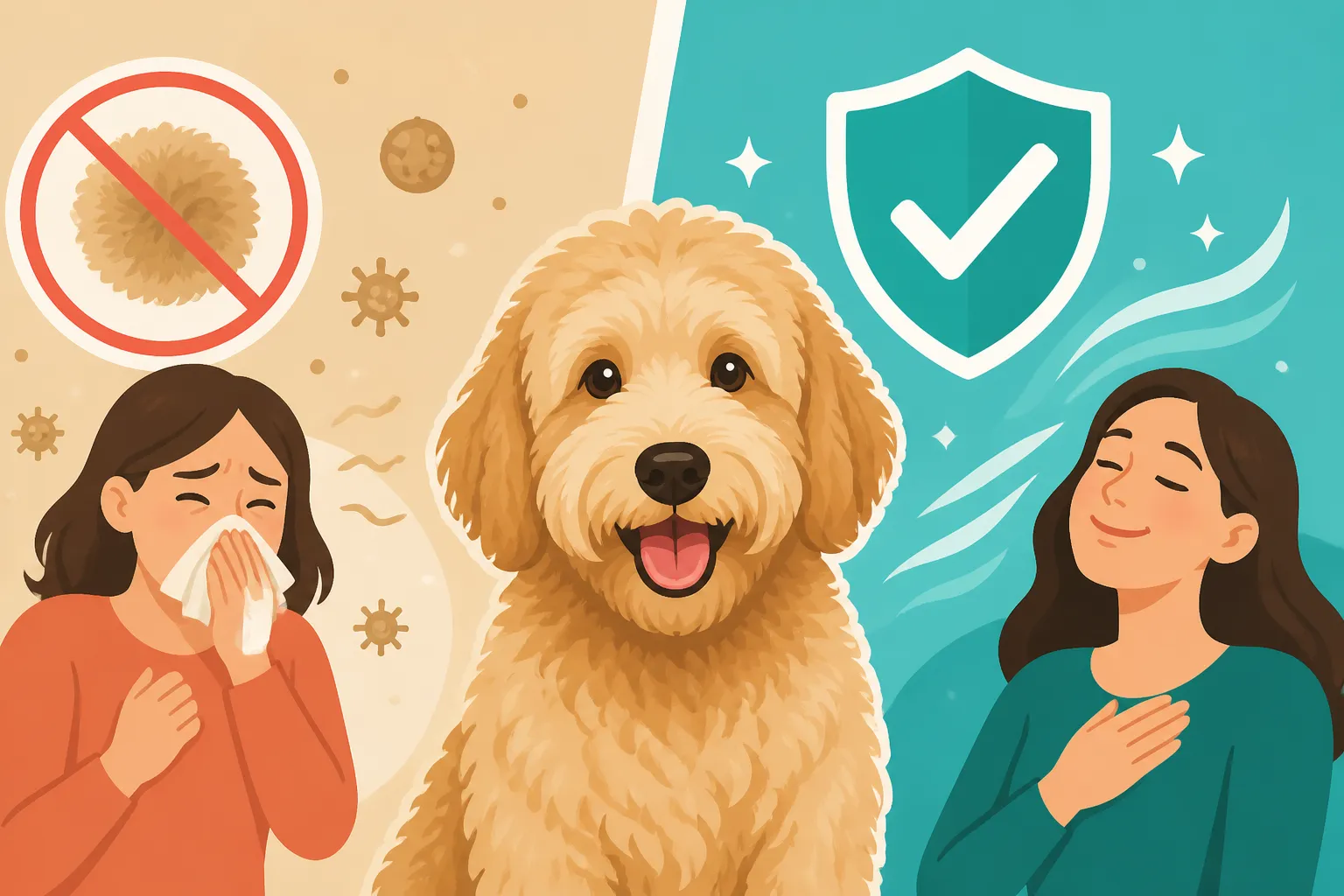
It's a really common misconception, almost an urban legend in the dog world, that some breeds are completely "hypoallergenic." I hear it all the time from hopeful families looking for a Labradoodle. The truth is, no dog is truly 100% hypoallergenic. The term itself can be pretty misleading because it suggests a complete absence of allergens, which simply isn't the case with any animal.
Allergies in humans aren't primarily caused by dog hair itself, as many people assume. Instead, the culprits are proteins found in a dog's dander (tiny flakes of skin), saliva, and urine. When a dog sheds hair, it also sheds dander, and as they lick themselves, saliva dries on their coat, becoming airborne. This is why breeds that shed less are often marketed as hypoallergenic; less shedding generally means less dander and dried saliva circulating in your home. The Poodle, one of the Labradoodle's parent breeds, is famous for its non-shedding coat, and this characteristic is what breeders initially hoped to pass on consistently to the Labradoodle. However, genetics are a funny thing, and predicting exactly how those traits will combine isn't always a sure bet, leading to a spectrum of outcomes that can either be a blessing or a challenge for allergy sufferers. The question then becomes, how much of that dander and those proteins are released into the environment by a specific dog?
Think about it like this: your dog is constantly producing dander, just like humans produce skin flakes. Every scratch, every roll on the carpet, every time they shake off, those tiny particles are released. When a dog has a coat that sheds profusely, like a Labrador, those dander particles, along with dried saliva, get caught in the shedding hair and are distributed widely throughout your home. This is where the difference lies. A low-shedding dog, like a Poodle or some Labradoodles, might still produce the same amount of dander, but because their hair doesn't fall out as readily, the dander tends to stay trapped within the coat, only being released when brushed or during grooming. This significantly reduces the amount of airborne allergens, making them less likely to trigger a reaction, but not impossible. Understanding that it's about managing exposure to allergens, rather than eliminating them entirely, is key to navigating life with a Labradoodle if you have sensitivities. For more on what truly triggers a reaction, you might find Dander or Hair Sets Off Allergies Around a Labradoodle helpful.
The Genetic Roulette of Labradoodle Coats and Shedding
When it comes to Labradoodles, their coats are a fascinating, and sometimes frustrating, genetic lottery. The very reason people seek them out for their "hypoallergenic" qualities lies in the Poodle's genetics, specifically the "furnishings" gene. This gene is responsible for the characteristic beard, mustache, and eyebrows that give Labradoodles and other "doodles" their distinct look, and crucially, it's also linked to the low-shedding trait. However, because the Labradoodle is a crossbreed, there's no guarantee that every puppy will inherit the ideal coat type from the Poodle side.
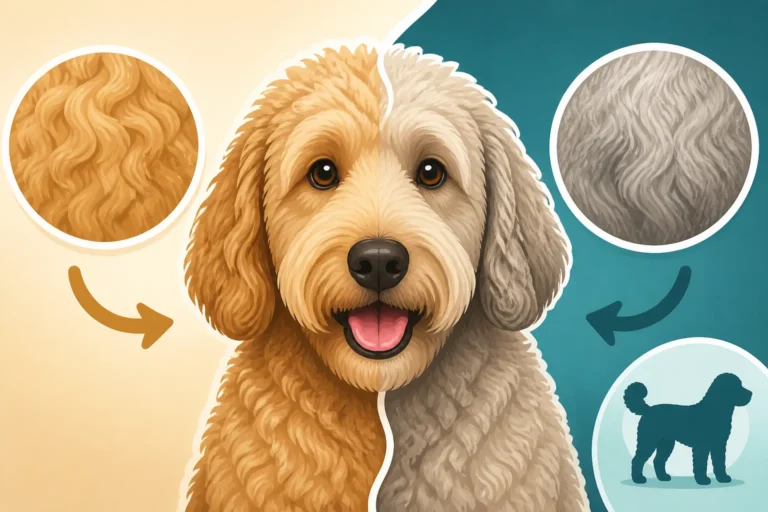
You see, a Labradoodle gets half its genes from a Labrador Retriever and half from a Poodle. Labradors are known for their dense, shedding double coats, while Poodles have a single, non-shedding coat. The combination of these two very different coat types means that Labradoodle puppies can inherit a wide range of coats, even within the same litter. This is where terms like F1, F1b, and multigen come into play, describing the generation of the cross and, ideally, giving an indication of coat predictability. An F1 Labradoodle (first cross, Labrador x Poodle) is the biggest gamble; some will have more Labrador-like coats that shed, while others will be closer to the Poodle. An F1b (F1 Labradoodle x Poodle) usually has a more reliably low-shedding coat because it has a higher percentage of Poodle genetics. For a deeper dive into these coat variations, check out The Three Labradoodle Coats: Hair, Fleece and Wool and Whether an F1 Labradoodle's Coat Is a Gamble.
The "furnishings" gene, or lack thereof, also plays a huge role. Dogs without this gene are said to have an "improper coat" (IC) because they often lack the facial hair that prevents loose dander from escaping easily, and their body coat tends to be more prone to shedding. So, even a Labradoodle that looks quite "doodle-like" might still carry genes for shedding. A responsible breeder will often test their breeding dogs for the furnishings gene, as well as for shedding traits, to increase the likelihood of producing puppies with desirable, low-shedding coats. Without this careful genetic selection, you might end up with a Labradoodle that sheds almost as much as a Labrador, which can be heartbreaking for an allergic family. This is why What an Improper Coat Means on a Labradoodle is something you should definitely understand.
| Coat Type | Shedding Level | Allergen Release Potential | Grooming Needs |
|---|---|---|---|
| Hair Coat | Moderate to High | Moderate to High | Regular brushing, especially during shedding seasons. |
| Fleece Coat | Low to Moderate | Low to Moderate | Regular brushing to prevent mats, professional grooming every 6-8 weeks. |
| Wool Coat | Very Low | Very Low | Daily brushing to prevent mats, professional grooming every 4-6 weeks. |
Note: Even "very low" shedding does not mean "no" shedding or "no" allergens.
Living with a Labradoodle and Allergies: Practical Management
So, you have a Labradoodle, and perhaps your allergies are still acting up, or you're preparing to bring one home and want to be proactive. It's totally understandable to feel a bit overwhelmed, but there are absolutely steps you can take to manage allergens in your home and make living with your furry friend more comfortable. It's not about achieving a sterile, allergen-free environment (which is practically impossible), but about significantly reducing your exposure.
Firstly, regular grooming is your best friend. This is probably the single most impactful thing you can do. Brushing your Labradoodle frequently, ideally daily or every other day, helps to remove loose hair and trapped dander before it has a chance to spread throughout your home. But here's the crucial part: you need to brush your Labradoodle Brushing a Labradoodle to the Skin, Not the Surface, not just the surface. This means using a slicker brush and a metal comb to work through the coat thoroughly, getting right down to the skin to remove any dead undercoat or loose hair that would otherwise be shed. If you're sensitive, it's best if a non-allergic family member does the brushing, or you do it outdoors, away from your living spaces. Regular professional grooming, typically every 6-8 weeks, is also vital to keep their coat healthy and minimize shedding. Talk to your groomer about a good bath and blow-out, as this helps remove even more dander.
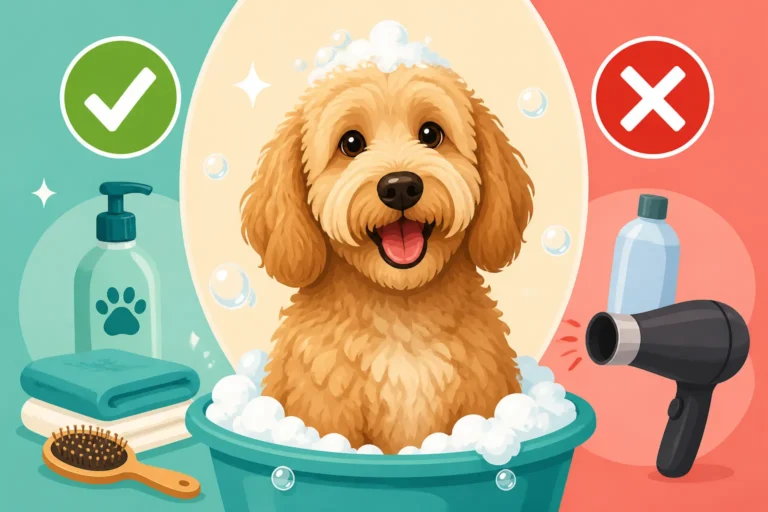
Beyond brushing, bathing your Labradoodle regularly can also make a big difference. A good bath helps wash away accumulated dander and dried saliva. Just be careful not to over-bathe, as this can dry out their skin, which ironically can lead to more dander! Most Labradoodles do well with a bath every 2-4 weeks. Use a gentle, dog-specific shampoo designed to moisturize the skin. After bathing, make sure to dry them thoroughly. For more specific bathing tips, read Whether Bathing Reduces Allergens on a Labradoodle. Many specialty pet retailers, like Chewy, offer a wide range of sensitive skin shampoos and conditioners that can help keep your Labradoodle's coat and skin in top condition, reducing potential irritants.
Environmental controls within your home are also hugely important. Invest in high-efficiency particulate air (HEPA) filters for your vacuum cleaner and consider adding air purifiers in the rooms where your Labradoodle spends the most time, especially your bedroom. Vacuum carpets and upholstery frequently, and wash your dog's bedding, toys, and any throws they lie on regularly in hot water. Hard flooring is generally better than carpet for allergy sufferers, as carpets can trap allergens. For things like new air purifiers or even specialized vacuum cleaners, Amazon can be a great place to compare options and find products that will help keep your home's air cleaner. Some owners find that a fresh food diet, like those offered by Ollie, can contribute to healthier skin and coat, potentially reducing excessive dander production, though individual results can vary.
Finally, personal habits play a role. Try to avoid letting your Labradoodle sleep in your bedroom, and definitely not on your bed if you're allergic. Wash your hands thoroughly after petting your dog, and avoid touching your face before doing so. It sounds simple, but it makes a huge difference. If your allergies are severe, consulting an allergist for medication or immunotherapy might be a necessary step to truly enjoy your Labradoodle without constant discomfort.
Before You Bring a Labradoodle Home: Due Diligence for Allergic Families
If you're an allergy sufferer dreaming of a Labradoodle, the best approach is always proactive and thorough research before you commit. Don't rely solely on a breeder's "hypoallergenic" claims or general breed reputation. This is where your detective hat comes on, and you really need to do your homework to avoid potential heartbreak down the line.
The absolute gold standard for testing your compatibility is to spend time, actual quality time, with the specific puppy or adult Labradoodle you're considering, and ideally, its parents. This isn't just a quick sniff at the breeder's home. Ask if you can visit for an extended period, perhaps an hour or two, allowing the puppy to interact with you. If possible, even better, see if the breeder would allow you to take a piece of bedding or a toy that the puppy has slept with home for a "trial run" to see if it triggers a reaction in your environment. Remember, every individual dog, even within the same litter, can have different allergen levels. What one Labradoodle's dander does to your system might be completely different from another's. You might find that Whether an Allergic Family Should Meet a Labradoodle First gives more detailed advice on this.
Discuss coat types with your potential breeder in detail. A reputable breeder will be transparent about their dogs' coats and shedding characteristics. They should be able to tell you if the parents have hair, fleece, or wool coats, and what generations the puppies are (F1, F1b, Multigen). As discussed earlier, F1b or later generation Labradoodles often have a more predictable, Poodle-like, low-shedding coat. Ask about the "furnishings" gene and if the breeding pair has been tested for it. Dogs that carry two copies of the "furnishings" gene and two copies of the "non-shedding" gene (usually indicated by specific DNA markers) are typically the best bet for allergy sufferers.
Don't be shy about asking breeders for health clearances and genetic testing results for their breeding stock. Not just for health conditions like hips, elbows, or eyes, but specifically for coat traits related to shedding and furnishings. This is part of The Health Tests a Labradoodle Breeder Should Show that will give you peace of mind. While DNA tests can give you a strong indication of a puppy's likely adult coat type and shedding propensity, they are not 100% foolproof in predicting an allergic reaction. What they can do, however, is significantly stack the odds in your favor by ensuring you choose a puppy with the genetic markers for low-shedding coats. Some breeders will even perform these tests on puppies before they go to their new homes.
If you have severe allergies, consider other options beyond a Labradoodle, or at least be prepared for intensive management. Some people explore fostering a Labradoodle temporarily to see how their allergies react over a longer period. While this might seem like a lot of extra effort, it's far better to invest the time upfront than to bring a dog home only to discover you can't live with them, leading to heartbreak for both you and the dog. Remember, the goal is a happy, healthy home for everyone, including your furry family member.
Disclaimer
This article is for general informational purposes only and does not constitute professional advice. Laws, prices and regulations vary by location and change over time. Consult a qualified professional for guidance on your specific situation.