Telling a Labradoodle’s Coat Type at Eight Weeks
Bringing home a Labradoodle puppy is an incredibly exciting time, full of wagging tails and puppy breath, but for many new owners, there's a big question mark hanging over that adorable fluffball: what kind of coat will they actually grow into? It's a common frustration, especially if you're hoping for a low-shedding companion or have specific grooming expectations. This guide is here to demystify the process, helping you understand how to get a good read on your Labradoodle's future coat type, even when they're just a tiny eight-week-old bundle of joy.
Why Your Labradoodle's Coat Type Really Matters
Understanding your Labradoodle's coat type isn't just about aesthetics; it profoundly impacts the daily care routine, potential allergenicity, and even your budget. Many people fall in love with the Labradoodle for its reputation as a low-shedding, allergy-friendly dog, but not all Labradoodle coats are created equal. Getting a grasp on what you're bringing home means you can prepare properly, whether that's stocking up on specific grooming tools or adjusting your expectations about shedding.
Grooming Commitments and Your Lifestyle
Let's be real, grooming a Labradoodle is a commitment, and some coat types demand significantly more attention than others. If you're a busy individual or family, the thought of daily brushing might fill you with dread, while a weekly session might be perfectly manageable. A wool coat, for instance, is notorious for matting if not meticulously cared for, requiring consistent brushing and professional grooming appointments. On the other hand, a hair coat might need less frequent brushing but will likely shed more, meaning more vacuuming for you! Knowing what you're in for allows you to either embrace the grooming challenge or ensure your chosen puppy aligns with your lifestyle. It’s important to understand The Yearly Grooming Total on a Standard Labradoodle and how that can fluctuate based on coat type.
Allergy Concerns and Future Shedding
For many families, the very reason they considered a Labradoodle was the promise of a "hypoallergenic" dog. While no dog is truly 100% hypoallergenic, certain coat types, particularly the wool and fleece, are known to shed significantly less, thus reducing the amount of dander (the true allergen) released into the environment. A hair coat, however, will shed much like a Labrador, which can be a huge disappointment and even a health issue for allergic individuals. Identifying the coat type early can prevent heart-wrenching rehoming situations down the line if allergies become a problem. Discussing Whether a Labradoodle Is Truly Hypoallergenic is a common topic, and coat type is central to that discussion.
The Three Main Labradoodle Coat Types You'll Hear About
When breeders talk about Labradoodle coats, they typically categorize them into three main types: hair, fleece, and wool. Each has distinct characteristics that affect its appearance, texture, and care requirements. It's helpful to familiarize yourself with these terms as you evaluate puppies.
Hair Coat: The Most Labrador-Like
The hair coat is the least desirable for those seeking a low-shedding or allergy-friendly dog, as it most closely resembles the Labrador Retriever parent. These coats are often coarse, straight or slightly wavy, and have a tendency to shed significantly. You might see a fine, soft undercoat along with a rougher outer coat. While lovely in its own right, this coat type can be a surprise for unsuspecting owners who were hoping for something more "doodle-like." If you're looking at an F1 Labradoodle (a direct cross between a Labrador and a Poodle), there's a higher chance of encountering this coat type compared to later generations. Owners expecting a low-maintenance coat often find themselves frustrated when their hair-coated Labradoodle sheds significantly, necessitating more frequent cleaning around the home.
Fleece Coat: The Desirable Middle Ground
Often considered the "ideal" Labradoodle coat, the fleece coat is soft, silky, and typically has a wavy or spiraling texture. It's often described as feeling like angora wool or cashmere. This coat type generally sheds very little to none, making it a popular choice for families with mild allergies. While it still requires regular grooming to prevent matting, it's often more manageable than a wool coat. Breeders often specifically breed for this type of coat due to its aesthetic appeal and lower maintenance compared to the wool coat, yet still offering the reduced shedding qualities. This balance of beauty and manageability makes it a sought-after trait. You can learn more about The Fleece Coat and Why Breeders Aim For It.
Wool Coat: The Most Poodle-Like
The wool coat is dense, curly, and has a texture reminiscent of a sheep's wool or a Poodle's coat. It is very similar in texture to a Poodle and tends to clump and mat if not brushed regularly and thoroughly. This coat type is usually non-shedding, making it the best option for severe allergy sufferers. However, it requires the most intensive grooming, with daily brushing often necessary, along with frequent professional trims every 6-8 weeks. While challenging to maintain, the wool coat is incredibly dense and soft. Owners must be prepared for the significant time and financial investment in grooming this coat, as ignoring it can lead to painful mats that require shaving. Regular visits to the groomer and a solid home brushing routine are non-negotiable for these beautiful, yet demanding, coats. Understanding What Upkeep Runs on a Wool Coated Labradoodle is crucial before committing.
Visual Clues to Spot at Eight Weeks
While a puppy's coat can change as they mature, especially during the notorious "coat change" phase, there are definite visual and tactile clues you can look for at eight weeks that will give you a strong indication of their adult coat type. This early assessment is crucial for setting expectations.
Texture and Feel: What to Touch For
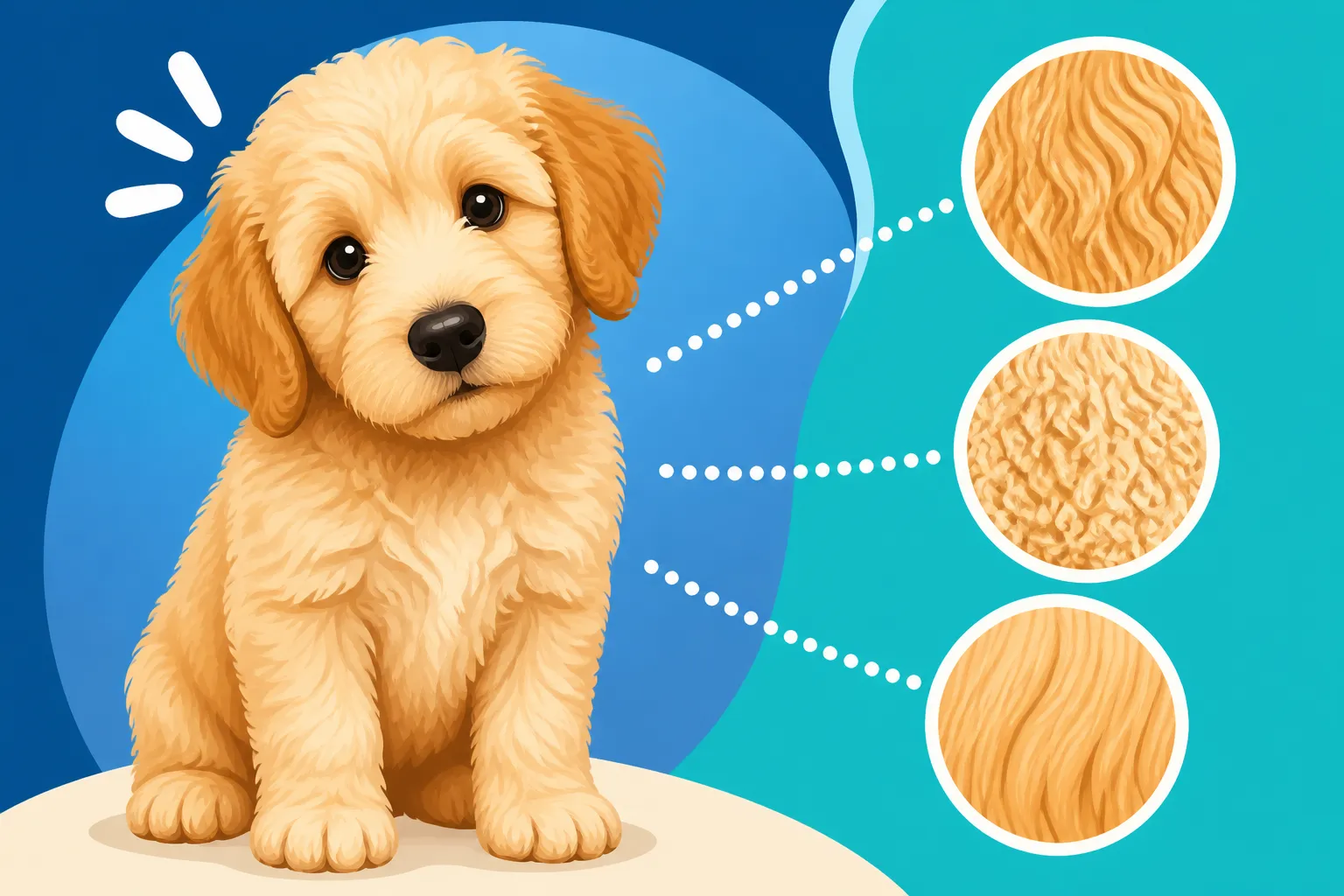
At eight weeks, pay close attention to how the puppy's fur feels to the touch. A hair-coated puppy will often have a coarser, stiffer feel to their fur, particularly along their back and sides. It might feel quite similar to a Labrador's coat, though perhaps a touch softer. On the other hand, a fleece-coated puppy will feel noticeably softer, almost silky or downy. When you run your hand through it, there shouldn't be much resistance, and it might have a slight bounce. A wool-coated puppy will have a denser, springier texture, often feeling like a tightly packed cotton ball. It will feel thicker and less flowing than a fleece coat, even at this young age. You might also try gently pulling a few strands of hair; wool and fleece coats will have a slight resistance before releasing, while hair coats might pull out more easily.
Curl Pattern: From Straight to Tight Ringlets
The curl pattern is another significant indicator. A puppy with a hair coat will typically have very little to no curl, perhaps just a slight wave in their coat. Their fur will lie relatively flat against their body. Fleece coats, even as puppies, will often show a distinct wavy pattern, or loose, open spirals. It won't be stick-straight, but it also won't be tight. The curls might be more apparent on their ears or tail. For a wool coat, you'll see tighter, denser curls that are often quite defined, even in a young puppy. These curls might appear as tight ringlets or a very uniform, dense crimp. The hair will appear to stand out from the body more, giving a somewhat plush look. Observe the coat across their entire body, but especially on their back, sides, and the hair around their muzzle and ears. This is crucial for Telling a Labradoodle's Coat Type at Eight Weeks.
Furnishings: The Defining Feature
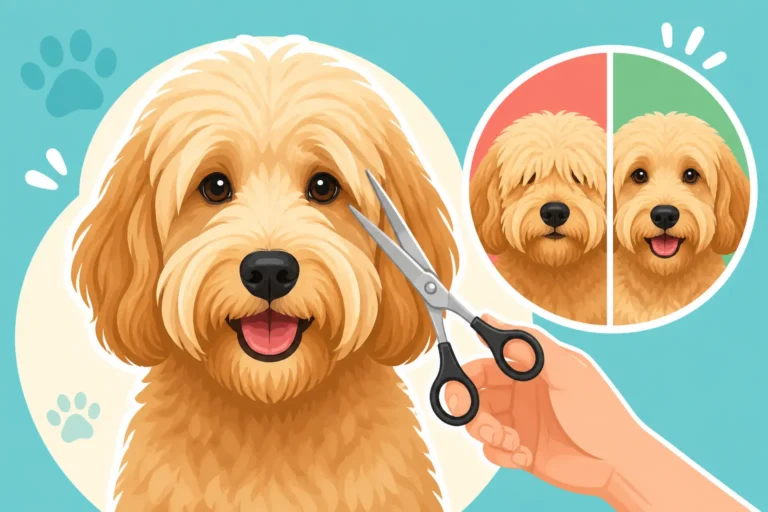
"Furnishings" are the longer hair on a Labradoodle's face, including their mustache, beard, and eyebrows, along with longer hair on their legs and tail. This is one of the most important indicators, as the presence of furnishings (or lack thereof) is largely what differentiates a Labradoodle's coat from a shedding retriever coat. Even at eight weeks, puppies with furnishings will have noticeably longer hair around their muzzle and over their eyes, giving them that classic "doodle" look. Puppies without furnishings will have a flatter, more Labrador-like face, with shorter hair on their muzzle and eyebrows. The presence of furnishings is controlled by a specific gene (the R-spondin 2 or RSPO2 gene), and a breeder can test for it. If a puppy lacks furnishings, regardless of its body coat texture, it will be a shedding dog, often called an "improper coat" or "IC." This genetic trait is paramount for understanding a Labradoodle's shedding potential and overall coat type. You can learn more about The Furnishings Gene Behind a Labradoodle's Beard.
Here's a quick comparison of what to look for at eight weeks:
| Feature | Hair Coat | Fleece Coat | Wool Coat |
|---|---|---|---|
| Texture | Coarse, stiff, similar to a Labrador's coat | Soft, silky, downy, often described as cashmere | Dense, springy, tightly packed, like sheep's wool |
| Curl Pattern | Straight or very slight wave, lies flat | Wavy, loose spirals, gentle curls | Tight, dense curls, ringlets, stands out from body |
| Furnishings | Absent or minimal (flat face) | Present (longer hair on muzzle, eyebrows, legs) | Present (longer hair on muzzle, eyebrows, legs) |
| Shedding (Adult) | Moderate to heavy | Low to none | None to very low |
| Grooming Need | Moderate (similar to a Labrador, brushing to remove dead hair) | Moderate to high (regular brushing, professional trims) | High (daily brushing, frequent professional trims) |
The "Improper Coat" and What It Means
Sometimes, despite a puppy's appealing looks at eight weeks, their genetics might tell a different story about their adult coat. This brings us to the concept of the "improper coat," often abbreviated as IC. An improper coat is essentially a coat that lacks furnishings, even if the body hair itself has a Poodle-like curl or texture. This means the dog will have a flat, Labrador-like face with short hair, and will shed.
Genetic Testing for Coat Traits
Responsible Labradoodle breeders often utilize genetic testing to ensure they are breeding dogs with the desired coat traits. This testing can identify whether a puppy carries the gene for furnishings. If a puppy has two copies of the non-furnishing gene, it will develop an improper coat, regardless of its parents' appearance. While not visible to the naked eye at eight weeks if the puppy still has some "doodle" qualities in its body coat, genetic testing offers a definitive answer. Asking your breeder about What a Labradoodle Coat DNA Panel Tells You can provide immense peace of mind. Knowing this information allows breeders to make informed decisions about pairings and gives prospective owners a clear understanding of what they are getting. Brands like Embark or Wisdom Panel offer these types of genetic tests.
Why an Improper Coat Can Be a Disappointment
For families seeking a non-shedding, allergy-friendly dog, an improper coat can be a significant disappointment. Despite potentially having a wavy body coat, the lack of furnishings means more shedding and a higher likelihood of triggering allergies. It can also lead to a dog that doesn't quite fit the aesthetic many people associate with the Labradoodle. Imagine investing in a Labradoodle specifically to mitigate allergies, only to find your adult dog sheds considerably and still causes sniffles. This is why understanding the genetics behind the coat, and specifically asking about furnishings, is so critical when choosing a puppy. It's not just about the curl; it's about the entire genetic package that makes a Labradoodle's coat what it is.
Managing Expectations: When the Puppy Coat Changes
Even with all the visual clues and genetic information, a Labradoodle's coat is a living, changing thing. The most significant transformation occurs during what's commonly known as the "coat change," a period that often catches first-time owners off guard.
The Infamous "Coat Change" Phase
Around 7-14 months of age, Labradoodle puppies go through a dramatic "coat change." During this time, their soft, easy-to-manage puppy coat begins to shed out, making way for their denser, adult coat. This transition period is notorious for intense matting. The shedding puppy fur gets tangled with the incoming adult fur, creating a nightmare of knots if not managed meticulously. What was once a relatively straightforward brushing routine can suddenly turn into a daily, hour-long battle against mats. Many owners describe this as the most challenging grooming period in their dog's life. Understanding What Happens to a Labradoodle's Coat at Nine Months and preparing for it can save you a lot of grief (and your dog a lot of discomfort!). You'll need extra brushes, like a good quality slicker brush and a metal comb, which you can find on Amazon or Chewy, and probably a good detangling spray.
Preparing for the Unexpected
The coat change can intensify the traits of each coat type. A fleece coat might become wavier and denser, a wool coat will certainly become thicker and more prone to felting, and even a hair coat might have a temporary period of increased shedding. It's vital to step up your grooming game during this phase. Daily line brushing, using a slicker brush and then following with a comb, becomes essential. It's also a great time to introduce your puppy to a professional groomer, even if it's just for a "puppy trim" to get them used to the experience. Don't be afraid to ask for advice from your breeder or an experienced groomer during this time. Regular professional grooming appointments, combined with diligent home care, are your best defense against the mats that can lead to painful shaving. High-quality dog food, like that from Ollie, can also contribute to overall coat health, making it more resilient during these changes, though it won't prevent matting.
Beyond Visuals: What a Breeder Can Tell You
When you're trying to predict your puppy's adult coat, your breeder is an invaluable resource. A reputable breeder will have extensive knowledge about their lines and should be transparent about what you can expect. Don't hesitate to ask detailed questions.
Understanding Parentage and Pedigrees
A good breeder will be able to tell you the coat types of both parent dogs, and possibly even grandparents. This information offers significant clues about the puppy's likely adult coat. For example, if both parents have fleece coats, the puppies are more likely to also have fleece coats. If one parent has a hair coat, or carries the improper coat gene, there's a higher probability that some puppies in the litter will inherit those traits. Understanding the generation of the Labradoodle (F1, F1b, Multigen) also plays a role in predictability; later generations, particularly Multigen Australian Labradoodles, are generally more consistent in their coat types. Ask your breeder about Whether an F1 Labradoodle's Coat Is a Gamble compared to later generations. They should be able to explain the genetic odds and what they've observed in previous litters from the same pairings.
Health Guarantees and Coat Clarity
A reputable breeder will often provide a health guarantee for their puppies, and this might even extend to certain coat characteristics, particularly regarding genetic conditions that impact coat health or shedding. While a breeder can't guarantee zero shedding, they can provide genetic test results for furnishings, which is the most reliable indicator of a low-shedding coat. Don't be shy about asking to see these genetic test results for the parents. A breeder who is confident in their lines and practices will be happy to share this information and educate you. This transparency helps ensure that you are making an informed decision and that you're prepared for the specific care needs of your new Labradoodle companion. It’s all part of ensuring you bring home a healthy, happy dog whose needs you are ready to meet.
Disclaimer
This article is for general informational purposes only and does not constitute professional advice. Laws, prices and regulations vary by location and change over time. Consult a qualified professional for guidance on your specific situation.