Keeping a Labradoodle’s Face Trimmed Out of Its Eyes
It's such a common struggle, isn't it? You adore your Labradoodle's fluffy, expressive face, but that charming hair has a tendency to grow right into their eyes, causing irritation, making them squint, and even obscuring their vision. This guide is here to walk you through the practical, gentle steps you can take at home to keep your beloved companion's eyes clear and comfortable, ensuring they can see the world, and you, perfectly.
Why Your Labradoodle's Facial Hair is a Big Deal
That adorable shaggy look your Labradoodle sports is part of their charm, but when the hair around their eyes gets too long, it's not just a cosmetic issue. It can lead to real discomfort and even health problems for your furry friend. Many owners don't realize the extent of the impact until their dog starts showing signs of irritation or a vet points it out. It's a preventable problem, but it requires understanding why it happens and what to do about it.
The Health Risks of Untrimmed Face Hair
Think about how irritating it is when you get a single stray hair in your own eye. Now imagine having a constant curtain of hair poking and rubbing at your eyes all day, every day. For a Labradoodle, overgrown facial hair can lead to persistent eye irritation, causing redness, excessive tearing, and frequent pawing at the face. Over time, this constant rubbing can even cause scratches on the cornea, which are not only painful but can become entry points for bacterial infections. These infections can be quite serious, sometimes requiring veterinary intervention, including antibiotics or special eye drops.
Beyond the immediate irritation, long hair can severely impair your Labradoodle's vision. When a dog can't see clearly, it affects their coordination, confidence, and overall quality of life. They might be more prone to bumping into furniture, misjudging steps, or showing increased anxiety in new environments because their primary sense of sight is compromised. This isn't just about their ability to chase a ball; it's about their ability to navigate their world safely and happily. Sometimes, excessive tearing and subsequent tear staining, those reddish-brown streaks under the eyes, are clear indicators that the hair is too long, trapping moisture and creating a breeding ground for yeast and bacteria. Addressing the hair length can often mitigate the severity of tear staining, making your dog more comfortable and their face cleaner.
Understanding Labradoodle Coat Growth Around the Face
The reason Labradoodles, and other "doodles," are prone to this issue lies in their genetics, specifically the "furnishings" gene inherited from their Poodle parent. Unlike many shedding breeds where facial hair growth is limited, Labradoodles have continuous hair growth on their face, including a beard, mustache, and eyebrows. This growth is a defining characteristic of their low-shedding coats, but it also means that the hair around their eyes will just keep growing longer and longer if not managed. It's not like a Labrador's short, sleek coat that naturally stays clear of the eyes; a Labradoodle's coat, whether it's fleece or wool, is designed to keep growing.
The texture and density of your Labradoodle's specific coat type can influence how quickly and densely the hair grows around their eyes. A wool-coated Labradoodle might have thicker, curlier hair that mats more easily right up to the eye area, creating a denser barrier. A fleece-coated Labradoodle might have softer, wavier hair that, while perhaps less prone to tight matting, can still hang directly into the eyes. Regardless of the exact coat type, the principle remains the same: regular trimming is essential. This continuous growth is also why breeders often focus on desired coat types that are easier to maintain but still require consistent grooming. You can learn more about managing that specific coat type in articles like The Wool Coat Labradoodle and Its Upkeep or The Fleece Coat and Why Breeders Aim For It.
Essential Tools for Facial Grooming at Home
Taking on the task of trimming your Labradoodle's face at home can feel daunting, but with the right tools, it becomes much safer and easier. Investing in a few key pieces of equipment designed for pet grooming will make a world of difference for both you and your dog. Don't try to use human scissors; they aren't designed for this purpose and can be dangerous.
Safe Shears and Trimmers for Delicate Areas
The absolute most crucial tool for trimming around your Labradoodle's eyes is a pair of blunt-nosed safety scissors. These scissors have rounded tips, which significantly reduce the risk of accidentally poking or injuring your dog's eye if they suddenly move. Look for a pair that is sharp and fits comfortably in your hand, allowing for precise, controlled snips. You'll find a good selection on platforms like Chewy or Amazon, where you can read reviews to ensure you're getting a quality, dog-safe product. Remember, sharp scissors are actually safer than dull ones because they cut cleanly and efficiently, reducing the need for multiple attempts that can cause stress or injury.
For broader areas of the face, or for dogs that are very nervous around scissors, a small, cordless, quiet clipper or trimmer can be incredibly useful. These are often called "finishing trimmers" or "detail trimmers" and are designed for delicate areas like the face, paws, and sanitary regions. Their quiet operation can be a huge benefit for noise-sensitive dogs, and the guard combs can provide an extra layer of safety, preventing you from cutting too close to the skin. Again, prioritize quality and quietness when looking for these, and sources like Amazon offer a wide variety of options. Always ensure the blades are clean and oiled to prevent pulling on the hair, which can be painful and make your dog dread future trims.
Combs, Brushes, and Other Preparatory Gear
Before you even think about bringing scissors near your Labradoodle's eyes, you need to prepare their coat. A fine-toothed metal comb is indispensable for this. It allows you to carefully separate the hair around the eyes, lift it, and assess exactly what needs to be trimmed. This also helps you ensure there are no tiny tangles or mats right at the skin level that could catch your scissors. For general facial grooming and detangling the beard and muzzle, a good slicker brush is also helpful for an initial brush-through to remove any loose debris or larger knots. You can find excellent quality combs and slicker brushes that will last years on Chewy.
Consider also a sturdy grooming table with a grooming arm and loop, especially if your Labradoodle is large or prone to wiggling. This helps keep them stable and secure during the grooming process, freeing up both of your hands to work safely and efficiently. While not strictly essential for just trimming around the eyes, it makes the entire experience much smoother and less stressful for both of you, particularly as you build up to Building a Labradoodle Up to a Long Grooming Session. Lastly, for cleaning away tear stains or eye discharge before you begin, a pack of gentle, pet-safe grooming wipes can be really handy. They help clarify the area you're about to trim and remove any crustiness that might make trimming more difficult.
Step-by-Step Guide to Trimming Your Labradoodle's Face
Trimming your Labradoodle's facial hair might seem intimidating, but by breaking it down into manageable steps and approaching it with patience and a positive attitude, you'll be a pro in no time. Remember, short, frequent sessions are always better than one long, stressful one.
Preparing Your Labradoodle for a Stress-Free Trim
The foundation of a successful grooming session, especially around sensitive areas like the eyes, is good preparation and desensitization. If you have a puppy, start early! Gently handle their face, ears, and paws daily, making it a positive experience with lots of praise and tasty treats. This helps them get used to being touched in these areas, which is crucial for building trust. Even if you have an older dog, it's never too late to start. Keep initial sessions very short, just a few seconds, gradually increasing the duration as they become more comfortable. High-value treats, like those from Ollie, can be excellent motivators for positive reinforcement.
Before you even pick up your tools, make sure your Labradoodle is calm and relaxed. A good exercise session beforehand can work wonders, expelling excess energy and making them more amenable to standing or sitting still. A tired dog is often a cooperative dog! Choose a quiet, well-lit area where you won't be interrupted. Brush their entire face and head first with a slicker brush, then a fine-toothed comb, making sure there are absolutely no tangles or mats. Trying to cut through a mat with scissors is dangerous and painful. If you encounter significant matting, you might need to address that first, or consider a professional groomer, as discussed in What a Groomer Charges to Dematt a Labradoodle by the Hour. The goal is to make this a positive, calm experience, building on trust and patience.
The Gentle Art of Trimming Around the Eyes
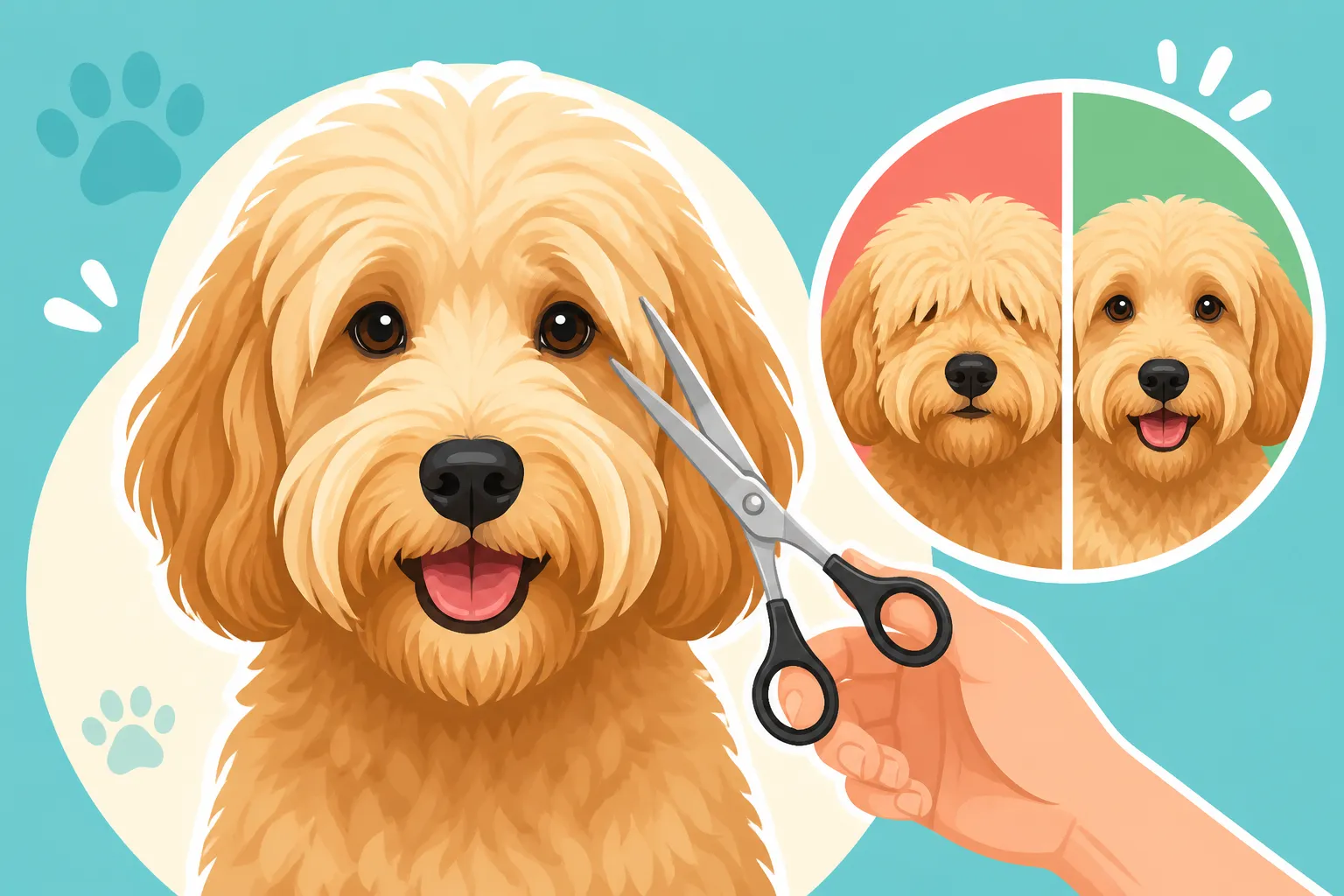
Now for the delicate part. Always use your blunt-nosed safety scissors. Hold your Labradoodle's head gently but firmly. You can have someone assist you by holding their head or offering treats if your dog is particularly wiggly. Use your fine-toothed comb to carefully comb the hair up and away from the eye. This allows you to see exactly how much hair is hanging over the eye and needs to be removed. The comb acts as a protective barrier between the scissors and your dog's eye.
With the hair combed up, take small, controlled snips, pointing the scissors away from your dog's eye. Imagine drawing an invisible line from the outside corner of the eye to the inside, and you want to trim the hair that falls below or into that line. Focus on the bridge of the nose, the inner corners (being extra careful here), and the hair directly above the eyes that might droop down. Trim only a little at a time – you can always cut more, but you can't put it back! Repeat this process for the other eye. If your dog gets restless, take a break, offer a treat, and try again later. It's far better to do two short, calm sessions than one long, stressful one. Consistency is key, and regular, even weekly, quick trims will prevent the hair from becoming overwhelmingly long.
Maintaining the Beard and Muzzle Area
Once the eyes are clear, you'll want to tackle the rest of the facial hair for both comfort and hygiene. The beard and muzzle area on a Labradoodle can become quite long and collect food, debris, or moisture. Trimming this area helps keep them cleaner and prevents mats from forming where they might chew or rub. For the beard, use your scissors to trim it to a manageable length, typically following the natural line of their jaw or slightly shorter to prevent it from dragging in their food or water bowl. You can use your comb to lift the hair and then trim, creating a neat, rounded or square shape depending on your preference.
For the hair around the mouth, which can also get food stuck in it, carefully trim it so it's flush with their lips when their mouth is closed. This helps prevent discomfort and keeps the area clean. When addressing the hair on the top of the muzzle, between their eyes and nose, you can use your blunt-nosed scissors or a small trimmer with a short guard to keep it tidy and prevent it from growing upwards into their eyes. Remember to be mindful of their whiskers; while some groomers trim them, they are sensory organs, and many owners prefer to leave them intact. Regularly checking these areas for any mats or debris, especially after meals or playtime, is crucial. This proactive approach will help you stay on top of their grooming needs and keep their entire face looking neat and feeling comfortable. It also helps manage issues like Whether a Labradoodle's Beard Stays Wet, which can contribute to skin irritation.
When to Call in the Professionals (and What to Ask)
While home grooming is empowering, there are definitely times when professional help is the best route. Knowing when to rely on a skilled groomer can save you stress, prevent injuries, and ensure your Labradoodle looks and feels their best.
Recognizing When Home Grooming Isn't Enough
Sometimes, despite your best efforts, home grooming simply isn't cutting it. One of the most common reasons to seek professional help is severe matting. If the hair around your Labradoodle's eyes or elsewhere on their face has become dense and matted close to the skin, trying to remove it yourself with scissors can be very dangerous. It's easy to cut the skin, which is often pulled taut by the mat. A professional groomer has the specialized tools and expertise to safely and gently remove severe mats, often needing to shave the area. Another clear indicator is if your Labradoodle becomes overly aggressive, anxious, or fearful during home grooming sessions. If they're snapping, struggling uncontrollably, or showing signs of extreme stress, pushing the issue yourself could damage your bond or even lead to injury for either of you. A professional groomer might have techniques, equipment, or a calmer environment that allows them to work more effectively with a nervous dog.
Furthermore, if your Labradoodle continues to experience persistent eye irritation, discharge, or redness despite your regular trims, it’s time to consult your veterinarian. While grooming can alleviate some issues, underlying health problems could be at play, and a professional cannot diagnose or treat medical conditions. Additionally, if you desire a specific, stylish look for your Labradoodle, such as The Teddy Bear Clip on a Labradoodle, achieving that polished, symmetrical finish often requires the skill and eye of an experienced professional. They understand coat growth patterns and breed-specific styles in a way most home groomers simply can't replicate.
Communicating Your Needs to a Professional Groomer
When you decide to take your Labradoodle to a professional groomer, clear communication is absolutely key to getting the results you want. Don't just say, "give them a trim." Be very specific about your concerns, especially regarding the facial hair around the eyes. Clearly state that you want the hair trimmed short enough so that it doesn't fall into their eyes, even when wet. You might even use phrases like, "I want their eyes completely clear of hair, and the bridge of their nose tidy." Bring photos if you have a specific look in mind.
Discuss the frequency of future grooming appointments. For Labradoodles, especially those with dense coats, a professional groom every 6-8 weeks is often recommended to prevent matting and keep their coat healthy, including the facial hair. Ask the groomer for their recommendations on maintenance between visits, such as quick trims around the eyes you can do at home. Finding a groomer who has extensive experience with "doodle" breeds is a huge advantage, as they understand the unique challenges of their continuously growing, often dense, and mat-prone coats. They can also advise on things like The Hair That Grows Where a Labradoodle's Ear Should Drain and how to keep those areas clean. Be prepared to discuss costs; professional grooming is an investment, and rates can vary based on location, coat condition, and the specific services requested. For example, severe matting can add significant fees to a groom, as mentioned in What a Groomer Charges to Dematt a Labradoodle by the Hour. A good groomer will take the time to listen to your needs and explain their approach.
| Aspect | Home Facial Grooming | Professional Facial Grooming |
|---|---|---|
| Cost | Low initial tool investment; ongoing cost for supplies. | Higher per-session cost; includes expertise & equipment. |
| Convenience | Can be done anytime; requires owner's time & patience. | Scheduled appointments; requires travel. |
| Control | Full control over length and style (within skill). | Groomer's expertise; specific instructions crucial. |
| Safety | Requires extreme care to avoid injury; blunt scissors. | Safer for severe issues; groomers have specialized tools. |
| Skill Level | Requires practice; suitable for basic maintenance. | Expert skill for complex trims, mat removal, styling. |
| Equipment | Safety scissors, comb, small trimmer, treats. | Professional clippers, various shears, dryers, grooming tables. |
| Best For | Regular upkeep, clearing eyes between professional grooms. | Full styling, severe matting, nervous dogs, full body grooming. |
Disclaimer
This article is for general informational purposes only and does not constitute professional advice. Laws, prices and regulations vary by location and change over time. Consult a qualified professional for guidance on your specific situation.