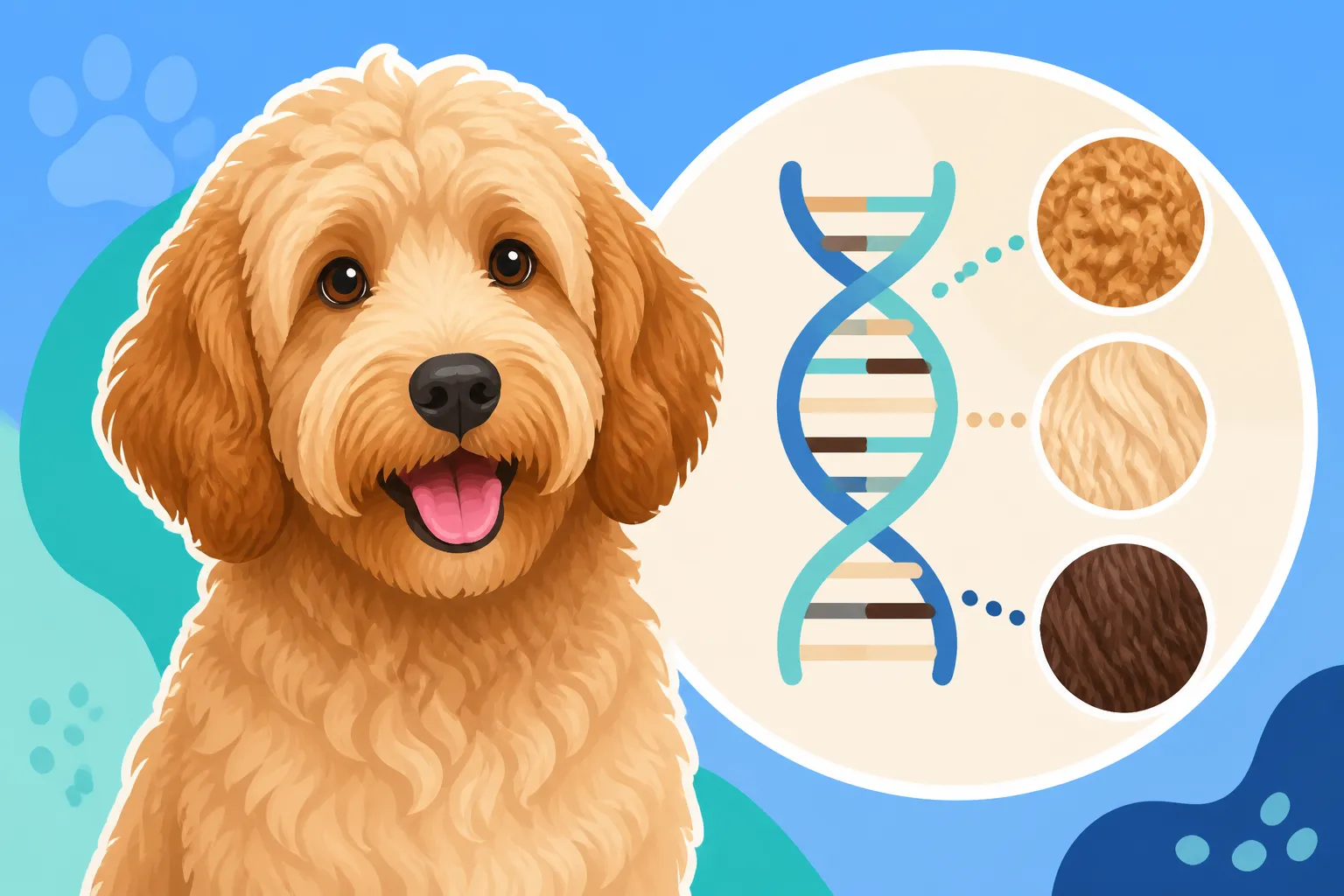
What a Labradoodle Coat DNA Panel Tells You
Bringing a Labradoodle puppy home is often filled with dreams of a low-shedding, allergy-friendly companion with that signature teddy bear look. However, many new owners quickly discover that not all Labradoodle coats are created equal, leading to unexpected shedding, relentless matting, or frustrating allergy flare-ups. This comprehensive guide will unravel the mysteries of Labradoodle coat genetics, explain exactly what a coat DNA panel tells you, and empower you to understand, predict, and manage your beloved doodle's unique fur.
The Frustration of Unpredictable Labradoodle Coats
It's a common scenario: you fall in love with a Labradoodle's charming looks and reputation for being "hypoallergenic," only to find yourself buried in dog hair or spending hours battling mats. This isn't just an inconvenience; it can be a genuine source of stress and disappointment when expectations don't align with reality. Understanding the genetic lottery of their coats can help mitigate these surprises.
The 'Surprise' Element of F1 Labradoodle Coats
Ah, the F1 Labradoodle – the original cross between a purebred Labrador Retriever and a Standard Poodle. These first-generation doodles are often the most genetically diverse, which means their coats can be a real toss-up. You might end up with a coat that leans heavily towards the Labrador side, meaning significant shedding, a flatter texture, and a coat that's surprisingly easy to care for but not allergy-friendly. On the other hand, you could get a pup with a Poodle-dominant coat, curly and low-shedding, but highly prone to matting and needing professional grooming.
The real surprise often lies in the "in-between" coats: wavy, sometimes wispy, that might not shed much but are incredibly prone to tangles and knots. Owners of F1 Labradoodles often feel like they're playing roulette with their puppy's future coat, and it’s a gamble that can leave them ill-prepared for the grooming demands or the reality of managing shedding in a seemingly non-shedding breed. It's a testament to the fact that while the idea of hybrid vigor is appealing, predicting specific traits in the first cross can be tricky.
Allergies and the Promise of a "Hypoallergenic" Doodle
One of the biggest draws of the Labradoodle for many families is the hope of a truly "hypoallergenic" dog. The Poodle parent is famous for its non-shedding, allergy-friendly coat, and the idea was to combine this with the Labrador's wonderful temperament. However, the reality is far more nuanced. Many families have brought home a Labradoodle, convinced they've found their solution, only to find their allergies flaring up just as badly as with any other dog. This can be heartbreaking, forcing difficult decisions about rehoming or constant medication.
It's crucial to understand that no dog is 100% hypoallergenic. The term generally refers to breeds that produce less dander and shed less hair, which are the primary carriers of allergens. A Labradoodle's "hypoallergenic" potential is directly linked to its coat type and shedding level. If a doodle inherits more of the Labrador's shedding genes, it will inevitably release more dander into the environment, potentially triggering allergic reactions. For families sensitive to pet dander, relying solely on the "Labradoodle" label without understanding the genetic makeup of the specific dog can lead to significant disappointment and health issues.
Grooming Nightmares and Unexpected Matting
Even if allergies aren't an issue, the grooming requirements of a Labradoodle can catch owners completely off guard. Many assume "low-shedding" means "low-maintenance," but this couldn't be further from the truth for most Labradoodle coats. The common fleece or wool coats, while beautiful, are incredibly prone to matting if not brushed regularly and correctly. We're not talking about a quick once-over; we're talking about dedicated line brushing to the skin.
Mats tend to form first on a Labradoodle's sensitive areas like behind the ears, in the armpits, and around the tail and sanitary regions. These aren't just cosmetic issues; severe matting can cause pain, skin infections, and restrict movement, sometimes requiring a full shave-down at the groomer, which can be an upsetting experience for both dog and owner. The coat change that hits a Labradoodle at nine months can be particularly challenging, turning what was once a manageable puppy coat into an overnight matting disaster if owners aren't prepared for the sudden increase in maintenance. Many owners share stories of a Labradoodle that fights the brush, making daily grooming a battle. It’s a significant commitment that often requires more time and specific tools than first-time owners anticipate.
Decoding the Genetics Behind Labradoodle Coats
The intricate beauty and frustrating unpredictability of a Labradoodle's coat are largely determined by a handful of key genes. Understanding these genetic markers is like having a secret decoder ring for predicting what kind of fur your puppy will grow. It moves beyond guesswork and into scientific insight.
Understanding Dominant and Recessive Genes
To grasp how a Labradoodle gets its coat, we need a quick primer on dominant and recessive genes. Think of it like a genetic tug-of-war. For each trait, a dog inherits two copies of a gene, one from each parent. A dominant gene will express itself even if only one copy is present. A recessive gene, however, only shows up if the dog inherits two copies of it.
For example, if a gene for "curly hair" is dominant (let's say 'C') and the gene for "straight hair" is recessive ('c'), a dog with a 'CC' or 'Cc' genetic makeup would have curly hair. Only a dog with 'cc' would have straight hair. This interplay is fundamental to how coat characteristics like furnishings, curl, and shedding manifest in a Labradoodle, which is a mix of a Poodle (often carrying dominant genes for curl and furnishings) and a Labrador Retriever (often carrying recessive genes for flatter, shedding coats). The combination of these genes determines whether you get a dog that sheds like a Labrador or is a low-shedding wonder.
The Importance of the Furnishings Gene (F/IC)
Perhaps the most crucial gene for the "doodle look" and its low-shedding reputation is the furnishings gene, often referred to as F or IC (Improper Coat). This gene dictates whether a dog has the characteristic facial hair (beard and eyebrows) and shaggy body coat that prevents continuous shedding. Without furnishings, a dog will have a "proper coat" (like a Labrador) – smooth face, short hair around the muzzle, and a single coat that sheds.
The gene for furnishings is dominant (F). This means if a Labradoodle inherits even one copy of the 'F' allele from either parent (making it Ff or FF), it will have furnishings. If it inherits two copies of the recessive 'f' allele (ff), it will have an "improper coat," looking more like a smooth-faced Labrador and shedding significantly. This is why many breeders emphasize checking for the furnishings gene; it's the primary indicator of whether a Labradoodle will have that classic, low-shedding doodle appearance. A dog without the furnishings gene might not resemble the typical doodle at all, and can be quite a surprise for owners expecting that shaggy charm.
Exploring Curl and Shedding Genes
Beyond furnishings, other genes influence the texture and shedding levels of a Labradoodle's coat. The curl gene, often denoted as Cu, determines how wavy or curly the coat will be. There are typically multiple alleles (versions) for this gene, leading to varying degrees of curl, from loose waves to tight ringlets. For instance, a dog might carry genes for wavy fleece (Cw) or tight wool (Ct), and the combination will influence the final texture.
Shedding is also influenced by specific genes, with some labs testing for alleles that correlate with low-shedding characteristics, even independent of the furnishings gene to some extent. While the furnishings gene (F) is the primary driver of low shedding and the 'doodle look,' other modifier genes can subtly influence how much dander is released or how prone the coat is to matting. A reputable DNA panel will look at multiple markers to give a more complete picture, not just focusing on the presence of furnishings. Understanding these complexities is key to knowing whether your dog will truly be a low-shedding companion or require constant vigilance against shed hair.
What a Labradoodle Coat DNA Panel Actually Tests For
A coat DNA panel isn't just one test; it's typically a suite of tests designed to analyze several genetic markers that influence everything from hair length and texture to shedding potential and even coat color. It provides a detailed blueprint of your Labradoodle's fur, offering insights that a visual inspection alone simply cannot. This scientific approach helps confirm what you might hope for or gives you a realistic picture of what to expect down the line.
The Furnishings Gene: Beards, Brows, and Low Shedding Potential
As we've discussed, the furnishings gene is paramount for the quintessential Labradoodle look and its purported low-shedding qualities. A coat DNA panel specifically identifies the presence or absence of the 'F' allele. The results will typically show if your dog is FF (homozygous dominant for furnishings, meaning two copies of the furnishing gene), Ff (heterozygous for furnishings, meaning one copy of the furnishing gene and one copy of the improper coat gene), or ff (homozygous recessive, indicating an improper coat with no furnishings).
A dog that is FF or Ff will have the characteristic beard, eyebrows, and longer hair on the muzzle and body that prevents it from shedding like a Labrador. This is what gives a Labradoodle that adorable, shaggy face. An ff dog, on the other hand, will have a smooth, short-haired face and will shed significantly, looking much more like a Labrador Retriever. For prospective owners focused on low shedding and the signature doodle appearance, this is arguably the most critical piece of information a coat DNA panel provides. It’s the difference between a teddy bear and a sleek retriever.
The Curl Gene: From Wavy Fleece to Tight Wool
The curl gene influences the texture of the coat, giving us the variations of fleece and wool that Labradoodle owners adore (or dread, depending on grooming commitment!). Different genetic markers on the DNA panel correspond to different degrees of curl. For example, labs often test for the KRT71 gene, with various alleles like Cu (curly), Cw (wavy), and C (straight). A dog might inherit different combinations, leading to its specific curl pattern.
A dog with two copies of the 'curly' allele (CuCu) will likely have a tightly curled, dense wool coat, much like a Poodle. One copy of the 'curly' allele and one 'wavy' or 'straight' allele (e.g., CuCw or CuC) might result in a looser, wavy fleece coat. If a Labradoodle inherits two copies of the 'straight' allele (CC), it will have a very straight or barely wavy hair coat, even if it has furnishings. This curl analysis helps owners anticipate the texture and density of their dog's coat, which directly impacts grooming time and susceptibility to matting. Understanding this helps prepare you for whether you’ll be dealing with the fluffy, airy feel of fleece or the dense, cottony feel of wool.
Shedding Genes and Allergy Compatibility
While the furnishings gene is the primary determinant of shedding, DNA panels can also delve into other shedding-related markers to give a more nuanced prediction. Some tests examine specific genes (like the MC5R gene) that are associated with low shedding, helping to confirm or refine the predictions made by the furnishings gene result. It’s not just about whether the hair falls out, but how much, and what kind of dander might be released.
For families with allergies, this multi-faceted approach to shedding prediction is invaluable. Even a dog with furnishings (Ff or FF) can still have some degree of shedding, especially if it carries other shedding alleles from its Labrador ancestry. A comprehensive panel can provide a clearer picture of the actual shedding potential, which directly correlates to how "allergy-friendly" a particular Labradoodle will truly be. This information is much more reliable than simply asking, "Does this generation shed?" because individual genetic variations exist even within generations. It can help an allergic family determine whether a specific puppy's genetic makeup is truly compatible with their needs, potentially preventing the heartbreak of a failed placement.
Color Genes and Unexpected Shades
Beyond coat texture and shedding, DNA panels can also tell you about your Labradoodle's genetic color potential. While not directly related to grooming or allergies, it's a fascinating aspect that can sometimes reveal unexpected hues. Labradoodles come in a rainbow of colors, from creams and apricots to chocolates, blacks, and even phantom or parti patterns. These colors are determined by several gene loci (locations on the chromosomes), such as E (Extension), B (Brown), K (Dominant Black), and A (Agouti).
For instance, the B locus determines whether a dog can produce black pigment. A dog that is BB or Bb will have black pigment (nose, paw pads), while a dog that is bb will have brown pigment (chocolate coat, brown nose). The E locus determines whether black pigment extends to the entire coat or is restricted to points like the nose and eyes, allowing for shades like red, yellow, or apricot. Understanding these color genetics can explain why two black Labradoodles might produce a litter of chocolate puppies or why a cream-colored pup suddenly develops darker points as it ages. While purely aesthetic, it’s another layer of genetic information that contributes to the unique individual profile of your Labradoodle.
Interpreting Your Labradoodle's DNA Panel Results
Once you get those results back from the lab, it can feel like you're staring at a foreign language. A string of letters and symbols might seem daunting, but breaking them down helps you understand the story your Labradoodle's genes are telling about its coat. This isn't just academic; it has practical implications for grooming, allergy management, and overall care.
Understanding the Letter Codes (e.g., Ff, CuC, Sd/sd)
DNA panel results for coat traits often use specific letter codes to denote the presence of different alleles (gene variants). Let's look at some common ones:
- F/IC (Furnishings/Improper Coat):
FF: The dog has two copies of the dominant furnishings gene. It will have full furnishings (beard, eyebrows) and is highly likely to be very low-shedding.Ff: The dog has one copy of the dominant furnishings gene and one copy of the recessive improper coat gene. It will still have furnishings and be low-shedding. It can pass on the improper coat gene to its offspring.ff: The dog has two copies of the recessive improper coat gene. It will lack furnishings, have a smooth face, and will shed significantly, much like a Labrador.
- Cu (Curl):
CuCu: The dog has two copies of a strong curl gene, indicating a dense, tightly curled coat (wool).CuCorCw: The dog has one copy of a curl gene and one for less curl or straight hair, resulting in a wavy coat (fleece).CC: The dog has two copies of the straight hair gene, leading to a much straighter or minimally wavy coat (hair).
- Sd (Shedding): Some panels include additional shedding intensity markers, often denoted with
Sd(low shedding) orsd(higher shedding).SdSd: Very low shedding potential.Sdsd: Low shedding potential but can pass on higher shedding.sdsd: Higher shedding potential.
These codes are your roadmap. For example, a dog typed as Ff CuC Sdsd would likely have furnishings, a wavy fleece coat, and be a low-to-moderate shedder. Knowing these codes helps you interpret the genetic contribution from both the Poodle and Labrador sides of your Labradoodle's family tree.
Predicting Coat Type and Future Grooming Needs
The beauty of a DNA coat panel lies in its predictive power. Based on the genetic codes, you can make a highly educated guess about your Labradoodle's adult coat type, even when they're just a puppy. This helps you prepare for the grooming demands long before the coat change hits.
- Wool Coat (CuCu, usually FF or Ff): Expect a dense, Poodle-like coat that is often tightly curled. This coat typically sheds very little but is a mat magnet. It will require daily brushing to the skin with a slicker brush and a metal comb, and professional grooming every 6-8 weeks is non-negotiable. This is the most demanding coat to maintain.
- Fleece Coat (CuC or Cw, usually FF or Ff): This is the most sought-after coat, soft and wavy, flowing in loose curls. It's generally low-shedding. While less prone to immediate matting than wool, it still requires thorough weekly brushing, especially in high-friction areas, and professional grooming every 8-10 weeks. This is the "teddy bear" coat that many people envision.
- Hair Coat (CC, usually FF or Ff, but sometimes ff if furnishings are absent): A straighter, coarser coat that can still have a slight wave. If it has furnishings (FF or Ff), it will shed less than a Labrador but still more than a fleece or wool coat. If it's an
ffhair coat, it will shed profusely. While easier to brush, the shedding can be a surprise for owners expecting a non-shedding dog.
Knowing these possibilities from a DNA panel helps you invest in the right grooming tools, plan your budget for professional grooms, and mentally prepare for the commitment required. You can purchase essential supplies from retailers like Chewy with confidence, knowing you’re choosing the right brushes for your dog's specific coat texture.
Assessing the Real Hypoallergenic Potential
The interpretation of the DNA panel is critical for assessing a Labradoodle's actual allergy compatibility. The combination of the furnishings (F/IC) and shedding (Sd) genes provides the most accurate picture.
- Highest Hypoallergenic Potential (FF or Ff + SdSd or Sdsd): A Labradoodle with furnishings and strong low-shedding genes is the most likely candidate for allergy sufferers. The furnishings prevent continuous shedding of dander-carrying hair, and the shedding genes reinforce this low-shedding trait. However, it's still not 100% guaranteed, as individual human sensitivities vary widely. Regular bathing and grooming can further reduce allergens.
- Moderate Hypoallergenic Potential (Ff + sdsd or Ff with weaker shedding markers): While still having furnishings, if the dog carries more shedding-prone modifiers, it might shed a bit more, potentially causing mild reactions in sensitive individuals. These dogs will still be much better than a shedding breed, but not as "allergy-friendly" as those with the strongest low-shedding profile.
- Low Hypoallergenic Potential (ff): A Labradoodle lacking furnishings will shed significantly, producing and releasing substantial dander. These dogs are generally not suitable for homes with moderate to severe pet allergies, regardless of their curl type.
It's important to set realistic expectations. A DNA panel gives you the best available information to make an informed decision, especially when allergies are a serious concern. It helps you understand that while the term "hypoallergenic" is often applied broadly to doodles, the reality depends on the specific genetic makeup of each individual dog.
Why Breeders Use Coat DNA Panels
For responsible Labradoodle breeders, coat DNA panels are an invaluable tool, moving them beyond guesswork and into scientific precision. These tests are not just for curious owners; they are fundamental to ethical breeding practices aimed at producing healthy, predictable puppies that meet specific standards and owner expectations.
Breeding for Specific Coat Types and Generations
Breeders often aim to produce particular coat types, especially the popular fleece or wool coats known for their low-shedding qualities. By testing their breeding dogs, they can strategically pair them to achieve desired outcomes. For example, if a breeder has a female who is Ff (carries one copy of the improper coat gene) and wants to ensure all puppies have furnishings, they must breed her with a male who is FF (two copies of the dominant furnishings gene). This guarantees that every puppy receives at least one 'F' allele.
Similarly, they can select for curl. If a breeder consistently wants wavy fleece coats, they might pair dogs known to carry the CuC or Cw alleles. This meticulous genetic planning helps them avoid surprises in their litters, allowing them to confidently advertise specific coat characteristics. This level of intentional breeding is what differentiates a responsible program from a backyard breeder who might not understand the genetic complexities. It allows them to produce multi-generational Labradoodles with more consistent traits.
Ensuring Predictability for Allergic Families
One of the primary reasons Labradoodles were initially bred was to create a guide dog for a visually impaired woman with allergies. Today, breeders use DNA panels to uphold this promise of allergy compatibility. By identifying the furnishings gene and other shedding markers in their breeding stock, they can select parents that are most likely to produce genuinely low-shedding puppies suitable for allergic households.
Imagine a family with a child who desperately wants a dog but suffers from severe allergies. A breeder can show them the DNA results of the parents and the predicted coat outcomes for the litter, providing peace of mind and significantly reducing the risk of a heartbreaking rehoming situation later on. This transparency is crucial. While no breeder can guarantee 100% allergy-proofing, using DNA panels allows them to make the most informed predictions possible, matching puppies with families more effectively. This ensures that the promise of a truly allergy-friendly dog is supported by scientific evidence, not just hope.
Avoiding the "Improper Coat" in Multi-Generational Doodles
The "improper coat" (ff) is a significant concern for breeders, particularly those working with multi-generational Labradoodles (F2, F3, etc.). While an F1 Labradoodle might still have an improper coat, it's more common in later generations if breeders aren't careful about genetic testing. If two Ff dogs are bred together, there's a 25% chance that each puppy in the litter will inherit two 'f' alleles (ff), resulting in an improper coat that sheds.
This can be devastating for a breeder and a huge disappointment for a buyer expecting a typical Labradoodle coat. An improper coat often means the dog looks more like a Labrador, sheds a lot, and requires minimal grooming – which is not what most Labradoodle buyers are looking for. By routinely testing their breeding stock for the furnishings gene, breeders can prevent inadvertently producing puppies with improper coats, ensuring consistency in their lines and protecting their reputation. This commitment to genetic health and predictable traits is a hallmark of ethical breeding practices and gives buyers confidence that they are getting what they paid for.
When and How to Get a Labradoodle Coat DNA Panel
Whether you're looking for a new puppy or trying to understand your current Labradoodle's coat quirks, a DNA panel can provide valuable answers. It's a straightforward process that offers profound insights, making it a worthy consideration for many doodle owners and prospective buyers.
For Prospective Puppy Buyers: What to Ask Your Breeder
If you're in the exciting (and sometimes overwhelming) process of finding a Labradoodle puppy, asking about coat DNA panels is a smart move. Responsible breeders should be transparent about their breeding dogs' genetic health and coat tests. Before putting down a deposit, inquire about the DNA test results for both parent dogs, specifically focusing on the furnishings (F/IC) and curl (Cu) genes.
A breeder should be able to provide documentation from a reputable genetic testing laboratory. They might also be able to tell you the predicted coat types for the litter based on the parents' genetics. For example, if both parents are FF for furnishings and CuCu for curl, you can be fairly certain the puppies will have dense, curly, low-shedding coats. If one parent is Ff and the other FF, you know all puppies will have furnishings, but some might carry the recessive 'f' allele. Don't be shy about asking for these details, especially if you have allergy concerns or specific grooming expectations. It’s a good sign when a breeder is proactive about sharing this information, as it reflects their commitment to health and predictability.
For Owners of Existing Labradoodles: Unraveling Coat Mysteries
Maybe you've already brought home your adorable Labradoodle, and its coat is turning out to be more of a puzzle than you anticipated. Perhaps you're constantly battling mats, wondering if your dog truly is "hypoallergenic" as promised, or just curious about its genetic makeup. Getting a coat DNA panel for your existing Labradoodle can unravel these mysteries.
Knowing the exact genetic profile of your dog's coat can help you adjust your grooming routine, understand its shedding patterns, and confirm (or deny) its potential for triggering allergies. For instance, if you've been struggling with constant shedding and the panel reveals your dog is ff (improper coat), it explains why your vacuum cleaner is working overtime. This knowledge allows you to tailor your expectations and care more accurately. You might even discover why your Labradoodle's coat changed texture dramatically after its puppy coat blew. Plus, it's just plain fascinating to learn more about your unique companion!
The Process: Sample Collection and Lab Analysis
Getting a coat DNA panel for your Labradoodle is surprisingly simple. Most common canine genetic testing companies, like Embark or Wisdom Panel, offer comprehensive panels that include coat traits. The process typically involves collecting a DNA sample at home:
- Order a Kit: You'll order a DNA testing kit online from a chosen provider.
- Collect Sample: The kit will contain sterile cotton swabs or a small brush. You simply swab the inside of your dog's cheek vigorously for about 30-60 seconds to collect saliva and cheek cells. It's important to make sure your dog hasn't eaten or drunk anything for at least an hour before, to avoid contaminating the sample.
- Mail It Back: Once the sample is collected and air-dried (if necessary), you seal it in the provided packaging and mail it back to the laboratory.
- Receive Results: After a few weeks (turnaround times vary by lab), you'll receive a detailed report via email or through an online portal. This report will break down all the genetic markers tested, often with easy-to-understand explanations of what each result means for your dog's coat, health, and breed ancestry.
Many of these labs provide incredibly detailed reports, which can be shared with your veterinarian or groomer to ensure the best possible care for your Labradoodle. Some reputable companies even provide health screenings alongside coat genetics. Companies like Chewy sometimes offer these DNA kits, making them easily accessible for owners.
Managing Your Labradoodle's Coat, Regardless of DNA
Even with a comprehensive DNA panel, consistent and correct coat care is paramount for any Labradoodle. While genetics tell you what kind of coat you have, good grooming practices ensure it stays healthy, comfortable, and beautiful. Neglecting their distinctive coats can quickly lead to discomfort for your dog and significant expense for you.
Essential Grooming Tools and Techniques
The right tools are half the battle when it comes to Labradoodle grooming. You can't just grab any brush; their unique coat textures require specific implements to prevent matting and ensure thorough cleaning.
- Slicker Brush: This is your primary weapon against mats. Look for one with fine, angled pins. It's essential for penetrating the coat down to the skin, which is where mats truly begin. Use it in short, gentle strokes, always brushing away from the skin.
- Metal Comb: A sturdy metal comb with both wide and narrow teeth is crucial for checking your work and for detangling smaller knots. After brushing with the slicker, run the comb through the coat. If the comb snags, you've missed a mat. Areas like behind the ears, armpits, and under the tail are prone to hidden mats.
- De-matting Comb/Rake: For those more stubborn tangles, a de-matting comb can carefully slice through small mats without pulling too much hair. Use with extreme caution and never try to rip through large mats, as this will hurt your dog.
- Force Dryer: While optional, a high-velocity force dryer is incredibly useful, especially after baths or swims. It blasts water and loose hair out of the coat, significantly reducing drying time and helping to prevent mats from forming as the hair dries. This is also excellent for drying a Labradoodle after it swims, ensuring no moisture is trapped in the dense coat.
- Quality Shampoo and Conditioner: Invest in dog-specific, moisturizing shampoos and conditioners. These help keep the coat hydrated, which makes it less prone to static and matting. Always rinse thoroughly to prevent skin irritation. Many quality grooming products are available through retailers like Chewy.
Learning to line brush a Labradoodle is arguably the most important technique. This involves parting the coat horizontally and brushing one section at a time, layer by layer, from the skin outwards. This ensures you're reaching all the way down to the roots, where mats start.
Daily Care for a Mat-Free Life
For many Labradoodles, especially those with wool or dense fleece coats, "daily brushing" isn't an exaggeration; it's a necessity. If you skip even a few days, especially during periods of high activity or wet weather, mats can form rapidly, seemingly overnight.
The key to preventing matting is consistency. A quick 10-15 minute session each day, focusing on problem areas like the armpits, behind the ears, and around the collar, can make a huge difference. During the infamous Labradoodle coat change, which typically happens between 6 and 12 months, daily rigorous brushing is absolutely non-negotiable. This is when the soft puppy coat gives way to the denser adult coat, and the two textures can intertwine, forming dense, painful mats if not brushed out consistently. Many owners report that a Labradoodle mats overnight during the change, so vigilance is key. It’s also important to trim the hair between a Labradoodle's pads regularly, as this can collect debris and form painful mats.
Beyond brushing, regular ear cleaning is crucial, especially for their drop ears which can trap moisture and debris, leading to ear infections. Clean them gently with a vet-approved cleaner a few times a week or after swimming. Also, keep an eye on their diet; some owners find that certain foods, like those from companies such as Ollie, can contribute to a healthier skin and coat, making it more resilient and less prone to issues.
Professional Grooming and Seasonal Clips
Even with diligent home care, most Labradoodles require professional grooming every 6 to 10 weeks. A professional groomer has specialized equipment, expertise, and training to handle the intricacies of a Labradoodle's coat, ensuring they are clipped evenly, mat-free, and comfortable.
- Regular Schedule: Establish a regular grooming schedule with your chosen groomer. This consistency helps prevent the coat from getting out of control between appointments. Discuss with your groomer what kind of clip you prefer – a "teddy bear clip" is popular, leaving the coat a bit longer, while a "kennel clip" is shorter and easier to maintain.
- Matting and Shaving: If a Labradoodle arrives at the groomer severely matted, the groomer's only humane option is often a full shave-down. While this can be upsetting for owners who love the fluffy look, it's necessary to relieve the dog from pain and potential skin issues. Prevention through regular home brushing is always the best approach. Never try to tackle severe matting with scissors at home, as it's incredibly easy to accidentally cut the dog's skin.
- Ear Hair Plucking/Trimming: Groomers will often address the hair that grows where a Labradoodle's ear should drain, either by plucking (if comfortable for the dog) or carefully trimming it to allow for better air circulation and reduce the risk of ear infections.
- Nail Trims and Sanitary Clips: Professional groomers also handle nail trims, sanitary clips around the rear, and trimming hair around the eyes to ensure clear vision, all of which contribute to your Labradoodle's overall hygiene and comfort.
Investing in professional grooming is an essential part of Labradoodle ownership. It complements your home care efforts and ensures your dog remains happy, healthy, and looking its best, no matter what its DNA panel reveals about its coat.
| Coat Type (Predicted by DNA) | Furnishings Gene (F/IC) | Curl Gene (Cu) | Expected Shedding Level | Grooming Frequency | Typical Appearance | Allergy Potential (Relative) |
|---|---|---|---|---|---|---|
| Wool Coat | FF or Ff | CuCu | Very Low | Daily brushing, 6-8 week professional clips | Dense, tightly curled, Poodle-like, no shedding. | Lowest |
| Fleece Coat | FF or Ff | CuC or Cw | Low | Weekly thorough brushing, 8-10 week professional clips | Soft, wavy, shaggy, "teddy bear" look, minimal shedding. | Low |
| Hair Coat (Furnished) | FF or Ff | CC | Moderate | Weekly brushing, 10-12 week professional trims | Straighter, coarser, some wave, noticeable but not heavy shedding. | Moderate |
| Hair Coat (Improper Coat) | ff | CC, CuC, or CuCu | High (like a Labrador) | Minimal brushing, less professional grooming needed | Smooth face, short coat, sheds heavily like a Labrador. | High (not suitable for allergy sufferers) |
Disclaimer
Please remember that this article provides general information and guidance. While genetic testing offers valuable insights, every dog is an individual, and environmental factors, diet, and overall health can also influence coat condition. Always consult with a qualified veterinarian or professional groomer for personalized advice regarding your Labradoodle's specific needs.