The Slicker, Rake and Comb a Labradoodle Takes
If you're a Labradoodle owner, you've probably heard the buzz about their wonderful, low-shedding coats. What many aren't prepared for is the diligent grooming regimen required to keep those beautiful curls from becoming a tangled, painful mess. This guide is here to demystify the essential grooming tools – the slicker, rake, and comb – and show you exactly how to use them to keep your Labradoodle's coat healthy, happy, and mat-free.
Understanding Your Labradoodle's Unique Coat
The allure of the Labradoodle often starts with its coat – often advertised as hypoallergenic and non-shedding. While many Labradoodles do shed significantly less than their Labrador parent, the reality is that "low-shedding" doesn't mean "no-maintenance." In fact, these coats are prone to matting and tangling in a way a shedding coat simply isn't, trapping loose hairs within their curls and creating dense felt. Many first-time owners are completely caught off guard by the commitment required, often leading to frustration and expensive trips to the groomer.
The Different Faces of the Labradoodle Coat
It's vital to understand that not all Labradoodle coats are created equal. The genetic lottery means your dog could have one of several coat types, each with its own specific grooming needs. You'll often hear breeders talk about The Three Labradoodle Coats: Hair, Fleece and Wool, and recognizing which one your furry friend sports is the absolute first step in choosing and using the right tools. The "hair coat" is generally coarser, closer to a Labrador's, and while it sheds, it's typically the easiest to maintain. However, the true Labradoodle signature coats are the "fleece" and "wool" types.
A fleece coat is wonderfully soft, with loose waves or spirals, feeling much like angora. This coat is highly prized but demands consistent brushing to prevent it from tightening into mats. The wool coat, on the other hand, is much denser, with tight, spiraling curls resembling a Poodle's. While often the most allergy-friendly, it’s also the most challenging to maintain, matting very quickly if neglected. Each of these textures responds differently to brushing, making a one-size-fits-all approach doomed to fail.
Why Coat Type Dictates Tool Choice
The very structure of your Labradoodle's hair – how coarse or fine, how straight or curly, how dense or sparse – dictates which grooming tools will be most effective. Trying to brush a tightly curled wool coat with a slicker brush designed for a straighter, hair-like texture would be like trying to rake leaves with a broom – largely ineffective. The wrong tool won't penetrate the coat sufficiently to reach the tangles that form closest to the skin, leaving you with a perfectly groomed surface but a matted mess underneath.
Conversely, using a tool that's too aggressive for a finer, less dense coat can cause skin irritation or even damage the delicate hair shafts. For instance, a very robust undercoat rake might be too harsh for a puppy's delicate coat or a more open fleece type. Understanding that your Labradoodle's coat is unique allows you to tailor your grooming arsenal. It ensures that the slicker brush, undercoat rake, and metal comb you select are perfectly suited to their individual needs, making grooming more efficient, more comfortable for your dog, and ultimately more successful for you.
The Essential Slicker Brush: Your First Line of Defense
For the vast majority of Labradoodle owners, the slicker brush quickly becomes the most frequently used tool in their grooming kit. It's an absolute powerhouse for daily maintenance, designed to tackle the superficial tangles and general fluffing that keeps a Labradoodle looking its best. Don't underestimate its importance; consistent use can save you from far bigger headaches down the line.
What a Slicker Brush Does
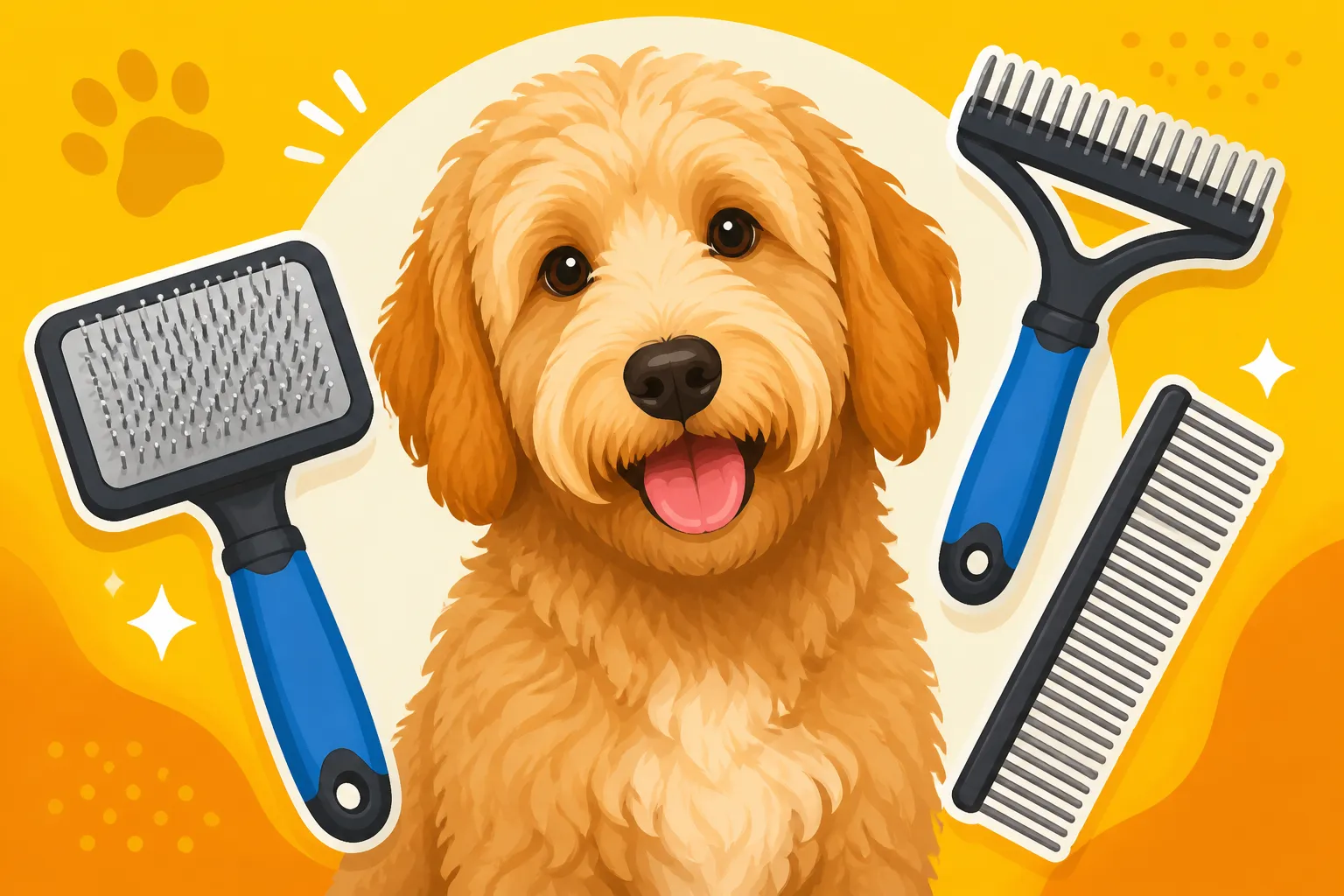
A slicker brush is characterized by its rectangular or oval head covered in a multitude of fine, short, wire pins that are slightly bent at the tips. These pins work to gently separate individual hairs, catching loose undercoat and teasing out minor tangles and knots before they have a chance to tighten into full-blown mats. For the popular fleece and wool coats, the slicker brush is crucial for preventing the hair from becoming felted, keeping the curls open and airy.
Beyond detangling, a good slicker brush also helps to remove dirt, debris, and loose hairs that would otherwise remain trapped in the coat. This action also stimulates the skin, promoting blood flow and distributing natural oils throughout the coat, which contributes to a healthy sheen. When you're looking to purchase one, you'll find a vast selection of slicker brushes available on platforms like Chewy and Amazon, with variations in pin hardness, density, and size. For Labradoodles, it's often best to choose a medium to firm slicker brush, ensuring it has enough strength to penetrate their dense coats without being overly harsh on the skin.
Mastering the Art of Slicker Brushing
Simply skimming a slicker brush over the surface of your Labradoodle's coat is one of the most common, and ultimately ineffective, grooming mistakes. To truly prevent mats and maintain a healthy coat, you need to be Brushing a Labradoodle to the Skin, Not the Surface. This is achieved through a technique known as "line brushing," which systematically works through the coat layer by layer.
Start by gently parting your dog's coat in a small section, often beginning at the legs or flank, and hold the hair above the part. Then, using a light, flicking motion, brush the section of hair you're holding, ensuring the slicker's pins reach all the way to the skin. Once that section is tangle-free, move the next part of the coat down and repeat, working your way across and up your dog's body. The goal is to see the skin as you brush each section. Without this diligent approach, mats will inevitably form close to the skin, particularly in areas of high friction such as the armpits, behind the ears, and under the collar. Consistent, thorough line brushing with your slicker is the foundation of effective Labradoodle coat care.
Diving Deeper with the Undercoat Rake
While the slicker brush is your daily workhorse, the undercoat rake is a specialized tool that many Labradoodle owners incorrectly assume they don't need because their dogs are "non-shedding." This misunderstanding can lead to significant coat problems, as the rake serves a distinct and crucial purpose, especially for certain coat types and during key periods.
Why a Rake is Crucial for Labradoodles
The term "undercoat rake" might conjure images of dense double-coated breeds like German Shepherds or Huskies, but it's equally valuable for many Labradoodles, particularly those with fleece or wool coats. These dogs might not "shed" in the traditional sense, but they do have a fine, often cottony, dead undercoat that gets trapped within their curly outer layers. If this dead hair isn't removed, it quickly becomes interwoven with the live hair, forming dense, impenetrable mats that pull on the skin and can cause considerable pain and discomfort.
An undercoat rake features long, blunt, widely spaced teeth designed to penetrate the dense topcoat and gently pull out this trapped, dead undercoat without cutting or damaging healthy hair. It's particularly indispensable during the infamous The Coat Change That Hits a Labradoodle at Nine Months, when the soft puppy coat transitions to a thicker, more adult coat. During this phase, dead puppy fur can bind with the emerging adult coat, creating massive matting if not meticulously removed. The rake helps to thin out this packed-in hair, promoting air circulation to the skin and significantly reducing the risk of painful matting and skin issues. It's a tool for thorough, periodic maintenance rather than daily use, perhaps once or twice a week depending on your dog's specific coat and its condition.
How to Properly Use an Undercoat Rake
Using an undercoat rake effectively requires a careful hand and a clear understanding of its purpose. It's not a tool for pulling through tight mats; rather, it's for clearing out dead, loose hair before it becomes a mat. Always use the rake on a coat that has already been mostly detangled with a slicker brush. Begin by working in small sections, much like line brushing, moving the rake gently through the coat in the direction of hair growth. The long teeth should reach down to the skin without scraping it.
If you encounter resistance or a snag, stop immediately. Do not pull. Go back with your slicker brush or even your fingers to carefully work out the tangle before attempting to use the rake again. The rake is most effective on the denser areas of the body, such as the back, sides, and hindquarters. Exercise extra caution around sensitive zones like the ears, armpits, and belly, where the skin is thinner and more delicate. For Labradoodles with a particularly dense Whether a Wool Coat Labradoodle Needs Daily Work, the rake may become a more regular feature in your routine. Regular use of the undercoat rake complements your slicker brushing efforts, ensuring the coat is thoroughly cleared of trapped hair, preventing buildup that can lead to severe matting and discomfort for your beloved Labradoodle.
The Mighty Metal Comb: For Finishing and Mat Detection
Often overlooked in favor of the more flashy slicker and rake, the simple metal comb is, without a doubt, one of the most critical tools in a Labradoodle owner's grooming arsenal. It acts as your final quality check, your mat detector, and your precision tool, ensuring no tangle goes unnoticed.
The Comb's Role in Grooming
A high-quality metal comb, typically featuring both wide-toothed and fine-toothed sections, serves multiple essential purposes in a Labradoodle's grooming routine. First and foremost, it is your ultimate mat detector. After you’ve done all your diligent work with the slicker brush and undercoat rake, the comb is what tells you if you’ve truly gotten down to the skin and removed every last knot. If the comb glides smoothly through the coat from root to tip, you've done a fantastic job. If it snags, even slightly, it indicates a hidden tangle that needs more attention. This is especially crucial in those sneaky, friction-prone areas like Mats Behind a Labradoodle's Ears and in the sensitive armpits.
Secondly, the finer-toothed end of the comb is indispensable for precision work. It allows you to meticulously tidy up delicate areas that a larger brush might miss or handle too roughly, such as the hair around the eyes, the muzzle, the paws, and the tail. It helps define those beautiful Labradoodle features, giving a neat and polished look. Finally, the comb can be used to fluff up the coat, adding volume and ensuring an even distribution of the hair. It’s the tool that confirms your thoroughness and helps achieve that professional, well-groomed finish. You can easily find robust, stainless steel metal combs on platforms like Amazon, often with anti-static coatings, which are excellent for long-lasting use.
Effective Comb Techniques for Mat Prevention
To wield the metal comb effectively, a systematic approach is key. Always use it after you've worked through the coat with your slicker and rake. Start with the wider-toothed end of the comb. Just as you did with line brushing, part the coat in small sections and draw the comb through, making sure the teeth reach all the way to the skin. This ensures you're checking for tangles at the deepest level, where they are most likely to form and cause problems.
If the wide-toothed comb passes through freely, then switch to the finer-toothed side and repeat the process. This two-step check is vital because sometimes a larger comb might glide over a small, tight knot that the finer teeth will catch. If the comb snags at any point, do not pull! That will hurt your dog and break the hair. Instead, go back to your slicker brush, perhaps with a spritz of detangling spray, and gently work out the detected tangle before returning to the comb. Pay particular attention to the known hotspots, as these are the Where Mats Form First on a Labradoodle. Regular, methodical combing is the ultimate secret weapon for preventing small knots from escalating into massive, painful mats that require a trip to the professional groomer.
Putting It All Together: A Comprehensive Grooming Routine
Owning the right tools is only half the battle; the real victory comes from establishing a consistent, effective grooming routine for your Labradoodle. Without regularity, even the most expensive and specialized brushes will fail to keep their beautiful coat in pristine condition. Many owners find themselves in a frustrating cycle of matting and costly groomer visits because they underestimate the time commitment and consistency needed for these high-maintenance coats.
Step-by-Step Grooming Flow
Here's a practical, comprehensive flow for a thorough Labradoodle grooming session, which you should aim to do at least weekly, with shorter, focused brushing sessions in between. The duration of this process can vary greatly; it's worth noting How Long Brushing a Labradoodle Takes Each Week can range from an hour to several hours, depending on coat type and condition.
- Preparation is Key: Before you even touch your dog, gather all your necessary tools: your slicker brush, undercoat rake, metal comb, a detangling spray (essential for easing out knots), some high-value treats, and a towel. Choose a comfortable, non-slip surface for your dog to stand on, ideally a grooming table if you have one, or a sturdy counter. This elevated position helps prevent back strain for you and signals to your dog that it's "grooming time."
- Initial Detangling with the Slicker Brush: Begin by using your slicker brush with the "line brushing" technique. Start at the bottom of a leg or flank, part the hair, and brush a small section from the skin outwards. Work your way systematically across and up your dog's body, ensuring you see the skin with each stroke. This method ensures you're not just brushing the surface. For any small tangles you encounter, use a light, flicking motion to gently tease them apart. Don't be shy with a detangling spray for tougher spots; it significantly reduces pulling and discomfort.
- Deep Cleaning with the Undercoat Rake: Once the slicker brush can glide relatively smoothly through most of the coat, bring out your undercoat rake. Focus on the denser areas: the body, the ruff around the neck, and the hindquarters. Use gentle, sweeping strokes, working in the direction of hair growth. The rake's purpose is to pull out trapped, dead undercoat that the slicker might miss, especially for Labradoodles with a What a Fleece Coat Feels Like on a Labradoodle or a woolier texture. Remember, if the rake catches, don't force it; go back to your slicker brush or fingers to loosen the snag.
- The Critical Comb Check: This is the most important step for mat prevention. Take your metal comb (starting with the wide teeth) and methodically comb through every single inch of your Labradoodle’s coat – from the tip of their nose to the end of their tail, including their paws, under their chin, in their armpits, and under their belly. If the comb snags, no matter how small the resistance, you've found a hidden mat. Go back to your slicker brush and detangling spray, carefully working out the knot until the comb can glide through freely. Then, repeat with the fine-toothed side of the comb to catch any minuscule tangles.
- Finishing Touches and Rewards: Once the entire coat is mat-free, use the fine end of your comb to neaten up the hair around the face, ears, and paws. Check their nails and ears for cleanliness. Throughout the entire process, lavish your Labradoodle with praise and treats. Making grooming a positive, reward-based experience is essential, especially for puppies, to ensure they tolerate and even enjoy their sessions as they grow.
The Importance of Regularity
Underestimating the need for consistent grooming is the quickest way to end up with a matted Labradoodle. These coats, especially the fleece and wool varieties, are designed to tangle and felt if not regularly maintained. Skipping even a few days, particularly during high-humidity periods or the significant The Coat Change That Hits a Labradoodle at Nine Months phase, can quickly transform minor tangles into painful, tightly bound mats that are almost impossible to brush out at home.
A matted coat is not just an aesthetic issue; it's a serious welfare concern for your dog. Mats pull on the skin, causing constant discomfort, bruising, and can even lead to skin infections as moisture, dirt, and parasites become trapped underneath. In severe cases, mats can restrict movement or cut off circulation. By committing to a regular, thorough grooming routine with the right tools, you're not just keeping your Labradoodle looking good; you're actively contributing to their health, comfort, and overall well-being. It transforms what could be a dreaded chore into a peaceful, bonding experience, ensuring your furry companion remains happy and healthy for years to come.
Troubleshooting Common Grooming Challenges
Even the most dedicated Labradoodle owners will face grooming challenges. It’s easy to get disheartened when you hit a stubborn mat or your dog decides they're absolutely not going to cooperate today. Knowing how to troubleshoot these common issues can save you a lot of stress and prevent discomfort for your dog.
Tackling Tough Mats
Encountering a tight, stubborn mat with your comb can feel like a sudden setback after all your hard work. Your immediate reaction might be to pull harder, but this is the worst thing you can do. Pulling causes pain, breaks hair, and creates a negative association with grooming. Patience and the correct technique are your best friends here.
The strategy for tackling mats depends on their severity:
| Mat Severity | Recommended Action | Tools to Use |
|---|---|---|
| Small Tangles | Gently work apart with your fingers first. Apply detangling spray. Use the edge of your slicker brush with a soft, flicking motion, working from the outside of the tangle inward. | Slicker brush, Metal comb, Detangling spray |
| Medium Mats | Saturate the mat with a good quality detangling spray or a light conditioning spray. Let it sit for a few minutes. Use the wide teeth of your comb or the corner of your slicker brush to carefully pick at the outer edges of the mat. You can also carefully try to split the mat into smaller sections using a mat splitter tool, being extremely cautious not to cut the skin. | Detangling spray/conditioner, Slicker brush, Wide-toothed comb, Mat splitter (use with extreme care) |
| Severe/Tight Mats | If the mat is large, dense, and close to the skin, or if your dog shows significant discomfort, stop. Attempting to cut or brush out severe mats at home can result in serious skin lacerations, bruising, or severe pain. | Professional groomer (this is almost always the safest and kindest option) |
It's critical to understand that Whether a Tight Matted Labradoodle Has Any Other Option often comes down to accepting a professional groomer's recommendation to shave the matted area. While it might be disheartening to see your dog lose some coat length, it is always the most humane choice for a dog suffering from severe matting. Their comfort and skin health are paramount.
Dealing with a Reluctant Labradoodle
Not every Labradoodle will stand like a statue for grooming. Some can be wiggly, anxious, or even resistant, especially if they haven't been positively introduced to grooming from a young age. This behavior often stems from fear, discomfort, or a lack of understanding, rather than defiance.
If your Labradoodle consistently fights the brush, consider these strategies:
- Positive Reinforcement is Gold: Make every grooming session, no matter how short, a positive experience. Offer high-value treats constantly. Speak in a calm, soothing voice. Stop before your dog gets overwhelmed, even if it means only brushing one leg. The goal is to build a positive association.
- Gradual Desensitization: If your dog is genuinely fearful, start with just touching the brush to their coat for a second, then treat. Slowly build up to a few strokes, then a few minutes. Don't push too hard, too fast. Let them sniff and investigate the tools before you use them on their body.
- Establish a Routine: Dogs thrive on routine. Try to groom at the same time each day or week, so your Labradoodle knows what to expect. A consistent schedule can reduce anxiety.
- Choose the Right Environment: A quiet, comfortable space where your dog feels secure is crucial. Some dogs do better on a raised surface, while others prefer the floor. Experiment to find what works for your particular Labradoodle.
- Short, Frequent Sessions: Instead of one long, arduous session, aim for multiple short, positive sessions throughout the week. This can be less intimidating for your dog and more manageable for you. For instance, spend 5 minutes each day focusing on a different body part.
- Seek Professional Help: If your Labradoodle's resistance is severe, involves growling or biting, or makes you feel like Whether Home Grooming a Labradoodle Ends Badly, don't hesitate to consult a professional force-free dog trainer or a positive reinforcement groomer. They have specialized expertise in behavioral modification and can provide tailored strategies or even demonstrate proper techniques. Some groomers even offer "puppy introduction" sessions designed specifically to create positive early experiences.
The ultimate goal is to foster trust and ensure that grooming is a tolerable, if not enjoyable, part of your Labradoodle's life. This long-term approach prevents suffering and keeps their beautiful coat in top condition.
Beyond the Tools: Maintaining a Healthy Labradoodle Coat
While having the right slicker brush, undercoat rake, and metal comb is non-negotiable for a Labradoodle, effective coat care is a holistic endeavor. It extends beyond the grooming table to encompass aspects like diet, lifestyle, and knowing when to enlist the expertise of a professional groomer.
The Role of Diet and Supplements
A truly healthy, resilient coat begins from the inside out. Just like our own hair and skin, a Labradoodle's coat is a direct reflection of their overall health and nutritional intake. Feeding your Labradoodle a high-quality, balanced diet rich in essential fatty acids, particularly Omega-3 and Omega-6, can make a remarkable difference in the health and manageability of their coat. These fatty acids contribute to skin hydration, reduce inflammation, and promote a strong, lustrous hair shaft that is less prone to breakage and matting.
Look for dog foods where real meat is the primary ingredient and which contain beneficial oils and vitamins. Some owners also choose to supplement their Labradoodle's diet with additional fish oil or specific skin and coat supplements. However, it is always crucial to consult your veterinarian before introducing any new supplements to your dog's diet. They can advise on appropriate dosages and ensure there are no contraindications with your dog's current health status or medications. A well-nourished coat is inherently stronger, healthier, and significantly easier to brush, reducing the constant battle against tangles.
When to Call the Professional Groomer
Despite your best efforts with home grooming, there will inevitably be times when a professional groomer becomes your most valuable partner. Professional groomers possess a wealth of experience, specialized tools, and techniques that can address situations beyond the typical owner's capabilities. For instance, if your Labradoodle has developed extensive, tight matting that you simply cannot remove safely and humanely at home, a professional groomer can often do so with less stress and pain for your dog, even if it means a full shave-down. Never feel guilty about this; a fresh start for their coat is often the kindest thing you can do for a matted dog.
Beyond mat removal, professional groomers offer a range of services that contribute to overall coat health and your dog's well-being. These include nail trims, thorough ear cleaning (especially important for Labradoodles prone to ear infections), and expertly executed clips that maintain a comfortable length and style. They can also offer invaluable advice tailored to your Labradoodle's specific coat type, condition, and lifestyle, helping you improve your home grooming routine between visits. Regular professional grooming, perhaps every 6 to 8 weeks, is a proactive measure that ensures your Labradoodle's coat remains in optimum condition, perfectly complementing your diligent home brushing efforts. This is particularly important as Whether a Labradoodle's Coat Changes Texture With Age, which can sometimes make old grooming routines less effective.
Conclusion: Embrace the Grooming Journey
Caring for a Labradoodle's coat is undoubtedly a commitment, and it's normal to feel overwhelmed when you first embark on this journey. But armed with the right knowledge and tools – a trusty slicker brush, a deep-diving undercoat rake, and an essential metal comb – you're well on your way to mastering the art of Labradoodle grooming. Remember, consistency, patience, and a positive approach are your secret ingredients. By making grooming a regular, positive experience, you're not just maintaining their beautiful coat; you're strengthening your bond and ensuring your Labradoodle lives a comfortable, healthy life. Embrace the fluff, and enjoy the journey!
Disclaimer
This article is for general informational purposes only and does not constitute professional advice. Laws, prices and regulations vary by location and change over time. Consult a qualified professional for guidance on your specific situation.