Whether a Labradoodle Brings the Ball Back
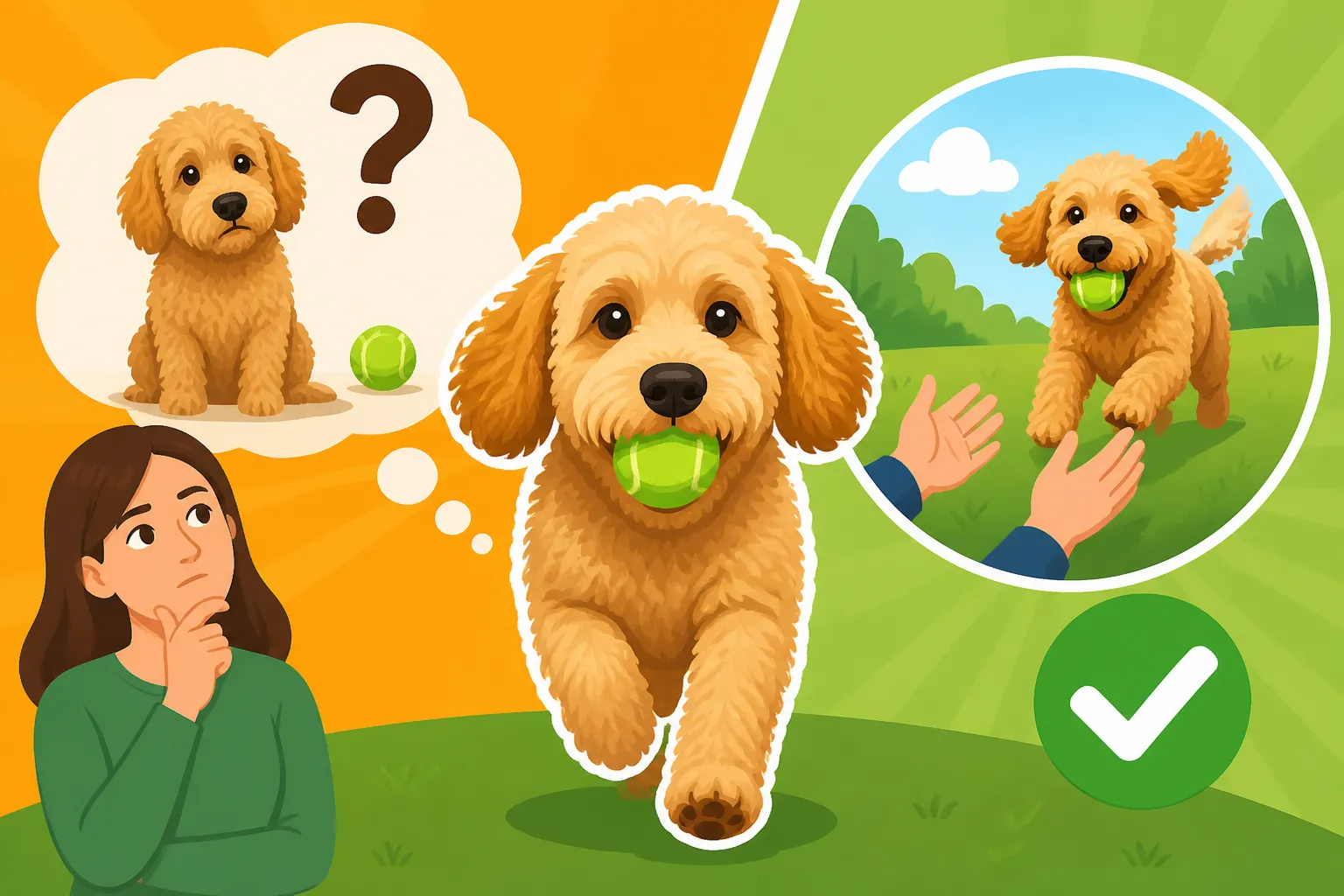
There’s nothing quite like the image of a happy Labradoodle bounding across the park, retrieving a ball with enthusiastic leaps and bounds, and then proudly bringing it right back to your feet. It's a picture of canine bliss that many Labradoodle owners dream of, and frankly, it's a huge reason why we choose these wonderfully intelligent and energetic dogs. However, the reality for many folks is that while their Labradoodle might love to chase, getting them to actually return the ball reliably, and then release it without a game of "keep away," can feel like trying to solve a Rubik's Cube blindfolded. You throw it, they charge after it, they pick it up, they look at you… and then they run off to chew it or trot in the opposite direction. It’s frustrating, bewildering, and makes those picture-perfect fetch sessions seem miles away. This guide is here to walk you through why your Labradoodle might not be a natural retrieve-and-drop pro, and how you can systematically train them to become one, turning that aspiration into a daily joy.
Understanding the Labradoodle's Natural Instincts for Fetch
The Labradoodle is a fantastic blend of two highly intelligent and active breeds: the Labrador Retriever and the Poodle. Both bring unique traits to the table when it comes to playing fetch, but those traits don't always align perfectly with our human expectations of a flawless retrieve. It's a bit like expecting a chef to be an accountant just because they're both smart people – they have different natural leanings.
The Labrador's Strong Influence
The Labrador Retriever side of your Labradoodle's ancestry is, as the name suggests, built for retrieving. For generations, Labradors were bred to work alongside hunters, patiently waiting for a shot bird to fall, then running out, picking it up gently in their "soft mouth," and bringing it back to hand. This ingrained desire to carry things and return them is often very strong in Labradoodles. You might notice your Labradoodle loves to carry toys around the house, pick up items you drop, or even bring you their leash when they want to go for a walk. This is their retrieving drive shining through.
This natural inclination means your Labradoodle likely wants to get the ball. They probably want to bring it close to you. The challenge often isn't the chase or the pick-up, but the final, crucial step of releasing the item directly to you. They might get close, wiggle with excitement, perhaps even present the item, but then guard it, dart away, or make you chase them for it. This is where the Labrador's natural drive to possess the item for the hunter (even if the hunter needs to take it from them) combines with the Poodle's cleverness, creating a nuanced training challenge. We delve deeper into this natural inclination in The Retrieving Drive a Labradoodle Gets From the Labrador.
The Poodle's Playfulness and Intelligence
Then there's the Poodle, the other half of your Labradoodle's genetic makeup. Poodles are incredibly intelligent, eager to please, and often possess a playful, sometimes mischievous, streak. While they weren't historically bred specifically for retrieving game like the Labrador, their high trainability and love for engaging with their human companions make them excellent candidates for learning complex tasks, including fetch. A Poodle's intelligence means they can quickly grasp commands and enjoy the mental stimulation that training provides.
However, that intelligence can also manifest in "clever" ways. If your Labradoodle senses that you want the ball back, they might see it as an invitation to a fun game of keep-away. They might love the attention they get when you try to coax the ball from them, or when you chase them playfully. For a Poodle-influenced Labradoodle, the act of withholding the toy can be just as, if not more, entertaining than the retrieve itself. This isn't out of malice, but pure, unadulterated canine fun. Understanding this dual inheritance helps us approach fetch training with empathy and strategy, rather than frustration.
Why "Bringing It Back" Isn't Always Automatic
It’s easy to assume that because a dog chases a ball, they’ll naturally bring it back. After all, isn’t that what dogs do? The truth is, the full fetch sequence—chase, pick up, return, and release—is a learned behavior, especially the "release" part. Many Labradoodles get stuck on that last step, turning what should be a straightforward game into a test of an owner's patience.
The Infamous "Keep Away" Game
If your Labradoodle bounds back with the toy, but then dances just out of reach, shakes their head playfully, or drops it only to snatch it up again when you reach for it, you're experiencing the "keep away" game. This isn't them being disobedient; it's them engaging in a game that, from their perspective, is highly rewarding. They've learned that bringing the toy back almost to you creates an exciting interaction. You get excited, you call their name, you might even try to grab it, which they interpret as you trying to play their game. It's a self-reinforcing cycle that's hard to break once established.
Sometimes, owners accidentally teach this behavior. We might cheer and run after them, inadvertently rewarding the "run away" aspect of the game. Or, we might get frustrated and try to physically take the toy, making the dog more likely to guard it next time. It's a common stumbling block, and many owners feel a sense of exasperation when their dog, who knows "sit" and "stay," suddenly seems to forget everything when a tennis ball is involved. The Ten Month Old Labradoodle That Forgets Everything often highlights how these learned behaviors can sometimes be challenging during adolescence.
Lack of Clear Communication and Reinforcement
Another major reason for an unreliable retrieve is often a lack of clear communication and consistent reinforcement from the human end of the leash. Dogs don't inherently understand our words like "bring it" or "drop it." These are concepts we need to teach them, step by deliberate step, associating the action with the verbal cue and a rewarding outcome.
Think about it: have you ever rewarded your Labradoodle for just bringing the ball close, even if they didn't drop it? Or perhaps you've let them keep the ball and chew it, inadvertently telling them that possessing the ball is the end goal, not returning it for another throw. If the most exciting thing that happens is holding onto the ball, rather than releasing it to you for another throw, why would they give it up? Consistency in your cues, your expectations, and your rewards is absolutely paramount. Without it, your Labradoodle is left guessing, and they'll usually opt for the behavior that feels most intrinsically fun or rewarding to them.
Step-by-Step Training for a Reliable Retrieve
Teaching a reliable retrieve, where your Labradoodle eagerly brings the item back and releases it into your hand, is absolutely achievable. It's about breaking the behavior down into small, manageable steps and building a strong foundation of positive reinforcement. Think of it like teaching a child to read; you start with letters, then words, then sentences. You don't just hand them a novel and expect them to understand.
Starting with the Basics: "Take It," "Bring It," and "Give"
Before you even think about throwing a ball across the yard, you need to teach the foundational elements of the retrieve. This process is best done in a quiet, distraction-free environment, like your living room or a fenced yard.
- "Take It" (or "Get It"): Start by holding a toy (something your Labradoodle loves but isn't overly possessive of) in front of them. When they mouth it or take it, say "Take it!" and immediately reward with praise and a small, high-value treat. Practice this several times. The goal is for them to associate the verbal cue with the act of taking the toy.
- "Bring It" (or "Come"): Once they reliably "take it," move a few steps away while holding the treat. When they take the toy, say "Bring it!" or "Come!" and use an inviting tone. As they move towards you, encourage them. The moment they reach you, even if they don't drop it yet, reward them for the approach. Gradually increase the distance. This is where a long line, easily found on Amazon, can be a great tool in a larger space, helping to guide them back to you without turning it into a chase.
- "Give" (or "Drop It"): This is the crucial step that often trips people up. The key is to make giving up the toy more rewarding than holding onto it.
- Method 1: The Treat Exchange: When your Labradoodle brings the toy to you (or is standing near you with it), hold a very high-value treat right under their nose. As soon as they open their mouth to sniff or eat the treat, the toy will fall out. The instant the toy drops, say "Give!" or "Drop it!" and give them the treat. Pick up the toy and immediately repeat the process or throw it again. The toy doesn't return to them until they've successfully "given."
- Method 2: The Two-Toy Method: This is fantastic for dogs who are reluctant to let go. Have two identical or equally appealing toys. Throw one toy. When your Labradoodle picks it up and brings it back, don't reach for it. Instead, show them the second toy and make it super exciting. When they drop the first toy to go for the second, say "Give!" and reward them with a toss of the second toy. Once they've retrieved the second, pick up the first and repeat. This teaches them that dropping a toy leads to another fun toy.
Keep sessions short, positive, and end on a high note. Over time, your Labradoodle will connect the command with the action and the reward. Consistency is your best friend here. For more comprehensive training resources that cover foundational obedience and problem-solving, online platforms like BAXTER & Bella offer structured programs that can be incredibly helpful for owners.
Troubleshooting Common Issues
Even with the best intentions, you might run into some snags. Here's a table outlining common fetch problems and their solutions:
| Problem | Why it Happens (Possible Reasons) | Solution Strategy |
|---|---|---|
| Runs off with the toy | Sees it as a game of chase; finds chewing the toy more rewarding than returning it. | Stop chasing. Use a long line in a secure area. Practice "Come" away from the toy, then introduce the toy. Make returning the toy the most rewarding option (high-value treat immediately upon arrival). |
| Brings it close but won't drop | Wants to keep it; enjoys the attention of holding it; hasn't learned a clear "give" cue. | Implement the "Treat Exchange" or "Two-Toy" method vigorously. Never try to grab the toy out of their mouth forcefully. Make giving it up a positive, rewarding experience every single time. |
| Drops it too far away | Not understanding "give to hand"; simply dropping it is enough for them. | Reward only when the toy is dropped within arm's reach. Slowly raise your criteria. If they drop it too far, don't move to pick it up. Lure them closer with a treat, then give the "give" cue. |
| Loses interest quickly | Toy isn't exciting enough; sessions are too long; too many distractions; they're tired. | Use a higher-value toy (one they only get for fetch). Keep sessions very short (2-5 minutes). Increase energy and excitement. Practice in a quiet area first. Ensure they're not over-exercised before training. |
| Nips when you try to take the toy | Resource guarding; fear of having toy taken away; over-excitement and accidental mouthing. | Do NOT punish. Implement "Treat Exchange" exclusively. Build trust that giving up the toy always results in something better. If serious resource guarding, seek professional help. |
| Chews the toy instead of returning | The joy of chewing outweighs the joy of fetch. | Use more durable fetch toys designed for chewing but less satisfying to just chew (e.g., hard rubber balls over plush toys). Practice the "take it" and "give" commands immediately. Don't leave fetch toys out as general chew toys. |
Remember, teaching these behaviors requires consistency and clarity. Each successful return and release, followed by a reward, builds a stronger habit. It's often not that your Labradoodle is being stubborn, but rather that the training hasn't been clear enough, or the rewards for the correct behavior haven't been strong enough to override their natural instincts or previously reinforced habits. Developing a reliable recall is also paramount for outdoor fetch games, so considering skills like Building a Recall a Labradoodle Answers Off Leash is an excellent parallel.
Making Fetch a Joyful Interaction
Once your Labradoodle understands the basic components of fetch, the real fun begins. You can expand the game, refine their skills, and turn it into a fantastic way to bond and provide mental and physical exercise.
Consistency and Patience Are Key
There will be days when your Labradoodle seems to have forgotten everything you taught them. They might be distracted, overly excited, or just having an "off" day. On these days, it's crucial to lean on your patience and stick to the basics. Don't get frustrated or angry; it will only make your Labradoodle associate fetch with negative feelings. Simply shorten the session, go back to an easier step, or try again later. Just like humans, dogs have good days and bad days. Remember that your Labradoodle is very smart, but sometimes their cleverness can lead to creative interpretations of "the rules." Whether a Labradoodle Is Too Smart for a Novice is a great read on this topic.
The process of teaching a reliable retrieve isn't a one-and-done deal. It requires ongoing practice and reinforcement. Every time they successfully bring the ball back and drop it, you're solidifying that desired behavior. Think of it as investing in their education – the more consistent your lessons, the better the outcome. This dedication extends to other training areas too, such as helping your Labradoodle stay calm for essential activities like grooming, which can be explored in Teaching a Labradoodle to Lie Still for a Ninety Minute Groom.
Varying the Game to Keep it Exciting
Once your Labradoodle is a fetch pro in your backyard, don't be afraid to mix things up! This not only keeps the game fresh and exciting for them but also helps generalize their skills to different environments.
- Different Toys: Introduce various types of retrieve toys. Maybe a frisbee one day, a rope toy the next, or a favorite squeaky plush. This helps them understand that the action of retrieve and drop is the command, not just tied to one specific item.
- New Locations: Try playing fetch in different parks, on trails (if safe and legal for off-leash play), or even by a calm body of water if your Labradoodle enjoys swimming. Just be mindful of safety, especially when introducing them to new environments for water play; Introducing a Labradoodle to a Lake Safely offers great advice. New smells and sights can be distracting initially, so start with short sessions in these new spots and build up gradually.
- Incorporating Other Commands: Integrate fetch into other training. Ask for a "sit" or "down" before throwing the ball, or a "stay" while you walk a short distance before giving the "fetch" cue. This adds mental stimulation and reinforces their overall obedience. Labradoodles often thrive when they have a "job" to do, and integrating commands into play satisfies that need. They are intelligent dogs who respond wonderfully to consistent, positive training methods, especially when food rewards are involved. Whether a Labradoodle Works for Food Like a Labrador often rings true for many.
By varying the game, you're not just providing physical exercise; you're also engaging their intelligent minds. This keeps them from getting bored and ensures fetch remains a high-value activity for both of you. Many Labradoodle owners initially underestimate the amount of engagement these intelligent dogs need, and fetch is a fantastic way to meet that need. It's a key part of ensuring they get The Exercise a Labradoodle Needs Before It Behaves.
Ultimately, teaching your Labradoodle to bring the ball back reliably is a journey, not a destination. It's about patience, understanding, and making the process enjoyable for your furry friend. The more you put into clear communication and positive reinforcement, the more rewarding those fetch sessions will become. You'll soon see that picture-perfect retriever you always dreamed of, proudly returning the ball to your awaiting hand, ready for another round of fun. While some articles might claim Whether a Labradoodle Is Really an Easy First Dog, the truth is, all dogs, especially intelligent ones like Labradoodles, benefit immensely from structured training.
Disclaimer
This article is for general informational purposes only and does not constitute professional advice. Laws, prices and regulations vary by location and change over time. Consult a qualified professional for guidance on your specific situation.