Introducing a Labradoodle to a Lake Safely
There's nothing quite like picturing a sunny afternoon at the lake with your beloved Labradoodle splashing happily by your side. But let's be real, the reality of introducing a dog to a large body of water like a lake, especially one as exuberant as a Labradoodle, can feel a little daunting. You might worry about safety, sudden drops, strange smells, or even if they'll actually like the water. This guide is here to walk you through a safe and positive introduction, ensuring those lakeside dreams become a joyful reality.
Understanding Your Labradoodle's Water Instincts and Temperament
It’s easy to assume that because Labradors are famously water-loving dogs and Poodles are strong swimmers, a Labradoodle will automatically dive into a lake with gusto. While many Labradoodles do adore the water, it's not a given, and their individual personalities play a huge role. Some will take to it like a fish, others might be hesitant, and a few might prefer to watch from the shore.
Not All Labradoodles Are Born Swimmers
Even with the genetics of two water breeds, not every Labradoodle pup is born knowing how to swim, nor do they all possess an innate desire to leap into the nearest puddle, let alone a vast lake. Their early experiences, or lack thereof, can greatly influence their comfort level. A puppy that was gently introduced to shallow water might be more confident than one who had a startling, accidental tumble. It's crucial to approach this with patience and never force your Labradoodle into the water, as a negative first experience can create a lasting aversion. Observe your dog's cues: are they sniffing at the water's edge, tentatively pawing at the surface, or backing away with their tail tucked? These signs will tell you a lot about their initial disposition.
Moreover, while both parent breeds are known for swimming, the type of swimming might differ. A Labrador often loves retrieving, enthusiastically crashing into water to grab a toy. Poodles, historically water retrievers, are elegant and strong swimmers, but might be more discerning about the conditions. Your Labradoodle could lean either way, or somewhere in between. Some might love to wade and splash, others might prefer to paddle gracefully, and some might only go in if a favorite ball is involved. Understanding these potential variations helps you tailor your approach to their comfort, not just your expectations.
Considering Coat Type and Water Interaction
A Labradoodle's coat type, whether it's a wavy fleece, a curly wool, or even a straighter hair coat, can surprisingly affect their comfort and experience in the water. While a denser, woolier coat offers insulation in cooler temperatures, it can also become quite heavy when saturated. Imagine trying to swim with a thick, wet blanket wrapped around you – it requires more effort. Owners of wool-coated Labradoodles might find their dogs get tired more quickly in the water than those with lighter fleece or hair coats. This isn't to say a wool-coated Labradoodle can't swim, but it's a factor to consider for endurance and comfort.
Conversely, a very open, hair-like coat might not provide as much insulation, making them more susceptible to cold in chillier lake waters. Regardless of coat type, thorough drying after a swim is essential, especially for those dense, curly coats that can trap moisture against the skin, potentially leading to skin irritations or hot spots. Drying a Labradoodle's Ears Properly is also incredibly important to prevent common ear infections, as the warm, moist environment in their drop ears is an ideal breeding ground for bacteria. When considering long-term water activities, you might also want to read about Whether a Wool Coat Weighs a Labradoodle Down in Water to understand the physical demands it places on them.
Essential Safety Gear for Lakeside Adventures
Before you even think about letting your Labradoodle dip a paw into the lake, it's paramount to gather the right safety equipment. Lakes can have unpredictable depths, currents, and hidden obstacles, and even the strongest swimmer can face a sudden challenge. Having the right gear not only protects your dog but also gives you peace of mind.
The Importance of a Well-Fitting Life Vest
This is, hands down, the most crucial piece of equipment for any dog introduced to open water. A dog life vest isn't just for non-swimmers; it provides buoyancy and confidence for all dogs, especially in unfamiliar or potentially strenuous situations. Even a strong swimming Labradoodle can tire quickly, get disoriented, or encounter unexpected currents. A life vest ensures they stay afloat, conserve energy, and are easily visible in the water. Look for a vest with:
- Bright Colors: High visibility colors like orange or yellow make your dog easy to spot, even from a distance or in choppy water.
- Strong Handle: A sturdy handle on the back is invaluable for guiding your dog in and out of the water, or for quickly retrieving them if they get into trouble.
- Adjustable Straps: A snug, comfortable fit is key. You don't want it to chafe, but it also shouldn't be loose enough to slip off or shift awkwardly. Measure your Labradoodle carefully according to the manufacturer's guide. Many great options are available on platforms like Amazon, offering various sizes and features to ensure a perfect fit for your specific Labradoodle's build.
- Front Floatation: Some vests include a floatation panel under the chin, which helps keep your dog's head above water, especially beneficial for dogs new to swimming or those who tend to drop their head low while paddling.
Introduce the life vest to your Labradoodle before you get to the lake. Let them wear it for short periods around the house or yard, associating it with positive experiences and treats. This way, it won't be a strange, uncomfortable item when they're excited at the water's edge.
Long Lines and Appropriate Leashes
While a life vest is for in the water, a long line or a secure leash is essential for around the water. Many public lakes require dogs to be leashed, and even if not, a long line offers a critical layer of control during the initial introduction phase. It allows your Labradoodle a sense of freedom to explore the water's edge and wade in gradually, while still giving you the ability to intervene if they get too adventurous or wander into unsafe areas.
Imagine your Labradoodle suddenly spotting a duck or another dog across the lake and deciding to give chase – a long line prevents this dangerous scenario. Choose a waterproof long line, typically 15 to 30 feet, made of biothane or similar material that won't absorb water or get tangled easily. Avoid retractable leashes for this purpose, as they offer less control and can be risky. A strong, comfortable harness should be used with the long line, rather than just a collar, to prevent strain on your dog's neck if they pull unexpectedly. Consider practicing recall on the long line in a safe park environment first, perhaps using a positive reinforcement program like those offered by BAXTER & Bella, so your Labradoodle understands boundaries and coming back to you.
Step-by-Step Introduction to the Water
Patience and positive reinforcement are your best friends when introducing your Labradoodle to a lake. Rushing the process can create fear and aversion, making future water adventures a struggle. A slow, gentle, and encouraging approach is key to building confidence and a lifelong love for the water.
Choosing the Right Spot and First Steps
The location you choose for your Labradoodle's first lake experience is crucial. Look for a spot with:
- A Gradual, Shallow Entry: Avoid steep banks or sudden drop-offs. A gently sloping sandy or pebbly beach is ideal, allowing your dog to walk into the water at their own pace, feeling the changes in depth slowly.
- Calm Water: Still, calm waters without strong currents or large waves are best for a first introduction. Avoid areas with heavy boat traffic or fast-moving water.
- Clear of Debris and Hazards: Check the area for sharp rocks, broken glass, fishing lines, or excessive algae. Your dog will inevitably explore with their mouth and paws, so a clean environment is vital.
- Quiet and Less Crowded: A less busy time or location reduces distractions and potential stressors from other dogs, people, or loud noises.
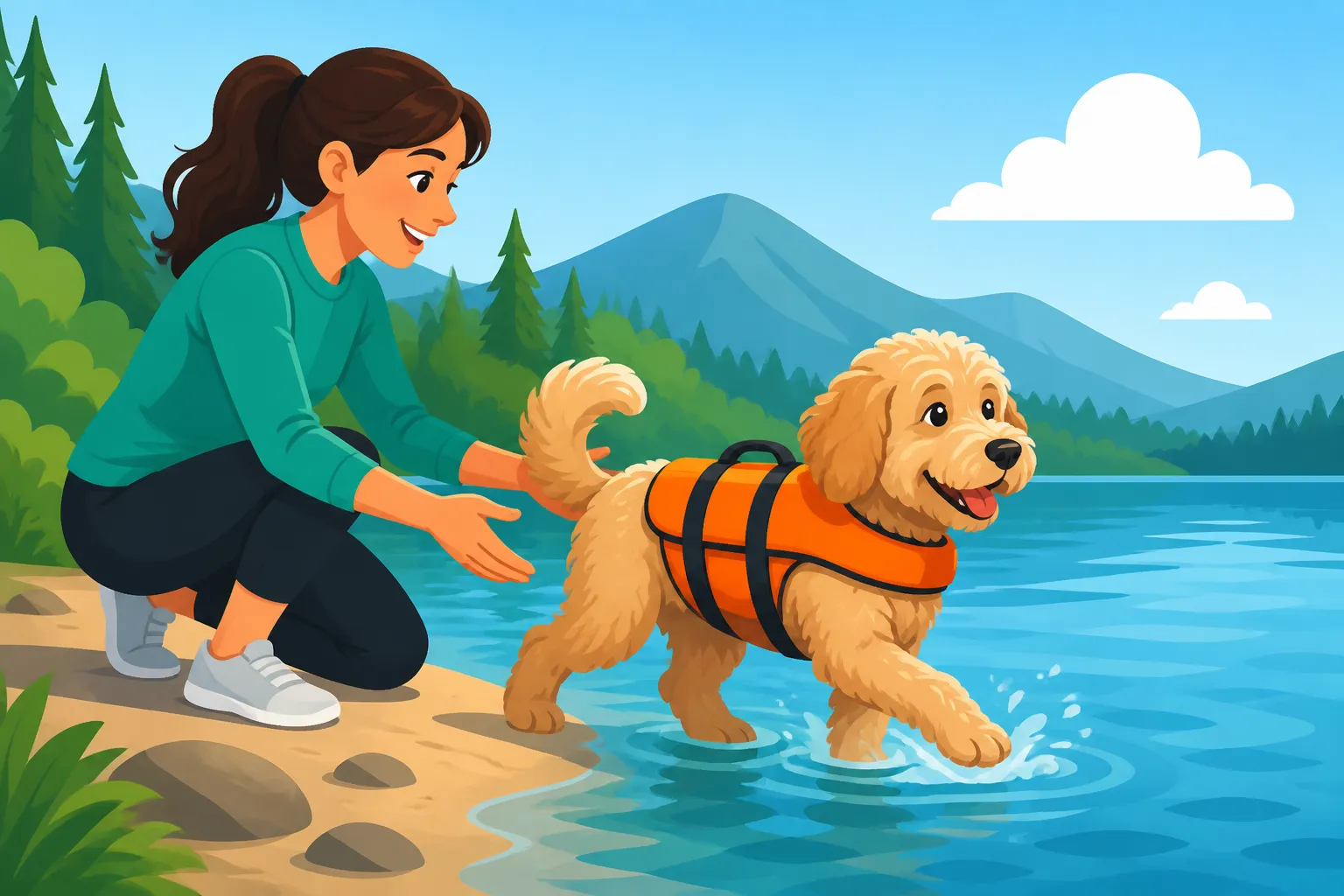
Once you've found your perfect spot, start by simply walking along the shoreline with your Labradoodle on their long line and in their life vest. Let them sniff around, explore the sand or rocks, and observe the water from a safe distance. Don't push them towards the water. If they show curiosity, encourage it with calm praise. You can wade in a little yourself, demonstrating that it's safe and fun. Throw a favorite floating toy just a few feet into the shallowest part of the water, encouraging them to retrieve it, but only if they seem comfortable doing so. Remember, the goal is to make it a positive, low-pressure experience. For more general advice on encouraging your Labradoodle, you might find tips in Introducing a Labradoodle to water.
Building Confidence with Positive Reinforcement
Positive reinforcement is paramount here. Every small step your Labradoodle takes towards or into the water should be met with enthusiastic praise, treats, and joyful encouragement. If they only dip a paw, celebrate that! If they wade up to their belly, even better! Never scold or force them.
- Make it a Game: Bring high-value, waterproof toys that float. Start by tossing them onto the dry sand, then just at the water's edge, letting your Labradoodle get them easily. Gradually, toss them a little further into the shallow water, always ensuring they can easily reach and stand.
- Lead by Example: If you're comfortable, wade into the water yourself, calling your dog to join you. Many dogs are more confident when their human is with them. Make it fun, splash gently, and show them there's nothing to fear.
- Treats, Treats, Treats: Have plenty of delicious, waterproof treats on hand. Reward every positive interaction with the water, no matter how small. Whether a Labradoodle Works for Food Like a Labrador definitely suggests that food motivation will be a powerful tool in this training.
- Short Sessions: Keep initial water sessions short and positive, ending on a good note before your dog gets tired or overwhelmed. A few minutes of happy splashing is far better than a prolonged, stressful experience. Over time, as their confidence grows, you can gradually increase the duration.
- Consider a 'Buddy System': If you have a friend with a confident, water-loving dog, a supervised playdate at the lake can sometimes encourage a hesitant Labradoodle. Dogs often learn by observing others. However, ensure the other dog is gentle and won't overwhelm your Labradoodle.
Progression to Deeper Water and Swimming
Once your Labradoodle is happily wading in the shallow areas, you can slowly encourage them into deeper water. Continue to use their life vest and long line.
- Gradual Deepening: Continue to use floating toys. Toss them slightly further out, into water where your Labradoodle's feet might just start to leave the bottom. The life vest will provide the necessary buoyancy.
- Support and Guidance: If your Labradoodle starts paddling, you can gently support them under their belly, encouraging the proper swimming motion. Watch their front paws; dogs often overuse their front legs and forget to kick with their strong back legs. Guide them to use all four.
- Focus on Fun, Not Perfection: The goal isn't to turn your Labradoodle into an Olympic swimmer overnight. It's about letting them enjoy the sensation of swimming and being comfortable in the water. Celebrate their progress, however small.
- Retrieving Games: For many Labradoodles, especially those with strong retrieving drives from their Labrador heritage, playing fetch with a floating toy is the ultimate motivator. This natural drive can often overcome any initial hesitation. The Age a Labradoodle Starts Retrieving is often quite young, so leveraging this instinct can be very effective.
Important Considerations and Safety Precautions at the Lake
While the lake offers fantastic opportunities for exercise and fun, it's also important to be aware of the inherent risks and take necessary precautions to keep your Labradoodle safe and healthy.
Water Quality and Hidden Hazards
Lakes, unlike controlled swimming pools, are natural environments with constantly changing conditions. Before letting your Labradoodle swim, always assess the water quality.
- Algae Blooms: Be vigilant about blue-green algae (cyanobacteria), which can be highly toxic to dogs if ingested. It often appears as a greenish scum on the surface or cloudy water. If you see any signs of it, keep your Labradoodle out of the water entirely.
- Contaminants: Lakes can contain various bacteria (like Leptospirosis), parasites (like Giardia), or even chemical runoff. Avoid stagnant water or areas near agricultural or industrial sites. If your dog drinks a lot of lake water, monitor them closely for any signs of gastrointestinal upset. It's always a good idea to bring fresh drinking water for your Labradoodle to prevent them from gulping down too much lake water.
- Sharp Objects and Debris: Underwater, there could be sharp rocks, broken bottles, fishing hooks, or submerged branches. The life vest offers some protection, but always try to stick to known safe swimming areas. After any swim, check your Labradoodle's paws for cuts or foreign objects.
- Wildlife: Lakes are home to various wildlife. Ducks, geese, and other birds can attract your Labradoodle's attention, potentially leading them into deeper or unsafe areas. Be mindful of snapping turtles or other aquatic animals that could pose a threat.
- Temperature: Cold water can lead to hypothermia, especially for prolonged swims or in cooler weather. On the flip side, extremely warm water can harbor more bacteria. Always consider the air and water temperature before letting your dog swim.
Preventing Overexertion and Exhaustion
Labradoodles are energetic dogs, and it’s easy for them to overdo it when having fun. However, swimming is a full-body workout that can be much more taxing than running. A tired dog in the water is a dangerous situation.
- Short, Controlled Sessions: Especially in the beginning, keep swimming sessions short. Watch for signs of fatigue such as excessive panting, lagging behind, or a change in their swimming style.
- Breaks are Essential: Ensure your Labradoodle takes frequent breaks out of the water to rest, rehydrate, and cool down. Provide a shaded spot where they can relax.
- Monitor Energy Levels: Pay close attention to your dog's overall energy. If they're usually energetic but seem lethargic after a swim, they might have overexerted themselves. Remember, while a Labradoodle has plenty of energy, The Exercise a Labradoodle Needs Before It Behaves on land is different from their endurance in water.
- Hydration: Always have fresh, clean drinking water available. Encourage your Labradoodle to drink from their water bowl rather than the lake to minimize ingestion of lake water contaminants.
Post-Swim Care for Your Labradoodle
After a fun day at the lake, proper post-swim care is vital to prevent health issues.
- Rinse Thoroughly: As soon as possible, rinse your Labradoodle with clean, fresh water. This helps remove any lake water contaminants, chlorine (if they've been in a pool too), sand, mud, and potential irritants from their coat. This is particularly important for curly or wool coats which can trap a lot of debris. For more specific guidance, see Rinsing Lake Water Out of a Labradoodle's Coat.
- Dry Completely: Dry their coat thoroughly, paying special attention to dense undercoats and hard-to-reach areas. Trapped moisture can lead to skin infections, hot spots, and unpleasant odors. A high-velocity dog dryer can be a game-changer here, significantly reducing drying time.
- Ear Cleaning: Labradoodles, with their floppy ears, are prone to ear infections. Moisture trapped in the ear canal creates a perfect breeding ground for yeast and bacteria. After every swim, gently clean and thoroughly dry their ears using a vet-approved ear cleaner. Cleaning a Labradoodle's Ears After Swimming is a crucial step that should never be skipped.
- Paw Check: Inspect their paws for any cuts, scrapes, or embedded debris from the lake bottom. Wipe them clean.
- Monitor for Illness: Keep an eye on your Labradoodle for a few days after swimming for any signs of illness, such as vomiting, diarrhea, lethargy, skin rashes, or ear discharge. If you notice anything concerning, contact your vet immediately.
By taking these precautions and introducing your Labradoodle to the lake safely and positively, you'll be well on your way to enjoying many memorable lakeside adventures together.
Disclaimer
This article is for general informational purposes only and does not constitute professional advice. Laws, prices and regulations vary by location and change over time. Consult a qualified professional for guidance on your specific situation.