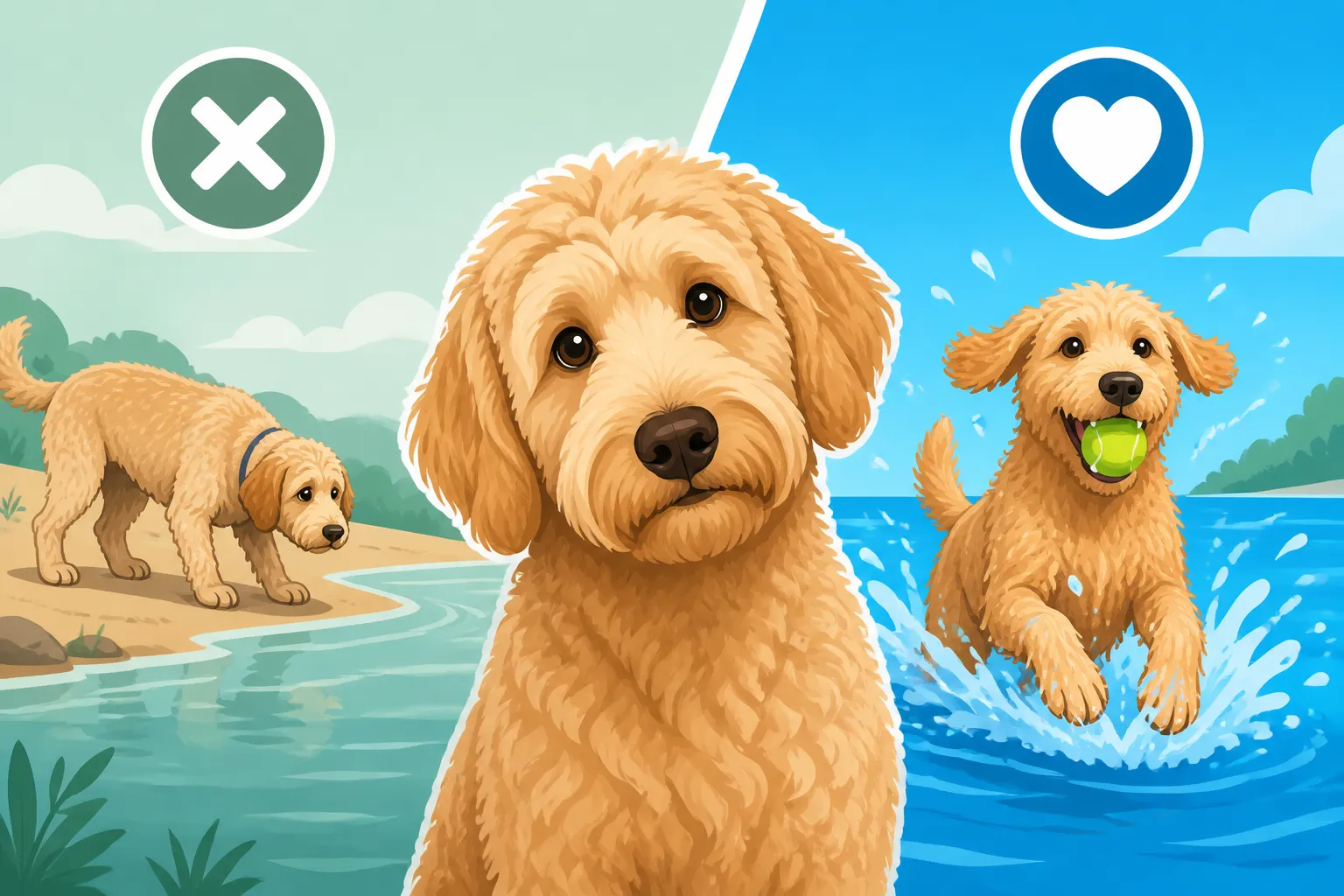
Whether a Labradoodle Takes to Water on Its Own
It's a common dream for Labradoodle owners: picturing their fluffy companion joyfully splashing in a lake, retrieving sticks from the waves, or confidently paddling alongside them. After all, with a Labrador Retriever in their heritage, shouldn't they just naturally love water? But the reality can often be a bit different, and it can be genuinely frustrating and confusing when your beloved Labradoodle shows hesitation or even outright fear around water. You might feel like you've done something wrong, or wonder if your particular dog missed the memo. This guide will dive deep into the fascinating blend of genetics, environment, and personality that determines a Labradoodle's relationship with water, and offer practical, empathetic advice on how to foster a positive, safe aquatic experience for your dog.
The Labradoodle's Dual Heritage and Water Affinity
When you bring a Labradoodle into your life, you're essentially getting a marvelous blend of two distinct breeds, each with its own rich history and inherent traits. It's this genetic tapestry that often leads owners to expect an automatic love for water, but understanding each thread is key to managing those expectations.
The Labrador's Natural Affinity for Water
The Labrador Retriever is, first and foremost, a water dog. Bred in Newfoundland to assist fishermen, their job was to retrieve nets, ropes, and fish from the icy waters of the Atlantic. This working history is deeply ingrained in their DNA, manifesting as a strong, often undeniable, desire to swim and retrieve from water. They possess a thick, water-resistant double coat that provides insulation, webbed feet for powerful propulsion, and a natural "otter tail" that acts as a rudder in the water. For many Labradors, seeing a body of water is an irresistible invitation for a joyful plunge. They often possess The Retrieving Drive a Labradoodle Gets From the Labrador, which extends naturally to objects in water.
This robust history often leads Labradoodle owners to assume their dog will be equally enthusiastic. And sometimes, they are! You'll see Labradoodles who, from the moment their paws touch a puddle, seem to instinctively know what to do, diving in with gusto and relishing every splash. This is often the Labrador influence shining through, a genetic inheritance that makes water feel like a second home. They may start The Age a Labradoodle Starts Retrieving early, including from shallow water.
The Poodle's Often Overlooked Water Dog Roots
Here's where many people are surprised: the Poodle, too, is historically a water retriever. In fact, their very name comes from the German word "Pudeln," meaning "to splash in water." Poodles were bred in Germany to retrieve waterfowl for hunters, much like the Labrador. Their distinctive coat, which might seem purely ornamental now, was originally clipped in a specific way to allow for free movement in the water while still protecting vital organs from the cold. The "puffs" of hair on their joints? Those were left to protect against rheumatism and cold water, acting as natural insulation for critical areas.
So, both parent breeds have a strong, historical connection to water. This dual heritage means that genetically, a Labradoodle is predisposed to be comfortable, if not ecstatic, in aquatic environments. However, genetics are only part of the story. The expression of these traits can be quite varied, meaning one Labradoodle might be an Olympic swimmer in the making, while another might prefer to admire the water from a safe distance. Don't be too disheartened if your pup doesn't immediately cannonball into the nearest pond; their Poodle side might be just as strong as their Labrador side in its appreciation for water, but perhaps a little more discerning about how they engage with it.
Factors Influencing a Labradoodle's Water Enthusiasm
While the genetic predisposition for water activities is undoubtedly present in Labradoodles, it’s rarely a guarantee of an automatic, unbridled love for swimming. Several other factors play a significant role in shaping your Labradoodle's individual relationship with water. Understanding these can help you better assess your dog's natural inclinations and guide your approach.
Early Exposure and Socialization
Just like with anything else in a dog's life, early, positive exposure to water is paramount. Puppies are sponges, and their experiences during their critical socialization period (roughly 3-16 weeks) heavily influence how they perceive the world around them. A Labradoodle puppy who was gently introduced to shallow water, kiddie pools, or even just the sprinkler in a fun, low-pressure way is far more likely to develop a positive association. These experiences teach them that water is not something to fear but a source of joy and exploration.
Conversely, a puppy who had a negative or frightening experience – perhaps falling into a pool, being forced into deep water, or encountering very cold water abruptly – might develop a lifelong aversion. It’s also common for puppies with no early exposure to simply be wary because it's a novel sensation. They haven't had the chance to learn about it, and without that foundation, caution is a natural response. This isn't a reflection of their breed or your efforts; it simply means you might need to take a more gradual and patient approach to introductions now. Building confidence around water, much like any other aspect of training, often involves breaking down the experience into tiny, manageable steps and celebrating every small success.
Coat Type and Its Impact on Swimming
A Labradoodle's coat is one of their most defining features, and it comes in a few variations: hair, fleece, and wool. While breeders often aim for the low-shedding fleece or wool coats, these can actually present a challenge when it comes to swimming.
- Wool Coat: A dense, curly wool coat can become incredibly heavy when wet. It acts like a sponge, soaking up a lot of water and potentially weighing the dog down. This can make swimming more strenuous and less enjoyable for the dog, making them feel less buoyant or efficient in the water. If your Labradoodle has a thick wool coat, you might find that Whether a Wool Coat Weighs a Labradoodle Down in Water is a very real concern for them. The extra effort required might simply make them prefer dry land.
- Fleece Coat: Often described as soft and wavy, the fleece coat is generally lighter than the wool coat but can still absorb a fair amount of water. It’s usually a good compromise, offering some water resistance without becoming overly burdensome.
- Hair Coat: This coat type is most similar to a Labrador's, tending to be straighter and coarser. It’s generally the most water-resistant of the three, shedding water more easily and not becoming as heavy. Labradoodles with a hair coat might find swimming more physically comfortable.
Beyond the weight, the coat also plays a role in post-swim care. A heavily matted or dirty coat will absorb more water and take longer to dry, increasing the risk of skin irritations or hot spots. Regular grooming is essential, especially if your Labradoodle enjoys water activities.
Individual Personality and Confidence
Every Labradoodle, despite its breed characteristics, has a unique personality. Some are born adventurers, eager to try new things and less phased by novel sensations. These are the dogs that might naturally plunge into a lake without a second thought. Others are more cautious, observant, and prefer to assess a situation before committing. They might be perfectly happy to wade up to their chests but hesitant to fully commit to swimming.
A Labradoodle's general confidence level will significantly influence their willingness to engage with water. A dog that is confident in new environments and with new experiences is more likely to approach water with curiosity rather than fear. Conversely, a shy or anxious Labradoodle might find the unpredictability of water – the moving surface, the depth, the wetness – overwhelming. Their reaction isn't a sign of stubbornness but a reflection of their individual comfort zone. This is where patience, positive reinforcement, and never forcing the issue become incredibly important. Building a strong bond and trust with your dog will make them more willing to try new things with you by their side, even if it's just dipping a paw in at first.
Introducing Your Labradoodle to Water Safely and Positively
So, your Labradoodle isn't an Olympic swimmer right out of the gate, or maybe they're downright hesitant. Don't worry! This is completely normal for many dogs, even those with water-loving ancestors. The key is to make the introduction a positive, low-stress experience, focusing on building confidence rather than forcing participation.
Gentle Introductions and Positive Reinforcement
The first rule of water introduction is: never force it. Dragging your Labradoodle into the water, even if you mean well, can create a traumatic experience that will be incredibly hard to reverse. Instead, think of it as a gradual process of discovery.
Start small. A shallow kiddie pool in your backyard is an excellent first step. Fill it with just an inch or two of water. Toss a favorite floating toy or a few high-value treats into the water, encouraging your Labradoodle to retrieve them. Praise them enthusiastically even if they just dip a paw in. You can also get in the kiddie pool yourself to show them it's safe and fun. For more structured guidance, online training programs, such as those offered by BAXTER & Bella, often include modules on desensitization and positive introductions to new environments, which can be easily adapted for water.
Once they're comfortable with the kiddie pool, graduate to slightly deeper, still bodies of water like a calm lake edge or a very shallow river bank. Choose a warm day when the water isn't too cold. Walk into the water yourself, calling your dog and offering treats. Let them explore at their own pace. If they're hesitant, don't push them further than they want to go. Celebrate every small victory – a wet paw, a sniff of the water, a brave step into the shallow end. Keep sessions short and always end on a positive note, even if it's just a few minutes of successful splashing. Remember, the goal is association: water equals fun and rewards. This gentle approach is crucial for Introducing a Labradoodle to a Lake Safely.
Essential Safety Precautions for Water Play
While encouraging water enthusiasm, safety must always be your top priority. Accidents can happen quickly, and even strong swimmers can get into trouble.
- Life Vests: This is non-negotiable, especially for new swimmers or if you're in open, deeper water. A well-fitting doggy life vest provides crucial buoyancy, helps them conserve energy, and makes it easier for you to guide or retrieve them if needed. You'll find a wide selection of dog life vests on platforms like Amazon, with various sizes and designs to ensure a snug fit for your Labradoodle. Even if your Labradoodle eventually becomes a confident swimmer, a life vest is a smart precaution, especially for longer swimming sessions or in unfamiliar waters.
- Supervision: Never leave your Labradoodle unsupervised near water, even for a moment. This includes pools, lakes, rivers, and even larger puddles. Drowning is silent and quick.
- Water Quality: Be mindful of the water source. Avoid stagnant ponds, fast-flowing rivers, or water bodies with visible algae blooms (especially blue-green algae, which is highly toxic). Check local advisories for any contaminants or harmful bacteria. If your Labradoodle has been swimming in natural water, it's wise to give them a good rinse afterward to remove any potential irritants or contaminants, as detailed in Rinsing Lake Water Out of a Labradoodle's Coat.
- Ear Care: Labradoodles, with their drop ears and potential for hair growth in the ear canal, are prone to ear infections. Water trapped in the ear can create a breeding ground for bacteria and yeast. After any water activity, thoroughly dry your Labradoodle's ears. You can use cotton balls or a soft cloth to gently absorb moisture from the visible parts of the ear canal. Many owners also use a veterinarian-approved ear drying solution. Neglecting this step can lead to uncomfortable and costly infections, so be diligent about Drying a Labradoodle's Ears Properly and Cleaning a Labradoodle's Ears After Swimming. Remember, Whether Swimming Sets Off a Labradoodle's Ears is a real concern for this breed.
- Temperature: Avoid swimming in very cold water, which can lead to hypothermia, or extremely hot weather, where they could overheat. Ensure access to shade and fresh drinking water. Always be aware of signs that Whether a Labradoodle Overheats in Summer.
Overcoming Water Reluctance
If your Labradoodle is particularly reluctant, it might take even more patience and creativity.
Consider bringing a confident, water-loving dog friend along. Sometimes, seeing another dog having a blast in the water can be the best encouragement. Dogs are often influenced by their peers.
You can also engage a professional trainer who specializes in positive reinforcement and confidence building. They might have strategies or tools you haven't considered.
For some Labradoodles, it might just be the sheer feel of water that's off-putting. Start by just wetting their paws with a spray bottle, then a damp towel, then walking through very shallow puddles. Make it a game.
If they just prefer shallow wading to full-on swimming, that's perfectly fine! Not every dog needs to be a water-retrieving champion. Appreciate their comfort zone and find other ways to enjoy the outdoors together. The goal isn't to force them into something they hate, but to help them discover a new, safe, and enjoyable activity if they're willing. Some Labradoodles might grow to love water sports like dock diving, but others will be content with a gentle paddle.
| Factor | Impact on Water Enthusiasm | Recommendation |
|---|---|---|
| Labrador Genes | Strong predisposition for retrieving from water, natural athleticism. | Build on natural instincts; use floating toys for retrieve games. |
| Poodle Genes | Also historically a water retriever, intelligent and athletic. | Encourage problem-solving around water; positive praise for engagement. |
| Early Exposure | Positive experiences lead to confidence; negative ones can create aversion. | Start young, make it fun, never force. |
| Coat Type (Wool/Fleece) | Can become heavy and waterlogged, making swimming more tiring. | Use a life vest for buoyancy; thorough drying post-swim is crucial. |
| Individual Personality | Adventurous dogs may jump right in; cautious dogs need gradual, patient introductions. | Respect their comfort level; celebrate small steps; avoid pressure. |
| Safety Concerns | Risks of drowning, contaminated water, ear infections. | Always supervise, use a life vest, check water quality, dry ears meticulously. |
Ultimately, whether your Labradoodle takes to water like a duck or prefers to stay on dry land, remember that every dog is an individual. With patience, positive reinforcement, and a strong focus on safety, you can help them discover the joy of water, or simply appreciate them for the wonderful companion they are, wet or dry.
Disclaimer
This article is for general informational purposes only and does not constitute professional advice. Laws, prices and regulations vary by location and change over time. Consult a qualified professional for guidance on your specific situation.