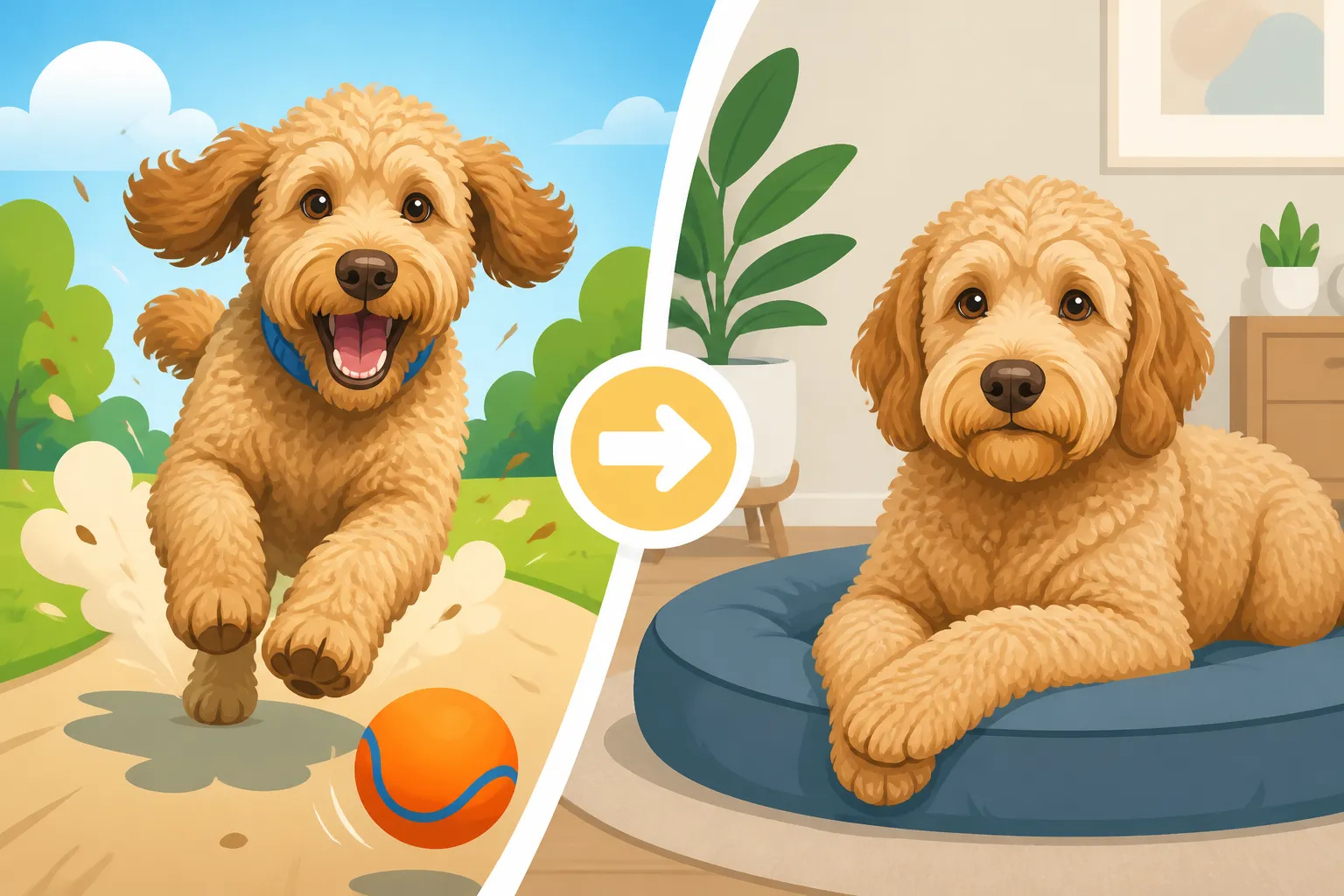
The Exercise a Labradoodle Needs Before It Behaves
It can be incredibly frustrating to come home to a chaotic house, a torn-up cushion, or a dog that just won't settle down, despite having been out for a quick walk. Many Labradoodle owners find themselves scratching their heads, wondering why their beloved companion, who seems to have endless energy, just can't seem to calm down indoors. This guide will dive deep into understanding the unique exercise needs of a Labradoodle and how meeting those needs isn't just about physical fitness, but about creating a happy, well-behaved, and mentally stimulated member of your family.
Understanding Your Labradoodle's Innate Drive for Activity
Labradoodles were originally bred with a purpose in mind: to be intelligent, active, and people-oriented assistance dogs. This history, combined with the traits inherited from their parent breeds, means they come hard-wired with a significant need for both physical exertion and mental engagement. It's not just a desire; it's a fundamental part of their being, and when unmet, it often expresses itself in ways we perceive as "bad" behavior.
The Energetic Blueprint from Their Parent Breeds
When you look at a Labradoodle, you're looking at a blend of two highly intelligent and active working breeds: the Labrador Retriever and the Poodle. Both of these dogs were developed to have jobs, and they excel when given tasks that engage their bodies and their minds. The Labrador side brings that enthusiastic retrieving drive and a love for water, always ready for action. The Retrieving Drive a Labradoodle Gets From the Labrador is a real force to be reckoned with, making them excellent candidates for games of fetch that can go on for what feels like forever.
The Poodle side, often underestimated, contributes incredible athleticism, problem-solving skills, and a surprising amount of stamina. Poodles were originally water retrievers, too, and they possess a keen intelligence that needs an outlet. Together, these traits create a dog that thrives on movement, exploration, and mental puzzles. If your Labradoodle seems to have an inexhaustible supply of energy, it's not because they're being "naughty"; it's because their genetic makeup is telling them to do something.
Why a Labradoodle's Energy Can Be Misunderstood
Many first-time Labradoodle owners, drawn to their charming looks and reputation for being friendly, sometimes underestimate the sheer volume of energy these dogs possess. They might think a quick stroll around the block is enough, or that a romp in the backyard will tire them out. While those activities are good, for many Labradoodles, they're barely a warm-up. This isn't a sedentary lapdog; it's a dynamic companion designed for sustained activity.
The frustration often stems from this mismatch between expectation and reality. An owner might feel like they're doing "enough" based on previous dog experiences, but their Labradoodle's breed history demands more. It's crucial to acknowledge this inherent drive and recognize that their perceived "misbehavior" is often a perfectly natural manifestation of pent-up energy, rather than defiance or a lack of understanding. Understanding this fundamental aspect is the first step toward a harmonious household.
The Spectrum of Exercise: More Than Just Running
When we talk about exercise, it's easy to just picture long runs or endless games of fetch. While those are definitely part of the equation for a Labradoodle, their needs are far more nuanced. A truly well-exercised Labradoodle is one whose physical body is tired, but whose clever brain has also been given a good workout. Neglecting either aspect can lead to a dog that's physically exhausted but still mentally restless and prone to mischief.
Physical Exertion: Burning Off the Zoomies
Physical exercise is, of course, paramount. Labradoodles need opportunities to stretch their legs, run freely (in a safe, enclosed space), and engage in vigorous play. This isn't just about preventing weight gain; it's about channeling their natural athleticism. Aim for a mix of activities: structured walks or jogs, games of fetch, swimming, and even off-leash exploration in appropriate areas. A tired Labradoodle is a good Labradoodle, and sometimes, a true "tire out" session means a solid 60-90 minutes of active movement, not just leisurely sniffing.
Think about how much more settled your Labradoodle is after a really good hike or an extended playdate with another dog. That feeling of contented exhaustion is what you're aiming for. It's about letting them really go, allowing them to express that high energy in a positive way. Remember that even on a leash, a brisk pace and plenty of opportunities to explore new scents can provide good physical and mental stimulation.
Mental Stimulation: Exercising the Brain
Beyond just physical movement, a Labradoodle's intelligent mind absolutely craves a challenge. Without it, they can become bored, and boredom is often the root cause of destructive behaviors. Mental exercise can take many forms: puzzle toys, scent work, training sessions, and even just exploring new environments. These activities force them to think, problem-solve, and focus, which can be just as tiring as a long run.
Consider incorporating interactive toys that dispense treats when manipulated, or hiding treats around the house for them to sniff out. Short, frequent training sessions – practicing commands, learning new tricks, or even just working on polite leash walking – can be incredibly mentally draining. Many online training platforms, like BAXTER & Bella, offer structured programs that can help you integrate mental challenges into your daily routine, teaching your Labradoodle new skills that engage their clever mind. These aren't just for puppies; an adult Labradoodle benefits immensely from ongoing mental enrichment.
Social Interaction: The Pack Animal Need
Labradoodles are generally very social creatures, inheriting a desire for companionship from both parent breeds. Engaging with other dogs and people is another crucial form of exercise, as it fulfills their need for social interaction and helps them learn appropriate behaviors. Dog parks (if your dog is well-socialized and vaccinated), playdates with trusted canine friends, or even group obedience classes can provide valuable social outlet.
However, it's important to monitor these interactions carefully to ensure they are positive experiences. Not all dogs enjoy the rough-and-tumble of a dog park, and some may prefer smaller, more controlled interactions. Observing your Labradoodle's body language will tell you what kind of social engagement they truly enjoy. A healthy balance of canine and human interaction contributes significantly to their overall well-being and helps them become a more well-adjusted member of the family and community.
When Exercise Falls Short: Behavioral Repercussions
It's easy to spot a dog that's not getting enough physical exercise: they might be bouncing off the walls, zooming around the house, or constantly nudging you for attention. But the repercussions of insufficient exercise, especially mental stimulation, run much deeper than just an overly enthusiastic greeting. These unmet needs can manifest as a range of "problem" behaviors that are actually cries for more appropriate outlets.
Destructive Chewing and Digging
Perhaps the most common complaint from Labradoodle owners about misbehavior is destructive chewing or digging. This isn't necessarily your dog being vindictive; it's often a desperate attempt to relieve boredom and burn off energy. A Labradoodle's mouth is a primary tool for exploration and interaction with the world. If they're not given appropriate chew toys or outlets for their energy, your furniture, shoes, or garden beds might become the unfortunate victims.
They might chew on your couch cushions not because they want to destroy them, but because the act of tearing and shredding provides a physical and mental release. Similarly, digging in the yard can be a self-rewarding behavior, fulfilling an innate drive to forage or simply creating a project for themselves when nothing else is available. Providing plenty of durable chew toys (you can find a great selection on Amazon) and engaging them in structured play can often redirect these instincts.
Excessive Barking and Attention-Seeking
An under-exercised Labradoodle might also resort to excessive barking as a way to demand attention or express their frustration. This isn't just annoying; it can be incredibly disruptive to a household and relationships with neighbors. They might bark at every squirrel, every car, or simply at you because they're bored and know that barking often gets a reaction, any reaction.
Beyond barking, attention-seeking behaviors like jumping on guests, pawing at you relentlessly, or even nudging your hand off your laptop can become prevalent. These dogs are intelligent and learn quickly that persistent behavior often gets them what they want – even if it's negative attention. It's a clear signal that their need for engagement isn't being met, and they're trying anything in their playbook to get a response. Consistency in providing proper exercise and ignoring unwanted attention-seeking behaviors while rewarding calm ones is key.
Hyperactivity and Inability to Settle
One of the most telling signs of insufficient exercise is a Labradoodle that simply cannot settle. They might pace, constantly shift positions, follow you from room to room, or seem perpetually wired. Even after what you consider a decent walk, they might still be restless, nudging toys, or looking for something to do. This isn't just about high energy; it's about an inability to self-regulate and switch off.
This kind of hyperactivity can be particularly challenging, especially in the evenings when you're trying to relax. It's often a clear indicator that their daily routine hasn't provided enough outlets for both their physical vigor and their sharp minds. A truly content Labradoodle will be able to relax calmly indoors, perhaps napping at your feet or engaging quietly with a chew toy, rather than constantly seeking action. If you're wondering if your Labradoodle is just naturally anxious or truly under-exercised, reading Telling an Anxious Labradoodle From an Under Exercised One can offer helpful insights.
Crafting an Optimal Exercise Schedule
There's no one-size-fits-all answer for how much exercise a Labradoodle needs, but establishing a consistent and varied routine is crucial. It's about finding a balance that works for your dog's individual energy levels, age, and your lifestyle, ensuring that both their physical and mental needs are met daily. Consistency is often more important than the intensity of any single session.
Daily Routine: Structured Walks and Play
Most adult Labradoodles thrive on at least 60 to 90 minutes of dedicated, vigorous exercise spread throughout the day. This could look like a brisk 30-minute walk or jog in the morning, another 30-minute walk or play session in the afternoon, and then a shorter sniff-walk or puzzle game in the evening. The key is that these aren't just potty breaks; they are opportunities for your dog to actively move and explore.
Consider mixing up your walking routes to provide new scents and sights, which acts as mental enrichment. Incorporate games of fetch during your outdoor time, allowing them to really stretch their legs. If you have a fenced yard, supervise their play to ensure they're actually engaging in activity, rather than just lounging around. For those living in apartments, committing to these regular, intentional exercise blocks becomes even more critical to prevent indoor restlessness.
Incorporating Mental Work and Training
Don't forget the brain! Dedicate 10-15 minutes, two to three times a day, to focused mental work. This could be a training session where you work on basic obedience commands or teach new tricks. Remember, positive reinforcement training is not just about manners; it's a fantastic way to engage their Poodle-inherited intelligence. Even simple "sit," "stay," and "come" commands, practiced in new environments with distractions, can be mentally taxing.
Puzzle toys, snuffle mats, or frozen Kongs filled with peanut butter or yogurt are excellent ways to provide independent mental enrichment. These types of activities force your Labradoodle to use their brain to solve a problem, which can be incredibly tiring. You might also explore local dog training classes or online resources like BAXTER & Bella for structured lessons that keep their minds sharp and help solidify good behaviors. The Ten Month Old Labradoodle That Forgets Everything highlights the importance of consistent training even through adolescence.
The Importance of Variety and Consistency
Just like humans, dogs can get bored with the same routine every single day. Introducing variety into their exercise schedule keeps them engaged and prevents complacency. One day might be a long hike, the next a trip to a dog-friendly beach, and another a session of scent games in the backyard. This keeps them guessing and provides a broader range of sensory experiences.
However, while variety is good, consistency in providing adequate exercise is paramount. Try to establish a general rhythm to your day – morning exercise, mid-day mental break, afternoon activity – so your Labradoodle knows what to expect. Dogs thrive on routine, and knowing that their needs will be met at predictable times can significantly reduce anxiety and attention-seeking behaviors. An exercise calendar or a daily checklist can be surprisingly helpful for ensuring you're hitting all their activity targets.
Tailoring Exercise to Your Labradoodle's Age and Stage
A Labradoodle's exercise needs aren't static; they evolve significantly throughout their life. What's appropriate for a rambunctious puppy could be detrimental to a growing adolescent or a slower senior dog. Understanding these changes and adjusting their routine accordingly is vital for their long-term health and behavior.
Puppyhood: Structured Play and Socialization
Labradoodle puppies are bundles of boundless energy, but their growing bodies are delicate. Over-exercising a puppy can lead to joint issues down the line. Instead of long, sustained runs, focus on frequent, short bursts of supervised play and exploration. A general rule of thumb is 5 minutes of structured exercise per month of age, twice a day. So, a 4-month-old puppy might get two 20-minute sessions.
Beyond physical play, socialization is a critical form of "exercise" for puppies. Exposing them gently to new sights, sounds, people, and vaccinated dogs helps build their confidence and prevents fear-based behaviors later on. Puppy classes are fantastic for this, providing controlled environments for learning and play. Remember that free play in a safe, enclosed area is often the best form of exercise for young pups, allowing them to burn off steam at their own pace without excessive strain on their developing joints.
Adolescence: The Peak of Energy and Challenge
Ah, adolescence! This is often when Labradoodles hit their peak energy levels, typically between 6 months and 2 years of age. They can seem like perpetual motion machines, and it's during this phase that many owners feel overwhelmed. This is the time to really lean into those 60-90+ minutes of vigorous exercise, incorporating more challenging activities like hiking, running (if their vet clears them, usually after 12-18 months for larger breeds), and advanced training.
However, adolescence is also when their brains are still developing, and they might test boundaries or seem to "forget" their training. The Age a Labradoodle Hits Adolescence often coincides with a period where consistent training and mental stimulation are just as important as physical outlets. They have the physical stamina for long activities, but their mental resilience needs consistent reinforcement. Puzzle toys, longer training sessions, and interactive games become even more valuable to keep them focused and out of trouble.
Senior Years: Gentle Movement and Comfort
As your Labradoodle enters their senior years, typically around 8-10 years old, their exercise needs will begin to shift again. While they still need activity, the intensity and duration should be scaled back. Longer, strenuous activities might be replaced with shorter, more frequent, gentle walks. Swimming can be an excellent low-impact exercise for older dogs with joint stiffness.
Pay close attention to any signs of discomfort, such as limping, slowness to rise, or reluctance to engage in once-loved activities. Their mental needs remain important, so continue with puzzle toys and gentle training, but avoid activities that put strain on their joints. Regular vet check-ups are essential to monitor for conditions like arthritis and manage pain, ensuring that their exercise remains comfortable and beneficial. What a Labradoodle Owner Should Watch For After Eight provides more details on caring for your aging companion.
| Age Stage | Recommended Exercise Type | Duration/Frequency | Key Focus |
|---|---|---|---|
| Puppy (8 wks – 6 mos) | Short, supervised play; gentle walks; puppy classes; mental games | 5 mins per month of age, twice daily | Socialization, foundational training, joint protection |
| Adolescent (6 mos – 2 yrs) | Brisk walks/jogs, fetch, hiking, swimming, advanced training, dog sports | 60-90+ mins vigorous daily | Physical outlet, mental challenge, boundary reinforcement |
| Adult (2 – 8 yrs) | Varied activities: running, hiking, swimming, dog parks, puzzle toys, training | 60-90 mins moderate-vigorous daily | Maintain fitness, prevent boredom, reinforce good habits |
| Senior (8+ yrs) | Gentle walks, swimming (low impact), sniff games, puzzle toys, massage | Shorter, more frequent gentle outings | Comfort, mobility, mental engagement without strain |
Tools and Resources for Active Labradoodles
Equipping yourself with the right tools and knowing where to turn for support can make a world of difference in managing your Labradoodle's exercise needs. From essential gear to valuable training resources, these elements can help you create a stimulating and safe environment for your energetic companion.
Essential Gear for Outdoor Adventures
Having the right equipment ensures both comfort and safety during your Labradoodle's outdoor excursions. A well-fitting harness is often preferable to a collar for walks, especially for Labradoodles who tend to pull, as it distributes pressure more evenly across their chest and avoids strain on their neck. You can find a wide range of durable harnesses on Amazon that are designed for active dogs.
For off-leash play in safe, open areas, a long line (a 15-30 foot leash) is invaluable. It allows your dog more freedom to explore and run while still maintaining a connection for safety and recall practice. Don't forget durable, weather-appropriate toys like rubber balls or frisbees for fetch, especially if your Labradoodle has a strong retrieving drive. If you're venturing out in wet conditions or after a swim, ensure you have towels and potentially a force dryer to thoroughly dry their coat, preventing mats and skin issues as mentioned in Drying a Labradoodle After It Swims.
Training Programs and Online Support
Sometimes, you need a little help channeling all that Labradoodle exuberance. Structured training programs can be incredibly beneficial, not just for manners but for providing mental exercise and strengthening your bond. Local obedience classes offer a fantastic opportunity for both you and your dog to learn in a distracting environment. They also provide a controlled social outlet for your Labradoodle.
For those who prefer to learn at home or need more flexibility, online training platforms are a game-changer. Companies like BAXTER & Bella offer comprehensive online courses and virtual support that guide you through everything from puppy basics to advanced obedience, and even specific behavior challenges. These resources can equip you with the knowledge and techniques to effectively engage your Labradoodle's mind and body, transforming their energy into focused cooperation rather than destructive chaos.
Investing in Interactive Toys and Enrichment
Beyond walks and training, providing opportunities for independent enrichment can be key to preventing boredom and channeling energy constructively. Interactive puzzle toys that require your Labradoodle to solve a problem to get a treat are excellent for mental stimulation. Slow feeder bowls or snuffle mats can turn mealtime into a mental game, slowing down eating and engaging their natural foraging instincts.
Durable chew toys, especially those that can be stuffed with treats or frozen, offer a long-lasting outlet for their natural chewing drive. Rotating toys periodically keeps them new and exciting. Investing in these types of items can prevent your Labradoodle from inventing their own "games" with your household items and contribute significantly to their overall contentment and good behavior.
Disclaimer
This article is for general informational purposes only and does not constitute professional advice. Laws, prices and regulations vary by location and change over time. Consult a qualified professional for guidance on your specific situation.