Whether a Labradoodle Is Really an Easy First Dog
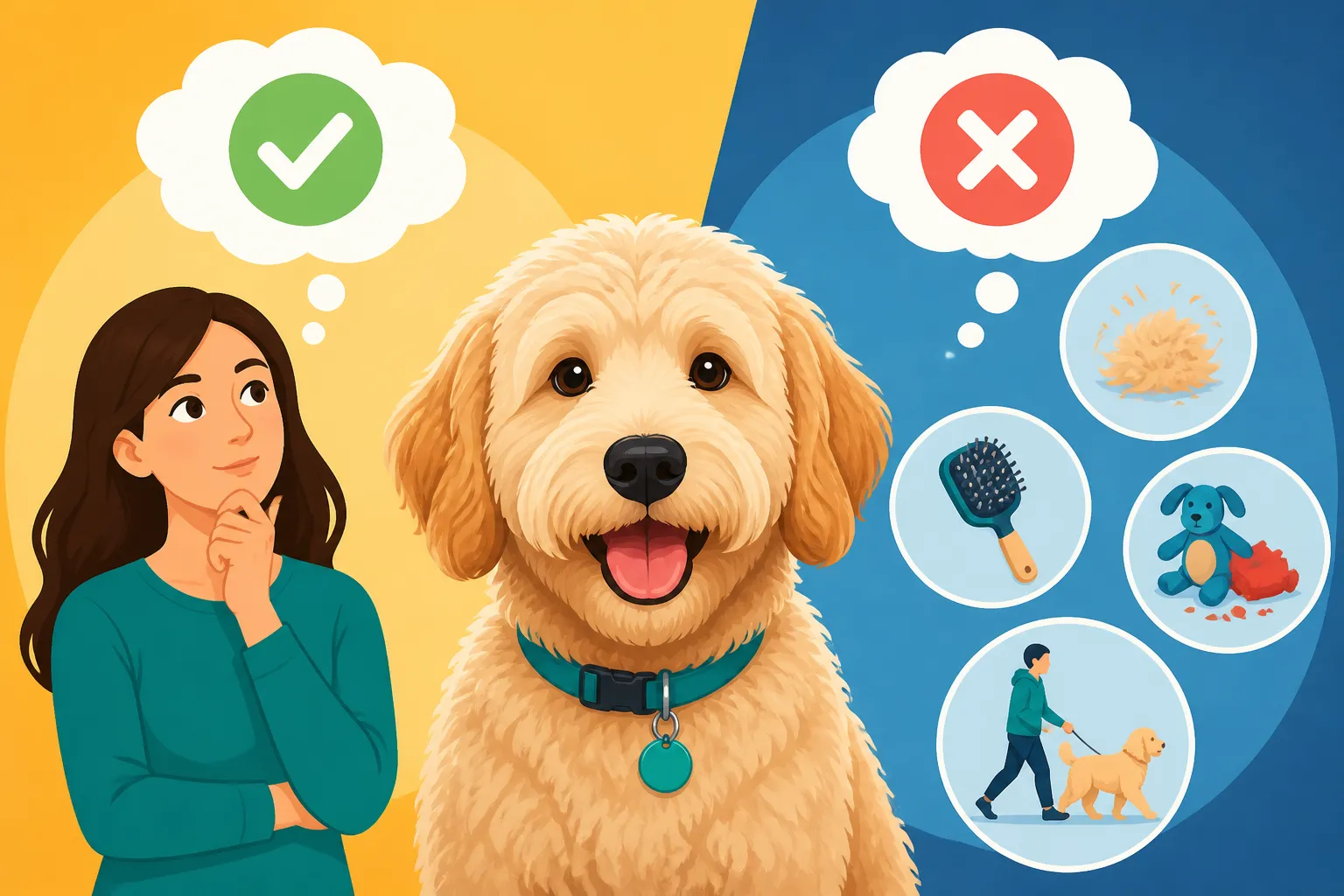
Many people fall in love with the Labradoodle's charming looks and reputation, often hearing that they make an "easy" first dog. This perception, while appealing, can sometimes set new owners up for unexpected challenges, leading to frustration and even regret. This comprehensive guide aims to peel back the layers of this myth, providing a realistic look at what it truly takes to welcome a Labradoodle into your life, especially if you're a first-time dog owner.
The Allure of the "Easy" Labradoodle Myth
The Labradoodle has rocketed in popularity, often painted as the perfect canine companion: intelligent, friendly, low-shedding, and generally easygoing. It's a compelling picture, especially for those new to dog ownership who are looking for a gentle introduction to the world of canine companionship. The breed's origins, blending two beloved breeds, certainly contribute to this widespread belief.
The Poodle and Labrador Reputation
When you combine a Labrador Retriever, known for its friendly, eager-to-please nature and trainability, with a Poodle, celebrated for its intelligence, elegance, and low-shedding coat, it's easy to see why the resulting "Doodle" seems like a dream come true. Both parent breeds are highly regarded as family dogs and excel in various roles, from assistance work to canine sports. The idea is that a Labradoodle inherits the best of both worlds – the Labrador's warmth and the Poodle's smarts and lower-shedding qualities. This genetic blending often leads prospective owners to assume a natural ease in training and care.
However, genetics are rarely a simple pick-and-choose menu. What often gets overlooked is that a hybrid can inherit any combination of traits, not just the most desirable ones. A Labradoodle might end up with the Poodle's sensitivity and the Labrador's boundless energy, for example, creating a very different personality than the "easygoing" image implies. Their intelligence, while a huge asset in training, can also manifest as boredom or mischief if not properly channeled.
Marketing Hype vs. Reality
The rise of the "designer dog" has been accompanied by a significant amount of marketing that emphasizes the positive aspects while downplaying the complexities. Breeders, often well-meaning, might highlight the low-shedding coat and the desire to please, making it seem like you're getting a pre-programmed perfect pet. Online photos and videos showcase fluffy, well-behaved puppies, further solidifying this ideal image in people's minds. It's easy to get swept up in the excitement and overlook the practical considerations.
The reality is that while many Labradoodles can be wonderful family dogs, they are still dogs, with individual personalities, needs, and potential challenges. They require consistent training, significant grooming, plenty of exercise, and dedicated socialization, just like any other breed. The "easy dog" label often leads to underprepared owners, who then struggle with behaviors that could have been managed with proper expectations and commitment. It's crucial for first-time owners to sift through the hype and understand the real commitment involved. What Nobody Tells a First Time Labradoodle Buyer often covers this very disconnect between expectation and reality.
Temperament: A Genetic Lottery with Consequences
The temperament of a Labradoodle is perhaps the most variable aspect, and often the biggest surprise for new owners expecting a uniform, predictable personality. Unlike purebred dogs with established breed standards that aim for consistency, a Labradoodle is a crossbreed, meaning their genetic makeup is a blend that can swing wildly from one parent's traits to the other, or a mix of both. This "genetic lottery" can lead to a wide spectrum of personalities within the same litter, let alone across different pairings.
The Poodle's Intelligence and Sensitivity
From their Poodle lineage, Labradoodles often inherit a keen intelligence and a certain sensitivity. Poodles are incredibly smart, quick to learn, and often highly attuned to their owners' emotions. This can make them excellent students in obedience, eager to engage in mentally stimulating activities. However, this same intelligence can be a double-edged sword. A bored Poodle-brained Labradoodle can quickly become a destructive, attention-seeking dog, figuring out how to open cabinets or unspool toilet paper in record time. They thrive on routine and mental challenges, and without them, their smarts can lead to mischief.
Furthermore, the Poodle's sensitivity can mean they don't respond well to harsh training methods. They can become withdrawn, fearful, or even shut down if subjected to overly strict or punitive approaches. A first-time owner might inadvertently use methods that are too strong, causing the dog to lose confidence or develop behavioral issues. Understanding this delicate balance is key to bringing out the best in a Poodle-influenced Labradoodle, relying heavily on positive reinforcement and patience.
The Labrador's Eagerness and Energy
The Labrador Retriever side brings a different set of traits to the mix: boundless energy, an outgoing nature, and an inherent retrieving drive. Labradors are famously friendly, eager to please, and generally robust. This can contribute to the Labradoodle's reputation as a jovial, social dog who loves everyone. They often possess a strong play drive and a desire to be involved in family activities.
However, a Labrador's energy level is significant. These are dogs bred for active outdoor work, and without adequate physical exercise, that energy doesn't just disappear – it often manifests as destructive chewing, excessive barking, or boisterous behavior indoors. A Labradoodle inheriting a strong Labrador energy drive will need substantial daily activity, often more than a casual walk. This can be a shock to first-time owners who imagined a calmer, more sedentary companion. Their natural retrieving instinct can also mean they are prone to carrying things in their mouths, sometimes things they shouldn't!
Unpredictable Hybrid Vigor
The concept of "hybrid vigor" is often touted in designer breeds, suggesting that the genetic diversity of two different purebreds results in a healthier, more robust animal. While there can be some truth to this in terms of reducing the incidence of certain breed-specific genetic diseases, it doesn't guarantee a "perfect" dog in terms of temperament or ease of ownership. The unpredictable nature of a cross means you might get a dog that leans heavily on one parent's traits, or an even blend that combines both the desirable and challenging aspects. Whether Hybrid Vigor Is Real in a Labradoodle delves into the scientific basis of this claim.
For example, a Labradoodle might inherit the Poodle's quick mind but also the Labrador's tendency for oral fixation and high energy, creating a dog that needs constant engagement to prevent chewing up the house. Or they might get the Poodle's aloofness combined with the Labrador's stubborn streak. There's no guarantee that you'll get the "best of both worlds," and first-time owners must be prepared for a dog with a unique personality that requires adaptable training and management strategies. It truly emphasizes why understanding both parent breeds is so important, as your Labradoodle could embody traits from either.
Training Challenges for a First-Time Owner
Training a Labradoodle, while often rewarding due to their intelligence, can present unique challenges for individuals new to dog ownership. Their smarts and energy require consistent, thoughtful, and engaging approaches, otherwise, they can quickly develop undesirable habits. It's not just about teaching 'sit' and 'stay'; it's about shaping a well-adjusted companion.
Navigating High Intelligence and Boredom
Labradoodles are intelligent dogs, a trait inherited from both the Poodle and Labrador sides. This means they are quick to learn commands and tricks, which sounds fantastic for a first-time owner! However, high intelligence also means they get bored easily. A bored Labradoodle is often a mischievous Labradoodle. They might start "problem-solving" in ways you don't appreciate, like figuring out how to open the pantry door, counter surfing for snacks, or creating their own entertainment by destroying household items. This isn't out of spite; it's simply a brain that needs a job.
For a first-time owner, recognizing the signs of boredom and consistently providing mental stimulation can be a steep learning curve. It means moving beyond basic obedience and incorporating puzzle toys, scent work, trick training, or even enrolling in dog sports. Merely repeating commands without context or engagement can lead to a dog that tunes you out. Online resources, like those offered by BAXTER & Bella, can be incredibly helpful for structured training programs that keep intelligent dogs engaged and challenged. Regularly rotating toys and investing in interactive feeders found on platforms like Amazon can also make a significant difference in preventing destructive behaviors rooted in boredom.
Managing Puppy Mouthing and Adolescence
Labradoodle puppies are notorious for their enthusiastic mouthing. Coming from the Labrador side, they often explore the world with their mouths, and their Poodle genetics can sometimes contribute to a more sensitive play style that still involves teeth. For a new owner, this constant nipping can be overwhelming and painful, especially when those sharp puppy teeth are in full force. It requires consistent redirection, teaching bite inhibition, and providing appropriate chew toys at all times. The Mouthing a Labradoodle Puppy Does Longest is a topic many new owners can relate to.
As they transition into adolescence, typically around 6 to 18 months, Labradoodles, like many breeds, can experience a phase often dubbed the "teenager" stage. During this time, previously learned commands might seem to disappear, impulse control goes out the window, and they might test boundaries constantly. This "regression" can be incredibly frustrating for a first-time owner who thought training was "done." It requires patience, consistency, and often, revisiting basic training with renewed vigor. The Ten Month Old Labradoodle That Forgets Everything describes this challenging period well, reminding owners that it's a normal developmental phase, not a sign of a bad dog.
The Importance of Early Socialization
One of the most critical, yet often underestimated, aspects of raising any dog, especially a potentially sensitive and energetic one like a Labradoodle, is early and thorough socialization. This isn't just about letting your puppy meet other dogs; it's about safely exposing them to a wide variety of sights, sounds, people, environments, and experiences during their critical developmental window (roughly 3 to 16 weeks of age). A well-socialized Labradoodle is more likely to be confident, friendly, and resilient in various situations, reducing the likelihood of fear-based aggression or anxiety later in life.
For a first-time owner, navigating effective socialization can feel daunting. It means deliberately seeking out positive interactions, enrolling in puppy classes, and consciously introducing them to novel stimuli in a controlled, positive manner. Without this crucial foundation, a Labradoodle can become fearful of new experiences, people, or other dogs, leading to reactivity. This can be incredibly challenging to manage, requiring professional intervention. Proactive socialization is far easier than reactive rehabilitation.
Grooming: A Non-Negotiable Time Commitment
One of the most frequently underestimated aspects of Labradoodle ownership, especially for first-time dog parents, is the sheer commitment required for their grooming. The appeal of a "low-shedding" or "hypoallergenic" coat often overshadows the intensive daily and weekly maintenance these coats demand. It’s a significant factor in The Time a Labradoodle Takes Out of a Week, and one that can lead to major problems if neglected.
Understanding Labradoodle Coat Types
Labradoodles come in a range of coat types, generally categorized as hair, fleece, and wool. Each has its own distinct characteristics and grooming needs.
- Hair Coat: This is the closest to a Labrador's coat, often being straighter and shedding more. While it sheds more than other types, it generally requires less intensive brushing to prevent mats compared to fleece or wool.
- Fleece Coat: This is arguably the most desired coat, soft and wavy or spiraled, resembling a lamb's fleece. It’s often low-shedding but highly prone to matting.
- Wool Coat: Similar to a Poodle's coat, it’s dense, curly, and can be quite thick. It's typically non-shedding but will mat very quickly if not diligently brushed and kept trimmed.
Many first-time owners, especially those looking for a "hypoallergenic" dog, often seek out fleece or wool coats. What they might not realize is that "low-shedding" does not equate to "low-maintenance." Instead, the hair that doesn't shed often gets trapped in the surrounding coat, intertwining and forming tight mats if not regularly brushed out. The Three Labradoodle Coats: Hair, Fleece and Wool offers a deeper dive into these variations. The unpredictable nature of the F1 Labradoodle means their coat can be a true gamble, sometimes combining a shedding undercoat with a matting topcoat, which is the worst of both worlds. Whether an F1 Labradoodle's Coat Is a Gamble really highlights this issue.
The Reality of Daily Brushing and Professional Care
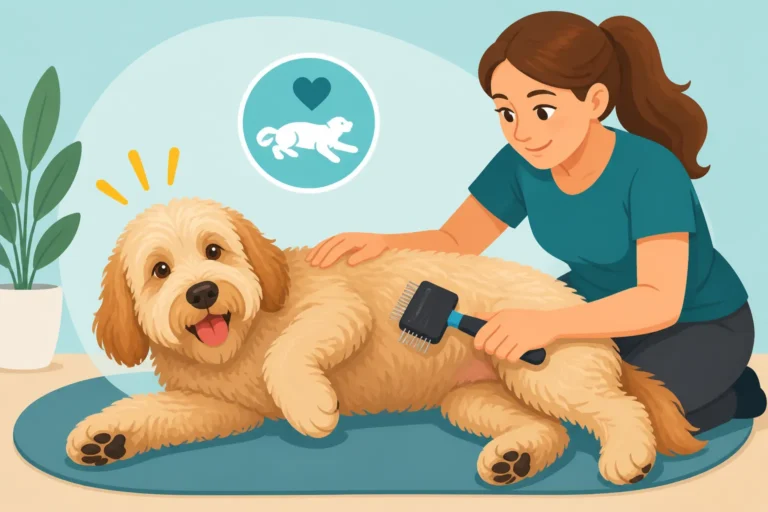
Regardless of the specific type, a Labradoodle with a non-shedding or low-shedding coat will mat without diligent care. This means daily or at least every-other-day line brushing, which involves systematically brushing small sections of hair down to the skin, not just skimming the surface. Brushing a Labradoodle to the Skin, Not the Surface is not just a suggestion; it's a fundamental requirement. Without this, mats will form, especially in friction areas like behind the ears, armpits, and around collars or harnesses.
A full grooming session can take a significant amount of time, perhaps 30-60 minutes, several times a week, plus professional grooming every 6-8 weeks. Many first-time owners simply aren't prepared for this level of commitment. When mats become severe, they can pull on the skin, causing pain, skin infections, and require a full shave-down by a professional groomer. Teaching your Labradoodle to tolerate this extensive handling from a young age is crucial. Teaching a Labradoodle to Lie Still for a Ninety Minute Groom explains the importance of early positive exposure to grooming tools and procedures. Investing in quality grooming tools, readily available on Amazon, is essential for maintaining their coat at home. This often includes a good slicker brush, a metal comb, and a force dryer.
Table: Labradoodle Coat Types and Grooming Demands
| Coat Type | Appearance | Shedding Level | Matting Potential | Brushing Frequency (Home) | Professional Grooming (Estimate) | Common Owner Experience |
|---|---|---|---|---|---|---|
| Hair Coat | Straighter, coarser, similar to a Labrador | Moderate | Low to Moderate | 2-3 times/week | Every 8-12 weeks | "Looks like a Lab, sheds like a Lab, less grooming." |
| Fleece Coat | Soft, wavy to spiraled, flowing | Low | High | Daily or every other day | Every 6-8 weeks | "Beautiful, soft, but mats like crazy if I miss a day." |
| Wool Coat | Dense, curly, Poodle-like | Very Low | Very High | Daily | Every 4-6 weeks | "Non-shedding dream, but a grooming nightmare if neglected." |
Note: These are general guidelines; individual dogs can vary significantly.
Exercise Needs: More Than Just a Walk Around the Block
The Labradoodle combines the energy of a Labrador with the athleticism of a Poodle, meaning they are often more active than many first-time owners anticipate. The idea of an "easy" dog sometimes translates to the assumption of lower exercise needs, which can be a significant miscalculation leading to behavioral problems.
Burning Off Energy Safely
A Labradoodle requires substantial daily exercise to be a well-behaved and happy companion. This isn't just a leisurely stroll around the block. We're talking about vigorous activity that engages both their body and mind. Think long walks, jogging, hiking, enthusiastic games of fetch, or even swimming – many Labradoodles absolutely adore the water, inheriting that love from their Labrador ancestry. Puppies and adolescents, in particular, have seemingly endless reserves of energy that need to be channeled productively. The Exercise a Labradoodle Needs Before It Behaves really drives home this point.
Without adequate physical outlets, a Labradoodle's pent-up energy can manifest in undesirable ways. This might include destructive chewing, excessive barking, digging in the yard, or becoming overly boisterous and jumpy indoors. A first-time owner might mistake these behaviors for defiance or naughtiness, when in reality, the dog is simply trying to burn off steam and alleviate boredom. Establishing a consistent exercise routine early on is crucial, and it’s a daily commitment, not just a weekend activity. For busy owners, exploring doggy daycare or hiring a reliable dog walker can be excellent ways to supplement their dog's exercise needs.
Mental Stimulation to Prevent Boredom
Beyond physical exercise, Labradoodles, with their Poodle intelligence, thrive on mental stimulation. A physically tired dog can still be mentally restless if their brain isn't engaged. This is where puzzle toys, training sessions, and interactive games become invaluable. Simply throwing a ball in the yard for an hour might tire them out physically, but their keen minds still crave a challenge.
Activities like nose work (hiding treats for them to find), learning new tricks, or engaging in obedience training refreshers can provide that essential mental workout. Consider using feeder toys, available on Amazon, that make them work for their meals, turning eating into a game. Consistent training, even just 10-15 minutes a day, not only reinforces good behavior but also provides vital mental enrichment. For new owners, online training programs, such as BAXTER & Bella, can offer structured lessons and guidance on how to integrate mental challenges into daily life, making training fun and effective. Neglecting this mental aspect can lead to frustration for both dog and owner, as the dog may act out in ways that a novice owner struggles to understand or correct.
The "Velcro Dog" Tendency and Separation Anxiety
The Labradoodle is often described as a "Velcro dog," a charming nickname that highlights their strong desire to be close to their human companions. While this can be endearing, it's also a trait that, if not managed carefully, can escalate into significant challenges for first-time owners, particularly separation anxiety.
Building Alone Time Gradually
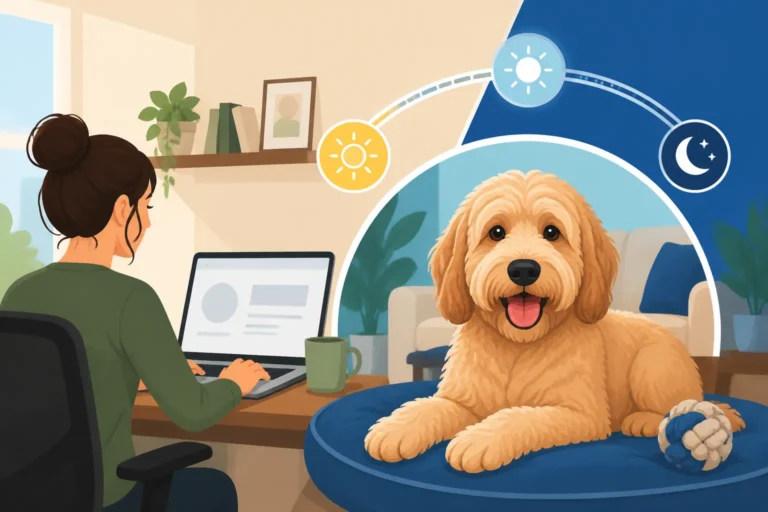
Labradoodles bond very deeply with their families, and they love to be involved in everything you do. This means they often follow you from room to room, want to be near you on the couch, and are always eager for your attention. While this closeness is a wonderful part of their personality, it's vital to teach them to be comfortable and confident when left alone, right from puppyhood. A first-time owner might unintentionally reinforce this "Velcro" behavior by never leaving the puppy alone or by making a big fuss every time they depart or return. This can inadvertently foster an over-reliance on human presence.
Building up a dog's tolerance for alone time needs to be a gradual process. Start with very short periods, even just a few minutes, while you step out of sight into another room. Gradually increase the duration as your dog shows comfort. Providing engaging toys or a food puzzle before you leave can help create a positive association with your absence. Avoid dramatic goodbyes or hellos, as these can heighten anxiety. The goal is to make alone time a normal, calm part of their routine, not a stressful event. The Alone Time a Velcro Labradoodle Can Build To explores techniques for fostering independence in these highly attached dogs.
Strategies for a Confident Canine
When a Labradoodle struggles with being left alone, it can manifest as barking, howling, destructive chewing of doors or furniture, or even inappropriate urination and defecation. These behaviors are not out of spite but are genuine signs of distress and can be incredibly heartbreaking and frustrating for owners, especially those without prior experience. Recognising the signs of genuine separation anxiety versus simple boredom is a crucial first step.
Strategies for fostering a confident canine who can handle alone time include:
- Crate Training: A properly introduced and positively reinforced crate can become a safe, den-like space where your Labradoodle feels secure. It's not a punishment but a personal sanctuary.
- Consistent Schedule: Dogs thrive on routine. Knowing when to expect walks, meals, playtime, and alone time can reduce uncertainty and anxiety.
- Mental and Physical Fulfillment: As discussed earlier, a well-exercised and mentally stimulated Labradoodle is a calmer Labradoodle. Ensuring they've had plenty of activity before being left alone can significantly help.
- Professional Guidance: If signs of separation anxiety are severe, seeking help from a certified professional dog trainer or veterinary behaviorist is essential. They can provide tailored strategies and, if necessary, discuss medication to help manage anxiety in conjunction with behavior modification. For new owners, understanding when to call in the experts is a vital part of responsible dog ownership.
Ultimately, while the Labradoodle's loving and intelligent nature makes them a wonderful companion, the "easy first dog" label can be misleading. They require dedication to training, consistent grooming, ample exercise, and thoughtful management of their highly social nature. With the right preparation and commitment, a Labradoodle can certainly be a fantastic first dog, but it's far from a hands-off experience.
Disclaimer
This article is for general informational purposes only and does not constitute professional advice. Laws, prices and regulations vary by location and change over time. Consult a qualified professional for guidance on your specific situation.