What a Therapy Dog Visit Asks of a Labradoodle
It’s a truly heartwarming thought, isn't it? Imagining your beloved Labradoodle, with their gentle eyes and wagging tail, bringing comfort and joy to people who need it most. Many of us look at our doodles and think, "They'd be perfect for therapy work!" And while their naturally friendly and intuitive natures certainly give them a head start, the reality of being a successful therapy dog asks for quite a specific set of skills and an incredibly stable temperament. This guide will walk you through exactly what those demands are, helping you understand if your furry family member truly has what it takes to be a canine comforter.
Understanding the Role of a Therapy Dog
Before we dive into the specifics of what your Labradoodle needs, let's clear up exactly what a therapy dog's role entails. There's a lot of confusion out there about the different types of working dogs, and it’s important to understand where therapy dogs fit in. They're not just cute dogs who like people; they have a very important, albeit voluntary, job to do.
What is a Therapy Dog, Really?
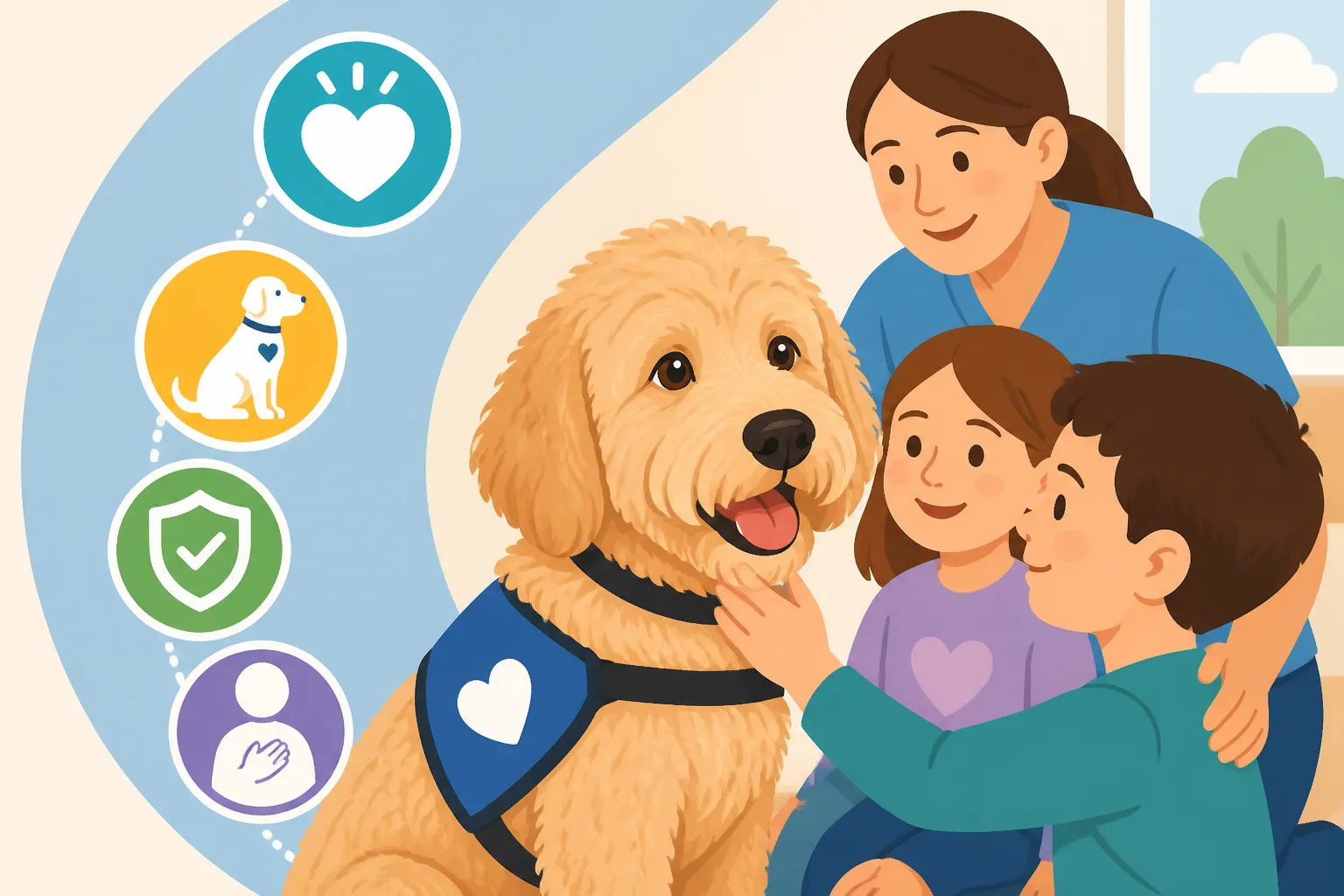
At its heart, a therapy dog is a companion animal that provides comfort, affection, and emotional support to individuals in various settings, often those experiencing stress, illness, or vulnerability. Think about visiting a hospital: a patient might be feeling lonely, anxious about a procedure, or just generally down. When a soft, warm Labradoodle head nudges their hand, or they get to stroke that fluffy coat, it can provide a powerful, immediate sense of calm and distraction. It’s about creating a moment of connection and easing emotional burdens.
Unlike service dogs, therapy dogs are typically personal pets whose owners volunteer their time to visit facilities. They are not granted the same public access rights as service dogs, meaning they can only enter facilities by invitation or permission, not by law. Their primary "work" is to be present, to allow petting, and to engage gently with people in structured, supervised environments. It’s less about performing specific tasks and more about their calming presence and ability to forge a brief, meaningful bond.
Common Environments for Therapy Dog Visits
Therapy dogs operate in a diverse range of environments, each presenting its own unique set of sights, sounds, and smells that a dog must be able to handle gracefully. Hospitals are a classic example, where they might visit patients in their rooms, or sit in waiting areas offering quiet reassurance. Nursing homes and assisted living facilities are another common destination, bringing companionship to seniors who may miss having pets of their own or who are struggling with loneliness.
But the scope extends far beyond medical settings. Therapy Labradoodles can be found in schools, participating in "reading with dogs" programs where children practice reading aloud to a non-judgmental, furry listener. They visit libraries during stressful exam periods, offering students a much-needed break and stress relief. And, tragically, some therapy dogs even provide comfort at disaster sites or during crisis interventions, offering a silent, steady presence to those who have experienced trauma. Each of these settings requires a dog that can adapt, remain calm, and be utterly reliable, no matter the circumstances or the emotional state of the people they are interacting with. What a Therapy Labradoodle Is Tested On delves deeper into the specifics of these situations.
The Difference Between Therapy Dogs and Emotional Support Animals ESAs
This is a point of frequent confusion, and it’s crucial to understand the distinction. While both therapy dogs and Emotional Support Animals (ESAs) provide comfort, their roles, legal standing, and training requirements are fundamentally different. A therapy dog is a volunteer animal, working with its handler to provide comfort to many people in various settings, with permission. They are typically evaluated and certified by an organization, demonstrating a high level of obedience, temperament, and public manners. They do not have special legal access rights beyond what is granted by the specific facility they are visiting.
An Emotional Support Animal, on the other hand, is an animal that provides therapeutic benefits to its owner through companionship. They are generally prescribed by a mental health professional for an individual with a diagnosed disability and are typically not required to have any specific training beyond being a well-behaved pet. ESAs have some limited legal protections, primarily related to housing under the Fair Housing Act and sometimes air travel, but they do not have public access rights to enter stores, restaurants, or other public places where pets are generally prohibited. The core difference lies in who benefits (many vs. one) and the legal framework surrounding their access and training expectations.
| Feature | Therapy Dog | Emotional Support Animal (ESA) | Service Dog |
|---|---|---|---|
| Purpose | Provides comfort/support to many people. | Provides comfort/support to its owner (one person). | Performs specific tasks for a disabled individual. |
| Training Level | High-level obedience, temperament, public manners. | No specific training required beyond being a pet. | Intensive, specialized task training. |
| Public Access | By invitation/permission only (no legal right). | Limited (housing, some travel), no general public access. | Full public access rights (legal protection). |
| Certification | Often certified by therapy animal organizations. | Requires a letter from a licensed mental health professional. | No federal certification, but task-trained. |
| Handler Role | Owner volunteers with dog to visit others. | Owner keeps animal for personal benefit. | Owner relies on dog for disability mitigation. |
| Legal Basis | Volunteer activity, no specific federal laws. | Fair Housing Act, Air Carrier Access Act (limited). | Americans with Disabilities Act (ADA). |
Essential Temperament Traits for a Therapy Labradoodle
The temperament of your Labradoodle is arguably more critical than any specific trick they can perform. A therapy dog needs a very special kind of personality – one that is resilient, loving, and completely unflappable in the face of the unexpected. The natural joy and friendliness of a Labradoodle can be a fantastic foundation, but it needs to be tempered with solid nerves and boundless patience.
Unflappable Calmness and Patience
Imagine your Labradoodle in a busy hospital corridor. There might be loud alarms, sudden gurneys rolling past, the clatter of dropped medical equipment, or even excited children darting around. An ideal therapy dog must remain perfectly calm through all of it. They shouldn't startle easily, bark at unexpected noises, or show signs of anxiety. This isn't just about being "not aggressive"; it's about maintaining a serene demeanor that actually transfers a sense of calm to the people they're interacting with.
Patience is equally vital. They might be petted awkwardly by someone with limited motor skills, or have a child cling to their fur a little too tightly. They need to stand or sit still for extended periods, waiting for their turn or allowing multiple people to interact with them without getting antsy or overstimulated. This unflappable nature is what allows them to be truly effective in environments that can be overwhelming for less stable dogs. It’s a trait that often comes from careful breeding and early socialization, but it's also something you can nurture through consistent, positive exposure to varied situations from puppyhood. Many owners find What a Therapy Labradoodle Is Tested On a helpful resource for understanding these critical traits.
Affectionate and Gentle Demeanor
While calmness is key, a therapy Labradoodle also needs to genuinely enjoy human interaction and express it gently. This means they should actively seek out gentle affection, nuzzle into a hand, and accept petting graciously from strangers, including those with unfamiliar scents, appearances, or movements. They must be comfortable with being touched all over, including their paws, tail, and ears, as different people will interact with them in different ways. A Labradoodle’s natural inclination to be a "Velcro dog" often translates well here, as they love being close to their people.
Crucially, this affection must be expressed without jumping up, nipping, or excessive licking, which can be startling or even dangerous for vulnerable individuals. Their greetings should be soft and inviting, perhaps a gentle tail wag or a soft lean into a hand. A dog that is too exuberant, even in its friendliness, can cause more anxiety than comfort. This gentle demeanor is something that needs to be practiced and reinforced constantly, ensuring that even in moments of excitement, your Labradoodle remembers their "soft" manners. Telling an Anxious Labradoodle From an Under Exercised One can help owners distinguish between genuine calm and suppressed stress.
Adaptability and Resilience
The environments a therapy Labradoodle visits are constantly changing. One day it might be a quiet library, the next a bustling emergency room. An effective therapy dog needs to be highly adaptable, able to adjust quickly to new places, different floor surfaces, varying noise levels, and a constant stream of new people. They shouldn't get fixated on a particular spot or become anxious when moved from one room to another.
Resilience ties directly into this adaptability. If something unexpected happens – a sudden loud noise, a person accidentally steps on their paw, or a child is overly boisterous – the Labradoodle needs to recover quickly and not let it derail their entire visit. They shouldn't hold a grudge or become fearful. Instead, they should shake it off and continue their work with the same cheerful, gentle disposition. This ability to "bounce back" is a hallmark of a truly sound therapy dog and reflects a deeply secure and confident personality. It often develops through extensive, positive early socialization, where the puppy learns that the world is a safe and interesting place, full of new experiences to explore rather than fear.
Key Skills and Training Required
Even with the perfect temperament, raw potential isn't enough. A Labradoodle aspiring to be a therapy dog needs solid, reliable training. This isn't just about sitting on command; it’s about a deep level of understanding and responsiveness that ensures their safety and the safety and comfort of everyone they interact with.
Mastering Basic Obedience Commands
This might sound obvious, but reliable basic obedience is the absolute foundation for any therapy dog. Your Labradoodle must respond to commands like "sit," "stay," "down," "come," and "leave it" without hesitation, even with distractions all around. A "stay" that holds for several minutes while people move around them, or a "leave it" that prevents them from sniffing tempting dropped food, are non-negotiable skills in a public environment.
Furthermore, they need to walk politely on a loose leash, without pulling, lagging, or lunging. This is not just for good manners but for safety, preventing trips or falls in crowded or medically fragile settings. Commands like "off" (to prevent jumping) and a solid "wait" at doorways are also crucial. Consistent practice in various settings, gradually increasing distractions, is key to building this rock-solid obedience. Resources like BAXTER & Bella’s online training programs can be invaluable for establishing these foundational skills from puppyhood, laying the groundwork for more advanced therapy dog training. Teaching a Sixty Pound Labradoodle Not to Pull is an essential read for handlers.
Advanced Socialization and Exposure
Beyond basic obedience, a therapy Labradoodle needs a level of socialization that goes far beyond what a typical pet experiences. They need to be utterly comfortable with unusual sights and sounds specific to medical and institutional environments. This includes wheelchairs, walkers, crutches, oxygen tanks, IV poles, and medical gowns. They shouldn't be startled by the whirring of equipment, the beeping of monitors, or the smell of disinfectants.
They also need exposure to people of all ages, sizes, and abilities. This means children, teenagers, adults, and seniors, including those who move differently, speak loudly or softly, or have visible disabilities. They should be calm and accepting of different types of handling, from gentle strokes to clumsy pats. This extensive, positive exposure helps them generalize their good behavior to almost any novel situation, ensuring they don't react fearfully or inappropriately to the unfamiliar. You can find items on Amazon, such as children's toys and medical play kits, to help simulate these exposures at home.
Specific Therapy Dog Manners
Therapy dog work demands specific manners that aren't typically taught in standard obedience classes. One critical skill is a reliable "visit" or "say hello" command, which cues the dog to gently approach a person and allow petting. Equally important is a "lap" command if your Labradoodle is small enough and comfortable resting on a lap, providing focused comfort.
They must also be trained not to jump on people, even in excitement, and to keep "four on the floor" at all times. This is vital for the safety of patients and staff, especially those who are frail or unsteady. Another key behavior is being comfortable with being approached from behind, being touched unexpectedly, or having their personal space slightly invaded without reacting negatively. These specialized manners are often covered in pre-certification classes offered by therapy dog organizations and distinguish a well-behaved pet from a truly professional therapy animal. Teaching a Labradoodle to Greet With Four Feet Down is a precursor to this level of training.
The Certification Process for Therapy Dog Work
So, you've got a Labradoodle with a stellar temperament and rock-solid training. That's fantastic! But to become an official therapy dog, there's a formal certification process you'll need to navigate. This isn't just a formality; it ensures that both you and your dog are truly prepared for the unique demands and responsibilities of therapy work.
Choosing a Reputable Therapy Dog Organization
The first step is to research and select a reputable therapy dog organization. These organizations set the standards for therapy animal teams, provide insurance, and often coordinate visits to facilities. National organizations like Therapy Dogs International (TDI), Pet Partners (formerly Delta Society), or Alliance of Therapy Dogs (ATD) are well-known and respected, but there are also many excellent local groups. Each organization will have slightly different requirements for age, training, and the evaluation process, so it's important to choose one that aligns with your goals and your dog's capabilities.
Look for an organization that provides clear guidelines, offers support for volunteers, and has a strong focus on both human and animal safety and welfare. They should offer structured evaluations and, ideally, provide opportunities for ongoing education or practice sessions. Your choice of organization will largely dictate the specific tests your Labradoodle will undergo, but the underlying principles of a calm, well-mannered, and people-loving dog remain universal.
The Evaluation or Test Day
The evaluation day is where your Labradoodle's temperament and training are put to the test. These tests are designed to simulate various real-life scenarios that your dog might encounter during a therapy visit. Expect a series of exercises that assess your dog’s basic obedience in a distracting environment, their reaction to medical equipment (like wheelchairs and crutches), and their acceptance of different types of interactions with strangers. This could include polite greetings, gentle petting, and even a stranger approaching from behind or pulling their tail lightly (without harm, of course, but to test reaction).
They’ll also observe your Labradoodle’s reaction to loud noises, clumsy handling, and interactions with other dogs. The evaluators are looking for consistency in behavior, a calm and confident demeanor, and a genuine enjoyment of interaction. It’s not about perfection, but about demonstrating that your dog is safe, reliable, and truly enjoys being around people in potentially challenging situations. It can be nerve-wracking for owners, but remember, the evaluators want to see your dog succeed and are looking for dogs that will genuinely benefit the people they visit. You might find some helpful guidance in Whether a Labradoodle Passes the AKC Good Citizen Test, as the Canine Good Citizen test is often a prerequisite or similar in nature to early therapy dog evaluations.
Maintaining Certification and Ongoing Training
Getting certified isn't a one-and-done deal. Therapy dog organizations typically require teams to re-certify periodically, often every one or two years. This ensures that the dog's health, temperament, and training skills remain up to standard. It's a way to account for natural changes that can occur in a dog's behavior or physical condition as they age or as their experiences accumulate.
Beyond formal re-certification, ongoing training and practice are crucial. Regular obedience refreshers, continued socialization in new environments, and practicing your therapy dog manners keep your Labradoodle sharp and confident. Many therapy dog groups offer informal meet-ups or practice sessions, which are great for maintaining skills and letting your dog enjoy the "work." It’s also vital to monitor your dog's health and well-being. Regular vet check-ups are paramount, and you should always ensure your Labradoodle is clean, comfortable, and enjoys their visits. A happy, healthy dog makes the best therapy partner. The Yearly Screening a Labradoodle Should Get is a good reference for maintaining your Labradoodle's health.
Preparing Your Labradoodle for a Therapy Visit
Once certified, the real fun begins! But even with certification in hand, there's still preparation involved to ensure each therapy visit is successful, stress-free for your Labradoodle, and maximally beneficial for the people you meet.
Health and Grooming Considerations
A therapy Labradoodle must always be in tip-top shape. This means regular veterinary check-ups to ensure they are healthy, up-to-date on all vaccinations, and free from any parasites. No facility will allow a dog that isn't clearly healthy. Beyond physical health, a meticulously groomed Labradoodle is essential. Their coat should be clean, brushed thoroughly to prevent matting, and smell fresh. Nails must be trimmed short to avoid scratching anyone, and their ears should be clean and free of odor. The Hair That Grows Where a Labradoodle's Ear Should Drain often contributes to ear infections, making regular cleaning especially important for Labradoodles.
Think about it from the perspective of someone vulnerable or unwell: a clean, soft, pleasant-smelling dog is far more appealing and reassuring than one that is matted or smells. This also includes basic hygiene like wiping their face and paws before entering a facility, especially if you've been outside. Carrying a small grooming kit with a brush, wipes, and a water bowl can be incredibly helpful for touch-ups between visits. An owner who takes pride in their dog's appearance demonstrates respect for the people they are visiting. You can find excellent grooming tools, from slicker brushes to paw wipes, on Amazon to keep your Labradoodle looking and feeling their best.
Practicing in Diverse Environments
While your certification test will cover many scenarios, real-world visits can always present new challenges. Continuously exposing your Labradoodle to diverse, novel environments helps them remain adaptable. Take them to places with different floor surfaces like linoleum, carpet, and concrete. Expose them to varying levels of noise, from quiet libraries to bustling outdoor markets. Practice polite greetings with a wide range of people, including children, seniors, and individuals with disabilities, if possible in a safe and supervised manner.
Consider using props at home to simulate unique situations. Walk past a person in a wheelchair often, or practice having someone approach you both from behind. The more varied positive experiences your Labradoodle has, the more confident and unflappable they will be during actual therapy visits. Remember, every positive exposure builds confidence, while negative or frightening experiences can set you back. Always prioritize your dog's comfort and well-being during these practice sessions.
Handling Stress and Burnout in Therapy Dogs
Even the most stable and well-trained Labradoodle can experience stress or burnout from therapy work. It’s emotionally and physically demanding to be "on" for an entire visit, constantly giving attention and receiving physical contact. As a handler, you are your dog’s advocate, and it’s your responsibility to recognize the subtle signs that your Labradoodle might be feeling overwhelmed. These signs can include excessive yawning, lip licking, looking away, trying to hide behind you, or a decrease in tail wagging.
Ensure that visits are not too long, and schedule plenty of breaks where your dog can relax, get a drink of water, or even step outside for a moment of quiet. Never force your Labradoodle to interact if they seem uncomfortable. Make sure therapy work is always a positive experience for them, perhaps by bringing their favorite high-value treats or ending the session with a fun play session afterward. Prioritize their joy and well-being above all else. After all, they are volunteering their love, and it should always feel like a choice for them. The Point a Labradoodle's Owner Has to Decide regarding their dog's well-being is a critical perspective to keep in mind.
The Rewards of Therapy Work with Your Labradoodle
The journey to becoming a therapy dog team is significant, requiring dedication, patience, and a deep understanding of your Labradoodle. But for those who embark on it, the rewards are often immeasurable, touching not only the lives of those you visit but also enriching your own.
Making a Tangible Difference
One of the most profound rewards of therapy dog work is witnessing the tangible difference your Labradoodle makes in people's lives. Imagine walking into a room where someone is withdrawn or anxious, and watching their face light up as your furry friend gently approaches. Picture a child struggling with reading, finding confidence by reading aloud to a patient, non-judgmental Labradoodle ear. These moments, often small and fleeting, create powerful ripples of positive emotion.
From bringing a smile to an elderly person remembering their own beloved pet, to offering a quiet source of comfort to someone in pain, your Labradoodle's presence can alleviate loneliness, reduce stress, and simply bring a moment of much-needed joy. These aren't abstract concepts; they are real, heartfelt connections that you and your Labradoodle facilitate. This profound impact is often what drives handlers to continue their volunteering, even through the challenges.
Deepening Your Bond
Undergoing the training, the certification process, and then regularly volunteering together creates an incredible bond between you and your Labradoodle. You learn to read each other's signals more intimately, becoming a true team. You'll understand when your dog needs a break, when they're particularly enjoying an interaction, or when they're simply having a fantastic day "working." This shared experience of giving back, of bringing comfort to others, strengthens your relationship in unique ways.
The focus required during visits, where you're constantly aware of your dog's demeanor and the reactions of the people around you, naturally enhances your communication and trust. You become each other's steadfast companions, navigating new and often challenging environments side by side. This shared purpose and the mutual understanding developed through such a special endeavor are deeply rewarding for both handler and dog.
Community Connection and Personal Fulfillment
Beyond the direct impact on individuals, therapy dog work often fosters a wonderful sense of community. You'll meet other dedicated therapy dog handlers, sharing stories, tips, and the unique camaraderie that comes from this shared passion. These connections can lead to new friendships and a supportive network that understands the joys and occasional challenges of the work.
For you, as the handler, there's an immense sense of personal fulfillment. Giving your time and sharing your beloved Labradoodle's warmth with others is a selfless act that enriches your own life profoundly. It's an opportunity to contribute positively to society, to make a difference one wagging tail and gentle nuzzle at a time. The gratitude from patients, staff, and families, coupled with the sheer joy your Labradoodle radiates, makes every effort worthwhile.
Disclaimer
This article is for general informational purposes only and does not constitute professional advice. Laws, prices and regulations vary by location and change over time. Consult a qualified professional for guidance on your specific situation.