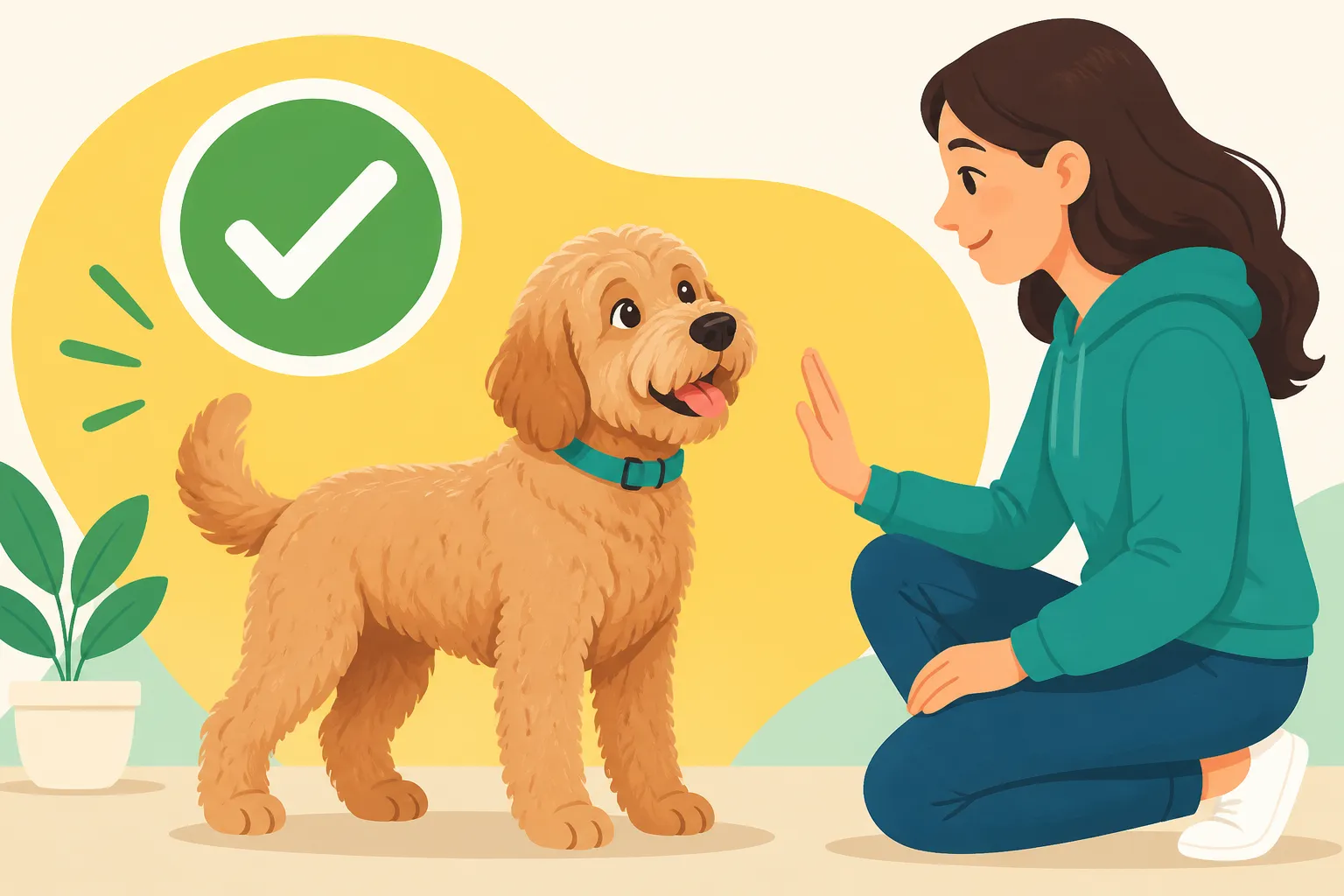
Teaching a Labradoodle to Greet With Four Feet Down
There's nothing quite like the boundless enthusiasm of a Labradoodle, is there? That wagging tail, the goofy grin, the way they launch themselves at you or your guests like a furry missile of love. While it comes from a place of pure affection, a sixty-pound dog launching itself at an elderly relative or a small child isn't just annoying; it can be downright dangerous. This guide is all about helping your wonderful Labradoodle learn to greet people politely, with all four paws firmly on the ground, making every hello a joyful moment, not a wrestling match.
Understanding Why Your Labradoodle Jumps And Why It's Normal!
It's easy to get frustrated when your Labradoodle bounds up and jumps all over every person they meet, but it's crucial to understand that this behavior isn't malicious. In fact, it's incredibly normal for dogs, especially a breed as affectionate and exuberant as the Labradoodle. They're trying to communicate, get your attention, and show their excitement in the most direct way they know how. Understanding their motivation is the first step toward gently redirecting that energy into more appropriate greetings.
The Enthusiastic Greeting: A Natural Canine Behavior
Think about how puppies greet their mothers. They often jump up, lick faces, and try to get attention from a higher vantage point. This is a deeply ingrained canine behavior. Your Labradoodle, whether a tiny puppy or a full-grown adult, is often reverting to these natural instincts. They want to get closer to your face, to "kiss" you, and to engage. Their world is often scent-driven, and getting to your face allows them to get a better read on your mood and presence. It’s also a big part of how they greet other dogs, often initiating play with a bounce and a nudge.
With a Labradoodle, you've got a fantastic blend of the Labrador Retriever's zest for life and the Poodle's intelligent, often dramatic, personality. Both breeds are known for their strong bond with people and their desire to interact. A Labrador's natural exuberance means they’re often thrilled to see you, and that excitement can translate into physical expressions like jumping. Poodles are smart and can quickly learn what gets them attention, even if that attention is negative. So, if jumping has ever resulted in a laugh, a loud "no," or even just a brief touch, your Labradoodle has learned that it works to get you to notice them. They simply don't differentiate between "good" attention and "bad" attention; any attention is good attention in their book!
How Humans Accidentally Encourage Jumping
This is where it often gets tricky for us owners, because we often unknowingly reinforce the very behavior we want to stop. Imagine a friend comes over. Your Labradoodle, beside themselves with joy, launches at them. Your friend, perhaps trying to calm them down, pushes them away, says "down," or even just pets their head in an attempt to be friendly. To your Labradoodle, every one of those actions is a reward. Pushing them away is physical contact. Saying "down" is verbal attention. Petting their head is a direct reinforcement of the jumping. They think, "Aha! Jumping equals interaction!"
Another common scenario involves arriving home. You've missed your dog, and they've missed you. They leap up, paws on your chest, tail wagging like a helicopter blade. You, in your excitement, might lean down, give them a quick hug, or scratch behind their ears. Again, you've just told your Labradoodle, "Yes, this is exactly how I want you to greet me!" It's a natural human reaction to reciprocate affection, but it inadvertently teaches them that jumping is the way to get that beloved interaction. Even making eye contact or talking to them while they're jumping can be enough reinforcement to keep the behavior going. It's a tough habit to break, especially when their enthusiasm is so endearing, but consistency is key. This is a common challenge for owners, and it's something many discover they weren't fully warned about before bringing home their new furry family member.
Laying the Foundation: Basic Obedience for a Calm Greeting
Before we can ask our Labradoodle to greet politely, they need a solid understanding of some fundamental commands. These aren't just parlor tricks; they're the building blocks for calm behavior and effective communication between you and your dog. Without a reliable "sit" or "stay," trying to stop a bouncy Labradoodle from jumping is like trying to build a house without a foundation – it's just going to wobble and fall apart. The good news is that Labradoodles are generally very intelligent and eager to please, making them excellent students when it comes to obedience.
The Power of "Sit" and "Stay"
A strong "sit" command is your absolute best friend when it comes to managing greetings. It's a simple, clear instruction that gives your dog an alternative, polite behavior to offer instead of jumping. Think of it as giving them a "job" to do when someone approaches. If your Labradoodle is already in a seated position, it's physically impossible for them to jump up!
To build a reliable "sit" for greeting:
- Start in a low-distraction environment: Practice in your living room first, without any guests.
- Lure and Reward: Hold a high-value treat near your Labradoodle's nose, slowly moving it up and back over their head. As their nose follows, their rear will naturally drop to the ground. The moment their bottom touches the floor, say "Yes!" or "Good sit!" and immediately give them the treat.
- Add the Verbal Cue: Once they reliably sit when lured, start saying "Sit" just before you lure. Eventually, you'll fade the lure and they'll respond to the verbal cue alone.
- Introduce Duration: Slowly increase the time they need to stay in the "sit" before getting the treat. Start with one second, then two, then three, gradually building up.
- Practice "Stay": Once "sit" is solid, layer in "stay." Have your Labradoodle sit, say "Stay," take one step back, then immediately return and reward. Gradually increase distance and duration. Remember, release them from the "stay" with a clear "Okay!" or "Free!" cue.
This foundational training is crucial. If your Labradoodle is in that adolescent phase, around The Ten Month Old Labradoodle That Forgets Everything, you might find they suddenly act like they've never heard "sit" before! Don't despair; consistency and patience are your best tools here. Keep practicing, even if it feels like you're going backward.
"Four on the Floor": The Golden Rule
This is the core principle for teaching polite greetings: your Labradoodle only gets attention when all four paws are on the ground. This rule needs to be applied by everyone who interacts with your dog, consistently, without exception. If even one person allows jumping to be rewarded with attention, it undoes a lot of your hard work. This can be particularly challenging when you have visitors who love dogs and want to immediately lavish affection.
Here's how to implement "Four on the Floor":
- Ignore the Jump: If your Labradoodle jumps up, turn your back immediately. Cross your arms, make no eye contact, and say nothing. Become a "tree." Wait until all four paws are on the ground, even for a split second.
- Reward the Calm: The instant those four paws are on the floor, turn back around, offer calm praise ("Good four on the floor!"), and gently pet them or give a treat. The key is gentle praise, not overwhelming excitement, which might trigger another jump.
- Short & Sweet: For really excitable Labradoodles, the initial interactions might need to be very brief. Reward for a second of "four on the floor," then turn your back again if they jump. You're teaching them that jumping disconnects them from you, while calm behavior connects them.
- Practice with Greetings: When you come home, carry your leash and keys in one hand. If your Labradoodle jumps, turn your back and wait. As soon as they settle, even for a moment, praise and reward. If they jump again, turn away. It takes patience, but they will learn. You can even keep a jar of treats near the door, easily accessible on top of a shelf or on your counter, to reward those calm greetings.
Remember, the goal is to prevent the jumping from being rewarded. If you're constantly fighting your Labradoodle to get them down, you're still engaging with them. By turning away, you remove the reward (your attention) completely.
Step-by-Step Training for Greeting Guests Calmly
Once your Labradoodle understands "sit" and the "four on the floor" rule, it's time to put it all into practice with real-world scenarios. This progression from controlled environments to more distracting ones is vital for ensuring your Labradoodle generalizes the behavior to all situations, not just when it's just you. You might find that A Labradoodle That Jumps on Every Visitor will need specific, tailored practice to break that deeply ingrained habit.
Controlled Introductions with Family Members
This is your rehearsal phase. Enlist family members or close friends who are willing to follow your instructions perfectly. Consistency from everyone is paramount.
Here’s how to set up a practice session:
- Gear Up: Put your Labradoodle on a leash, even if they're usually good off-leash. A standard leash and a comfortable flat collar or a front-clip harness work well. A front-clip harness, easily found on Amazon, can give you better control without putting pressure on their neck, and many owners find it helpful for managing an overly enthusiastic dog without causing discomfort.
- The Handler: You are the handler. Hold the leash and have high-value treats ready.
- The "Guest": Have your family member (the "guest") enter the room.
- Initial Reaction: As your Labradoodle starts to get excited, give your "Sit!" command. If they sit, great! Reward heavily. If they lunge or jump, immediately turn your back and walk away a step or two, taking your dog with you on the leash. Do not say anything. Wait for them to settle, then try again.
- Controlled Greeting: When your Labradoodle is sitting calmly, or at least has all four feet down, have your "guest" calmly approach. They should not lean over the dog or get in their face. Instead, they should approach slightly from the side, offer a calm "hello," and gently stroke the dog's chest or side, not their head (which can be interpreted as a challenge or invitation to jump up).
- Reward: As long as your Labradoodle stays calm and on the floor, you (the handler) should continuously reward with small, frequent treats and quiet praise. The guest can also offer treats if they are comfortable doing so.
- Keep it Short: For initial sessions, keep greetings very brief. A few seconds of calm greeting, then the "guest" disengages by taking a step back. If the dog maintains calm, repeat. If they get too excited, reset by turning your back or moving away.
- Gradual Progression: Slowly increase the duration of the greeting, the number of "guests," and eventually, introduce mild distractions like background noise or someone walking past.
Extending Training to New People and Environments
Once your Labradoodle is greeting family calmly, it's time to generalize this behavior to new people and more distracting environments. This is often the trickiest part, as the novelty of a stranger can be incredibly exciting for a Labradoodle.
- Practice with Friends: Ask friends to help you with practice sessions. Brief them beforehand on the "four on the floor" rule and how to interact calmly. Have them ignore jumping and only pet or acknowledge when all paws are down.
- The "Doorbell Drill": Recreate doorbell rings and knocks. Keep your Labradoodle on a leash when practicing this. When the doorbell rings, immediately ask for a "Sit" or "Place" (if you've trained them to go to a mat or bed). Reward for staying in position as the "door" opens and your "guest" comes in. This helps them associate the doorbell with calm behavior, not a free-for-all. For dogs that get especially riled up by the doorbell, having them go to a specific "place" can be a fantastic way to manage that initial burst of energy.
- Public Settings: Take your Labradoodle to places with moderate foot traffic, like a park bench, and practice having strangers (who are willing and understand your training goals) approach and offer a treat only if your dog stays seated. This helps your dog learn that calm interactions get rewards, even from exciting new people. Remember that The Exercise a Labradoodle Needs Before It Behaves is crucial; a well-exercised dog is often a calmer dog, making training much easier.
- Managing Children: Children can be particularly challenging because their movements are often erratic, and their voices are higher pitched, which can further excite a dog. Always supervise interactions between your Labradoodle and children. Teach children the "four on the floor" rule and to approach calmly, petting gently on the chest or side. For a deeper dive on safety, consider resources on Whether a Labradoodle Is Too Bouncy for a Toddler.
- Using a "Place" Command: Teaching your Labradoodle a "place" command (to go to a specific mat or bed) can be incredibly useful. This gives them a designated spot to settle when guests arrive. You can then reward them for staying on their "place" as guests enter, gradually allowing them to greet once they are calm. Many online training programs, such as those offered by BAXTER & Bella, incorporate "place" training as a core component of good manners.
Dealing with Relapses and High-Energy Situations
Let's be realistic: your Labradoodle isn't going to be perfect overnight, or even every time. There will be days when they have an off-moment, or a situation is simply too exciting, and they relapse into old jumping habits. This is normal. The key is to not get discouraged and to remain consistent.
- Don't Get Emotional: When a relapse happens, avoid getting angry or overly frustrated. Your dog won't understand. Simply go back to basics: turn your back, disengage, wait for four paws on the floor, and then reward.
- Reduce the Stimulus: If your Labradoodle is constantly failing in a particular situation (e.g., greeting mail carriers), try to reduce the stimulus. Can you put them on a leash before the mail carrier arrives? Can you have them "place" in another room until the mail carrier leaves? Gradually reintroduce the challenge as they improve in less stimulating environments.
- Reinforce Basic Commands: If greetings are falling apart, go back and drill your "sit" and "stay" commands in a calm environment. Strengthen that foundation. Maybe your Labradoodle needs a refresher course on What a Labradoodle Should Know by Six Months.
- Management Over Training (Sometimes): There will be times when management is your best friend. If you know a particular guest or situation is going to be overwhelming, it's okay to put your Labradoodle in their crate with a long-lasting chew toy for a few minutes while initial greetings happen, then reintroduce them once things have settled down.
- Consider Tools: If your Labradoodle's excitement is truly overwhelming, tools like a head halter (like a Gentle Leader) can provide more control, especially in public. If you're considering this, do some research on Whether a Head Halter Suits a Labradoodle to understand if it's right for your dog and how to introduce it correctly. Remember, an e-collar, while sometimes suggested for stubborn dogs, may not be the right choice for a sensitive Labradoodle, and it's worth exploring alternatives like those discussed in Whether an E-Collar Belongs on a Labradoodle first.
Consistency is truly the most powerful tool you have. Every interaction is a training opportunity, and every time you successfully redirect your Labradoodle to a polite greeting, you're building a stronger, more positive habit.
Practical Tools and Resources for Success
Training your Labradoodle to greet politely is a journey, and having the right tools and support can make a world of difference. From physical aids to structured learning programs, there are many resources available to help you and your enthusiastic companion achieve those picture-perfect, four-on-the-floor greetings.
Recommended Training Aids
A few simple items can significantly assist your training efforts:
- Leash and Collar/Harness: A standard 6-foot leash is indispensable for controlled greetings. For Labradoodles prone to pulling or getting extra bouncy, a front-clip harness (sometimes called a "no-pull" harness) can be a game-changer. These harnesses redirect your dog's forward momentum when they pull, making it easier to maintain control without causing discomfort to their throat. You can find a wide variety of these harnesses, as well as high-quality leashes, on Amazon. A regular flat collar is fine if your dog is not a puller and responds well to cues.
- High-Value Treats: These are your dog's currency. Small, soft, smelly treats (like bits of cheese, cooked chicken, or commercial training treats) will grab your Labradoodle's attention more effectively than their regular kibble, especially in distracting environments. Keep them in a treat pouch that's easy to access, so you can reward instantly.
- Treat Pouch: A wearable treat pouch keeps treats readily available for immediate rewarding, which is crucial for marking desired behavior at the exact moment it occurs.
- Training Platform/Mat: A "place" mat or raised dog bed can be a powerful tool for teaching your Labradoodle to settle in a specific spot when guests arrive. It gives them a clear boundary and a "job" to do, which can channel their excited energy into a constructive behavior.
- Long Line: For working on impulse control at a distance, particularly if your Labradoodle has a tendency to bolt after exciting stimuli, a long line can be useful for practicing control from further away, similar to how one might work on Long Line Work for a Labradoodle That Bolts After Birds.
Online Training Programs and Support
Sometimes, you need a little more structure or guidance than you can get from just reading articles. Online training programs can offer comprehensive curricula, video demonstrations, and even community support that can be invaluable, especially for owners tackling specific behavioral challenges.
- Structured Courses: Many online programs offer step-by-step courses that cover everything from basic puppy manners to advanced obedience, including specific modules on polite greetings. These often come with video tutorials, downloadable guides, and exercises to practice at home. One popular option that many doodle owners find helpful is BAXTER & Bella. Their online puppy school provides a detailed framework for puppy training, which includes crucial lessons on managing excitement and teaching appropriate greeting behaviors, right from the start.
- Community Support: A big advantage of many online programs is access to a community forum or private social media group. This allows you to connect with other Labradoodle owners facing similar challenges, share successes, ask questions, and get advice from trainers or experienced peers. Knowing you're not alone in the journey can be incredibly motivating.
- Flexibility: Online programs offer the flexibility to train at your own pace and schedule, fitting into your busy life. You can revisit lessons as needed and tailor the training to your Labradoodle's individual learning style and temperament. This can be particularly helpful if your Labradoodle is in that unpredictable adolescent phase, as How Long Labradoodle Adolescence Lasts can vary greatly, and consistent training is needed throughout.
- Professional Guidance: While not a substitute for in-person, one-on-one training for severe behavioral issues, many online programs offer virtual consultations or Q&A sessions with certified trainers, providing personalized feedback and troubleshooting tips from the comfort of your home. They can often guide you through specific issues like A Labradoodle That Jumps on Every Visitor with tailored advice.
Remember, the goal is to build a positive relationship with your Labradoodle based on clear communication and trust. With patience, consistency, and the right resources, you can transform those exuberant leaps into calm, joyful greetings that everyone, including your Labradoodle, can enjoy.
Do's and Don'ts for Teaching Polite Greetings
To help you keep track of the key strategies and common pitfalls when training your Labradoodle not to jump, here's a quick reference table.
| Action | Do | Don't |
|---|---|---|
| When Your Dog Jumps | Turn your back immediately, cross your arms, become a "tree." Wait for all four paws on the floor. | Make eye contact, say "no" or "down" loudly, push them away, or knee them. These are all forms of attention. |
| When Your Dog is Calm | Instantly reward with calm praise ("Good four on the floor!") and a high-value treat. Keep interactions brief initially. | Get overly excited, offer enthusiastic praise that might re-excite them into jumping, or allow lengthy petting sessions until the behavior is solid. |
| Greeting Guests | Put your dog on a leash for controlled introductions. Brief guests on the "four on the floor" rule. Have them approach calmly, pet the chest/side, and offer treats only for calm. | Let your dog greet guests off-leash if they are jumpers. Allow guests to lean over, get in their face, or pet the head, which can trigger jumping. |
| Training Focus | Emphasize "sit" and "stay" as foundational commands. Use positive reinforcement and high-value rewards. Practice in varied, progressively more distracting environments. | Expect instant results. Rely on punishment. Ignore basic obedience training. Only practice in one location. |
| Management | Use management tools like leashes, front-clip harnesses, or a "place" command when expecting challenging greetings. Crate your dog briefly if they are over-excited. | Allow your dog to self-regulate if they consistently fail. Neglect exercise; a tired Labradoodle is a calmer Labradoodle. |
| Consistency | Ensure everyone who interacts with your Labradoodle adheres to the "four on the floor" rule, every single time. | Let exceptions slide, even "just this once." Inconsistency confuses your dog and slows down progress significantly. |
This article is for general informational purposes only and does not constitute professional advice. Laws, prices and regulations vary by location and change over time. Consult a qualified professional for guidance on your specific situation.