Telling an Anxious Labradoodle From an Under Exercised One
Many Labradoodle owners find themselves scratching their heads, wondering if their dog's destructive chewing, incessant barking, or general restlessness stems from a deep-seated anxiety or simply an overflowing well of unspent energy. It's a common dilemma, and one that can feel overwhelming to decipher. This guide will help you unpack the subtle differences, understand the root causes, and find practical solutions to help your furry friend thrive.
The Energetic Labradoodle: A Blend of Drive and Intelligence
Labradoodles are a wonderful mix, but that mix brings a unique set of needs. They inherit traits from both the Labrador Retriever, known for its boundless energy and retrieving drive, and the Poodle, famous for its intelligence and often, its own surprising stamina. This combination means you've got a dog that's not just physically capable but also mentally sharp. When these inherent needs aren't met, behaviors can manifest that look a lot like anxiety, making it incredibly tricky to figure out what's really going on.
Understanding the Breed's Energy Blueprint
Think of a Labradoodle as having two engines: a physical one and a mental one. The Labrador side contributes a strong desire for physical activity – running, fetching, swimming, long walks. They were bred to work alongside hunters all day, which means they're not content with a quick trot around the block. Then there's the Poodle influence, bringing a keen intelligence and a need for mental engagement. Poodles are problem-solvers; they thrive on learning, puzzles, and structured activities. Without outlets for both these aspects, your Labradoodle can quickly become a bundle of pent-up energy, leading to frustration and behavioral issues. It's like having a super-smart athlete stuck on a couch all day; they're going to find something to do, and it might not be what you want.
Consider your Labradoodle's lineage. Was it bred from working Labrador lines or show lines? Was the Poodle parent a highly active standard or a more sedate miniature? While these are generalities, they can offer clues to your dog's intrinsic drive. A Labradoodle from a high-drive background, for instance, will likely require more intense physical and mental exercise than one whose parents were more laid-back. This isn't about blaming the dog; it's about recognizing the powerful genetic legacy they carry and adjusting our expectations and routines accordingly. For a deeper dive into their natural inclinations, you might want to read The Temperament a Labradoodle Gets From Each Parent.
The Impact of Mental Under-Stimulation
It's easy to focus on physical exercise, but the Poodle brain in your Labradoodle needs a workout too. A dog that's physically tired but mentally bored can be just as problematic as one that's simply under-exercised. Imagine trying to fall asleep after running a marathon, but your brain is still buzzing with unanswered questions and unfulfilled tasks. That's how a mentally under-stimulated Labradoodle might feel. They might start creating their own "jobs," which often translate to behaviors we find undesirable.
These self-created jobs can include excessive chewing on furniture or shoes, incessant barking at every little sound, or even hyper-vigilance at windows. It's their way of engaging their active minds and burning off mental energy that hasn't been directed. Think about offering puzzle toys, engaging in scent work games, or teaching new tricks consistently. These activities tap into their problem-solving abilities and can be just as tiring, if not more so, than a long walk. Whether a Labradoodle Needs a Job to Settle is a very real question, and often, the answer is a resounding yes. Without appropriate mental challenges, a Labradoodle's cleverness can quickly turn into mischief and frustration.
Decoding the Behaviors: Under-Exercise or Anxiety?
It can feel like a game of behavioral charades trying to figure out if your Labradoodle's antics are a cry for more exercise or a plea for reassurance. The symptoms can overlap significantly, leading to a lot of confusion for even the most dedicated owner. However, there are some key distinctions to look for, especially regarding the context in which the behaviors occur. Understanding these nuances is crucial for implementing the right solution.
Classic Signs of Under-Exercised Labradoodles
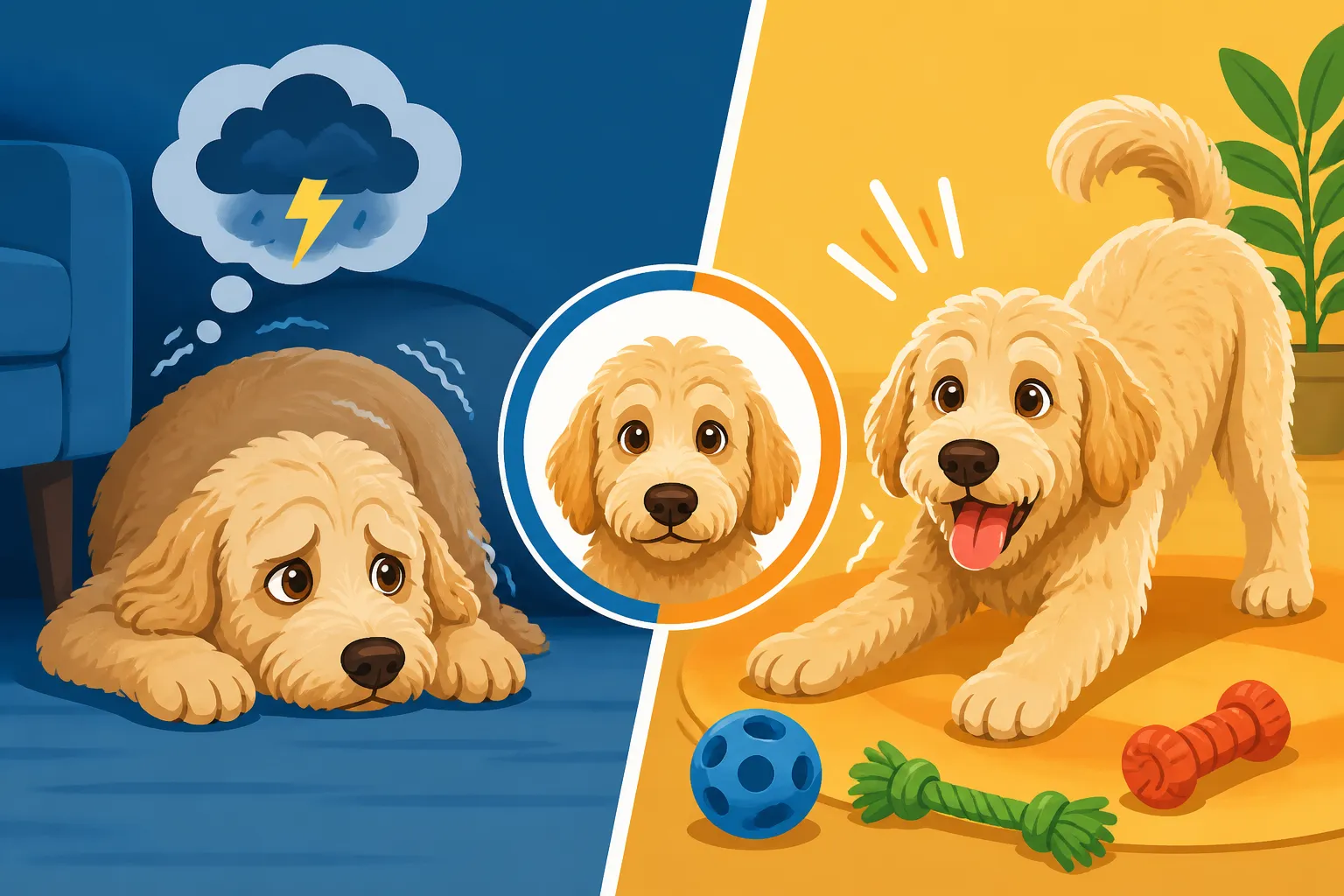
When a Labradoodle isn't getting enough physical and mental exercise, their behaviors often stem from an accumulation of excess energy and a lack of appropriate outlets. These behaviors are generally energy-driven and might appear throughout the day, or intensify when they have been confined for a long period.
Here are some common indicators:
- Destructive Chewing: This isn't just puppy chewing, but intense, targeted destruction of household items, especially after a period of confinement or when they haven't had a proper outlet. This often happens on items that smell like you, like shoes or clothing, but it's more about the act of doing something with their mouths and bodies than coping with your absence directly. They're releasing pent-up energy. What a Labradoodle Destroys When Left Alone can often be linked to this very issue, as a bored dog will find its own entertainment.
- Zoomies and Restlessness: Sudden bursts of frantic running around the house, bouncing off furniture, or an inability to settle even when you're home. They might pace, dig at carpets, or constantly nudge you for attention, not out of fear, but out of sheer boredom and a need to move. This can be particularly frustrating when you're trying to relax.
- Excessive Barking (Context-Dependent): Barking that seems to be attention-seeking, boredom barking, or barking at every little stimulus (squirrels, leaves blowing, the neighbor's cat) because they're hyper-alert and have nothing else to focus on. It might not be frantic, fear-based barking, but rather a persistent, sometimes demanding, vocalization. Whether a Labradoodle Barks When Left could indicate boredom or anxiety, but observe the type of bark and its triggers carefully.
- Difficulty Learning or Remembering Commands: A dog that's buzzing with unspent energy will struggle to focus during training sessions. They might seem distracted, easily frustrated, or simply unable to concentrate on what you're asking, making you feel like they've forgotten everything they ever learned. Their mind is elsewhere, consumed by their unmet needs.
- Nipping, Mouthing, and Rough Play: Beyond puppy nipping, an under-exercised Labradoodle might be overly mouthy or rough in play, using you or other pets as an outlet for their physical drive. It's often not aggressive, but simply a lack of impulse control due to too much energy. They simply haven't learned other ways to express their excitement.
These behaviors often resolve or significantly lessen after a vigorous walk, a long play session, or a challenging training session. If a solid hour of fetching or a brain game makes your Labradoodle curl up contentedly, chances are it was an energy issue. Recognizing The Exercise a Labradoodle Needs Before It Behaves is critical here.
Recognising the Signs of Labradoodle Anxiety
Anxiety in Labradoodles, particularly separation anxiety, presents differently. While some overlap with under-exercise can occur, the core motivation behind the behavior is fear, stress, or distress related to a specific trigger, most often your absence or the threat of it.
Key indicators of anxiety include:
- Panting and Trembling (Without Heat/Exertion): Your Labradoodle might pant heavily, tremble, or drool excessively even when they haven't been exercising or it's not hot. This is a physiological response to stress, indicating a heightened state of alert and discomfort.
- Excessive Vocalization (Distress Cries): This isn't just attention barking; it's often a more frantic, high-pitched, or mournful crying, whining, or howling that starts before you even leave or within minutes of your departure. It signals genuine distress, a desperate plea for you to return or not to go.
- Destructive Behavior (Entry/Exit Points or Self-Mutilation): While under-exercised dogs chew, anxious dogs often focus their destruction around escape routes like doors and windows, scratching at frames, tearing up carpets, or attempting to dig out. They might also engage in self-mutilation, like excessive licking or chewing their paws, leading to raw spots. This self-soothing behavior is a sign of intense stress.
- Inappropriate Urination/Defecation: A previously house-trained Labradoodle might have accidents indoors, particularly when left alone, even if they were just outside. This is not defiance, but a stress response, often happening involuntarily due to overwhelming emotional discomfort.
- Shadowing and Clinginess (The "Velcro" Dog): An anxious Labradoodle might follow you from room to room, never letting you out of their sight. They become intensely focused on your movements and react strongly to any sign you might be leaving. This is why they are often called The Velcro Labradoodle That Cannot Be Left, as their dependence is palpable.
- Loss of Appetite or Vomiting When Alone: Some anxious dogs become too stressed to eat or may even vomit due to anxiety. Their digestive system is reacting to their emotional state.
- Hyper-vigilance (Fear-Based): While an under-exercised dog might bark at everything out of boredom, an anxious dog's hyper-vigilance is often characterized by a nervous startle response, flinching at sudden sounds, or constantly scanning the environment with a worried expression. They are on edge, anticipating something negative.
The crucial difference here is the trigger. Anxious behaviors are almost always directly linked to being separated from you or anticipating separation. They are distress signals, not simply energy outlets.
Context is Key: Observing the Patterns
The real secret to telling the difference between an under-exercised Labradoodle and an anxious one lies in careful observation and understanding the context of their behaviors. It's not just what they do, but when they do it, and what happens before and after. Becoming a detective in your own home will provide the clues you need.
When Does the Behavior Occur?
One of the most telling indicators is the timing of the problematic behavior. Is your Labradoodle destroying things and barking even when you're right there, relaxing on the couch, or cooking dinner? Or does it exclusively happen when you leave the house?
-
Under-Exercise: If your Labradoodle is destructive, restless, or excessively vocal even when you're present, and especially if these behaviors persist after a short walk but improve significantly after a really long walk or a vigorous play session, it points strongly to a need for more physical and mental stimulation. They're showing signs of boredom and pent-up energy regardless of your presence. A typical scenario might be your Labradoodle pacing the living room, nose-nudging your hand for attention, then grabbing a shoe and shaking it wildly, all while you're trying to read. The energy simply has nowhere to go.
-
Anxiety: If the behaviors—like frantic barking, scratching at doors, or house-soiling—only occur, or are significantly worse, when you are preparing to leave or after you've left, then anxiety is the more likely culprit. An anxious dog might be perfectly calm and settled when you are home, even if they haven't had a lot of exercise. The moment you pick up your keys, put on your shoes, or walk out the door, that's when the distress signal begins. Imagine your dog watching you get ready for work, starting to pace, whine, and then, as soon as the door closes, the barking escalates to howling and scratching. This strong correlation with your absence is a hallmark of separation anxiety.
How Does Your Labradoodle Respond to Your Return?
Another vital piece of the puzzle is how your Labradoodle greets you when you come home. This can offer profound insight into their emotional state during your absence.
-
Under-Exercise: A dog that has simply been under-exercised might greet you with enthusiasm, jumpiness, and a general aura of "Finally! Something to do!" They'll be excited to see you, ready to play, and might seem a bit over-the-top, but it's typically a happy, if boisterous, welcome. The house might be a mess, but your dog is often more excited to see you than stressed about your return. They're relieved the boredom is over and the fun can begin, eager to channel that stored energy into interaction with you.
-
Anxiety: An anxious Labradoodle, on the other hand, often exhibits an over-the-top, prolonged, and sometimes frantic greeting. They might jump uncontrollably, whine incessantly, circle you, and struggle to calm down for several minutes. This intense reaction isn't just happiness; it's relief mixed with lingering stress from your absence. It's as if they're saying, "Oh my goodness, I thought you were gone forever, please don't leave me again!" Some anxious dogs might even appear subdued or withdrawn upon your return, exhausted from the stress. The relief they feel is palpable, but it's tinged with the memory of distress.
A useful exercise is to set up a camera or your phone to record your Labradoodle's behavior when you leave. Many owners are shocked to see what their dogs really do. This objective view can remove all doubt and give you a clear picture of whether you're dealing with a frantic attempt to escape or a bored dog looking for entertainment. This simple step can illuminate patterns you might miss otherwise.
| Behavior | Often Points to Under-Exercise | Often Points to Anxiety |
|---|---|---|
| Destructive Chewing | Random items, anywhere, usually for activity/boredom relief. | Around exit points (doors, windows), self-mutilation (paws), stress-driven. |
| Barking/Vocalization | Attention-seeking, boredom, reactive to external stimuli (even when you're home). | Frantic, high-pitched, howling, whining, specifically when alone or anticipating solitude. |
| Pacing/Restlessness | General inability to settle, active even with you present, seeking engagement. | Intensifies before/during departure, accompanied by trembling, drooling. |
| House Soiling | Rare unless truly desperate or untrained. | Frequent and consistent only when left alone. |
| Greeting Upon Return | Enthusiastic, happy, ready to play, settles relatively quickly. | Over-the-top, frantic, prolonged, difficult to calm, intense relief. |
| Clinginess | May seek attention but also content to play alone if stimulated. | Follows you everywhere, extreme distress if you leave sight, "Velcro dog." |
Solutions Tailored to the Problem
Once you've done your detective work and have a better idea of whether under-exercise or anxiety is the primary issue, you can start implementing targeted solutions. Remember, it's rarely a single fix, but rather a combination of strategies. And sometimes, there's a bit of both going on!
When Your Labradoodle Needs More to Do
If you suspect your Labradoodle is under-exercised, the good news is that many solutions involve increasing their activity and engagement in positive ways. It's about channeling that incredible Labradoodle drive into appropriate outlets.
Upping the Physical Activity Game
This is often the most obvious starting point. Labradoodles aren't just walk-around-the-block dogs. They often need sustained, vigorous exercise.
- Longer, More Intense Walks: Instead of one 30-minute walk, consider two 45-minute brisk walks, or even a trail hike. Let them sniff and explore; mental stimulation from scent work on a walk is valuable. Vary your routes to keep it interesting. Remember, simply being outside isn't enough; they need purpose and engagement.
- Active Play Sessions: Fetch is a Labradoodle favorite, thanks to their Labrador heritage. Aim for 20-30 minutes of solid fetching, letting them truly run and retrieve. Swimming is another excellent, low-impact option if your Labradoodle enjoys water. A flirt pole can also provide intense bursts of exercise in a smaller space. These activities tap into their natural prey drive and energy levels.
- Dog Parks or Daycare: If your Labradoodle enjoys other dogs, a supervised trip to the dog park or a reputable doggy daycare a few times a week can be a fantastic way to burn off energy and socialize. Just ensure the environment is safe and well-managed, as not all dogs thrive in these chaotic environments.
Remember, consistency is key. A massive weekend hike won't make up for five days of minimal activity. Building a consistent routine is far more effective. Your Labradoodle thrives on predictability and ample opportunity to move its body.
Boosting Mental Stimulation and Training
Physical activity alone might not be enough. Engaging their intelligent Poodle brains is equally vital.
- Puzzle Toys and Interactive Feeders: These are lifesavers for preventing boredom. Instead of just putting food in a bowl, make your Labradoodle work for it. There are countless options available on platforms like Amazon, from simple treat-dispensing balls to more complex sniff mats and interactive feeders. These can turn mealtime into a mental workout and keep them occupied for longer periods.
- Training Sessions: Even if your Labradoodle knows the basics, continue teaching new tricks or refining old ones. Five to ten minutes of focused training several times a day can be incredibly tiring for their brain. Consider signing up for an online obedience program, like those offered by BAXTER & Bella, which can guide you through fun and challenging exercises that build both obedience and mental acuity. This can be especially helpful if you feel like you're always trying to catch up with their learning speed.
- Scent Work and Enrichment: Hide treats around the house and encourage your dog to find them. This taps into their natural sniffing instincts and can be surprisingly exhausting. You can also rotate toys to keep them novel and exciting, preventing them from getting bored with the same old options.
- Structured Play: Games like 'find it', hide-and-seek, or even teaching them to put their toys away can provide mental challenges. These activities require them to think, problem-solve, and interact with their environment in a meaningful way.
It's all about making their environment and daily routine more engaging, giving them positive ways to spend their energy rather than finding destructive ones. A well-exercised and mentally stimulated Labradoodle is a much happier and calmer companion.
Addressing Labradoodle Anxiety with Care
If anxiety is the primary concern, especially separation anxiety, the approach shifts from simply more activity to building confidence and security. This often requires a more delicate touch and a focus on behavior modification.
Building Confidence and Independence
Helping an anxious Labradoodle feel more secure when you're not around is a gradual process.
- Gradual Departure Training: This is paramount. Start with very short absences—just seconds—and gradually increase the time. Practice "mock departures" where you go through your leaving routine but don't actually leave, or leave for only a minute or two and return calmly. The goal is to desensitize them to your departure cues and show them that you always come back. This repeated, calm experience can slowly reshape their perception of your absence. Teaching a Labradoodle That You Come Back is the core message here, reinforced by consistent, positive experiences.
- Positive Associations with Alone Time: Create a positive experience for your dog when you leave. This might involve a special high-value chew toy or a puzzle feeder that they only get when you are gone. This helps them associate your absence with something good, rather than just fear or distress. It's a powerful tool for counter-conditioning.
- Safe Space: Ensure your Labradoodle has a comfortable, secure "den" where they can feel safe when alone. A crate, if properly introduced and positively associated, can be incredibly helpful. It should be a place of comfort, not punishment, a sanctuary where they can retreat and feel protected. Whether a Crate Helps a Labradoodle Switch Off is often true for anxious dogs, offering them a secure retreat and a sense of boundaries.
- "Velcro Dog" Detachment: For the truly clingy Labradoodle, gently encourage independence while you're home. Practice having them settle in a different room for short periods, increasing the distance and time. Don't reward constant shadowing with attention. Instead, reward moments of calm independence. This helps break the cycle of constant reliance on your presence.
Seeking Professional Guidance
Anxiety, particularly severe separation anxiety, can be incredibly challenging to manage alone. Don't hesitate to reach out for help.
- Certified Professional Dog Trainer (CPDT-KA): A good trainer specializing in behavior can provide tailored strategies and guide you through the desensitization process. They can observe your dog's specific triggers and reactions and help you create a plan. Look for trainers who use positive reinforcement and understand canine body language.
- Veterinary Behaviorist (Dip. ACVB): For more severe cases, or when anxiety is compounded by other issues, a veterinary behaviorist is a specialist who can diagnose the root cause and may recommend medication in conjunction with behavior modification. This isn't a quick fix, but it can significantly help reduce your dog's stress levels, making them more receptive to training. They offer a holistic approach to behavioral health.
- Online Resources and Programs: Many online platforms and trainers offer courses specifically designed for separation anxiety. Programs like those on BAXTER & Bella or other reputable training sites can provide structured modules and support. Always look for programs that emphasize positive reinforcement and force-free methods, as punitive approaches can exacerbate anxiety.
Remember, anxiety is not a dog being "naughty" or "stubborn"; it's a genuine emotional response that requires empathy and a structured approach. Patience, consistency, and sometimes professional intervention are key to helping your Labradoodle feel more secure and enjoy their time, both with you and when you're away.
Disclaimer
This article is for general informational purposes only and does not constitute professional advice. Laws, prices and regulations vary by location and change over time. Consult a qualified professional for guidance on your specific situation.