Whether a Labradoodle Knocks Over Small Children
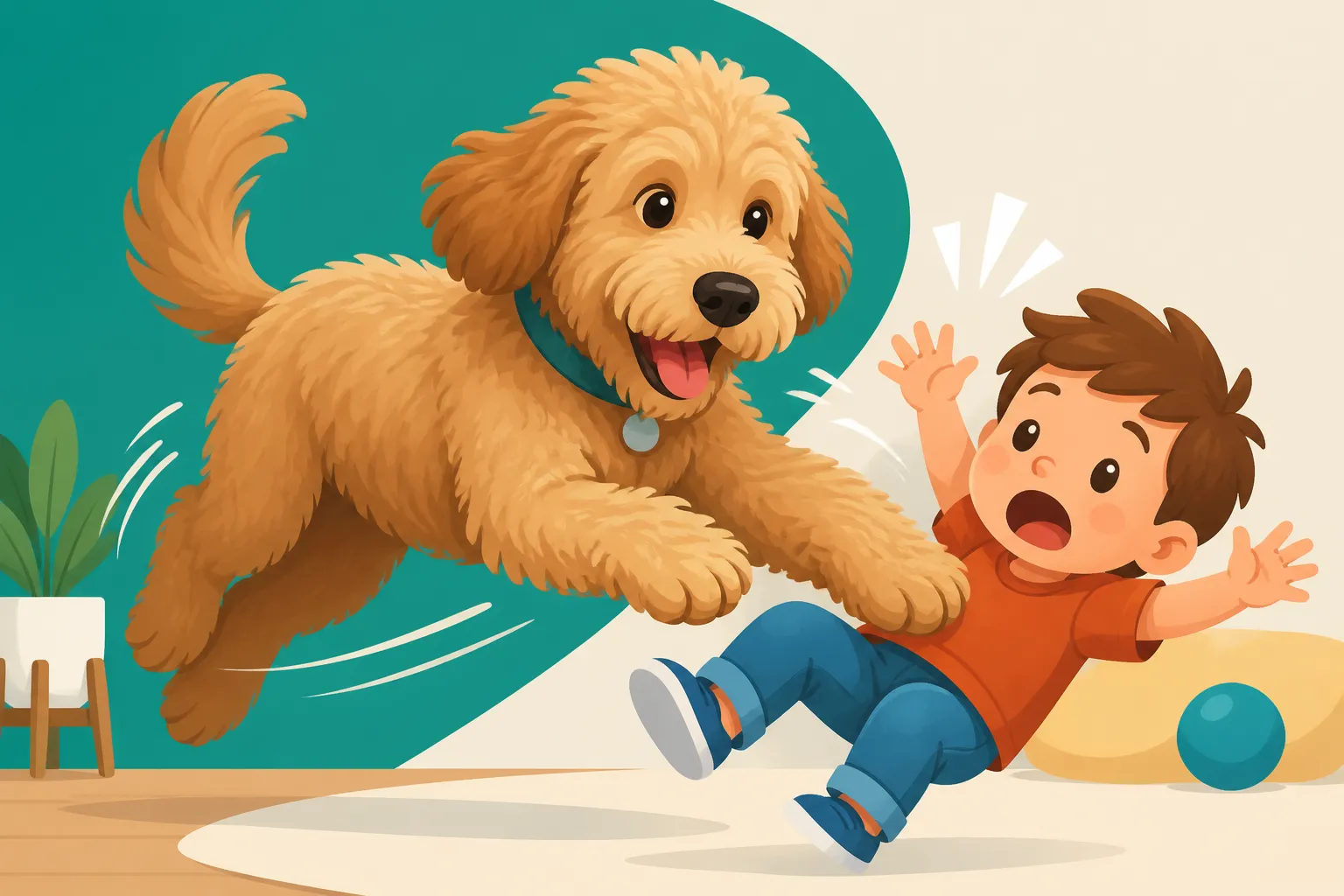
One of the biggest concerns for families bringing a Labradoodle into a home with young children is the sheer exuberance and size these wonderful dogs can possess. It's a genuine worry: a happy, bouncy Labradoodle can easily, and often unintentionally, knock over a small child in their excitement. This guide will walk you through understanding why this happens, how to prevent it with proactive training, and what management strategies you can put in place to ensure safe and harmonious interactions between your Labradoodle and the little ones in your life.
Understanding the Labradoodle's Natural Tendencies
Labradoodles are truly delightful dogs, known for their friendly dispositions and spirited nature. However, these very traits, combined with their physical characteristics, can sometimes lead to unintentional tumbles for smaller family members. It's not malice; it's just pure, unadulterated "Doodle joy" that needs to be channeled correctly.
The Poodle and Labrador Influence on Bounciness
When you look at the parent breeds of the Labradoodle, you see two very active and intelligent dogs. The Labrador Retriever is famous for its boundless energy, love of people, and sometimes clumsy enthusiasm, especially in its younger years. They are often "full-body greeters," wagging not just their tails but their entire bodies, often knocking things (or people) over in the process. Then you have the Poodle, highly intelligent, athletic, and also known for its playful, sometimes dramatic, bounciness.
Combine these two, and you get a Labradoodle that often inherits a significant amount of zest for life. They love to be involved, to play, and to greet their favorite humans with unbridled excitement. This enthusiasm, while endearing, can manifest as jumping, nudging, and a general lack of awareness about their size and strength when interacting with smaller, less stable individuals like toddlers. It's not that they intend harm; they simply haven't learned the appropriate way to express their joy around everyone, especially those under three feet tall.
High Energy Levels and Exuberance
Labradoodles, particularly standard-sized ones, are not couch potatoes. They thrive on activity and mental stimulation. A Labradoodle that isn't receiving enough exercise or mental engagement will often have pent-up energy that can erupt in less-than-ideal ways, such as excessive jumping or frantic play. Imagine a teenager who hasn't been able to leave the house all day – they're going to be bouncing off the walls! It's similar for a Labradoodle. This is especially true for puppies and adolescents, who have seemingly endless reserves of energy.
This high energy can make greetings particularly challenging. When you arrive home after a long day, or when a child runs excitedly through the room, your Labradoodle's natural instinct might be to join the fun with gusto. Their exuberance can translate into jumping up, pawing, or running too close, inadvertently knocking over a child who isn't as steady on their feet. It’s a common scenario that many Labradoodle owners grapple with, confirming that these dogs truly need outlets for their energy to be calm companions indoors. If you're wondering how much activity they need, our guide The Exercise a Labradoodle Needs Before It Behaves might offer some insights.
The "Velcro Dog" Tendency
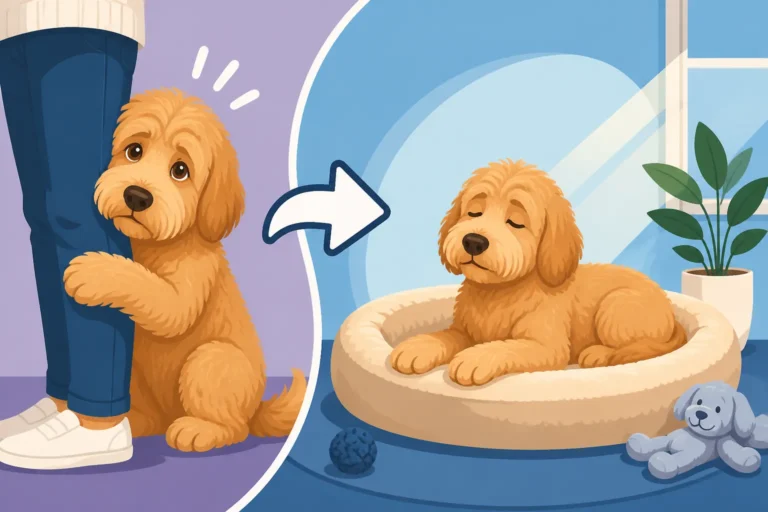
Many Labradoodles earn the affectionate nickname "Velcro dogs" because of their strong desire to be close to their human families. This trait, while lovely for bonding, can also contribute to the "knocking over" problem. A Labradoodle that constantly follows you from room to room, weaving between your legs, or always wants to be in the middle of family activity might accidentally trip a child.
This constant proximity, coupled with their often playful and slightly clumsy nature, means that they might not always be aware of where everyone's feet are. If a child is running or even just walking, and the Labradoodle suddenly decides to cut in front of them or nuzzle their leg, a fall can easily occur. It's a testament to their loving nature, but it requires mindful management, especially in homes with energetic youngsters. This inherent closeness can also contribute to separation anxiety if not managed, as discussed in The Velcro Labradoodle That Cannot Be Left.
Early Socialization and Training as Prevention
The good news is that many of these behaviors can be managed and prevented with consistent, positive training and early socialization. Starting early is key to building good habits and teaching your Labradoodle how to interact politely with all family members, regardless of their size.
Importance of Puppy Kindergarten
Enrolling your Labradoodle puppy in a well-run puppy kindergarten class is one of the best investments you can make. These classes aren't just about teaching basic commands; they're crucial for early socialization. Your puppy will learn to interact appropriately with other dogs and, importantly, with different types of people, including children (if the class safely incorporates this). A good trainer will also help you understand your puppy's body language and guide you in positive reinforcement techniques.
In puppy class, your Labradoodle learns impulse control, like not lunging at every new person or dog. This early exposure helps shape a more thoughtful and less boisterous adult dog. Without this foundation, you might find yourself with a The Ten Month Old Labradoodle That Forgets Everything, hitting adolescence with all the bad habits learned unchecked. Plus, it’s an excellent opportunity for you, as the owner, to learn how to effectively communicate with your dog. Programs like those offered by BAXTER & Bella can provide structured online guidance, which can be invaluable for busy families seeking to incorporate consistent training from home.
Teaching "Four on the Floor"
This is perhaps the most critical command to teach a Labradoodle living with children: "four on the floor." It means all four paws must remain on the ground when greeting people. This isn't just about preventing jumping; it's about teaching polite manners. Start training this from the moment you bring your puppy home.
Here's how it generally works:
- Start small: When your puppy approaches you excitedly, before they jump, say "four on the floor" (or "off," or "settle"), and immediately reward them with a treat and praise when their paws stay down.
- Turn away: If your puppy does jump, immediately turn your back, cross your arms, and completely ignore them. No eye contact, no speaking. The moment all four paws are back on the floor, turn around and calmly reward them. This teaches them that jumping makes the fun stop, while keeping paws down brings attention and rewards.
- Consistency is key: Every single person who interacts with your Labradoodle must follow this rule. If one person allows jumping, it confuses the dog and undermines the training. This applies to visitors too! It might take some time and patience, but consistently reinforcing "four on the floor" is essential for preventing your A Labradoodle That Jumps on Every Visitor.
Managing Excitement at Greetings
Greetings are prime times for a Labradoodle's excitement to bubble over. Whether it's you coming home, a friend visiting, or a child running in from playing outside, the burst of energy can be overwhelming for a small child. Management is crucial here.
Consider these tactics:
- The "Calm Greeting" Ritual: Before you even open the door, ask your Labradoodle to sit or lie down. Reward them for staying calm. Only when they are settled do you allow them to greet. If they jump up, repeat the "turn away" method.
- Leash Management: For particularly exuberant greetings, keeping your Labradoodle on a leash can be incredibly helpful. This allows you to have physical control and prevent jumping without being rough. You can gently guide them into a sit or down position, rewarding them when they comply.
- Designated "Greeting Spot": You might even train your Labradoodle to go to a specific spot (like their bed or mat) when someone comes to the door, and only approach for a greeting once they are calm. This teaches them impulse control during high-excitement moments. This type of controlled greeting can be a lifesaver in a busy household with small children, allowing you to ensure that greetings are always safe and controlled.
Strategies for Safe Interactions with Small Children
Even with the best training, a Labradoodle is still a dog, and small children can be unpredictable. Therefore, ongoing management and teaching both dog and child appropriate behaviors are essential for long-term safety and harmony.
Supervised Play and Management Tools
The golden rule for dogs and children, especially young children, is never leave them unsupervised. Even the most well-behaved dog can react unexpectedly, and a child can unintentionally provoke a dog. Active supervision means you are actively watching and ready to intervene at any moment.
Here are some tools and strategies that can help:
- Physical Barriers: Baby gates are your best friend. They allow your Labradoodle to be part of the family in a separate, safe space, preventing accidental knock-overs during chaotic times. You can find sturdy, tall gates on Amazon that will contain even the bounciest Labradoodle. Crates also offer a safe retreat for your dog when things get too overwhelming.
- Leash Inside: Sometimes, even indoors, keeping your Labradoodle on a light leash can provide an extra layer of control, especially when children are particularly active. This helps you prevent them from rushing past or jumping on a child without having to physically grab them.
- Enrichment Toys: A busy dog is less likely to be a destructive or over-excited one. Provide your Labradoodle with plenty of puzzle toys, chew toys, and items that keep their minds engaged. A stuffed Kong, for example, can keep them happily occupied while children play nearby. This also helps with issues like The Mouthing a Labradoodle Puppy Does Longest, by giving them appropriate outlets for their oral fixations.
| Management Strategy | Purpose | When to Use | Benefit |
|---|---|---|---|
| Baby Gates | Separate dog and child safely | High activity times, meal times, initial introductions | Prevents accidental contact, provides dog a calm space |
| Indoor Leash | Gentle control during greetings/play | Guests arrive, children are very active | Prevents jumping, allows redirection |
| Crate Training | Safe den for dog, supervised breaks | Dog needs rest, child needs quiet play, absence | Reduces stress, prevents accidents when unsupervised |
| Puzzle Toys | Mental stimulation, redirect energy | Anytime dog needs to be occupied quietly | Reduces boredom-induced jumping, encourages calm behavior |
| "Place" Command | Teaches dog to go to and stay in a designated spot | During busy family activities, mealtimes | Creates a safe boundary, promotes impulse control |
Teaching Children How to Interact
It's not just about training the dog; children also need to learn how to interact respectfully and safely with their Labradoodle. This is an ongoing process that requires patience and consistency from parents.
Here are some key lessons for children:
- Gentle Hands: Teach children to pet the dog gently, avoiding pulling ears or tail. Demonstrate how to stroke the dog's back or chest, not its face.
- "Be a Tree": This is a fantastic safety technique. If a dog jumps on them, teach children to "be a tree": stand still, fold their arms, look at their feet, and remain quiet. This removes the excitement reward for the dog and makes the child less likely to fall.
- Respecting Space: Teach children that the dog's crate or bed is their safe space, and they should never disturb the dog when it's there. Similarly, teach them not to bother the dog when it's eating or chewing a toy.
- Asking Permission: Encourage older children to always ask an adult before approaching or petting any dog, even their own, especially if the dog is sleeping or seems preoccupied. This builds good habits for interacting with all dogs. This comprehensive approach is part of A Sixty Pound Labradoodle and a Toddler.
Creating Safe Spaces for Both Dog and Child
Establishing clear boundaries and safe zones within your home can significantly reduce the risk of accidents. This proactive approach helps manage the natural exuberance of a Labradoodle in a family environment.
- Dog's Retreat: Ensure your Labradoodle has a quiet, comfortable space where they can retreat when they need a break from the hustle and bustle of family life. This could be their crate, a dog bed in a quiet room, or a designated corner. Teach children to respect this space as the dog's private area.
- Child's Zone: Similarly, consider having areas where children can play undisturbed by the dog. This might be a playroom with a baby gate, or simply a high-chair area during mealtimes where the dog isn't allowed to hover.
- Scheduled Interactions: Instead of constant, free-for-all interactions, consider scheduling supervised playtimes between your Labradoodle and children. This allows you to manage the energy levels and ensure positive, controlled experiences, building good habits for both. Our guide Whether a Labradoodle Suits a Family With Babies explores this dynamic further. By using these strategies, you're not just preventing accidents, but also fostering a positive, respectful relationship between your dog and your children.
When Professional Help Might Be Needed
While consistent training and management can resolve most issues, there are times when a professional dog trainer or behaviorist can offer invaluable guidance, especially if your Labradoodle's jumping is persistent or accompanied by other challenging behaviors.
Identifying Persistent Jumping Issues
You've tried all the tips, you're consistent with "four on the floor," and your Labradoodle still relentlessly jumps on children. Or maybe the jumping has escalated beyond just excitement and seems to involve more pushiness or rough play. These are signs that it might be time to seek professional help. Persistent jumping, especially if it causes children to fall frequently or feel afraid, needs to be addressed quickly and effectively.
Sometimes, what appears to be simple "bad manners" might stem from underlying issues such as insufficient exercise, lack of mental stimulation, or even anxiety. A professional can help you decipher the root cause of the behavior. They can also offer personalized strategies tailored to your specific dog and family dynamics. This isn't a sign of failure; it's a responsible step towards ensuring the safety and well-being of everyone in your household.
Seeking Guidance from Certified Trainers
When looking for professional help, it's crucial to find a certified professional dog trainer (CPDT-KA) or a certified applied animal behaviorist (CAAB). These professionals use positive reinforcement methods and understand canine behavior thoroughly. Avoid anyone who suggests harsh corrections, punitive tools, or techniques that could instill fear in your dog.
A good trainer will typically:
- Observe: They'll want to see your Labradoodle in action, observing interactions with children if possible, and how you manage situations.
- Assess: They'll assess your dog's temperament, energy levels, and current training. They might also inquire about your family's routine and the child's interactions.
- Develop a Plan: They will create a customized training plan that might include specific exercises, management strategies, and techniques to help your Labradoodle learn appropriate greetings and play behaviors. They can also help you with Teaching a Labradoodle to Greet With Four Feet Down in a more effective way.
Remember, investing in professional training is an investment in a harmonious household and a well-adjusted Labradoodle. It provides peace of mind and builds a stronger, safer bond between your beloved dog and the little people they share their home with.
Disclaimer
This article is for general informational purposes only and does not constitute professional advice. Laws, prices and regulations vary by location and change over time. Consult a qualified professional for guidance on your specific situation.