Whether a Labradoodle Retrieves Without Being Taught
It's a common dream for many Labradoodle owners: a dog that instinctively bounds after a thrown ball, joyfully brings it back, and drops it neatly at your feet, ready for the next round. While Labradoodles certainly have the genetic ingredients for a love of fetch, relying solely on instinct often leads to frustration, with dogs who chase but don't retrieve, or play a perpetual game of keep-away. This guide aims to clear up these misconceptions, exploring the innate predispositions for retrieving in Labradoodles, detailing how their unique heritage influences this behavior, and, crucially, outlining why deliberate training is essential to cultivate that reliable, rewarding game of fetch you're hoping for.
The Instinctual Drive to Retrieve: A Look at the Labrador Heritage
When you bring a Labradoodle into your home, it's natural to assume some of those iconic Labrador retriever traits will shine through. After all, the "Labra" in Labradoodle comes from the Labrador Retriever, a breed renowned worldwide for its retrieving prowess. Many hope their furry companion will possess that same innate drive, making fetch a simple, spontaneous joy.
The Labrador's Natural Predisposition for Fetch
Labrador Retrievers were purpose-bred for retrieving. Originating from Newfoundland, they assisted fishermen by retrieving fish, nets, and lines from the icy waters. Later, they became indispensable gun dogs, known for their "soft mouths" – an ability to carry game birds without damaging them – and their relentless enthusiasm for bringing things back. This isn't just a learned behavior; it's deeply ingrained in their genetic code. They have a strong desire to please their handlers and a powerful prey drive that translates beautifully into retrieving games. For a purebred Labrador, chasing, catching, and returning an object is often as natural as breathing, a joyful fulfillment of their purpose.
Their physical attributes also play a role. Their strong bodies, powerful swimmers' tails, and webbed feet make them adept at navigating various terrains, including water, to retrieve. Coupled with an eager-to-please temperament and a highly biddable nature, it's no wonder they are the poster children for fetch. When you toss a ball for a Labrador, they often don't just want to get it; they need to, and they understand their job isn't done until it's back in your hand.
How Labrador Traits Appear in Labradoodles
Now, when you mix a Labrador with a Poodle to create a Labradoodle, it's a bit like a genetic lottery. You're hoping to get the best of both worlds, but you don't always know exactly which traits will be dominant. Some Labradoodles inherit a very strong retrieving drive from their Labrador parent, showing a keen interest in toys and a natural inclination to bring them back. They might grab a ball, charge back to you, and offer it up, tail wagging, with little formal training. These are the Labradoodles that live up to the "retriever" part of their name with impressive ease.
However, it's far from a guarantee. Other Labradoodles might inherit a more moderate drive, or even very little of that intense retrieving instinct. They might enjoy chasing a ball but have no concept of bringing it back to you, preferring to chew on it or carry it around proudly. The expression of these genetic traits can vary wildly even within the same litter, showcasing the fascinating unpredictability of hybrid breeds. For a deeper dive into the specific traits inherited, you might want to read The Retrieving Drive a Labradoodle Gets From the Labrador. It's crucial for prospective owners to understand that while the potential for a strong retrieving drive is certainly there thanks to the Labrador lineage, it's not a given that it will manifest without guidance.
The Poodle's Role in Retrieving Abilities
Often, when people think of Poodles, images of stylish show dogs with intricate clips or perhaps pampered lapdogs come to mind. What many forget is that beneath that elegant exterior lies a highly intelligent and athletic working dog with a history as a water retriever. This often-overlooked aspect of the Poodle's heritage also contributes to the Labradoodle's overall retrieving potential, albeit in a different way than the Labrador.
Poodle Ancestry as Water Retrievers
The word "Poodle" itself comes from the German word "Pudeln," meaning "to splash in the water." Standard Poodles, in particular, were originally bred in Germany as water retrievers, tasked with fetching waterfowl for hunters. Their dense, curly coat, which is often considered hypoallergenic, was actually functional in its original context, protecting them from cold water and harsh underbrush. The traditional "poodle clip" with puffs of hair around the joints wasn't just for fashion; it was designed to keep vital areas warm while allowing for agility in the water.
These dogs were smart, agile, and had excellent swimming capabilities. While their retrieving style might have differed from a Labrador's, they were certainly proficient at the task. This means that a Labradoodle isn't just getting one shot at retrieving genes from the Labrador side; there's also a latent, historical retrieving ability lurking in the Poodle lineage. This dual heritage can be a powerful advantage if harnessed correctly, making the Labradoodle uniquely positioned for retrieve-based activities.
How Poodle Intelligence Influences Trainability
Poodles are consistently ranked among the most intelligent dog breeds. Their keen minds, coupled with an eagerness to learn and strong problem-solving skills, make them highly trainable. While a Poodle might not have the sheer, unadulterated drive to retrieve that a Labrador typically possesses, their intelligence allows them to grasp complex commands and patterns quickly. If a Labradoodle inherits this strong Poodle intelligence, it can significantly enhance their trainability for retrieving, even if the initial instinct isn't overwhelming.
Instead of an immediate, instinctive return, a Poodle-dominant Labradoodle might approach retrieving as a puzzle or a task to be mastered. They learn the "rules" of the game – chase, pick up, bring back, drop – with remarkable speed, often enjoying the mental stimulation as much as the physical exercise. This intelligence means that even if your Labradoodle isn't a natural fetch fanatic from day one, consistent, positive reinforcement training can unlock their potential. They might need a bit more guidance to understand what you want them to do with the item once they've caught it, but once they connect the dots, they can become incredibly reliable and enthusiastic retrievers. This trainability also extends to other areas, as discussed in Whether a Labradoodle Is Too Smart for a Novice.
The Reality of an Untrained Labradoodle's Retrieve
Many new dog owners harbor a romantic ideal of fetch. They picture tossing a toy, and their Labradoodle gracefully bringing it back, ready for the next toss. While some Labradoodles might show a natural inclination towards this, the reality for an untrained dog is often far less idyllic. There's a significant difference between a dog who enjoys a good chase and one who reliably retrieves.
Why Natural "Fetch" Isn't Always Reliable
The core issue is that chasing a thrown object is only one part of the retrieving sequence. Most dogs, especially those with some prey drive, will eagerly pursue a moving object. It's exhilarating for them! However, a true retrieve involves several distinct steps:
- Chase: The dog runs after the object.
- Pick Up: The dog grabs the object.
- Return: The dog brings the object back to the person who threw it.
- Release: The dog willingly drops the object.
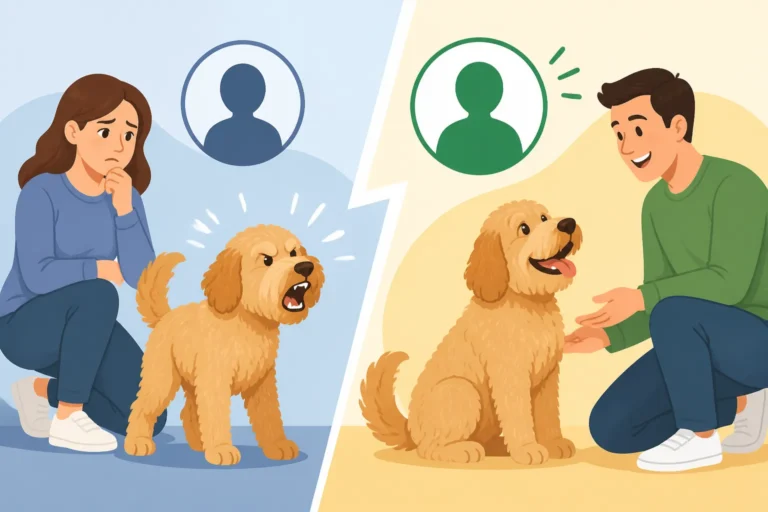
Where many Labradoodles (and other breeds) falter without training is at the "return" and "release" stages. They might chase, pick up the object, and then… run off with it. Or they might trot halfway back, sit down, and start chewing on it. Or they might engage you in a delightful game of "keep-away," where you chase them to get the toy back. This can be incredibly frustrating for an owner hoping for a smooth, interactive game of fetch. It's not that your Labradoodle is being defiant; it's simply that they haven't been taught the full sequence, and their natural inclination might be to guard their "prize."
Common Pitfalls of Relying on Instinct Alone
When owners rely solely on instinct, they often inadvertently reinforce undesirable behaviors. If your Labradoodle chases the ball, grabs it, and then runs to another part of the yard to chew it, and you then go get it, you've just taught them that picking up the ball means going off to enjoy it alone. If they play "keep-away" and you finally manage to wrestle the toy from them, you've just taught them that holding onto the toy is fun, and giving it up requires a struggle.
Here are some common pitfalls:
- The "Keep-Away" Champion: Your Labradoodle quickly learns that having the toy makes them the center of attention, leading to a frustrating game where they dart away every time you approach.
- The Chew-Toy Converter: The ball or frisbee quickly becomes just another chew toy, often destroyed quickly because the dog isn't bringing it back for repeated throws, but rather for solitary enjoyment.
- Lack of Interest After the Chase: Some Labradoodles lose interest the moment they catch the object. The thrill was in the pursuit, not the possession or the interaction with you.
- Resource Guarding: In some cases, a dog might begin to guard the retrieved item, growling or acting possessive if you try to take it away. This is why teaching a reliable "drop it" command is so vital.
These scenarios often lead to owners giving up on fetch altogether, mistakenly believing their Labradoodle "just isn't a retriever." In reality, they're often just an untrained retriever. The good news is that with the right approach, nearly any Labradoodle can learn to love and perform a proper retrieve. If you've found your Labradoodle hitting adolescence and seeming to forget everything, you might relate to The Ten Month Old Labradoodle That Forgets Everything.
Cultivating a Reliable Retrieve Through Training
The great news is that because of their heritage, most Labradoodles have the innate capacity and intelligence to become fantastic retrievers. Even if your dog isn't a natural fetch champion from day one, with patience and the right training methods, you can cultivate a reliable and enjoyable game. It's about teaching the full sequence of retrieving, not just the chase.
Building Foundational Skills for Fetch
Before you can expect your Labradoodle to bring a toy back and drop it, you need to establish some fundamental skills. These are the building blocks that make a successful retrieve possible:
- Desire for the Toy: First and foremost, your dog needs to be excited about the toy! Use high-value toys that your Labradoodle loves – squeaky balls, plush toys, tug ropes. Make the toy a reward in itself by playing with it enthusiastically yourself, making it irresistible.
- "Take It" (or "Get It"): This command teaches your dog to pick up the object. Start by holding the toy out, and as soon as their mouth touches it, say "Take it!" and praise/reward. Gradually, place it on the ground right in front of them, then a short distance away.
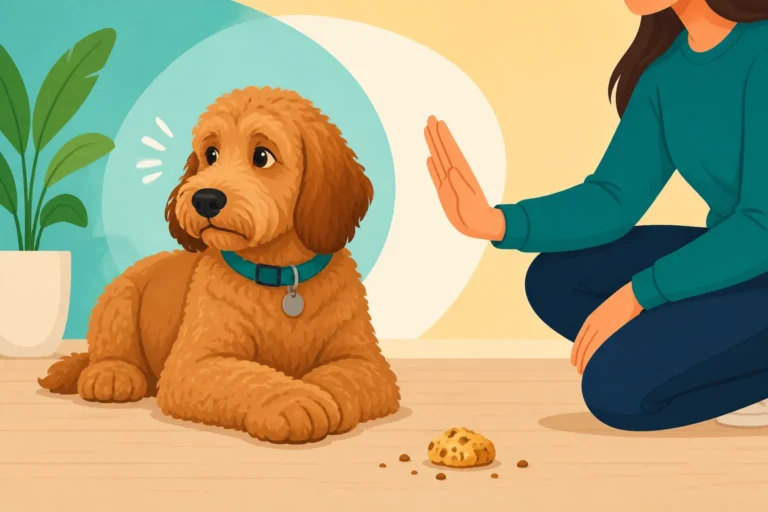
- "Drop It" (or "Give"): This is perhaps the most crucial command. Your dog must learn to willingly release the toy. Start by having two identical toys. When your dog has one, show them the second, more exciting toy. As they drop the first to get the second, say "Drop it!" and immediately reward with praise and the new toy. Repeat until they drop the first toy consistently for the second. You can also use high-value treats to lure a "drop it." This prevents the "keep-away" game and builds trust.
- Recall: A solid recall is vital. If your Labradoodle grabs the toy and runs off, you need to be able to call them back to you. Work on "come" in a low-distraction environment, making it the most rewarding thing they can do. Teaching a Labradoodle That You Come Back delves into building a strong recall.
These skills are not just for fetch; they form the basis of good obedience and a strong bond with your dog, helping them understand what you expect in various situations, much like teaching them to settle in public, as explored in Teaching a Labradoodle to Settle Under a Restaurant Table.
Step-by-Step Approach to a Solid Retrieve
Once your Labradoodle has a grasp of "take it" and "drop it," you can start putting the pieces together to teach a full retrieve. Remember to keep sessions short, positive, and end on a successful note.
- Start Close: In a quiet, enclosed area, sit on the floor a short distance from your dog. Show them the toy, get them excited, and toss it only a few feet away.
- Encourage Picking Up: As they move toward the toy and pick it up, praise them warmly ("Good take!").
- Lure Back to You: As soon as they have the toy, clap your hands, call their name, or make exciting noises to encourage them to come back to you. If they hesitate, gently back away, making yourself more interesting than the toy. You can also have another identical toy ready to trade for the one they're holding.
- Practice "Drop It": Once they are close, cue "Drop it!" If they drop it, immediately praise and reward with a high-value treat or a quick game with the second toy.
- Increase Distance Gradually: Over time, slowly increase the distance you throw the toy. If your dog starts to get distracted or play "keep-away," go back to a shorter distance where they were successful.
- Add Distractions (Slowly): Once they are reliably retrieving in a quiet environment, slowly introduce minor distractions. This might mean moving to a slightly busier room in the house, then the backyard, and eventually a park.
- Use a Long Line (Optional but Helpful): For dogs that struggle with the "return" part, a lightweight long line (available on Amazon) can be a game-changer. Attach it to their harness. When they pick up the toy, gently reel them in with the line while praising them. This ensures they come back to you and prevents them from practicing "keep-away."
Consistency is key. Every time you play, reinforce the desired behavior. Make retrieving a positive, rewarding experience for your Labradoodle.
Incorporating Toys and Tools for Success
The right tools can make a significant difference in your retrieving training journey.
- Variety of Toys: Don't limit yourself to just one type of ball. Experiment with different textures, shapes, and sizes. Soft rubber balls, durable squeaky toys, frisbees, or even a soft retrieve dummy can keep your Labradoodle engaged. Make sure the toys are appropriately sized for your dog to comfortably carry and are durable enough for play. You can find a vast selection of durable and engaging dog toys on Amazon.
- High-Value Treats: Especially in the beginning, having super high-value treats (small pieces of cooked chicken, cheese, or specialty training treats) on hand will make "drop it" and "come" much more appealing.
- Clicker Training: Many trainers find clicker training incredibly effective for teaching precise behaviors like retrieving. The click marks the exact moment your dog performs the desired action, followed by a reward.
- Online Training Programs: If you're looking for structured guidance, online dog training programs can be a fantastic resource. For example, BAXTER & Bella offers comprehensive online puppy and dog training programs that cover everything from basic obedience to more advanced skills like a reliable retrieve. Their step-by-step videos and support can be invaluable, particularly for first-time owners navigating the complexities of dog training.
- Long Lines: As mentioned, a long line, perhaps 15-30 feet, is excellent for practicing recall and retrieve in an open space while maintaining control. It helps prevent your dog from developing the habit of running off with the toy.
Remember, the goal is to make fetch a fun, interactive game for both of you, strengthening your bond and providing excellent physical and mental exercise for your Labradoodle.
Factors Influencing a Labradoodle's Retrieving Potential
While it's clear that training plays a huge role in developing a reliable retrieve, it's also true that certain innate factors can give a Labradoodle a head start or, conversely, present a few more challenges. Understanding these influences can help tailor your expectations and training approach.
Genetics vs. Environment and Training
It's a classic nature-versus-nurture debate when it comes to dog behavior, and retrieving is no exception.
- Genetics (Nature): As we've discussed, both the Labrador and Poodle lines contribute retrieving instincts and intelligence. A Labradoodle puppy born from parents with strong retrieving drives (e.g., a Labrador who loves fetch and a Poodle from a working line) is more likely to inherit a higher predisposition for it. Some Labradoodles just seem to "get it" faster, showing a natural eagerness to chase, pick up, and return with minimal prompting. This initial drive is a gift from their genetic makeup. Breeders who carefully select for temperament and working drive in their parent dogs can produce puppies with a greater likelihood of possessing these desirable traits. This can sometimes influence whether an owner views their F1 Labradoodle as healthier, for example, which is explored in Whether an F1 Labradoodle Is Healthier Than a Multigen.
- Environment and Training (Nurture): However, even the most genetically predisposed Labradoodle needs some guidance. Without consistent training, that natural drive might manifest as chasing but not returning, or playing keep-away. Conversely, a Labradoodle with a less intense innate drive can still become an excellent retriever through dedicated, positive, and consistent training. Early exposure to toys, positive play experiences, and structured lessons from a young age can amplify any latent drive and build the necessary skills. The environment you create, the games you play, and the training you provide are paramount in shaping behavior.
Think of it this way: genetics loads the gun, but environment and training aim and fire it. A Labradoodle might have the "software" for retrieving pre-installed, but you still need to teach them how to use it effectively.
Age and Maturity's Impact on Learning
A Labradoodle's age and stage of development also significantly influence their retrieving potential and how easily they learn.
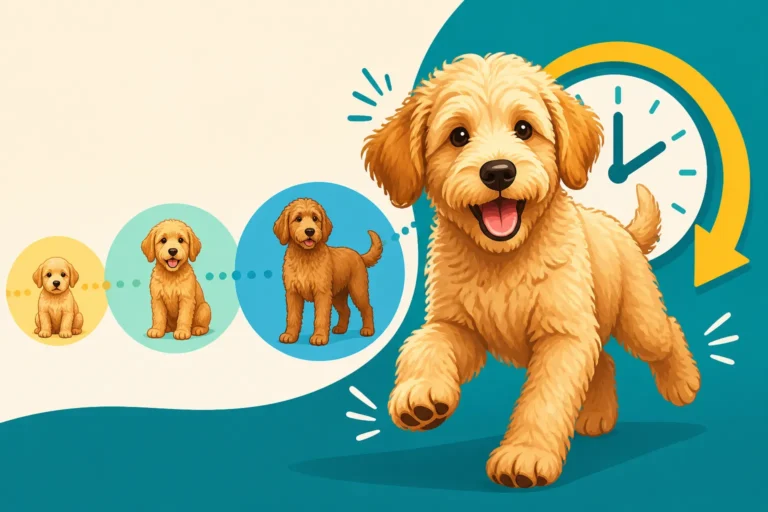
- Puppyhood (8 weeks – 6 months): This is a fantastic time to introduce foundational concepts. Puppies are naturally curious and often enjoy chasing and mouthing objects. You can start with very short, positive sessions focused on making toys exciting, encouraging them to pick up, and introducing "drop it" in a playful way. Don't expect perfect retrieves, but aim to build a love for toys and interaction. Their attention spans are short, so keep it fun and brief.
- Adolescence (6 months – 18 months): Ah, adolescence! This period can be a real rollercoaster. Just when you thought your Labradoodle had a solid retrieve, they might suddenly "forget" everything, choose to play keep-away, or become easily distracted. This is normal. During this time, dogs test boundaries and their hormones are raging. Patience is key. You might need to go back to basics, use a long line, and make rewards even more enticing. This is also when dogs often become too smart for their own good, as discussed in Whether a Labradoodle Is Too Smart for a Novice.
- Adulthood (18 months+): Adult Labradoodles are perfectly capable of learning to retrieve reliably, often with greater focus and attention than adolescents. If you've adopted an older Labradoodle or simply waited to start training, don't despair! Their mature minds can grasp the concepts quickly, and they may be less prone to puppy-like distractions. The key is consistent, positive reinforcement, and treating it like any other new skill you're teaching. Many Labradoodles also have a natural drive for a "job," and retrieving can fulfill that need, as explored in Whether a Labradoodle Needs a Sport to Be Manageable. They can truly shine as working retrieval partners, whether it's for sport or just fun in the park.
| Feature | "Chase Only" Behavior (Untrained) | "Reliable Retrieve" Behavior (Trained) |
|---|---|---|
| Initial Action | Dog runs after the object. | Dog runs after the object. |
| Object Handling | Picks up, then runs off, chews, or plays keep-away. | Picks up, immediately turns back towards owner. |
| Return to Owner | Reluctant, or not at all. Owner often has to chase. | Eager, consistent return to owner. |
| Object Release | Holds onto the object, guards it, or drops it far away. | Willingly drops the object at or near owner's feet. |
| Owner's Role | Chasing the dog, coaxing, or getting frustrated. | Throwing the object, praising, and re-throwing. |
| Interaction | Often one-sided, dog-focused. | Two-sided, interactive game. |
| Outcome | Frustration, short play sessions, destroyed toys. | Enjoyable exercise, strengthened bond, mental stimulation. |
Remember that every Labradoodle is an individual. Some will pick up retrieving faster than others, but with the right guidance, almost any Labradoodle can learn to enjoy a good game of fetch and bring that joy right back to your hands.
Disclaimer
This article is for general informational purposes only and does not constitute professional advice. Laws, prices and regulations vary by location and change over time. Consult a qualified professional for guidance on your specific situation.