A Sixty Pound Labradoodle and a Toddler
Bringing a sixty-pound bundle of Labradoodle joy into a home with a toddler can feel like orchestrating a symphony with two incredibly enthusiastic, unpredictable conductors. Both are full of boundless energy, curiosity, and an endearing knack for testing boundaries, and sometimes, the sheer difference in their size and strength can make parents worry about accidental bumps, enthusiastic nudges, or even just overwhelming interactions. This guide is here to walk you through the realities, offering practical strategies and empathetic advice to help your Labradoodle and your little one not just coexist, but truly thrive together, building a beautiful bond from the start.
Understanding the Dynamic: Labradoodles and Little Ones
When you have a curious toddler and a playful Labradoodle, you're looking at a dynamic that's equal parts heartwarming and challenging. Both are learning about the world and their place in it, and sometimes, their ways of exploring can collide. It’s not about blame; it’s about understanding their inherent natures.
Labradoodle Temperament: What to Expect
Labradoodles are often praised for their friendly, outgoing, and intelligent natures, a wonderful blend from their Labrador Retriever and Poodle parents. They tend to be highly sociable and eager to please, which can make them seem like ideal family dogs. However, their size – especially a sixty-pound standard Labradoodle – combined with their characteristic exuberance, can be a lot for a small child. They might jump up in excitement when someone new enters the room, or nudge a small hand with their nose a little too hard in anticipation of a treat. Many Labradoodles are known for their "zoomies," those bursts of energy where they tear around the house or yard at top speed, which can easily knock over an unsteady toddler. This isn't aggression; it's simply a large, happy dog expressing itself. Understanding that these behaviors stem from their innate traits, rather than malice, is key to managing them effectively. They often want to be involved in everything their family does, which means they’ll be right there where the action is, which, inevitably, is often right next to your toddler.
Toddler Development: Key Stages and Behaviors
Toddlers, typically between one and three years old, are a whirlwind of discovery and limited impulse control. They are learning about cause and effect, developing their motor skills, and asserting their independence, often through testing boundaries. This means they might grab a handful of fur, pull an ear, or inadvertently step on a tail in their clumsy exploration. They don't mean to hurt the dog; they simply lack the understanding of how their actions impact another living being, especially one as patient as a family dog. Their vocalizations can also be high-pitched and sudden, which can startle a dog. Furthermore, toddlers are often fascinated by movement, and a fast-moving Labradoodle can look like an incredibly fun toy to chase or interact with, even if the dog is just trying to walk by. Recognizing these developmental stages helps you anticipate potential issues and intervene proactively, teaching both your child and your dog appropriate interactions. Think about how a toddler often has trouble with The Ten Month Old Labradoodle That Forgets Everything; both are going through a phase of intense learning and occasional regression.
The "Velcro" Labradoodle Tendency
Many Labradoodle owners affectionately refer to their dogs as "Velcro dogs" because of their strong desire to be constantly near their human family members. This trait, largely inherited from their Poodle side, means they often follow you from room to room, want to lie at your feet, or even try to squeeze onto the couch right next to you, no matter how much space there isn't. While this is a charming quality for adults, it can be overwhelming, or even a tripping hazard, when you have a small toddler navigating the same space. A Labradoodle’s desire to be close might mean they’re always underfoot, seeking attention, or trying to join in on whatever your toddler is doing, from playing with blocks to eating a snack. This constant presence requires careful management to ensure the toddler has their space and the dog isn't inadvertently stepping on them or getting too close during sensitive moments. Understanding and managing this The Velcro Labradoodle That Cannot Be Left tendency is crucial for a harmonious household.
Safety First: Essential Preparations Before Bringing Them Together
Creating a safe and calm environment for both your Labradoodle and your toddler is paramount. It’s not just about supervision; it’s about setting up the physical space and laying down foundational rules that protect both parties. Prevention is always better than reaction, especially when dealing with two lively beings.
Creating Safe Spaces for Both
One of the most important things you can do is establish distinct, safe zones where your Labradoodle and your toddler can retreat and be undisturbed. For your Labradoodle, this might be a crate, a dog bed in a quiet room, or a designated corner behind a baby gate where they can relax without being approached by little hands. Teach your toddler that this is the dog's special "den" and they are not allowed to bother the dog when it's there. Similarly, your toddler needs a safe zone – perhaps a playpen, a gated-off room, or a highchair – where they can eat, play, or simply exist without the Labradoodle's enthusiastic attention or accidental intrusion. These separate spaces are not about keeping them apart forever, but about giving each individual a sense of security and control over their environment. It reduces stress for both, preventing overstimulation for the dog and accidental bumps for the child. This setup aligns with the idea of Supporting a Sixty Pound Labradoodle That Cannot Rise – giving them the right physical support, even when young, means providing a safe place for rest.
Early Socialization for Your Labradoodle
If you have your Labradoodle before your toddler arrives, or before your toddler is mobile, seize the opportunity for thorough socialization. Exposure to a wide range of sights, sounds, people, and experiences helps your dog develop into a well-adjusted companion. Introduce them to children of various ages in controlled, positive settings, always under strict supervision. Teach your Labradoodle that children are fun, exciting, and associated with good things, like treats and gentle praise. Familiarize them with the sounds of babies crying, toddlers babbling, and loud toys. Consider playing recordings of children’s noises at low volumes and gradually increasing them, paired with positive reinforcement. A well-socialized Labradoodle is less likely to be startled or anxious around the unpredictable nature of a toddler, making for a much safer interaction. This early work on temperament testing and socialization directly impacts Whether a Labradoodle Suits a Family With Babies.
Educating Your Toddler About Dogs
While a toddler's understanding is limited, you can start building a foundation for respectful interaction from a very young age. Use simple, consistent language. Teach them "gentle hands" and guide their hand to stroke the dog's back softly, rather than grabbing fur or pulling. Emphasize "quiet voices" around the dog. Teach them about the dog's personal space and that the dog's bed, food bowl, and toys are not for them to play with. This might involve setting up visual cues, like a special blanket for the dog's toys. Consistently model appropriate behavior yourself, showing your toddler how you gently interact with your Labradoodle. Read children's books about dogs and safety. It's a continuous process, but starting early instills good habits. A good approach is similar to teaching your Labradoodle to Teaching a Labradoodle to Lie Still for a Ninety Minute Groom; it requires patience, consistency, and breaking it down into small, manageable steps.
Managing Interactions: Supervision and Positive Reinforcement
Active management of interactions is non-negotiable when you have a Labradoodle and a toddler. You are the conductor of this household symphony, and your role is to ensure harmony, not chaos. This means constant vigilance and a proactive approach to shaping positive experiences.
Structured Meetings and Controlled Play
Never leave your Labradoodle and toddler unsupervised, even for a moment. Even the most tolerant dog can react unpredictably to a sudden poke or fall, and even the most gentle toddler can accidentally provoke. Instead of letting them roam freely, structure their interactions. Short, supervised "meeting times" are ideal. During these times, engage both your child and your dog in a calm activity. Perhaps your toddler sits in their highchair with a snack while you gently brush your Labradoodle nearby, offering praise for calm behavior. Or maybe your Labradoodle lies on their bed while your toddler plays with quiet toys on a blanket a few feet away. When it comes to playtime, always keep it controlled. Instead of roughhousing, encourage your toddler to gently roll a soft ball for the Labradoodle, or give them a treat (if age-appropriate and supervised). This teaches both the value of quiet, shared moments. Think of it as a guided discovery tour, not a free-for-all.
Reading Body Language: Your Labradoodle's Cues
Learning to read your Labradoodle's body language is critical to preventing problems. Dogs communicate constantly, and understanding their signals can tell you when they are happy, stressed, or uncomfortable. A relaxed Labradoodle will have loose body posture, a soft gaze, and a wagging tail that isn't stiff. Signs of stress or discomfort include yawning when not tired, lip licking, head turns, a stiff body, tucked tail, ears pinned back, or averting gaze. If your Labradoodle shows any of these signs, it's a clear signal that they need space. Immediately separate them, allowing your dog to retreat to their safe zone. Never punish your dog for displaying these warning signs; they are communicating their feelings. Instead, learn from them and adjust the interaction. Understanding What a Labradoodle Collapse Episode Looks Like is one extreme of reading body language for health issues, but recognizing subtle stress signals is just as vital for daily safety.
| Labradoodle Body Language | What it Might Indicate | Action to Take |
|---|---|---|
| Loose body, relaxed tail wag, soft eyes | Happy, comfortable, engaged | Continue supervised interaction, praise |
| Lip licking, yawning, head turn | Mild stress, feeling uncomfortable | Increase space, redirect toddler, provide dog with an out |
| Stiff body, tucked tail, ears back, whale eye | Significant stress, fear, potential for warning | Immediately separate dog and child, no punishment |
| Growling, snapping, baring teeth | Last resort warning, fear, pain | Immediately separate, seek professional help, identify trigger |
| Play bow, bouncy movements, open mouth | Invitation to play (if appropriate) | Supervise closely, ensure play is gentle and safe for child |
Teaching "Gentle" and "Quiet"
Consistency is key when teaching your Labradoodle how to interact calmly around your toddler. Use positive reinforcement to reward desired behaviors. When your Labradoodle is lying calmly near your toddler, offer a quiet "good settle" and a gentle scratch behind the ears. If they approach your toddler without jumping, reward them with a small, high-value treat. Conversely, if your Labradoodle starts to get too boisterous, immediately and calmly redirect them. This might involve a verbal cue like "off" or "four on the floor" if they jump, followed by rewarding them when all four paws are down. For mouthing or nipping, redirect their attention to an appropriate chew toy. It's also important to reinforce "quiet" behavior when the toddler is noisy. If the Labradoodle barks at the toddler's shrieks, lead them away calmly and reward quietness in another room. Consistency here is critical; everyone in the household needs to use the same cues and expectations. Building a Labradoodle Up to a Long Grooming Session uses the same principles of positive reinforcement and gradual exposure.
Training Your Labradoodle for Toddler Coexistence
Training isn't just about obedience commands; it's about shaping behavior for the specific context of living with a toddler. Your sixty-pound Labradoodle needs to understand boundaries and display impulse control, which takes dedicated effort and repetition.
Mastering Basic Obedience Commands
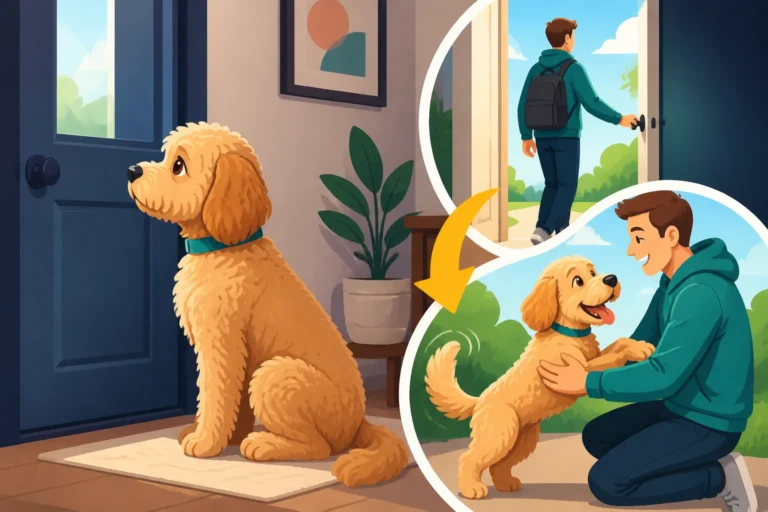
Reliable obedience commands are the bedrock of a safe household with a Labradoodle and a toddler. "Sit," "stay," "down," and "come" are not just party tricks; they are vital safety tools. Your Labradoodle should be able to hold a "stay" for an extended period, allowing you to tend to your toddler without worrying about your dog getting underfoot. A solid "recall" (come when called) is essential for quickly removing your dog from a potentially escalating situation. Practice these commands frequently, in various environments, and with distractions – including the sound and movement of your toddler. Reward generously for success, building a strong association between following commands and positive outcomes. Consider using a training program like BAXTER & Bella, which offers online courses and support, making it easier to integrate training into a busy family schedule. A well-trained dog is a confident dog, and a confident dog is less likely to react negatively out of fear or uncertainty. Teaching a Labradoodle to Lie on Its Side for Line Brushing relies heavily on these basic commands for successful execution.
Addressing Common Labradoodle Behaviors (Jumping, Mouthing)
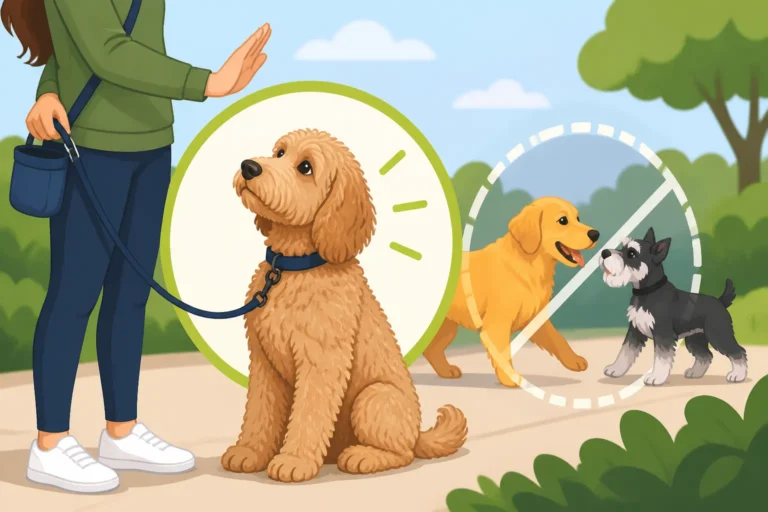
Labradoodles are often very enthusiastic greeters, but a sixty-pound dog jumping up on a toddler can cause a serious accident. Start training "four on the floor" early. When your Labradoodle jumps, turn your back, ignore them, or calmly walk away. Only give attention when all four paws are on the ground. Be consistent, and ensure everyone in the family follows this rule. For mouthing, a common puppy behavior that can persist if not addressed, redirect immediately. When your Labradoodle mouths, offer an appropriate chew toy instead. If they persist, a short "time out" (ignoring them or leaving the room for a minute) can be effective. Always avoid using your hands as toys, as this encourages mouthing. These behaviors, while natural for a dog, must be managed effectively when a toddler is present. This is similar to A Labradoodle That Jumps on Every Visitor, but with the added urgency of a small child's safety.
Desensitization to Toddler Noises and Movements
Toddlers are loud and unpredictable. They shriek, they drop things, they run erratically, and they can move in surprising ways. It's crucial to desensitize your Labradoodle to these common toddler triggers. Start by exposing your dog to typical toddler sounds at low volumes, gradually increasing the intensity over time, always paired with positive reinforcement like treats or praise. Practice having your dog "stay" while you walk past them in an exaggerated, clumsy manner, rewarding their calm response. If your dog reacts nervously to a loud noise or sudden movement, avoid comforting them, as this can inadvertently reinforce the fear. Instead, calmly redirect their attention to a simple command or a chew toy, rewarding them when they settle. This helps your Labradoodle learn that these unpredictable elements are part of their daily life and not something to be alarmed by. A calm response to a toddler's unexpected movements is much safer than a startled reaction.
Handling Challenges: When Things Get Tricky
Even with the best preparation and training, challenges can arise. It's vital to know how to identify and address these issues safely and effectively, always prioritizing the safety of both your child and your dog.
Dealing with Resource Guarding
Resource guarding is when a dog protects its food, toys, or even sleeping spots from perceived threats, including a curious toddler. This is a serious behavior that needs immediate attention. If you notice your Labradoodle stiffening, growling, or snapping when your toddler approaches their bowl, toy, or bed, it's a red flag. The first step is prevention: ensure your Labradoodle's meals and high-value treats are always given in their safe space, away from your toddler. Pick up all toys when not actively in use, and teach your toddler never to approach the dog's food or water bowls. If guarding behavior is already present, seek professional help from a certified dog trainer or veterinary behaviorist immediately. Do not attempt to "correct" this yourself, as it can escalate the problem. Professional guidance is essential for safely modifying this behavior and ensuring everyone's well-being. Whether a Labradoodle Guards Its Stolen Laundry can be an early indicator of resource guarding tendencies.
When Excitement Overwhelms Good Manners
Sometimes, despite all your efforts, your sixty-pound Labradoodle's sheer excitement can just overwhelm their good manners, especially when a toddler is involved. This might manifest as overly enthusiastic licking, jumping, or even nudging a toddler over in their zeal to play or greet. It's not malicious, but it's dangerous. In these moments, it's crucial to calmly intervene and redirect. Leash training, even indoors, can be a valuable tool to manage an overly excited dog. If your Labradoodle is becoming too boisterous, calmly put them on a leash and guide them to their safe spot for a short "calm down" period. Use a firm but gentle "enough" command. Ensure your Labradoodle is getting sufficient physical exercise and mental stimulation throughout the day. A tired Labradoodle is a good Labradoodle! Consider puzzle toys bought on Amazon to keep their minds engaged, reducing pent-up energy that might spill over into unruly interactions with your toddler.
Seeking Professional Guidance
If you find yourself struggling, feeling overwhelmed, or if any concerning behaviors emerge (especially aggression, growling, or biting), do not hesitate to seek professional help. A certified professional dog trainer specializing in family dog mediation or a veterinary behaviorist can provide tailored strategies and hands-on guidance. They can assess your specific situation, observe interactions, and develop a safety plan and training protocol that addresses your dog's individual needs and your family's dynamics. Investing in professional help is an investment in the safety and harmony of your entire household. It’s far better to be proactive than to wait until an accident occurs. Sometimes, even the best owners need an outside perspective to identify subtle cues or implement effective techniques. This is similar to knowing when to consult a vet for The Signs Owners Miss Before a Labradoodle Crashes with Addison's—early intervention is key.
Long-Term Harmony: Growing Up Together
The journey of raising a Labradoodle and a toddler together is a marathon, not a sprint. As both grow and change, your strategies will need to adapt. The goal is to foster a lifelong bond built on mutual respect and understanding.
Adapting as Your Child Grows
Your toddler will eventually become a child, and with each developmental stage, their understanding and interactions with your Labradoodle will evolve. As your child gets older, you can involve them more actively in their dog's care, such as helping with feeding, brushing (under supervision), or throwing a ball for fetch. Continue to reinforce respectful interaction, teaching them about different types of play and when to give the dog space. As your child gains more control over their own impulses, they can learn to read the dog’s body language and recognize when their Labradoodle wants to play or needs a break. The rules and boundaries you established early on will grow with them, strengthening their bond. This evolving relationship underscores Raising a Labradoodle Through Its First Year but extends it to the child's development too.
Maintaining a Balanced Routine for Your Labradoodle
Even with a busy toddler, it's crucial not to neglect your Labradoodle's needs. A well-exercised, mentally stimulated, and properly fed Labradoodle is a happy and well-behaved one. Ensure they get their daily walks, playtime, and opportunities for mental engagement through training sessions or puzzle toys. A bored or under-exercised Labradoodle is far more likely to engage in unwanted behaviors, like jumping, barking, or destructive chewing, which can exacerbate tensions in a busy household. Maintaining their routine helps them feel secure and understand expectations. This includes consistent feeding times (perhaps using a slow-feeder bowl from Amazon to prevent scarfing), regular grooming to keep their coat healthy and comfortable, and consistent training reinforcement. A content Labradoodle will be a more tolerant and patient companion for your growing child. Remember, The Weight a Labradoodle Puts On Without Anyone Noticing can also affect their energy and overall well-being.
The Unbreakable Bond: Benefits of Growing Up with a Labradoodle
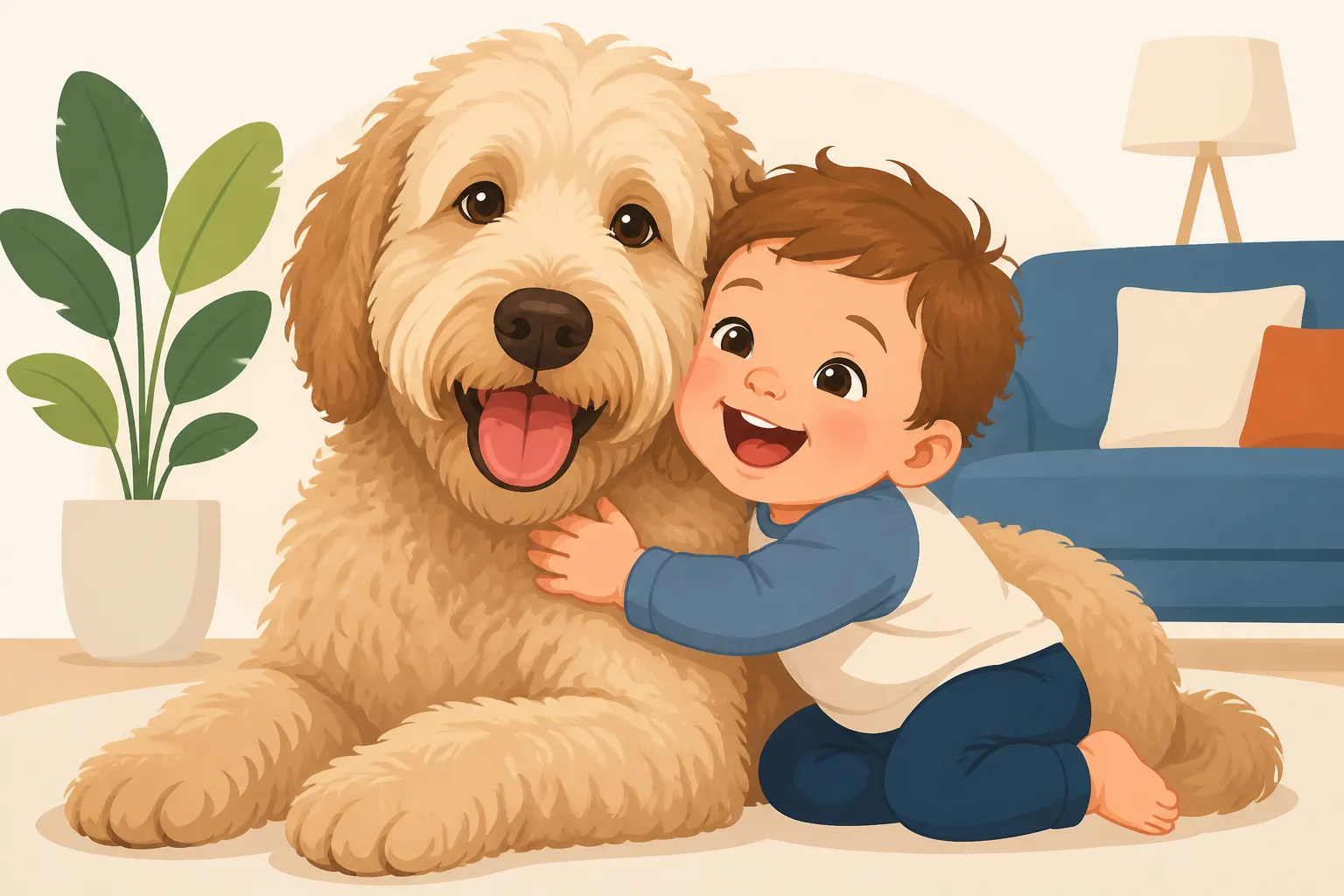
Despite the challenges, allowing a child to grow up with a loving Labradoodle offers countless benefits. Children learn empathy, responsibility, and gentle care from interacting with a family pet. Dogs can be a source of comfort, a confidante, and a constant playmate. The bond formed between a child and their dog is truly special, offering companionship, unconditional love, and endless joy. Witnessing this relationship blossom is one of the most rewarding aspects of family life. These early lessons in kindness and respect lay a foundation for how your child interacts with all living beings. From sharing quiet moments to exuberant games of fetch, the memories they create together will be cherished for a lifetime.
Disclaimer
This article is for general informational purposes only and does not constitute professional advice. Laws, prices and regulations vary by location and change over time. Consult a qualified professional for guidance on your specific situation.