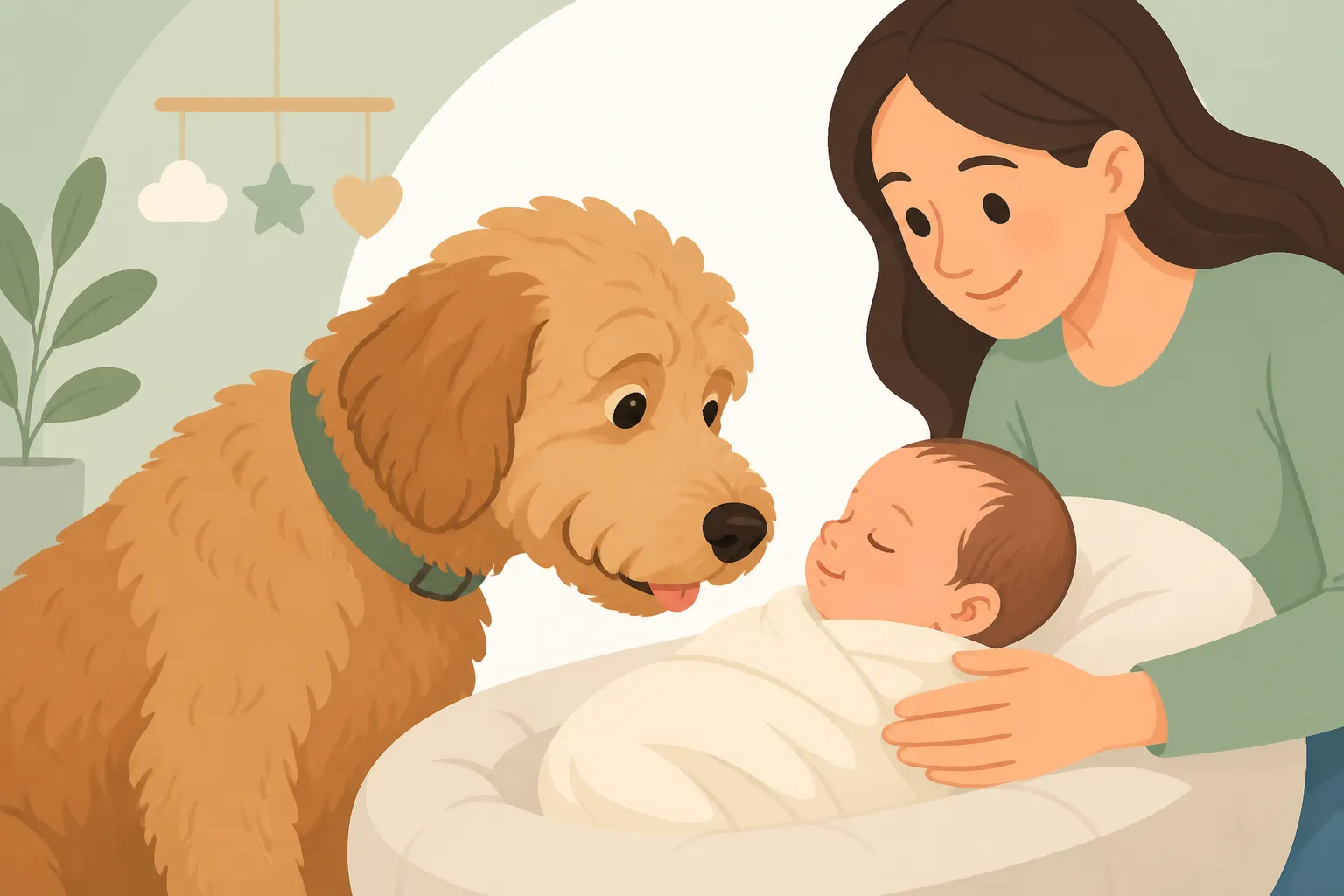
Introducing a Labradoodle to a Newborn
Bringing a new baby home is an incredibly exciting time, but if you're a Labradoodle parent, it can also come with a whole lot of anxiety about how your furry family member will react. That adorable, bouncy bundle of energy who has been the center of your universe is about to meet a tiny, unpredictable human, and ensuring that introduction goes smoothly, safely, and lovingly is paramount for every new parent. This guide is all about helping you navigate that delicate dance, preparing both your Labradoodle and your home for a harmonious new chapter with your newborn.
Preparing Your Labradoodle Before Baby Arrives
The key to a smooth introduction isn't waiting until the baby is home; it's starting preparations well in advance. Think of it as a long-term project to ease your Labradoodle into the changes, rather than a sudden shock to their system. Labradoodles, with their intelligent and often sensitive nature, thrive on routine and can be unsettled by abrupt shifts.
Gradual Changes to Routine
One of the biggest mistakes new parents make is keeping their dog's routine exactly the same until the baby arrives, then suddenly flipping it upside down. Your Labradoodle will associate all these negative changes with the new baby, which is exactly what we want to avoid. Instead, start subtly altering their schedule months before the due date. If you anticipate that evening walks might be shorter or later, or that their usual playtime will shift, begin implementing those changes bit by bit. For example, if your Labradoodle typically gets a long morning walk and you know that will be impossible with a newborn, start shortening it or moving it to a different time slot gradually.
Similarly, consider the attention your Labradoodle receives. If they're used to being lavished with constant cuddles and playtime, start introducing periods where you're busy with other things, even if it's just reading a book or working on a hobby, rather than always interacting with them. This isn't about neglecting them, but about teaching them that they won't always be the sole focus of attention. You might find some excellent resources on places like BAXTER & Bella that offer online training specifically geared towards preparing dogs for a new baby, helping you structure these routine changes effectively. This gradual approach helps them adapt without feeling like they've been replaced when the baby actually arrives. Remember, a The Velcro Labradoodle That Cannot Be Left might struggle more with sudden shifts in attention.
Desensitization to Baby Sights and Sounds
Your Labradoodle has never seen a stroller, heard a baby cry, or smelled baby lotion. These are all new stimuli that can be startling or confusing. Long before the baby makes their grand entrance, start introducing these things. Set up the crib and changing table in the nursery, even if it's just to let your Labradoodle explore them under supervision. Allow them to sniff the baby's blanket, the lotion, the diapers. You can even buy a doll and carry it around, changing its diaper, rocking it, and generally mimicking how you'll interact with your newborn.
Perhaps most importantly, desensitize them to baby sounds. You can find recordings online of babies crying, cooing, and gurgling. Start playing these sounds at a very low volume while your Labradoodle is engaged in something positive, like eating their meal or playing with a favorite toy. Gradually increase the volume over weeks or even months, observing their reaction. The goal isn't to make them ignore the sounds completely, but to get them used to them so they don't trigger an alarmed or overly excited response. Think about how many new noises a home with a newborn will have, and proactively address them.
Reinforcing Basic Obedience
A well-trained Labradoodle is a safer Labradoodle around a baby. Now is the time to really polish those basic obedience cues. Commands like "sit," "stay," "down," "leave it," and a rock-solid "come" are not just helpful; they are absolutely essential for managing interactions with a newborn. Practice these commands in various environments, including busy or distracting ones. You want your Labradoodle to respond reliably, even when excited or distracted.
For example, practice "down-stay" while you walk past them with the baby doll, or have them "leave it" when you drop a baby toy. Teach them to go to a designated "place" or mat on command and stay there calmly. This creates a safe zone for both your dog and the baby and gives you a management tool when your hands are full. If your Labradoodle tends to jump on visitors, A Labradoodle That Jumps on Every Visitor is a behavior that absolutely needs to be addressed and corrected before the baby arrives. Consistent positive reinforcement training will make all the difference.
| Key Pre-Baby Preparations | What to Do | Why It Helps |
|---|---|---|
| Gradual Routine Shifts | Adjust feeding, walking, and play schedules slowly over weeks/months. Reduce intense one-on-one attention gradually. | Prevents associating sudden negative changes with the baby. |
| Introduce Baby Scents | Let your Labradoodle sniff new baby items: lotions, blankets, diapers. | Familiarizes them with new smells before the baby's arrival. |
| Baby Sound Desensitization | Play recordings of baby sounds (crying, cooing) at low volumes, increasing gradually over time. | Reduces startling or anxious reactions to novel sounds. |
| Practice "Place" Command | Teach your dog to go to a designated mat or bed and stay there calmly. | Provides a safe, calm spot for your dog when you need hands-free time with the baby. |
| Reinforce Basic Obedience | Drill "sit," "stay," "down," "leave it," and reliable recall, especially in distracting environments. | Essential for managing your Labradoodle's behavior around a fragile newborn. |
| Create "Baby-Only" Zones | Use baby gates to establish areas the baby will use that are off-limits to the dog. | Establishes boundaries and prevents accidental interference or resource guarding. |
The First Introduction: Setting the Stage for Success
The moment your baby comes home is monumental. For your Labradoodle, it's a huge event too. How you manage this initial meeting can significantly influence their perception of the new arrival. It's about making it positive, controlled, and safe.
The Scent Introduction
Before your Labradoodle even sees the baby, introduce the baby's scent. While you're still in the hospital, have a family member or friend take a blanket or article of clothing that the baby has worn and bring it home. Let your Labradoodle sniff it thoroughly. They'll process a lot of information through their nose, and this pre-exposure helps them understand that this new smell is part of the family. Allow them to investigate it calmly, offering praise and perhaps a small treat if they show a relaxed interest. This isn't about encouraging them to chew or play with the item, but simply to acclimate them to the novel scent. This is a crucial step in ensuring your Labradoodle isn't overwhelmed by new smells when the baby finally arrives.
The Controlled First Meeting
When you actually bring the baby home, the first meeting should be as calm and controlled as possible. Ideally, have one parent enter the home first, greet the Labradoodle, and allow them to get out their initial excitement. This prevents the dog from associating the baby with the return of their favorite human. Once your Labradoodle has settled a bit, then the parent carrying the baby can enter. Keep the Labradoodle on a leash, held by another adult, or behind a baby gate to ensure a controlled interaction.
Allow your Labradoodle to approach calmly, sniffing the baby's feet or back (areas where they are less likely to startle the baby). Keep the interaction brief and positive. Talk in a calm, reassuring voice. Shower your Labradoodle with praise and gentle petting for good behavior. Avoid any harsh corrections or showing fear, as your dog will pick up on your anxiety. This is not the time for overwhelming excitement or frantic energy. If your Labradoodle is a typical A Sixty Pound Labradoodle and a Toddler type, manage their enthusiasm carefully.
Managing Expectations and Reactions
It’s important to remember that not all Labradoodles will react the same way. Some might be immediately curious and gentle, others might be indifferent, and some might even show signs of anxiety or jealousy. It's crucial to manage your expectations. Your Labradoodle might not instantly fall in love with the baby, and that's okay. The goal is acceptance and a safe, respectful coexistence.
If your Labradoodle seems overly excited, tries to jump, or exhibits any unwanted behaviors, calmly redirect them using the obedience commands you've been practicing. For example, "down-stay" on their mat. Reward them for settling. If they show any signs of fear, growling, or snapping, remove them immediately and consult with a professional dog trainer or veterinary behaviorist. Never leave your Labradoodle unsupervised with the baby, even for a second. This early stage is all about building positive associations and setting clear boundaries. Remember that Raising a Labradoodle Through Its First Year is a process, and adding a newborn is another layer of growth for both of you.
Living Together: Establishing a Harmonious Household
The first introduction is just the beginning. The real work comes in establishing a peaceful routine where both your Labradoodle and your newborn can thrive side-by-side. This requires consistency, patience, and a deep understanding of both your dog's needs and the baby's safety.
Supervised Interactions and Safe Spaces
Every single interaction between your Labradoodle and your newborn must be supervised. This cannot be stressed enough. A playful nudge from a sixty-pound dog, even if well-intentioned, can be dangerous for a fragile infant. Use baby gates strategically to create clear boundaries. For instance, the nursery might be a dog-free zone, or perhaps a section of the living room is sectioned off for the baby to play. Products readily available on Amazon, like baby gates and playpens, can be invaluable tools for creating these safe, separate spaces.
Conversely, ensure your Labradoodle also has its own safe space—a crate, a dog bed in a quiet corner, or even a separate room where they can retreat and be undisturbed. This is especially important for Whether a Labradoodle Should Sleep in the Bedroom discussions; sometimes having their own dedicated space helps them relax. Teach children as they grow older to respect the dog's space. This prevents unintended negative interactions and gives your dog a much-needed break from the constant new stimuli that a baby brings.
Maintaining Your Labradoodle's Mental and Physical Needs
Amidst the sleep deprivation and endless diaper changes, it's incredibly easy for your Labradoodle's needs to fall by the wayside. However, a bored, under-exercised, or under-stimulated Labradoodle is much more likely to develop behavioral issues that could impact the baby. Labradoodles are intelligent dogs; they need mental and physical activity. Try to stick to a semblance of their previous routine for walks and playtime. If long walks aren't feasible for a while, consider shorter, more frequent walks, or enlist help from family, friends, or a dog walker. Puzzle toys, training sessions, and chew toys can provide valuable mental stimulation when you're busy with the baby.
Even just a few minutes of dedicated playtime or a quick training session can make a huge difference in your Labradoodle's well-being. This helps to prevent them from becoming frustrated or seeking attention in less desirable ways, like jumping or excessive barking. Remember, a The Ten Month Old Labradoodle That Forgets Everything can emerge if their routine and mental engagement are neglected, especially during a time of such significant change. Continuing to meet their needs helps them maintain a positive outlook on this new family dynamic.
Addressing Common Challenges and Behaviors
Despite your best efforts, you might encounter some common challenges.
- Jumping: A Labradoodle's excitement can manifest as jumping, which is dangerous around a baby. Reinforce the "four paws on the floor" rule rigorously. When the baby is nearby, if they jump, calmly say "off" or "down" and remove yourself or the baby. Reward calm greetings.
- Excessive Licking: While often a sign of affection, a dog's mouth carries bacteria, and a baby's immune system is fragile. Redirect excessive licking with a toy or a "leave it" command. You can teach them to lick you instead of the baby, or simply redirect them to a quick sniff.
- Resource Guarding: Pay close attention if your Labradoodle starts guarding baby items (toys, blankets, even dropped food). This is a serious issue that needs immediate professional intervention. It's often subtle at first, maybe a stiffening of the body or a hard stare. Never punish guarding directly, as this can escalate aggression. Instead, work with a professional to teach your dog that good things happen when baby items are present (e.g., you drop a high-value treat away from the baby item).
- Anxiety/Attention-Seeking: If your Labradoodle whines, paces, or acts out, it might be due to anxiety or a plea for attention. Ensure they are getting enough exercise and mental stimulation. Schedule short, dedicated one-on-one time with them, even if it's just 10 minutes of fetch or belly rubs. This reinforces that they are still loved and valued members of the family. If you're struggling with severe separation anxiety, the post Teaching a Labradoodle That You Come Back could offer some helpful strategies.
Always err on the side of caution. If you are ever unsure about your Labradoodle's behavior around your newborn, seek advice from a certified professional dog trainer or veterinary behaviorist. They can provide tailored guidance and help ensure a safe and loving home for everyone.
Disclaimer
This article is for general informational purposes only and does not constitute professional advice. Laws, prices and regulations vary by location and change over time. Consult a qualified professional for guidance on your specific situation.