A Labradoodle That Jumps on Every Visitor
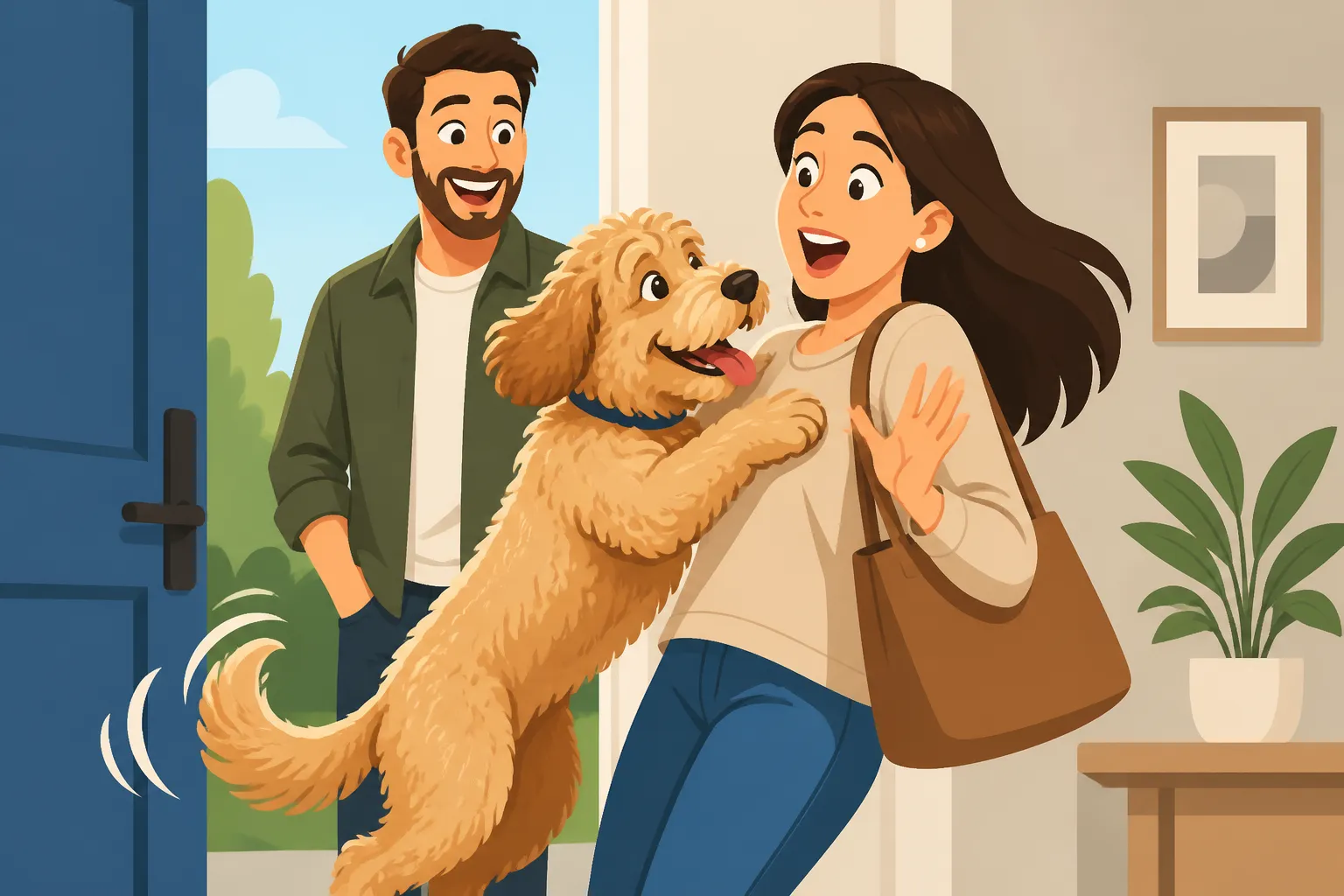
Oh, the sheer joy of seeing your Labradoodle greet a beloved friend or family member at the door… quickly followed by the heart-sinking moment when all four paws leave the ground and your furry friend launches itself at your unsuspecting visitor! It's a common scenario that many Labradoodle owners grapple with, turning what should be a happy reunion into a chaotic wrestling match, complete with muddy paw prints and sometimes even a knocked-over guest. This guide is here to walk you through why your enthusiastic Labradoodle feels the need to jump and, more importantly, how you can teach them a calm, polite way to welcome anyone into your home.
Understanding Why Your Labradoodle Jumps on Visitors
It's easy to feel like your Labradoodle is intentionally misbehaving when they leap up, but the truth is, their motivations are often very innocent, even if the outcome is frustrating. Understanding the "why" behind the jump is the first step in addressing the behavior effectively. It's rarely about dominance or spite; it's usually about pure, unadulterated excitement and a desire for connection.
The Root of the Excitement: Greetings and Attention
Imagine your best friend walking through your door after a long absence. What's the first thing you want to do? Probably hug them, right? Your Labradoodle feels something similar, but with a few key differences in how they perceive and express that desire. When a visitor arrives, especially someone they know and adore, their world lights up. The sudden appearance of a new person, the novel smells, the sounds of greetings – it all coalesces into an overwhelming wave of excitement.
For many dogs, jumping is a natural way to try and get closer to a human's face, to sniff, to lick, and to get that immediate physical connection and attention. Think about how puppies greet their mothers or littermates; there's often a lot of boisterous physical contact. When they jump on us, they're simply trying to engage on their level. If that jump results in a gasp, a touch, or even a push, in their minds, they've succeeded in getting a reaction, which is a form of attention. Even negative attention, like a shout or a shove, can inadvertently reinforce the behavior because, from your dog's perspective, they achieved interaction. This can be especially true for a "Velcro Labradoodle" that thrives on constant companionship and connection.
Lack of Impulse Control and Training Gaps
While excitement is a huge factor, it's compounded by a natural lack of impulse control, especially in younger or less-trained Labradoodles. Puppies and adolescent dogs, much like human teenagers, often struggle with managing their immediate desires. The urge to jump for attention or greeting is strong, and if they haven't been taught an alternative, polite behavior, they'll default to what comes naturally. This isn't a sign of defiance; it's simply a gap in their education.
Many first-time Labradoodle owners, myself included, often underestimate the importance of foundational impulse control training from day one. We might focus on "sit" or "stay" in calm environments, but the real test comes when distractions are high, like when the doorbell rings. If a dog hasn't learned to pause and process their excitement, or if they haven't been consistently rewarded for not jumping, then jumping becomes the established habit. It's not that your Labradoodle doesn't want to please you; it's that in that moment of high arousal, the learned impulse to jump overrides any polite manners they might have. Remember, a The Ten Month Old Labradoodle That Forgets Everything is a common challenge, and impulse control is often the first thing to go when they hit that adolescent phase.
Breed-Specific Tendencies: Poodle and Labrador Influence
Both parent breeds contribute to the Labradoodle's propensity for enthusiastic greetings. The Labrador Retriever side brings a strong desire to please, a friendly, outgoing nature, and often a high energy level. They love people and thrive on interaction, which can translate into boisterous physical greetings. The Poodle, on the other hand, is highly intelligent, often sensitive, and equally keen on being close to their humans. Poodles can be quite bouncy and agile, capable of those impressive vertical leaps.
When you combine these traits, you get a dog that is not only eager to greet everyone but also possesses the physical prowess to do so with gusto. Furthermore, the strong bond Labradoodles form with their families means they often view visitors as an extension of their social group, deserving of the same enthusiastic welcome they might give you after a short absence. It's a testament to their loving nature, but it definitely needs channeling. Understanding these inherent traits helps you approach training with more empathy, realizing that you're not trying to stifle their joy, but rather to redirect it into acceptable channels.
The Impact of a Jumping Labradoodle on Your Home Life
While your Labradoodle's intentions might be pure, the consequences of uncontrolled jumping can range from minor annoyances to serious safety concerns. It's a behavior that can genuinely impact your enjoyment of your dog and your ability to comfortably host guests.
Safety Concerns for Guests and Children
This is perhaps the most critical concern. A standard Labradoodle can easily weigh between 50 and 65 pounds, and a medium one isn't far behind. When a dog of this size jumps up, especially if they're particularly bouncy or clumsy, they can easily knock over an elderly guest, a small child, or even an adult who isn't expecting it. Imagine a grandparent coming to visit, or a young niece or nephew. A well-meaning but over-exuberant Labradoodle can cause falls, scrapes, and even more serious injuries.
Beyond physical injury, there's the genuine fear and discomfort it can instill in people. Not everyone is a "dog person," and even those who love dogs might be intimidated by a large, jumping animal. Children, in particular, can be easily frightened, potentially leading to a lifelong fear of dogs if they have a negative experience. It's also important to consider the potential for damage to clothing – muddy paws on clean pants, or snagged sweaters from claws. This isn't just about manners; it's about creating a safe and welcoming environment for everyone who enters your home, canine and human alike. A Sixty Pound Labradoodle and a Toddler highlights just how important it is to manage enthusiastic greetings around vulnerable family members.
The Frustration and Embarrassment for Owners
Let's be honest, it's incredibly frustrating when your dog, whom you love dearly, misbehaves in front of guests. You might find yourself apologizing constantly, trying to physically restrain your dog, or even having to put them away when people visit, which defeats the purpose of having a family dog. This can lead to feelings of embarrassment and anxiety every time the doorbell rings. Instead of looking forward to company, you might start dreading it.
The cycle of frustration can also impact your relationship with your Labradoodle. You might find yourself getting angry or short-tempered with them, which isn't fair to a dog who simply hasn't been properly taught. It can even make you question your capabilities as an owner, especially if you feel like you've tried everything. This isn't a reflection of your ability, but rather an indication that a more consistent, structured approach to training is needed.
Perpetuating the Behavior (Even Accidentally)
One of the hardest truths to accept is that we, as owners, often inadvertently reinforce the very behavior we're trying to stop. Think about it: when your Labradoodle jumps, what's your immediate reaction? Most likely, you push them down, say "no," or try to physically move them. While these reactions are understandable, from your dog's perspective, they are still receiving attention. Even a brief touch, a stern word, or eye contact can be interpreted as a reward for their jumping efforts.
For your Labradoodle, any interaction is often better than no interaction. If jumping is the most effective way to get you or your guests to look at them, talk to them, or touch them, they'll continue to do it. This is why consistent management and training are so crucial. Without a clear signal that jumping gets nothing and polite behavior gets everything, your Labradoodle will continue to try their luck. This accidental reinforcement makes the habit deeply ingrained, making it harder, but certainly not impossible, to undo.
Practical Strategies to Stop Your Labradoodle from Jumping
Stopping a jumping Labradoodle requires a multi-faceted approach, combining immediate management with consistent, positive reinforcement training. It's about teaching them what to do instead rather than just punishing what you don't want.
Management Techniques for Immediate Relief
Before you even start formal training, it's crucial to manage the environment to prevent the jumping from happening in the first place. This buys you time, keeps everyone safe, and prevents the behavior from being reinforced.
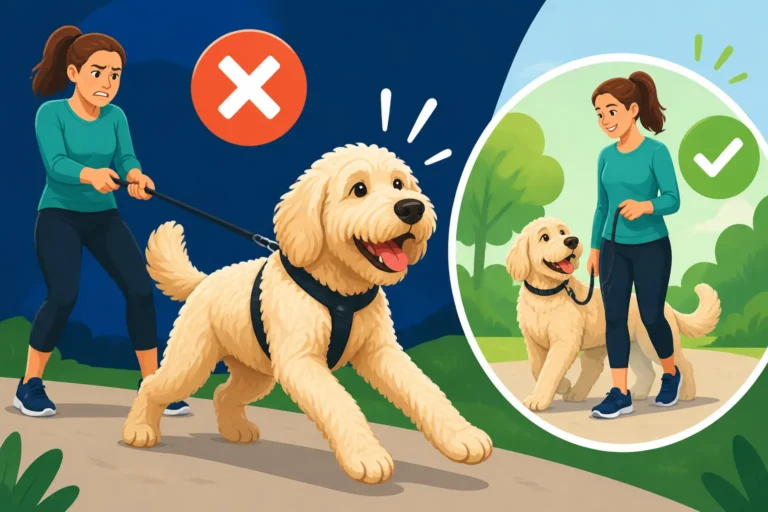
- Leash Management: When you know guests are arriving, put your Labradoodle on a leash before they get excited. This gives you immediate control. You can then physically prevent them from jumping without having to push or scold. Hold the leash short, keep them by your side, and reward them for all four paws staying on the floor. A front-clip harness, easily found on Amazon, can also be incredibly helpful in giving you more control without putting pressure on their throat, especially when you're Teaching a Sixty Pound Labradoodle Not to Pull.
- Containment: If your Labradoodle's excitement is too much to handle with a leash, consider containing them briefly. This could mean a crate in another room, a baby gate in a hallway, or even a tether in a safe spot away from the door. Let your guests get settled, then bring your Labradoodle out on a leash for a calm, controlled introduction. This prevents the initial burst of energy that leads to jumping.
- Doorbell Desensitization: Often, the doorbell itself is a trigger. Practice ringing the doorbell repeatedly without guests present. Each time it rings, ask your Labradoodle to "sit" or "down" and reward them calmly. Start far from the door, then gradually move closer. The goal is to reframe the doorbell from a signal for chaos to a cue for calm behavior.
Teaching an Alternative, Desired Greeting Behavior
The most effective way to stop jumping is to teach your Labradoodle an incompatible behavior – something they can do instead of jumping that still gets them the attention they crave.
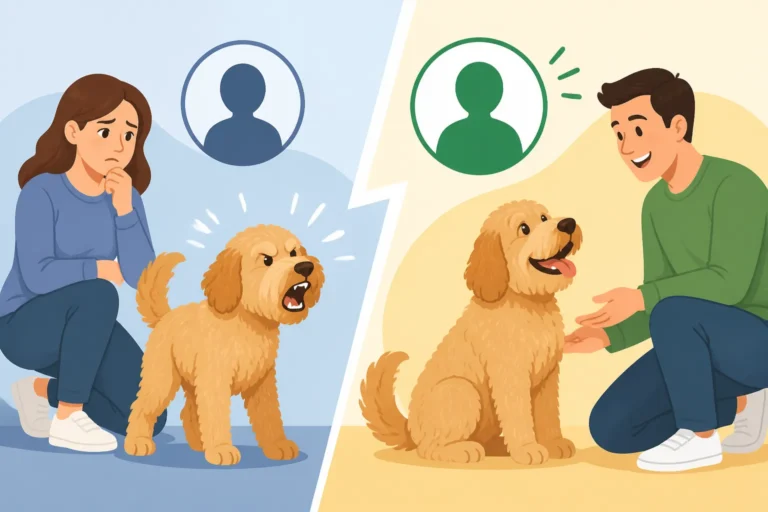
- "Four on the Floor" Rule: This is your mantra. Your Labradoodle only gets attention, petting, or verbal praise when all four paws are firmly on the ground. The moment they lift a paw to jump, you immediately turn your back, cross your arms, and make no eye contact or sound. This is called "negative punishment" – you are removing the desired reward (attention) for the unwanted behavior. The instant their paws are on the floor, turn back around and reward them.
- "Sit to Greet": Teach your Labradoodle to sit automatically when someone approaches. Start with yourself. Walk towards your dog, and as you get close, ask for a "sit." When their rear touches the ground, immediately reward them. Practice this hundreds of times. Then, introduce a neutral person (like a family member who isn't usually the main "greeter"). Have them approach, and you ask for the "sit" and reward. Gradually, increase the distraction and the excitement level of the "greeter."
- "Go to Mat/Place": This is an advanced management technique that teaches your Labradoodle to go to a designated spot (a mat, a bed) and stay there until released. This is incredibly useful for doorbell greetings. Start by luring them to the mat with a treat, reward them for being on it, then slowly increase the duration and distraction. Eventually, you can cue them to their mat before a guest even opens the door. Many online training platforms, such as BAXTER & Bella, offer excellent step-by-step guidance on teaching a "place" command, breaking it down into manageable steps.
Consistent Training and Reinforcement
Consistency is the absolute bedrock of success when it comes to changing ingrained behaviors like jumping. This isn't a one-and-done fix; it's an ongoing process that requires patience from every member of the household.
- Practice with Everyone: It's not enough for you to teach your Labradoodle not to jump. Every family member, and ideally every regular visitor, needs to be on board with the "four on the floor" rule. If one person allows jumping, even occasionally, it undermines all your hard work. Brief your guests before they enter: "Please ignore Rover until he sits calmly."
- Positive Reinforcement is Key: Always reward the desired behavior. When your Labradoodle keeps all four paws on the ground during a greeting, lavish them with praise, a favorite treat, or calm petting. This teaches them that polite greetings are far more rewarding than jumping. Carry high-value treats with you, especially when expecting company.
- Short, Frequent Training Sessions: Instead of long, tedious sessions, aim for short (5-10 minute) bursts of training throughout the day. Practice calm greetings when someone comes home from work, when the mail carrier approaches the door, or even when you just walk from one room to another. Repetition in various contexts builds strong habits. Remember that What a Labradoodle Should Know by Six Months often includes basic manners, and consistent practice is how those foundations become solid.
Essential Tools and Resources for Training Success
Having the right equipment and knowing where to turn for extra help can make a huge difference in your training journey. Don't feel like you have to do it all alone!
Harnesses, Leashes, and Barriers
The right physical tools can aid in managing and training your Labradoodle, especially when you're actively working on polite greetings.
- Front-Clip Harness: As mentioned before, a front-clip harness (like those available on Amazon) can be a game-changer. When your Labradoodle pulls or tries to jump, the leash attachment on the chest gently redirects their body sideways, making it harder for them to launch forward or upward. This gives you much more leverage and control than a traditional back-clip harness or a flat collar, without causing discomfort.
- Standard Leash: A sturdy, comfortable 6-foot leash is essential. Avoid retractable leashes during training, as they teach your dog that tension on the leash is normal and don't offer consistent feedback. A standard leash allows for clear communication and control.
- Baby Gates and Pens: These are invaluable for managing your Labradoodle's access to the front door or to guests during the initial, excitable phase. A baby gate can create a "decompression zone" where your Labradoodle can see and hear guests but cannot physically jump on them. This allows them to calm down before a more controlled introduction. A sturdy exercise pen can also serve a similar purpose, especially for puppies or smaller Labradoodles, providing a safe space to contain their enthusiasm.
- Long Line: For practicing recall and greeting manners in a slightly more open but still controlled environment, a long line (15-30 feet) can be useful. This allows you to give your Labradoodle more freedom to move, but still intervene if they forget their manners, helping them to solidify their Building a Recall a Labradoodle Answers Off Leash.
Online Training Programs and Professional Help
Sometimes, you need more than just general advice. Structured programs and expert guidance can provide the personalized support needed for challenging behaviors.
- Online Training Courses: There are many reputable online dog training platforms that offer detailed, step-by-step courses on polite greetings and impulse control. These can be incredibly convenient, allowing you to learn at your own pace from home. BAXTER & Bella, for example, offers comprehensive online puppy training programs that cover everything from basic manners to more complex behaviors, including how to handle excited greetings. Their self-paced lessons, often with video demonstrations, can be a great asset.
- Professional Dog Trainers: If you're really struggling, or if your Labradoodle's jumping is particularly strong or coupled with other challenging behaviors, don't hesitate to seek out a certified professional dog trainer. Look for trainers who use positive reinforcement methods. They can offer personalized advice, hands-on guidance, and help you troubleshoot specific issues unique to your dog and household. A few sessions with an expert can accelerate your progress significantly. They can also help you identify if underlying issues, such as anxiety or excessive energy (perhaps indicating The Exercise a Labradoodle Needs Before It Behaves isn't being fully met), are contributing to the jumping.
- Dog Parks (with caution): While not a direct training tool, well-managed dog parks can offer opportunities for your Labradoodle to learn appropriate social greetings with other dogs, which can indirectly help with impulse control. However, be mindful that uncontrolled greetings at dog parks can also reinforce bad habits, so always supervise closely.
High-Value Rewards and Environmental Control
The key to successful training lies in motivating your Labradoodle with rewards they truly value, and controlling the environment to set them up for success.
- High-Value Treats: When training a behavior as exciting as greeting visitors, you need rewards that are more enticing than the thrill of jumping. Think small pieces of cooked chicken, cheese, hot dogs, or commercially prepared training treats. These "high-value" treats capture your Labradoodle's attention and make them eager to perform the desired behavior. Save these special treats only for training polite greetings.
- Favorite Toys: For some Labradoodles, a favorite squeaky toy or ball can be an even higher reward than food. You can use a toy as a reward for calm greetings, or even as a distraction. If your Labradoodle loves to retrieve, teaching them to fetch a toy instead of jumping on a guest can be a wonderful redirect.
- Enrichment Toys/Chews: Before guests arrive, you can give your Labradoodle a long-lasting chew or a puzzle toy stuffed with delicious treats (like a KONG filled with peanut butter and frozen). This can help burn off some excited energy and keep them occupied and calm while your guests are settling in. A calm, mentally stimulated dog is less likely to jump out of boredom or excessive energy.
- Calm-Down Strategies: Consider how you greet your Labradoodle. Do you come home and immediately engage in an excited, high-pitched greeting? This can amp up their energy. Try coming home and ignoring them for a minute or two until they settle, then offering a calm greeting. Teach them that calmness is what gets them attention, not frantic excitement.
| Strategy | Description | Benefits | Potential Challenges |
|---|---|---|---|
| Leash Management | Keeping dog on leash during greetings. | Immediate control, prevents jumping. | Requires owner's constant attention, dog may still pull. |
| Containment | Using gates/crates to separate dog from guests initially. | Guarantees no jumping, allows guests to settle, dog to calm. | Dog might bark/whine if not accustomed to confinement. |
| "Four on the Floor" | Only reward dog when all paws are on the ground. | Teaches dog desired behavior, clear boundaries. | Requires consistent effort from everyone, slow initial progress. |
| "Sit to Greet" | Training dog to sit reliably when approached by people. | Proactive, incompatible with jumping, polite greeting. | Needs many repetitions in various contexts. |
| "Go to Mat/Place" | Teaching dog to go to a designated spot and stay until released. | Excellent impulse control, structured greeting alternative. | More advanced, requires dedicated training time. |
Addressing Common Challenges and Setbacks
Training a jumping Labradoodle isn't always a linear path. You'll likely encounter bumps along the way, but understanding common challenges can help you navigate them effectively.
When Guests Undermine Your Training Efforts
This is perhaps one of the most frustrating aspects of training a dog not to jump. You've worked tirelessly, your Labradoodle is making progress, and then a well-meaning but uninformed guest comes over and completely undermines everything you've taught. They might bend down to greet your dog while it's jumping, talk in an excited baby voice, or even give a quick pet when your dog is still bouncing. In their mind, they're being friendly; in your dog's mind, they've just received a huge reward for jumping.
It's crucial to be proactive here. Before your guests even step foot in the door, brief them on your training plan. A simple, polite request like, "Hey, just a heads-up, we're working on polite greetings with [Labradoodle's Name]. Could you please completely ignore them until all four paws are on the floor, and then you can greet them with a calm pet?" can make a world of difference. You might even demonstrate the "turn your back" technique. If a guest forgets, gently remind them or physically step between your dog and the guest to redirect your dog. It feels awkward at first, but it's essential for your dog's consistent learning. This is particularly important with dogs known for being friendly, as What First Time Owners Get Wrong About a Labradoodle often includes underestimating how much structure they need.
Dealing with Over-Excitement in Different Scenarios
The challenge with jumping often isn't just a simple greeting at the front door. Your Labradoodle might jump when you first get home, when you introduce them to new dogs, or even when you're just trying to have a conversation with someone in your living room. The core issue is often managing over-excitement and a lack of impulse control.
- Coming Home Greetings: Just like with visitors, practice ignoring your Labradoodle for the first few minutes after you arrive home. Don't engage until they've settled into a sit or a calm stand. Once they're calm, then you can offer quiet affection. This teaches them that a calm demeanor is what earns your attention.
- Dog-to-Dog Greetings: If your Labradoodle gets overly excited when meeting other dogs, leading to jumping or frantic behavior, work on controlled, parallel walks where they can see the other dog but aren't forced to interact immediately. Reward calm leash walking. Only allow controlled, short greetings when both dogs are relaxed.
- General Interaction: If your Labradoodle jumps on you or family members when you're simply moving around the house or sitting on the couch, apply the "four on the floor" rule consistently. Every time they jump, remove attention. Every time they're calm, reward. This helps generalize the behavior beyond just the front door.
Patience and Consistency are Key
Training a dog, especially a high-energy, intelligent breed like a Labradoodle, takes time and unwavering consistency. You won't see results overnight, and there will be days when you feel like you're taking two steps back for every step forward. This is normal.
- Don't Give Up: It's easy to get discouraged, especially when the jumping seems to reappear after a period of improvement. Understand that learning isn't linear. Your Labradoodle is learning a new way of interacting, and it takes time for old habits to truly fade and new ones to solidify. Keep at it.
- Celebrate Small Victories: Did your Labradoodle only jump once instead of five times? Did they sit for a second before leaping? Celebrate these small wins! Acknowledging progress, no matter how small, helps keep your motivation up.
- Revisit Fundamentals: If progress stalls, go back to basics. Revisit simple "sit" and "stay" commands in low-distraction environments. Sometimes, reinforcing the foundation strengthens the more complex behaviors.
- Keep it Positive: Always maintain a positive, encouraging attitude. Your Labradoodle responds to your emotions. If training becomes a chore or a source of frustration, they will pick up on that. Keep training sessions fun and rewarding for both of you. Remember that How Long Labradoodle Adolescence Lasts can feel like an eternity, but consistent positive training will get you through it. Your dedication will eventually pay off with a polite, well-mannered Labradoodle who greets everyone with a happy, but grounded, wag of their tail.
Disclaimer
This article is for general informational purposes only and does not constitute professional advice. Laws, prices and regulations vary by location and change over time. Consult a qualified professional for guidance on your specific situation.