Teaching a Sixty Pound Labradoodle Not to Pull
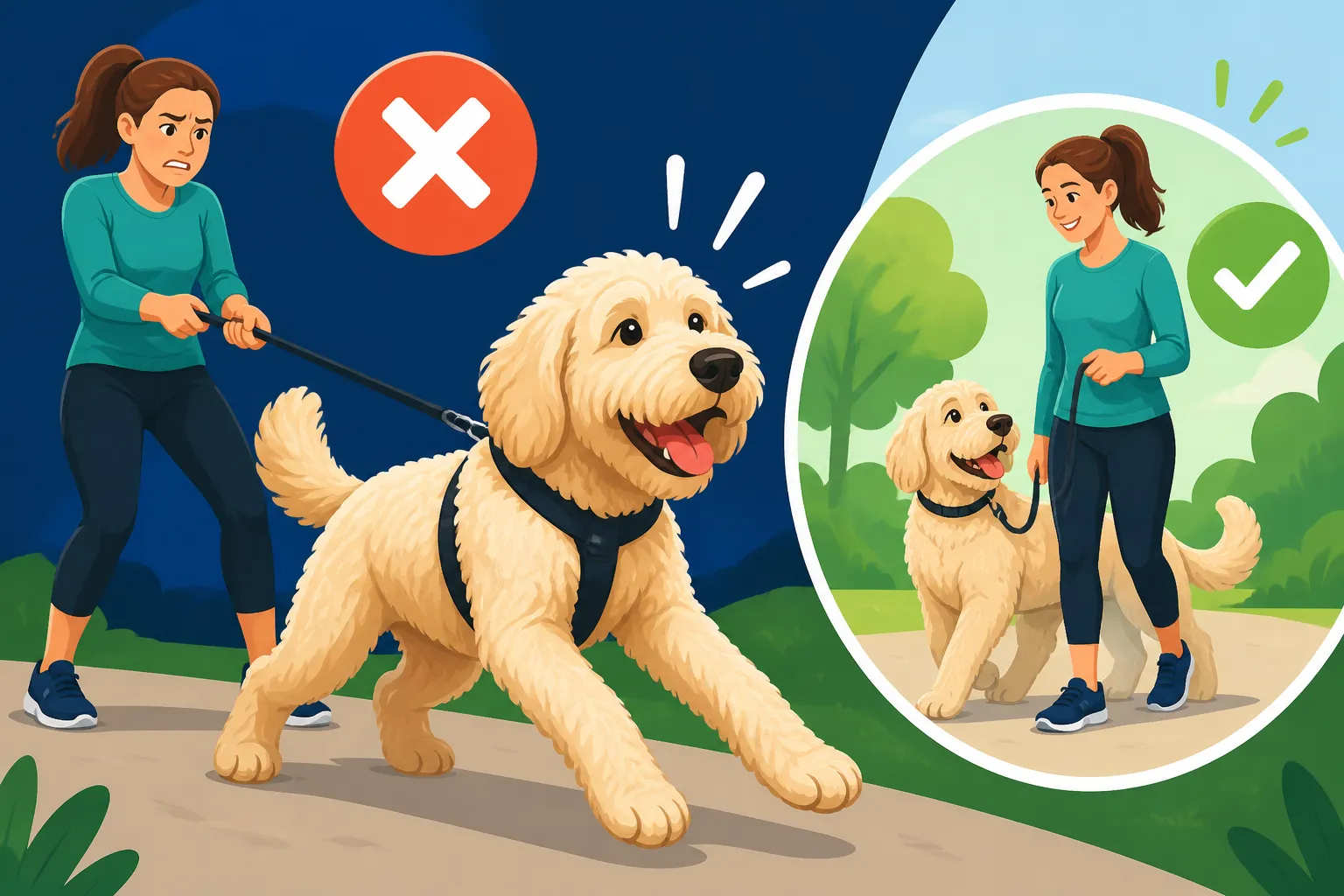
It's a familiar scenario for so many of us Labradoodle parents: you clip on the leash, brimming with excitement for a nice walk, and the moment you step outside, your sweet, loving 60-pound companion transforms into a furry freight train, dragging you down the street. It's frustrating, it's exhausting, and let's be honest, it can sometimes be a little embarrassing. But don't despair! This guide is here to walk you through understanding why your Labradoodle pulls and, more importantly, how to teach them to walk politely by your side, making your walks a joy again.
Understanding Why Your Labradoodle Pulls
Before we can tackle the pulling, it's incredibly helpful to understand the root causes. Dogs don't pull to be defiant; they pull because it works for them. There are often a few key factors at play, stemming from their natural inclinations, past experiences, and even the tools we use.
The Labradoodle's Natural Instincts
Think about the two breeds that make up your beloved Labradoodle: the Labrador Retriever and the Poodle. Both are intelligent, active, and capable dogs, but their combined traits can sometimes lead to a strong desire to pull.
From their Labrador side, Labradoodles often inherit a powerful retrieving drive and an innate desire to explore. Labs were bred to work alongside hunters, covering ground, sniffing out game, and enthusiastically bringing things back. This means they are naturally inclined to forge ahead, nose to the ground, eager to investigate every new smell and sight. When that instinct kicks in, a 60-pound dog can exert a surprising amount of force. They're not trying to be naughty; they're simply following their genetic programming to explore the world around them with gusto.
Then there's the Poodle half. Poodles are known for their high intelligence, athleticism, and sometimes, a certain independent spirit. They're quick learners, but if not given proper direction and mental stimulation, they can channel that energy into less desirable behaviors, like pulling. A Poodle's energy levels can be quite high, and when combined with the Labrador's enthusiasm, you get a dog that's often ready to go, go, go! They might be strong-willed, knowing exactly where they want to go and eager to get there, and if you're holding them back with a traditional collar, they'll lean into it. This blend of intelligence, energy, and a keen sense of smell creates a powerful combination that, without proper training, can easily result in a dog that pulls you along rather than walks with you. Whether the Poodle or the Labrador Shows Up in Training can greatly influence how your dog responds to various methods.
Lack of Early Training and Reinforcement
Many pulling problems start subtly and escalate over time. When your Labradoodle was a tiny, adorable puppy, a little tug on the leash might have seemed cute, or at least manageable. You might have let them pull a bit to get to the grass to relieve themselves, or to greet a friendly face.
The problem is, dogs learn through consequence. If pulling on the leash consistently gets them to where they want to go (whether that's a sniff spot, another dog, or just around the block faster), they quickly learn that pulling is an effective strategy. They're essentially training us to follow their lead. As that adorable puppy grows into a 60-pound powerhouse, those early, uncorrected pulling habits become deeply ingrained and much harder to break. It's like a bad habit that’s had months or even years to solidify, making it feel impossible to change.
Inconsistent training also plays a huge role. If sometimes you allow pulling, and other times you try to correct it, your Labradoodle becomes confused. They don't understand the rules, so they default to the behavior that has worked for them in the past – pulling. They need clear, consistent communication from us every single time the leash is on, regardless of the environment or who is holding the leash. Every walk is a training opportunity, and every family member needs to be on the same page.
Equipment and Management Issues
Believe it or not, the equipment you use can either help or hinder your efforts to stop pulling. A flat buckle collar, while perfectly fine for holding ID tags, often provides little to no control over a strong, pulling Labradoodle. When they pull against a flat collar, the pressure is applied across their throat, which can be uncomfortable, lead to coughing, and potentially even cause damage over time. Crucially, it doesn't discourage pulling; it often just makes them pull harder against the discomfort.
Retractable leashes are another common culprit. While they seem to offer freedom, they actually teach dogs that pulling is necessary to gain distance. The tension is almost constant, and there's no clear signal to the dog about what "loose leash" even means. Because the length varies, the dog never learns a consistent boundary for how far they can range. For a 60-pound Labradoodle, a retractable leash offers minimal control, especially in unexpected situations, and can even be dangerous for both dog and handler.
Furthermore, a common oversight is not addressing your Labradoodle's energy levels before a walk. A Labradoodle, being a cross of two active breeds, has a significant need for physical and mental exercise. If they haven't had a chance to burn off some of that pent-up energy before heading out the door, they're likely to be over-excited and much harder to manage on the leash. Think of it like trying to teach a child to sit quietly after they’ve just had too much sugar – it's an uphill battle. A good, stimulating play session or a game of fetch in the yard before the structured walk can make a world of difference. The Exercise a Labradoodle Needs Before It Behaves is a crucial piece of the puzzle.
Essential Equipment for Loose Leash Walking
Choosing the right tools for loose leash walking is paramount, especially when you're dealing with a strong, enthusiastic 60-pound Labradoodle. The goal isn't just to stop the pulling, but to do so safely and comfortably for both you and your dog.
Front-Clip Harnesses: A Game Changer
For many Labradoodle owners, a front-clip harness becomes an absolute game-changer. Unlike traditional harnesses that clip on the back, or flat collars that put pressure on the throat, a front-clip harness has the leash attachment ring located on your dog's chest.
When your Labradoodle starts to pull forward with this type of harness, the leash redirects their momentum to the side, gently turning them back towards you. This makes it incredibly difficult for them to pull with their full strength because they can't effectively lean into the harness and drag you along. Instead, every pull results in them being turned, which quickly becomes less rewarding than walking calmly. It's a much more humane and effective way to manage pulling than collars or back-clip harnesses that often exacerbate the issue. These harnesses are designed to distribute pressure evenly across their chest and shoulders, avoiding strain on their neck or throat. This can make walks much more comfortable for your Labradoodle, reducing coughing and gagging, and allowing them to focus better on your cues. You can find a wide variety of effective front-clip harnesses on platforms like Amazon, offering different styles and fits for your Labradoodle's specific shape. Whether a Front Clip Harness Mats a Labradoodle is a common concern, so look for designs with soft webbing and proper fit.
Head Halters: For Stronger Pullers
For Labradoodles who are particularly strong or persistent pullers, or for those whose owners need maximum control, a head halter can be an excellent option. Often mistaken for muzzles, head halters are training tools that provide control over the dog's head, which in turn controls the direction of their body.
The principle behind a head halter is simple: where the head goes, the body follows. The leash attaches under the chin, and when your Labradoodle attempts to pull, the pressure gently turns their head to the side or down, making it impossible for them to continue pulling forward. This offers incredible leverage, allowing you to guide even a very strong dog with minimal effort. It removes the physical advantage your 60-pound Labradoodle might have over you, making walks much safer and more enjoyable. Head halters like the Gentle Leader are widely available and can be a fantastic tool for establishing polite leash manners. Initially, some dogs may try to paw at a head halter because it feels unusual, but with positive introduction and pairing with treats, most adjust quickly. Always introduce it gradually and positively, never as a punishment. If you're wondering Whether a Head Halter Suits a Labradoodle, it's often a highly effective solution for dogs that haven't responded to other methods.
The Right Leash and Collar Combination
Beyond harnesses and head halters, the type of leash you use is equally important. For training loose leash walking, a fixed-length leash, typically 4 to 6 feet long, is highly recommended. This length provides enough slack for your Labradoodle to walk comfortably beside you, sniff a bit, and still allows you to maintain control without them being too far away.
Crucially, avoid retractable leashes at all costs when training for loose leash walking. As mentioned, they teach dogs that tension on the leash is normal and even necessary to get where they want to go. A fixed-length leash allows you to clearly communicate to your Labradoodle what "loose leash" feels like—no tension, no pulling, just a gentle loop in the leash. This consistency is vital for your dog to understand the desired behavior. A flat buckle collar can still be used for holding identification tags and for very short, controlled instances, but it should not be the primary tool for managing pulling on longer walks or during training sessions. The table below summarizes the common leash walking equipment and their suitability for a Labradoodle prone to pulling:
| Equipment Type | Primary Function | Pros | Cons | Suitability for Pulling Labradoodles |
|---|---|---|---|---|
| Flat Buckle Collar | ID Tag Holder, Basic Lead | Simple, inexpensive, easy to put on | No control for pulling, pressure on neck, can cause discomfort | Poor (for pulling control) |
| Back-Clip Harness | Body Support, Easy On | Comfortable, good for dogs without pulling issues | Can increase pulling power, offers less control | Poor to Moderate |
| Front-Clip Harness | Anti-Pull Device, Chest Clip | Redirects pulling, comfortable, reduces strain on neck | Can sometimes tangle legs if not fitted well, may mat coat | Excellent |
| Head Halter | Head Control, Guidance | Excellent control, minimal effort needed, prevents pulling | Requires positive introduction, some dogs resist initially | Excellent (for strong pullers) |
| Retractable Leash | Variable Length | Appears to offer freedom | Teaches pulling, inconsistent tension, poor control, safety risk | Never Recommended (for training) |
| Fixed-Length Leash | Consistent Control | Clear communication of loose leash, good control, durable | None, when used with appropriate harness/halter | Excellent |
Positive Reinforcement Training Techniques
Once you've got the right equipment, it's time to dive into the training itself. The most effective way to teach a 60-pound Labradoodle not to pull is through positive reinforcement, making the desired behavior (loose leash walking) far more rewarding than pulling.
The "Stop and Go" Method
This is a foundational technique that's surprisingly effective because it immediately teaches your Labradoodle that pulling literally gets them nowhere. It's all about consistency and clear communication.
Here's how it works: Start walking with your Labradoodle. The instant you feel tension on the leash – even a slight tug – immediately stop dead in your tracks. Don't pull back, don't say anything, just become a tree. Your dog will likely feel the sudden stop, might look back at you, or even continue to pull for a moment. Wait. Only when the leash goes slack again, even if it's just for a second, praise your Labradoodle enthusiastically ("Good!"), and immediately resume walking. The key here is consistency. If they pull, you stop. If the leash is loose, you walk. Your Labradoodle quickly learns that the tension on the leash is the signal for the walk to halt, and a slack leash means forward movement. This simple cause-and-effect relationship is very powerful for a smart dog like a Labradoodle.
The beauty of this method is its simplicity and clarity. There's no harsh correction, just an immediate consequence that dogs understand: "My pulling stops the fun." It requires patience, especially at first, because you might find yourself stopping every few steps. But stick with it! Over time, your Labradoodle will begin to anticipate the stop and self-correct, offering a loose leash more frequently. It's a fantastic way to build the foundation for polite walking, making every walk a teaching moment. Start in a low-distraction environment, like your backyard or a quiet street, before moving to busier areas.
Lure and Reward: Teaching "Heel"
While "stop and go" is great for stopping pulling, lure and reward techniques are excellent for teaching your Labradoodle where you want them to be and what loose leash walking feels like. This is where high-value treats and praise become your best friends. Whether a Labradoodle Works for Food Like a Labrador is a good indicator of how effective this method will be!
To begin, hold a high-value treat (something your Labradoodle absolutely loves) in your hand, close to your side, at your dog's nose level. Lure your Labradoodle into the desired "heel" position (walking calmly beside your leg with a loose leash). As they walk with you, keeping their attention on the treat, offer continuous praise and small pieces of the treat every few steps, only when the leash is loose. The moment they start to forge ahead or pull, stop walking and bring the treat back to your side to lure them into position again. The goal is to make walking politely by your side the most rewarding place to be.
Keep these training sessions short and positive, especially when you're starting out, perhaps just 5-10 minutes at a time. Labradoodles are smart, but they can also get easily distracted or bored if the training goes on too long. By consistently rewarding them for staying in position with a loose leash, you're building a strong positive association with walking nicely. This method helps them understand that great things happen when they pay attention to you and walk politely. Over time, you can gradually fade the lure, still rewarding frequently for good behavior, but without always having the treat right at their nose. Consider checking out online training programs like those offered by BAXTER & Bella, which often provide structured step-by-step guidance on these positive reinforcement techniques, making it easier to follow along at home.
Changing Directions for Engagement
One of the reasons Labradoodles pull is because their environment is often far more interesting than we are. To combat this, you need to become unpredictable and engaging! Consistently changing directions during your walk can be a powerful tool for maintaining your Labradoodle's focus on you rather than on external distractions.
Instead of walking in a straight line, randomly change direction: turn left, turn right, make a U-turn, or even stop and reverse. The instant you change direction, enthusiastically praise your Labradoodle and reward them with a high-value treat if their leash is loose and they adjust with you. This forces them to pay attention to your movements and anticipate what you might do next. If they're constantly wondering where you'll go, they can't effectively pull you in their preferred direction. This technique teaches them that keeping an eye on you is essential for continuing the walk and earning rewards.
This not only makes you more interesting but also builds a stronger bond and communication between you and your dog. It transforms a mundane walk into an interactive game where paying attention to their human companion is key to success. Initially, your Labradoodle might be confused, but with consistent positive reinforcement for every successful adjustment, they'll soon become much more attuned to your lead. This also helps when you eventually want to teach Building a Recall a Labradoodle Answers Off Leash, as it strengthens their focus on you.
Addressing Common Challenges and Advanced Tips
Even with the right equipment and solid basic training, teaching a 60-pound Labradoodle not to pull can present its own set of challenges. Dealing with distractions, navigating adolescent behavior, and knowing when to call in the pros are all part of the journey.
Managing Distractions on Walks
The world is a fascinating place for a Labradoodle, full of tantalizing smells, exciting sights, and other dogs to greet. These distractions are often the biggest reason a dog forgets their leash manners and reverts to pulling.
The key to success here is gradual exposure and consistent reinforcement. Start your loose leash walking training in environments with very low distractions – your quiet backyard, a calm cul-de-sac, or during off-peak hours at a local park. Once your Labradoodle is consistently performing well in these areas, gradually introduce more challenging environments. This might mean moving to a slightly busier street, then a park with a few other people, and eventually areas with more dogs, squirrels, or noises. The moment a distraction appears, be ready with your high-value treats and a strong "look at me" cue. Practice having your Labradoodle make eye contact with you and reward them before they even have a chance to focus on the distraction. If they do get distracted and pull, revert to your "stop and go" method immediately.
The goal is to teach your Labradoodle that you are still the most rewarding thing in their environment, even when exciting things are happening around them. Practice moving past other dogs or people while maintaining focus on you, rewarding profusely for calm, loose-leash behavior. Remember, Teaching a Labradoodle to Ignore Other Dogs in Public is a skill that takes time, patience, and many repetitions. Don't set your dog up for failure by throwing them into a chaotic environment too soon. Build their confidence and your bond slowly but surely.
Dealing with Adolescent Labradoodles
If you've ever raised a human teenager, you'll understand the adolescent phase in dogs perfectly. Around 6 to 18 months, your once-attentive Labradoodle puppy might suddenly seem to "forget" everything you've taught them. Their energy levels might surge, they become more independent, and they start testing boundaries with a renewed vigor. This can be incredibly frustrating when you've put so much effort into loose leash training.
During this period, it often feels like you're taking two steps back for every step forward. The pulling might return with a vengeance, or they might suddenly become much more reactive to things they previously ignored. The absolute best approach is patience and a return to basics. Don't assume they're being stubborn or defiant; their brains are undergoing significant changes, similar to a human "growth spurt" in judgment and impulse control. Revisit all the foundational loose leash walking exercises you taught them as a puppy, perhaps even in less distracting environments than you're currently walking in. Shorten your walks if needed, making them more about structured training than long excursions.
It's crucial to be even more consistent during adolescence. Any slack in your training routine will be quickly exploited. Keep your rewards high-value, your praise enthusiastic, and your expectations realistic. It’s a phase, and with persistence, your Labradoodle will come out the other side as a well-behaved adult. If you're struggling, remember that The Ten Month Old Labradoodle That Forgets Everything is a common experience, and you're not alone.
Seeking Professional Guidance
Sometimes, despite your best efforts, your Labradoodle's pulling behavior might feel overwhelming, or you might hit a plateau in your training progress. This is absolutely nothing to be ashamed of; every dog and owner dynamic is unique, and sometimes a fresh pair of expert eyes can make all the difference.
A certified professional dog trainer can provide personalized insights into your Labradoodle's specific behavior, energy levels, and motivations. They can observe your walks, identify subtle cues you might be missing, and offer tailored strategies and hands-on guidance. They can also help you troubleshoot specific pulling triggers, such as reactivity to other dogs or a strong prey drive. A trainer might introduce new techniques or refine your existing ones, providing you with the tools and confidence to continue your training journey effectively. Sometimes, it's just about learning how to communicate more clearly with your dog.
If in-person training isn't feasible, many reputable online resources and programs are available. Services like BAXTER & Bella offer comprehensive online training courses that can guide you through loose leash walking and many other behaviors from the comfort of your home. These programs often include video tutorials, personalized coaching, and a supportive community, allowing you to work at your own pace. Knowing Whether a Labradoodle Needs a Trainer or a Class can truly empower you to make the best decision for your family and your furry friend. Don't hesitate to seek help if you feel stuck; it's an investment in a happier, more harmonious life with your Labradoodle.
Integrating Exercise and Mental Stimulation
Loose leash walking isn't just about leash skills; it's deeply connected to your Labradoodle's overall well-being, including their physical exercise and mental engagement. A dog with pent-up energy, whether physical or mental, is far more likely to pull and be difficult to manage on a walk.
Pre-Walk Exercise for Energy Release
One of the most effective strategies to reduce pulling on walks is to simply tire your Labradoodle out before you even step out the door for a structured walk. A 60-pound Labradoodle, being a mix of two high-energy breeds, has a significant capacity for exercise. If they haven't had an outlet for that initial burst of enthusiasm, they're going to use the walk itself as an opportunity to burn it off, which often translates to pulling.
Consider a vigorous play session in the backyard before your scheduled walk. Games of fetch, tug-of-war, or even a short run can help to burn off that initial excitement. The goal is not to exhaust them completely, but to take the edge off their energy so they can approach the leash walk in a calmer, more receptive state. A dog that has released some of its pent-up energy is much more likely to be able to focus on you and respond to your loose leash cues. Think of it as priming them for success. This simple management strategy can dramatically improve your success with loose leash training, making the walk a pleasant experience rather than a battle of wills.
Mental Stimulation Beyond Physical Walks
While physical exercise is crucial, Labradoodles are also highly intelligent dogs that need mental stimulation to truly thrive. A bored dog, even a physically tired one, can still be prone to destructive behaviors or an inability to focus. Engaging their brains is just as important as exercising their bodies.
Integrate puzzle toys into their daily routine, where they have to work to get their food or treats. These can be incredibly satisfying for a Labradoodle and burn mental energy. Scent work, where you hide treats around the house or yard and encourage them to sniff them out, is another fantastic way to engage their keen sense of smell and intelligence. Short, frequent training sessions at home, practicing basic obedience cues or learning new tricks, also provide valuable mental exercise. This kind of brain work can be just as tiring as a physical run and helps create a more balanced and manageable dog. When their minds are engaged and satisfied, they're less likely to be overstimulated and reactive on walks. Whether a Labradoodle Needs a Sport to Be Manageable often comes down to their individual energy levels and how much mental engagement they get. Also, being a smart breed, Whether a Labradoodle Gets Bored of Repetition can definitely influence training outcomes, so mix it up!
Consistency in All Environments
Loose leash walking isn't a skill that should only be practiced at the park or on designated "training walks." For your Labradoodle to truly master polite leash manners, consistency must be applied in all environments and by all family members.
Every time the leash is on, whether it's a quick trip to the mailbox, a potty break in the yard, or a long stroll around the neighborhood, the expectation for a loose leash should be the same. If you allow pulling in some situations but not others, or if different family members have different rules, your Labradoodle will become confused and inconsistent. They'll learn to test the boundaries, always trying to get away with pulling if they think they can. Hold regular, short training sessions in various locations – from your driveway to a local trail – reinforcing the "stop and go" and "lure and reward" methods.
Ensure everyone in the household is on the same page regarding the equipment used, the cues given, and the response to pulling. A unified approach is critical for your Labradoodle to understand what is expected of them. With consistent practice, patience, and positive reinforcement across all scenarios, your 60-pound Labradoodle will eventually become the polite walking companion you've always envisioned, making every outing a pleasure for both of you.
Disclaimer
This article is for general informational purposes only and does not constitute professional advice. Laws, prices and regulations vary by location and change over time. Consult a qualified professional for guidance on your specific situation.