The Mouthing a Labradoodle Puppy Does Longest
It's a familiar scene for many Labradoodle owners: your adorable, fluffy puppy greets you with enthusiasm, tail wagging, only to lunge and mouth at your hands, ankles, or clothes with surprising force. This isn't just a fleeting phase for many Labradoodle puppies; it's a persistent behavior that, left unaddressed, can become a real frustration, especially given their strength and exuberance. This guide will delve into why Labradoodle puppies mouth, how long this behavior typically lasts, and, most importantly, provide practical, empathetic strategies to manage and reduce it, ensuring your puppy grows into a well-mannered companion.
Understanding Labradoodle Puppy Mouthing: More Than Just Play
When you bring home a Labradoodle puppy, it's easy to dismiss their nipping and mouthing as "just puppy stuff." And while it’s true that all puppies use their mouths to explore the world, for Labradoodles, this natural behavior can often feel more intense and last longer than anticipated. Understanding the roots of this behavior, drawing from their parent breeds, is the first step in addressing it effectively.
The Natural Instinct Behind the Nips
Puppies, much like human babies, learn about their environment through their mouths. They don't have hands or opposable thumbs to pick things up and examine them; instead, they use their mouths to taste, feel, and test the world around them. When they interact with their littermates, they mouth and nip as part of play. This rough-and-tumble interaction teaches them vital lessons about bite inhibition – how hard is too hard? When a littermate yelps, they learn to soften their bite. This is a crucial developmental stage.
Beyond exploration, mouthing is also a key way puppies communicate. A nip can mean "I want to play," "I'm excited," "I'm frustrated," or even "Leave me alone." When they join your family, you become their new "littermate," and they naturally try to communicate and play with you the same way they did with their siblings, which often involves their teeth. This instinct doesn't disappear overnight; it requires consistent guidance and teaching to channel it appropriately.
Labrador's Retrieve, Poodle's Sensitivity
The Labradoodle is a blend of two highly intelligent and active breeds: the Labrador Retriever and the Poodle. Both contribute to the Labradoodle's propensity for mouthing, though in slightly different ways. Labradors were bred for retrieving, meaning they naturally use their mouths to carry objects gently. This "soft mouth" trait is highly prized in working Labs. However, the urge to put things in their mouths is strong. They'll carry anything from your slippers to a stick they found in the yard. This ingrained drive means a Labradoodle puppy often has a strong oral fixation, wanting to grab and hold things, which can extend to your hands or clothes.
The Poodle side, while often associated with elegance and keen intelligence, also brings a certain sensitivity and quick learning ability. Poodles are very responsive to their owner's cues, which can be a double-edged sword when it comes to mouthing. If an owner inadvertently reinforces mouthing (e.g., by reacting with excited squeals or playful pushing), the Poodle's intelligence means the behavior can be quickly ingrained. Conversely, their sensitivity also means they are usually quick to understand and respond to clear, consistent negative feedback (like a sharp "ouch!") and redirection. The combination of these traits means your Labradoodle puppy might have a strong desire to mouth, but also the intelligence to learn what's acceptable and what's not, provided you are consistent in your training. Whether the Poodle or the Labrador Shows Up in Training can greatly influence how a puppy learns to control its mouth.
When Mouthing Becomes a Problem: Reading the Cues
It's important to distinguish between normal puppy exploration and mouthing that crosses the line into problematic behavior. Not all nips are created equal, and understanding the context and intensity can help you tailor your response. Ignoring the nuances can lead to frustration for both you and your Labradoodle.
Differentiating Play Bites From Warning Nips
Most Labradoodle puppy mouthing starts as play. These are often quick, playful nips that might sting a little but don't break the skin. The puppy's body language will usually be loose and wiggly, with an open, relaxed mouth and a wagging tail. They might bounce around, trying to initiate a game. This is where they are learning boundaries and bite inhibition. The goal here is not to stop them from playing with their mouths entirely, but to teach them that human skin is fragile and requires a much softer approach than a littermate's fur.
However, sometimes mouthing can escalate or take on a different tone. If the nips become harder, more persistent, or are accompanied by stiff body language, growling, or a wrinkled nose, it could be moving beyond simple play. This might indicate overstimulation, frustration, fear, or resource guarding. For example, if your puppy is overtired, much like a toddler, they might become cranky and use their mouth more forcefully. Or, if you're trying to take a toy away and they nip sharply, it might be a warning sign. It's crucial to pay attention to these cues, as they require a different approach than simply redirecting playful nips. Understanding whether a Labradoodle puppy bites harder than most can help you discern the severity.
The "Ouch!" Test and Its Limits
The "yelp and withdraw" method, often called the "ouch!" test, is a commonly recommended technique for teaching bite inhibition. The idea is simple: when your puppy nips too hard, you let out a high-pitched "ouch!" or "yipe!" sound, much like a littermate would, and immediately withdraw all attention. This means pulling your hand away, standing up, turning your back, or even leaving the room for 10-20 seconds. The goal is to make the puppy realize that hard bites make the fun stop.
While effective for many puppies, it has its limits, especially with enthusiastic Labradoodles. Some puppies get even more excited by the "ouch!" sound, interpreting it as an invitation to continue play or a fun new game. For these puppies, a simple withdrawal without the sound might be more effective. Additionally, if the mouthing is driven by fear or anxiety, a sudden yelp might startle them further. The key is to observe your puppy's reaction. If the "ouch!" method seems to escalate the behavior or make them more frantic, it's time to modify your approach. Consistency is vital; every family member must respond the same way every time to avoid confusing the puppy.
Strategies for Managing Puppy Mouthing: Early Intervention is Key
Managing puppy mouthing successfully means being proactive, consistent, and patient. It's not about punishing your Labradoodle for a natural behavior, but about guiding them towards appropriate ways to interact with the world and with you. Starting early and maintaining a consistent approach will yield the best results. Raising a Labradoodle Through Its First Year requires consistent effort in all training aspects.
Redirection: Offering Appropriate Chew Toys
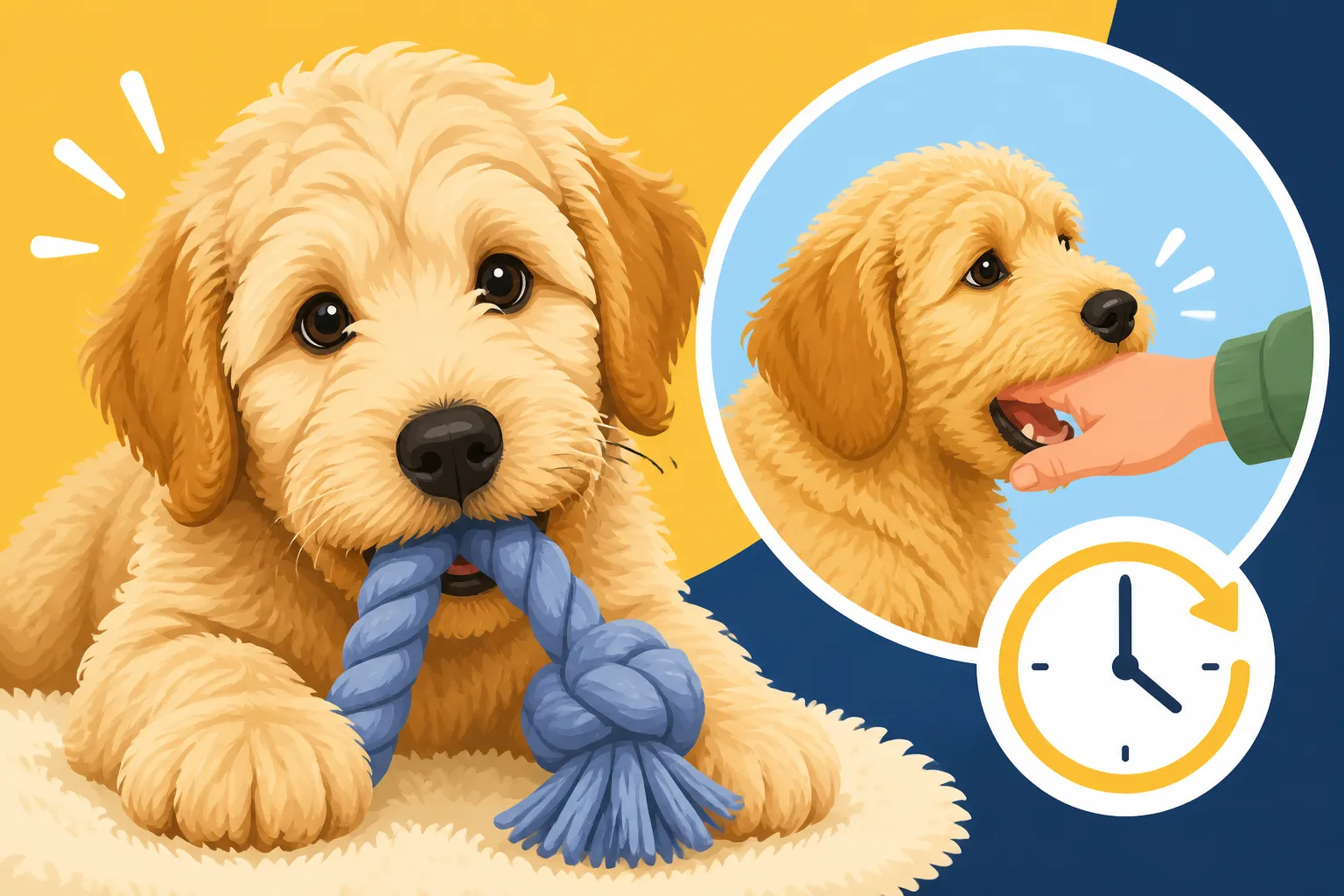
One of the most powerful tools in your mouthing management toolkit is redirection. Your Labradoodle puppy has an innate need to chew and mouth, and it's your job to provide acceptable outlets for this behavior. Always have a variety of sturdy, safe chew toys readily available. When your puppy starts to mouth at your hands, clothing, or furniture, immediately and calmly offer a suitable chew toy instead. The moment they take the toy, offer praise and positive reinforcement ("Good chew!").
Think about the texture and durability of toys. Labradoodles, with their strong jaws and retrieving instincts, often appreciate toys that offer good resistance, like solid rubber chew toys, rope toys, or puzzle toys that dispense treats. Brands like Kong, Nylabone, or various options found on Amazon offer a wide range of durable choices suitable for vigorous chewers. Rotate toys regularly to keep things interesting and prevent boredom. This technique works because it doesn't punish the puppy for mouthing, but rather teaches them what they can mouth.
Teaching Bite Inhibition: The "Yelp and Withdraw" Method
As discussed, the "yelp and withdraw" method can be a highly effective way to teach your Labradoodle puppy how much pressure is too much. Here’s a more detailed breakdown of how to implement it effectively:
- Exaggerated Reaction: The instant your puppy’s teeth make too much contact with your skin, let out a sharp, high-pitched "ouch!" or "yipe!" This sound should be attention-grabbing, mimicking a littermate’s cry.
- Immediate Withdrawal: Simultaneously, immediately remove the body part they were mouthing (your hand, foot, etc.) and completely withdraw attention. This means standing up, turning your back, or even crossing your arms and avoiding eye contact. The key is that all interaction stops the moment the inappropriate mouthing occurs.
- Brief Time-Out: If the puppy persists or gets more excited by your reaction, immediately leave the room for 10-20 seconds. This is a mini-time-out. The puppy learns that biting too hard makes their favorite person disappear.
- Resume Interaction Calmly: After the brief time-out, return to the room and interact with your puppy calmly. If they mouth too hard again, repeat the process.
- Consistency is King: Every single person in the household must implement this method consistently. If one person allows hard mouthing, it undermines the training efforts of everyone else. Over time, as your puppy learns to control their bite pressure, you can begin to reduce the threshold for your "ouch!" so they learn to be even gentler.
Consistent Training and Positive Reinforcement
Beyond directly addressing the mouthing, a solid foundation of general training and positive reinforcement will greatly assist in managing this behavior. When your Labradoodle puppy is engaging in appropriate behaviors – chewing a designated toy, lying calmly, or greeting you without mouthing – shower them with praise, gentle petting, and high-value treats. This reinforces the good choices and makes them more likely to repeat them.
Enroll in puppy classes. These classes provide structured environments for socialization and learning basic obedience commands like "sit," "stay," and "leave it," all of which are invaluable for managing an overly enthusiastic Labradoodle. An online training program like BAXTER & Bella can also be a fantastic resource, offering step-by-step guidance and support for common puppy challenges, including nipping. Their structured lessons can help you establish clear communication and consistent expectations, which are vital for a breed as smart and energetic as the Labradoodle. Consistent positive reinforcement not only reduces mouthing but also strengthens your bond and builds a well-adjusted dog.
| Mouthing Scenario | Recommended Action | Effective Tools/Techniques | What to Avoid |
|---|---|---|---|
| Playful Nips (not too hard) | Redirect to appropriate chew toy. | Durable chew toys (Kong, Nylabone), Rope toys, Puzzle feeders. | Waving hands, roughhousing that encourages biting. |
| Hard Bites / Painful Nips | "Ouch!" / Yelp, immediate withdrawal of attention/person. | Short time-outs (10-20 seconds in another room). | Punishing, yelling, physical corrections (can escalate fear/aggression). |
| Mouthing Clothes / Leash | Redirect to a toy, use "leave it" command. | Tug toys (if played appropriately), designated chew items. | Playing tug with clothes, letting them chew on leash during walks. |
| Over-Excitement Mouthing | Calm interaction, short time-out, impulse control games. | "Sit for pet," Scatter feeding, capturing calm behavior. | Getting overly excited yourself, high-energy greetings until calm. |
| Attention-Seeking Mouthing | Ignore the behavior, reward calm quiet behavior. | Mat training, teaching "place" command. | Giving any form of attention (even negative) when mouthing for attention. |
Addressing Common Mouthing Scenarios: Hands, Clothes, and Beyond
Labradoodles are intelligent and quickly learn patterns, so how you react to their mouthing in specific situations makes a huge difference. These common scenarios require tailored approaches to ensure your training is effective and consistent. It's about proactive management and teaching them what's acceptable.
Mouthing Human Hands and Feet
This is perhaps the most common and often most painful form of puppy mouthing. Your Labradoodle sees your wiggling fingers or bare toes as irresistible playthings, much like their littermates' tails. When your puppy mouths your hands or feet, the immediate reaction should be consistent: a firm "No!" or "Off!" followed by the "yelp and withdraw" method. If they're particularly persistent, consider wearing gloves or shoes around the house for a short period to make your body less appealing as a chew toy.
Crucially, do not engage in rough play with your hands. This might seem harmless, but it teaches your puppy that hands are toys, which can lead to continued mouthing as they grow larger and stronger. Instead, use toys for all interactive play. If your Labradoodle habitually mouths hands during petting, try petting them for shorter durations, or only pet when they are calm and focused on a chew toy. If they start to nip, stop petting immediately and resume once they're calm. This teaches them that calm interaction gets rewarded, while mouthing stops the fun. For example, when you're settling down to watch TV, have a basket of approved chew toys within reach. If your pup starts to mouth your ankle, immediately swap it out for a toy from the basket.
Nipping at Clothes and Leashes
Many Labradoodle puppies also develop a habit of nipping at clothing, pant legs, sleeves, or even the leash during walks. This can be particularly frustrating and even dangerous, especially if it interferes with leash handling. This behavior often stems from excitement, an urge to tug, or simply trying to get attention.
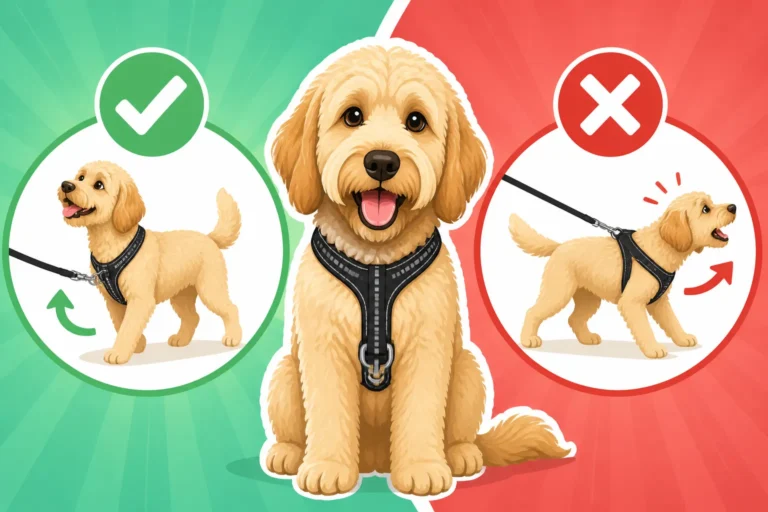
For clothing, the same principle of redirection applies. If your puppy nips at your pants, immediately stop moving, present a suitable toy, and praise them when they take it. If the nipping persists, you might need to briefly disengage by stepping away or using a short time-out. For leash nipping, it's often a sign of over-excitement or frustration. If your pup starts chewing the leash, stop the walk immediately. Stand still, ignore them, and wait for them to calm down and release the leash. Only when they are calm and the leash is slack do you resume walking. You can also try spraying the leash with a bitter apple spray (available on Amazon) to make it unappealing. Teaching a strong "leave it" command will be immensely helpful here, allowing you to tell them to disengage from your clothes or the leash. Redirecting a Labradoodle That Grabs Sleeves is a specific skill that will come in handy.
Over-Excitement Mouthing: Managing Energy Levels
Labradoodles are energetic dogs, and sometimes their excitement simply boils over into mouthing. This is especially common during greetings, playtime, or when they're simply overjoyed to see you. You might notice them jumping and nipping when you come home, or getting extra mouthy during a game of fetch.
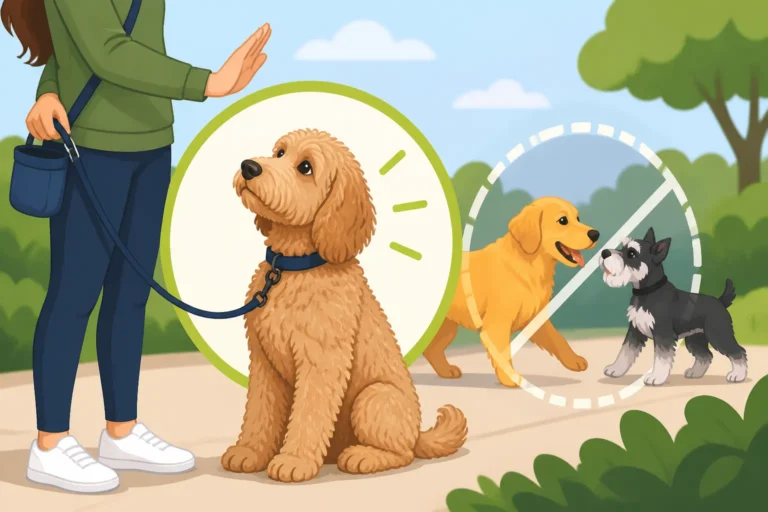
Managing over-excitement starts with managing their overall energy levels. Ensure your Labradoodle is getting adequate physical exercise and mental stimulation daily. A tired Labradoodle is a good Labradoodle! Structured walks, games of fetch, and puzzle toys can help burn off excess energy. During moments of high excitement, instead of mirroring their energy, try to remain calm. When greeting your dog, keep your voice low and movements slow. Ask them to "sit" or "down" before offering attention. If they jump and mouth, immediately turn your back and ignore them until all four paws are on the floor and they are calm. Only then do you reward with calm praise and a gentle pet. This teaches them that calm behavior earns attention, while frantic mouthing does not. Consider the article Teaching a Labradoodle to Greet With Four Feet Down for more tips on calm greetings.
When Does the Mouthing Finally Stop? A Realistic Timeline
The question on every Labradoodle owner's mind is, "When will this end?" While every puppy is an individual, there's a general developmental timeline for mouthing. It's not a light switch that suddenly turns off; rather, it's a gradual reduction that requires consistent effort from you.
The Teething Phase
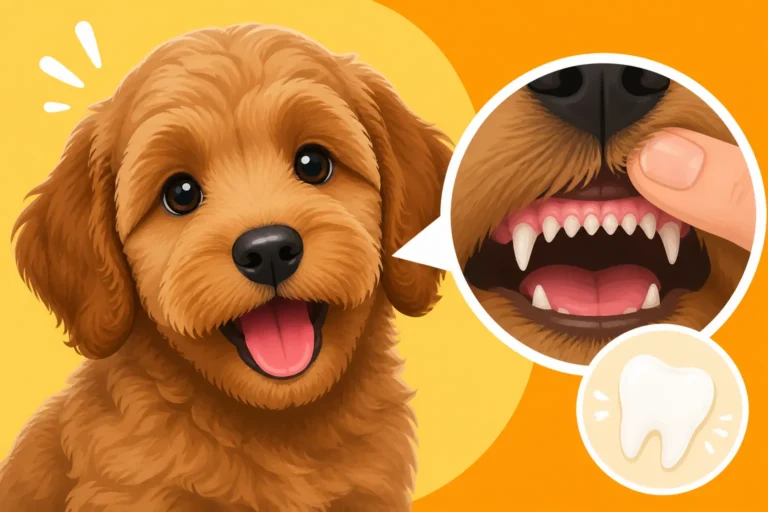
The first major phase of mouthing is directly related to teething. Labradoodle puppies are born without teeth, and their sharp "needle" puppy teeth erupt around 3-4 weeks of age. By 8 weeks, they usually have a full set. Then, between 12 weeks (3 months) and 6 months of age, these puppy teeth fall out, and their larger, stronger adult teeth begin to emerge. This process is uncomfortable for puppies, and they have an intense urge to chew to relieve the pressure and pain in their gums. This is when mouthing can feel most relentless.
During this period, expect an increase in chewing and mouthing. It's crucial to provide an abundance of appropriate chew toys, including those that can be frozen (like a frozen Kong stuffed with peanut butter or yogurt) to soothe their gums. Diverting their chewing onto these approved items during this phase is paramount. This intensive chewing phase typically peaks around 4-5 months and starts to subside as most adult teeth come in by 6-7 months. Understanding When a Labradoodle Puppy's Needle Teeth Come Out can help you anticipate this phase.
Adolescent Regression
Just when you think you've turned a corner and the mouthing is getting better, adolescence hits. For Labradoodles, this typically occurs between 6 months and 18 months, or even up to 2 years for some larger individuals. This is often described as the "teenage" phase, characterized by increased independence, testing boundaries, and sometimes a temporary regression in learned behaviors, including bite inhibition. Your once-obedient puppy might suddenly seem to forget everything they learned, including that "ouch!" means stop. The Age a Labradoodle Hits Adolescence and How Long Labradoodle Adolescence Lasts are crucial articles to understand here.
During adolescence, a Labradoodle's physical strength and energy increase dramatically, which can make any lingering mouthing behaviors feel more impactful. They might also become more excitable and prone to attention-seeking behaviors, which can manifest as renewed nipping. The key during this phase is to double down on consistency. Don't assume they've forgotten; assume they're testing. Reinforce all rules, continue with redirection, and ensure they are getting sufficient exercise and mental challenges. This is not the time to slack on training; in fact, it's when you might need to increase your efforts. Structured training sessions, even short ones, can help remind them of expectations.
Lifelong Management: The Goal of Bite Inhibition, Not Eradication
While the intense puppy mouthing typically tapers off significantly by 8-12 months of age, and usually resolves by 18 months to 2 years, it's important to understand that the goal isn't to eradicate all oral behaviors. Labradoodles, with their retriever heritage, will likely always enjoy carrying things in their mouths, chewing on appropriate toys, and using their mouths in play. The real goal is to teach strong bite inhibition – meaning they understand to use their mouths very, very gently when interacting with humans.
Even as adults, some Labradoodles might occasionally "mouth" a hand gently during petting or in moments of excitement, but it should be without pressure and never painful. It’s a testament to good training if they can mouth playfully without causing harm. For instance, a well-trained adult Labradoodle might "take" a treat from your fingers very delicately. Lifelong management involves continuing to provide suitable chew toys, engaging in appropriate play, and reinforcing calm behavior. If an adult Labradoodle suddenly starts mouthing excessively or aggressively, it warrants a vet visit to rule out pain or discomfort, followed by consultation with a professional dog trainer.
Disclaimer
This article is for general informational purposes only and does not constitute professional advice. Laws, prices and regulations vary by location and change over time. Consult a qualified professional for guidance on your specific situation.