Redirecting a Labradoodle That Grabs Sleeves
It's incredibly frustrating, and let's be honest, sometimes a little painful, when your sweet Labradoodle decides your arm, sleeve, or even your pant leg is the perfect chew toy or an invitation to a game of tug. This isn't just annoying; it can be damaging to clothes and, more importantly, to your skin. This guide is here to walk you through understanding why your Labradoodle might be grabbing your sleeves and, more importantly, how to effectively redirect this behavior so you can enjoy your dog without the constant worry of a playful nip.
Understanding Why Your Labradoodle Grabs Sleeves
Before we can effectively redirect your Labradoodle's sleeve-grabbing habits, it's really helpful to understand why they might be doing it in the first place. Dogs, especially young ones, communicate and interact with the world through their mouths, and this behavior usually stems from a few common, completely natural, but ultimately unwanted impulses.
Puppy Teething and Exploration
Ah, puppyhood! Those adorable, sharp little puppy teeth are designed for exploring the world, and unfortunately, that often includes exploring your hands, feet, and yes, your clothes. Just like human babies, puppies experience discomfort when teething, and chewing helps alleviate that. Your soft, accessible sleeve becomes an easy target. It's not malicious; it's instinctual. They haven't learned yet that human skin and fabric are off-limits. Both the Labrador Retriever and Poodle sides of your Labradoodle's heritage contribute to this natural mouthing tendency, especially in puppyhood. It's their way of learning about textures, pressure, and their environment. When a puppy mouths your sleeve, they're often just trying to engage with you, much like they would with a littermate during play, testing boundaries and learning social cues. The key is to teach them that humans are not chew toys and that sleeves are definitely not for tugging. The Mouthing a Labradoodle Puppy Does Longest is a common concern for many owners during this stage.
Attention-Seeking Behavior
Dogs are incredibly smart and quick to learn what actions get them a reaction from us. If your Labradoodle grabs your sleeve and you immediately respond – whether with a shout, a playful tug, or even just eye contact – they've learned that this behavior is a surefire way to get your attention. Even negative attention, from their perspective, can be better than no attention at all. Imagine a busy evening: you're cooking dinner, distracted, and your Labradoodle comes over and gently (or not so gently) takes your sleeve in their mouth. Your natural reaction is to look down, tell them "no," or try to push them away. Bingo! They've succeeded in getting you to engage. This quickly becomes a self-reinforcing cycle. They learn, "If I grab a sleeve, Mom or Dad looks at me!" This is why being mindful of how you react is paramount. Sometimes, the most loving thing you can do is to withhold attention from an unwanted behavior.
Over-Excitement or Frustration
Labradoodles are known for their lively, enthusiastic personalities. They can be incredibly bouncy and full of energy, thanks to their active parent breeds. When they get over-excited, perhaps during greetings, playtime, or when they anticipate something fun, that surge of energy can spill over into mouthiness. Similarly, if they're frustrated – maybe they want to play but you're busy, or they're not getting a toy they desire – they might redirect that frustration onto the nearest available "thing," which often happens to be your sleeve. This is particularly common in adolescent Labradoodles who are still learning self-control and how to manage their big feelings. A Labradoodle that hasn't had enough physical activity or mental stimulation might also resort to this as an outlet. Consider The Exercise a Labradoodle Needs Before It Behaves and how unmet needs can lead to problem behaviors.
Lack of Appropriate Outlets
Dogs need to chew. It's a natural, healthy behavior that helps keep their teeth clean, relieves stress, and provides mental stimulation. If your Labradoodle doesn't have enough appropriate chew toys, or if the toys they do have aren't engaging enough, they'll seek out alternatives. Your clothing, especially loose sleeves or pant legs, becomes an accidental substitute. Think about it: if there's nothing else enticing to chew on, why wouldn't they try your comfortable, interesting-smelling shirt? Ensuring your Labradoodle has a variety of high-quality, durable chew toys readily available is a fundamental step in redirecting this behavior. This also ties into Whether a Labradoodle Needs a Job to Settle; if they don't have enough constructive activities, they'll invent their own.
Immediate Strategies for Redirecting Sleeve-Grabbing
When your Labradoodle inevitably goes for your sleeve, having a few immediate, consistent strategies in your toolkit can make all the difference. The goal here isn't punishment, but rather clear communication that this action doesn't get them what they want, while simultaneously teaching them what does.
The "Be a Tree" Method
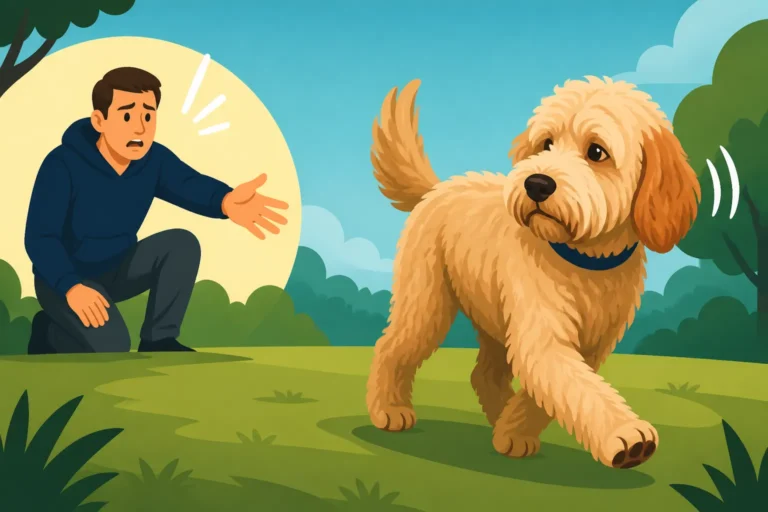
This is a classic for a reason, and it's incredibly effective for redirecting unwanted attention-seeking behaviors like sleeve-grabbing. The moment your Labradoodle's mouth touches your clothing, immediately stop all movement. Cross your arms over your chest, turn away from your dog, and stand absolutely still. Become as boring and uninteresting as a tree. Do not speak, do not make eye contact, and do not pull your sleeve away (as this can turn it into a game of tug, which is exactly what they want).
The instant your dog disengages – even if it's just for a second – that's your cue to praise them calmly and then immediately redirect them to an appropriate chew toy. Consistency is key here. Every single time those teeth touch your clothes, you become a tree. Your Labradoodle will quickly learn that "grabbing clothes makes the fun stop." It takes patience, especially with a high-energy Labradoodle, but it works.
Immediate Redirection to an Appropriate Toy
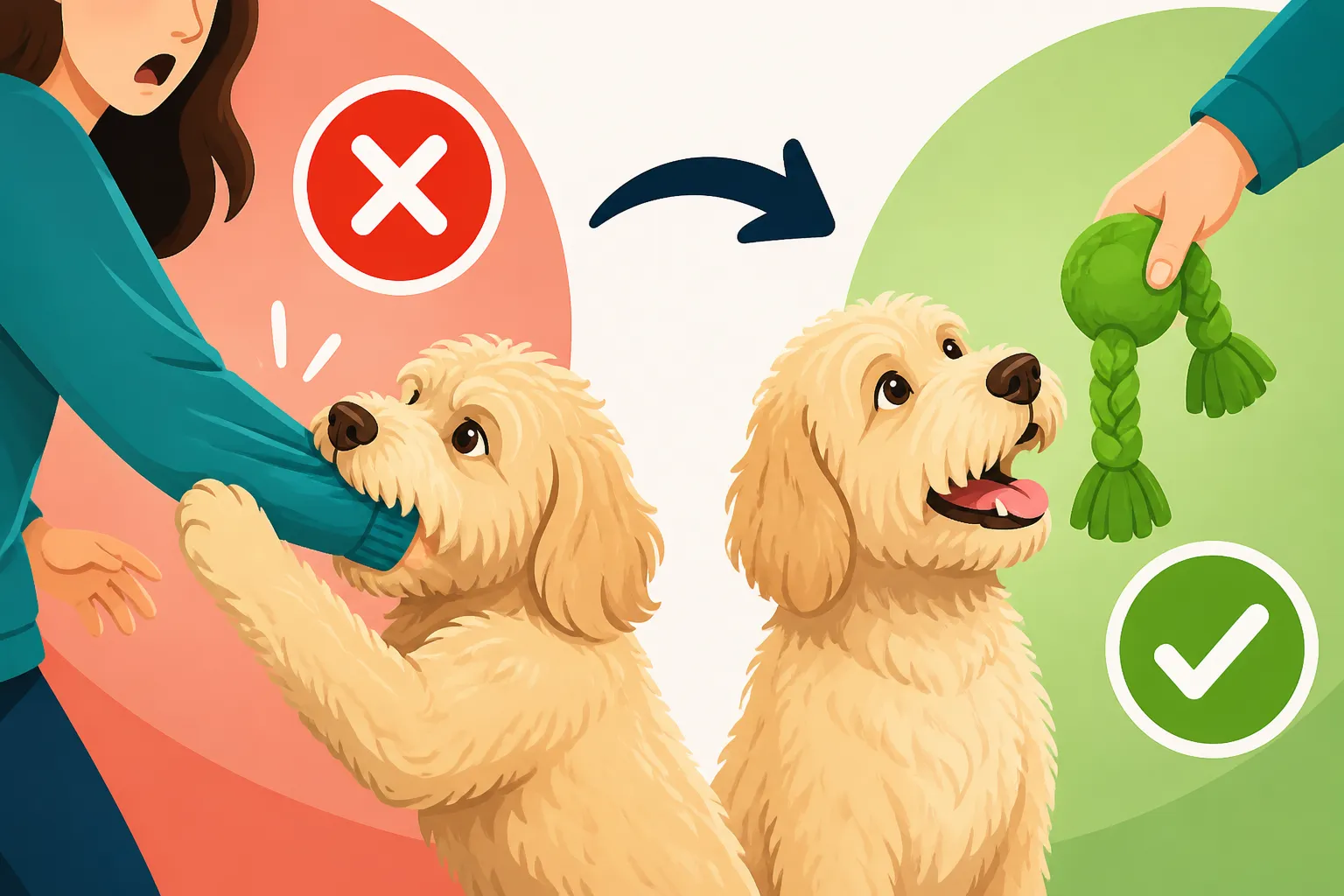
Once your Labradoodle disengages from your sleeve (because you became a tree!), the very next step is to immediately offer them something they are allowed to chew. Have a favorite toy – a sturdy chew toy, a braided rope, or a puzzle toy – always within reach. The moment they let go of your sleeve, praise them ("Good release!") and present the toy. When they take the toy in their mouth, praise them again enthusiastically. This teaches them, "Okay, this is what I can chew on to get attention or relief."
For younger puppies, it's helpful to have a variety of toys with different textures. Some dogs love soft plush toys, others prefer harder rubber chews. Explore what your Labradoodle enjoys. You can find a vast selection of durable chew toys on sites like Amazon, making it easy to keep a rotating stock that keeps your pup engaged. The trick is to be faster than your dog; anticipate the sleeve-grab and be ready with the toy before they even get a chance to mouth you.
Leash Management and Spatial Awareness
Sometimes, the best offense is a good defense. If your Labradoodle is particularly prone to sleeve-grabbing, especially during certain times of the day (like when you first get home, or during dinner prep), consider using a house line or leash indoors. A lightweight, short leash attached to their collar allows you to gently guide them away from you or to a designated "place" without having to use your hands or body to push them. This means you can intervene before they even get close enough to grab your sleeve.
When you see the tell-tale signs of impending mouthiness – maybe they're getting wound up, bouncy, or starting to fixate on your arm – you can use the leash to calmly lead them to a mat or bed and ask for a "settle" or "place" command. Reward them for lying down calmly. This isn't about tethering them permanently, but about giving you a tool for polite management during high-risk moments and teaching them self-control. It's a great way to manage interactions, especially when you have guests over or are doing something that requires your full attention.
Managing Greetings and Over-Excitement
Many sleeve-grabbing incidents happen during greetings, whether you're coming home or a visitor arrives. Labradoodles, with their friendly and enthusiastic nature, can get incredibly excited, and this excitement often manifests as jumping and mouthiness. To prevent this, implement a management plan for greetings. Before you open the door to a guest, put your Labradoodle on a leash. Have a chew toy ready.
Ask your dog to sit or lie down calmly before the guest enters. Reward them for maintaining their position. If they start to get too bouncy or go for a sleeve, immediately become a tree or gently guide them away with the leash. Only allow interaction and praise when all four paws are on the floor and their mouth is not on anyone's clothing. This teaches them that calm, polite greetings are what earn them attention. Consider the advice in Teaching a Labradoodle to Greet With Four Feet Down for a detailed approach to this.
Long-Term Training and Environmental Management
While immediate redirection is crucial, solving the sleeve-grabbing problem for good requires a consistent, long-term approach that incorporates training, environmental management, and understanding your Labradoodle's needs.
Consistent Training and Positive Reinforcement
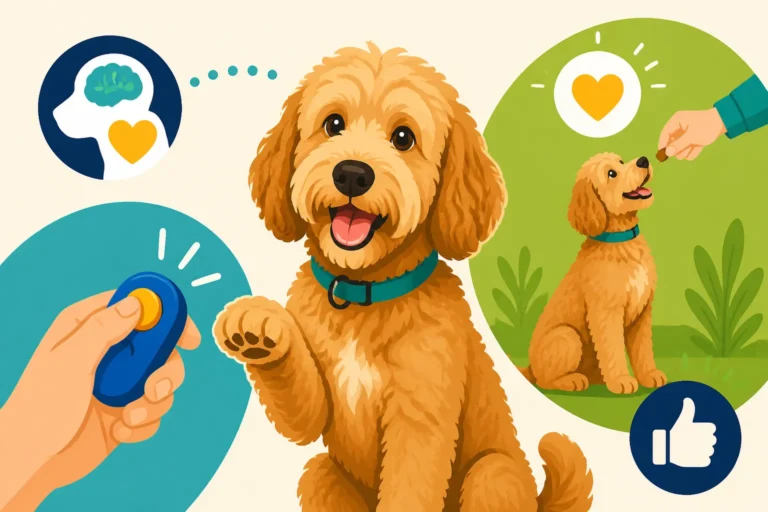
Effective training is the cornerstone of managing any unwanted behavior. For sleeve-grabbing, focus on teaching strong "leave it" and "drop it" commands. Practice these commands regularly with various items, starting with low-value objects and gradually increasing the difficulty. When your Labradoodle performs these commands successfully, reward them generously with high-value treats and praise. This builds a clear understanding of what is and isn't allowed to be in their mouth.
Furthermore, teach and heavily reinforce behaviors you do want to see. When your dog lies calmly at your feet, chews on an appropriate toy, or greets you without jumping or mouthing, make sure to shower them with praise and attention. This positive reinforcement makes desired behaviors more likely to happen again. Don't be afraid to seek guidance from online training platforms like BAXTER & Bella, which offer comprehensive programs designed to help owners tackle common puppy and dog behaviors using positive, consistent methods. Their resources can be incredibly helpful for learning how to implement these strategies effectively. If you're struggling, a certified professional dog trainer can provide personalized help.
Providing Engaging Chew Toys and Enrichment
A bored Labradoodle is often a mischievous Labradoodle. To curb sleeve-grabbing, ensure your dog has a constant supply of mentally stimulating and appropriate chew outlets. Rotate their toys regularly to keep things fresh and exciting. Think beyond just rubber bones; consider puzzle toys that dispense treats, snuffle mats that encourage foraging, or even frozen Kongs stuffed with peanut butter or plain yogurt to provide long-lasting engagement.
Different textures and shapes of chew toys can also appeal to different dogs. Some love the challenge of a tough nylon bone, while others prefer something softer and more satisfying to gnaw on. By providing a rich environment filled with appropriate chewing options, you make your clothes far less appealing. You can easily stock up on a variety of engaging toys and enrichment items from online retailers such as Amazon, ensuring your Labradoodle always has something new to explore. This fulfills their natural need to chew in a way that doesn't involve your wardrobe.
Adequate Exercise and Mental Stimulation
Remember that over-excitement and frustration can lead to sleeve-grabbing. A physically and mentally tired Labradoodle is a well-behaved Labradoodle. Ensure your dog is getting enough exercise for their age and energy level. This means more than just a quick stroll around the block. Think about varied walks, games of fetch in a secure yard, dog park visits (if appropriate for your dog's temperament), or even swimming. Labradoodles love to move, and channeling that energy constructively is vital.
Beyond physical exercise, mental stimulation is equally important. Engage your Labradoodle in short, fun training sessions throughout the day, teach them new tricks, or play scent games around the house. These activities tire their minds and reduce the likelihood of them seeking out inappropriate outlets for their energy, like your clothes. A well-exercised and mentally engaged Labradoodle is much less likely to grab your sleeves simply out of boredom or pent-up energy. For more on this, check out Whether a Labradoodle Needs a Job to Settle.
Teaching an Alternative Greeting Behavior
Instead of constantly reacting to sleeve-grabbing, proactively teach your Labradoodle a polite alternative greeting. The most common and effective is teaching them to sit calmly for attention or greetings. Start by practicing in a low-distraction environment. When you approach your dog, wait for them to sit, then immediately reward them. Gradually increase the distraction level, working up to greeting visitors.
Another excellent alternative is teaching them to go to a designated "place" (like a mat or bed) when someone enters the home. Reward them for staying on their place until you release them. This gives them a clear job to do and removes the opportunity for sleeve-grabbing during exciting moments. Consistency here will pay off immensely, transforming chaotic greetings into calm, manageable ones. Teaching a Labradoodle to Greet With Four Feet Down provides a deeper dive into this important aspect of training.
Common Pitfalls and Troubleshooting
Even with the best intentions, it's easy to fall into common traps that can inadvertently reinforce sleeve-grabbing behavior. Understanding these pitfalls and knowing how to troubleshoot them will strengthen your training efforts.
Accidental Reinforcement
One of the biggest hurdles many owners face is accidentally reinforcing the very behavior they want to stop. As discussed, any attention – even negative attention – can be a reward for a dog seeking interaction. A sharp "No!", a high-pitched yelp, or pulling your arm away vigorously can all inadvertently turn sleeve-grabbing into a fun game for your Labradoodle. They might interpret your reaction as a playful invitation to tug, or simply as a successful way to get your focus.
The key here is to truly become boring. If your dog gets no reaction, no game, no fun from grabbing your sleeve, the behavior will eventually extinguish. It might get worse before it gets better (a phenomenon known as an extinction burst), but persistence is vital. Your silence and stillness are your most powerful tools. Be mindful of your body language and tone of voice; aim for a neutral, non-reactive response.
Lack of Consistency Across the Household
Dogs thrive on consistency. If one family member strictly adheres to the "be a tree" method and redirects every time, but another family member allows occasional sleeve-grabbing or engages in playful tugging with clothing, your Labradoodle will become confused. They learn that the rules are fluid and that the behavior sometimes works, which means they'll keep trying.
It is absolutely crucial that everyone in the household, including children and frequent visitors, understands and consistently applies the same rules and redirection techniques. Hold a family meeting to discuss the plan and ensure everyone is on the same page. If children are too young to understand or remember, it's best to supervise their interactions closely or manage the dog's proximity with a leash during their playtimes. This collective effort accelerates learning and prevents your Labradoodle from thinking they can get away with it sometimes.
When to Seek Professional Help
While many cases of sleeve-grabbing can be resolved with consistent application of the strategies outlined here, there are times when seeking professional help is the best course of action. If your Labradoodle's mouthiness is escalating, becoming painful, or seems aggressive rather than just playful, it's a strong indicator that you need expert guidance. This is particularly true if the behavior is accompanied by growling, snarling, or a reluctance to let go.
A certified professional dog trainer or a veterinary behaviorist can assess your specific situation, identify underlying causes that you might have missed, and develop a tailored training plan. They can also observe your interactions and provide real-time feedback, helping you refine your technique. Don't hesitate to reach out if you feel overwhelmed or aren't making progress. Sometimes, a fresh, expert perspective is exactly what you need to get back on track. For more insights into training challenges, you might find Whether a Labradoodle Is Too Smart for a Novice interesting.
| Problem Behavior | Ineffective Response (Accidental Reinforcement) | Effective Response (Redirection & Consistency) |
|---|---|---|
| Grabbing sleeves | Yelling "No!", pulling arm away, tugging back | "Be a Tree" (still, silent, arms crossed) |
| Jumping for attention | Pushing down, making eye contact, high-pitched voice | Turn away, ignore, wait for all four paws on floor |
| Nipping hands | Jerking hand away, quick, sharp scold | Remove hand, replace with appropriate chew toy |
| Stealing items | Chasing dog, trying to snatch item | Offer a trade for a higher-value item |
Disclaimer
This article is for general informational purposes only and does not constitute professional advice. Laws, prices and regulations vary by location and change over time. Consult a qualified professional for guidance on your specific situation.