Whether an Australian Labradoodle Trains Better for Service
It's a dream many aspiring service dog owners share: finding a dog with the right blend of intelligence, temperament, and trainability to become a truly life-changing partner. For those specifically looking at the Australian Labradoodle, there's often an underlying hope that their reputation for being smart and amiable translates directly into a smoother path to service work. This guide aims to thoroughly explore whether an Australian Labradoodle genuinely trains better for service, digging into their unique characteristics, the demands of service work, and what truly contributes to success in this incredibly challenging and rewarding field.
Understanding the Australian Labradoodle for Service Work
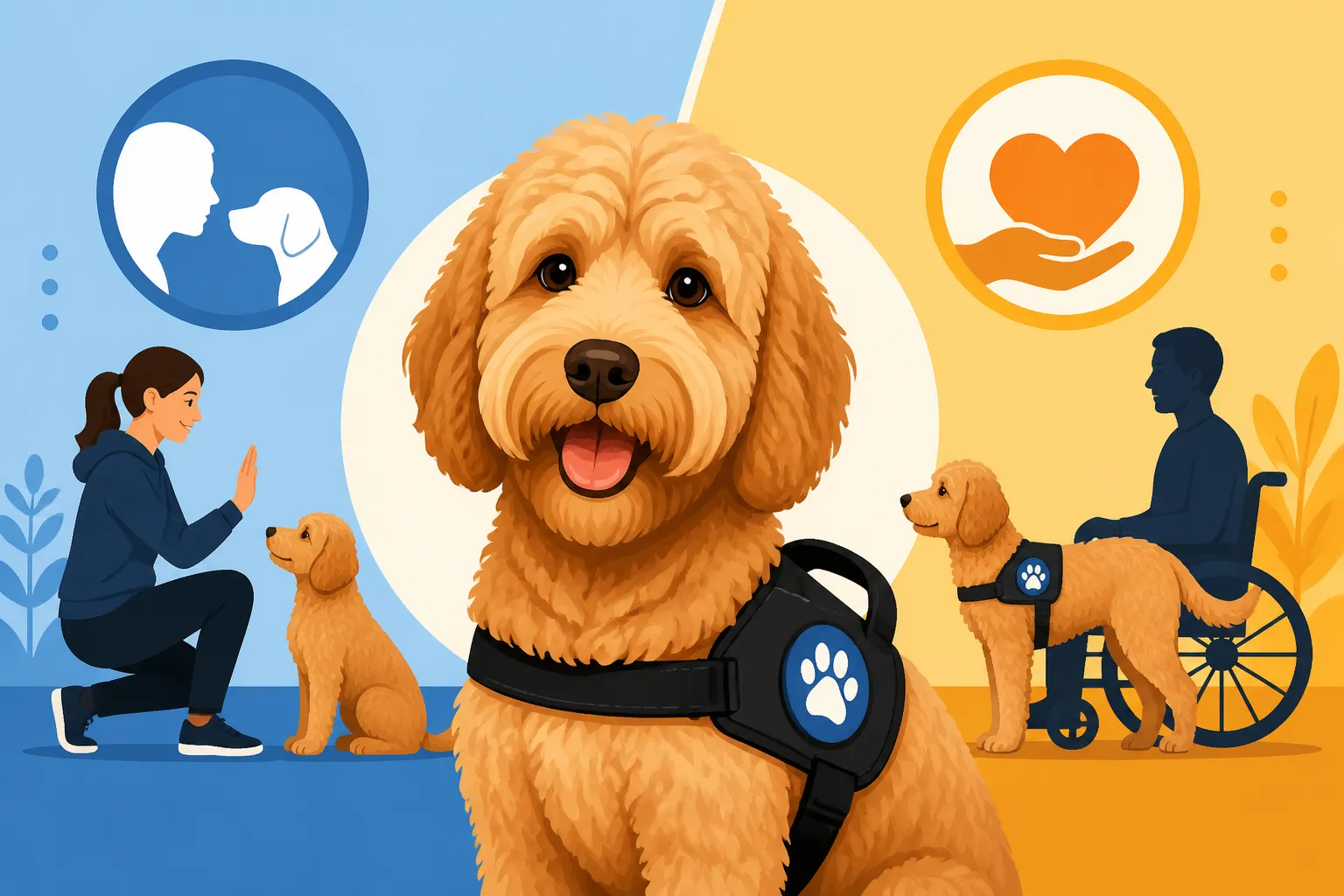
When we talk about "service dog potential," we're really discussing a complex cocktail of genetics, early environment, and dedicated training. The Australian Labradoodle often comes to mind because of its carefully cultivated lineage, which was initially aimed at producing allergy-friendly guide dogs. This heritage gives them a strong starting point, but it's crucial to understand what factors truly contribute to a successful service animal.
The Foundation of Service Dog Temperament
A successful service dog isn't just a well-behaved pet; they are a highly specialized working animal whose temperament is paramount. They need to be incredibly stable, resilient, and focused, able to perform tasks reliably in diverse and often distracting public environments. This means they must possess an innate calmness, a low reactivity to novel stimuli, and an unflappable confidence. They can't be prone to fear, anxiety, or aggression, and they must be highly motivated to work alongside their human partner.
The original vision for the Labradoodle, and subsequently the Australian Labradoodle, was to blend the biddable nature of the Labrador Retriever with the intelligence and low-shedding coat of the Standard Poodle. The inclusion of other breeds like the Cocker Spaniel and Irish Water Spaniel in the Australian lines further refined temperament and coat qualities, with breeders striving for consistency. The goal was always a dog with a gentle disposition and an eagerness to please, qualities that are indeed highly desirable in a service prospect. Many service dog organizations, like those originally involved in the creation of the Labradoodle, perform meticulous temperament testing on puppies to identify those rare individuals with the ideal mental makeup for such demanding roles.
Temperamental Traits of the Australian Labradoodle
Australian Labradoodles are often praised for their friendly, outgoing, and intelligent nature. They are typically described as "Velcro dogs" due to their strong desire to be close to their human companions, a trait that can be both a blessing and a challenge in service work. This close bond can be incredibly beneficial for task performance, as it fosters a strong connection and attentiveness to their handler's needs. They tend to be highly intelligent, often keen to learn, which certainly makes them quick studies in obedience and task training. Their eagerness to please, another hallmark trait, means they respond well to positive reinforcement and are often highly food or toy motivated.
However, it's also important to acknowledge that Australian Labradoodles can carry a high energy level, particularly in their younger years. While intelligence makes them trainable, that same intelligence needs an outlet, and without sufficient mental and physical exercise, they can become bored or destructive. Some individuals might also exhibit a sensitivity to their environment, which, if not properly managed, could manifest as anxiety in high-stress public settings. Moreover, the "Velcro" nature, while endearing, needs careful shaping during training to prevent over-attachment and separation anxiety, which would be detrimental to a working dog that needs to be comfortable settling independently when not actively performing a task. This is where consistent training, often supported by resources like those from BAXTER & Bella, can make a huge difference, guiding owners through foundational behaviors that build confidence and independence.
The Role of Early Socialization and Training
Regardless of breed, the first few months of a puppy's life are absolutely critical for shaping its future as a stable adult, especially for a potential service dog. Early and extensive socialization is non-negotiable for any dog destined for service work. This means safely exposing the puppy to a wide variety of sights, sounds, people, animals, and environments in a positive way. A puppy needs to experience busy city streets, quiet parks, different floor textures, loud noises, children, adults, other dogs, and all sorts of common scenarios they might encounter in public.
Coupled with socialization is early obedience training. Simple commands like "sit," "stay," "come," and "down" form the building blocks for more complex service tasks. Puppies also need to learn proper leash manners from a young age, as pulling on the leash is unacceptable for a working service dog. Positive reinforcement methods are crucial, building a strong, trust-based relationship between dog and handler. The more solid the foundation laid in puppyhood, the better equipped the Australian Labradoodle will be to handle the intense and specific training demands of service work. This early period sets the stage for whether the dog develops the confidence and resilience required to navigate the world as a working partner.
The Rigors of Service Dog Training
Training an Australian Labradoodle for service work is a journey far more intensive and demanding than teaching a pet dog good manners. It requires thousands of hours of dedicated instruction, both from professional trainers and the handler, to mold a reliable, task-performing companion.
Beyond Basic Obedience: What Service Work Truly Demands
A service dog isn't simply a well-behaved dog that goes everywhere with its owner. They are trained to perform specific tasks that mitigate their handler's disability. These tasks can range from retrieving dropped items, opening doors, providing deep pressure therapy, alerting to medical changes, or guiding individuals with visual impairments. Each task requires meticulous, repetitive training until the dog performs it flawlessly and consistently, even under extreme distraction. This means the dog must not only understand the command but also generalize it across various environments and stimuli.
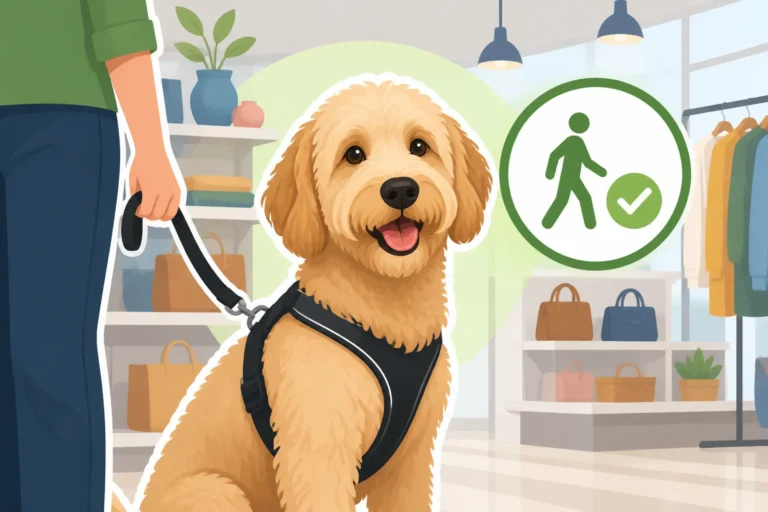
Beyond task training, public access training is a monumental undertaking. A service dog must ignore tempting smells, other animals, loud noises, and the attention of strangers. They must be able to lie quietly under a restaurant table for an hour, navigate crowded grocery aisles without bumping into displays, and remain focused on their handler even when children try to pet them. This level of self-control and unwavering focus is not natural for most dogs, even intelligent ones like the Australian Labradoodle. It requires immense patience, consistent expectation-setting, and a deep understanding of canine learning principles. What Public Access Training Asks of a Labradoodle delves deeper into these specific requirements.
Challenges Specific to the Australian Labradoodle in Training
While Australian Labradoodles have many wonderful traits, some characteristics can pose particular challenges in the context of service dog training. Their "Velcro" nature, as mentioned, can sometimes lean towards clinginess or separation anxiety if not managed, making it difficult for them to settle independently in public without constantly seeking reassurance. Their energy levels, especially as adolescents, can be quite high. While this can be channeled into productive training sessions, it also means handlers must be prepared for extensive exercise and mental stimulation to keep them calm and focused when working. A bored or under-exercised Labradoodle is an unfocused Labradoodle, and focus is everything in service work.
Another factor is their coat. While often touted as low-shedding, the fleece or wool coat of an Australian Labradoodle requires significant grooming. This isn't just a cosmetic concern; matting can be painful and distracting for a working dog. Early desensitization to brushing, bathing, and even the sound of clippers is vital. Imagine trying to perform a critical service task while your dog is uncomfortable due to a tight mat or a long, ungroomed coat. Teaching a Labradoodle to Lie Still for a Ninety Minute Groom highlights the extensive training required for this essential care. Grooming tools, like those found on Amazon, become daily necessities. Furthermore, while they are intelligent, some individuals can be quite "doodle-brained," meaning they might be clever at finding ways around commands or testing boundaries, requiring a handler who is equally smart and consistent in their training approach.
The Impact of Professional Training Programs
The vast majority of successful service dogs come from professional training programs. These organizations meticulously select puppies from proven lines, provide expert early socialization, and then guide them through years of intensive training with highly skilled professional trainers. They have the resources, knowledge, and experience to identify ideal candidates, address behavioral quirks, and consistently shape complex behaviors. They also understand the nuances of public access laws and expectations.
For those considering owner-training, it's a far more arduous path. It requires an extraordinary commitment of time, effort, and often financial resources for private lessons and specialized equipment. While online platforms like BAXTER & Bella offer structured curricula and support for owner-training, they are best suited for highly dedicated individuals who have a deep understanding of dog behavior and learning theory, or are willing to learn intensely. The average pet owner, even one with a naturally biddable Australian Labradoodle, will likely struggle to achieve the consistent, high-level performance required of a service dog without significant professional guidance.
Factors Influencing Training Success Beyond Breed
While the Australian Labradoodle breed offers a strong foundation, pinpointing whether an individual dog will "train better" for service work hinges on several crucial factors that extend beyond breed alone. Thinking about these elements upfront is critical for any prospective service dog owner.
Genetics and Health Clearances
A dog cannot be an effective service partner if it's constantly battling health issues. Therefore, impeccable health and sound genetics are non-negotiable for a service dog prospect. Australian Labradoodles, like all breeds, can be prone to certain inherited conditions. Reputable breeders screen their breeding dogs for common issues such as hip and elbow dysplasia, various eye conditions (like progressive retinal atrophy), and certain heart conditions. Genetic testing for diseases like von Willebrand's disease or Addison's disease, which are sometimes seen in the Poodle lines, is also important.
A service dog needs to have the physical stamina and comfort to perform its duties for many years. A dog with painful joints or chronic illness simply cannot do the job reliably. Choosing a puppy from parents with excellent health clearances, verified by organizations like OFA or PennHIP for hips and elbows, drastically increases the chances of having a healthy, long-lived working partner. This often means investing in a puppy from a breeder who can provide transparent documentation of these health tests for generations. Whether Health Tested Parents Add Years to a Labradoodle speaks to the longevity benefits of such careful breeding.
The Individual Dog's Personality
Even within a breed known for certain traits, individual dogs will have unique personalities. Not every Australian Labradoodle, no matter how well-bred, will have the specific combination of temperament, drive, and resilience required for service work. Some might be too shy, others too exuberant, some easily distracted, and others simply lack the intrinsic motivation to perform tasks for a handler in a demanding environment.
A good service dog prospect often exhibits a "bomb-proof" temperament. They are confident but not pushy, resilient but not hard-headed, and possess a strong desire to please without being overly sensitive. They should recover quickly from startling noises or new experiences and show a natural curiosity rather than fear. These are subtle nuances that require keen observation, often through structured temperament testing performed by experienced professionals. While an Australian Labradoodle may have a higher average propensity for desired traits, it's the specific individual's character that truly matters.
Owner Commitment and Consistency
Perhaps the most underestimated factor in service dog success is the owner's commitment and consistency. Training a service dog is a full-time job that requires immense dedication for years, not weeks or months. The handler must be willing to:
- Spend countless hours on training, practice, and proofing behaviors.
- Be absolutely consistent with commands, expectations, and consequences.
- Advocate for their dog and themselves in public, handling questions and sometimes resistance from others.
- Continuously reinforce learned behaviors throughout the dog's life.
- Provide appropriate physical exercise and mental stimulation daily.
- Understand canine body language and learning theory.
If an owner isn't fully committed to this rigorous process, even the most promising Australian Labradoodle will likely fail to reach its full potential as a service dog. The owner is the dog's anchor, trainer, and advocate, and their dedication is paramount to forging an effective working team. Whether an Owner Can Train Their Own Service Labradoodle offers more insight into the challenges of this path.
Choosing the Right Labradoodle for Service
Deciding to pursue a service dog, especially through owner-training or with a specific breed in mind, involves making incredibly informed choices. For an Australian Labradoodle, these choices start long before the puppy even comes home.
What to Look for in a Breeder
Finding a reputable breeder is the single most critical step in increasing the chances of acquiring a successful service dog prospect. A good breeder will prioritize health, temperament, and ethical breeding practices above all else. Here's what to look for:
- Extensive Health Testing: Demand to see verifiable health clearances for both parent dogs, including hips, elbows, eyes, and genetic tests relevant to the breed (like prcd-PRA, EIC, and potentially Addison's). The Health Tests a Labradoodle Breeder Should Show is a must-read.
- Temperament Focus: A breeder serious about producing dogs with working potential will be able to discuss the temperaments of their breeding stock and previous litters in detail. They should aim for calm, confident, and biddable dogs, not overly sensitive or high-strung ones.
- Early Socialization Protocols: Ask about their puppy-raising program. Do they follow protocols like Puppy Culture or "The Rule of 7s" to ensure early, positive exposure to various stimuli?
- Transparency and Support: A good breeder will welcome questions, allow visits (when appropriate), and offer lifelong support for their puppies. They won't just sell you a puppy and disappear.
- Willingness to Match: They should be actively involved in matching puppies to appropriate homes based on individual puppy temperaments and the family's lifestyle and goals. Explicitly tell them you are seeking a service dog prospect.
Be wary of breeders who don't perform health testing, breed solely for "rare" colors, or don't seem concerned with where their puppies go.
Temperament Testing a Potential Service Puppy
Even with the best breeding, individual puppies in a litter will vary. Professional service dog organizations often conduct formal temperament tests at 7-8 weeks of age to assess key traits crucial for service work. While a pet owner might not have access to a professional evaluator, understanding what these tests look for can guide your discussions with a breeder.
Key traits assessed include:
- Confidence: How the puppy explores new environments or reacts to novel objects.
- Softness/Hardness: How sensitive the puppy is to correction or startling events, and how quickly they recover.
- Prey Drive: While some drive is good for motivation, excessive prey drive can be a distraction.
- Social Attraction/Biddability: How much the puppy seeks human interaction and is willing to follow.
- Sound Sensitivity: Reaction to loud noises.
- Touch Tolerance: Reaction to being handled, especially in sensitive areas.
A puppy that is too fearful, overly dominant, highly sensitive, or easily distracted is generally not a good candidate for service work. You're looking for a confident, resilient, moderately social, and curious puppy.
The Benefits of a Program-Trained Dog vs. Owner-Training
It's important to weigh the pros and cons of obtaining a program-trained service dog versus attempting to owner-train an Australian Labradoodle.
| Feature | Program-Trained Service Dog | Owner-Trained Australian Labradoodle |
|---|---|---|
| Selection | Professionally chosen, often from specific breeding lines | Owner chooses puppy, high variability |
| Training | Thousands of hours by professional trainers | Owner's responsibility, requires immense dedication |
| Cost | High initial cost (often includes training, dog, support) | Lower initial puppy cost, high ongoing training expenses |
| Timeframe | Can be 1-3 year waitlist, dog arrives fully trained | Years of owner's personal time and effort |
| Guarantees | Often comes with placement and behavior guarantees | No guarantees, success depends entirely on owner's skill |
| Public Access | Prepared for public access with proofing | Requires extensive, self-directed public access training |
| Support | Lifelong support from the program | Owner responsible for finding and funding support |
For most individuals seeking a highly reliable service dog, a program-trained dog offers a significantly higher chance of success, albeit with a substantial financial and waiting list commitment. While owner-training an Australian Labradoodle is possible, it's an exceptionally challenging endeavor that requires a unique blend of dog knowledge, patience, and unwavering commitment. It's not a path to be taken lightly, and often, even owner-trainers seek significant professional guidance along the way, purchasing courses or tools from resources like BAXTER & Bella or specific training equipment from Amazon.
Ultimately, whether an Australian Labradoodle "trains better" for service isn't a simple yes or no. They certainly possess many desirable traits – intelligence, biddability, and a strong desire to connect with people – that give them a head start. However, successful service dog training depends less on breed alone and far more on impeccable genetics, a solid individual temperament, meticulous early socialization, and, most critically, the immense dedication and skill of the trainer and handler. With the right foundation and unwavering commitment, an Australian Labradoodle can absolutely excel in service work, but it's a marathon, not a sprint.
Disclaimer
This article is for general informational purposes only and does not constitute professional advice. Laws, prices and regulations vary by location and change over time. Consult a qualified professional for guidance on your specific situation.