What Public Access Training Asks of a Labradoodle
The dream of having a Labradoodle as a service dog or assistance animal in public spaces is a powerful one for many, but the reality of what public access truly demands from both dog and handler can be a significant shock. It's far more rigorous than simply being a well-behaved pet, and the expectations are incredibly high. This guide aims to pull back the curtain on the intense, lifelong training and temperament requirements that go into a Labradoodle successfully performing public access work, addressing the specific challenges and commitments involved.
Understanding Public Access for Service Dogs
When we talk about public access for a service dog, we're not just discussing a dog that can walk politely on a leash or sit quietly in a park. This is about a highly trained working animal that must perform specific tasks to mitigate a handler's disability, remaining completely calm and focused in environments that would overwhelm most pets. It's a world away from a family dog's daily life, and the distinctions are critical for anyone considering this path with their Labradoodle.
The Legal Framework: ADA vs. Emotional Support Animals
Many people confuse service dogs with emotional support animals (ESAs), and while both provide invaluable companionship and comfort, their legal standing for public access is vastly different. In the United States, the Americans with Disabilities Act (ADA) specifically defines a service animal as a dog that is individually trained to do work or perform tasks for a person with a disability. This work or task must be directly related to the person's disability. Think of a Labradoodle trained to retrieve dropped items, alert to a medical crisis, or guide a visually impaired individual. These are concrete, demonstrable tasks.
Emotional support animals, on the other hand, provide comfort just by their presence. While they are federally recognized for housing and air travel under certain circumstances, they do not have the same broad public access rights as service dogs. This means that an ESA Labradoodle, no matter how sweet or well-behaved, can be denied entry to most public places like restaurants, grocery stores, or retail establishments, which can be a difficult reality for owners who simply want their dog with them everywhere. Understanding this distinction is the absolute first step in comprehending the "ask" of public access training.
The Ethical Responsibility: More Than Just a Vest
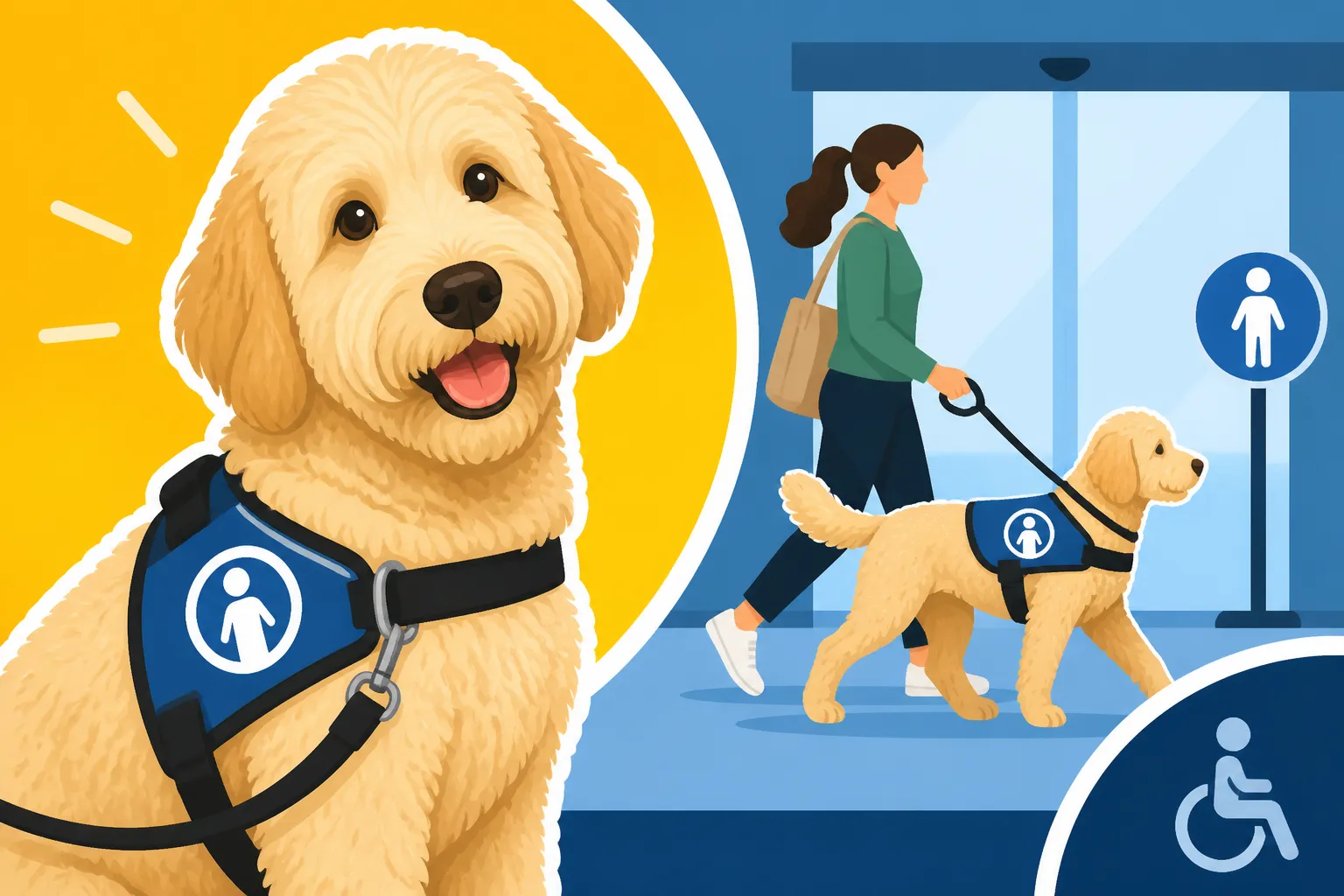
Beyond the legal definitions, there's a profound ethical responsibility that comes with taking a service dog into public spaces. A service dog represents not just itself, but all working dogs, and its behavior impacts public perception and acceptance. A Labradoodle wearing a service vest, even if its tasks are invisible to the public, must embody composure and impeccable manners at all times. This means no barking, no sniffing merchandise, no jumping on people, and no bathroom accidents.
If a service dog acts out, even once, it can erode trust and lead to increased scrutiny or even restrictions for other legitimate service dog teams. Handlers bear the responsibility of ensuring their Labradoodle is always under control and performing its duties without disruption. This includes anticipating potential issues, managing distractions, and always being prepared to leave a situation if the dog becomes overwhelmed or unable to perform its work. It's a weighty commitment, far beyond merely dressing your dog in a special harness you found on Amazon.
Core Temperament Traits Required
Not every dog, even one from excellent lines, possesses the inherent temperament necessary for public access work. While training is paramount, a strong foundation of specific personality traits makes the journey possible. For a Labradoodle, drawing on the best of its Labrador Retriever and Poodle heritage is crucial. This isn't about intelligence alone; it's about a deep, unwavering calmness and an intrinsic desire to work alongside its human, regardless of external chaos.
Stability and Resilience Under Pressure
A public access Labradoodle must be incredibly stable and resilient. Imagine being in a bustling airport, with constant announcements, people rushing by, luggage carts clattering, and children crying. A service dog cannot be startled by sudden noises, spooked by strange objects, or overwhelmed by crowded spaces. It needs to remain focused on its handler and its tasks, maintaining a calm demeanor that communicates confidence. This means ignoring dropped food, loud conversations, and unexpected bumps from passersby.
Resilience also means bouncing back quickly from minor disruptions. Perhaps a small child accidentally steps on its tail, or a shopping cart brushes its side. A pet might yelp or react defensively, but a service Labradoodle needs to absorb these minor incidents without a fuss, quickly refocusing on its handler. This innate unflappability is often tested through specific temperament evaluations early in a dog's life, as it's something that can be nurtured but not entirely created through training alone. Temperament Testing a Labradoodle Puppy for Service often looks for these very qualities.
Low Reactivity and High Trainability
Low reactivity is non-negotiable for a public access dog. This means no barking, no lunging, no growling, and no excessive excitement when encountering other dogs, people, or tempting smells. A service Labradoodle must be able to walk past a squealing toddler, a barking chihuahua, or a dropped hot dog without so much as a glance, keeping its attention solely on its handler. This requires a dog that isn't easily distracted by the environment or driven by instinctual urges to chase or play.
While Labradoodles are generally known for their intelligence and desire to please, "high trainability" for service work means an exceptional aptitude for learning complex tasks and maintaining them under immense distraction. It's not just about learning "sit" quickly, but about performing a critical task like alerting to a blood sugar drop even when a parade is passing by. This level of focus and dedication takes thousands of hours of training and a dog with a profound willingness to engage with its handler above all else. The Tasks a Labradoodle Is Taught for Disability Work are often quite intricate and require sustained mental effort.
The Importance of Socialization, Not Just Exposure
There's a common misconception that "socialization" simply means exposing a puppy to as many things as possible. For a public access Labradoodle, true socialization is far more nuanced. It means creating positive associations with a wide variety of people, places, sounds, and objects, teaching the dog how to ignore distractions and remain neutral. It's about building confidence and neutrality, not about encouraging interaction with everyone and everything.
A service dog in training needs carefully managed exposure to differentiate between appropriate work environments and downtime. It needs to learn that while other dogs exist, they are not for greeting while working. It needs to understand that strangers are to be ignored, not solicited for pets. This careful balance, often starting from puppyhood, helps shape a Labradoodle that is comfortable in any setting but always defaults to focusing on its handler. Without this foundation, the intense demands of public access will quickly overwhelm even the most well-intentioned dog.
Fundamental Obedience Skills for Public Access
When people envision a service dog, they often imagine complex tasks. While those are vital, they are built upon a bedrock of fundamental obedience that must be absolute and unwavering. For a Labradoodle working in public, "good obedience" isn't enough; it must be perfection, executed silently and flawlessly, even when every fiber of the dog's being is screaming to do something else. This isn't just about command-response; it's about a dog's profound understanding of its role and its handler's needs.
Flawless Leash Manners and Heeling
Leash manners for a public access Labradoodle go far beyond a casual stroll. The dog must heel precisely at its handler's side, whether in a crowded mall, a quiet library, or navigating a busy street crossing. This means no pulling, no lagging, no sniffing, and no wandering. The dog must match its handler's pace, stop when they stop, and turn when they turn, all without tension on the leash. This precision is essential for safety, preventing trips and falls, and ensuring the dog doesn't become a hazard to others.
Furthermore, a service dog must be able to perform these actions with various equipment – perhaps a specific harness or a mobility aid attached to the leash. It must ignore dropped food on the sidewalk, the tantalizing smells from a restaurant patio, or the excited barks of another dog across the street. Teaching a Sixty Pound Labradoodle Not to Pull becomes a mission-critical objective, not just a preference, because even a slight pull from a large dog can unbalance a handler relying on its presence.
Rock-Solid Stays and Recalls in Distraction
Imagine needing your Labradoodle to stay put while you retrieve something from a shelf, or call it back instantly from a slight distance to avoid a hazard. For a public access dog, "stay" isn't for a few seconds; it's for minutes, even in a busy environment. The dog must remain in position – sit, down, or stand – until explicitly released, ignoring all passersby, children, and other animals. This level of self-control is incredibly difficult to instill and requires immense patience and consistent practice in increasingly distracting environments.
Equally critical is a "rock-solid" recall. If for any reason the dog becomes separated or needs to be called away from a dangerous situation, it must come immediately, without hesitation, every single time. This is not a request; it's a command that must override any other impulse, whether it's chasing a squirrel or greeting an unfamiliar person. Achieving this level of reliability under public access conditions means countless hours of training, often with positive reinforcement methods, building a bond where the dog chooses to respond to its handler above all else. This can be particularly challenging during The Ten Month Old Labradoodle That Forgets Everything phase of adolescence.
The "Leave It" and "Drop It" Commands as Lifelines
These two commands are absolute lifelines in public access work. A service Labradoodle must instantly "leave" any item it encounters on the ground – food scraps, discarded trash, or even potentially dangerous objects – without a second thought. This protects the dog from ingesting something harmful and prevents it from becoming a nuisance by investigating or trying to steal items. This command must be so ingrained that it's an automatic response, not a moment of hesitation.
Similarly, "drop it" is essential for safely managing items. Whether the Labradoodle is performing a retrieve task and needs to release an object into its handler's hand, or if it accidentally picks something up that it shouldn't, the dog must immediately release it on command. These commands are not merely about good manners; they are about safety, health, and maintaining the professionalism required of a working service animal. Mastering them means practicing in every conceivable environment, from a quiet home to a bustling outdoor market, ensuring the Labradoodle's understanding is absolute, a trait that BAXTER & Bella’s online training program emphasizes from puppyhood.
Navigating Public Environments
The sheer variety of public environments presents an unending stream of challenges for a service Labradoodle. It's not enough to be trained in a controlled setting; the dog must be able to seamlessly transfer its skills and maintain its composure across wildly different sensory landscapes. This is where the rubber meets the road, proving whether a Labradoodle truly has the aptitude and training for public access.
Handling Crowds, Noise, and Unpredictable Situations
Imagine walking through a crowded street fair, with loud music, vendors calling out, children running, and unexpected movements from every direction. A public access Labradoodle must navigate this chaos with grace and focus. It must be comfortable with people brushing against it, loud noises like sirens or dropped objects, and the unpredictable nature of human behavior. This means no flinching, no shying away, and no signs of anxiety or fear.
The dog needs to learn to tune out the irrelevant stimuli and focus solely on its handler and its tasks. This isn't natural for most dogs, who are hardwired to notice everything in their environment. Training involves systematic desensitization and counter-conditioning, gradually exposing the Labradoodle to increasing levels of noise and crowds while reinforcing calm, focused behavior. It's a testament to the dog's temperament and training when it can remain perfectly settled amidst a cacophony of sound and movement, a skill crucial for What Public Access Means for a Labradoodle in a Store.
Ignoring Food, People, and Other Animals
This is perhaps one of the biggest "asks" of a public access service dog. Everywhere you go, there's food: dropped crumbs, open bags, restaurant tables, and grocery aisles. There are also countless people who want to interact with a cute Labradoodle, and other dogs (sometimes on-leash, sometimes not). A service dog must ignore all of it. This means no sniffing food from the floor or tables, no attempts to solicit pets from strangers, and absolutely no greetings or reactions to other dogs.
The dog's focus must be so laser-sharp on its handler that these distractions become mere background noise. This requires intense impulse control training and consistent reinforcement. Teaching a Labradoodle to Ignore Food on the Floor is a monumental task, especially given the Labrador's natural inclination towards food, and similarly, Teaching a Labradoodle to Ignore Other Dogs in Public challenges their innate social drives. Handlers must be vigilant, constantly managing the environment and proactively reinforcing the "ignore" behavior.
Settling in Confined and Busy Spaces
Public access often means spending time in tight, often uncomfortable spaces. Think of a crowded bus, a small doctor's office waiting room, or under a restaurant table. A service Labradoodle must be able to settle calmly and quietly in these situations, lying down out of the way, ideally under or beside the handler's chair or feet, without fidgeting, whining, or taking up too much space. This "settle" command needs to be reliable for extended periods.
This skill is crucial because a service dog that constantly shifts, paces, or makes noise can be a trip hazard or a distraction to others. It requires a dog that can truly relax and be "invisible" in public. For a larger standard Labradoodle, teaching it to curl up compactly and remain still for long durations is a significant training goal. Teaching a Labradoodle to Settle Under a Restaurant Table illustrates one specific, yet common, demand of public access.
Grooming and Hygiene for Public Access
While not directly a "training" task in the traditional sense, impeccable grooming and hygiene are absolutely essential components of public access for a Labradoodle. A service dog must always present itself as clean, well-maintained, and odor-free. This not only ensures the dog's comfort and health but also upholds the professional image of service animals and prevents any legitimate complaints from business owners or the public. Neglecting these aspects can lead to refusal of entry, regardless of the dog's training.
Maintaining a Clean, Mat-Free Coat
Labradoodles are renowned for their low-shedding coats, but these coats require diligent maintenance. For a public access dog, a matted coat is not just uncomfortable; it's unacceptable. Mats can harbor dirt and parasites, cause skin irritation, and emit odors. A service Labradoodle must be brushed regularly, often daily, to ensure its coat remains clean, tangle-free, and presentable. This includes thorough line brushing right down to the skin, paying close attention to common matting areas like behind the ears, in the armpits, and under the collar or harness.
Beyond regular brushing, routine bathing with appropriate dog-friendly shampoos and conditioners is necessary. The dog must be completely dried after baths to prevent skin issues and matting, especially with the denser fleece or wool coats. This commitment to grooming is a significant time investment, but it is non-negotiable for a dog that will be in close contact with the public in various environments, from hospitals to retail stores.
Regular Nail Trims and Ear Care
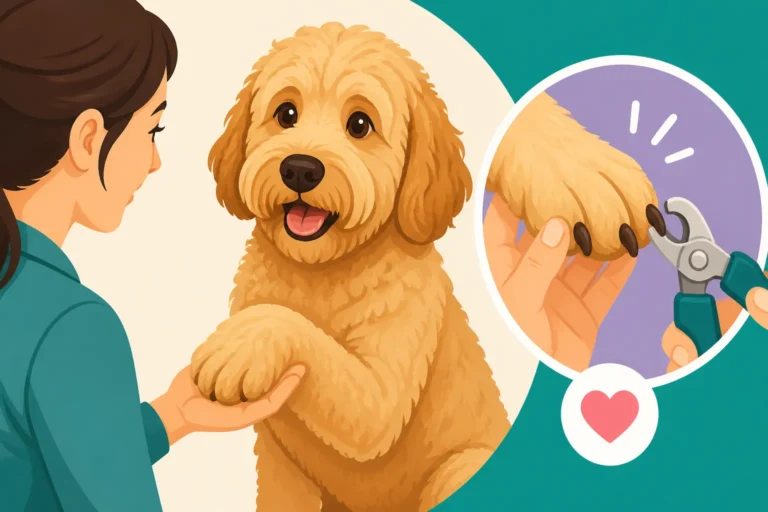
Long nails can cause discomfort for the dog, affect its gait, and scratch flooring or people. For a service Labradoodle, nails must be kept trimmed short, ensuring they don't click on hard surfaces. This requires consistent nail trimming, often weekly or bi-weekly, to maintain appropriate length and keep the quick receded. The dog must be completely tolerant of having its paws handled and nails clipped, which is a foundational part of puppy socialization and desensitization.
Labradoodles, with their drop ears, are prone to ear infections due to reduced air circulation and hair growth within the ear canal. For a public access dog, a chronic ear infection would be both painful for the dog and potentially cause an unpleasant odor, making it unfit for public work. Regular ear cleaning and inspection are vital to prevent issues, and any signs of infection must be addressed immediately by a veterinarian. This proactive approach to hygiene is paramount.
Potty Training and Emergency Protocols
An absolute cornerstone of public access is infallible potty training. A service Labradoodle must never, under any circumstances, have an accident in a public building. This means comprehensive training on appropriate elimination areas, being able to hold it for extended periods, and giving a clear signal to the handler when it needs to relieve itself. It's about reliability 100% of the time.
Beyond standard potty training, handlers of public access dogs must have emergency protocols in place. This includes knowing where designated "pet relief areas" are in airports or large venues, carrying waste bags, and being prepared for unexpected situations. While accidents are rare with properly trained service dogs, a handler must be equipped to handle one discreetly and thoroughly if it were to occur, maintaining cleanliness and hygiene as a top priority. This attention to detail is part of the extensive preparation for a life of public access.
The Role of the Handler in Public Access Training
While we focus a lot on what the dog needs to do, the handler's role in public access training and ongoing maintenance is equally, if not more, demanding. It's a symbiotic relationship, where the handler is both teacher and advocate, responsible for setting their Labradoodle up for success and managing every aspect of their public life together. This isn't a passive role; it's an active, conscious commitment that never truly ends.
Consistent Reinforcement and Clear Communication
Public access training is a marathon, not a sprint. The handler must provide consistent reinforcement and maintain clear communication throughout the dog's life. This means using consistent commands, rewarding desired behaviors, and correcting undesired ones promptly and fairly. Ambiguity in communication can lead to confusion and undermine the dog's reliability in high-stakes public settings. Consistency is key across all environments and with all handlers if multiple people are involved in the dog's life.
This also means that the handler must continually refresh and proof their Labradoodle's skills. Just because a dog learned a command at home doesn't mean it will perform perfectly in a novel, distracting environment. Ongoing practice in diverse settings, gradually increasing the level of difficulty, is crucial. This proactive approach ensures that the Labradoodle's public access skills remain sharp and reliable, no matter the situation. Online resources, such as those offered by BAXTER & Bella, can be invaluable for maintaining training routines.
Advocating for Your Service Labradoodle
Despite legal protections, service dog handlers frequently encounter misunderstandings, challenges, and even discrimination from the public and business owners. A public access handler must be prepared to educate others about their rights and their dog's role, calmly and confidently. This often involves explaining what a service dog is (and isn't), clarifying tasks, and asserting access rights, all while managing their own disability and their dog's behavior.
Advocacy also involves protecting the dog from inappropriate interactions. This means politely asking people not to pet the working dog, explaining why distractions are harmful, and preventing others from offering food or interfering with the dog's focus. This can be emotionally draining, as many people mean well but don't understand the severe impact their actions can have on a working team. The handler is their Labradoodle's sole protector and spokesperson in the public sphere.
The Lifelong Commitment to Training and Maintenance
Getting a Labradoodle to the point of being a fully trained public access service dog takes years of intensive work and significant financial investment. But the commitment doesn't end there. A service dog handler must maintain that training throughout the dog's life, adapting to new situations, refreshing old skills, and continually practicing. This includes regular veterinary check-ups to ensure the dog remains physically sound and able to perform its duties. The Yearly Screening a Labradoodle Should Get is vital for this.
A service dog isn't a robot; it's a living, breathing animal that will have good days and bad days. The handler must be attuned to their Labradoodle's emotional and physical state, knowing when it needs a break, when it's stressed, or when it's simply having an off day. Providing adequate rest, exercise, and enrichment outside of working hours is critical to prevent burnout and ensure the dog remains happy and healthy in its demanding role. It's a 24/7 commitment that requires immense dedication and understanding.
Common Challenges and How to Overcome Them
Even with the best temperament and the most diligent training, the path to becoming a public access Labradoodle team is fraught with challenges. Understanding these common hurdles and having strategies to overcome them is crucial for success and maintaining the integrity of the partnership. It's a journey that requires patience, problem-solving, and sometimes, the wisdom to know when to ask for help.
Dealing with Distractions and Setbacks
Distractions are the bane of every service dog handler's existence. A sudden loud noise, a child running directly towards the dog, another dog barking aggressively from a car, or the overwhelming smell of a food court – any of these can potentially derail a working dog's focus. While training aims to proof against these, perfection is an ideal, and real-world situations are infinitely varied. Dealing with these requires constant vigilance from the handler and a robust set of responses.
When a distraction occurs, the handler must be prepared to intervene immediately, redirecting the Labradoodle's attention back to them using previously learned commands and positive reinforcement. This might mean a quick "watch me," a rapid change in direction, or a high-value treat reward for maintaining focus. Setbacks, such as a moment of reactivity or an accidental sniff, are learning opportunities, not failures. The key is to calmly assess what happened, identify the trigger, and implement a plan to work through it in future training sessions. Using varied training tools, easily accessible from retailers like Amazon, can assist in managing these situations.
Preventing Burnout for Both Dog and Handler
Public access work is mentally and physically exhausting for both the Labradoodle and its handler. The constant need for vigilance, perfect behavior, and task performance can lead to stress and burnout. For the dog, signs might include reluctance to put on its vest, excessive panting, yawning, lip licking, or subtle avoidance behaviors. For the handler, it can manifest as emotional fatigue from constant advocacy and management.
Preventing burnout requires a careful balance between work and rest. Handlers must ensure their Labradoodle has plenty of downtime to simply be a dog, engaging in play, off-leash romps in safe areas, and mental enrichment activities that aren't task-related. It's important to recognize that even service dogs need a break from "working." Similarly, handlers need to establish self-care routines, leaning on support networks, and remembering that their worth isn't solely tied to their dog's performance. Sometimes, a planned "day off" from public access is the best solution for both team members.
When to Seek Professional Guidance
No handler is an island, and public access training is too complex to attempt alone without expert guidance. There will inevitably be moments when a challenge seems insurmountable or when a behavior emerges that the handler feels ill-equipped to address. This is precisely when it's crucial to seek help from a qualified professional service dog trainer or behaviorist. These experts can offer fresh perspectives, introduce new training techniques, and provide tailored solutions to specific issues.
A good professional will assess both the dog and the handler, observing their dynamic and identifying underlying causes for problem behaviors. They can also help with advanced proofing, ensuring the Labradoodle's skills hold up in increasingly complex environments. Ignoring persistent issues can lead to escalation and ultimately jeopardize the dog's ability to perform public access work. Investing in professional support, whether through in-person sessions or comprehensive online courses such as BAXTER & Bella offers, is an investment in the long-term success and well-being of the service dog team. Whether a Labradoodle Needs a Trainer or a Class is almost always answered with a resounding "yes" for service work.
The Reality of Public Access: Not Every Dog Is Cut Out For It
It's a tough truth, but it's essential to be realistic: not every Labradoodle, no matter how beloved or well-intended its owner, is suited for the rigorous demands of public access service work. The criteria are exceptionally high, and pushing a dog into a role it's not temperamentally suited for is unfair to the animal and can lead to stress, behavioral issues, and an unsuccessful partnership. Recognizing this reality is an act of responsible ownership and deep love for your dog.
Recognizing When a Labradoodle Isn't Suited for Public Work
Signs that a Labradoodle might not be cut out for public access can manifest in various ways, even after significant training. These include persistent anxiety in novel environments, reactivity towards strangers or other animals despite intervention, an inability to settle in busy places, chronic stress signals (excessive panting, drooling, lip-licking, shedding), or a lack of focus on the handler in distracting situations. These aren't necessarily "failures" on the dog's part, but rather indicators that the demands of the role exceed its natural coping mechanisms.
It's also important to consider the Labradoodle's physical health. Any chronic pain, severe allergies, or conditions that might limit its stamina or focus could make public access work untenable. A service dog needs to be in peak physical condition to perform its tasks reliably over many years. Whether a Labradoodle Is Too Much Dog for a Quiet Home can often be an early indicator, as a dog that struggles with routine environmental stimuli might find public access overwhelming.
Alternative Roles for Talented Labradoodles
If a Labradoodle proves not to be suited for the intense, constant demands of public access, it doesn't diminish its value or its potential to contribute meaningfully. Many Labradoodles excel in other, less public-facing, but equally important roles. They can make fantastic in-home service dogs, performing tasks within the handler's private residence where distractions are significantly reduced. They might retrieve items, alert to sounds, or provide stability without needing to navigate busy stores.
Alternatively, some Labradoodles thrive as facility dogs, working in specific environments like schools, therapy centers, or courthouses, where their presence is consistent and controlled. Others become exceptional therapy dogs, visiting hospitals or nursing homes in planned, supervised interactions, bringing joy and comfort to many. What a Therapy Labradoodle Is Tested On shows a different set of skills required. And, of course, many make simply wonderful, cherished family pets, providing unconditional love and companionship within the home. Recognizing a dog's strengths and finding the role where it can truly flourish is the ultimate goal, ensuring a happy and fulfilling life for the Labradoodle.
| Public Access Requirement | Service Labradoodle Expectation | Pet Labradoodle Reality |
|---|---|---|
| Leash Manners | Perfect heel, no pulling/sniffing, ignores distractions | May pull, sniff, react to stimuli, occasional lunging |
| "Stay" Command | Extended duration (minutes), under high distraction, silent | Shorter duration, moderate distraction, may fidget |
| "Recall" Command | Instant, 100% reliable, overrides all distractions | Reliable in low distraction, may hesitate or get distracted |
| Distraction Management | Ignores food, people, dogs, loud noises; handler-focused | Engages with distractions, seeks interaction/food |
| Public Etiquette | Lies quietly out of the way, invisible, no vocalization | May explore, whine, bark, solicit attention, chew inappropriate items |
| Hygiene | Impeccably clean coat, trimmed nails, no odors, no accidents | Regular grooming for comfort, occasional accidents possible |
| Handler Focus | Primary focus on handler, performs tasks on command | Focus divided between handler and environment, may seek own agenda |
Disclaimer
This article is for general informational purposes only and does not constitute professional advice. Laws, prices and regulations vary by location and change over time. Consult a qualified professional for guidance on your specific situation.