Whether a Labradoodle Places in Agility
Many Labradoodle owners dream of seeing their energetic, intelligent companions shine in dog sports, but often wonder if their beloved doodle truly has what it takes to not just participate, but genuinely place in a competitive arena like agility. It's a valid question, as the flashy, fast-paced world of agility often seems dominated by certain purebreds, leaving some to doubt if a Labradoodle's mixed heritage offers the consistent traits needed for top-tier performance. This guide will delve into the Labradoodle's natural aptitudes, the challenges they might face, and the dedicated training required to help them not only excel but potentially bring home those coveted ribbons in agility.
Unpacking the Labradoodle's Agility Potential
When we talk about a Labradoodle's potential for dog agility, we're really looking at a fascinating blend of genetics from two highly capable parent breeds: the Poodle and the Labrador Retriever. Both contribute unique strengths that, when combined effectively, can create a formidable agility dog.
The Poodle's Athleticism and Brainpower
Let's not forget that the Poodle, in all its sizes, is a highly athletic and intelligent dog with a rich history as a water retriever and hunter. They are incredibly agile, known for their springy gait, impressive jumping ability, and quick turns. Poodles consistently excel in obedience and agility due to their eagerness to please, sharp minds, and incredible body awareness. They love to work and solve problems, which is exactly what an agility course demands. Their lean, muscular build, often expressed through the Labradoodle's Poodle side, allows for explosive speed and grace over obstacles. This genetic predisposition for athleticism and mental acuity is a huge advantage for any aspiring agility champion.
The Labrador's Drive and Biddability
Then we have the Labrador Retriever, another working dog powerhouse. Labradors are renowned for their incredible drive, enthusiasm, and biddability. They live to retrieve, to please their handlers, and to be active partners in any endeavor. This strong working ethic translates beautifully into agility, providing a dog with immense motivation to tackle challenges and a joy in performing. A Labradoodle inheriting a strong retrieving drive from its Labrador lineage will often be highly toy-motivated, which can be a fantastic tool for building speed and engagement on an agility course. They tend to be steady under pressure and possess a wonderful "can-do" attitude that is infectious.
The Mix of Hybrid Vigor and Physical Traits
The idea of "hybrid vigor" often floats around when discussing crossbreeds like the Labradoodle, suggesting that the mix results in a healthier, more robust dog than either parent. While there's certainly anecdotal evidence and some scientific backing for this in terms of genetic diversity, it doesn't guarantee a perfect blend of all desired traits. The beauty of the Labradoodle is in the combination, but also in the delightful unpredictability. A Labradoodle might inherit the Poodle's springy leap and the Labrador's unwavering focus, creating an ideal agility candidate. However, they could also inherit a heavier build from the Labrador side that impacts speed, or a coat type that requires more maintenance than a Poodle's. It's truly a lottery, but when the right traits align, the potential is undeniable. If you're wondering about the real science behind this, you might find Whether Hybrid Vigor Is Real in a Labradoodle an interesting read.
Navigating the Challenges of Labradoodle Agility
While Labradoodles certainly possess the raw ingredients for agility success, there are some common challenges that owners should be prepared to address. These often relate to their physical characteristics and typical temperament.
Coat Care and Overheating Concerns
One of the most defining characteristics of the Labradoodle is its coat, which can range from a wavy fleece to a curly wool. While these coats are often prized for their low-shedding qualities, they can pose practical challenges in a high-intensity sport like agility. A thick, dense coat, especially a wool or even a heavy fleece, can trap heat, making the dog susceptible to overheating during strenuous activity, particularly in warmer climates or during long training sessions. Regular and thorough grooming is absolutely paramount to prevent matting, which further exacerbates heat retention and restricts movement. This means diligent brushing, often daily, and professional grooming every 6-8 weeks to keep the coat at an manageable length. Imagine your dog trying to run and jump with a heavy, matted blanket on – it's just not going to be their best performance. Considering the impact of climate, Whether a Labradoodle's Coat Overheats in Agility is a crucial topic for any agility enthusiast.
Energy Management and Maintaining Focus
Labradoodles are known for their lively and exuberant personalities. They often possess a joyful, sometimes bouncy, energy that can be both a blessing and a curse in agility. On one hand, this energy fuels their speed and enthusiasm; on the other, it can make maintaining focus on the course a real challenge, especially for younger dogs. Imagine a Labradoodle puppy, full of beans, seeing a squirrel or another dog just outside the ring – their attention might be gone in a flash! This requires a handler to be exceptionally engaging and consistent in their training. Many Labradoodles hit a challenging adolescent phase around ten months where their focus can waver dramatically, leading owners to feel like their dog suddenly forgot everything they learned. If this sounds familiar, The Ten Month Old Labradoodle That Forgets Everything offers some relatable insights. Successful agility dogs need to concentrate on their handler and the sequence of obstacles despite distractions, which takes dedicated training to build.
Joint Health Considerations for an Active Life
Agility is a physically demanding sport that puts a lot of stress on a dog's joints. Both Poodles and Labradors, and therefore Labradoodles, can be prone to certain orthopedic conditions like hip and elbow dysplasia, patellar luxation (slipping kneecaps), and cruciate ligament injuries. For a sixty-pound Labradoodle, the impact of repeated jumping, weaving, and tight turns can be significant. It's absolutely vital to ensure your Labradoodle has excellent joint health clearances from their parents before considering agility, and to incorporate proper conditioning, warm-ups, and cool-downs into their routine. Starting too young or pushing too hard can lead to injuries that shorten their agility career, or worse, their overall quality of life. Understanding these risks is part of responsible ownership, and Hips and Elbows in a Sixty Pound Labradoodle provides important context. A dog with good structural integrity will be able to perform safely and comfortably for many years.
Training for Agility Success with Your Labradoodle
Getting a Labradoodle to place in agility isn't just about their inherent talent; it's heavily reliant on a thoughtful and consistent training program. It's a journey that builds both physical skills and a strong bond between dog and handler.
Laying a Strong Foundation with Early Training
Agility success doesn't start on the course; it begins with a solid foundation in basic obedience and socialization. A Labradoodle puppy should be exposed to various sights, sounds, and experiences in a positive way from a young age. Puppy classes are invaluable for teaching manners, impulse control, and how to focus in a distracting environment. Commands like "stay," "come," and "leave it" are the building blocks for safely navigating an agility course. Working on a strong recall is particularly important for dogs that will be off-leash in a potentially exciting environment. Online training programs, like those offered by BAXTER & Bella, can be an excellent resource for new owners looking to establish these foundational skills from the comfort of their home, providing structured lessons and support as their Labradoodle grows. Getting these basics down makes all the advanced agility work so much smoother.
Building Drive, Motivation, and Engagement
Labradoodles, like most dogs, need to be motivated to perform at their best. For agility, this means finding what truly excites your dog. For many, it's a favorite toy – a squeaky ball, a tug rope (easily found on Amazon), or a high-value treat. The key is to make agility feel like the most fun game in the world. Use short, upbeat training sessions. Celebrate every small success with enthusiastic praise and their chosen reward. Learn to read your dog's body language and understand what keeps them engaged. Building a strong "play drive" is essential, as it translates directly into speed and eagerness on the course. A dog that is thrilled to be working with you will give 110%. Remember, a well-exercised Labradoodle is often a more focused Labradoodle; if your dog struggles with attention, consider whether they're getting The Exercise a Labradoodle Needs Before It Behaves.
Progressive Skill Development and Proofing
Agility training is a gradual process. You start with simple obstacles, low to the ground, and build up both height and complexity. Teach each obstacle individually (tunnel, jump, weave poles) before combining them into sequences. It's crucial to ensure your dog understands the mechanics of each obstacle and performs it confidently and safely. Once they've mastered an obstacle, "proof" the behavior by practicing in different environments with increasing distractions. For example, practicing weave poles first in a quiet yard, then at a local park, and finally at an agility trial where other dogs are barking and running. This helps solidify their understanding and ensures they can perform under pressure. Overcoming common challenges like a sixty-pound Labradoodle pulling on the leash, which can impact handler movement in agility, is also a vital step, so addressing issues like Teaching a Sixty Pound Labradoodle Not to Pull early on is beneficial.
Do Labradoodles Really Place in Agility Competitions?
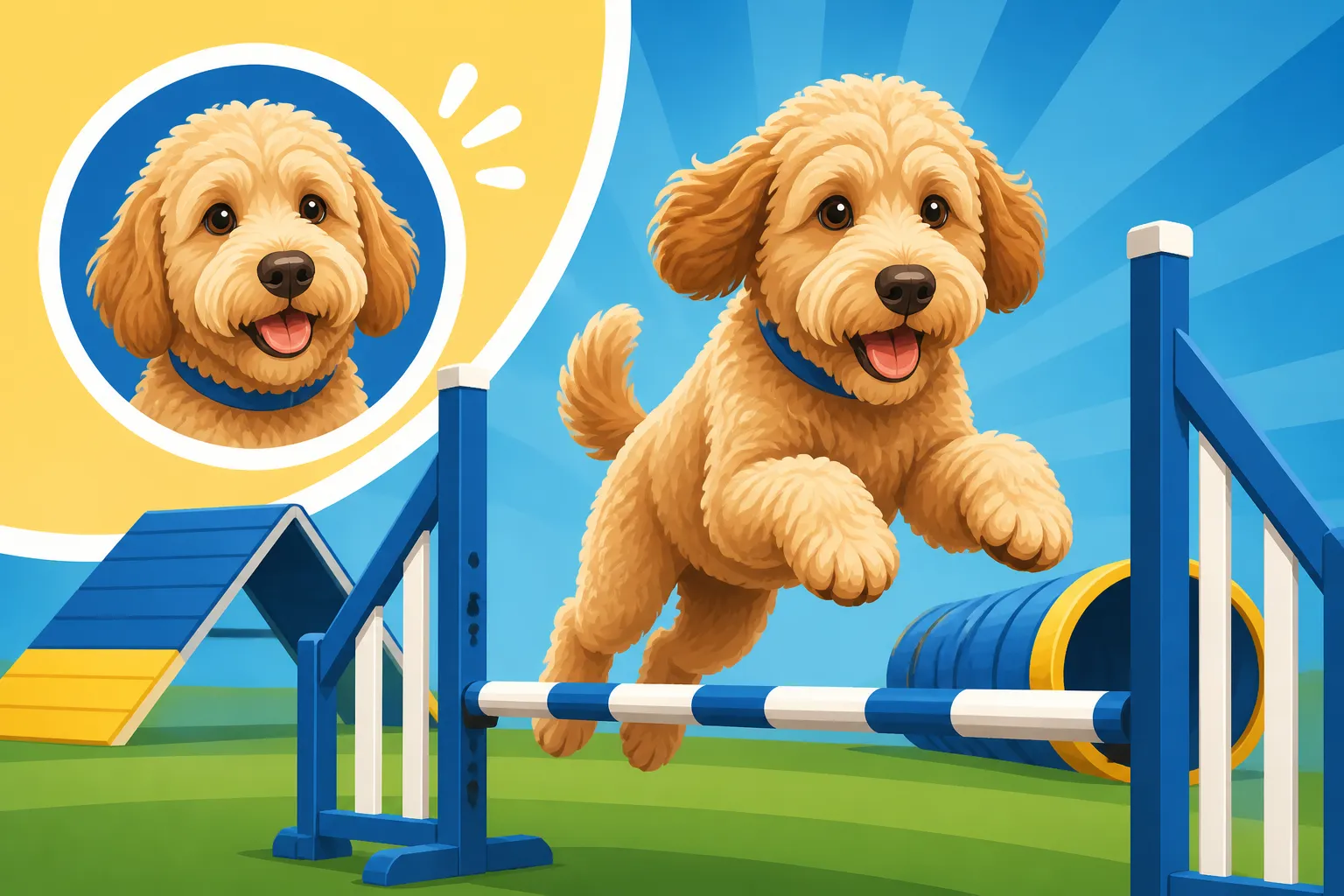
Now to the heart of the matter: Can a Labradoodle actually place in agility? The simple answer is a resounding yes, absolutely! While certain purebreds like Border Collies and Shelties are often seen dominating the top ranks, a well-bred, well-trained, and well-handled Labradoodle can certainly hold its own and bring home ribbons.
The Reality of Competitive Agility
It's true that the very top echelons of competitive agility are often populated by breeds specifically bred for generations to excel in such high-speed, technical sports. These dogs often have a natural predisposition for extreme drive, focus, and physical prowess. However, agility is also a sport for every dog, and success isn't solely determined by breed. A Labradoodle with a fantastic temperament – eager to please, intelligent, and possessing good athleticism – combined with a dedicated handler, can absolutely achieve competitive success. I've seen many Labradoodles light up the agility ring with their enthusiasm and skill. It's a wonderful sight when a dog and handler work together seamlessly, regardless of pedigree.
What it Takes to Stand Out and Win
Placing in agility requires more than just running fast. It demands precision, consistency, and a strong partnership between dog and handler. The dog needs to execute each obstacle correctly and quickly, while the handler needs to guide them with clear, timely cues. Winning teams have spent countless hours building that communication, refining their skills, and strengthening their bond. It's about showing up to practice, even when you're tired, and celebrating the small victories along the way. It’s also about understanding that sometimes, despite your best efforts, another team will simply have a cleaner run that day. The journey itself is often more rewarding than the destination, but the drive to improve is what propels you to those podium finishes.
Here's a quick comparison of general traits that contribute to agility success and how Labradoodles typically measure up:
| Trait | Poodle Contribution | Labrador Contribution | Labradoodle Agility Potential |
|---|---|---|---|
| Speed | High (athletic, light frame) | High (powerful, driven) | High – can be very fast |
| Agility/Turning | Excellent (springy, body aware) | Good (athletic, keen) | Excellent – can be nimble |
| Trainability | Excellent (intelligent, biddable) | Excellent (eager, focused) | Excellent – picks up commands quickly |
| Focus/Drive | High (loves to work, keen) | Very High (strong work ethic) | High – often very engaged, but can be distracted |
| Endurance | Good (active, energetic) | Excellent (stamina) | Excellent – good stamina for courses |
| Jumping Ability | Excellent (natural spring) | Good (powerful hindquarters) | Excellent – natural jumpers |
| Problem Solving | Excellent (intelligent) | Good (adaptable, persistent) | Excellent – enjoys new challenges |
| Coat Management | High (non-shedding, needs grooming) | Low (shedding, less intensive grooming) | High – essential for comfort and performance |
| Joint Health | Moderate risk (hips, elbows) | Moderate risk (hips, elbows) | Moderate risk – health testing crucial |
The Joys Beyond the Ribbons
Ultimately, whether your Labradoodle places in agility or not, the journey itself is incredibly enriching. Agility provides an amazing outlet for a Labradoodle's boundless energy and intelligence. It builds confidence in your dog, strengthens your bond, and keeps them physically and mentally stimulated. Many owners find that participating in agility transforms their dog, making them more attentive and well-behaved at home. If you're looking for a way to channel your Labradoodle's enthusiasm, agility is a fantastic option, regardless of competitive aspirations. After all, a dog that consistently needs a job to feel settled might benefit immensely from the structure and challenge of agility. You might even find that Whether a Labradoodle Needs a Sport to Be Manageable directly relates to your dog's overall happiness and demeanor. The pure joy your Labradoodle will experience zipping over jumps and through tunnels is often the biggest reward of all.
Disclaimer
This article is for general informational purposes only and does not constitute professional advice. Laws, prices and regulations vary by location and change over time. Consult a qualified professional for guidance on your specific situation.