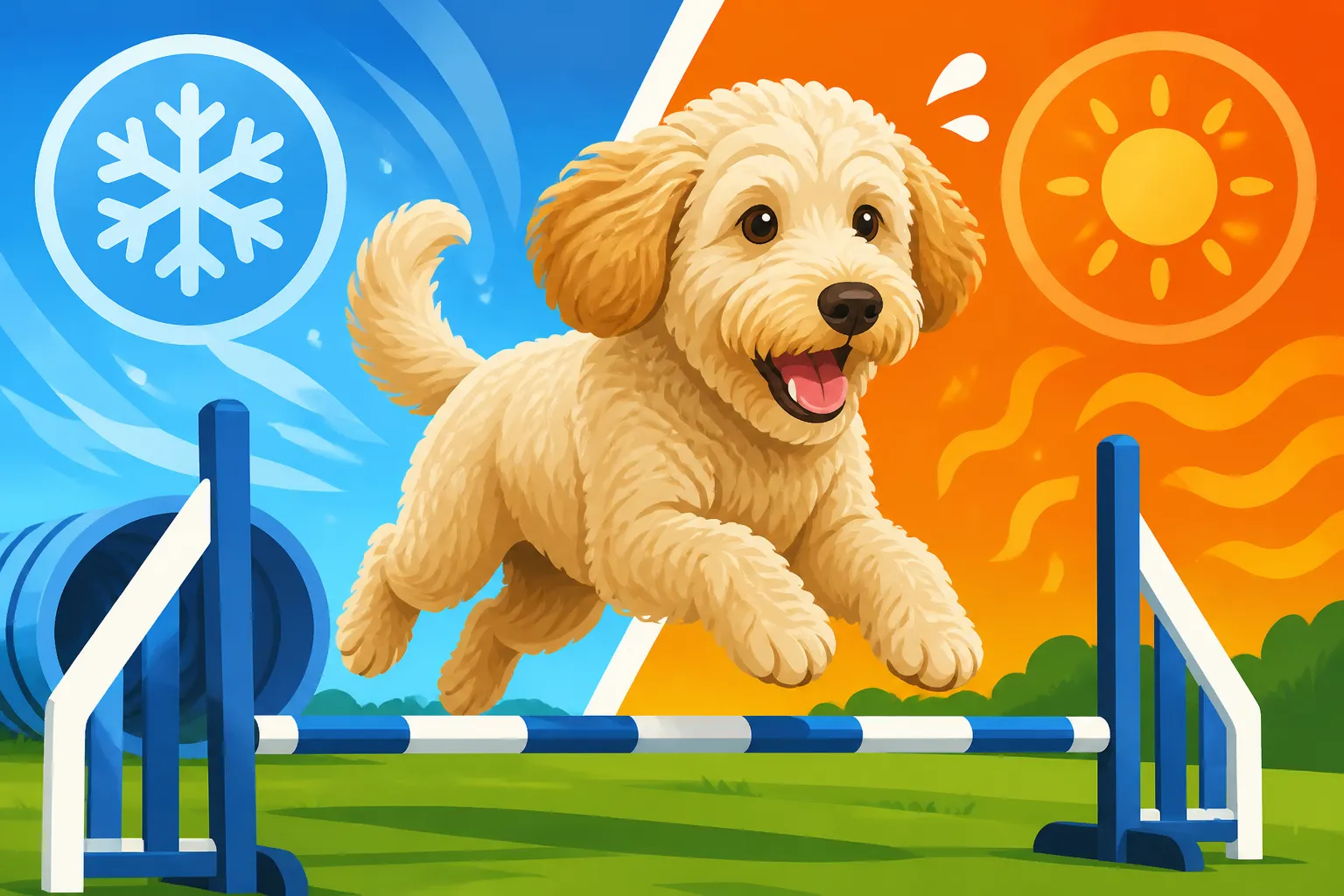
Whether a Labradoodle’s Coat Overheats in Agility
One of the biggest joys of owning a Labradoodle is their zest for life and incredible energy, which often makes them fantastic candidates for dog sports like agility. However, as much as we love watching them fly over jumps and weave through poles, a common worry that pops up for many Labradoodle parents, especially when the weather warms up, is whether their beautiful, often thick, coat will cause them to overheat during such strenuous activity. This guide is here to tackle that very concern head-on, offering you insights and practical tips to ensure your furry athlete stays safe and cool while enjoying their favorite sport.
Understanding the Labradoodle's Unique Coat
The Labradoodle's coat is one of its most defining features, celebrated for its low-shedding qualities and soft texture. However, what makes it so appealing can also present challenges when it comes to regulating body temperature, particularly during high-energy activities. It’s not just one coat type, but a spectrum, each with its own quirks.
The Different Coat Types and Their Insulating Properties
Labradoodles typically come in three main coat types: hair, fleece, and wool. Each has a different texture and density, which affects how effectively it manages heat. Understanding your dog's specific coat is the first step in knowing how to care for them, especially when they're working up a sweat on the agility course. For a deeper dive into these variations, you might find The Three Labradoodle Coats: Hair, Fleece and Wool very helpful.
The hair coat, often seen in earlier generations, tends to be straighter and more akin to a Labrador's coat, though usually softer. While it might shed more than other types, it can sometimes offer better air circulation if it's not overly dense. However, if it's thick, it can still trap heat, especially if not well-groomed. The fleece coat is perhaps the most desired type, characterized by its soft, wavy, or curly texture, often described as feeling like angora or cashmere. It's usually less dense than a wool coat, but its waves and curls can still create pockets where warm air gets trapped close to the body, acting as insulation. Finally, the wool coat is the densest and curliest, resembling a Poodle's coat. This type provides excellent insulation in cold weather, but it’s also the most prone to matting and can be the biggest culprit for overheating if not meticulously cared for. Its tight curls form a thick barrier that makes it harder for heat to escape, much like wearing a heavy wool sweater in summer.
How Coat Density and Length Impact Heat Regulation
Regardless of the specific type, the overall density and length of a Labradoodle's coat play a crucial role in its ability to regulate body temperature. A thick, long coat, while beautiful, can essentially act like a built-in winter jacket, making it incredibly difficult for your dog to cool down, even on moderately warm days. This is especially true if the coat is matted or poorly maintained, as mats further reduce airflow to the skin.
Think about it from a human perspective: trying to run a marathon in a heavy fur coat would be unbearable, right? For a Labradoodle, particularly those with dense fleece or wool coats, a long, untrimmed coat during an agility session can be similarly uncomfortable and dangerous. The hair traps a layer of warm air against their skin, preventing the natural evaporative cooling process from working efficiently. Even a seemingly soft fleece coat, if it's very thick and has a good amount of undercoat, can be deceptively insulating. This means that regular grooming and careful consideration of coat length are paramount for any Labradoodle participating in strenuous activities.
The Demands of Agility and Overheating Risks
Agility is an exhilarating sport that truly tests a dog's physical and mental prowess. While it's fantastic for channeling their energy, the intense physical exertion combined with certain environmental conditions can elevate the risk of overheating for your Labradoodle.
Why Agility Increases Body Temperature
Agility isn't just a leisurely jog; it's a series of explosive movements, quick turns, jumps, and sprints. Dogs engage both anaerobic and aerobic systems as they navigate tunnels, weave poles, and clear hurdles. This kind of high-intensity, short-burst exercise rapidly increases their heart rate and metabolism, generating a significant amount of internal body heat. Unlike humans, dogs don't sweat efficiently through their skin; their primary cooling mechanism is panting, which relies on evaporative cooling from their respiratory tract.
When a Labradoodle is actively running and jumping for several minutes straight, their body temperature rises quickly. The faster they go, the more effort they expend, and the more heat they produce. Imagine your own experience during a high-intensity workout – you get hot fast! Your Labradoodle feels the same, but with the added challenge of their insulating coat hindering heat dissipation. This metabolic heat, combined with external heat, is what leads to dangerous overheating.
Environmental Factors That Exacerbate Overheating
Even with the perfect coat trim, certain environmental conditions can turn a fun agility session into a health hazard. It's not just about the temperature displayed on the thermometer; humidity plays a massive role, as does direct sun exposure and air circulation. A 75-degree Fahrenheit day with high humidity can be far more dangerous than an 85-degree dry day, because the moisture in the air prevents efficient evaporative cooling from panting.
Direct sunlight, especially on a dark-coated Labradoodle, can absorb and retain heat, further warming their body. Agility courses are often outdoors, meaning exposure to the sun is unavoidable without proper shade. Even indoors, if the venue isn't well-ventilated or air-conditioned, the heat generated by many active dogs in one space can quickly become problematic. Surfaces like asphalt or artificial turf can also absorb and radiate heat, warming your dog's paws and body from below. Always consider the "feels like" temperature, which accounts for humidity, and remember that dogs are much closer to the hot ground than we are.
Recognizing the Signs of Overheating in Your Labradoodle
Spotting the early signs of overheating is critical. A few extra seconds can make all the difference in preventing a serious health crisis. What starts as mild discomfort can quickly escalate to life-threatening heatstroke. Always be vigilant and trust your gut if something seems off.
Initially, you might notice excessive panting – louder, faster, and more labored than usual. Their gums might appear brighter red than normal, and they might seem a bit disoriented or less focused on their tasks. As it progresses, your Labradoodle might start to drool heavily, appear lethargic, stumble, or even collapse. Their body might feel hot to the touch, and in severe cases, their gums can turn pale or bluish, indicating a lack of oxygen. Vomiting or diarrhea can also occur. If you ever see these advanced signs, it's an emergency. Immediately move your dog to a cool, shaded area, offer small amounts of water, and apply cool (not icy) water to their belly, armpits, and paw pads. Seek veterinary attention without delay. Prevention is always better than cure, and knowing these warning signs is your most powerful tool.
Strategies to Prevent Overheating in Agility
The good news is that with thoughtful management, your Labradoodle can absolutely enjoy agility without putting themselves at undue risk of overheating. It's all about being proactive and tuning into your dog's needs.
Proactive Grooming for Heat Management
One of the most effective ways to help your Labradoodle regulate their temperature during exercise is through diligent grooming. Their coat is a double-edged sword: it offers protection, but it can also trap heat. The key is to manage its length and condition appropriately.
Keeping your Labradoodle's coat trimmed to a shorter length, typically one to two inches, is highly recommended for active dogs, especially in warmer climates or during summer months. This shorter length allows air to circulate closer to the skin, helping with evaporative cooling. While some people might immediately think "shave," it's important to remember that shaving a Labradoodle down to the skin can actually be counterproductive. Their coat offers some protection from the sun's harsh UV rays, and shaving too short can expose their skin to sunburn and potentially damage the hair follicles, leading to improper regrowth. A professional groomer can achieve a functional, sporty clip that maintains a healthy length while reducing insulation. For an idea of what a shorter clip looks like, check out What a One Inch Clip Looks Like on a Labradoodle. Beyond length, regular, thorough brushing is essential. Mats, particularly those near the skin, create an impenetrable barrier that prevents air from reaching the skin and traps heat. Brushing a Labradoodle to the Skin, Not the Surface is crucial to ensure all tangles are removed. This is especially important during "coat change" periods, often around nine months of age, when the puppy coat transitions to the denser adult coat, which can be a matting nightmare. More on this can be found in The Coat Change That Hits a Labradoodle at Nine Months. By keeping their coat clean, unmatted, and at a manageable length, you're giving them the best chance to stay cool.
Hydration and Cooling Techniques During Training
Even with the best grooming, your Labradoodle will still need help staying cool and hydrated, especially during and after an intense agility run. Just like human athletes, they need consistent hydration and opportunities to cool down.
Always have plenty of fresh, cool water readily available. A portable water bowl is a must-have at any training session or competition. Encourage your Labradoodle to drink frequently, even if they don't seem overly thirsty. You can even add a few ice cubes to their water to make it more appealing and help cool them from the inside out. During breaks, don't just let them lie in the sun. Seek out shade, or better yet, use cooling aids. Cooling vests, available on platforms like Amazon, can be pre-soaked in water and help draw heat away from their body. Alternatively, simply wetting a towel with cool water and draping it over their back, chest, and armpits can provide immediate relief. Some handlers even bring a small kiddie pool for their dogs to wade in between runs, which can be a fantastic way for them to dissipate heat from their paws and belly. After a bath or a quick rinse, ensuring your Labradoodle is thoroughly dried to the skin, as discussed in Drying a Labradoodle to the Skin After a Bath, is important, as trapped moisture can ironically lead to skin issues if not properly managed.
Adapting Training Schedules and Intensity
Perhaps the most crucial strategy is knowing when and how to adjust your training. Sometimes, the best solution is simply to not train or compete under risky conditions. Your dog's health always comes first.
On hot or humid days, schedule training sessions for the coolest parts of the day – early morning or late evening. Avoid the midday sun entirely. If you're at a competition, be mindful of when your dog's run is scheduled and plan accordingly. Shorten training sessions significantly when the temperature rises, and incorporate more frequent, longer rest breaks. Pay close attention to your Labradoodle's body language. If they're panting heavily, slowing down, or losing focus more quickly than usual, it's a clear signal to stop. Pushing them "just one more time" could have serious consequences. There's always another day to train. Remember, the goal of agility is to be fun and enriching; it shouldn't be a source of stress or danger.
Conditioning and Health Considerations
A well-conditioned Labradoodle is better equipped to handle the physical demands of agility and, by extension, manage their body temperature more effectively. Think of it as building their athletic resilience.
Gradual conditioning is key. Don't expect your Labradoodle to go from couch potato to agility star overnight. Build their endurance slowly with regular exercise, ensuring they are The Exercise a Labradoodle Needs Before It Behaves. This helps their cardiovascular system become more efficient and their muscles stronger. Maintaining a healthy weight is also vital. Overweight dogs have an extra layer of fat that acts as insulation, making them much more prone to overheating. Regularly check to ensure your Labradoodle maintains The Weight a Labradoodle Should Hold. For general health, ensuring your Labradoodle gets The Yearly Screening a Labradoodle Should Get will help rule out any underlying conditions that could impact their ability to safely participate in strenuous activity. Consider consulting with a veterinary professional to discuss your dog's suitability for agility, especially if they are older or have any pre-existing health conditions. Online training resources, like those offered by BAXTER & Bella, often emphasize understanding your dog's individual cues and limits, which applies universally to physical activities and health monitoring. It's about knowing your specific dog, not just the breed.
Labradoodle Coat Types and Heat Management Considerations
Here’s a quick overview of how different Labradoodle coat types impact their heat regulation, especially when it comes to high-energy activities like agility.
| Coat Type | Characteristics | Heat Management Considerations | Grooming for Agility |
|---|---|---|---|
| Hair Coat | Straighter, coarser, minimal curl; sheds some. | Can allow better airflow if not dense, but still insulates if thick. Less prone to severe matting, but density can be an issue. | Regular brushing, maintain moderate length for air circulation. |
| Fleece | Soft, wavy to loose curls; low-shedding. | Good insulator; curls can trap warm air close to the body. Requires consistent brushing to prevent matting that restricts airflow. | Keep trimmed to 1-2 inches. Daily brushing is often necessary, especially for dense coats. |
| Wool Coat | Dense, tight curls; very low-shedding. | Excellent insulator; very prone to matting. Traps significant heat, making cooling difficult if long or matted. | Essential to keep short (1 inch or less) and brush daily. Professional grooming is a must. |
Conclusion
Yes, a Labradoodle's coat can definitely cause them to overheat during intense activities like agility. Their wonderful, insulating coats, while great for aesthetics and minimizing shedding, require diligent management when faced with physical exertion and warm weather. However, this doesn't mean your Labradoodle can't enjoy the thrill of the agility course! By proactively managing their coat length through appropriate grooming, ensuring they stay well-hydrated, utilizing cooling aids, and adjusting your training schedule and intensity based on environmental conditions and your dog's individual needs, you can mitigate the risks. Always prioritize your Labradoodle's comfort and safety, and you'll both enjoy many happy, healthy years together on and off the course.
Disclaimer
This article is for general informational purposes only and does not constitute professional advice. Laws, prices and regulations vary by location and change over time. Consult a qualified professional for guidance on your specific situation.