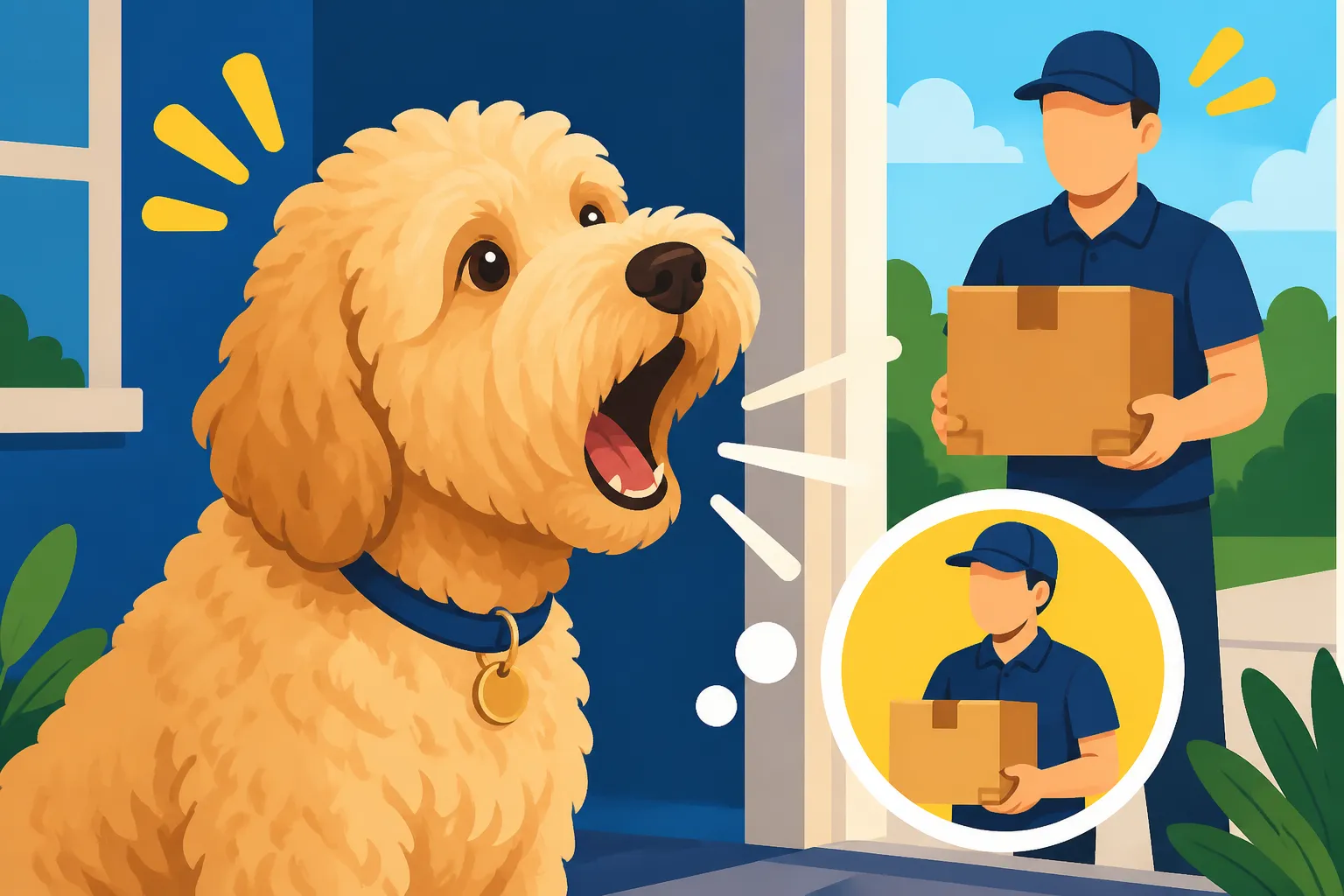
Whether a Labradoodle Announces Every Delivery
Oh, the infamous delivery bark! If you're a Labradoodle parent, you've likely experienced the sudden, enthusiastic, and often ear-splitting announcement that a package, mail, or even just a person walking by has dared to approach your front door. It's a common, albeit sometimes maddening, phenomenon, and this guide is here to help you understand why your beloved Labradoodle feels the need to alert the entire neighborhood about every delivery and, more importantly, what you can do about it.
Understanding Your Labradoodle's Vocal Nature
It's easy to get frustrated when your Labradoodle turns into a canine alarm system, but understanding why they do it is the first step toward managing the behavior. It's not usually out of malice or disobedience; it's often rooted deep in their genetics and their perception of their role in your home.
The Instinct Behind the Bark
Labradoodles are a mix of two wonderful breeds: the Labrador Retriever and the Poodle. Both bring their own unique traits to the table, and when it comes to vocalization, it's a bit of a mixed bag. Labradors are generally known for being friendly and less prone to excessive barking, but they are also alert and will often announce visitors. Poodles, especially the Standard Poodle, can be quite vocal, often barking to alert their families to strangers or unusual sounds. Combine these, and you have a dog with a natural inclination to be aware of their surroundings and to make noise when something new or unexpected arises.
This isn't just about sounding the alarm; it's also about a sense of duty. Many dogs, including Labradoodles, feel a deep responsibility to protect their territory and their family. To them, a delivery person, even a regular one, is an unfamiliar figure entering their perceived domain. Their barking is their way of saying, "Hey! Someone's here! I'm on guard!" or "Stay back! This is my house!" It's an ingrained instinct, not a personal slight against your peace and quiet. Understanding The Temperament a Labradoodle Gets From Each Parent can shed more light on these inherent tendencies.
When a Delivery Becomes a "Threat"
For your Labradoodle, the arrival of a delivery truck or a person at the door isn't just a benign event; it's often a novel intrusion. Think about it from their perspective: a large, unfamiliar vehicle pulls up, a stranger steps out, approaches their house, and often leaves something at their threshold before disappearing. This sequence can be highly stimulating and, for many dogs, triggers an alert response. The sound of the truck, the closing of the door, the footsteps, the ring of the doorbell – each can be a trigger for their protective instincts.
They're not necessarily viewing the delivery person as an actual danger, but rather as an unknown entity that needs to be acknowledged and, perhaps, deterred. Their barking might be an attempt to "scare" the intruder away, and when the person inevitably leaves, the dog might perceive their barking as having been successful. This accidental reinforcement can make the behavior even stronger over time. It's a classic case of a dog trying to do what they think is their job.
The Delivery Person: Friend or Foe?
The way your Labradoodle perceives the delivery person plays a huge role in their reaction. Is it a new, startling event every time, or are they able to differentiate between types of visitors?
Distinguishing Between Familiar and Unfamiliar
Some Labradoodles might be a bit more discerning. They might learn the routine of the mail carrier who comes at the same time every day, simply offering a low grumble or a couple of barks before settling. However, an Amazon driver in a new van, a grocery delivery person, or someone delivering a large appliance might elicit a much more frantic and sustained vocal protest. The uniform, the vehicle, the scent, the timing—all these factors contribute to how your Labradoodle classifies the "intruder."
It's a lot like how we react to different sounds in our own homes. The gentle hum of the refrigerator is background noise, but a sudden loud bang will make us jump. For a Labradoodle, the familiar rumble of the daily postal truck might be less alarming than the unexpected arrival of a lesser-seen delivery service. Their alert systems are finely tuned, and anything out of the ordinary can set them off. If your Labradoodle is still young, focusing on Raising a Labradoodle Through Its First Year with a variety of exposures can help them adapt to different people and situations.
The Cycle of Barking and Reinforcement
Here's the tricky part: dogs learn through consequences. When your Labradoodle barks at the delivery person, and then the delivery person walks away, your dog gets a huge, albeit accidental, reward. From their perspective, their barking worked! They successfully "chased away" the "intruder." This makes them more likely to repeat the behavior next time. It's a classic example of positive reinforcement, even if it's not what you intended.
Beyond the "success" of making the person leave, there's also an element of excitement. The doorbell, the arrival of a new package (which often carries interesting smells), the interaction (even if it's just through a closed door) – these can all be highly stimulating. For some Labradoodles, it's not just about guarding; it's also a burst of energy and a way to engage with the world outside their window. This can be especially true for a Labradoodle that needs plenty of mental and physical stimulation; sometimes, the barking is just another outlet for their energy. Remember, The Exercise a Labradoodle Needs Before It Behaves can often impact a range of behaviors, including excessive barking.
Strategies to Manage Delivery Barking
While you can't completely extinguish your Labradoodle's natural instincts, you can certainly manage and redirect their delivery-related barking with consistent effort and the right approach.
Proactive Management and Training
The key to reducing delivery barking lies in proactive training and management. Instead of waiting for the barking to start and then reacting, aim to preempt it.
- Teach a "Quiet" Command: This is foundational. Start by teaching your Labradoodle to bark on command (say "speak!"), then reward them for being quiet on command ("quiet!"). Once they understand the concept, you can apply it to real-life situations. When the delivery person arrives and they start to bark, say "quiet!" and, the instant they stop (even for a second), reward them generously with a high-value treat. Repeat, gradually increasing the time they need to be quiet before getting the treat.
- Desensitization and Counter-Conditioning: This involves changing your dog's emotional response to the trigger. You want them to associate the delivery person with good things, not just barking.
- Simulated Deliveries: Have a friend or family member pretend to be a delivery person. Start far from your door, so your dog notices them but doesn't immediately bark. As soon as your dog sees the "delivery person," immediately start giving them treats. If they stay quiet, keep rewarding. If they bark, the treats stop, and the "delivery person" moves away. Repeat, gradually bringing the "delivery person" closer to the door, always rewarding calm behavior.
- Doorbell Training: Record your doorbell sound or find one online. Play it at a very low volume, below your dog's reaction threshold. The moment it sounds, give them a treat. Repeat, gradually increasing the volume. The goal is for them to hear the doorbell and look at you expectantly for a treat, rather than rushing to bark at the door.
- Redirection: When you anticipate a delivery, have a special high-value chew, a puzzle toy, or a favorite long-lasting treat ready. As the delivery person approaches, or just before the doorbell rings, give your Labradoodle this special item in a designated "safe" spot, like their crate or bed. This redirects their attention and gives them a positive outlet for their energy. For example, a sturdy chew toy found on Amazon can be a lifesaver for these moments, occupying them while the "threat" passes. Online training platforms, like BAXTER & Bella, offer structured courses that can guide you through these desensitization and redirection techniques, providing step-by-step instructions for managing various challenging behaviors.
- Consistency is Crucial: Everyone in the household needs to be on the same page with the training. One person allowing uncontrolled barking can undo weeks of progress.
Environmental Management and Tools
Sometimes, prevention is the best medicine. Modifying your Labradoodle's environment can significantly reduce the triggers for barking.
- Limit Visual Access: If your Labradoodle can see everything happening outside through a window, they're more likely to bark. Consider using opaque window film, privacy screens, or even simply keeping blinds or curtains closed during peak delivery times. If they can't see the "threat," they might be less inclined to react aggressively. You could even set up a baby gate to block access to the front window or door area when you know deliveries are expected. This creates a physical barrier and helps them learn that this isn't their "post."
- Sound Masking: Outside noises can be a huge trigger. Running a fan, a white noise machine, or even playing soft music or a radio can help mask the sounds of approaching vehicles or footsteps. This reduces the auditory cues that set off your Labradoodle's alarm.
- Create a Safe Zone/Crate: If you know a delivery is coming, or during times of high delivery traffic, guide your Labradoodle to a comfortable, quiet space away from the door and windows. This could be their crate (if they're crate-trained and view it as a positive space), a back room, or a designated bed. Give them that special chew toy or puzzle to keep them occupied. This gives them a calm retreat and prevents the opportunity for barking. For more on this, consider reading Whether a Crate Helps a Labradoodle Switch Off.
- Door Signage: While not a training tool for your dog, a polite sign on your door asking delivery drivers to knock rather than ring the doorbell can remove one of the most common barking triggers. If they only hear a knock, it might be less startling than a sudden chime.
Consistency and Patience Are Key
Training a Labradoodle, especially one with strong vocal instincts, takes time, patience, and unwavering consistency. You might feel like you're making progress, only for them to have an "off" day where they announce every leaf blowing down the street. Don't get discouraged!
Remember that Labradoodles are intelligent dogs, sometimes even too smart for their own good, as discussed in Whether a Labradoodle Is Too Smart for a Novice. They can pick up on routines and learn new commands, but they also test boundaries. What a Labradoodle puppy learns by What a Labradoodle Should Know by Six Months is just the foundation; continued reinforcement is always needed. Every interaction is a training opportunity. If you let them bark uncontrollably "just this once," you're effectively reinforcing the unwanted behavior. Stick to your plan, celebrate small victories, and understand that some behaviors take longer to modify than others.
Why Some Labradoodles Are More Vocal Than Others
Not every Labradoodle is a champion barker. You might know a Labradoodle that barely makes a peep, while yours sounds like they're hosting a rock concert for every passing squirrel. There are several reasons for these individual differences.
Individual Personality and Genetics
Just like people, dogs have unique personalities. Even within the same litter, puppies can have vastly different temperaments. Some Labradoodles inherit more of the Poodle's alert and vocal tendencies, while others lean more towards the Labrador's generally calmer, though still watchful, demeanor. This genetic lottery plays a significant role in how prone a particular Labradoodle will be to barking.
Beyond the Poodle/Labrador mix, individual dogs also develop their own coping mechanisms and reactions based on their experiences. A Labradoodle who is generally confident and relaxed might be less prone to alarm barking than one who is more naturally anxious or easily startled. Factors like their parents' temperaments and even their early puppy experiences can shape their vocal habits. If you're wondering What Nobody Tells a First Time Labradoodle Buyer, excessive barking can certainly be one of them!
Early Socialization and Exposure
The formative weeks and months of a Labradoodle's life are crucial for shaping their behavior. A puppy that is well-socialized and exposed to a wide variety of sights, sounds, people, and experiences during this critical period is generally more likely to be well-adjusted and less reactive as an adult.
If a Labradoodle puppy didn't get much exposure to new people, different vehicles, or various sounds, they might grow up to be more wary of novel stimuli. A delivery person, with their unfamiliar uniform and actions, can be a particularly strong trigger for a dog who hasn't learned to interpret such encounters as routine and non-threatening. Early exposure to all sorts of situations helps a dog build confidence and learn that most new things aren't something to bark at. This is why breeders often emphasize early socialization, and why continued, gentle exposure to the world is so important as your Labradoodle grows.
| Training Approach | Description | Pros | Cons |
|---|---|---|---|
| "Quiet" Command | Teaches the dog to stop barking on cue. This involves teaching "speak" first, then rewarding silence. You apply this by issuing the command during a barking episode and rewarding the instant quiet. | Directly addresses the barking behavior; gives the owner a tool to interrupt | Requires consistent practice; can be challenging to implement during high-arousal moments; dog might associate "speak" with getting treats. |
| Desensitization & Counter-Conditioning | Gradually exposes the dog to the barking trigger (e.g., doorbell sound, sight of a delivery person) at low intensity, pairing it with positive experiences (treats, praise). The goal is to change the dog's emotional response from alarm to positive anticipation. | Changes the dog's underlying emotional response; often leads to a more lasting solution; builds positive associations | Time-consuming; requires careful control of the environment; needs many repetitions; can be hard to simulate real-life delivery scenarios perfectly. |
| Redirection & Occupation | Diverts the dog's attention away from the trigger by offering a highly engaging alternative activity (e.g., puzzle toy, special chew, training exercise) just before or as the trigger occurs. This gives them something else to do instead of barking. | Prevents the barking from starting; provides mental stimulation; dog learns to associate triggers with a fun activity | Requires anticipating triggers; might not work for all dogs, especially those with very strong barking drives; the "special" item must be highly appealing. |
| Environmental Management | Modifies the physical environment to reduce exposure to triggers. This includes blocking visual access (blinds, film), masking sounds (white noise), or creating a designated quiet space (crate, back room) during trigger times. | Immediate reduction in barking opportunities; relatively easy to implement; can be a good interim solution while training is ongoing | Doesn't address the underlying behavior; dog may still react if a trigger gets past the management; can't always block all triggers; might lead to a dog being reactive when management isn't in place. |
While the delivery bark might feel like an inescapable part of owning a Labradoodle, it truly is a behavior that can be understood and managed. With patience, consistent training, and perhaps a few environmental adjustments, you can teach your Labradoodle to react to deliveries in a much calmer way. It's all about understanding their world and guiding them with kindness and a clear plan.
Disclaimer
This article is for general informational purposes only and does not constitute professional advice. Laws, prices and regulations vary by location and change over time. Consult a qualified professional for guidance on your specific situation.