Whether Clicker Work Suits a Labradoodle
Every Labradoodle owner knows the incredible blend of intelligence and zest for life that comes with these wonderful dogs. But that sharp mind and abundant energy can sometimes make training feel like a puzzle. You want the best for your furry friend, a way to communicate clearly and build good habits without resorting to harsh methods that can dampen their spirit. This guide will delve into whether clicker training, a popular positive reinforcement technique, is a suitable and effective approach for your beloved Labradoodle, exploring its benefits and how to implement it successfully.
Understanding What Clicker Training Actually Is
When we talk about clicker training, it’s not just about a little plastic box making a sound; it's a profound communication tool rooted in behavioral science. Many people hear "clicker training" and immediately think of circus tricks, but it's so much more than that. It's a way to speak your dog's language and empower them to be an active participant in their own learning.
The Science Behind the Click
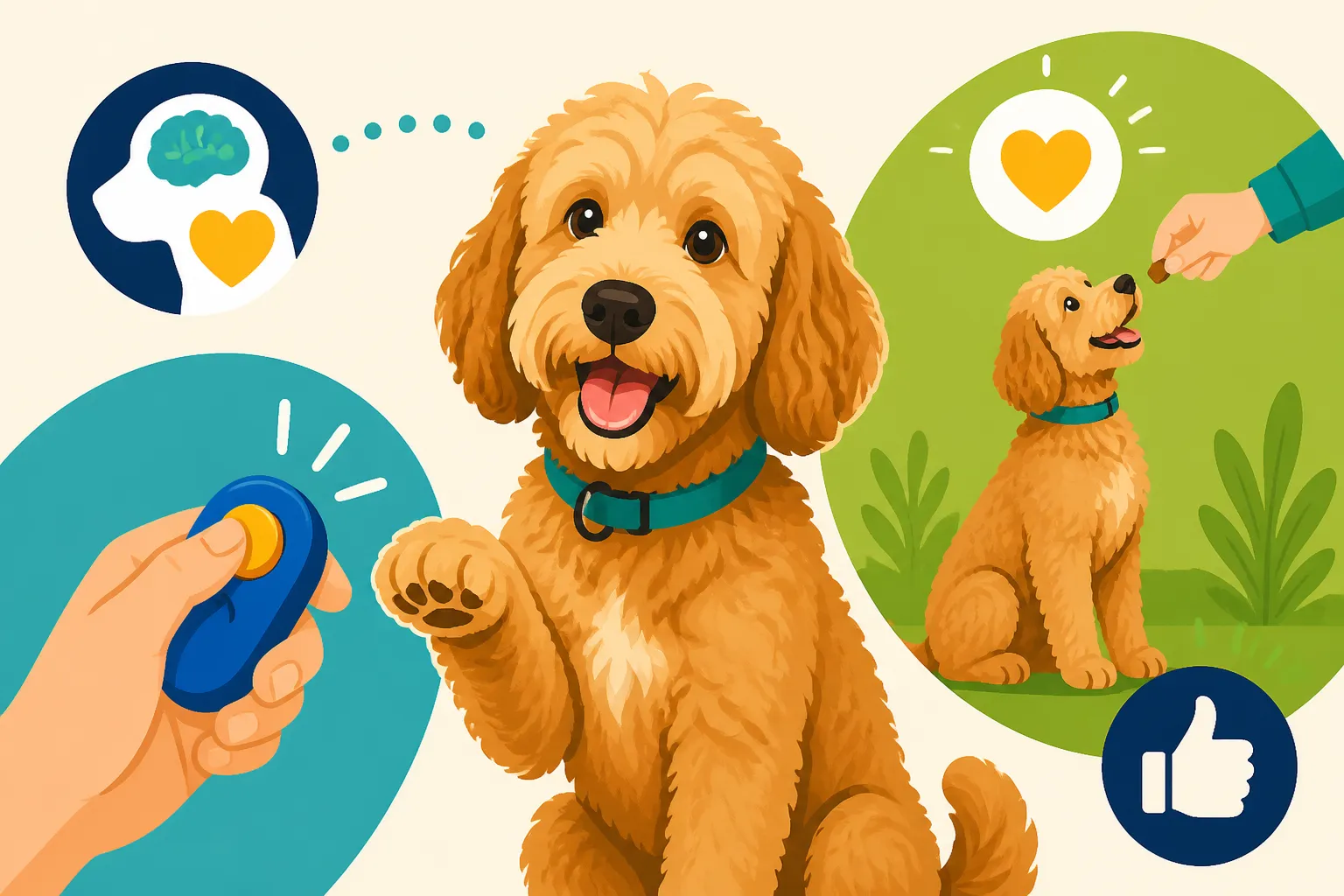
At its heart, clicker training is an application of operant conditioning, specifically positive reinforcement. Imagine your Labradoodle is just doing their thing, sniffing around, maybe stretching, then they spontaneously sit down. In that exact moment their rear touches the ground, you click. Immediately after the click, a high-value treat appears. What happens? Your dog starts to understand that the "click" means "Yes! That's precisely what I wanted you to do, and a reward is coming!"
The clicker acts as a highly precise "marker signal." Think about it: when you say "Good boy!" or "Yes!" your tone might vary, and the timing might be a split second after the desired action. But a clicker makes a consistent, distinct sound that marks the behavior at the precise instant it occurs. This unparalleled precision is what makes it so incredibly effective. Your Labradoodle isn't just getting a treat for generally being good; they're getting clear, instant feedback on which specific action earned that treat. Over time, this builds a strong association: desired behavior equals click equals reward. It's a clear, unambiguous language that bypasses human inconsistencies.
How It Differs from Traditional Methods
Traditional dog training often relied heavily on physical corrections, leash jerks, or even verbal reprimands to stop unwanted behaviors. The philosophy was often about showing the dog "who's boss" and compelling them to obey. While some dogs might learn to comply under such pressure, it can often lead to fear, anxiety, and a breakdown in the human-animal bond. The dog learns to avoid punishment rather than to eagerly offer desired behaviors.
Clicker training flips this dynamic entirely. It's a purely positive, reward-based system where there are no physical corrections, no harsh words, and no fear involved. Instead, it focuses on reinforcing the behaviors you want to see. This approach encourages your Labradoodle to think and actively offer behaviors, rather than passively waiting for instructions or trying to avoid consequences. They become problem-solvers, figuring out how to "earn" that click and treat. This builds immense confidence and fosters a joyful, cooperative relationship where learning is fun for both of you. Instead of saying "Don't jump!", you're clicking and treating when all four paws are on the floor, effectively teaching them what to do instead. It's about empowering your dog to make the "right" choices because they are consistently rewarded for them.
Why Clicker Training is a Fantastic Fit for the Labradoodle Mind
Labradoodles are renowned for their intelligence, eagerness, and friendly disposition. These very traits make them exceptionally well-suited for clicker training, allowing you to tap into their full potential without extinguishing their wonderful spirit.
Tapping Into Their Poodle Intelligence
Anyone who's lived with a Labradoodle knows they're not just pretty faces; they've got brains! This is largely due to their Poodle heritage, which brings a remarkable capacity for learning, problem-solving, and even abstract thought. A bored Labradoodle is often a mischievous Labradoodle, finding their own "work" to do, which might involve counter-surfing or creatively remodeling your furniture.
Clicker training directly addresses this need for mental engagement. It turns learning into a fascinating game, a puzzle your Labradoodle is eager to solve. Because the click provides such precise feedback, they quickly grasp what you're asking, making the learning process incredibly efficient and rewarding for them. They'll start offering behaviors, trying new things, and watching you intently to see what earns that coveted click. This engagement can actually prevent many common behavioral issues that stem from a lack of mental stimulation. Instead of just memorizing commands, they're actively participating in a thinking process. You might even find yourself teaching them complex trick chains or scent detection games, utilizing their sharp minds in ways you never thought possible. Their Poodle side thrives on this kind of intellectual challenge. The Poodle Crosses That Came Before the Labradoodle
Harnessing the Labrador's Eagerness to Please
Beyond their intelligence, Labradoodles inherit a wonderful eagerness to please from their Labrador Retriever side. These dogs thrive on interaction and love nothing more than making their humans happy. However, if communication isn't clear, this eagerness can sometimes turn into frustration for both dog and owner. They want to do the right thing, but they might not always understand what that is.
This is where clicker training shines. It provides crystal-clear communication. When your Labradoodle performs an action you like, that precise click instantly tells them, "That's it! You did it right!" This clarity reduces guesswork and helps them quickly connect their actions to the positive outcome. It builds their confidence in understanding your expectations, which in turn reinforces their natural desire to cooperate. The strong food drive often present in Labradors also makes them excellent candidates for reward-based training. They are typically highly motivated by treats, making the association between the click and the reward even stronger and faster. This method fosters a deep sense of teamwork, turning training sessions into enjoyable bonding experiences rather than battles of wills. What a Labradoodle Owes to Its Labrador Side
Building Confidence in Sensitive Labradoodles
While many Labradoodles are outgoing, some can possess a more sensitive temperament, easily spooked by loud noises, sudden movements, or harsh corrections. For such dogs, traditional training methods that involve force or intimidation can be incredibly detrimental. It can lead to a dog that is fearful, withdrawn, or even reactive, rather than a confident and happy companion.
Clicker training is a godsend for sensitive Labradoodles because it is built entirely on positive reinforcement. There's no punishment, no fear of getting it wrong. Every interaction is designed to be positive and uplifting. This fosters a safe learning environment where your dog feels empowered to experiment and try new behaviors without the anxiety of potential reprimand. A sensitive Labradoodle, when trained with a clicker, learns that engaging with you and trying new things is a consistently rewarding experience. This builds immense self-confidence, encouraging them to step out of their shell and become a more resilient and happy dog. It helps them feel secure in their decisions, knowing that their efforts will be met with positive feedback, strengthening the trust between you.
Getting Started with Clicker Training Your Labradoodle
Ready to dive into the world of clicker training with your Labradoodle? It's an incredibly rewarding journey, but like any new skill, it requires a little preparation and understanding of the basic steps. Don't worry, it's not complicated, and your eager Labradoodle will pick it up quickly!
Essential Tools and Setting Up for Success
Before you even start clicking, you'll need a few things. First, obviously, a clicker. These are inexpensive and readily available at most pet stores or online, such as through Amazon. Choose one that fits comfortably in your hand and makes a clear, consistent sound.
Next, you'll need high-value treats. This is crucial! "High-value" means something your Labradoodle adores. Kibble might be fine for some dogs, but for initial training, think small pieces of cooked chicken, cheese, hot dogs, or store-bought soft training treats. The treats should be tiny (pea-sized or smaller) so your dog can eat them quickly without getting distracted by chewing, allowing you to get back to training. You'll also want to start in a quiet environment with minimal distractions. Your living room or a quiet corner of your yard is perfect for initial sessions.
The very first step is called "charging the clicker" or "loading the clicker." This means teaching your Labradoodle that the click predicts a treat. It's super simple:
- Hold the clicker in one hand and a treat in the other.
- Click the clicker.
- Immediately (within a second) give your dog a treat.
- Repeat this 10-20 times in a short session. Don't ask for any behavior; just click, then treat.
Your dog will soon start to associate that click with the coming treat. You'll see their ears perk up or their head turn towards you expectantly after the click. Congratulations, your clicker is now "charged!" This foundation is absolutely vital because it makes the click a positive, powerful marker. Remember to keep sessions short and fun, especially at the beginning, typically 3-5 minutes at a time. Consistency is also key – ensure everyone in the household understands the clicker's role and uses it appropriately.
Basic Commands to Master First
Once your clicker is charged, you can start teaching behaviors. Begin with simple, common commands like "sit," "down," and "come." There are a few ways to introduce behaviors with a clicker:
- Capturing: This is my favorite method, as it lets your Labradoodle figure things out on their own. Wait for your dog to naturally perform the desired behavior. For example, if you want to teach "sit," simply wait until your Labradoodle sits on their own. The moment their rear touches the ground, click, then immediately give a treat. Repeat this whenever they offer a sit. After a few repetitions, they'll start sitting more frequently, trying to make you click. Once they're consistently offering the behavior, you can add a verbal cue like "Sit" just before they perform the action, then click and treat.
- Luring: This involves using a treat to guide your dog into the desired position. For "sit," hold a treat near your Labradoodle's nose and slowly move it back over their head. As their nose follows the treat, their rear will naturally lower into a sit. The moment they sit, click, then give the treat. Gradually, you'll fade out the lure, replacing it with just the hand motion, and eventually, just the verbal cue.
- Shaping: This is for more complex behaviors. You reward small steps or "approximations" towards the final desired behavior. For instance, to teach "down," you might first click and treat for a head lower, then for a bent elbow, then for a full down. Each click signifies progress!
Always keep training sessions short and positive. Five minutes of focused, fun training is far more effective than a long, drawn-out session where your dog (and you!) gets bored or frustrated. For consistent progress and structured lessons, I've found online programs like those from BAXTER & Bella can be incredibly helpful for owners. They provide step-by-step guidance that's perfect for both novice and experienced trainers, helping you implement these techniques effectively with your Labradoodle. Whether a Labradoodle Needs a Trainer or a Class
Moving Beyond Basics and Troubleshooting Common Hurdles
Once your Labradoodle has mastered basic commands like sit, down, and come, the sky's the limit! Clicker training is fantastic for teaching more advanced behaviors and tricks, from "stay" with increasing distractions to "leave it" and even complex retrieve games. Their natural retrieving drive from the Labrador side can be greatly refined with this precise communication tool. The Retrieving Drive a Labradoodle Gets From the Labrador
However, you might encounter a few common hurdles:
- My dog only works when the clicker is out! This is a common concern. The clicker is a learning tool. Once your Labradoodle consistently performs a behavior on cue, you'll start to "fade" the clicker. This means you click less frequently, moving to intermittent reinforcement. The verbal cue becomes the primary signal, and the reward becomes praise, a quick pat, or an occasional treat. The goal is a dog that responds reliably to your voice, not just the clicker.
- My Labradoodle isn't motivated by treats/the clicker. First, ensure your treats are genuinely high-value. What might be high-value in your quiet living room might not cut it at the park with squirrels around. Second, check your timing. Are you clicking precisely at the moment of the desired behavior? If the timing is off, the message gets muddled. Also, consider the environment; too many distractions early on can be overwhelming.
- I'm struggling with timing/what to click. This is where practice comes in! It takes a little coordination. You might even practice by yourself, clicking at specific moments in a TV show or when an object moves. If you're still having trouble, consider seeking guidance from a professional dog trainer who specializes in positive reinforcement. They can observe your technique and provide real-time feedback.
Remember, every dog learns at their own pace. Be patient, keep sessions positive, and celebrate every tiny success. Clicker training should be fun for both of you, strengthening your bond and enhancing your Labradoodle's confidence.
Here's a quick overview of the pros and cons of clicker training for your Labradoodle:
| Feature | Pros for Labradoodles | Cons (and Solutions) |
|---|---|---|
| Clarity | Precise communication, reduces confusion for eager learners | Can be challenging for owners to time perfectly (practice is key) |
| Engagement | Mentally stimulating, taps into Poodle intelligence | Requires owner consistency and patience to see results |
| Confidence Building | Fosters a positive learning environment for sensitive dogs | May not appeal to owners seeking quick, force-based obedience |
| Versatility | Effective for basic obedience, tricks, and complex tasks | Can become over-reliant on clicker if not phased out strategically |
| Bonding | Strengthens relationship through positive interactions | Initial investment in time to learn the technique |
Integrating Clicker Training into Your Labradoodle's Daily Life
Clicker training isn't just for formal "sessions" or teaching fancy tricks. Its true power lies in how seamlessly it can be integrated into your Labradoodle's everyday life, shaping polite manners and reinforcing desirable behaviors in real-world scenarios. This is where the magic truly happens, transforming your dog into a well-behaved and confident companion.
Applying It to Everyday Manners
Think about all the little behaviors that make living with a dog a joy, or a challenge. Clicker training is perfect for reinforcing those good habits you want to see day in and day out.
For instance, does your Labradoodle get overly excited when guests arrive, perhaps jumping on every visitor? Instead of repeatedly telling them "no" or pushing them down, which can sometimes even reinforce the attention-seeking behavior, use the clicker. The moment all four paws are on the floor as a guest walks in, click and treat. If they offer a sit instead, even better – click and treat! Over time, your Labradoodle learns that polite greetings, with all feet on the ground, are what get them attention and rewards. A Labradoodle That Jumps on Every Visitor
The same principle applies to counter-surfing or raiding the trash. Instead of punishing them when they get a treat off the counter, set them up for success. Keep counters clear at first. Then, practice "leave it" with a clicker, gradually increasing the temptation. When they ignore something tempting, click and reward them with an even better treat from your hand.
Even seemingly minor things, like not barking at every delivery person, can be shaped. When the doorbell rings and your Labradoodle hears it but doesn't bark, click and treat for their quietness. You're effectively reinforcing the behavior you want to see, rather than just reacting to the behavior you don't. This proactive approach to training builds a dog who understands your expectations and is eager to meet them. Whether a Labradoodle Announces Every Delivery
The Role of Generalization and Fading the Clicker
One crucial aspect of clicker training is understanding generalization. A behavior learned in your quiet living room might not automatically transfer to a busy park or a bustling pet store. You need to practice the behavior in various environments, gradually introducing more distractions while always setting your Labradoodle up for success. Start small: master "sit" in the living room, then try it in the kitchen, then the backyard, then a quiet street, slowly building up to more complex and distracting locations. Each time they perform the behavior successfully in a new setting, click and reward.
Equally important is fading the clicker and treats. Remember, the clicker is a teaching tool, not a lifelong crutch. Once your Labradoodle reliably performs a behavior on its verbal cue, you can start to use the clicker less often. The verbal cue ("Sit!" or "Stay!") becomes the primary signal. Treats can also become intermittent – sometimes they get a treat, sometimes just enthusiastic praise, a happy game, or a favorite toy. The goal is for your Labradoodle to perform the behavior because they understand the cue and want to please you, not just because they expect a click and a treat every single time. This is also why having a solid relationship with your Labradoodle and making training a fun, positive experience is so vital. Your cheerful "Good boy!" or a quick scratch behind the ears becomes a powerful reinforcer in itself. Teaching a Labradoodle to Lie Still for a Ninety Minute Groom
When to Seek Professional Guidance
While clicker training is highly intuitive and accessible, there might be times when professional guidance can make a significant difference. If you're struggling with your timing, or if you feel your Labradoodle isn't responding as you'd hoped, a certified professional dog trainer specializing in positive reinforcement can be invaluable.
They can offer real-time feedback on your technique, help you troubleshoot specific issues, and provide personalized strategies tailored to your Labradoodle's individual personality and learning style. Perhaps you're dealing with a particular behavioral challenge that feels overwhelming, such as leash pulling that just won't budge. Teaching a Sixty Pound Labradoodle Not to Pull A trainer can observe the dynamics, identify potential triggers, and help you implement a precise clicker training plan to address it effectively. Sometimes, an experienced eye is all it takes to refine your skills and help you and your Labradoodle unlock new levels of communication and cooperation. Remember, asking for help isn't a sign of failure; it's a sign of a responsible and dedicated dog owner committed to their Labradoodle's well-being and success. After all, Labradoodles are quite intelligent, and sometimes they can even outsmart their novice owners, so a little expert help can go a long way. Whether a Labradoodle Is Too Smart for a Novice
Disclaimer
This article is for general informational purposes only and does not constitute professional advice. Laws, prices and regulations vary by location and change over time. Consult a qualified professional for guidance on your specific situation.