Whether the Poodle or the Labrador Shows Up in Training
One of the most common questions I hear from new Labradoodle owners, or those considering bringing one into their home, revolves around training: "Will my Labradoodle be more like a Poodle or a Labrador when it comes to learning and behavior?" It’s a completely valid concern, because you’re not just getting a cute, fluffy face; you’re welcoming a complex genetic tapestry that can present distinct training challenges and joys. This guide will dive deep into the fascinating world of Labradoodle genetics and how the unique traits of their Poodle and Labrador parents can surface during training, helping you anticipate, understand, and navigate your pup’s individual learning style.
The Genetic Lottery of Labradoodle Training
When you bring a Labradoodle home, you're essentially embracing a wonderfully unpredictable genetic lottery. You might envision a dog with the Labrador's easygoing nature and the Poodle's sharp intellect, but the reality is that the mix can be far more nuanced. Understanding the foundational training personalities of each parent breed is the first step in appreciating what your Labradoodle might bring to the training ring.
Unpacking the Parent Breeds' Training Personalities
Both Labradors and Poodles are incredibly intelligent and highly trainable breeds, which is why they were chosen for the original Labradoodle cross. However, their methods and motivations in training can differ significantly, and your Labradoodle will likely inherit a blend of these.
The Labrador Retriever is famous for its eager-to-please attitude, insatiable food drive, and strong retrieving instincts. They are often incredibly forgiving, resilient, and thrive on positive reinforcement, especially when treats are involved. A Labrador typically approaches training with enthusiasm and a desire to work with their handler. They often adore people, sometimes to the point of being a bit boisterous in their greetings. This means a Labradoodle leaning heavily on its Labrador side might be highly food-motivated, eager to retrieve toys, and generally keen to participate in training sessions. However, that same enthusiasm can manifest as jumping, pulling on the leash, or an inability to focus when exciting distractions are present. They can also be slow to mature, maintaining a puppy-like exuberance for longer than some other breeds.
On the other hand, the Standard Poodle is renowned for its incredible intelligence, problem-solving abilities, and sometimes a more sensitive nature. Poodles are quick to learn new commands, often picking them up in just a few repetitions. They can be incredibly agile and excel in dog sports that require precision and mental engagement. A Poodle-leaning Labradoodle might display a remarkable capacity for understanding complex tasks, showing off their smarts by figuring out puzzles or even trying to outsmart you! They might be more sensitive to harsh corrections and respond best to calm, consistent, and reward-based methods. However, this high intelligence can also translate into mischievousness or boredom if not mentally stimulated. They might become easily distracted by novel scents or sights, or decide that a particular command simply isn't worth their time if the reward isn't enticing enough. Their energy, while not always as outwardly "bouncy" as a Labrador, can be intense and requires a significant outlet.
The Unpredictability of Hybrid Vigor
The concept of "hybrid vigor" often conjures images of a dog that somehow possesses only the best traits from both parent breeds, skipping over any potential downsides. While hybrid vigor can indeed contribute to a more robust genetic pool and sometimes greater overall health in first-generation crosses, it doesn't guarantee a perfectly balanced temperament or a predictable training outcome. In reality, when you mix two distinct breeds, you're essentially rolling the genetic dice. You could get a pup that's a perfect 50/50 blend, one that leans heavily towards the Poodle, one that's predominantly Labrador in its training responses, or even one that exhibits a completely unique combination.
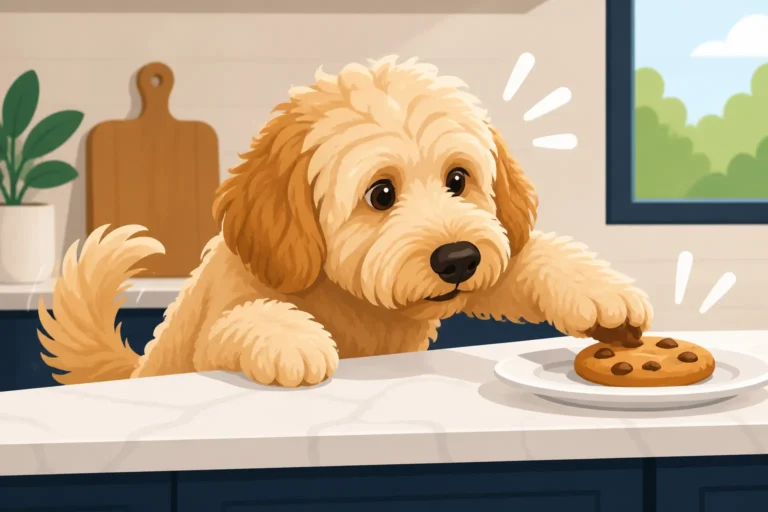
For example, you might end up with a Labradoodle that has the Labrador's drive to chase squirrels but the Poodle's sensitive reaction to being called back loudly. Or a dog that is incredibly quick to learn new tricks like a Poodle, but equally prone to counter-surfing with Labrador-like abandon if not properly supervised. The generational aspect of Labradoodles also plays a role here. An F1 (first-generation) Labradoodle, a direct cross between a Poodle and a Labrador, can be the most unpredictable in terms of coat and temperament traits, as there's a wider range of genetic expression. Later generations, like F1b (Labradoodle bred back to a Poodle) or multigen (Labradoodle bred to Labradoodle), are often bred with the intention of solidifying certain traits, but even then, individual variation remains significant. This is why it's crucial to approach training with an open mind, ready to adapt to the unique personality blossoming in your furry friend. Many owners find themselves asking Whether Hybrid Vigor Is Real in a Labradoodle and the answer, for training, is that it's more about variety than guaranteed perfection.
Common Training Scenarios: Poodle vs. Labrador Tendencies
Understanding how Poodle and Labrador traits might influence your Labradoodle's behavior in specific training scenarios can help you prepare and respond effectively. It's not about one being "better" than the other, but about recognizing the tendencies so you can tailor your approach.
Recall and Focus: Who's Listening?
A reliable recall is often considered the holy grail of off-leash dog ownership, and here, the Poodle and Labrador influences can manifest in different ways.
A Labrador-leaning Labradoodle might have a fantastic natural desire to please and a strong bond with their family, making them generally eager to return when called. Their high food drive can make recall training very effective with high-value treats. However, that same enthusiastic nature can mean they get easily engrossed in sniffing interesting smells or greeting every person and dog they encounter, making focus challenging. They might need more consistent practice in highly distracting environments to solidify their recall. If you've got a Labradoodle that's constantly pulling you towards new scents or friends, you'll be focusing heavily on impulse control and engaging their attention before distractions become overwhelming.
A Poodle-leaning Labradoodle, with its keen intelligence, might understand the recall command quickly. They might even be more inclined to check in with you more frequently, especially if they perceive you as the source of interesting activities or mental games. However, their intelligence can also lead to independent decision-making. If they've decided that chasing a squirrel or investigating a distant rustle is more rewarding than coming back to you, they might "selectively hear" your call. Some Poodles can also be more sensitive to their environment, becoming hyper-focused on specific sights or sounds, making it harder to break their attention. For these dogs, making yourself more exciting than the distraction is key. Building a strong foundation is crucial, and mastering Building a Recall a Labradoodle Answers Off Leash will likely involve diverse environments and ever-increasing distractions.
Leash Manners and Impulse Control
Walking nicely on a leash and exhibiting good impulse control in exciting situations are areas where Labradoodle owners often see the blend of their dog's heritage.
Many Labrador-influenced Labradoodles bring a boundless zest for life that translates into pulling on the leash. They want to greet everyone, sniff everything, and go, go, go! Their sheer physical strength combined with their enthusiasm can make walks feel like a wrestling match. This isn't out of defiance, but pure exuberance. They might also be more prone to jumping up on visitors or counter-surfing for forgotten snacks. For these pups, consistent training with a focus on loose-leash walking from a very young age is vital. You'll spend a lot of time on rewarding calm behavior and teaching them that good things happen when all four paws are on the floor. If you're struggling with a dog that constantly drags you along, our guide on Teaching a Sixty Pound Labradoodle Not to Pull offers some excellent strategies.
Poodle-leaning Labradoodles, while often lighter on their feet, can still exhibit impulse control challenges. Their intelligence can mean they are quick to react to stimuli, whether it's a dog barking from a yard or a sudden movement. They might not pull with the brute force of a Labrador, but they might dart or suddenly stop and fixate, making walks less smooth. They might also be quick to jump up, not just for affection, but as a way to engage or investigate. The Poodle’s quick wit means they learn quickly how to get to things they want, which can make A Labradoodle That Counter Surfs or A Labradoodle That Jumps on Every Visitor a common household challenge if boundaries aren't crystal clear from day one. Mental stimulation, alongside physical exercise, is crucial to channeling their keen minds into appropriate behaviors.
Grooming Patience and Handling
Grooming is an unavoidable part of Labradoodle ownership, especially with those beautiful, low-shedding coats. The tolerance for handling and grooming often reveals the Poodle's influence.
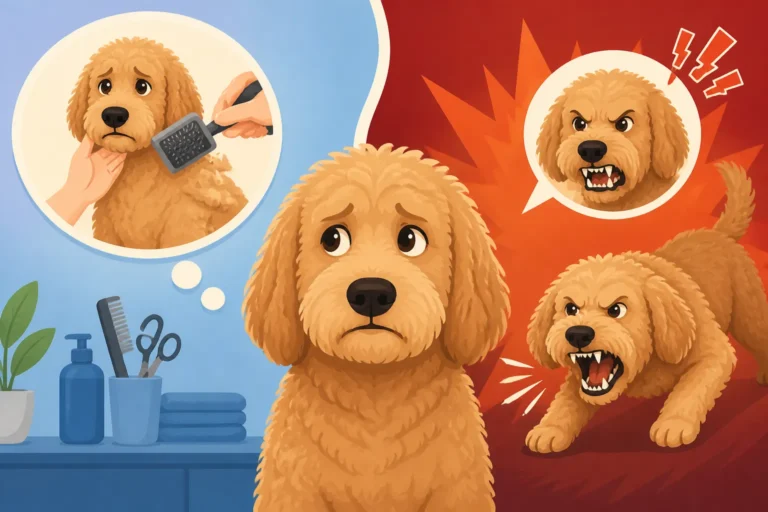
The Poodle is a breed accustomed to frequent, extensive grooming from a young age. Their coats require regular brushing, bathing, and clipping, meaning Poodles generally learn to be patient and still during these sessions. A Labradoodle that has inherited this Poodle trait will likely be more accepting of being brushed, having their feet handled, and enduring the blow dryer.
Conversely, while Labradors tolerate handling, their grooming needs are typically simpler, involving less prolonged attention to their coat. A Labradoodle leaning more towards its Labrador heritage might be less patient with long grooming sessions, more prone to wiggling, or see the brush as a fun toy to mouth. They might find the dryer scary or the prolonged stillness difficult. Regardless of their genetic leanings, early and consistent positive exposure to all aspects of grooming is non-negotiable for a Labradoodle. This means making brushing a pleasant experience with treats and praise, gradually introducing clippers and dryers, and ensuring they are comfortable with having their ears, paws, and tail handled. Our piece on Teaching a Labradoodle to Lie Still for a Ninety Minute Groom offers invaluable advice for making grooming a positive experience.
Here’s a quick overview of how Poodle and Labrador traits might show up in training:
| Trait Category | Poodle Tendencies | Labrador Tendencies |
|---|---|---|
| Intelligence | Quick learners, problem-solvers, can be mischievous | Eager to please, motivated by clear instruction |
| Motivation | Often respond well to praise, novelty, mental games | Highly food-motivated, thrive on positive feedback |
| Energy Level | High energy, can be intense and bursts of activity | High stamina, can be consistently boisterous |
| Focus/Distraction | Can fixate, selective hearing if bored/uninterested | Enthusiastic greetings, easily distracted by scents |
| Sensitivity | Can be more sensitive to tone, corrections | Resilient, forgiving of handler errors |
| Mouthiness/Chewing | Can be mouthy as pups if not redirected | Strong retrieving drive, can be mouthy/chewy as pups |
| Grooming Patience | Generally more tolerant of extensive handling | Can be less patient with long, still sessions |
| Independence | Can be independent thinkers, problem-solvers | Generally eager to work with handler |
Tailoring Your Training Approach to Your Unique Labradoodle
The beautiful thing about owning a Labradoodle is that you get a truly individual dog, a unique blend of two fantastic breeds. This means your training approach needs to be just as individual. There's no one-size-fits-all method for "the Labradoodle" because your dog might show more Poodle traits in one area and more Labrador traits in another.
Observation is Key: Identifying Dominant Traits
The most important tool in your training kit is keen observation. Spend time really watching your Labradoodle. How does your pup react when presented with a new toy? Does it immediately want to retrieve it (Labrador) or try to figure out how it works (Poodle)? How does it respond to different kinds of rewards? Does it go wild for a piece of chicken (Labrador) or seem more engaged by a game of fetch (Poodle)?
Pay attention to their body language, their learning speed, and what genuinely motivates them. Does your dog learn new commands in just a few repetitions, or do they need more consistent practice? Does loud praise make them shrink back or wag their tail even harder? For instance, if you notice your Labradoodle quickly picks up intricate tricks but gets bored with repetitive drills, you might have a Poodle-dominant learner on your hands, and you'll want to incorporate more variety and mental challenges into your sessions. Conversely, if your dog is constantly sniffing the ground on walks and has an incredible drive to retrieve, leaning into that Labrador heritage with scent work or more fetch games might be highly effective for engagement. Keeping a simple training journal can even help you track what works and what doesn't, allowing you to fine-tune your approach over time.
Consistency, Patience, and Positive Reinforcement
Regardless of whether your Labradoodle leans Poodle or Labrador, some universal truths apply to successful dog training. Consistency is paramount. Dogs thrive on routine and clear expectations. If one family member allows jumping and another corrects it, your Labradoodle will become confused and progress will be slow. Everyone in the household needs to be on the same page regarding rules and commands.
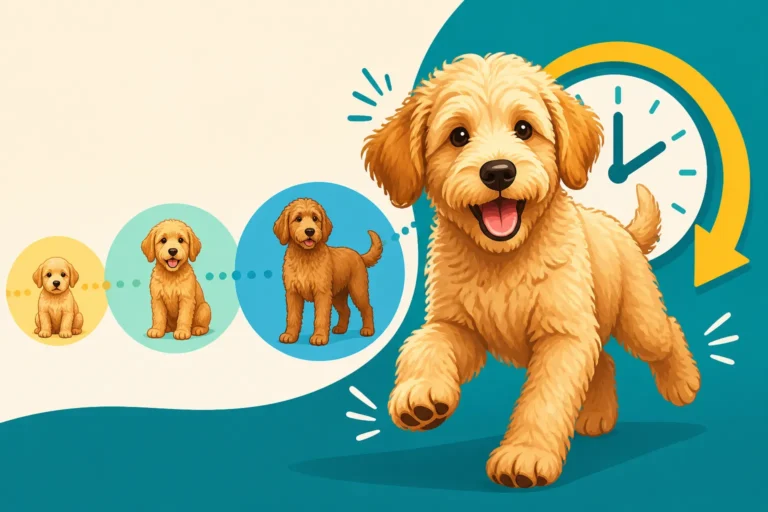
Patience is also non-negotiable. Learning takes time, and there will be frustrating moments, especially during adolescence when your seemingly well-trained pup might suddenly forget everything you taught them. Our article on How Long Labradoodle Adolescence Lasts highlights just how long that phase can feel. Remember that your dog isn't being stubborn; they're learning and sometimes testing boundaries.
Finally, positive reinforcement is the gold standard for Labradoodle training. Both Poodles and Labradors respond exceptionally well to rewards-based training. This means rewarding desired behaviors with treats, praise, toys, or anything your dog finds motivating. Punishing unwanted behaviors can create fear and anxiety, especially in more sensitive, Poodle-leaning dogs, and can break down the trust between you and your pup. If your Labradoodle really thrives on food rewards, you'll find that understanding Whether a Labradoodle Works for Food Like a Labrador can dramatically boost your training effectiveness. For those looking for structured online guidance that emphasizes positive methods, resources like BAXTER & Bella offer comprehensive programs that guide owners through everything from puppyhood basics to more advanced obedience. These kinds of programs can be incredibly helpful for maintaining consistency, especially for first-time owners.
Seeking Professional Guidance
Sometimes, despite your best efforts, you might feel like you're speaking a different language than your Labradoodle. This is where professional help can be invaluable. An experienced dog trainer can observe your individual Labradoodle and help you identify whether certain behaviors are stemming from Poodle-like intelligence (e.g., being too smart for their own good) or Labrador-like exuberance (e.g., boundless energy and excitement).
They can help you troubleshoot specific issues, introduce new training techniques tailored to your dog's personality, and provide insights you might miss. Puppy classes are a fantastic way to start, offering socialization and basic obedience in a controlled environment. For specific challenges or advanced goals, a one-on-one trainer can be a game-changer. Don't hesitate to consider if Whether a Labradoodle Needs a Trainer or a Class is right for your family, as early intervention often prevents bigger issues down the road. They can also help you understand what specific milestones, like What a Labradoodle Should Know by Six Months, are realistic for your particular dog.
Managing Expectations and Embracing the "Doodle" Difference
Bringing a Labradoodle into your life is an exciting journey, but it comes with the responsibility of managing expectations and embracing the unique qualities of this wonderful hybrid. It’s easy to get caught up in marketing or anecdotal stories, but the reality is always a bit more complex.
The Myth of the "Easy" Labradoodle
One of the most common misconceptions about Labradoodles is that they are inherently "easy" dogs. While their intelligence and generally friendly nature make them highly trainable and wonderful companions, they are far from automatic. Many new owners are surprised by the sheer amount of energy and mental stimulation a Labradoodle requires, often underestimating the commitment involved. Our post on Whether a Labradoodle Is as Easy as Breeders Say dives into this in more detail.
Both Poodles and Labradors are active, intelligent working breeds. This means your Labradoodle will likely need significant daily exercise to be a well-behaved family member. A bored Labradoodle, regardless of whether it leans Poodle or Labrador, is a destructive Labradoodle. They need outlets for their minds and bodies. If they don't get sufficient physical activity, that Poodle intelligence might lead to creative ways to get into trouble, or that Labrador enthusiasm might result in zoomies through the house. Providing adequate The Exercise a Labradoodle Needs Before It Behaves is not just about physical health, but also about mental well-being and managing their training responses.
Celebrating the Best of Both Worlds
Despite the challenges of unpredictability, the blend of Poodle and Labrador traits can truly create an exceptional companion. The Poodle’s intelligence contributes to a dog that can learn complex commands, problem-solve, and excel in various dog sports. They often possess a playful, sometimes mischievous, spark that keeps life interesting. The Labrador’s amiability, loyalty, and desire to please result in a devoted family member who generally loves people and other animals. This combination, when nurtured with consistent training and positive reinforcement, can lead to a dog that is not only smart and capable but also incredibly affectionate and eager to be a part of everything you do.
You might find your Labradoodle has the Poodle’s quick wit in learning a new trick in minutes, combined with the Labrador’s absolute joy in retrieving a ball for hours. This unique blend creates a dog with a wide range of capabilities and a captivating personality. Embrace the blend, understand that each trait comes with its own nuances, and enjoy the journey of discovering your Labradoodle’s individual self.
Essential Tools and Resources
To set your Labradoodle up for success, it’s helpful to have the right tools and resources. Beyond consistency and patience, practical items can make a big difference. For instance, a comfortable, well-fitting harness can be invaluable for leash training, especially for a strong, enthusiastic Labradoodle. Many popular options are readily available on platforms like Amazon, offering various styles that can help prevent pulling without causing discomfort to your dog.
Additionally, don't underestimate the power of enrichment toys. Puzzle feeders, snuffle mats, and durable chew toys can help channel your Labradoodle's intelligence and energy, preventing boredom-induced destructive behaviors. Again, a quick search on sites like Amazon will reveal a plethora of options to keep their minds engaged. Remember, a well-exercised and mentally stimulated Labradoodle is usually a happier and more trainable one, regardless of whether their Poodle or Labrador genes are more prominent on any given day.
Disclaimer
This article is for general informational purposes only and does not constitute professional advice. Laws, prices and regulations vary by location and change over time. Consult a qualified professional for guidance on your specific situation.