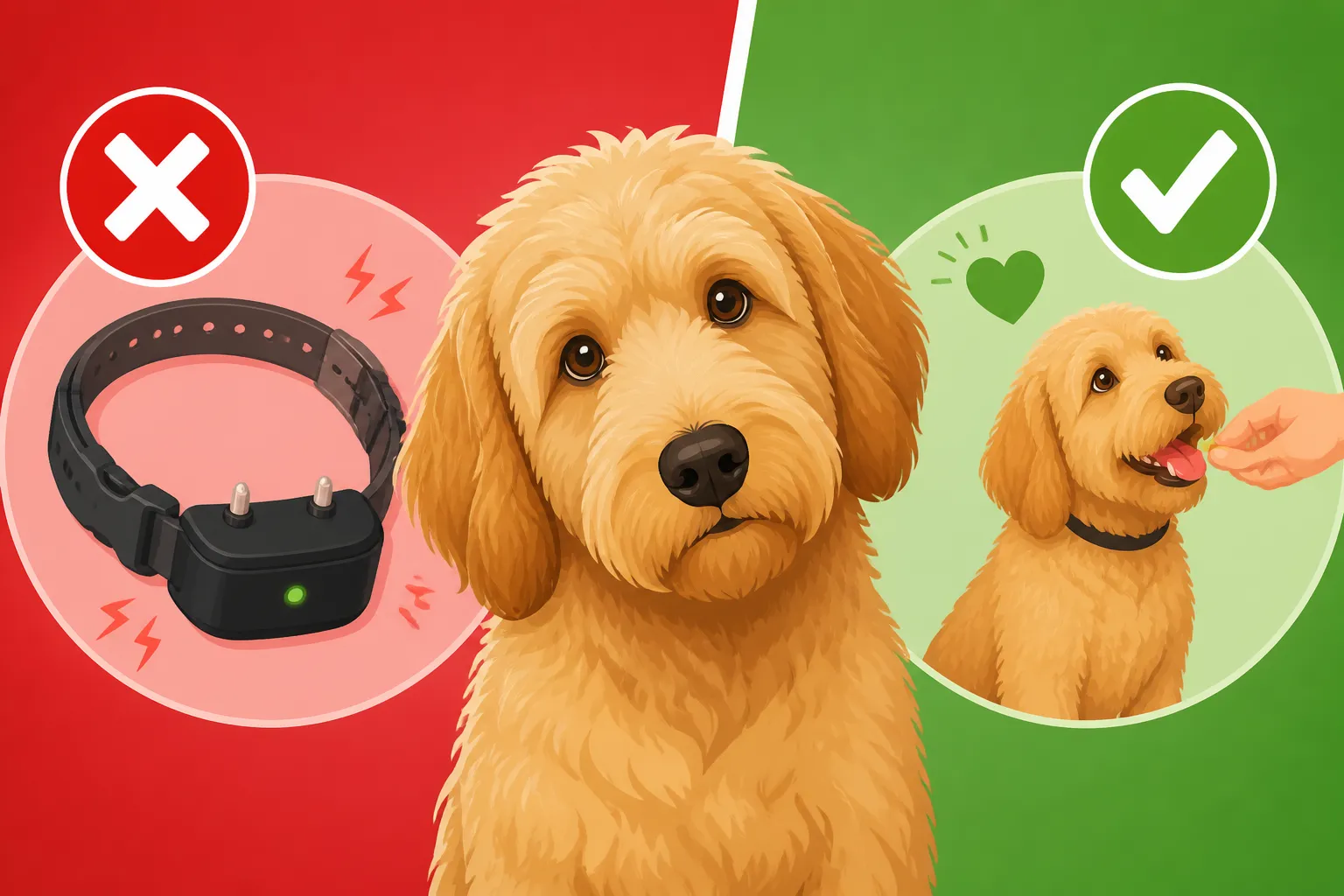
Whether an E-Collar Belongs on a Labradoodle
It's incredibly frustrating when you've poured your heart and soul into training your beloved Labradoodle, only to find yourself still struggling with recall, leash manners, or those persistent little habits that can sometimes feel overwhelming. Many owners reach a point where they wonder if there's a tool out there that could bridge the gap, and often, the conversation turns to e-collars. This guide aims to cut through the noise and provide a comprehensive, empathetic look at whether an e-collar is a suitable, responsible tool for your Labradoodle and how to approach its use.
Understanding E-Collars and Their Controversies
The world of dog training can feel like a minefield of differing opinions, and few topics spark as much debate as the use of e-collars. For many Labradoodle owners, the idea of using a device that delivers a "shock" can be deeply unsettling, while others swear by them as a game-changer for off-leash freedom and safety. It's easy to get lost in the strong emotions on both sides, but understanding what an e-collar truly is and isn't, and why there's such a divide, is the first step toward making an informed decision for your dog.
What is an E-Collar, Really?
First and foremost, let's clear up some common misunderstandings. While often colloquially referred to as "shock collars," modern e-collars, or electronic collars, are far more sophisticated than the punitive devices of old. They are designed to deliver a mild, momentary static sensation – often described as a tap or vibration – rather than a painful jolt. Think of it less like a cattle prod and more like a tens unit used in physical therapy, providing a unique sensation that gets your dog's attention.
These devices typically come with a remote transmitter and a receiver collar that fits around your dog's neck. Quality e-collars offer a wide range of stimulation levels, from barely perceptible vibrations or tones to stronger static pulses. The key for responsible use is finding what's called the "working level" – the lowest possible setting your dog perceives and responds to, which is usually just enough to cause a slight ear twitch or head tilt. Many modern e-collars also include vibration and tone-only settings, allowing for a diverse range of communication options. The intent, for those who use them responsibly, is to use the sensation as a clear communication cue, a tap on the shoulder from a distance, rather than a punishment.
The Divide: Why Trainers and Owners Disagree
The training community is broadly split on e-collar use, creating significant confusion for owners. On one side, proponents argue that when used correctly, e-collars are invaluable tools for safety, particularly for achieving reliable off-leash recall, especially with high-drive or easily distracted dogs. They emphasize that the technology allows for immediate, clear communication over long distances, which can be literally life-saving if a dog bolts towards a road or dangerous animal. They often highlight that it can grant dogs more freedom by making them safe off-leash, rather than keeping them constantly confined. Many balanced trainers advocate for e-collars as part of a comprehensive training program, using them to reinforce known commands and establish boundaries, giving the dog clear information about what is expected.
On the other side, many positive reinforcement-only trainers and ethical organizations express deep concerns. They worry about the potential for misuse, accidental over-correction, or the creation of fear and anxiety in dogs if the e-collar is used improperly or purely for punishment. They argue that any aversive tool can damage the human-animal bond and that effective training can always be achieved through purely positive methods, focusing on reward-based motivation and environmental management. Owners themselves often grapple with the ethical implications, wondering if using such a tool aligns with their desire for a loving, trusting relationship with their pet. This ethical quandary is real, and it's something every Labradoodle owner considering an e-collar must thoughtfully consider.
Why Labradoodle Owners Consider E-Collars
It’s no secret that Labradoodles are smart, energetic, and full of personality. This wonderful blend of traits is what draws so many people to the breed, but it can also present some unique challenges in training that lead owners to explore every possible tool, including e-collars. You love your Labradoodle's zest for life, but sometimes that zest can translate into a stubborn streak or an overwhelming desire to chase that squirrel, no matter how many times you call their name.
The Labradoodle's Unique Blend of Traits
The Labradoodle is a fascinating mix, inheriting traits from both the Labrador Retriever and the Poodle. From the Labrador side, you often get that classic retrieving drive, a boundless enthusiasm for life, and a strong nose for interesting smells. This means your Labradoodle might be easily distracted by birds, squirrels, or tantalizing scents, making consistent recall a significant challenge in an open park or wooded area. Their inherent joy in exploring can sometimes override their desire to return to you, especially if they catch a scent or spot something exciting in the distance. This is where many owners feel the pull to find a more reliable method of communication, especially for ensuring their dog's safety in less controlled environments.
Then there's the Poodle influence. Poodles are incredibly intelligent, sensitive, and often quite perceptive. This intelligence means they learn quickly, but it also means they can be incredibly clever about what they choose to respond to. Some Poodles, and by extension, some Labradoodles, can have an independent streak, evaluating whether coming when called is truly worth it if there's something more interesting happening. This sensitivity also means that while they learn quickly, they can also be more prone to becoming stressed or shut down if training methods are harsh or inconsistent. Understanding Whether the Poodle or the Labrador Shows Up in Training is key to tailoring your approach. The combination of high drive from the Labrador and the intelligence/sensitivity of the Poodle can make for a dog that is a joy to train but also a challenge to keep consistently focused, especially off-leash.
Common Training Frustrations a Labradoodle Presents
Given their unique genetic makeup, Labradoodles can exhibit certain behaviors that push owners to their limits. One of the most common frustrations is the unreliable recall. You might spend hours practicing "come" in the backyard, only for your Labradoodle to suddenly develop selective hearing the moment they spot a rabbit in the distance. This isn't usually defiance; it's often their instincts kicking in, which can be powerful. The fear of your dog running into traffic or getting lost because they won't come back is a terrifying prospect for any owner. This is precisely why many seek a tool that can provide a reliable "emergency brake" for off-leash situations.
Beyond recall, other common challenges include excessive jumping on guests, counter-surfing (that notorious "doodle reach" can grab anything!), or pulling on the leash. A sixty-pound Labradoodle excitedly greeting a visitor can easily knock over a child or an elderly relative. Their intelligence can also mean they become adept at problem-solving, like figuring out how to get onto the counter for a discarded snack. These behaviors, while often endearing in their enthusiasm, can quickly become safety hazards or major inconveniences. Owners often dream of building A Labradoodle That Jumps on Every Visitor or preventing A Labradoodle That Counter Surfs without constant supervision, leading them to explore more advanced training tools that offer greater control and consistency.
Responsible E-Collar Use for a Labradoodle
Deciding to use an e-collar is a significant step, and if you choose this path, doing it responsibly is absolutely paramount. An e-collar is not a magic wand, nor is it a substitute for foundational training. It's a tool that, when used correctly, can enhance communication and solidify boundaries. However, improper use can lead to confusion, fear, and even behavioral problems. It’s about being thoughtful, consistent, and always prioritizing your Labradoodle's well-being.
The Foundation: Training Before the Tool
Before you even think about putting an e-collar on your Labradoodle, you absolutely must ensure they have a solid understanding of basic obedience commands using positive reinforcement. This means "come," "sit," "stay," and "heel" should be well-established with a leash and treats in low-distraction environments. An e-collar is designed to reinforce known commands, not to teach new ones or to introduce concepts. If your Labradoodle doesn't understand what "come" means, a static sensation will only confuse or frighten them, making them associate the sensation with you or the command itself, rather than with a failure to respond.
Think of it this way: you wouldn't hand a student a complex calculus problem without first teaching them basic arithmetic. Similarly, an e-collar is an advanced communication device. You teach the "language" of your commands with positive methods first, and then you introduce the e-collar as a way to "speak" that language more clearly and consistently over distance. Rushing this process almost guarantees negative results, potentially creating a fearful or distrustful dog. Building a strong foundation with positive reinforcement ensures your Labradoodle understands what you're asking before the e-collar is introduced to add clarity to those requests.
Finding the Right Trainer and Equipment
If you're serious about incorporating an e-collar into your Labradoodle's training, the single most important step is to seek guidance from a qualified, experienced professional. Look for trainers who specialize in balanced training methods and have a proven track record of using e-collars humanely and effectively. This isn't a tool you should experiment with on your own after watching a few online videos. A good trainer will teach you how to use the collar, how to find your dog's "working level," and how to properly condition your Labradoodle to the sensation. They will emphasize pairing the e-collar stimulation with known commands, ensuring your dog understands it as a prompt, not a punishment.
Many reputable trainers offer structured programs that integrate e-collar conditioning into overall obedience. Some online platforms, like BAXTER & Bella, offer comprehensive courses that guide owners through every step of positive reinforcement training, and some of these programs may also address the responsible integration of various tools, including e-collars, when appropriate. When it comes to the equipment itself, don't skimp on quality. Cheap, unreliable e-collars can be dangerous. Look for brands known for their consistency, wide range of levels, and safety features. Check reviews on retailers like Amazon to identify well-regarded brands, but always remember that the device is only as good as the knowledge of the person holding the remote. A quality e-collar should offer variable stimulation levels, a tone-only option, and ideally, be waterproof and rechargeable.
Conditioning and Application Techniques
The process of introducing an e-collar to your Labradoodle is called "conditioning," and it's a careful, methodical process. The goal is for your dog to associate the sensation not with pain or punishment, but with a subtle, non-aversive cue to perform a known command. This usually starts with finding their "working level" – the lowest stimulation setting that your dog acknowledges with a slight head tilt, ear flick, or momentary pause, without showing signs of fear or pain. It's often so low that a human can barely feel it.
Once the working level is found, the trainer will guide you through pairing the stimulation with commands your Labradoodle already knows perfectly. For example, for recall, you might give the "come" command, then apply a momentary tap of stimulation as you gently pull on a long line, releasing both the stimulation and the line pressure as your dog moves towards you, followed by effusive praise and a high-value treat. The dog learns that turning off the sensation is as simple as performing the command. Over time, the goal is for the dog to respond to the command before the stimulation is even needed, seeing the e-collar as a silent extension of your voice or leash. This method, often called "pressure on, pressure off," ensures the dog learns to turn off the stimulation by complying, rather than being punished by it. This approach can be incredibly effective for behaviors like Building a Recall a Labradoodle Answers Off Leash or establishing boundaries in a larger yard.
Alternatives and Ethical Considerations
For many Labradoodle owners, the decision to use an e-collar comes after exhausting other options or feeling a deep concern for their dog's safety. However, it's crucial to understand that e-collars are not the only solution, and they're certainly not the right solution for every dog or every household. Exploring alternatives and reflecting on the ethical implications can help you make a choice that aligns with your values and your Labradoodle's individual temperament.
Exploring Positive Reinforcement Alternatives
Before considering an e-collar, it’s worth doubling down on what positive reinforcement can achieve, especially for a smart and food-motivated breed like the Labradoodle. A long line, for example, can be an incredible tool for practicing off-leash recall safely in open areas. By allowing your Labradoodle more freedom to explore while still maintaining a physical connection, you can practice calling them back, reeling them in if needed, and rewarding them lavishly for returning. This builds a positive association with coming when called, even with distractions.
High-value treats are also your best friend. For a Labradoodle, something truly irresistible like boiled chicken, cheese, or specialized training treats can make all the difference when competing with exciting environmental distractions. Whether a Labradoodle Works for Food Like a Labrador is a good question to ask yourself – and often, the answer is a resounding yes if the reward is tempting enough! Engagement games, like playing fetch or tug, and consistent, structured walks that meet their exercise needs can also build a stronger bond and improve responsiveness. Remember, training is a continuous journey, and consistent, clear positive reinforcement can build incredible reliability and trust, often without the need for aversive tools. It just requires patience, creativity, and commitment from the owner.
When an E-Collar Might Not Be Right for Your Labradoodle
Even with proper instruction, an e-collar is not universally appropriate. Some Labradoodles, particularly those with a highly sensitive or anxious disposition, might not react well to the static stimulation, even at low levels. For a dog that is already prone to fear or stress, the use of an e-collar, no matter how carefully introduced, could exacerbate these issues, leading to a breakdown in trust or even aggression stemming from fear. It's essential to be acutely aware of your individual dog's personality and how they respond to different stimuli. For example, Whether a Labradoodle Is Too Soft for Correction is a valid concern; some dogs thrive on positive reinforcement and shut down with any perceived pressure.
Furthermore, the commitment required from the owner cannot be overstated. Using an e-collar effectively demands consistency, precise timing, and a deep understanding of canine body language. If you're not confident in your ability to be consistent or to interpret your dog's subtle responses, then an e-collar might do more harm than good. It's far better to rely on proven positive reinforcement techniques, long lines, and strong management strategies to keep your Labradoodle safe and well-behaved than to improperly use a tool that could damage your relationship or create new behavioral problems. Ultimately, your Labradoodle's emotional well-being and your bond with them should always be the top priority.
| Feature / Consideration | Pros of E-Collar Use (Responsible) | Cons / Alternatives |
|---|---|---|
| Off-Leash Control | Enhanced reliability for recall over distance, greater safety in open areas. | Can be achieved with consistent positive reinforcement, long lines, and high-value rewards. |
| Communication | Clear, immediate signal even with distractions; expands communication range. | Potential for misuse, confusion, or fear if not properly conditioned; can damage trust. |
| Behavior Correction | Effective for breaking deeply ingrained habits (e.g., counter surfing) or establishing boundaries. | May cause anxiety or suppression of natural behaviors; can be addressed with management and positive redirection. |
| Freedom | Allows dogs more freedom to explore safely off-leash in appropriate environments. | Risk of over-reliance on the tool; dog may not generalize behavior without collar. |
| Training Pace | Can accelerate the training process for certain behaviors due to clear feedback. | Requires significant owner education and consistent application; not a shortcut. |
| Ethical Concerns | When used correctly, it's a communication tool, not a punishment. | Some find any aversive tool unethical, regardless of application. |
Disclaimer
This article is for general informational purposes only and does not constitute professional advice. Laws, prices and regulations vary by location and change over time. Consult a qualified professional for guidance on your specific situation.