The Alone Time a Velcro Labradoodle Can Build To
One of the most common anxieties for Labradoodle owners is how much time their beloved "Velcro dog" can truly handle being left alone. It's a genuine worry: you want your furry companion to feel safe and secure, not distressed, when you need to step out. This guide is here to walk you through the process of gradually increasing your Labradoodle's comfort with alone time, from puppyhood through adulthood, addressing common pitfalls and offering practical solutions.
Understanding the "Velcro" Labradoodle Tendency
It’s no secret that Labradoodles, with their Poodle intelligence and Labrador affability, often form incredibly strong bonds with their human families. This wonderful trait, while endearing, can also lead to a dog that prefers to be glued to your side, making alone time a real challenge. You might find yourself unable to go to the bathroom without a furry shadow, let alone leave the house for an errand.
Why Labradoodles Love Being Close
The Labradoodle was intentionally bred for companionship and service work, particularly as guide dogs. Both parent breeds, the Labrador Retriever and the Poodle, are known for their strong desire to be with people. Labradors are famously people-oriented, eager to please, and thrive on being part of the family "pack." Poodles, too, are highly intelligent and sensitive, often developing deep attachments to their owners. When you combine these traits, you often get a dog that genuinely sees you as the center of their universe. They are attentive, often intuitive, and incredibly loyal, which means they simply prefer to be in your presence. It’s not just about wanting treats or attention; it's about a deep-seated need for connection and belonging. This natural inclination means that while their devotion is heartwarming, it also means they need careful guidance to learn independence.
Distinguishing Clinginess from Separation Anxiety
It's crucial for any Labradoodle owner to understand the difference between a dog that simply enjoys being close and one that suffers from true separation anxiety. A "Velcro dog" might follow you from room to room, curl up at your feet while you work, or greet you with unbridled enthusiasm when you return. They might even whine a little when you leave, but they generally settle down within a few minutes and don't engage in destructive behaviors or excessive vocalization. This is normal, albeit a bit inconvenient at times!
Separation anxiety, on the other hand, is a much more serious and distressing condition. A Labradoodle experiencing separation anxiety will often show clear signs of panic and fear when left alone. This can manifest as excessive barking, howling, or whining that doesn't cease. They might engage in destructive chewing, often targeting doors, windows, or items that smell like you. House soiling, even in a perfectly housetrained dog, is another common symptom. Some dogs might even injure themselves trying to escape. If your Labradoodle starts pacing, drooling excessively, shaking, or panting uncontrollably as you prepare to leave, these are significant red flags that their clinginess has escalated into anxiety. Understanding this distinction is the first step in knowing how to approach their alone time training. You might also find it helpful to read Telling an Anxious Labradoodle From an Under Exercised One for more insights.
The Early Stages: Building Foundational Alone Time
Starting early and building a solid foundation is paramount for any Labradoodle, especially given their tendency to form strong attachments. It's much easier to teach independence in small, positive increments from puppyhood than to try and reverse ingrained anxious behaviors later on.
Crate Training as a Foundation
Crate training is, hands down, one of the most effective tools for teaching a Labradoodle to be comfortable and secure in their own space, even when you're not right there. The crate shouldn't be seen as a punishment, but rather as a den—a safe, cozy haven where your dog can relax and feel protected. Introduce the crate gradually, making it a positive place with soft bedding, favorite toys, and delicious treats. Start by feeding meals in the crate, then close the door for very short periods while you are still in the room.
The goal is for your Labradoodle to associate the crate with good things and calm relaxation. Once they're comfortable with short durations, you can start leaving the room for a minute or two, returning before they become anxious. This process helps them understand that being alone in their crate isn't scary and that you will always come back. Many owners have found immense success with programs like BAXTER & Bella, which often incorporate robust crate training guidance, providing structured steps and support. Whether a Crate Helps a Labradoodle Switch Off goes into more detail about how a crate can be beneficial for their mental well-being.
Short, Positive Departures
Once your Labradoodle is happy and relaxed in their crate for short periods while you're nearby, you can begin practicing short departures from the house. The key here is to keep these departures short and boring. Resist the urge to make a big fuss when you leave or when you return. Overly emotional goodbyes or excited greetings can heighten anxiety, making the dog anticipate or dread your departure and arrival.
Start with just a few minutes: step out, close the door, and come back in before your dog has a chance to get upset. As you re-enter, ignore them for a minute or two until they've settled, then offer a calm pat or a quiet "good dog." Gradually increase the time you're away, always observing your Labradoodle's comfort level. If they show signs of distress, you've gone too far, too fast. Scale back to a shorter duration where they were successful and build up again more slowly. This systematic approach teaches them that your departures are routine and predictable, and that you will always return. Remember, consistency is key in building this trust.
Gradually Increasing Duration and Independence
Once your Labradoodle is comfortable with short periods of alone time, the next phase is to slowly and steadily increase the duration and foster a deeper sense of self-sufficiency. This isn't just about the clock; it's about building their confidence in their ability to cope without you present.
The Art of the "Quiet Stay"
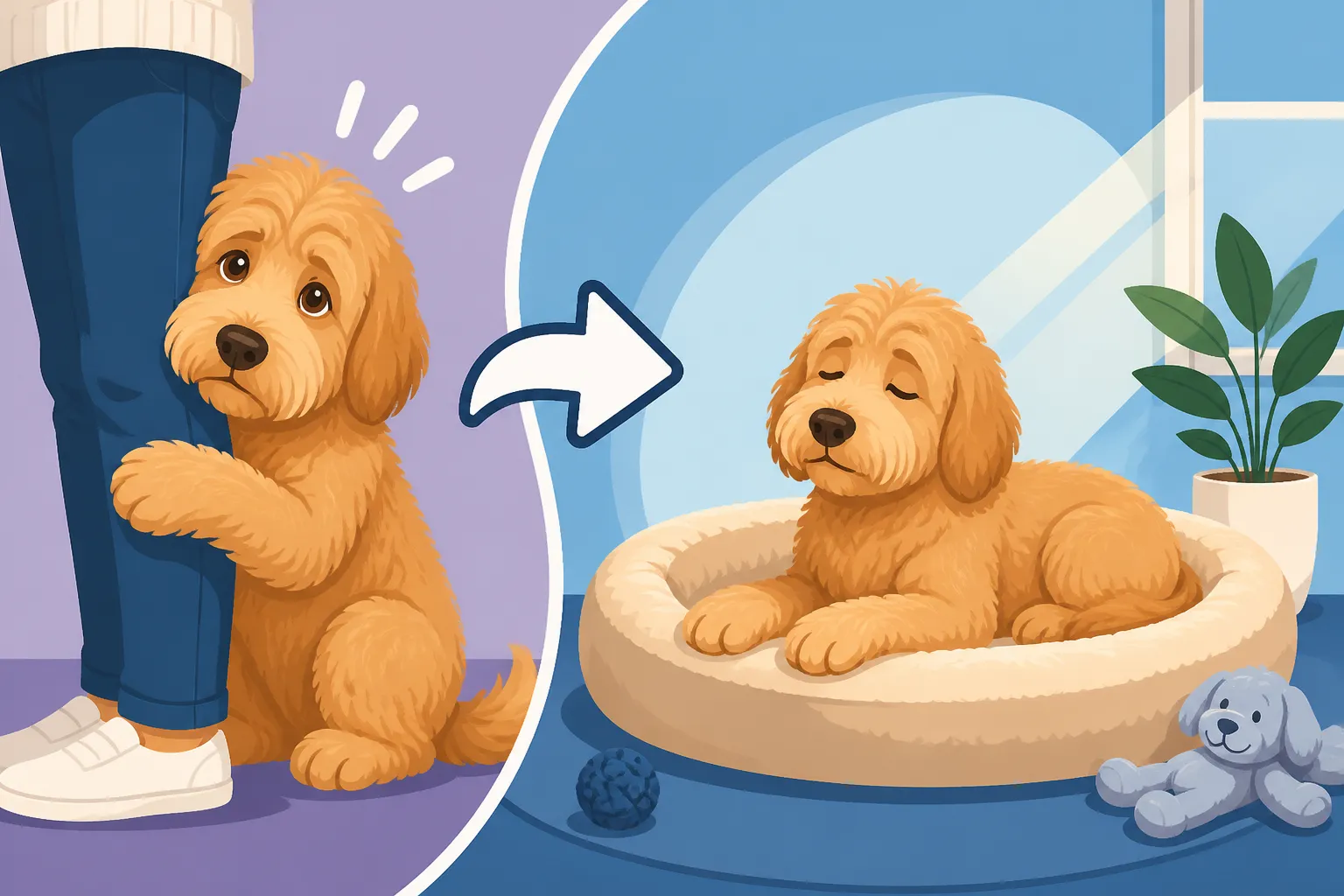
Beyond the crate, teaching your Labradoodle to settle quietly in a designated spot, like their dog bed, while you're in another room or even just busy around the house, is invaluable. This "quiet stay" command helps them understand that they don't always need to be by your side to feel secure. Start by rewarding them for lying calmly on their bed while you're nearby. Gradually increase the distance you move away and the length of time they need to stay.
This practice helps prevent the intense "Velcro" behavior where they follow your every step, creating a dog that can relax independently even when you're home. It's about teaching them that "alone" doesn't necessarily mean "abandoned." You're still present, but they are choosing to occupy their own space. This mental shift is crucial for longer periods of actual alone time, as it builds a foundation of calm and self-control.
Using Enrichment to Encourage Self-Sufficiency
Puzzle toys and long-lasting chews can be game-changers for alone time. These aren't just distractions; they engage your Labradoodle's intelligent mind and natural desire to work for food, turning alone time into a positive, rewarding experience. A frozen Kong stuffed with peanut butter, yogurt, or wet food can keep them happily occupied for a significant period. Snuffle mats, treat-dispensing balls, or sturdy chew toys available on Amazon can provide mental stimulation and reduce boredom, which is often a precursor to destructive behaviors.
Introducing these enrichment items before you leave can help create a positive association with your departure. The idea is that "when mom/dad leaves, I get this super awesome thing!" This shifts their focus from your absence to an enjoyable activity. It encourages them to entertain themselves and develop independent play, which is a vital skill for a dog that needs to be comfortable on their own. For more on managing potential destructiveness, consider reading What a Labradoodle Destroys When Left Alone.
The Role of Routine and Predictability
Dogs thrive on routine and predictability, and Labradoodles are no exception. A consistent daily schedule helps them understand what to expect, reducing anxiety about when you might leave or return. This includes consistent feeding times, walks, play sessions, and designated alone time. For example, if your Labradoodle knows that after their morning walk and breakfast, you usually leave for a specific period, they are more likely to settle down because it's part of their predictable routine.
Before you leave, ensure your Labradoodle has had adequate physical exercise and mental stimulation. A tired dog is a good dog, and a Labradoodle with pent-up energy is far more likely to get into trouble or become anxious when left alone. A good, brisk walk or a vigorous play session can make all the difference. Knowing that their needs have been met helps them relax. A predictable routine also minimizes the "pre-departure cues" that can trigger anxiety—those subtle actions you take before leaving, like grabbing your keys or putting on your shoes. By making alone time a normal, uneventful part of their day, you gradually desensitize them to your departures.
Here's a quick guide to building alone time:
| Stage | Duration Away (Initial) | Focus | Key Behaviors to Observe | Common Tool |
|---|---|---|---|---|
| Phase 1: Foundation | 1-5 minutes | Positive crate association, presence in room | Calm settling, no panic in crate while you're present | Crate, high-value treats |
| Phase 2: Short Departures | 5-30 minutes | Owner leaves house, quick return | Settles quickly after departure, no destructive behavior | Crate, engaging puzzle toys |
| Phase 3: Increasing Independence | 30 minutes – 2 hours | Longer periods, in and out of crate, other rooms | Relaxed in designated spot, engages with toys, calm greeting | Dog bed, longer lasting chews, "quiet stay" command |
| Phase 4: Extended Alone Time | 2-4+ hours | Consistent routine, mental and physical exercise | Sleep, independent play, no anxiety symptoms | Regular exercise, varied enrichment, predictable schedule |
Addressing Separation Anxiety in Labradoodles
If your Labradoodle's "Velcro" tendencies have crossed the line into full-blown separation anxiety, it's a challenging situation that requires a dedicated, patient, and often professional approach. It's not just "bad behavior"; it's a panic attack for your dog, and punishing them for it will only make it worse.
Recognizing the Signs of Distress
As mentioned earlier, true separation anxiety goes beyond mild clinginess. When left alone, a Labradoodle suffering from this condition might exhibit a range of distressing behaviors. These can include incessant barking, howling, or whining that continues for long periods, not just a brief complaint. You might come home to find destructive chewing, not just on toys, but on doorways, window sills, furniture, or personal items that carry your scent, indicating an attempt to escape or a desperate need for comfort.
House soiling is another very common sign, even in dogs that are otherwise perfectly housetrained. This isn't spite; it's a loss of bladder or bowel control due to extreme stress. Some Labradoodles might pace incessantly, shake uncontrollably, drool excessively, or pant even in a cool environment. These are all physiological signs of acute stress and panic. If you're unsure, setting up a camera to record your Labradoodle's behavior when you leave can provide invaluable insight into what's happening and help you accurately assess the severity of their anxiety. A Labradoodle That Barks When Left offers specific strategies for managing vocalization when alone.
Professional Help and Training Resources
When separation anxiety is severe, attempting to resolve it on your own can be overwhelming and often ineffective, leading to frustration for both you and your dog. This is precisely when professional help becomes not just advisable, but often necessary. A certified professional dog trainer, particularly one specializing in separation anxiety, or a veterinary behaviorist, can provide a tailored plan. They will work with you to implement desensitization and counter-conditioning techniques, which involve gradually exposing your Labradoodle to your departures in a way that creates positive associations rather than fear.
These professionals can help you identify triggers, manage pre-departure cues, and teach you how to make alone time a non-event. Online training platforms, like BAXTER & Bella, can be a great resource for foundational obedience and general puppy raising, which indirectly supports a calmer temperament, but for diagnosed separation anxiety, an individualized program from a dedicated specialist is often required. They might suggest a protocol where you only leave for periods your dog can handle without distress, incrementally increasing the time, often in very tiny steps like seconds, building confidence rather than reinforcing panic.
Medication as a Supporting Tool
In some cases of severe separation anxiety, behavioral modification alone might not be enough to help a Labradoodle cope. Just like humans, dogs can benefit from medication to help manage anxiety symptoms, especially in the initial stages of training. A veterinarian or veterinary behaviorist might prescribe anti-anxiety medication to reduce their overall stress levels, making them more receptive to training and less likely to fall into a full-blown panic.
It's important to understand that medication is rarely a standalone solution. It's typically used as a tool to support and enhance the effectiveness of a comprehensive behavioral modification plan. The goal is to help your Labradoodle feel calm enough to learn and respond to training. As their confidence grows and their anxiety lessens through desensitization, the medication can often be gradually reduced or discontinued under veterinary guidance. This approach acknowledges the profound stress your Labradoodle is experiencing and provides a pathway to true relief and progress.
Practical Tips for a Successful Alone Time Journey
Learning to be alone is a journey, not a destination, especially for a "Velcro" breed like the Labradoodle. Implementing practical strategies and maintaining a realistic mindset will pave the way for success.
Setting Up a Safe Space
Creating a designated safe space for your Labradoodle is fundamental for successful alone time. This isn't just about throwing down a dog bed; it's about curating an environment where they feel secure, comfortable, and content. For many, this will be their crate, especially if it's been positively introduced as a den. Ensure the crate is appropriately sized, with comfortable bedding, and covered with a blanket to create a den-like feel.
Beyond the crate, think about making a specific room or corner of a room their "zone." This space should be free from potential hazards they might chew or destroy. Provide familiar scents, like a dirty t-shirt of yours, and plenty of appropriate chew toys or puzzle feeders. Consider playing calming music or white noise to block out external sounds that might startle or excite them. A dog camera that allows you to monitor them and even speak to them can provide peace of mind and help you understand their behavior while you're out. Having a dedicated, calm space helps them switch off and relax, knowing exactly what is expected of them in your absence.
When to Seek Professional Guidance
It's natural to want to handle everything yourself, but knowing when to call in a professional is a sign of a responsible and caring owner. If you've been diligently working on alone time training for weeks or months, following all the advice, and your Labradoodle is still exhibiting significant distress—like excessive barking, destructive chewing, house soiling, or self-harm—it's time to seek expert help.
General obedience classes can certainly help with impulse control and building a bond, but true separation anxiety often requires a specialist. Look for a certified professional dog trainer (CPDT-KA) with experience in separation anxiety, or a veterinary behaviorist (DACVB). These professionals have the knowledge and tools to diagnose the severity, identify underlying causes, and create a tailored desensitization and counter-conditioning plan that addresses your Labradoodle's specific needs. Trying to push through severe anxiety on your own can inadvertently worsen the problem, so don't hesitate to reach out. Many professionals offer virtual consultations, making it easier to access help regardless of your location. Remember, a veterinary behaviorist can also discuss pharmaceutical options if necessary.
Managing Expectations and Celebrating Small Wins
Training a Labradoodle to be comfortable alone, especially one with strong "Velcro" tendencies or separation anxiety, is a marathon, not a sprint. It requires immense patience, consistency, and a realistic perspective. There will be good days and bad days, and setbacks are a normal part of the process. Don't get discouraged if your Labradoodle regresses after a period of success; simply go back to a stage where they were comfortable and rebuild from there.
Celebrate every small win: the first time they stayed quiet for ten minutes, the day they didn't chew anything, or the moment they calmly watched you leave. These milestones, no matter how tiny, are indicators of progress. Your Labradoodle isn't being stubborn; they are genuinely struggling with a powerful emotional response. By managing your own expectations, understanding that this is a gradual process, and consistently reinforcing positive, calm behaviors, you'll help your Labradoodle build the confidence they need to be a happy, independent companion. It's a testament to your bond that you're willing to put in this work, and ultimately, a more independent dog is a happier, less stressed dog, whether you're home or away. You might also find comfort in understanding What Nobody Tells a First Time Labradoodle Buyer about these kinds of challenges.
Disclaimer
This article is for general informational purposes only and does not constitute professional advice. Laws, prices and regulations vary by location and change over time. Consult a qualified professional for guidance on your specific situation.