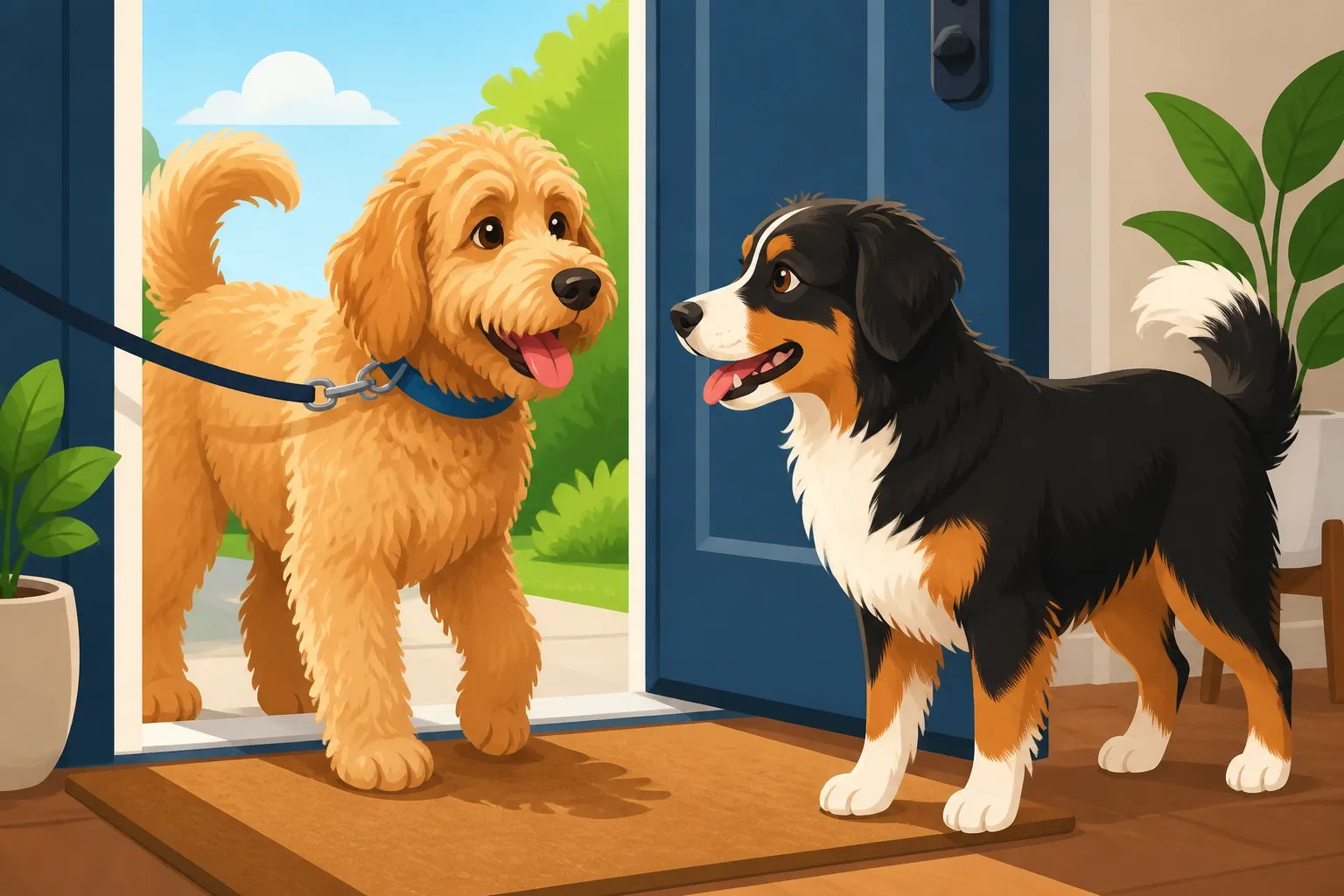
A Labradoodle Meeting the Resident Dog
Bringing a new Labradoodle into a home where another dog already reigns can feel like walking a tightrope. You're filled with excitement for your new fluffy family member, but also a healthy dose of anxiety about how your resident dog will react. Will they be best friends? Arch-rivals? It's a really common worry, and frankly, a valid one. This guide is here to help you navigate those crucial first encounters and beyond, offering a realistic, step-by-step approach to help both your dogs settle into a harmonious, happy household, minimizing stress for everyone involved.
Understanding the Dynamics of Dog-to-Dog Introductions
Introducing a new dog, especially one as exuberant and often large as a Labradoodle, to your resident canine isn't something to rush. It's a delicate dance where every move matters, setting the stage for their future relationship. Think of it less like throwing them into a wrestling ring and more like a carefully choreographed meet-and-greet at a fancy dinner party – polite, controlled, and with an exit strategy.
Why First Impressions Matter
We humans often underestimate just how much our dogs rely on their initial assessments. For them, a first impression isn't just about good manners; it's about safety, hierarchy, and potential threats or friendships. A bad first impression can create lingering tension, fear, or even aggression that takes a lot of time and effort to undo. You want those first interactions to be as neutral and positive as possible, avoiding any situations that force them into conflict or make one dog feel cornered or threatened. It’s about building a foundation of trust and respect, even if it starts with polite indifference.
When a new Labradoodle puppy bounds in, full of boundless energy, a sedate older dog might find this overwhelming. Or, an established dog who is used to being the sole recipient of attention might suddenly feel displaced. If the introduction is chaotic or stressful, both dogs can form negative associations with each other right from the start. This means they might see the other as a source of anxiety or competition, rather than a potential playmate or companion. Taking your time here pays dividends down the road.
Reading Both Dogs' Body Language
This is perhaps the most critical skill you'll need as you facilitate introductions. Dogs communicate volumes through their body language, and understanding these signals is key to knowing when to proceed, pause, or pull back. Misinterpreting a stiff posture as mere curiosity, or a low growl as a friendly rumble, can escalate a situation quickly and dangerously. It's not just about watching for overt signs of aggression, but also subtle cues of stress, discomfort, or appeasement.
Look for signs like a relaxed body, loose tail wags (not stiff, high flags), soft eyes, and open mouths. A "play bow" is a fantastic sign! Conversely, watch for tension: stiff bodies, direct prolonged eye contact, closed mouths, hackles raised, ears flattened, whale eye (showing the whites of their eyes), or excessive lip licking and yawning (stress signals). If either dog tries to hide, cower, or continuously move away, they're telling you they're uncomfortable. Learning these nuances for both your resident dog and your new Labradoodle will be your superpower.
| Body Language Sign | Possible Meaning (General) | Notes for Labradoodles/Resident Dogs |
|---|---|---|
| Loose, Waving Tail | Happy, relaxed, friendly | Whole body wiggly, not just the tip. |
| Play Bow | Inviting play | Front end down, rear end up, tail wagging. |
| Soft Eyes, Blinking | Calm, non-threatening | Pupils normal, no hard stare. |
| Relaxed Mouth, Panting | Content, comfortable | Tongue may be slightly out, no tight lips. |
| Direct Stare, Stiff Body | Challenge, tension, warning | Often accompanied by a tense mouth and stillness. |
| Growling, Snapping | Warning, discomfort, fear | Immediate intervention needed. |
| Lip Licking, Yawning (out of context) | Stress, appeasement | Often seen when uncomfortable or trying to de-escalate. |
| Ears Flattened/Pasted Back | Fear, anxiety, submission | Can also indicate aggression if combined with other tense signals. |
| Raised Hackles | Arousal, fear, excitement | Not always aggression, but indicates heightened state. |
| Tail Tucked | Fear, insecurity | Dog is trying to make itself appear smaller. |
| Turning Head Away | De-escalation, avoidance | Often a polite way to say "I don't want conflict." |
The Importance of a Neutral Space
Your home is your resident dog's kingdom. It smells like them, their toys are there, their favorite napping spots. Introducing a new dog directly into this established territory can trigger territorial instincts, even in the most laid-back dogs. This isn't about aggression necessarily, but a natural canine desire to protect their space and resources.
A neutral outdoor space, like a local park, a quiet field, or even a friend's large, fenced yard that neither dog considers "theirs," is ideal for initial introductions. The lack of familiar scents and boundaries helps both dogs remain calmer and more focused on each other without the added pressure of territorial defense. It reduces the stakes significantly, allowing them to focus on sniffing and observing without feeling their home turf is being invaded. This also prevents resource guarding from being an issue right off the bat, as there are no "their" toys or "their" bowls around.
Preparing Your Resident Dog for a New Labradoodle
Bringing home a new Labradoodle isn't just about getting the new dog ready; it's perhaps even more about preparing your existing canine companion. Their world is about to change, and how well you manage that transition for them will heavily influence their acceptance of the new arrival. It's like preparing an older child for a new baby—they need reassurance, continuity, and to feel secure in their place.
Assessing Your Resident Dog's Temperament
Before your Labradoodle even steps paw through the door, take an honest inventory of your resident dog's personality. Are they generally social and happy to meet new dogs, or do they tend to be aloof, fearful, or even reactive? Do they have a history of resource guarding or a strong prey drive? How do they react to puppies versus adult dogs? The Household a Labradoodle Actually Suits asks if they fit with other pets. For example, a stoic Labrador might tolerate a bouncy Labradoodle puppy with a bit of a sigh, while a more sensitive Poodle-mix might find the high energy overwhelming.
If your resident dog has any history of aggression, fear, or anxiety around other dogs, it's crucial to acknowledge this. You might need to consult with a professional trainer before the new Labradoodle arrives to develop a specific management plan. Pretending these issues don't exist will only set both dogs up for failure. Understanding their baseline will help you gauge their reactions during introductions and tailor your approach accordingly.
Establishing Clear Boundaries and Routine
Dogs thrive on routine and predictability. The more solid your resident dog's routine and boundaries are before the new Labradoodle arrives, the less unsettling the change will be. Continue their regular feeding times, walk schedules, and training sessions. This reinforces their sense of security and their place within the family. Ensure they have their own designated safe spaces—a crate, a favorite bed, a quiet room—where they can retreat and be undisturbed.
If you're planning any changes to your resident dog's routine, implement them now, well in advance of the new dog's arrival. This way, they won't associate the changes with the new Labradoodle, which could breed resentment. A consistent routine acts as an anchor for your resident dog during a time of significant change, letting them know that even with a new addition, their core world remains stable and safe. It's often when routines are completely upended that older dogs struggle most with new arrivals.
Desensitization to New Sights and Smells
Dogs rely heavily on their sense of smell. Before the face-to-face meeting, try to exchange scents. Bring home a blanket, a toy, or a piece of bedding from your new Labradoodle puppy or adult dog. Allow your resident dog to sniff it in a relaxed environment. Don't force interaction; just let them investigate at their own pace. Observe their reaction: calm curiosity, indifference, or signs of stress. This allows them to become familiar with the new dog's scent in a non-threatening way, without the pressure of a physical presence.
You can also introduce the new dog's scent in a positive way. For instance, place the scented item near your resident dog's food bowl while they eat, or give them a favorite high-value treat while they're sniffing the item. This helps create a positive association with the new scent. You can rotate items, bringing new smells to your resident dog and taking their scent to your new Labradoodle. This "olfactory introduction" is a crucial pre-step that helps smooth the path for visual contact.
The Step-by-Step Introduction Process for Your Labradoodle
The actual meeting between your Labradoodle and your resident dog requires patience, careful management, and a commitment to keeping things positive and low-stress. This isn't a race; it's a marathon, and slow and steady wins the prize of a peaceful household. Resist the urge to just "let them figure it out" – that often leads to avoidable problems.
The Parallel Walk: An Outdoor Start
Once you've done your scent exchange, the parallel walk is often the ideal first physical introduction. This involves walking both dogs on leash, side-by-side, but with enough distance between them that they don't feel pressured to interact. Choose a neutral location, like a park or a quiet walking trail. You might need two handlers, one for each dog. Start with a significant distance, where both dogs are aware of the other's presence but not reacting strongly.
The goal isn't immediate interaction, but rather for them to simply exist in the same space, moving in the same direction, without tension. As they become more relaxed, you can gradually decrease the distance. Keep leashes loose; tension on the leash can signal to your dog that there's danger. Offer plenty of praise and high-value treats to both dogs whenever they calmly acknowledge the other or simply ignore them. Short bursts are better than long, stressful walks. If either dog shows signs of stress (stiff body, pulling, growling), increase the distance again. This allows them to "ignore" each other while still processing the other's presence, Teaching a Labradoodle to Ignore Other Dogs in Public can be a valuable skill here.
Controlled Indoor Meetings with Barriers
After successful parallel walks, the next step is a controlled indoor meeting using barriers. Baby gates are your best friends here. Set up a gate (or two, for extra security, especially with a strong or jumpy Labradoodle) between two rooms. This allows the dogs to see and smell each other without direct physical contact. Keep these sessions short, positive, and supervised. Again, reward calm behavior from both sides with treats and praise. Toss treats on both sides of the gate.
These barrier meetings can be used for short periods throughout the day. You can feed them on opposite sides of the gate, offering a positive association with the other dog's presence. Amazon offers a wide range of sturdy gates that can be invaluable for this stage. Remember, no dog should be forced into interaction. If one dog consistently tries to avoid the gate or shows signs of fear or aggression, it's time to go back a step or re-evaluate the pacing. This controlled environment is also a great place to start working on Raising a Labradoodle Through Its First Year while managing the existing dog's space.
Supervised Off-Leash Interaction
This is the stage you gradually build up to, and it should only happen once both dogs are consistently relaxed and showing positive, curious body language during parallel walks and barrier greetings. Choose a secure, neutral, fenced area – again, not necessarily your living room initially, unless it's very large and clear of "stuff." Keep these initial off-leash interactions very brief, just a few minutes, and always under active supervision. Avoid moments that could lead to competition, like feeding time or high-value toys.
During these sessions, watch intently for body language. Look for reciprocal play bows, loose chasing, and soft-mouthed interactions. Interrupt any overly intense staring, stiff body language, or excessive mounting with a cheerful recall and a brief separation. This isn't punishment; it's managing arousal before it escalates. Always end on a positive note, even if it means interrupting play, so they associate coming together with good things. It's especially important to manage a young Labradoodle's exuberance during these times, as A Labradoodle That Jumps on Every Visitor might need to learn to tone it down for an older, more sedate resident dog.
Common Challenges and How to Address Them
Even with the best intentions and careful planning, introducing a new Labradoodle to a resident dog can present its unique set of challenges. It’s important to understand these potential hurdles and have strategies in place to address them with patience and consistency.
Resource Guarding Behaviors
Resource guarding is when a dog protects items like food, toys, sleeping spots, or even people from others. This is a natural canine instinct, but it can quickly become a serious issue in a multi-dog household. Your resident dog might suddenly become possessive of their favorite chew bone, or your new Labradoodle might try to guard a specific person. A Labradoodle that guards its stolen laundry can be a problem, and this behavior extends to all kinds of resources.
To mitigate this, prevention is key. Initially, remove all high-value resources when the dogs are together, especially during unsupervised time. Feed them in separate rooms or crates. Give them individual chew toys or bones when they are separated. When offering toys, provide multiple options so neither dog feels they need to compete. If guarding emerges, do not punish the dog, as this can worsen the behavior. Instead, manage the environment to prevent the guarding from happening. If a dog is guarding a toy, calmly remove the dog from the area or distract them with a higher value treat, then remove the toy. For more persistent issues, working with a certified professional trainer is essential to teach "trade" or "leave it" commands in a positive way.
Over-Exuberance from the Labradoodle
Labradoodles are known for their playful, often bouncy nature, which is wonderful but can be overwhelming for a more reserved or older resident dog. A young Labradoodle might want to play incessantly, mouth, jump, and generally invade the personal space of your resident dog. This can lead to the resident dog feeling constantly pestered, stressed, or even reacting defensively.
The key here is to teach your Labradoodle appropriate boundaries and self-control. Provide ample exercise and mental stimulation for your Labradoodle before any interactions, so they're not bursting with pent-up energy. Teach a "settle" or "place" command. If your Labradoodle is becoming too boisterous, calmly intervene by redirecting their energy with a toy or calling them away for a brief "time-out" (not as punishment, but to reset their energy). Ensure your resident dog has plenty of escape routes and quiet spaces they can retreat to without being followed. Reward calm behavior when your Labradoodle is around the resident dog. Consistent training and teaching them Building a Recall a Labradoodle Answers Off Leash can be invaluable to interrupt unwanted interactions.
Resident Dog's Reluctance or Reactivity
Sometimes, the resident dog is the one struggling. They might be reluctant to interact, growl from a distance, or even snap if the Labradoodle gets too close. This can stem from fear, insecurity, or a general dislike of other dogs. It's heartbreaking to see, and it can feel like your beloved dog is rejecting your new family member.
In these situations, patience is paramount, and you must respect your resident dog's boundaries. Do not force interactions. Increase the distance between the dogs and go back to earlier steps, like parallel walks at a greater distance or barrier introductions. Create only positive associations by giving your resident dog high-value treats whenever the Labradoodle is in sight, even if far away. The goal is to change their emotional response from "danger/dislike" to "other dog means good things happen." If the reactivity is severe (lunging, barking uncontrollably), it's highly recommended to seek help from a qualified dog behaviorist. They can help identify the root cause of the reactivity and implement a structured desensitization and counter-conditioning program. The emotional well-being of both dogs is at stake.
Fostering a Harmonious Multi-Dog Household
The initial introduction is just the beginning. Long-term harmony in a multi-dog household, especially with an energetic Labradoodle and a settled resident dog, requires ongoing effort, understanding, and a commitment to meeting the needs of both animals. It's about creating a lifestyle where both dogs feel safe, loved, and respected.
Maintaining Separate Spaces and Resources
Even after dogs seem to get along, it’s wise to maintain some level of separation, especially around high-value resources or when unsupervised. This isn't about keeping them apart indefinitely, but about preventing potential conflicts and ensuring each dog has a refuge. Continue feeding dogs separately, either in different rooms or in their crates. This eliminates any food-related competition or anxiety. Provide each dog with their own set of beds, water bowls, and toys.
Crate training can be incredibly beneficial here, providing each dog with a secure, personal den where they can relax undisturbed. If you’re leaving the house, it might be safer to separate them, especially during the early stages of their relationship, to prevent any unsupervised skirmishes or further resource guarding issues. Ensuring they each have their own sanctuary helps reduce stress and prevents territorial disputes, allowing them to relax more when they are together.
Continuing Individual Attention and Training
It’s easy to get caught up in the novelty of a new Labradoodle puppy, but neglecting your resident dog can lead to feelings of resentment or displacement. Your resident dog was there first, and their emotional well-being is crucial to the success of the new dynamic. Continue to provide individual attention, playtime, walks, and training sessions with your resident dog. Reaffirm their special bond with you. This also applies to your new Labradoodle; one-on-one training time is invaluable for their development.
Training, like the online resources offered by BAXTER & Bella, can be a fantastic way to bond with both your dogs individually and ensure they're both receiving mental stimulation. It also helps reinforce good behavior and obedience, which is essential for managing a multi-dog household effectively. Consistent training with both dogs, both separately and occasionally together in controlled settings, reinforces your role as the leader and helps them understand expectations, building a stronger relationship with you and each other. Remember, even if your Labradoodle is a "Velcro dog" as described in The Velcro Labradoodle That Cannot Be Left, they still need to learn to function independently and respect boundaries around your other dog.
Recognizing When Professional Help is Needed
Despite your best efforts, sometimes dogs just don't click, or behavioral issues arise that feel beyond your ability to manage. This isn't a failure on your part, but a clear signal that it's time to bring in the experts. Signs that you might need professional help include:
- Persistent growling, snapping, or fighting, even with careful management.
- One dog constantly harassing or bullying the other.
- One dog showing extreme fear, anxiety, or depression around the other.
- Resource guarding that you cannot manage safely.
- Any injury resulting from dog-to-dog conflict.
A certified professional dog trainer or a veterinary behaviorist can assess the specific dynamics in your home, identify the root causes of the issues, and develop a tailored plan to address them. They can offer invaluable guidance on behavior modification techniques, management strategies, and even medication if anxiety or fear is severe. Services like those provided by BAXTER & Bella can also offer initial guidance and resources for finding qualified professionals. Investing in professional help early can prevent minor issues from escalating into dangerous situations, ultimately helping both your Labradoodle and your resident dog live together more peacefully. Whether a Labradoodle Needs a Trainer or a Class is a crucial question, and often, for complex situations like these, individual professional guidance is the best path.
Disclaimer
This article is for general informational purposes only and does not constitute professional advice. Laws, prices and regulations vary by location and change over time. Consult a qualified professional for guidance on your specific situation.