Whether Two Labradoodles Are Easier Than One
The thought of welcoming a second Labradoodle into your home can be incredibly tempting – visions of two fluffy, happy dogs playing together fill our heads. But the reality of managing two energetic, intelligent pups often hits hard, transforming that dream into a double dose of unexpected challenges. This guide will explore the common pitfalls and surprising joys of having a multi-Labradoodle household, helping you decide if doubling your doodle fun is truly the right path for your family and your sanity.
The Allure and the "Easier" Myth of Two Labradoodles
It's a common fantasy among dog lovers: wouldn't it be easier if our beloved canine companion had a playmate? For Labradoodle owners, who are already so smitten with their intelligent and affectionate dogs, the idea of having a second one to entertain the first, and perhaps even "train" them, is a powerful draw. We picture a perpetually happy duo, romping in the yard, curled up together for naps, and generally making life more harmonious. This notion often stems from a deeply ingrained belief that two dogs automatically solve each other's boredom or loneliness, making the human's job somehow less demanding.
Why the Idea of "Easier" Catches On
The "easier" myth often takes root when we see our single Labradoodle displaying behaviors we attribute to boredom or a need for more company. Maybe they chew on things they shouldn't, bark when left alone, or seem restless even after a good walk. It's natural to think, "If only they had a friend to play with, they wouldn't do this." We project our own desires for companionship onto our pets, assuming a second dog will automatically provide the perfect solution to any perceived gaps in our current dog's life. This overlooks the fundamental truth that we are still the primary caregivers, trainers, and companions. The responsibility doesn't halve; it often more than doubles. Adding another canine personality, another set of needs, and another learning curve into the mix can multiply the existing challenges rather than diminish them. It's a hopeful thought, but rarely an accurate prediction of the workload involved.
The Companionship Factor: A Double-Edged Sword
There's no denying that a second Labradoodle can provide wonderful companionship for your existing dog. Watching them play, chase, and cuddle can be incredibly heartwarming. For dogs prone to separation anxiety, having a buddy can sometimes alleviate some of that stress, but it's not a guaranteed fix. A dog with true separation anxiety needs dedicated training and behavioral modification, and sometimes adding another dog simply means you now have two dogs with anxiety, or one who triggers the other. The bond between two Labradoodles can be beautiful, leading to shared naps and synchronized zoomies, enriching both their lives. However, this companionship doesn't negate their individual need for human interaction, attention, and training. In fact, you now need to ensure that both dogs are getting enough one-on-one time with you, which can be a significant time commitment. Neglecting this can lead to dogs who are overly reliant on each other and less engaged with their human family. The ideal is a balance where they enjoy each other's company but also thrive on individual attention and training sessions with you. This can be tricky to achieve, especially if your initial motivation was to lessen your own dog-related duties.
Doubling Down on the Daily Routine: The Real Work
When you bring a second Labradoodle into your home, you're not just adding another dog; you're adding another entire set of needs and demands to your already busy schedule. The daily routine that once felt manageable with one dog can quickly become overwhelming when you're catering to two energetic, intelligent, and often boisterous personalities. Every single aspect of care, from grooming to feeding to exercise, suddenly requires more time, more effort, and more resources. It's a significant shift that many owners underestimate, thinking the second dog will simply slot into the existing framework.
Grooming Double Trouble
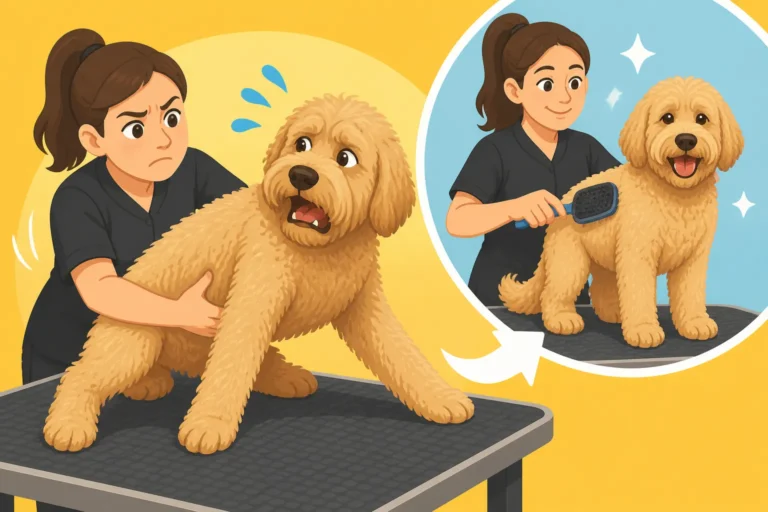
Labradoodles are renowned for their wonderful coats, which come in hair, fleece, or wool varieties. While charming, these coats are also demanding. Now, imagine maintaining two such coats. The brushing that used to take you 30 minutes every few days can easily turn into an hour or more, particularly if you have two full-sized dogs with dense fleece or wool coats. Each dog needs to be line-brushed thoroughly to prevent mats from forming, especially behind the ears, in the armpits, and around the tail. You'll likely need two sets of grooming tools – slicker brushes, de-matting rakes, and combs – just to keep up.
The routine bath, once a fun, if messy, chore, now becomes a full-scale operation involving twice the shampoo, twice the rinsing, and twice the drying time. And don't forget professional grooming appointments. If you rely on a groomer, you'll be booking back-to-back sessions or simultaneous appointments, doubling your frequency and your bill. Owners often tell stories of how the sheer volume of grooming was what they underestimated most. Before getting a second dog, consider honestly if you can commit to twice the brushing time each week, as outlined in guides like How Long Brushing a Labradoodle Takes Each Week. If one dog already pushes your limits, two will likely break them, leading to matted coats and unhappy pups.
Exercise Needs Squared
Labradoodles are active dogs that thrive on regular exercise, both physical and mental. They carry a heritage from two working breeds, the Labrador Retriever and the Poodle, and their energy levels are not to be underestimated. With two Labradoodles, you are now responsible for ensuring both dogs get adequate physical activity every single day. This isn't just a walk around the block; it's often an hour or more of vigorous play, running, or structured walks. If one dog is a keen swimmer and the other prefers fetch, you might find yourself juggling different activities or compromising.
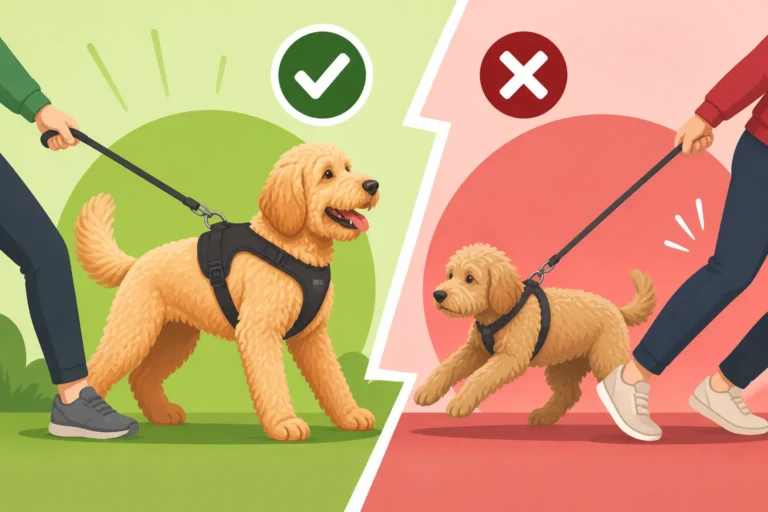
The logistics of exercising two dogs can be surprisingly complex. Walking two strong Labradoodles on leash simultaneously requires significant strength and coordination, especially if they are prone to pulling. Training them to walk nicely side-by-side takes consistency and patience, as discussed in Teaching a Sixty Pound Labradoodle Not to Pull. Off-leash play becomes a game of managing two sets of instincts, ensuring both return when called, which can be a challenge even with one dog (see Building a Recall a Labradoodle Answers Off Leash). You might find yourself needing to take them out separately for quality individual exercise or to address specific training goals. This effectively doubles your "dog walking" time. An under-exercised Labradoodle is a recipe for destructive behavior, and with two, you could have double the trouble.
Feeding Frenzies and Health Management
Feeding two Labradoodles isn't just about putting down two bowls of food. It often involves managing different dietary needs, ensuring each dog eats their own portion without guarding or gobbling up their sibling's meal. If one dog is a fast eater and the other is a grazer, you might need to feed them in separate rooms or use slow-feeder bowls for both. The cost of premium dog food, which Labradoodles often thrive on, will also double, making a noticeable dent in your budget.
Beyond the daily meals, consider the health management. Routine vet visits, vaccinations, flea and tick prevention, and annual check-ups now apply to two dogs. If one develops a chronic condition like allergies or Addison's Disease a Labradoodle Inherits From the Poodle, the medication and ongoing care costs are compounded. Even something as simple as nail trims or ear cleanings becomes a tandem task. You'll need to be vigilant for subtle changes in both dogs' behavior or appetite, which can be harder to spot when they're always together. Illness in one dog can also easily spread to the other, leading to double the recovery time and vet bills. The logistical challenge of coordinating vet appointments, administering medications, and monitoring two separate health records is a genuine consideration that needs careful planning.
Training Challenges with Multiple Pups
Training a single Labradoodle requires consistency, patience, and a good understanding of their intelligent yet sometimes mischievous nature. When you introduce a second dog, especially if it's a puppy or close in age to your first, the training dynamics shift dramatically. The idea that one dog will simply "learn from" the other often falls flat, replaced by unique challenges that can make the training process feel like an uphill battle.
Littermate Syndrome Concerns
If you're considering getting two Labradoodle puppies at the same time, or two very young dogs close in age, you absolutely need to be aware of "littermate syndrome." While the name suggests it only happens with actual littermates, it can occur with any two puppies or young dogs raised together during critical developmental periods. The symptoms include extreme co-dependence, leading to intense anxiety when separated (even briefly), poor individual development, and sometimes even aggression towards each other or other dogs due to a lack of proper socialization outside their duo.
These dogs can become so reliant on each other that they struggle to form strong bonds with their human family. They may not respond to their names or cues when their sibling is around, seeing each other as their primary source of comfort and attention. To avoid this, experts recommend raising young dogs separately for significant portions of the day, including crate training them in different rooms, walking them individually, and training them one-on-one. This intense, individualized approach completely negates the idea that two dogs are "easier" to raise. In fact, it's often significantly harder and requires a highly dedicated owner to counteract the natural tendency of puppies to bond exclusively with each other.
Individual vs. Group Training
Even outside of littermate syndrome, training two Labradoodles means you need to train them as individuals and as a pair. Each dog will have its own learning style, temperament, and areas where it excels or struggles. What works for one might not work for the other. You can't just teach a command once and expect both to learn it. Instead, you'll need to dedicate separate training sessions to each dog, focusing on their unique needs and progressing at their own pace. This means doubling your active training time, every single day.
Once they understand commands individually, you then face the challenge of teaching them to perform those commands reliably when together, with the added distraction of each other. This is often where things get tricky. One dog might perform perfectly alone but get overly excited or distracted by its sibling during a group session. You might find yourself using online resources like BAXTER & Bella, which offers structured training programs, but you'd need to adapt it for individual and then duo work. From basic obedience like "sit" and "stay" to more advanced skills, you're looking at a magnified training commitment. For example, a dog that already struggles with focus (like The Ten Month Old Labradoodle That Forgets Everything often does) will find it even harder with a furry playmate constantly vying for attention.
Recall, Distractions, and Public Etiquette
Imagine walking two Labradoodles, both eager and friendly, encountering another dog or a person with treats. The challenge of maintaining control and getting a reliable recall with one Labradoodle can be significant; with two, it’s often exponential. Dogs can egg each other on, amplify excitement, and make it far harder to regain their attention once they've fixated on a distraction. You might find yourself managing a tangle of leashes and two strong, pulling dogs, making walks less enjoyable and more of a test of strength.
Public access and etiquette also become harder. If one Labradoodle tends to jump on people (as explored in A Labradoodle That Jumps on Every Visitor), two doing it simultaneously can be overwhelming and even dangerous, especially for children or the elderly. Teaching both dogs to politely greet strangers, ignore dropped food, or settle calmly in a cafe requires meticulous, consistent training where each dog must learn these behaviors independently before being expected to perform them as a pair. The distractions are simply greater, and the likelihood of one dog influencing the other (positively or negatively) is always present. Without diligent individual and paired training, outings can quickly devolve into chaos, leading to less enjoyable experiences for everyone.
Financial and Logistical Realities of a Double Doodle Life
While the emotional rewards of having two Labradoodles can be immense, the practicalities—especially the financial and logistical aspects—are where many owners truly feel the pinch. Owning one Labradoodle is already a significant investment of time and money; doubling that commitment can profoundly impact your lifestyle and budget in ways you might not initially foresee. It's crucial to move beyond the adorable imagery and confront the cold, hard numbers and practical limitations.
Double the Vet Bills and Unexpected Costs
One of the most immediate and substantial financial impacts of having two Labradoodles is the doubling of veterinary expenses. Routine care, like annual check-ups, vaccinations, and parasite prevention, is straightforward: you pay for two instead of one. However, the real cost often comes from unexpected emergencies or chronic health issues. If one dog needs emergency surgery for bloat (a risk in deep-chested breeds like the Labradoodle's Poodle parent), or if both develop allergies requiring ongoing medication, your vet bills can skyrocket. You'll need to budget for twice the amount of potential care, and often, it feels like more than just double because problems can sometimes arise simultaneously or sequentially, creating a constant stream of expenses.
Insurance premiums will also increase significantly, as you'll need a separate policy for each dog. Even if you secure a good rate, two policies will always cost more than one. Furthermore, unexpected costs aren't limited to the vet. Training classes, which are crucial for Labradoodles, will double if you need to attend separate sessions or hire a trainer for individualized attention. Boarding or pet-sitting services, grooming appointments, and even specialized diets for specific health needs will all come at twice the price. When you factor in the potential for a full 14 years with two dogs, The Full Cost of Fourteen Years With a Labradoodle becomes a truly eye-watering figure. It's not just double; it's twice the risk, twice the potential for emergencies, and twice the ongoing maintenance.
Equipment and Space Requirements
Beyond the recurring costs, consider the initial and ongoing investment in equipment and the physical space your home offers. Everything you need for one dog, you'll need for two. This includes:
- Crates: If you crate train, you'll need two appropriately sized crates, which can take up a considerable amount of floor space. They should ideally be in separate areas initially to promote independence.
- Beds: Two comfortable, durable beds.
- Bowls: Two sets of food and water bowls. You might even consider two different feeding stations.
- Leashes, Collars, Harnesses: Two of each, ensuring they are appropriate for each dog's size and walking style.
- Toys: While they might share, you'll likely need a larger variety and quantity to prevent resource guarding and keep both engaged.
- Car travel: Does your vehicle comfortably fit two large dog crates or safety harnesses, plus any luggage or other passengers? Many family cars suddenly feel much smaller with two Labradoodles.
- Yard space: While a Labradoodle can thrive in an apartment with enough exercise, two large, energetic dogs will certainly appreciate more outdoor space for safe play and zoomies. A smaller yard might necessitate even more frequent and longer outings.
These items quickly add up, and ongoing replacements for worn-out toys, beds, and equipment will also be a doubled expense. The impact on your living space is also significant; two large dogs simply take up more room, both physically and in terms of their "stuff."
Time Management for Two Labradoodles
Perhaps the biggest logistical hurdle isn't financial, but temporal. Time is finite, and two Labradoodles demand a lot of it. The time you spend on feeding, grooming, exercise, training, play, and just plain cuddling with one dog needs to be replicated for the second. This isn't always as simple as doing everything simultaneously.
- Individual Attention: Both dogs need one-on-one time with you. This helps build their individual bond with you, reinforces separate training, and prevents over-reliance on their sibling. This might mean separate walks, separate training sessions, or individual playtimes.
- Training Consistency: As discussed, training two dogs effectively often means training them separately at first, then together. This doubles your active training hours.
- Errands and Outings: Leaving two dogs at home, or taking two out, requires more planning. If one dog has separation anxiety, leaving two can mean double the barking, as explored in Whether a Labradoodle Barks When Left. Finding pet-friendly accommodations or sitters for two can also be more challenging and expensive.
- Flexibility: Your ability to be spontaneous diminishes. A quick trip to the store might feel like a big event if you have two dogs to manage upon your return, or if you need to juggle their schedules.
Consider the ripple effect on your own life. Do you have twice the time each day to dedicate to their care and enrichment? Can you manage potentially conflicting schedules or needs? The logistical reality is that while two Labradoodles can provide a fantastic dynamic, they require an extraordinary commitment of your most precious resource: time.
The Social Dynamics Between Labradoodles
Introducing a second Labradoodle into your home can create fascinating, and sometimes challenging, social dynamics within your canine family. While the companionship can be a huge benefit, it's not always smooth sailing. Understanding how dogs establish hierarchy, manage resources, and interact with their humans in a multi-dog household is key to fostering a harmonious environment.
Sibling Rivalry and Hierarchy
Just like human siblings, two Labradoodles will naturally establish a pecking order. This hierarchy isn't always overt, but it's present, influencing everything from who gets to go through the door first to who claims the prime napping spot. While often subtle, this can sometimes manifest as mild sibling rivalry, particularly over resources like toys, treats, or even your attention. It's crucial for you, as the human leader, to manage these interactions to prevent them from escalating into genuine aggression or chronic stress for one of the dogs.
Signs of rivalry might include one dog consistently pushing the other out of the way, stealing toys, or demanding attention more forcefully. It's your role to teach both dogs that all valuable resources come from you and that good behavior is rewarded. Ensure separate feeding spots, provide plenty of individual toys, and distribute treats fairly and calmly. By consistently enforcing fair rules and intervening before conflicts arise, you can help them navigate their social structure peacefully. Remember, you're not just a dog owner; you're a pack manager now, and a fair and consistent leader is vital for two dogs to thrive together.
Managing Attention and Resources
In a household with two Labradoodles, managing attention and resources becomes a delicate balance. It's incredibly easy for one dog to dominate the attention, either because of its personality, its age, or simply because it's always the first one to demand your affection. The other dog, even if equally deserving, can sometimes get lost in the shuffle. This can lead to insecurity, behavioral issues, or a feeling of being overlooked. It's vital to make a conscious effort to give both dogs individual, dedicated one-on-one time every single day.
This means separate cuddle sessions, individual training moments, and walks where one dog gets your undivided attention. It's during these individual moments that their bond with you is strengthened, reinforcing that they are valued members of the family, not just one half of a duo. Similarly, managing resources like food, beds, and prime relaxation spots requires thought. If one dog starts guarding a particular toy or space, you need to step in to prevent it from becoming an issue. Providing ample resources, so there's always enough for both, is a good starting point. For example, ensuring you have more beds than dogs can prevent competition over sleeping areas.
The Benefits of Canine Company
Despite the challenges, there's no denying the profound benefits that canine companionship can bring to a multi-Labradoodle household. For many dogs, having a fellow canine around alleviates loneliness, provides constant mental and physical stimulation, and simply makes life more fun. They can entertain each other with games of chase, tug-of-war, or wrestling, burning off energy in ways a human often cannot replicate. This shared activity can be particularly beneficial for an active breed like the Labradoodle.
The social learning that occurs between dogs is also invaluable. A younger Labradoodle can learn appropriate social cues and play behaviors from an older, well-adjusted dog, provided the older dog is a good role model. They offer each other comfort and reassurance, especially during times when you might be busy or away. Whether a Second Dog Settles an Anxious Labradoodle is a common question, and while it's not a guaranteed solution, many owners report a noticeable decrease in anxiety-related behaviors when a dog has a companion. Seeing your two Labradoodles curled up together, grooming each other, or simply existing in peaceful proximity is one of the most rewarding aspects of having a multi-dog family, making all the extra effort feel worthwhile.
When Two Labradoodles Might Work
While the decision to get a second Labradoodle should never be taken lightly, there are scenarios where a multi-doodle household can thrive. It's less about the dogs themselves and more about the preparedness, commitment, and lifestyle of the human family. Success hinges on careful planning, realistic expectations, and a willingness to invest significantly more time, energy, and resources. It's not about finding an easier path, but about being truly ready for a richer, more demanding one.
The Age Gap Advantage
One of the most effective strategies for successfully integrating a second Labradoodle is to ensure a significant age gap between the two dogs. Bringing home a new puppy when your first Labradoodle is already a well-established, mature adult (ideally around 3-5 years old or more) can make a world of difference. An older dog is typically past the most challenging adolescent phases, is usually well-trained, and has a solid sense of self and routine. This maturity allows them to act as a more stable, patient mentor figure for the younger dog.
The older dog's established manners and calm demeanor can help teach the puppy appropriate household rules and social behaviors, sometimes even more effectively than a human can. They are less likely to compete fiercely for resources or attention with a new puppy, especially if they have a secure bond with you. This age difference also helps prevent littermate syndrome, as the new puppy has a strong individual bond with you before developing a primary bond with the older dog. It also staggers the demanding phases of puppyhood and adolescence, preventing you from simultaneously navigating two sets of boundless puppy energy, house-training mishaps, and The Ten Month Old Labradoodle That Forgets Everything adolescent moments.
Temperament Matching is Crucial
Another key to a successful two-Labradoodle household is careful temperament matching. This isn't just about finding a dog you like; it's about finding a dog whose personality genuinely complements your existing Labradoodle's. If your current dog is shy or anxious, a boisterous, overly confident puppy might overwhelm them. Conversely, if your dog is a high-energy "life of the party," a very timid newcomer might struggle to keep up or feel comfortable.
When choosing a second dog, whether a puppy or an adult rescue, spend time observing them carefully. If possible, arrange supervised "meet and greets" between your current dog and the potential new family member. Look for signs of respectful play, appropriate deference, and mutual curiosity, rather than immediate dominance or fear. A good breeder or rescue organization will be able to help you assess temperaments and recommend a suitable match. The goal is to create a harmonious duo where their personalities balance each other, avoiding clashes that could lead to stress or behavioral problems for either dog. A calm, observant temperament in the new dog can often be a good choice, as it allows them to adapt to the existing dynamic without immediately disrupting it.
When You're Truly Ready for Two
Ultimately, the most important factor in whether two Labradoodles are "easier" (or at least manageable) than one is you. Are you truly ready for the amplified commitment? This involves a brutally honest assessment of your lifestyle, finances, and emotional bandwidth.
Ask yourself:
- Time: Do you have not just double, but perhaps even triple the amount of time you currently spend on your single Labradoodle, to dedicate to daily exercise, grooming, training, and individual attention for two? Can you commit to two separate training sessions a day, if needed?
- Finances: Have you thoroughly budgeted for double the food, vet care (including emergencies), grooming, insurance, and equipment for the next 10-15 years? Can you absorb unexpected costs without financial strain?
- Space: Does your home and yard comfortably accommodate two active, medium to large-sized dogs?
- Patience: Are you prepared for potential sibling squabbles, synchronized mischief, and the occasional feeling of being overwhelmed? Are you confident in your ability to be a fair, consistent, and calm leader for two dogs?
- Experience: Do you have solid experience training and living with Labradoodles or similarly intelligent, energetic breeds? First-time dog owners, while often drawn to Labradoodles (see Why So Many Labradoodles Go to First Time Owners), might find two an overwhelming leap.
If you can confidently answer yes to these questions, and if your motivation is truly to enrich your own life and the lives of both dogs with double the love and double the fun, rather than seeking an "easier" solution, then you might just be ready for the joyful chaos of a two-Labradoodle household.
| Aspect of Ownership | One Labradoodle (Estimate) | Two Labradoodles (Estimate) | Key Considerations for Two |
|---|---|---|---|
| Grooming Time (Weekly) | 2-3 hours | 4-6 hours+ | Requires dedicated, consistent effort; double the tools. |
| Exercise Time (Daily) | 1-2 hours | 2-3 hours+ | May need separate walks/play; managing two strong dogs. |
| Training Time (Daily) | 30 mins – 1 hour | 1-2 hours (individual + group) | Crucial to train individually first to prevent co-dependence. |
| Food Costs (Monthly) | Moderate | Double | Potential for different dietary needs or feeding strategies. |
| Vet Costs (Annual) | Moderate | Double+ (risk of concurrent issues) | Emergency fund for two; separate insurance policies. |
| Equipment Costs (Initial) | Moderate | Double | Crates, beds, leashes, toys, car safety. |
| Attention Needs | Significant, individual | Significant, individual (x2) and group | Must ensure one-on-one time for both dogs daily. |
| Housebreaking | Challenging at first | Significantly more challenging (if two pups) | Avoid littermate syndrome by separate training/supervision. |
| Travel/Boarding | Manageable | More complex and expensive | Finding suitable care for two can be difficult. |
Disclaimer
This article is for general informational purposes only and does not constitute professional advice. Laws, prices and regulations vary by location and change over time. Consult a qualified professional for guidance on your specific situation.