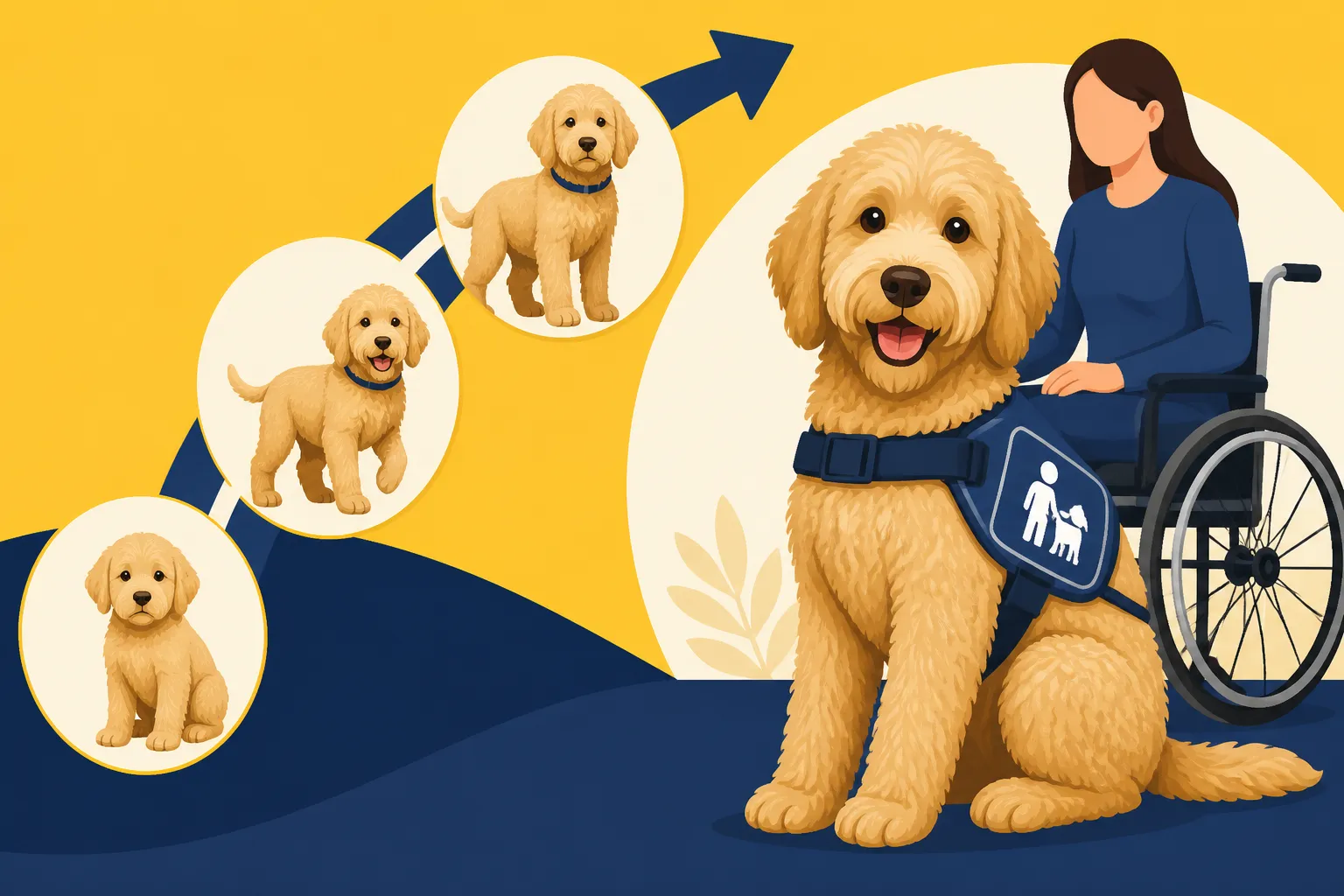
The Age a Service Labradoodle Starts Formal Work
It's incredibly exciting to think about a Labradoodle entering the world of service work. For many prospective owners and aspiring trainers, understanding the timeline for when a service Labradoodle truly "starts formal work" can feel a bit murky, leading to understandable impatience or unrealistic expectations. It's not a simple flip of a switch; instead, it's a carefully orchestrated journey from a bouncy puppy to a highly skilled and mature working partner, and getting a realistic grasp of this process is key to success. This guide will clarify the typical age ranges and the significant milestones your Labradoodle will pass on its way to becoming a fully fledged service dog, helping you navigate this incredible path with informed patience.
Understanding the Journey: From Puppy to Working Service Dog
The path to becoming a working service dog is a long and winding one, built on a foundation laid during puppyhood and meticulously developed throughout adolescence. It's not just about teaching commands; it's about shaping a resilient, calm, and intelligent partner. You can’t rush true maturity, and for a service dog, maturity means reliability under pressure.
The Foundation: Puppyhood and Early Socialization
Believe it or not, the "formal work" of a service Labradoodle truly begins the moment they open their eyes. From a very young age, usually starting around 8 weeks when they come home, puppies selected for service work embark on a rigorous program of socialization and foundational training. This isn't about teaching complex tasks yet, but rather exposing them to every conceivable sound, sight, texture, and social interaction they might encounter in public life. Think about busy grocery stores, crowded parks, medical offices, various floor textures, loud noises, and even different types of people, from children to those using mobility aids. Every positive exposure builds confidence and prevents fear.
During this critical period, which typically runs from 8 weeks to about 6-8 months, puppies are also learning crucial basic manners. This includes house training, crate training, polite leash walking, and fundamental commands like sit, stay, down, and come. The goal is to instill a calm demeanor and a strong desire to please, setting the stage for more advanced lessons. It's a full-time job, often requiring dedicated volunteer raisers or professional puppy development staff who understand the nuances of early canine learning. Consistency during these early months is paramount, ensuring the Labradoodle develops into a well-adjusted and stable individual, which is the bedrock for any future service role.
The Adolescent Phase: Refining Skills and Behavior
As your Labradoodle transitions from puppyhood into adolescence, roughly between 6 months and 18 months of age, their training takes a significant step up. This is often the most challenging, yet crucial, phase. While puppies are adorable and forgiving, adolescent dogs, much like human teenagers, tend to "forget" everything they've learned as hormones surge and independent thinking kicks in. It's a time of testing boundaries and pushing limits, which can be frustrating for trainers, but it's also where true grit and reliability are forged. The Ten Month Old Labradoodle That Forgets Everything is a very real phenomenon!
During this phase, the focus shifts to refining basic obedience under increasing distractions and introducing specific service tasks. For example, a future mobility assistance dog might start practicing retrieving dropped items, while a medical alert dog begins scent discrimination work. They learn to ignore tempting smells, loud noises, and other dogs or people in public. This is where patience truly becomes a virtue. Many programs utilize public access training during this stage, carefully introducing the adolescent Labradoodle to public environments under strict supervision. The aim is to generalize their behaviors, so a "sit" means "sit" whether they are in a quiet living room or a bustling airport terminal. This period also allows trainers to evaluate the dog's temperament, drive, and suitability for specific service roles, as some dogs might excel in one area but not another.
The Transition to Formal Training
The term "formal training" is often used loosely, but for service dogs, it typically refers to the intensive, structured instruction aimed at teaching highly specialized tasks and achieving public access reliability. After the foundational puppy and adolescent phases, a Labradoodle will usually transition into more dedicated, focused service dog training around 12 to 18 months of age. This is when their minds are developed enough to handle complex concepts and their bodies are mature enough for physically demanding tasks without risking injury.
This transition marks the point where the dog moves beyond general obedience and into a curriculum tailored precisely to their future human partner's needs. If they’re going to be a guide dog, they’ll spend countless hours navigating obstacles, responding to traffic, and guiding their handler. If they’re a hearing dog, they’ll learn to alert to specific sounds. This stage is demanding, often involving many months, sometimes even a year or more, of daily, intensive training sessions with professional trainers. The emotional maturity of the Labradoodle is key here; they need to be able to focus, problem-solve, and maintain a calm demeanor over extended periods and in novel environments.
Key Milestones and Age Ranges for Service Dog Work
Pinpointing an exact age when a Labradoodle "starts formal work" is tricky because the journey has many stages. However, we can look at key developmental milestones that dictate when certain types of training become appropriate and effective. These aren't rigid rules but general guidelines based on canine development and the demands of service work.
Initial Assessment and Basic Obedience (Puppy/Young Dog)
The very beginning of a service dog's career, even if it's not "formal work" in the task-specific sense, starts with rigorous assessment and basic obedience. Puppies as young as 8-10 weeks often begin their journey in what are sometimes called "puppy raiser" programs or initial assessment phases. During this time, which typically lasts until 6-12 months, the focus is entirely on foundational behaviors, temperament shaping, and extensive socialization. They're learning things like proper house manners, leash skills, coming when called, sitting, staying, and laying down.
The goal isn't to make them perform complex tasks, but to build a robust, resilient temperament and a strong bond with their human. They are exposed to a myriad of environments – from bustling city streets to quiet doctor's offices – all designed to build confidence and prevent fear responses later on. If a Labradoodle doesn't pass these early stages with flying colors, demonstrating a stable temperament and an eagerness to learn, they might be "career changed" out of service work. This early period is absolutely non-negotiable for future success, laying the emotional and behavioral groundwork for everything that follows. Temperament Testing a Labradoodle Puppy for Service often begins around this age.
Advanced Task Training (Adolescent/Adult)
This is typically where most people envision "formal work" truly kicking in. Advanced task training, the specific skills that define a service dog's role, generally commences when the Labradoodle is between 12 and 18 months old. By this age, their brains have matured enough to grasp more intricate concepts, and their physical bodies are largely developed, making them capable of performing tasks that might involve strength or fine motor skills. Trying to teach these complex tasks too early can lead to frustration for both dog and handler, and potentially incorrect learning.
For example, a Labradoodle destined to be a mobility assistance dog might start learning how to open doors, retrieve specific items by name, or even brace for balance. A medical alert dog would be fine-tuning scent detection. This phase is characterized by intense, repetitive training sessions, often in controlled environments before gradually moving to more distracting settings. Trainers meticulously break down tasks into tiny, achievable steps, using positive reinforcement methods to build accuracy and reliability. This is a commitment that requires significant time, patience, and often, the guidance of experienced service dog trainers.
Public Access and Certification Readiness (Young Adult)
The culmination of all this effort is public access training and the readiness for certification, which usually occurs when a Labradoodle is a young adult, typically between 18 months and 2 years old, or sometimes even older. "Certification readiness" doesn't mean a dog is instantly certified (as formal certification requirements vary greatly and often don't exist in a governmental sense for owner-trained dogs in many regions), but rather that they are consistently performing their tasks reliably in public and demonstrating impeccable public manners. What Public Access Training Asks of a Labradoodle is enormous, and not all dogs are cut out for it.
During this stage, the Labradoodle is spending significant time practicing in real-world public settings, from grocery stores to airports, demonstrating calmness, focus, and responsiveness to their handler's commands. They must ignore distractions, not solicit attention from strangers, and perform their tasks on cue, even in novel and chaotic environments. This phase is crucial for ensuring the dog is not only capable of performing its tasks but can do so safely and appropriately in any situation. For many programs, this also involves a final "public access test" to ensure the dog meets the highest standards of behavior and task performance before being placed with a client or beginning full-time work.
Here’s a simplified breakdown of the general timeline for a Labradoodle becoming a service dog:
| Phase | Approximate Age Range | Primary Focus | Key Milestones |
|---|---|---|---|
| Puppy Development | 8 weeks – 6 months | Socialization, basic manners, confidence building, foundational exposure | House training, crate training, basic obedience (sit, stay), exposure to diverse environments |
| Adolescent Training | 6 months – 18 months | Refinement of obedience, introduction to pre-tasks, distraction proofing, temperament evaluation | Reliable recall, polite leash walking, advanced obedience, sustained focus, early task concepts |
| Advanced Task Training | 12 months – 24 months (or more) | Intensive instruction in specific service tasks, public access skills | Consistent task performance, ignoring distractions, public etiquette, handler-specific training |
| Working Service Dog | 18 months – 2 years + | Full deployment in service role, continued maintenance of skills and public manners | Reliable task execution in all environments, handler dependency, ongoing training as needed |
Factors Influencing a Labradoodle's Readiness for Service Work
While general timelines exist, every Labradoodle is an individual, and several factors can significantly influence how quickly or slowly they mature into a working service dog. It's not a race, and pushing a dog beyond its natural readiness can be detrimental to its long-term success and well-being.
Individual Temperament and Maturity
This is arguably the most significant factor. Some Labradoodles are naturally more calm, focused, and resilient from a young age, displaying the inherent "softness" and biddability that makes them excellent candidates for service work. Others, even from the same litter, might be more easily distracted, overly enthusiastic, or take longer to mature emotionally. A Labradoodle’s temperament, which is a blend of their genetics and early experiences, dictates how well they handle stress, new environments, and the intense focus required for tasks. Whether an Australian Labradoodle Trains Better for Service might be something you're asking, but ultimately, individual personality is key.
A dog needs to be emotionally robust enough to handle the constant pressure and novel situations that public access demands. This means not being easily startled, not showing aggression or fear, and being able to "switch off" when not actively working. Some Labradoodles simply need more time to develop this level of emotional maturity. A good trainer or program understands this and adjusts the pace of training to suit the individual dog, rather than adhering to a rigid schedule. It's far better to wait a few extra months for a truly ready dog than to rush one that isn't quite there, potentially leading to burnout or failure.
Training Program Intensity and Duration
The intensity and structure of the training program itself play a huge role in how quickly a Labradoodle progresses. Dogs enrolled in full-time, professional service dog programs, where they receive daily, dedicated instruction from experienced trainers, will naturally progress faster than a dog being owner-trained part-time. These programs often have dedicated facilities, highly structured curricula, and a team of experts who can address challenges efficiently.
For owner-trainers, the timeline can be considerably longer. Juggling work, family life, and the demanding training schedule for a service dog means progress might be slower, but it can still be incredibly rewarding. Resources like online courses, such as those offered by BAXTER & Bella, can provide structure and guidance for owner-trainers, helping them navigate the complexities of training. However, even with excellent resources, the sheer volume of training hours and public access exposure required means it often takes longer. The number of hours dedicated to training each week, the consistency of the training, and the expertise of the trainers involved all directly impact how soon a Labradoodle is ready for formal work.
Type of Service Role
Not all service dog roles demand the same level of cognitive or physical maturity at the exact same age. A hearing alert dog, for instance, might be able to reliably perform its tasks (alerting to specific sounds) at a slightly younger age than a mobility assistance dog, which might require more physical development and coordination for bracing or retrieving heavier objects. Guide dogs, with their highly complex navigation tasks and immense responsibility, typically require the most maturity and often start their formal "working" phase closer to two years old, sometimes even later.
Consider the complexity and the physical demands. A dog learning to pick up a dropped key is different from a dog learning to guide a person through a busy intersection or provide deep pressure therapy during a panic attack. The more intricate the tasks, or the more critical the safety implications, the more comprehensive the training and the greater the emotional and physical maturity required. This is why many organizations carefully match dogs to specific roles based on their individual aptitudes and developmental stage, ensuring the best possible partnership.
Life as a Working Service Labradoodle
Once a Labradoodle reaches the age and stage where it begins its "formal work," it embarks on a fulfilling, yet demanding, career. This isn't just a job; it's a partnership, and understanding what this entails helps frame the entire journey.
The Definition of "Formal Work"
When we talk about a service Labradoodle starting "formal work," we're generally referring to the point where the dog is consistently performing its trained tasks for its handler in real-world public and private settings, making a tangible difference in their handler's life. This means the dog has successfully completed its intensive training, passed any necessary public access tests, and has been officially "graduated" by a program or deemed competent by an owner-trainer. This isn't just about being well-behaved; it's about active, purposeful task performance.
For example, a Labradoodle assisting a visually impaired person would be actively guiding them, avoiding obstacles, and stopping at curbs. A dog for a person with diabetes might be alerting to blood sugar changes throughout the day and night. The dog is no longer "in training" in the sense of learning new foundational skills, but rather applying and perfecting the skills it has already mastered. This stage often involves a "team training" period where the dog and its human partner learn to work together seamlessly, building that essential bond and communication before going out into the world as a fully operational team. It's a true collaboration, where the Labradoodle's dedication and training come to full fruition.
Maintaining Skills Throughout Their Career
Just because a Labradoodle has started its formal service work doesn't mean training ends. Far from it! A working service dog, much like any highly skilled professional, requires ongoing practice and refreshers to maintain its proficiency and public access manners. This often involves regular "tune-up" sessions with their handler, practicing tasks in different environments, and reinforcing good behavior. Handlers are responsible for ensuring their dog remains sharp, responsive, and always ready to perform.
Think of it like an athlete or a musician; daily practice is key to staying at the top of their game. For service dogs, this might mean practicing retrieves, revisiting public access etiquette, or ensuring their alerts are still clear and consistent. This continuous engagement helps prevent skill fade and ensures the dog remains confident and comfortable in its role. Moreover, as the handler's needs might evolve or as new situations arise, minor adjustments or additions to the dog's skill set might be required. Investing in durable, high-quality training aids, available on platforms like Amazon, for these ongoing practice sessions can be incredibly beneficial. The working life of a service Labradoodle is a dynamic partnership that thrives on consistent effort and mutual understanding, usually lasting The Twelve to Fifteen Years a Labradoodle Lives.
Disclaimer
This article is for general informational purposes only and does not constitute professional advice. Laws, prices and regulations vary by location and change over time. Consult a qualified professional for guidance on your specific situation.