Whether a Labradoodle Ever Truly Settles Down
It’s a common, whispered frustration among Labradoodle owners, especially when you’re knee-deep in puppy shenanigans or navigating the wild ride of adolescence: "Will my Labradoodle ever actually calm down?" It can feel like you’ve adopted a furry, perpetual motion machine, and the dream of a serene, settled companion seems miles away. This guide is here to shed light on your Labradoodle's energy journey, from their bouncy puppy days to their hopefully more tranquil adult years, offering practical insights and strategies to help them, and you, find a sense of peace.
The Whirlwind of Labradoodle Puppyhood
Bringing home a Labradoodle puppy is often a joyous, albeit exhausting, experience. These little bundles of fluff come equipped with boundless energy, sharp puppy teeth, and an insatiable curiosity about the world around them. It’s easy to feel overwhelmed, wondering if this non-stop energy is their permanent state.
Early Days: Energy, Enthusiasm, and Exploration
From eight weeks to about six months, your Labradoodle puppy is a sponge, absorbing everything and experiencing the world with unbridled enthusiasm. They'll chew, dig, bounce, and sprint, often seemingly without an off-switch. This isn't naughtiness; it's simply puppyhood! Their bodies are developing rapidly, and their minds are on overdrive. They need appropriate outlets for this energy, or they'll invent their own, which might not always align with your household rules. Think of a tiny furry explorer, driven by instinct and curiosity. A common mistake new owners make is thinking a tired puppy is a quiet puppy, then realizing their dog just gets more hyper when overtired. It's a fine balance.
During this stage, consistent training is paramount. Short, positive training sessions, mental enrichment games, and supervised play are far more effective than trying to "run the puppy out" for hours. Over-exercising a growing puppy can actually be detrimental to their developing joints, something we delve into in The Exercise Limit for a Growing Labradoodle. Instead, focus on channeling their energy wisely. Puzzle feeders, snuffle mats, and appropriate chew toys (you can find a fantastic selection on Amazon, often with reviews that mention durability for strong chewers) can provide valuable mental stimulation that tires them out just as much as physical activity.
The Myth of the "Naturally Calm" Puppy
While some individual Labradoodle puppies might be a tad mellower than others, it's a rare day you'll find one that's truly "naturally calm" in the way an adult dog might be. This breed, a mix of the active Labrador Retriever and the intelligent Poodle, carries genes for working, retrieving, and high levels of engagement. Expecting a zen-like puppy is setting yourself up for disappointment. Instead, embrace the energy and see it as an opportunity for bonding and training.
Their high energy is often coupled with a surprising sensitivity. They respond best to positive reinforcement, gentle guidance, and clear boundaries. Trying to suppress their natural enthusiasm with harsh corrections can backfire, leading to anxiety or a breakdown in your relationship. Patience is your greatest tool during these formative months.
Navigating the Adolescent Rollercoaster: When Energy Peaks (Again!)
Just when you think you're getting a handle on your Labradoodle's puppy energy, adolescence hits. This phase, typically from around 6-8 months up to 18-24 months, can feel like a step backward, often catching owners completely off guard. The sweet, albeit energetic, puppy you knew seems to have been replaced by a rebellious teenager with selective hearing and an even more intense burst of energy.
The Teenage Rebellion: Forgetting Everything They Knew
Adolescence in dogs is remarkably similar to human teenage years. Hormones are raging, brains are still developing, and they're testing boundaries. That perfect recall you thought you had? It might disappear the moment a squirrel crosses their path. The house training that was so solid? Suddenly, there might be "accidents" again. This isn't spite; it's a normal part of their brain development, where they're literally reorganizing and solidifying neural pathways. You might recognize this phenomenon if you've ever thought, "My ten-month-old Labradoodle forgets everything!" which is a real struggle for many owners, and exactly why we cover it in The Ten Month Old Labradoodle That Forgets Everything.
During this period, consistency becomes even more critical. Revisit basic commands, practice them in new environments, and keep training sessions fun and engaging. Their physical endurance is now much greater than when they were puppies, so they'll need more structured exercise. Long walks, hikes, safe off-leash play in secure areas, or even dog sports can help burn off steam.
The True Challenge: Mental vs. Physical Exercise
Many owners mistake physical exercise for mental stimulation. While a long run will certainly tire your Labradoodle's body, it might not fully satisfy their intelligent Poodle brain. This is where you might find your adolescent Labradoodle resorting to destructive behaviors or excessive barking out of sheer boredom, even after a romp in the park.
Incorporate activities that challenge their minds. Scent work, advanced obedience, agility classes, or even just regular 'find it' games with their kibble can be incredibly beneficial. Think about activities that tap into their natural retrieving drive, a trait they get from their Labrador side. Finding new ways to engage their mind will help them be more settled indoors. Online training platforms, like BAXTER & Bella, can be invaluable during this stage, offering structured curricula and support to guide you through the ups and downs of adolescence and beyond.
| Labradoodle Life Stage | Typical Energy Level (Relative) | Key Challenges for Calmness | Recommended Strategies for Calmness |
|---|---|---|---|
| Puppy (8 wks – 6 mos) | Very High, bursts of energy | Over-stimulation, teething, short attention span | Crate training, short play sessions, puzzle toys, structured naps, early manners training |
| Adolescent (6 mos – 2 yrs) | High, sometimes erratic, testing boundaries | "Forgetting" training, increased physical stamina, hormonal changes | Consistent training, increased physical exercise, mental enrichment (scent work, obedience), managing freedom |
| Young Adult (2 – 5 yrs) | Moderate to High, more consistent | Needs purpose, can become destructive if bored | Regular routine, advanced training, dog sports, prolonged mental games, structured downtime |
| Mature Adult (5 – 8 yrs) | Moderate, more predictable | Weight gain if activity drops, joint health | Maintained exercise, mental stimulation, regular vet checks, comfortable resting spots |
| Senior (8+ yrs) | Lower, varied | Mobility issues, cognitive decline, aches/pains | Gentle exercise, soft beds, joint supplements, mental games adapted for age, patience |
Maturity: The Path to a Truly Settled Labradoodle
So, when does a Labradoodle actually "settle down"? For most Labradoodles, true maturity, where their energy levels become more consistent and their ability to settle significantly improves, typically begins between 18 months and 3 years of age. Some may take a little longer, especially larger or particularly high-drive individuals. This isn't a switch that flips overnight, but rather a gradual evolution.
What "Settled" Really Means for a Labradoodle
It's important to adjust your definition of "settled." A Labradoodle isn't likely to become a sedentary couch potato. They retain their intelligent, active, and social nature throughout their lives. "Settled" for a Labradoodle means they can:
- Relax Indoors: After appropriate exercise and mental stimulation, they can calmly lie down, chew a toy, or nap without constantly seeking attention or mischief.
- Control Impulses: They can resist the urge to jump on guests, counter surf, or bark excessively when someone walks past the window. A Labradoodle That Jumps on Every Visitor or A Labradoodle That Counter Surfs are common issues that can improve with maturity and consistent training.
- Be Responsive: They maintain their training, responding reliably to commands even with distractions.
- Manage Alone Time: They are comfortable being left alone for reasonable periods without displaying separation anxiety. This is a big one for the "Velcro" Labradoodle and is covered in depth in The Alone Time a Velcro Labradoodle Can Build To.
A truly settled Labradoodle is one that has learned how to be calm, rather than one that is simply born calm. It's a skill that you, as their owner, play a huge role in teaching.
The Impact of Early Training and Socialization
The foundation you lay during puppyhood and adolescence profoundly impacts how "settled" your adult Labradoodle becomes. Consistent positive reinforcement, early exposure to various sights, sounds, people, and other dogs (positive socialization), and teaching them an "off-switch" from a young age are all critical. A Labradoodle who has never learned to be bored or to relax quietly will struggle to do so as an adult.
Conversely, a Labradoodle who has been over-stimulated, constantly entertained, or not given clear boundaries might struggle more to settle, even into adulthood. They learn that constant activity or demand barking gets them attention. It's never too late to start working on these skills, but it's undoubtedly easier to instill them early on.
Practical Strategies for Cultivating Calmness
If you're still waiting for your Labradoodle to 'turn off', don't despair! There are many proactive steps you can take to help them develop into a calm, well-adjusted companion.
Establishing a Routine and Predictability
Dogs thrive on routine. A predictable schedule for feeding, potty breaks, exercise, and training helps your Labradoodle feel secure and understand what to expect. This predictability can significantly reduce anxiety and over-excitement because they know their needs will be met. For instance, if they know their big walk is always after breakfast, they might be calmer leading up to it, rather than constantly pestering you.
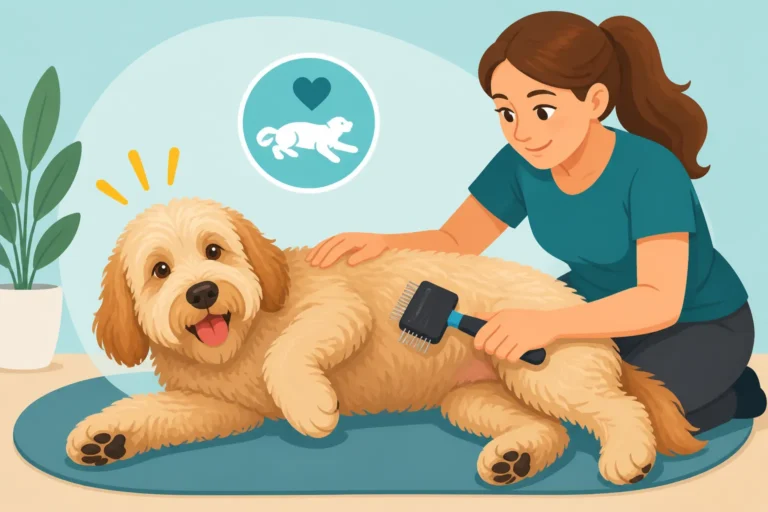
Create specific times for high-energy activities and equally specific times for quiet, calm activities. This helps them learn to differentiate. For example, after an energetic play session, transition immediately into a calm activity like a chew toy or a short, quiet training session for Teaching a Labradoodle to Lie Still for a Ninety Minute Groom.
Teaching the "Off-Switch"
One of the most valuable things you can teach your Labradoodle is an "off-switch" – the ability to settle down even when exciting things are happening. This isn't about crushing their spirit but teaching them self-control.
- Mat Work/Place Training: Teach your Labradoodle to go to a designated mat or bed and stay there until released. Start with short durations and gradually increase the time and distractions. This gives them a clear "job" to do when you need them to be calm, such as during meal prep or when guests arrive.
- Capturing Calmness: Reward your Labradoodle whenever you see them spontaneously lying down, relaxing, or being quiet. Toss a small treat their way without making a big deal of it. This teaches them that being calm is rewarding.
- Enrichment for Quiet Time: Provide long-lasting, calming enrichment during quiet periods, such as a frozen Kong, a bully stick, or a safe chew toy. These keep them occupied in a relaxed, non-destructive way. Many excellent, durable options can be found on Amazon.
The Power of Mental Stimulation and Enrichment
As mentioned, mental exercise is just as important, if not more so, than physical exercise for a Labradoodle. Their intelligent Poodle heritage means they need to use their brains!
- Puzzle Toys: Rotate a variety of puzzle toys that dispense treats, requiring your dog to figure out how to get the reward.
- Scent Games: Hide treats around the house or yard and encourage your Labradoodle to "find it." This taps into their natural sniffing instincts and is wonderfully tiring.
- Training Challenges: Don't stop at basic obedience. Teach them new tricks, work on advanced obedience, or try a dog sport like Rally Obedience or Canine Good Citizen preparation. Online programs like BAXTER & Bella offer comprehensive guides for these kinds of advanced challenges, helping you keep their minds sharp and engaged.
A mentally satisfied Labradoodle is often a calmer Labradoodle. They've had a "job" to do, and now they can truly rest.
Appropriate Exercise, Not Excessive Exercise
It’s tempting to try to exhaust a high-energy dog, but excessive physical exercise can sometimes backfire, creating an athlete who constantly needs more and more to feel satisfied. Focus on appropriate exercise. This means a mix of:
- Structured Walks: Daily walks where they learn to heel politely, not just sniff every blade of grass.
- Off-Leash Play: Opportunities to run freely in a safe, secure area, playing fetch or interacting positively with other dogs.
- Short Bursts of Intense Activity: A few minutes of vigorous fetch or tug-of-war can be more tiring than a long, leisurely stroll.
- Variety: Keep exercise interesting! Don't do the same thing every day. Explore new trails, visit different dog parks, or play new games.
The goal is to meet their needs, not constantly push their physical limits. For more insights into how much activity is right for them, consider reading The Exercise a Labradoodle Needs Before It Behaves.
The Long View: Patience and Consistency
Ultimately, the question of whether a Labradoodle ever truly settles down is less about a magical age and more about consistent effort, understanding their breed traits, and dedicated training. They are not naturally born calm in the way some other breeds might be; rather, they are intelligent, active companions who need guidance and purposeful engagement to channel their energy constructively.
With patience, a clear routine, plenty of mental stimulation, and the right kind of physical exercise, your Labradoodle will mature into a wonderful, settled family member. It’s a journey, not a destination, but the rewards of a well-adjusted Labradoodle are absolutely worth every step of the way.
Disclaimer
This article is for general informational purposes only and does not constitute professional advice. Laws, prices and regulations vary by location and change over time. Consult a qualified professional for guidance on your specific situation.