Whether a Labradoodle Has the Nose for Scent Work
Many Labradoodle owners find themselves wondering if their energetic, intelligent companion could excel at something more than just fetching a ball. You see those videos of dogs tracking scents with incredible focus, and a little voice in your head asks, "Could my Labradoodle do that?" It’s a common thought, especially with their mixed heritage, and it often leads to questions about their natural abilities. This guide is here to unravel whether your Labradoodle truly has the nose for scent work, what that even means, and how you can explore this incredibly enriching activity with them.
Unpacking the Labradoodle's Scenting Lineage
When considering a Labradoodle's potential for scent work, it's essential to look at the powerful genetic legacies they inherit from their parent breeds: the Labrador Retriever and the Poodle. Each contributes unique strengths that, when combined, can make for a formidable scenting partner. Understanding these foundations helps you appreciate the deep-seated instincts at play.
The Labrador Retriever's Olfactory Prowess
Labradors are famously known for their incredible noses, originally bred to retrieve game from both land and water. This means they are designed to follow a scent trail, often a faint one, through various environments, sometimes even over water. Their drive to find and bring back is deeply ingrained, making them excellent candidates for detection work, tracking, and all sorts of scent-based activities. When you consider a Labradoodle, you're tapping into generations of this keen sense of smell and the motivation to use it. Many Labradors live for the chance to put their noses to work, viewing it as the ultimate puzzle.
This strong genetic predisposition is a huge advantage. It's not just about sniffing; it's about processing that information, identifying specific odors, and following them relentlessly. Think about how a Labrador can pinpoint a duck that fell into reeds fifty yards away, or track a deer through dense brush. This isn't just luck; it's a testament to their refined olfactory system and their desire to complete a task given to them. For your Labradoodle, this translates into a potential goldmine of natural talent waiting to be unleashed, often showing up as an intense interest in smells on walks.
So, when people ask if a Labradoodle has a good nose, the answer is often a resounding "yes" right out of the gate, thanks largely to their Labrador heritage. This doesn't guarantee your individual dog will be a scent detection superstar, but it certainly loads the dice in your favor. It provides a foundational drive and capability that you won't find in many other breeds. You might already see glimpses of this when your Labradoodle sniffs a patch of grass for what feels like an eternity, completely engrossed in the world of odors, demonstrating The Retrieving Drive a Labradoodle Gets From the Labrador.
The Poodle's Often Underestimated Intelligence and Focus
While the Labrador brings the raw scenting power, don't underestimate the Poodle's contribution. Poodles are incredibly intelligent, highly trainable, and possess a remarkable ability to focus, especially when engaged in a task they enjoy. Historically, Standard Poodles were retrieving water dogs, which means they also had to use their noses to locate fallen birds. This isn't just a pretty show dog; it's a working breed with its own legacy of scenting and retrieving. Their brainpower means they can quickly grasp the rules of scent games and problem-solve complex scent puzzles.
The Poodle's keen intellect allows them to learn sophisticated scent detection protocols, distinguishing between target scents and distractions. This is crucial for competitive scent work or practical applications like search and rescue. A dog might have a great nose, but if they lack the mental acuity to understand the game or stay focused despite environmental distractions, their potential is limited. A Labradoodle benefits from this Poodle intelligence, making them adaptable and eager students in the world of scent. They often excel at tasks that require both physical exertion and mental engagement.
What's more, the Poodle's desire to please and their sensitivity make them very responsive to positive reinforcement training, which is the cornerstone of effective scent work. They often thrive on the mental challenge, and their focus can be surprisingly intense. This combination of a powerful nose from the Labrador and the sharp, trainable mind of the Poodle makes the Labradoodle a truly promising candidate for scent work. It’s a blend that offers both the raw talent and the mental horsepower needed to succeed. Many owners are often surprised by What Nobody Tells a First Time Labradoodle Buyer about their dog's intelligence, which is a blend of both parent breeds.
Understanding What "Scent Work" Really Means for Your Dog
The phrase "scent work" can conjure up different images for different people. For some, it's police dogs tracking criminals; for others, it's a simple game of hide-and-seek with a treat. But for your Labradoodle, and in the context of canine activities, it's a rich and varied field that goes far beyond casual sniffing.
Beyond Just Sniffing: The Nuances of Detection and Discrimination
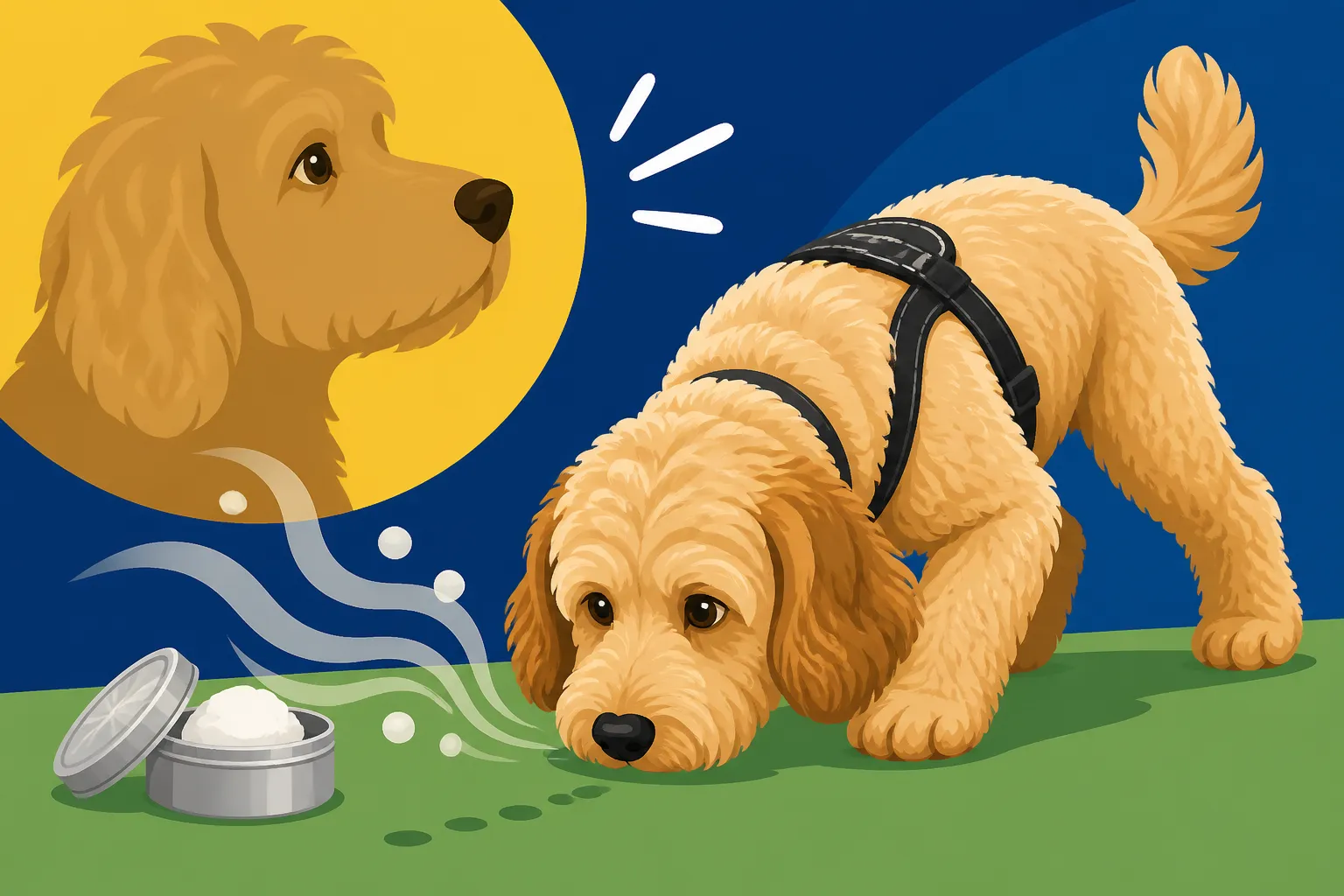
When we talk about scent work, it's easy to picture a dog just sniffing around, but it's so much more intricate than that. True scent work involves detection – finding a specific odor, often hidden – and discrimination – telling that target odor apart from all the other smells in the environment. It's not about being overwhelmed by scents; it's about sifting through them with purpose. Imagine trying to find a single, specific spice in a fully stocked kitchen, blindfolded, relying only on smell. That's the challenge we ask of our dogs, and they do it with astounding precision.
Detection can range from simple hide-and-seek games with treats in your living room to highly specialized tasks like finding specific essential oils in competitive canine scent sports. The dog learns to recognize a particular odor, indicates its location, and gets rewarded. This process builds immense focus and drive. It taps into their natural instincts in a way that a simple walk might not, providing profound mental enrichment. Your Labradoodle isn't just smelling; they're actively working to solve a puzzle.
Discrimination is where the Poodle's intelligence really shines through in the Labradoodle. It means teaching your dog that only this smell is important, and all those other interesting smells – the cat next door, the leftover pizza, the squirrel that ran by five minutes ago – are irrelevant to the task at hand. This level of focus and selective attention takes training, but with a Labradoodle's combined heritage, it's often a very rewarding process for both dog and owner. It moves beyond rudimentary sniffing to a sophisticated partnership, showing Whether the Poodle or the Labrador Shows Up in Training in different ways.
Different Avenues of Canine Scent Sports and Activities
The world of canine scent work offers a diverse range of activities, each with its own charm and challenge. Nosework (or Scent Work, as it's often called in North America) is perhaps the most accessible entry point. It's inspired by professional detection dogs and involves teaching your dog to find specific target odors, usually essential oils like birch, anise, or clove, hidden in various environments (containers, interiors, exteriors, vehicles). It's incredibly fun and confidence-building. Many people start with basic kits available on Amazon that include the essential oils and scent vessels.
Then there's tracking, which is more about following a human scent trail across different terrains over a distance. This is much closer to what search and rescue dogs do, requiring stamina, focus, and adherence to a laid track. For a Labradoodle with its strong retrieving drive, this could be a natural fit. Another option is K9 Scent Detection, which often involves more rigorous training similar to professional working dogs, sometimes even targeting specific substances like narcotics or accelerants, though this is less common for pet owners.
Each of these avenues offers unique rewards and challenges. Some dogs love the methodical nature of tracking, while others thrive on the quick problem-solving of finding hidden odors in a nosework trial. The beauty is that there's likely a scent activity that will perfectly suit your Labradoodle's personality and your lifestyle. It’s not a one-size-fits-all endeavor, and exploring different options can be part of the fun. Your Labradoodle’s intelligence, a trait often underestimated, means they can likely tackle many of these.
Spotting the Scenting Star: Signs Your Labradoodle Has the Knack
You might be wondering if your Labradoodle specifically shows any natural inclination towards scent work. The good news is, many of the traits that make a great scent dog are already visible in everyday behaviors, once you know what to look for. It's often about recognizing and harnessing these innate abilities.
Everyday Behaviors That Hint at a Strong Nose
You might already be seeing signs of your Labradoodle's scenting potential in their daily life, even if you haven't recognized them as such. Does your dog spend an inordinate amount of time with their nose glued to the ground on walks, seemingly oblivious to the rest of the world? Do they pull you towards a specific patch of grass, sniffing intently, as if reading a very long and detailed newspaper? That intense focus on odors, sometimes to the point where they ignore verbal cues, is a strong indicator of a dog who loves to use their nose.
Another sign is their ability to "find" things around the house, even if it's just a dropped piece of kibble under the couch or a toy that rolled out of sight. They don't rely purely on sight; they use their nose to pinpoint the location. Many Labradoodles are also notorious for counter surfing or raiding the trash – while frustrating, these behaviors demonstrate an excellent ability to sniff out tempting food items and follow the scent to its source. It's about harnessing that drive, not eliminating it entirely.
A Labradoodle who is constantly investigating new smells, following invisible trails, and seems particularly interested in "reading" the environment through their nose is likely a prime candidate for formal scent work. They aren't just sniffing randomly; they are gathering information, constructing a scent picture of their world. This innate curiosity and drive to explore with their nose are fundamental building blocks for success in any scent discipline.
| Behavior Trait | Scent Work Aptitude Indicator | What it Means for Your Labradoodle |
|---|---|---|
| Ground Sniffing on Walks | High interest in environmental odors | Shows natural drive to use nose, potential for tracking/detection |
| "Finding" Lost Items | Uses nose to locate hidden objects | Indicates ability to follow faint scent trails, good for hide-and-seek games |
| Counter Surfing/Trash Raiding | Strong drive to follow food scents, persistence | Demonstrates motivation and ability to pinpoint odor sources (needs redirection!) |
| Investigating New Smells | Curiosity and desire to explore via olfaction | Eager learner for new target odors and discrimination tasks |
| Focus in Scent-Rich Areas | Ability to filter distractions and concentrate | Potential for maintaining focus during prolonged scent searches |
| Problem Solving | Mentally engaged by challenges | Will enjoy the mental puzzle aspect of scent work |
Temperament Traits That Complement Scent Work
Beyond just a good nose, certain temperament traits can really make a Labradoodle shine in scent work. Patience is key; dogs need to be able to methodically search an area, sometimes slowly, without getting frustrated or giving up. A dog that's too hyper or easily distracted might struggle initially, but with the right training, even high-energy dogs can learn to channel their focus. The Poodle side often contributes a thoughtful, analytical approach, while the Labrador side brings the persistence.
Confidence is another vital trait. Scent work often involves exploring new environments, unfamiliar objects, and sometimes working independently away from the handler. A dog that is fearful or hesitant might find this overwhelming. Labradoodles generally tend to be confident and adventurous, making them well-suited to navigating various search areas, from an open field to a cluttered garage. Building confidence through positive training is always possible, but a naturally confident dog has a head start.
Finally, a strong desire to work for rewards, whether that's food, toys, or praise, is crucial. Scent work is built on positive reinforcement, and a dog that is highly motivated by these rewards will be an enthusiastic and effective learner. Labradors are famously food-motivated, and many Labradoodles inherit this trait, making them incredibly keen to "work" for that delicious treat or a favorite squeaky toy. This inherent drive makes them a joy to train and can also address Whether a Labradoodle Works for Food Like a Labrador.
Getting Started: Training Your Labradoodle for Scent Work
Feeling inspired to unlock your Labradoodle's scenting potential? The good news is that getting started with scent work doesn't have to be complicated or intimidating. With a few basic steps and a positive attitude, you and your furry friend can embark on this exciting journey together.
The Basics of Building Scent Associations
Embarking on scent work with your Labradoodle doesn't require complex equipment or specialized knowledge to start. The fundamental principle is creating a strong positive association between a specific target odor and a reward. You want your dog to think, "When I smell that, I find that, and then something awesome happens!" A great way to begin is by using a high-value treat your dog absolutely loves, paired with a distinct, new scent. Essential oils like birch, anise, or clove are common starting points in nosework, but you could even begin with a strong herb like dried oregano or a new spice.
Start by placing the target scent (e.g., a cotton swab with a drop of birch oil) right next to a pile of tasty treats. Let your Labradoodle discover it, eat the treats, and associate the smell with the reward. Repeat this many times in different easy locations, always making it easy for them to find the scent and get the reward immediately. The goal is to build an irresistible connection. Once they eagerly seek out the scent, even when the treat isn't directly on top of it, you're ready to start hiding it.
Gradually increase the challenge by hiding the scent slightly further away, under a small cup, or behind an object. Always celebrate their find with enthusiasm and a generous reward. Keep sessions short, fun, and end on a high note. This initial phase is all about building enthusiasm and clarity. You want your Labradoodle to understand the game and love playing it. Many online resources, including comprehensive courses from BAXTER & Bella, offer step-by-step guidance for these initial stages, making it accessible even for beginners.
Essential Tools and Resources for the Budding Scent Dog
While you can start with household items, investing in a few basic tools can really enhance your scent work journey. A reliable source for target odors is essential. You can find starter kits with essential oils and scent vessels on platforms like Amazon. These kits often include small tins or plastic tubes to hold the scented cotton swabs, making them easy to hide and retrieve. Having a variety of hiding places, from cardboard boxes to small containers, will also make training more versatile.
For documentation and tracking progress, a small notebook can be invaluable. Jot down what odors you're working on, where you hid them, and how your Labradoodle performed. This helps you identify patterns, build on successes, and know when to increase the difficulty. Remember, consistency is key in dog training, and tracking helps you maintain that consistency. Using a clicker can also be highly effective for precise marking of the exact moment your dog indicates the scent. Whether Clicker Work Suits a Labradoodle is often a resounding yes for these intelligent dogs.
Beyond physical tools, educational resources are a game-changer. There are many excellent books, online courses, and local trainers specializing in nosework or tracking. Look for positive reinforcement-based trainers who understand how to motivate and guide a dog without pressure. Online platforms, like the BAXTER & Bella puppy program, often extend their offerings to cover various dog sports and activities, including scent work, providing structured lessons you can follow at home. Don't be afraid to seek out a class if you feel stuck; hands-on guidance from an experienced instructor can unlock new levels of understanding for both you and your Labradoodle.
The Profound Benefits of Engaging Your Labradoodle in Scent Work
Scent work is so much more than just a fun pastime; it's a deeply enriching activity that taps into your Labradoodle's primal instincts and can dramatically improve their overall well-being. The benefits extend far beyond just finding hidden objects.
Mental Enrichment and Confidence Boosting
The truth is, many of our dogs lead lives that are physically active but often mentally under-stimulated. Running around the yard or going for a walk, while good, doesn't always engage their powerful brains and innate drives. Scent work, however, provides unparalleled mental enrichment. It forces your Labradoodle to think, problem-solve, and concentrate, burning mental energy in a way that physical exercise alone cannot. After a good scent work session, you might find your dog is not just tired, but also deeply content and calm, having satisfied a fundamental instinct.
Beyond mental stimulation, scent work is an incredible confidence builder, especially for shy or anxious dogs. In scent work, the dog is the expert; they have the nose, and you, as the handler, are there to support them. This shift in dynamic empowers the dog, allowing them to lead and make discoveries, which can dramatically boost their self-esteem. Watching your Labradoodle confidently search an area and pinpoint a hidden odor is incredibly rewarding for both of you. It's a low-pressure activity where every "find" is a win.
This focus on dog-led discovery also means it's an activity that almost any Labradoodle can enjoy, regardless of age or physical ability. An older dog with stiff joints who can no longer go for long runs can still be a scent work superstar. A young, boisterous puppy can learn focus and patience through scent games. It caters to a wide range of needs, making it one of the most inclusive dog sports out there. Exercise for a Stiff Old Labradoodle can definitely include gentle scent games around the house or yard, keeping them mentally sharp.
Strengthening the Human-Canine Bond
One of the most beautiful aspects of scent work is how profoundly it deepens the bond between you and your Labradoodle. Unlike obedience, where the dog is often reacting to your commands, scent work requires you to observe and trust your dog. You learn to read their subtle cues – a change in breathing, a slight tail wag, a sudden pause – that tell you they're on to something. This shared experience of discovery, where you rely on their unique abilities, fosters a level of connection that is truly special.
Think of it as a team sport where your Labradoodle is the star player, and you're their biggest cheerleader. You're working together towards a common goal, but the dog is the primary driver of the action. This collaborative effort builds mutual respect and understanding. You learn to appreciate their incredible senses, and they learn that you are a reliable partner in their explorations. It's an activity that truly validates your dog's instincts and intelligence.
Moreover, scent work provides a structured, positive outlet for your Labradoodle's natural drives. Instead of them using their nose to get into trouble (like counter surfing!), you're guiding them to use it for a fun, rewarding purpose. This redirects their energy and intelligence, leading to a happier, more fulfilled dog and a more harmonious household. It gives them Whether a Labradoodle Needs a Job to Settle, satisfying that inherent need to do something. This also alleviates the challenge of The Time a Labradoodle Takes Out of a Week by incorporating meaningful engagement.
Navigating Potential Hurdles and Maximizing Success
While Labradoodles have incredible potential for scent work, it's not always smooth sailing. Like any new activity, there can be challenges. Recognizing these potential hurdles and having strategies to overcome them will ensure a more rewarding experience for both you and your dog.
Overcoming Distractions and Maintaining Focus
Even with a naturally keen nose, Labradoodles can face challenges in scent work, particularly when it comes to distractions. Their friendly, outgoing nature, inherited from both parents, can sometimes mean they're more interested in greeting a new person or another dog than focusing on a scent hide. The world is full of exciting sights, sounds, and smells, and convincing your Labradoodle that a tiny drop of essential oil is more interesting than a squirrel can take time and consistent effort. This is where patience and methodical training become paramount.
Start training in very low-distraction environments – a quiet room in your house, your fenced backyard when no one else is around. Gradually introduce mild distractions as your Labradoodle's focus strengthens. For example, have a family member sit quietly across the room, or practice in a park during off-peak hours. Always make the reward for finding the scent incredibly high-value, so it consistently outweighs the appeal of distractions. Remember, the stronger the motivation for the scent, the easier it is for them to ignore other things.
If you find your Labradoodle struggling with focus, re-evaluate the difficulty of the hides. Are they too hard? Is the environment too distracting? Go back to easier hides and more controlled environments, rebuilding their confidence and motivation before adding complexity. Keep sessions short and fun to prevent frustration. Remember that The Ten Month Old Labradoodle That Forgets Everything might experience a dip in focus during adolescence, so adjust expectations accordingly and reinforce basics. Also consider if Whether a Labradoodle Is Too Smart for a Novice is playing a role, requiring more creative training methods.
Balancing Excitement and Methodical Searching
Labradoodles are often enthusiastic dogs, and while excitement is great, in scent work, it needs to be channeled into methodical searching rather than frantic energy. A dog charging through a search area, sniffing randomly, is likely to miss the target odor. The goal is a calm, focused, and systematic approach. You want them to be excited about the game, but composed enough to work efficiently. Sometimes, their boundless energy, inherited perhaps from the Labrador, can make them less precise.
Teach your Labradoodle to work slowly and deliberately. This can be encouraged by using smaller search areas initially, rewarding precise indications of the scent, and praising calm searching behavior. Avoid inadvertently rushing them by your own body language or verbal cues. Allow them to take their time to process the scent information. If they become too frantic, take a break or return to an easier hide where they can succeed with less pressure. Understanding if Whether a Labradoodle Is Too Soft for Correction is important, as positive reinforcement is always the best approach here.
Consider the value of the reward. Sometimes, an overly exciting toy can lead to frenzied behavior, while a delicious, small, soft treat encourages a more focused, nose-to-the-ground search. Experiment to find what motivates your Labradoodle to be both keen and calm. The balance is key: you want enthusiasm, but it must be controlled enthusiasm. This methodical approach will ultimately lead to more successful finds and a more enjoyable experience for both of you, especially when tackling The Yearly Screening a Labradoodle Should Get to ensure they are healthy enough for any activity.
Disclaimer
This article is for general informational purposes only and does not constitute professional advice. Laws, prices and regulations vary by location and change over time. Consult a qualified professional for guidance on your specific situation.