Whether a Labradoodle Suits Autism Assistance Work
For many families, the idea of an autism assistance dog is a beacon of hope – a furry companion who can bring calm, safety, and a sense of connection to a child navigating the world with autism. The Labradoodle, with its often-touted friendly demeanor and low-shedding coat, frequently comes to mind as a prime candidate. But the journey from a cute puppy to a fully-fledged assistance dog is long, demanding, and requires a very specific set of traits that not every Labradoodle, despite their wonderful qualities, will possess. This guide aims to explore whether a Labradoodle truly suits autism assistance work, delving into their temperament, training requirements, and the realistic expectations families should hold.
Understanding Autism Assistance Dogs (AADS)
Before we even begin to talk about Labradoodles, it's crucial to understand what an autism assistance dog actually does and the unique needs they are trained to meet. These aren't just pets; they are highly trained working animals with specific tasks designed to support an individual with autism.
What an Autism Assistance Dog Does
An autism assistance dog performs a variety of tasks tailored to the needs of the child or individual they support. These tasks go far beyond basic obedience and are often life-changing. For instance, a common task is 'tethering,' where the dog is physically connected to the child, preventing them from bolting into dangerous situations, like a busy street. Imagine the peace of mind this can bring to parents who constantly worry about their child's safety in public. The dog acts as a calm anchor, slowing the child down and providing a physical barrier.
Beyond safety, these dogs provide deep emotional support. They can help interrupt repetitive behaviors, apply deep pressure therapy by lying on the child during a meltdown, or offer a consistent, non-judgmental presence that helps reduce anxiety. Many children with autism find it easier to connect with an animal than with people, and the dog can become a bridge, encouraging social interaction and communication. They can also act as a calming presence in overstimulating environments, providing a focal point for the child. The very presence of a dog can de-escalate a stressful situation simply by offering comfort.
The Specific Needs of Children with Autism
Children with autism often experience the world differently, facing challenges that impact their safety, social interactions, and emotional regulation. Sensory sensitivities, for example, can make public spaces overwhelming, leading to meltdowns or a tendency to bolt. This is where an assistance dog's tethering or deep pressure work becomes invaluable. The dog's predictable nature can be incredibly soothing for a child who thrives on routine and struggles with unexpected changes.
Socially, an assistance dog can facilitate interactions. Other children or adults are often curious about the dog, creating natural opportunities for conversation and reducing the social isolation many children with autism experience. The dog provides a common ground, an easy topic of discussion, which can lower the barrier to engagement. Emotionally, the unconditional love and constant companionship of a dog can build confidence and independence. For a child who struggles with expressing emotions, the dog offers a safe outlet and a source of comfort that is always there.
Labradoodle Temperament and Traits for AADS
The Labradoodle was originally conceived with assistance work in mind – specifically, to be a hypoallergenic guide dog. This history gives them a natural lean towards service work, but it's important to differentiate between the breed's general characteristics and the very specific traits required for an assistance dog. Why a Labradoodle Was Bred to Be a Guide Dog delves into this history.
The Poodle and Labrador Influence
A Labradoodle's temperament is a blend of its parent breeds: the intelligent, often sensitive Standard Poodle and the friendly, eager-to-please Labrador Retriever. From the Poodle, they often inherit a sharp mind, a desire to learn, and an impressive capacity for problem-solving. Poodles are known for their athleticism and grace, but also for their sensitivity to their owner's moods, making them potentially excellent emotional support animals. The Labrador, on the other hand, brings an unparalleled friendliness, a strong retrieving drive, and a robust, unflappable nature. They are generally tolerant, good with children, and possess an inherent desire to work alongside humans.
When these two breeds come together, you often get a dog that is intelligent, sociable, and highly trainable. However, the mix isn't always perfectly balanced. Some Labradoodles lean more towards the Poodle's sensitivity, while others inherit more of the Labrador's boisterous enthusiasm. It’s this variability that makes careful selection so critical for assistance work. A dog that is too sensitive might be overwhelmed by sensory input, while one that is too boisterous might inadvertently knock over a child. The Temperament a Labradoodle Gets From Each Parent explores these influences further.
Common Labradoodle Traits
Many Labradoodles are known for being affectionate, playful, and eager to please, which are wonderful traits for a family pet. They often form strong bonds with their families, sometimes to the point of being "Velcro dogs" that follow you from room to room. This strong attachment can be a huge asset in assistance work, as it means the dog is naturally inclined to stay close to their person. Their intelligence makes them generally quick learners, capable of picking up a wide range of commands and tasks.
However, their energetic nature also means they need a good amount of exercise and mental stimulation. An under-exercised Labradoodle can become bored, destructive, or overly excitable, which is counterproductive for a dog meant to bring calm and stability. Their intelligence can also be a double-edged sword; they can learn quickly, but they might also learn undesirable behaviors if not consistently trained. A Labradoodle's coat, often a selling point for allergy sufferers, also requires significant grooming, which can be an unexpected demand on a family already busy with the needs of a child with autism.
Predictability and Hybrid Vigor
The concept of "hybrid vigor" often suggests that mixed breeds are inherently healthier and more stable than purebreds. While there can be some truth to this in terms of genetic diversity, it doesn't automatically translate to predictable temperament. With a first-generation (F1) Labradoodle, the traits inherited from the parents can vary wildly, making it a "genetic lottery" regarding temperament and coat type. Later generations (F1b, F2, Multigen) bred for consistency tend to be more predictable, but even then, individual variation exists. Whether Hybrid Vigor Is Real in a Labradoodle provides more context on this genetic aspect.
For an assistance dog, predictability is paramount. You need a dog whose temperament is stable, calm, and consistent under pressure. While many Labradoodles can possess these qualities, it's not a guarantee. This means that selecting a Labradoodle for assistance work requires rigorous temperament testing, often starting from a very young age, to identify puppies with the specific psychological makeup suitable for the demanding role of an AAD. It's not enough for a dog to be generally "nice"; it needs to be resilient, confident, calm, and highly attentive.
Training Considerations for a Labradoodle as an AAD
Training an autism assistance dog is an intensive, long-term commitment. It goes far beyond basic obedience and requires specialized instruction, patience, and consistency. Whether you choose a program-trained dog or opt for owner-training, the journey is significant.
Early Socialization and Foundation Skills
For any potential assistance dog, early and extensive socialization is non-negotiable. From a young age, a Labradoodle puppy destined for service work needs to be exposed to a wide variety of sights, sounds, people, and environments in a positive and controlled manner. This helps them develop into confident, resilient adults who are not easily startled or overwhelmed. Think of busy shopping centers, public transport, noisy parks, different types of flooring, and people with various gaits or assistive devices. Each exposure should be positive, building the dog's confidence and adaptability.
Beyond socialization, foundation skills like consistent house training, crate training, and basic obedience (sit, stay, come, down, heel) must be solid. These aren't just commands; they are the bedrock of reliable behavior in any situation. A Labradoodle's intelligence means they can learn these quickly, but their sometimes playful nature means consistency is key. Commands need to be proofed in increasingly distracting environments. Resources like BAXTER & Bella online puppy programs can be incredibly helpful for owners undertaking early training themselves, providing structured lessons and support to build these crucial foundations. A solid foundation is necessary before any advanced task training can even begin. Raising a Labradoodle Through Its First Year offers valuable insights into this critical development period.
Advanced Task Training
Once the foundation is rock solid, the real work of task training begins. This is where the dog learns to perform specific actions to mitigate the challenges faced by the child with autism. Examples include:
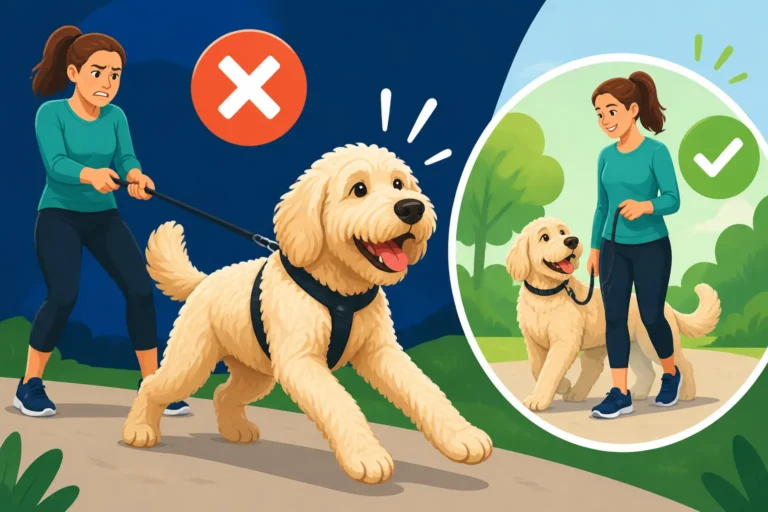
- Tethering: As mentioned, this involves the dog being attached to the child, preventing bolting and offering a calming presence. The dog learns to walk at a specific pace, respond to gentle pressure, and remain steadfast even if the child pulls.
- Interruption of Repetitive Behaviors: A dog might be trained to nudge or place a paw on a child when they begin a harmful or repetitive behavior, redirecting their attention.
- Deep Pressure Therapy: The dog learns to lie across a child's lap or body during a meltdown, using their weight to provide a calming sensation. This requires a dog that is comfortable and patient in close contact.
- Finding an Adult: The dog can be trained to lead an adult to a child who is distressed or needs help.
- Retrieving Objects: For a child who might drop items frequently or need specific comfort objects, the dog can be trained to fetch them. The Retrieving Drive a Labradoodle Gets From the Labrador can be a natural asset here.
This advanced training is complex and often requires the guidance of a professional service dog trainer. It involves breaking down tasks into tiny steps, using positive reinforcement, and practicing in a variety of real-world scenarios. It's not something an average pet owner can typically undertake without expert support.
Owner-Trained vs. Program-Trained Dogs
Families generally have two main routes for acquiring an autism assistance dog: through a specialized assistance dog program or by owner-training with professional guidance.
Program-Trained Dogs:
These dogs are raised and trained from puppyhood by dedicated organizations. They undergo rigorous selection and training protocols, ensuring they meet the highest standards for temperament and task performance. This pathway offers the most reliable outcome, as the dog has already proven its suitability and competence before placement. However, it often comes with a significant cost and a lengthy waitlist. The What a Program Trained Assistance Labradoodle Costs can be substantial, reflecting the immense investment in breeding, raising, and training.
Owner-Trained Dogs:
In this scenario, the family selects a suitable puppy and undertakes the training themselves, typically with the supervision and support of a professional service dog trainer. This can be more affordable upfront and allows the family to be deeply involved in the dog's development. However, it requires an extraordinary commitment of time, effort, and consistency from the family. Not every dog, even a well-bred Labradoodle, will have the temperament for this path. It's crucial to acknowledge the immense personal dedication involved, often equivalent to a part-time job for several years. Whether an Owner Can Train Their Own Service Labradoodle explores the feasibility and commitment required. For families considering this, investing in training resources, perhaps even books and guides available on platforms like Amazon, and working with certified trainers is paramount.
Here's a comparison of these two pathways:
| Feature | Program-Trained Dog | Owner-Trained Dog (with professional guidance) |
|---|---|---|
| Selection Process | Highly rigorous; dogs bred/selected specifically for service work. | Family selects puppy; temperament testing by professional is crucial. |
| Training Quality | Expertly trained by professionals; consistent methods. | Varies based on owner's dedication and trainer's expertise. |
| Cost | High upfront program fees (often includes dog, training, support). | Lower upfront, but ongoing costs for trainers, equipment, time. |
| Time Commitment | Primarily program's time; family integrates trained dog. | Significant daily commitment from family for training. |
| Wait Time | Can be years-long waitlists. | Varies; depends on finding a puppy and trainer availability. |
| Success Rate | Generally higher due to expert selection and training. | Highly dependent on dog's temperament, owner's commitment, and trainer. |
| Bonding | Immediate bonding with a fully trained dog. | Strong bond developed through shared training journey. |
| Public Access Training | Fully prepared by program; public access etiquette instilled. | Requires explicit, intense public access training and proofing. What Public Access Training Asks of a Labradoodle |
Challenges and Realistic Expectations
While the prospect of an autism assistance dog is wonderful, it's vital to enter this journey with open eyes, understanding the significant challenges and realistic expectations involved.
The Time and Financial Commitment
Regardless of whether you choose a program or owner-training, the time and financial commitment for an autism assistance dog are substantial. For owner-training, consider the hours you'll spend in classes, practicing at home, and working in public. It’s not just an hour a week; it’s a lifestyle. The Time a Labradoodle Takes Out of a Week is far more than most people anticipate. You'll need to invest in high-quality food, veterinary care, grooming tools, and a range of training equipment like leashes, collars, harnesses (a well-fitting vest and harness are crucial for public access, often found on Amazon), and treats.
Financially, program-trained dogs can cost tens of thousands of dollars, though many organizations offer fundraising support. For owner-training, weekly or bi-weekly sessions with a qualified service dog trainer can add up quickly. Factor in ongoing vet visits, potential emergency care, and the specialized grooming a Labradoodle often requires, especially those with wool or fleece coats. These are long-term commitments that need careful budgeting and planning. What a Program Trained Assistance Labradoodle Costs provides a deeper dive into these figures.
When a Labradoodle Might Not Be a Good Fit
Not every Labradoodle is destined for assistance work, and it's crucial to recognize when a particular dog might not be a good fit. Some Labradoodles, despite their general intelligence, might be too easily distracted or possess too much independent spirit for the constant focus required of a service dog. Others might be overly sensitive to their environment, becoming stressed by loud noises, new people, or unexpected situations – the very environments an assistance dog must navigate calmly.
If a Labradoodle displays significant anxiety, fear, or aggression, they are simply not suitable. Even subtle signs of these can be problematic, as service dogs must remain unflappable and predictable in all circumstances. A dog that is too high-energy and struggles to settle, even after ample exercise (The Exercise a Labradoodle Needs Before It Behaves), might not provide the calming presence needed. It's heartbreaking to realize a beloved pet might not make it as a service dog, but prioritizing the safety and well-being of both the child and the dog is paramount. Sometimes, a Labradoodle's role is best kept as a wonderful, supportive family pet.
Public Access Rights and Responsibilities
A fully trained and certified autism assistance dog has public access rights, meaning they can accompany their handler in most public places where pets are generally not allowed, such as stores, restaurants, and hospitals. This is a powerful legal right under the Americans with Disabilities Act (ADA) in the United States. However, these rights come with significant responsibilities.
The dog must be impeccably behaved, clean, and under the handler's control at all times. They cannot bark, lunge, eliminate inappropriately, or solicit attention from others. If a dog is disruptive, the establishment has the right to ask them to leave. Furthermore, the handler must be able to confidently assert their rights while also educating the public, who are often curious or misinformed. This aspect of public life with an assistance dog can be challenging, requiring resilience and advocacy from the family. Ensuring your Labradoodle is not only trained for tasks but also for exemplary public decorum is a huge undertaking. What Public Access Training Asks of a Labradoodle provides essential detail on these expectations.
Finding the Right Labradoodle for Service Work
If, after careful consideration, you decide that pursuing an autism assistance dog is the right path, finding the right Labradoodle is the single most critical step. This isn't about simply picking the cutest puppy; it's about making a highly informed decision based on genetics, early development, and expert evaluation.
What to Look for in a Puppy
When seeking a Labradoodle puppy for potential assistance work, you need to go beyond surface appeal. You're looking for very specific temperament traits:
- Confident and Curious: The puppy should explore new environments calmly but with interest, not shrinking away from new sights or sounds.
- Moderate Energy Level: While Labradoodles are generally active, a potential service dog should show a capacity to settle and relax, even amidst some activity. Avoid puppies that are overly hyper or excessively timid.
- Good Nerve Strength: The puppy should recover quickly from startling noises or experiences, not remaining fearful or stressed.
- Sociable but Not Overly Exuberant: The puppy should enjoy human interaction but not be prone to jumping, excessive nipping, or being unruly.
- Focus and Trainability: Look for a puppy that shows an early interest in engaging with humans and problem-solving, even at a basic level.
Working with a breeder who performs early temperament testing on their litters is invaluable. They should be looking for these traits specifically for service dog potential, not just for a good family pet. Temperament Testing a Labradoodle Puppy for Service can provide a deeper understanding of what these tests entail and why they are so important.
Working with a Reputable Breeder or Program
This cannot be stressed enough: only work with breeders or programs specifically experienced in breeding and selecting dogs for service work. A reputable breeder will:
- Prioritize Health and Temperament: They will conduct extensive health testing on their breeding dogs for conditions common in Labradors and Poodles, such as hip and elbow dysplasia, eye conditions (PRA), and Addison's disease. They should be transparent and willing to show you all health clearances. The Health Tests a Labradoodle Breeder Should Show will give you a comprehensive list to ask for.
- Perform Early Socialization and Enrichment: Their puppies should be raised in a stimulating home environment, exposed to various sounds, textures, and gentle handling from birth.
- Conduct Temperament Evaluations: They should assess each puppy's individual temperament to match them to the right family and purpose. They won't just sell you any puppy for service work.
- Offer Lifetime Support: A good breeder or program will be a resource throughout the dog's life.
If you are going the owner-training route, ensure your chosen trainer has extensive experience specifically with service dogs, not just pet obedience. They should be able to guide you through the selection process, the intensive training, and the complexities of public access. For general supplies and training aids, look at reliable sources. Amazon offers a vast selection of high-quality dog crates, long lines, and interactive toys that can aid in training and enrichment.
The Importance of Temperament Testing
Temperament testing for a potential service dog is a crucial, objective assessment designed to reveal a puppy's inherent tendencies and suitability for such a demanding role. This isn't just about a cute puppy being friendly; it delves into their resilience, problem-solving skills, sensitivity to touch and sound, retrieve drive, and how they cope with novel situations. A good test will involve various stimuli, observing how the puppy reacts to sudden noises, unfamiliar objects, gentle restraint, and interaction with strangers.
For instance, a puppy that startles easily and takes a long time to recover, or one that shows aggression when surprised, would immediately be ruled out. Conversely, a puppy that shows mild surprise but quickly recovers and investigates the source, or one that willingly engages with a stranger while remaining calm, would be a strong candidate. This testing should ideally be done by an impartial, experienced professional, not just the breeder, to ensure objectivity. It’s an investment in the success of the partnership and critical to making an informed decision about whether a Labradoodle, or any dog, is truly up to the task of autism assistance work.
Disclaimer
This article is for general informational purposes only and does not constitute professional advice. Laws, prices and regulations vary by location and change over time. Consult a qualified professional for guidance on your specific situation.