Whether a Labradoodle Suits Mobility Assistance
Many people are drawn to the Labradoodle's friendly demeanor, intelligence, and often hypoallergenic coat, and naturally, they wonder if these wonderful traits extend to high-level service work like mobility assistance. While Labradoodles are undeniably clever and eager to please, the truth about their suitability for mobility assistance is more nuanced than simply "yes" or "no," and it’s critical to understand the specific demands of such a role. This guide will thoroughly explore the capabilities and limitations of the Labradoodle when it comes to helping individuals with mobility challenges, giving you a realistic picture of what to expect.
What Mobility Assistance Truly Entails for a Service Dog
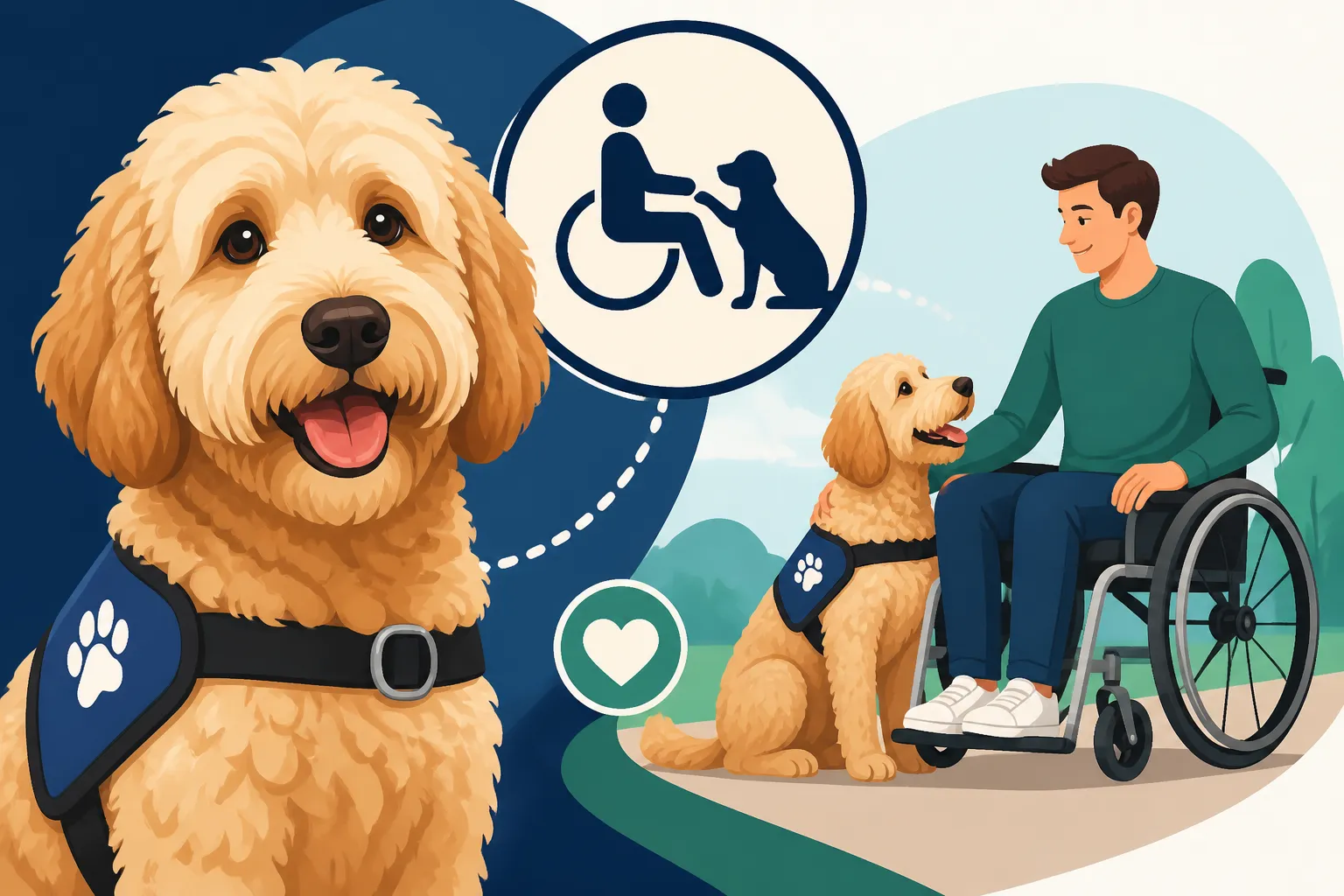
When we talk about mobility assistance, we're not just discussing a well-behaved dog by your side. This specific category of service dog performs physical tasks that help mitigate a person's disability, often involving their strength, stability, or dexterity. It's a demanding job that requires very specific physical attributes and an unwavering temperament, which is why many breeds aren't typically considered for the most strenuous forms of this work.
Physical Demands of Mobility Assistance
A service dog performing mobility assistance must be built for the job, quite literally. This isn't just about being a certain size; it's about structural integrity, weight distribution, and sheer physical strength.
One of the primary tasks associated with mobility assistance is bracing, where the dog provides a stable support for a person to lean on when standing up, maintaining balance, or transferring from a chair. For a dog to safely and effectively perform bracing, they need to have a robust, square build, strong bone structure, and adequate weight. A dog that is too lightly built, too tall and gangly, or has an uneven distribution of weight might injure themselves or fail to provide adequate support, potentially leading to a fall for their handler. Imagine trying to lean on a dog that wobbles or isn't solid beneath you – it would be incredibly dangerous. The dog also needs to be comfortable with the pressure of a human leaning on them, which requires a specific physical and psychological resilience.
Beyond bracing, mobility dogs often perform tasks like retrieving dropped items, which can range from a set of keys to a medicine bottle or even a walker. This requires a strong retrieving drive, a soft mouth, and the ability to distinguish between different objects. They might also pull wheelchairs for short distances, open and close doors, or help guide a person by a harness. Each of these tasks demands a certain physical stature and strength, not just willingness. A dog that is too small might not reach a doorknob, and one without sufficient muscle might struggle with even a lightweight wheelchair. Understanding The Standard Labradoodle at Fifty to Sixty Five Pounds is important here, as even this size might not be suitable for all mobility tasks.
Temperamental Needs for a Working Mobility Dog
The physical side is only half the equation; the temperament of a mobility assistance dog is paramount. These dogs need to be incredibly calm, focused, and unflappable in all environments, from a bustling grocery store to a quiet doctor's office.
A dog that spooks easily, has a low tolerance for frustration, or is prone to distraction simply won't cut it. Imagine a dog bracing someone to stand, and a sudden loud noise causes them to startle and pull away. The consequences could be dire. Therefore, a mobility dog must possess an innate calmness and resilience, able to maintain its focus on its handler no matter what unexpected sights, sounds, or smells might crop up. This high level of focus and self-control requires extensive training, often starting from puppyhood. Service dog organizations typically look for puppies with a naturally placid and confident disposition, as these traits are difficult to instill if not present to some degree already.
Furthermore, a mobility dog must be highly biddable and possess an intense desire to please its handler. They need to be responsive to commands, sometimes subtle ones, and maintain a consistent work ethic day in and day out. This means they cannot have an "off day" or decide they don't feel like working. Their handler's safety and independence depend on their unwavering reliability. They also need to be socialized to an extraordinary degree, comfortable with all sorts of people, other animals, and environments, without seeking attention or becoming overly excited. What Public Access Training Asks of a Labradoodle is a comprehensive look at the level of training and control required.
Evaluating the Labradoodle's Suitability for Mobility Assistance
Given the rigorous requirements for mobility assistance, where does the beloved Labradoodle stand? They bring many wonderful qualities to the table, but also some inherent characteristics that can make this particular type of service work challenging for them.
Labradoodle Strengths That Align with Service Work
Labradoodles are often praised for their intelligence, eagerness to please, and generally friendly nature. These are foundational traits that make any dog trainable for complex tasks, and the Labradoodle certainly has them in spades.
Their intelligence means they can pick up commands quickly and understand complex sequences of actions. A Labradoodle often enjoys having a "job" to do, which can be a huge asset in service work. They thrive on engagement with their handler and respond well to positive reinforcement methods. Many Labradoodles inherit the strong retrieving drive from their Labrador Retriever lineage, making tasks like picking up dropped items a natural fit for them. The Retrieving Drive a Labradoodle Gets From the Labrador is a good read if you want to understand this aspect better. This trait can be incredibly useful for a person with limited dexterity or reach.
Additionally, the desired non-shedding or low-shedding coat, inherited from the Poodle, can be a significant advantage for a service dog. For handlers with allergies, or those who simply prefer less dog hair in their home and on their clothes, a Labradoodle's coat can reduce concerns about cleanliness and allergen exposure, particularly in public spaces where service dogs are permitted. This was, in fact, one of the original motivations behind the creation of the breed, as explored in Why a Labradoodle Was Bred to Be a Guide Dog and The Royal Guide Dogs Program Behind the Labradoodle. However, this coat also comes with significant grooming responsibilities, which we'll delve into later. For foundational training, online programs like BAXTER & Bella offer excellent resources for building a well-mannered canine partner, which is the first step for any service dog prospect. Even simple things like ordering durable tug toys or treat pouches from Amazon can help reinforce positive behaviors.
Labradoodle Challenges for Bracing and Heavy Mobility Tasks
While Labradoodles possess many desirable traits, there are specific challenges that make them less ideal for the more physically demanding aspects of mobility assistance, such as bracing or substantial pulling.
One of the biggest hurdles is the breed's variability in size and structure. Unlike purpose-bred service dog breeds such as certain lines of Golden Retrievers or Labradors, which are bred for consistent size, bone structure, and temperament specifically for bracing work, Labradoodles can vary widely. Even within "standard" sizes, some might be leggy and slender, others stockier, but very few are bred with the robust, balanced frame required to be a stable brace dog for a human. Their gait, joint health, and overall physical conformation might not withstand the repetitive stress of bracing without risking injury to the dog. It's not just about height, but the actual structural integrity. This variability makes it difficult to predict whether a given Labradoodle puppy will grow into a dog physically capable of safely performing bracing. You can learn more about this variability in The Three Labradoodle Sizes and How They Are Set.
Another significant challenge is their energy level, particularly in their younger years. While intelligence and biddability are great, many Labradoodles retain a playful, sometimes bouncy, energy well into adulthood. A dog that is prone to jumping, wiggling, or sudden bursts of energy, no matter how friendly, cannot safely perform mobility tasks where stability is critical. They need extensive training and management to channel this energy, and even then, some individuals may simply be too high-energy for the constant calm required for complex mobility work. The Exercise a Labradoodle Needs Before It Behaves often surprises new owners.
Finally, the beautiful coat that makes them attractive to allergy sufferers also requires substantial upkeep. A working service dog needs to be impeccably groomed to prevent matting, especially in a long-haired, non-shedding coat type. This means regular, often professional, grooming appointments or diligent daily home care, which can be a time-consuming and costly endeavor for a handler who might have limited mobility themselves. Imagine a matted coat causing discomfort for the dog or snagging on equipment; it's a practical consideration that shouldn't be overlooked. Teaching a Labradoodle to Lie Still for a Ninety Minute Groom highlights the commitment required.
Selecting a Labradoodle for Service Work: A Realistic Approach
If you're still determined to explore a Labradoodle for service work, particularly for tasks like retrieving or alerts rather than heavy bracing, a realistic and highly selective approach is absolutely critical. This isn't a decision to take lightly, and it demands immense dedication to training and careful selection.
Prioritizing Health, Temperament, and Structure
For any service dog, but especially one from a crossbreed with variable traits, focusing on health, temperament, and appropriate structure from the very beginning is paramount. You simply cannot compromise on these factors.
Start by researching reputable breeders who prioritize health testing. This means breeders who can provide proof of health clearances for both parent dogs for conditions common in Labradors and Poodles, such as hip and elbow dysplasia, eye conditions (like progressive retinal atrophy), and genetic disorders like Exercise Induced Collapse (EIC) and Addison's Disease. A service dog needs to be physically sound for its entire working life. Asking a breeder for The Health Tests a Labradoodle Breeder Should Show is a non-negotiable step. Without sound health, a dog cannot perform its duties reliably, and early onset of conditions can lead to heartbreaking retirements or massive veterinary bills.
Temperament testing is equally important. A good breeder will evaluate their puppies for traits like confidence, resilience to novel stimuli, calmness, and biddability. Look for the calmest, most confident, and least reactive puppy in the litter. This is where an experienced service dog trainer or program can be invaluable, as they know how to spot the subtle cues that indicate a dog's potential for service work. Avoid any puppy that shows excessive shyness, aggression, or hyperactivity, as these are incredibly difficult to train out for the demanding environment of a public access service dog. Temperament Testing a Labradoodle Puppy for Service can give you more insight into this process.
Finally, consider the individual puppy's physical structure. If you are hoping for any level of bracing or stability support, look for a puppy with a squarer, more robust build rather than a long, lanky one. Observe the parents if possible – are they well-proportioned? Do they move soundly? While size can vary, aim for a standard-sized Labradoodle, as miniatures are generally too small for mobility assistance, even for retrieving tasks that require reaching higher points.
The Absolute Necessity of Professional Training and Ongoing Management
Even with the best genetic and temperamental start, a Labradoodle chosen for service work will require extensive, professional training. This is not a task for the faint of heart or for someone attempting it without expert guidance.
Most individuals seeking a mobility assistance dog work with accredited service dog organizations or highly experienced private trainers who specialize in service dog development. These programs understand the nuance of public access laws, the intricacies of task training, and the ongoing support a service dog team needs. Attempting to owner-train a mobility assistance Labradoodle without this expertise can be incredibly challenging, leading to an inadequately trained dog that struggles in public, or worse, a dog that cannot safely perform its required tasks. Whether an Owner Can Train Their Own Service Labradoodle delves into the complexities of this path.
Training will be intensive and lifelong. It involves countless hours of obedience, socialization to every conceivable environment, and precise task training. For instance, retrieving a specific item might involve teaching the dog to recognize dozens of objects by name, pick them up gently, and deliver them to hand. Beyond the initial training, ongoing maintenance training is essential to keep skills sharp and behaviors reliable. This commitment requires significant time, effort, and often financial investment. For a busy owner, purchasing a dog ramp from Amazon might be a simple way to protect joints and assist with daily transitions, regardless of whether the dog is a full mobility partner. Even with the best training, a Labradoodle needs active management throughout its life to ensure it remains a calm, reliable, and effective partner.
Table: Labradoodle Suitability for Mobility Assistance Tasks
| Mobility Task | Typical Labradoodle Suitability (General) | Key Considerations for Labradoodles |
|---|---|---|
| Bracing for Standing/Balance | Low – Most Labradoodles lack the consistent, robust structure and weight distribution for safe, sustained bracing. | Look for stockier builds, excellent joint health, and a very calm, stable temperament. Still a high risk for injury to dog or handler. |
| Retrieving Dropped Items | High – Inherited strong retrieve drive from Labrador side. Eager to please and intelligent. | Focus on soft mouth training. Ensure appropriate size for reaching various items. |
| Opening/Closing Doors | Medium – Intelligent enough to learn, but variable size can impact reach. | Requires specific training for nose/mouth targeting. Larger standard Labradoodles will have better reach for standard doorknobs. |
| Pulling Wheelchairs | Low to Medium – While some standard sizes have the weight, few have the structural integrity and consistent pull training. | Extremely difficult to train safely; requires specific harnesses and meticulous conditioning to avoid injury to the dog. Not recommended for most. |
| Turning Lights On/Off | High – Requires targeting with nose/paw; easily trainable for intelligent Labradoodles. | Ensure appropriate height for switches. |
| Carrying Items (e.g., shopping bag) | High – Many enjoy carrying things, especially from their Labrador lineage. | Ensure proper harness and weight distribution. Avoid over-loading. |
| Alerting to Medical Episodes | High – Alertness and attentiveness make them good for scent or behavioral alerts. | Requires consistent training to recognize specific cues and alert reliably. |
Disclaimer
This article is for general informational purposes only and does not constitute professional advice. Laws, prices and regulations vary by location and change over time. Consult a qualified professional for guidance on your specific situation.