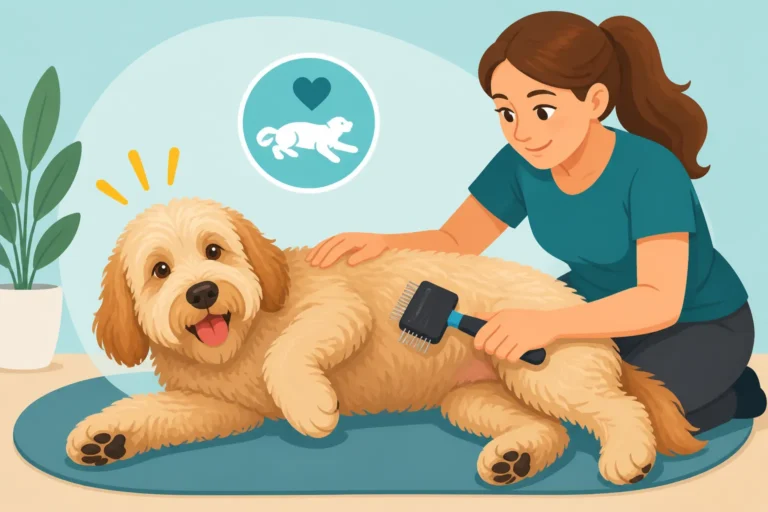
Whether a Labradoodle Needs Certification to Work
Navigating the world of working dogs can be incredibly confusing, especially when you have a wonderful Labradoodle and you're trying to understand what it means for them to genuinely "work" and whether some piece of paper is truly required. Many well-meaning people assume that a certificate or registration is the golden ticket, but the reality for service animals is often quite different and far more nuanced. This guide aims to clear up the common misconceptions and explain what truly matters when it comes to your Labradoodle performing tasks to mitigate a disability.
Understanding the Difference: Service Dog vs. Emotional Support vs. Therapy Dog
Before we dive into certifications, it's absolutely crucial to understand the distinct roles these amazing dogs play. There's a lot of misunderstanding, and often, people use these terms interchangeably, which can lead to tricky situations for owners in public. Your Labradoodle might be incredibly supportive, but the legal definitions matter significantly.
What Truly Defines a Service Dog?
A service dog is not just a beloved pet that makes you feel better; it's a highly trained working animal that performs specific tasks directly related to a person's disability. Think about that for a moment: specific tasks. These tasks aren't just "being there for comfort." They are things like guiding a visually impaired individual, alerting a diabetic to low blood sugar, pulling a wheelchair, or detecting an oncoming seizure. The key here is that the dog's work or tasks must be directly related to the handler's disability. This is defined under the Americans with Disabilities Act (ADA) in the United States, and similar legislation exists in other countries, though specifics may vary.
For a Labradoodle, their intelligence, trainability, and generally friendly nature can make them excellent candidates for service work. However, it’s the rigorous training in those specific, disability-mitigating tasks, coupled with impeccable public manners, that truly makes them a service dog, not merely their breed or presence. What Public Access Training Asks of a Labradoodle is a huge part of this journey.
Emotional Support Animals: A Different Kind of Support
Emotional Support Animals (ESAs) provide comfort and companionship, which can be immensely helpful for individuals dealing with mental health challenges, anxiety, or depression. They are wonderful animals, and their presence can indeed improve a person's well-being. However, ESAs are not recognized as service animals under the ADA. This means they do not have the same public access rights. While they might be permitted in housing that normally has a "no pets" policy or on certain airlines (though airline rules have changed significantly for ESAs in recent years), they generally do not have the right to accompany their handler into restaurants, stores, or other public places where pets are prohibited.
The support an ESA provides is primarily through their comforting presence, not through performing specific trained tasks. Your Labradoodle might be the most comforting dog in the world, a true Velcro Labradoodle That Cannot Be Left, but unless they are trained to perform specific tasks to mitigate a disability, they fall into the ESA category, which carries different legal allowances.
Therapy Dogs: Bringing Comfort to Many
Therapy dogs are fantastic animals who work with their handlers to provide comfort and affection to many different people in settings like hospitals, nursing homes, schools, or disaster areas. Unlike service dogs, who are focused solely on assisting their disabled handler, therapy dogs' primary role is to interact with and provide therapeutic benefits to others. They are often calm, friendly, and very well-socialized, enjoying meeting new people and being petted.
While therapy dogs undergo training and often pass specific evaluations (like those offered by organizations such as Therapy Dogs International or Alliance of Therapy Dogs), they are still considered pets with special training, not service animals. They do not have public access rights and can only enter facilities by invitation or agreement with the institution. What a Therapy Labradoodle Is Tested On provides more insight into the specific skills and temperament needed for this important role.
Here's a quick comparison to help solidify these distinctions:
| Feature | Service Dog | Emotional Support Animal (ESA) | Therapy Dog |
|---|---|---|---|
| Primary Role | Performs specific tasks for a disabled handler | Provides comfort/emotional support to handler | Provides comfort to multiple people in specific settings |
| Legal Status | Covered by ADA (public access rights) | Limited housing/travel rights (not ADA service animal) | No federal public access rights (facility invitation) |
| Training Focus | Task training & public access | Basic manners, companionship | Socialization, gentle interaction, basic obedience |
| "Certification" | Not legally required by federal law | Not legally required by federal law | Often involves evaluation/registration with specific organizations |
| Who Benefits | Handler with a disability | Handler with a mental/emotional disability | Many people in various settings |
The Truth About "Certification" for Service Labradoodles
This is where a lot of people get tripped up and where the misinformation thrives. It's easy to fall prey to websites promising official-looking certificates or vests, but understanding the legal reality is key.
The Legal Landscape: No Federal Registry
Under federal law, specifically the Americans with Disabilities Act (ADA), there is no requirement for service dogs to be professionally trained or to be certified or registered by any organization. Let that sink in for a moment. No official ID card, no registry number, no specific vest is legally mandated. The ADA explicitly states that inquiries about a service animal are limited to two questions: (1) Is the dog a service animal required because of a disability? and (2) What work or task has the dog been trained to perform? They cannot ask about your disability, require documentation, or demand a demonstration of the task.
This means that while some private organizations might offer certifications or registration for a fee, these are purely voluntary and do not confer any additional legal rights under the ADA. They are not recognized by the federal government as proof that your Labradoodle is a service animal. This can be a tough pill to swallow for owners who want to do everything "by the book," but the law is quite clear.
Why Some Organizations Offer Certificates Anyway (and Their Value)
Despite the lack of legal requirement, countless websites and organizations offer service dog registration and certification kits. So, why do they exist? For some, it’s a way to capitalize on confusion, preying on handlers who want to avoid confrontation. For others, it might be an attempt to provide a sense of legitimacy or comfort to handlers who feel they need something "official" to show. A vest or ID card, even if not legally required, can sometimes help smooth interactions in public by visually communicating that the dog has a job. However, it's crucial to understand that these items are not legal proof and do not grant access if the dog isn't genuinely task-trained for a disability.
If you are considering training your own Labradoodle, focus your energy and resources on actual training, not on buying a piece of paper. For instance, programs like BAXTER & Bella provide excellent foundational obedience and socialization courses that are far more valuable than any certificate. You might find useful training tools, vests, or books on Amazon that can aid in training and public identification, but remember, the value is in the training and the tasks, not the item itself.
The Importance of Public Access Training, Not a Piece of Paper
What is paramount for a service Labradoodle is its public access training. This goes far beyond basic obedience. A service dog must be impeccably behaved in all public settings, able to ignore distractions, remain calm, and not interfere with the public or other animals. They should lie quietly under a table, walk politely on a leash, and not solicit attention. A service dog that barks, lunges, eliminates inappropriately, or otherwise disrupts an environment can legally be asked to leave, regardless of any "certification."
The skills required for seamless public access are what truly enable a service Labradoodle to do its job effectively and legally. This level of training takes immense time, dedication, and often professional guidance. It’s about building a rock-solid foundation of behavior and manners. Teaching a Labradoodle to Settle Under a Restaurant Table is a prime example of the kind of specific, real-world training that makes a service dog truly functional.
What Your Working Labradoodle Really Needs
So, if certification isn't the answer, what does your Labradoodle need to be a legitimate working service dog? It boils down to a combination of effective training, unwavering public manners, and your own understanding of the legal framework.
Task Training: The Cornerstone of a Service Dog
This cannot be stressed enough: a service Labradoodle must be individually trained to perform specific tasks that directly mitigate its handler's disability. These aren't tricks; they are vital functions. For someone with mobility issues, this might mean retrieving dropped items or opening doors. For a person with a hearing impairment, it could be alerting to sounds like a smoke alarm or doorbell. For mental health disabilities, tasks might include guiding a handler to an exit during a panic attack, deep pressure therapy to interrupt an anxiety spiral, or finding a specific person.
Think about the unique needs of the individual. Does your Labradoodle need to interrupt self-harming behaviors, provide a brace for stability, or even alert to certain medical changes? Each task must be clearly defined, reliably performed, and directly linked to mitigating a specific aspect of the disability. This level of training often takes months, if not years, and consistent practice.
Impeccable Public Manners: Beyond Basic Obedience
Beyond tasks, a service Labradoodle must demonstrate flawless manners in every public setting imaginable. This means no barking, no jumping on people or counters, no sniffing merchandise, and no going to the bathroom indoors. They must be calm, quiet, and unobtrusive. This isn't just about being polite; it's a legal expectation under the ADA. If a service animal is out of control or not housebroken, a business can legally exclude them.
Achieving this level of composure in busy, distracting environments requires intensive socialization and training. It means exposing your Labradoodle to all sorts of sights, sounds, smells, and people, and teaching them to remain focused on you and their job. From busy shopping malls to quiet doctors' offices, your Labradoodle needs to be a professional at all times. Teaching a Labradoodle to Ignore Other Dogs in Public and Teaching a Labradoodle to Ignore Food on the Floor are critical skills that highlight the depth of this training.
Understanding Your Rights and Responsibilities
As a handler of a service Labradoodle, you have specific rights under the ADA, but also significant responsibilities. You have the right to equal access in most public places, but you are also responsible for your dog's behavior, health, and well-being. This includes ensuring they are groomed and clean, up-to-date on vaccinations, and always under your control.
Knowing the two permissible questions businesses can ask about your service dog is your primary defense against unlawful inquiries. Being able to clearly articulate the work or task your Labradoodle performs is crucial. You also need to understand that private clubs, religious organizations, and some other entities may have different rules. Familiarize yourself with local laws as well, as some state or municipal regulations might offer additional provisions or clarify existing federal law. The more informed you are, the smoother your public interactions will be.
Navigating the World with Your Working Labradoodle
Even with a perfectly trained Labradoodle, you'll inevitably encounter situations that challenge your understanding and patience. Being prepared for these moments can make all the difference.
When You Might Be Asked Questions
Despite the ADA's clear guidelines, you will almost certainly be asked about your service Labradoodle at some point. It might be a store employee, a restaurant host, or even a curious passerby. Most people are genuinely unfamiliar with service animal law and are operating under common misconceptions. Your role is to calmly and confidently educate them, if appropriate, or simply answer the two legal questions.
A common scenario involves a new cashier who sees your Labradoodle and says, "Oh, what a cute dog! Is he allowed in here?" Instead of getting frustrated, you can respond simply, "Yes, he's my service dog, and he's trained to alert me to changes in my blood sugar." Keeping your answer clear, concise, and focused on the task rather than your disability is key. Remember, your Labradoodle's behavior will speak volumes; a well-behaved dog rarely draws negative attention. Whether a Labradoodle Needs Certification to Work is a question many people ask, and knowing the answer empowers you.
Preparing for Public Interactions
Preparation is everything. Before heading out with your service Labradoodle, take a moment to mentally prepare for potential interactions. Have your responses to the two legal questions ready. Ensure your Labradoodle has relieved itself and is clean and well-groomed. While not legally required, a service vest or harness can sometimes prevent unnecessary questions simply by visually signaling your dog's working status. Many handlers find that a simple vest, readily available on platforms like Amazon, helps distinguish their working dog from a pet.
Continue practicing your Labradoodle's public access skills regularly, even if they're already perfect. Real-world exposure to different environments, sounds, and people is invaluable. If you've utilized a program like BAXTER & Bella for initial training, keep those principles of positive reinforcement and consistent practice in mind. The goal is for your Labradoodle to be a reliable, calm, and inconspicuous presence, allowing you to go about your day without added stress. Teaching a Labradoodle to Ignore Other Dogs in Public is a skill that saves countless headaches.
In the end, it's not about the paper or the badge. It's about the partnership, the profound training, and the essential tasks your Labradoodle performs to enhance your life and mitigate your disability. That's the real certification.
Disclaimer
This article is for general informational purposes only and does not constitute professional advice. Laws, prices and regulations vary by location and change over time. Consult a qualified professional for guidance on your specific situation.