Whether a Labradoodle Can Do Barn Hunt
Many Labradoodle owners find themselves constantly looking for new ways to engage their clever and energetic companions, especially when daily walks just aren't cutting it. It's a common frustration to have a dog that's clearly bored and finding its own (often destructive) entertainment. This guide is here to shed light on a fun, instinct-driven dog sport called Barn Hunt and explore whether your beloved Labradoodle has what it takes to excel, providing an exciting new outlet for their natural talents.
Understanding the Appeal of Barn Hunt for Dogs
Barn Hunt has quickly become one of the most popular dog sports, and for good reason. It taps into ancient canine instincts in a safe, controlled, and incredibly engaging way. It's not just about competition; it's about giving your dog a job that fulfills a deep, primal need.
What Exactly is Barn Hunt?
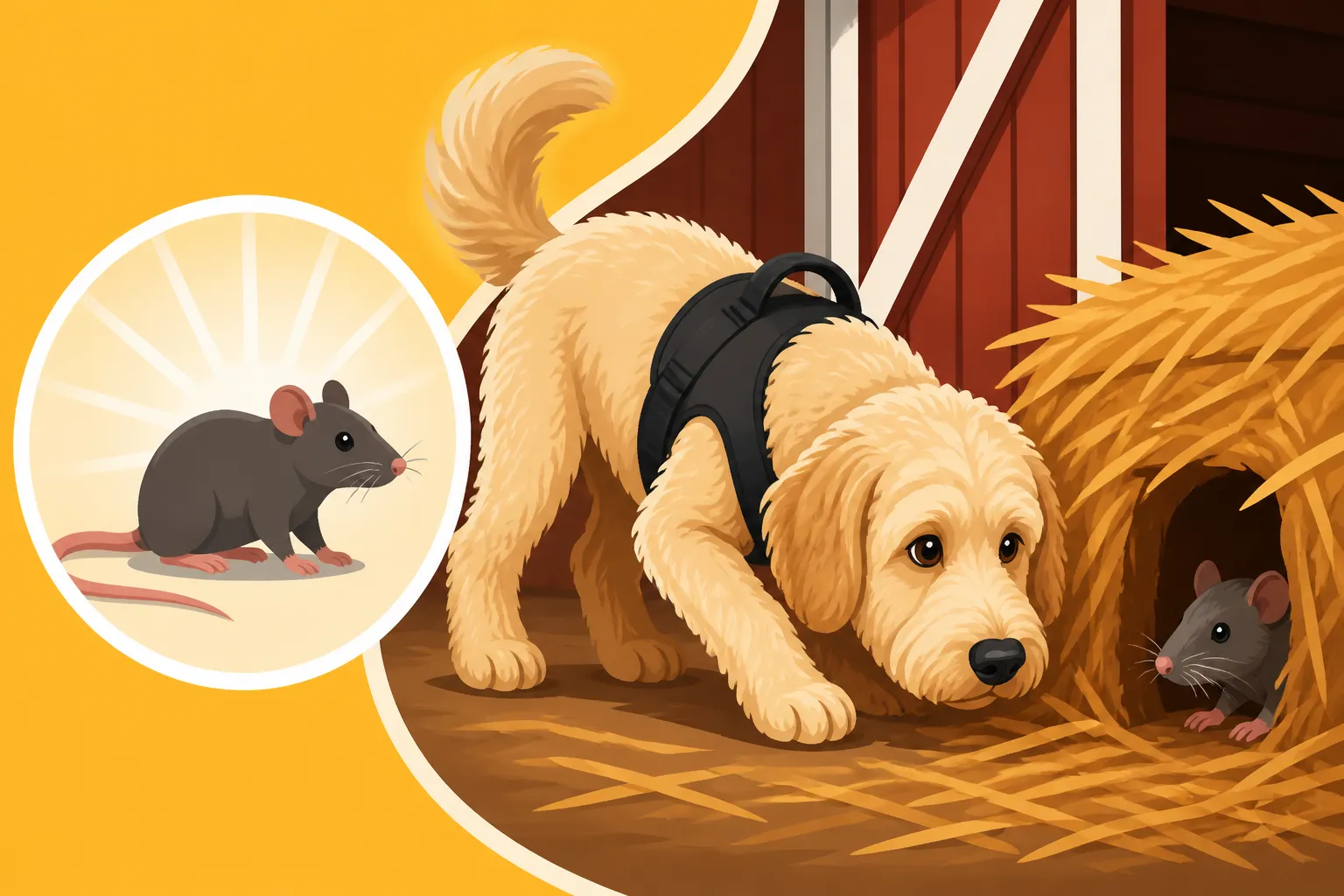
At its core, Barn Hunt is a modern take on vermin control, reimagined as a fun sport. Picture a course set up with hay bales, creating tunnels, obstacles, and hiding spots. Within this setup, plastic tubes are hidden – some containing live, rat-scented bedding (but no actual rats, don't worry!), some containing a live, well-protected rat, and others completely empty, known as "blanks." The dog's job is to sniff out the tube containing the live rat and then "indicate" its presence to their handler. This indication can be anything from a pawing, barking, staring, or even just a subtle change in body language.
Dogs are judged on their ability to find the rat, discriminate it from the empty tubes and rat-scented tubes, and accurately indicate its location, all within a time limit. There are various levels, from Novice to Master, and even more advanced classes that add height elements, more rats, and complex searches, keeping both dog and handler challenged. It's truly amazing to watch a dog's focus when they're on the hunt, completely immersed in their task.
Why Dogs and Owners Love It
The magic of Barn Hunt lies in its profound ability to engage a dog's mind and body. For the dogs, it’s an exhilarating game where they get to use their most powerful sense – their nose – to solve a puzzle. This mental stimulation is incredibly enriching and often more tiring than a long walk, helping to prevent boredom and alleviate destructive behaviors at home. It builds immense confidence, especially in dogs who might be a bit shy or unsure in other environments. Suddenly, they have a purpose, a job they are good at, and that empowers them.
For us owners, it's a fantastic bonding experience. You learn to read your dog's subtle cues, trust their instincts, and celebrate their successes together. Unlike high-impact sports like agility, Barn Hunt is generally low-impact, making it accessible for a wide range of dogs, from young pups to seasoned seniors, and dogs of various builds and breeds. It's also a sport that doesn't require extensive prior training; a dog with a good nose and some basic manners can often jump right in. The community aspect is also wonderful, as fellow enthusiasts are typically supportive and keen to share tips and celebrate victories.
Labradoodle Traits and How They Align with Barn Hunt
Now, let's talk about our beloved Labradoodles. Are they naturally geared for this kind of sport? The answer, for many, is a resounding yes! Their unique blend of parentage gives them a fantastic toolkit for Barn Hunt success.
The Lab's Nose and the Poodle's Brain
The Labradoodle is a crossbreed, taking qualities from both the Labrador Retriever and the Poodle. When it comes to scent work, this combination is particularly advantageous. The Labrador Retriever side brings a powerful, discerning nose. Labradors were originally bred to retrieve game, often in challenging conditions, requiring them to follow scent trails over land and water. This innate drive to use their nose and find hidden objects is a huge asset in Barn Hunt. They possess a natural talent for tracking and searching, and this often shines through in their Labradoodle offspring.
Then there's the Poodle, one of the most intelligent dog breeds. Poodles are known for their problem-solving abilities, their eagerness to learn, and their exceptional trainability. In Barn Hunt, it's not enough to just find the rat; the dog also needs to understand how to navigate the hay bale course, ignore distractions, and, critically, communicate their find to their handler. The Poodle's intelligence helps the Labradoodle quickly grasp the rules of the game and develop clear, consistent indications. This means they are not just randomly sniffing; they are actively working a problem and trying to communicate the solution. You'll see their focus light up as they put those mental gears to work. It’s an ideal combination: the raw scenting power of the Labrador, refined by the intellect and trainability of the Poodle. Whether the Poodle or the Labrador Shows Up in Training is a fascinating question, and in Barn Hunt, you often see the best of both.
Drive and Focus: Key for Success
Many Labradoodles possess a healthy dose of natural prey drive and an intense focus when engaged. While we certainly don't want them chasing squirrels in the park, this instinct, when channeled appropriately, can be a major advantage in Barn Hunt. That inherent desire to locate something hidden, often called "hunt drive," makes them enthusiastic participants. They aren't just going through the motions; they are genuinely invested in the search.
This focused drive, combined with their typical eagerness to please, means they are often highly motivated to work with their handler. They want to succeed and they respond well to encouragement and positive reinforcement. If your Labradoodle has a strong retrieving drive, you might find that The Retrieving Drive a Labradoodle Gets From the Labrador translates beautifully into the drive to find the "rat" in Barn Hunt. They are often less prone to becoming easily distracted once they've engaged their nose, especially if the activity is presented as a rewarding game.
Physical Suitability and Temperament
One of the great things about Barn Hunt is that it's designed to be inclusive. It doesn't require extreme athleticism or a specific body type. A Labradoodle's typical build, whether a standard-sized fifty-pounder or a miniature, is well-suited to navigating the hay bale courses. They are usually agile enough to climb over bales or squeeze through tunnels without issue. The demands are more about mental effort and scent discrimination than speed or jumping prowess, although some advanced courses do incorporate climbing.
In terms of temperament, Labradoodles are generally friendly, outgoing, and possess a good work ethic when given a task. This makes them enjoyable companions at trials, capable of focusing on their job while still being sociable with other dogs and people during downtime. Even if your Labradoodle is more laid-back, the mental engagement of Barn Hunt can spark a whole new level of enthusiasm without over-straining their physical limits. For the many Labradoodles who are active and need a job to prevent boredom, Barn Hunt can be a perfect fit. Whether a Labradoodle Needs a Job to Settle is a common question, and scent work is an excellent answer.
Getting Your Labradoodle Started in Barn Hunt
So, you're convinced your Labradoodle might be a Barn Hunt star? Fantastic! Getting started is relatively straightforward, but like any new activity, a little preparation and guidance go a long way.
Finding a Local Club and Classes
The absolute best way to introduce your Labradoodle to Barn Hunt is through a reputable local club that offers introductory classes. These classes are invaluable because they not only teach your dog the rules of the game but also teach you how to be an effective handler. You'll learn how to read your dog's indications, how to guide them effectively, and how to make the experience positive and rewarding. A good instructor will ensure the rats are safe and that your dog is learning in a stress-free environment.
Start by searching online for "Barn Hunt clubs near me" or checking the official Barn Hunt Association website for affiliated organizations. Don't be shy about reaching out to clubs, asking to observe a class, or attending a local trial as a spectator. It's a great way to see what the sport is all about and get a feel for the community before committing. Many clubs also offer "instinct tests" which are a low-pressure way to see if your dog has a natural aptitude for finding the rat.
Essential Training and Gear
While specialized Barn Hunt training is best done with an instructor, some basic foundational skills will make your Labradoodle's journey smoother. A solid "stay," a reliable "come," and comfortable leash manners are always helpful. A dog that can focus on you, even amidst distractions, will be a quicker learner. Online training platforms, like BAXTER & Bella, offer excellent foundational obedience courses that can give your Labradoodle a head start before you hit the hay bales. These programs focus on positive reinforcement, which is crucial for building enthusiasm in a sport like Barn Hunt.
When it comes to gear, you'll need:
- A comfortable harness: This is preferable to a collar for scent work, as it won't put pressure on your dog's neck or throat as they eagerly sniff and pull around the course. Look for one that allows a full range of motion.
- A long line (optional but helpful): Especially in early stages, a 10-15 foot leash can give your dog freedom to explore while still keeping them safely connected to you.
- High-value treats: Think small, soft, irresistible treats for rewarding successful finds and good indications.
- A crate or safe space: For downtime between turns or when observing others, a comfortable crate helps your dog relax.
- Water and a bowl: Especially important for active dogs.
You can find a wide range of suitable harnesses, long lines, and treat pouches on platforms like Amazon, making it easy to gather your supplies.
Overcoming Common Challenges
It's completely normal for a Labradoodle, or any dog, to face a few hurdles when starting a new sport. Some dogs might be initially hesitant around the hay bales, especially if they're not used to novel environments. Others might get too excited and want to dig at every bale, not just the one with the rat. Patience and positive reinforcement are your best friends here.
If your Labradoodle isn't indicating clearly, your instructor will help you "shape" that behavior. Sometimes, a dog might find the rat but then just look at you, waiting for direction. This is where learning to read your dog's subtle cues becomes vital. If they try to chew on the tube (which is rare, as the tubes are durable), it's a sign they might be over-aroused or need to learn a more appropriate indication. Remember that The Ten Month Old Labradoodle That Forgets Everything can be a challenge during adolescence, so consistency and keeping sessions fun and short are key, especially during that phase.
Benefits Beyond the Ribbons
While winning ribbons and titles is fun, the real rewards of Barn Hunt for your Labradoodle go far beyond the competition ring. It's about enhancing their overall well-being and strengthening your bond.
Mental Stimulation for an Active Mind
Labradoodles are intelligent dogs, and their minds thrive on challenges. An under-stimulated Labradoodle can quickly become a bored Labradoodle, leading to behaviors like excessive barking, chewing, or destructive tendencies. Barn Hunt provides an unparalleled mental workout. It forces them to focus, problem-solve, and utilize their natural instincts in a highly concentrated way.
This mental engagement is often more exhausting and fulfilling than purely physical exercise. Imagine the satisfaction your dog gets from successfully hunting down a hidden scent, something their ancestors did for survival. It taps into that deep, instinctual part of their brain, leaving them feeling accomplished and content. It's a fantastic way to meet The Exercise a Labradoodle Needs Before It Behaves on a cognitive level.
Building Confidence and Bonding
For some Labradoodles, especially those who might be a bit shy or nervous in new situations, success in Barn Hunt can be a tremendous confidence booster. The pure joy and pride they exhibit when they find that rat is infectious. They learn that they are capable, effective, and that their nose is a powerful tool. This newfound confidence can spill over into other areas of their life, making them more resilient and outgoing.
The sport is also a powerful way to deepen the bond between you and your Labradoodle. It's a team sport; you rely on their nose, and they rely on your guidance and encouragement. The shared experience, the communication, and the celebrations create a stronger, more trusting relationship. For a The Velcro Labradoodle That Cannot Be Left, this focused one-on-one time can be incredibly rewarding, reinforcing their connection to you in a positive, goal-oriented way.
Socializing and Community
Attending Barn Hunt classes and trials provides structured opportunities for socialization. Your Labradoodle will learn to be calm and focused around other dogs and people, even in an exciting environment. They'll practice waiting their turn politely and concentrating on their handler despite the distractions around them. This type of controlled socialization is invaluable for a well-adjusted dog.
For you, the owner, it’s a chance to connect with a passionate community of dog lovers. You'll meet people who understand the joys and challenges of dog ownership, learn from experienced handlers, and share in the successes of others. It’s a supportive and encouraging environment where everyone is rooting for each other and their dogs. This sense of belonging for both you and your dog is truly priceless.
| Trait | Labrador Contribution | Poodle Contribution | Labradoodle Advantage for Barn Hunt |
|---|---|---|---|
| Scenting Ability | Strong nose for game and tracking | Intelligence to apply scent skills | Excellent natural ability to locate hidden scents |
| Trainability | Eagerness to please, biddability | High intelligence, problem-solving | Quick to learn rules, indications, and navigation |
| Energy Level | Active, enjoys work, good stamina | Often athletic, enjoys mental engagement | Can maintain focus and endurance for searches |
| Physical Build | Sturdy, agile, robust structure | Athletic, good body awareness, flexible | Adaptable for maneuvering through hay bales |
| Motivation | Food/toy motivated, high drive | Craves mental challenge and interaction | Highly motivated by the hunt and handler praise |
Disclaimer
This article is for general informational purposes only and does not constitute professional advice. Laws, prices and regulations vary by location and change over time. Consult a qualified professional for guidance on your specific situation.