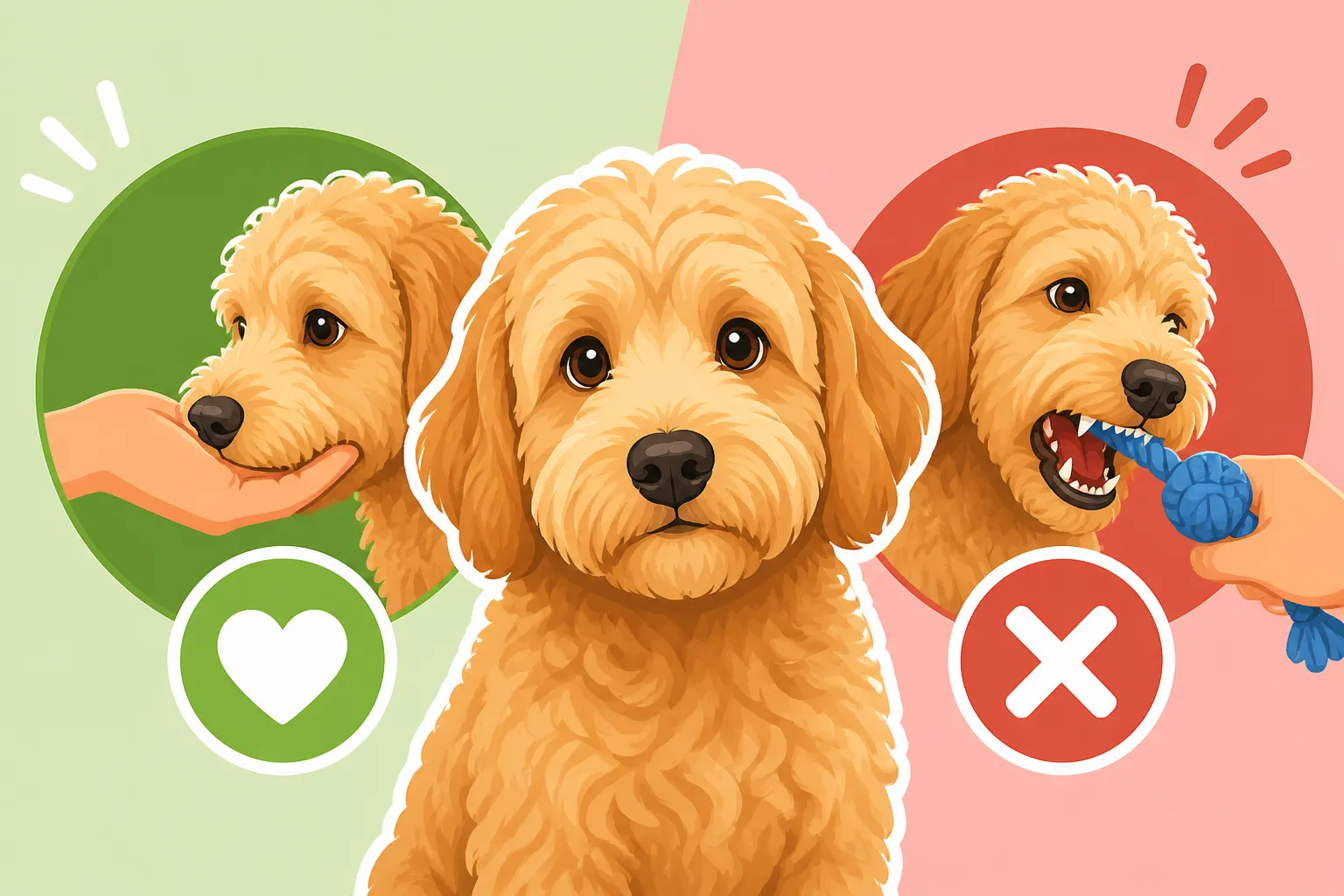
Whether a Labradoodle Has a Soft Mouth
One common concern for new Labradoodle families, especially those drawn to the Labrador's famously gentle nature, is whether their fluffy companion will also inherit a "soft mouth." Many dog owners grapple with the normal, sometimes intense, nipping and mouthing of a puppy, and understanding if their Labradoodle naturally possesses a delicate bite can really set expectations and guide training. This guide will delve into the concept of a "soft mouth," explore how genetics play a role in your Labradoodle, and offer practical, empathetic advice for nurturing a gentle mouth, regardless of inherited traits.
The Myth and Reality of the "Soft Mouth" Trait
When people talk about a dog having a "soft mouth," they're often referring to a specific, highly prized trait in certain retrieving breeds, particularly the Labrador Retriever. It's a hallmark of a dog bred to carry delicate game birds without damaging them, demonstrating incredible control and gentleness with their jaws.
Defining the "Soft Mouth"
A truly "soft mouth" isn't just about a dog not biting hard; it's about the ability to pick up and hold objects with minimal pressure, ensuring no harm comes to the item being retrieved. Imagine a Labrador carrying a raw egg without cracking the shell – that's the ideal. This isn't just a learned behavior; it's a combination of inherent temperament, jaw structure, and a highly developed proprioception, which is the sense of the body's position and movement. It's an instinctive understanding of how much pressure is too much. For hunting dogs, this trait was paramount to returning game to their handler in pristine condition.
The Labrador's Legacy of Gentleness
The Labrador Retriever was specifically developed for this very purpose. Their role was to retrieve waterfowl and other small game, often from water, and bring it back to the hunter unharmed. Generations of selective breeding focused on dogs that could perform this task with exceptional tenderness. This dedication to a soft mouth has also translated into their reputation as wonderful family dogs, often gentle with children and careful with household items. Owners often share heartwarming stories of their Labradors carrying fragile things without a scratch, from a child's forgotten toy to a delicate flower. This genetic predisposition means that even without specific training, many Labradors instinctively know how to be gentle with their mouths.
Does Your Labradoodle Inherit a Soft Mouth?
This is where the wonderful, sometimes unpredictable, world of hybrid vigor comes into play. A Labradoodle is a crossbreed, taking genes from both the Labrador Retriever and the Poodle. While the Labrador side certainly contributes the potential for a soft mouth, the Poodle side brings its own set of characteristics, and the combination can lead to varying outcomes.
The Genetic Lottery of a Crossbreed
When you mix two distinct breeds, you're essentially rolling the genetic dice. Your Labradoodle puppy could inherit more traits from their Labrador parent, more from their Poodle parent, or a lovely, unpredictable blend of both. This means that while some Labradoodles might display that natural, innate soft mouth of a Labrador, others might lean more towards the Poodle's tendencies. Poodles, while intelligent and capable retrievers, weren't historically bred for the same degree of "softness" as the Labrador. They are strong, athletic dogs, and their mouth control might be more a result of training than inherent instinct in the same way. Therefore, you can't guarantee a soft mouth in a Labradoodle simply because one of its parents possessed the trait. It’s important to remember that each puppy is an individual, and even within the same litter, there can be a wide range of inherited behaviors and physical traits. Whether an F1 Labradoodle Is Healthier Than a Multigen might discuss similar genetic variations.
Poodle Influence and Jaw Control
Poodles are incredibly smart and trainable, and they can certainly be taught excellent mouth control. However, their historical roles didn't always demand the same innate delicacy with game as a Labrador's. Many Poodles use their mouths to explore, play, and carry, often with more enthusiasm than precise gentleness. This isn't a fault, but simply a difference in historical purpose. If your Labradoodle leans more heavily on its Poodle genetics for temperament and physical traits, its mouth might be perfectly capable of learning to be soft, but it might not start with the same inherent predisposition as a purebred Labrador. You might find yourself doing more foundational work to teach precise mouth control.
Generations and Predictability
The generation of your Labradoodle can also play a role, though it's not a foolproof predictor.
- F1 Labradoodles (first cross, Labrador x Poodle): These puppies are the most varied, as they get 50% of their genes from each parent. You might see a strong soft mouth, or a less defined one.
- F1b Labradoodles (F1 Labradoodle x Poodle): With more Poodle genetics (typically 75%), these dogs might be less likely to have the innate soft mouth of a Labrador, though they are still highly trainable.
- Multigenerational Labradoodles: Bred selectively over several generations for specific traits, these Labradoodles might be more consistent in appearance and temperament. A good breeder aiming for "soft mouth" in their lines would select breeding dogs that consistently display this trait. However, even with selective breeding, the deep-seated genetic wiring of a purebred for a trait like "soft mouth" is hard to replicate perfectly in a hybrid. When considering these aspects, it's also worth exploring Whether a Labradoodle Will Ever Be Recognized by kennel clubs, as breed recognition often leads to more standardized traits.
| Trait Aspect | Purebred Labrador Retriever | Labradoodle (F1, F1b, Multigen) |
|---|---|---|
| Innate Soft Mouth | High probability, deeply ingrained | Variable, depends on genetic inheritance |
| Jaw Control | Excellent, often instinctive | Excellent with training, can be enthusiastic |
| Retrieving Drive | High, often strong natural instinct | Variable, generally present |
| Mouthing Intensity (Puppy) | Normal puppy nipping, generally manageable | Normal puppy nipping, can be more energetic |
| Training Needs | Less focus on innate soft mouth, more on direction | More focus on teaching gentle mouth behavior |
Training for a Gentle Mouth, Regardless of Genetics
Even if your Labradoodle doesn't have that "raw egg" soft mouth from day one, rest assured that you absolutely can, and should, train them to have a gentle mouth. This is crucial for living harmoniously with your dog, especially in a family setting where children might be present. The goal is always to teach bite inhibition and proper mouth manners. The Mouthing a Labradoodle Puppy Does Longest is a great resource if you're battling persistent puppy nipping.
Managing Puppy Nipping and Play Biting
Puppy mouthing is completely normal, but it can feel overwhelming, especially with a playful Labradoodle. Those sharp puppy teeth can hurt! The key is to teach your puppy that human skin is very sensitive and that biting hard is never acceptable.
- Yelp and Withdraw: When your puppy bites too hard, give a high-pitched yelp, as a littermate would. Immediately withdraw attention – stand up, turn your back, or even leave the room for 30-60 seconds. This teaches them that biting too hard makes the fun stop.
- Redirect to Appropriate Chew Toys: Always have plenty of appropriate chew toys available. When your puppy starts to mouth you, calmly redirect their attention to a toy. Praise them when they chew the toy instead of you. You can find a wide variety of durable chew toys on Amazon that can withstand a Labradoodle's chewing power.
- Consistent Reinforcement: Everyone in the household needs to be consistent with these rules. A puppy who learns that biting hard is okay with one person but not another will get confused and take longer to learn.
- "Soft Touch" Games: Practice games where you encourage your puppy to take treats gently. Hold a treat in your closed fist, and only open your hand when your puppy nudges it softly with their nose or licks your hand. If they mouth aggressively, the treat disappears. This builds a foundation for gentle interaction.
Teaching Bite Inhibition
Bite inhibition is about teaching your dog how much pressure is acceptable, not just whether biting is okay. Even if a dog never intends to harm, an excited nip that isn't inhibited can cause injury.
- Gradual Pressure Reduction: Initially, yelp for hard bites. As your puppy gets the message, start yelping for medium-hard bites. The goal is to eventually only allow the softest mouth pressure, like a gentle mouthing or lick, if any at all on skin.
- Use Training Resources: Online puppy training programs like BAXTER & Bella often have detailed modules on bite inhibition, nipping, and proper mouth manners. Their structured approach can be incredibly helpful for first-time owners or those struggling with persistent mouthing. They offer step-by-step guidance that removes much of the guesswork.
- Handling Exercises: Regularly handle your puppy's mouth, ears, and paws from a young age. Pair these interactions with positive reinforcement like tasty treats and praise. This desensitizes them to being handled, which is crucial for vet visits and grooming, and teaches them to tolerate touch without mouthing. This also contributes to their comfort during tasks like Teaching a Labradoodle to Lie Still for a Ninety Minute Groom.
Encouraging Desirable Mouthing and Retrieving
Beyond preventing unwanted mouthing, you can actively encourage and shape positive mouth behaviors, especially harnessing your Labradoodle's natural retrieving drive.
The Joy of Retrieving and Carry Games
Labradors were bred for retrieving, and many Labradoodles inherit this love for carrying things around. This can be a wonderful outlet for their mouth and energy.
- Start Simple: Begin with soft, easily graspable toys. Toss them a short distance and encourage your dog to bring them back. Praise enthusiastically when they return the item. The Retrieving Drive a Labradoodle Gets From the Labrador will tell you more about this instinct.
- "Drop It" and "Leave It" Commands: These are essential. "Drop It" teaches your dog to release an item on command, which is crucial for managing household items and preventing resource guarding. "Leave It" teaches them to ignore tempting items until given permission. Practice these commands with high-value treats and gradually increase the difficulty.
- Vary the Objects: Once your Labradoodle understands retrieving, you can introduce different textures and weights of objects. Always ensure they are safe and non-toxic. Some dogs love carrying softer fabric items, while others prefer harder rubber toys. Puzzle toys, readily available on Amazon, can also engage their mouth and mind.
Guiding Playful Interaction
Labradoodles are often very playful dogs. Channeling their energy into appropriate games helps reduce unwanted nipping or rough play.
- Interactive Toys: Use flirt poles, tug toys, or fetch toys that keep your hands away from their teeth. Tug-of-war is fine, as long as you teach a clear "drop it" command and end the game if teeth accidentally touch skin.
- Supervised Play with Other Dogs: Well-socialized play with other dogs can teach bite inhibition through natural canine communication. Just ensure the play is balanced and not overly rough.
- Positive Reinforcement for Gentle Play: When your Labradoodle plays gently with you or a toy, offer praise and rewards. This strengthens the association between calm, gentle behavior and positive outcomes. For a comprehensive approach to training, consider resources like BAXTER & Bella, which emphasizes positive reinforcement across all aspects of training, including appropriate play.
Ultimately, while a "soft mouth" may be an inherent trait in some Labradoodles due to their Labrador heritage, it's also a behavior that can be cultivated and perfected through consistent, patient training. Every Labradoodle, regardless of their genetic predisposition, can learn to be a gentle and considerate companion.
Disclaimer
This article is for general informational purposes only and does not constitute professional advice. Laws, prices and regulations vary by location and change over time. Consult a qualified professional for guidance on your specific situation.