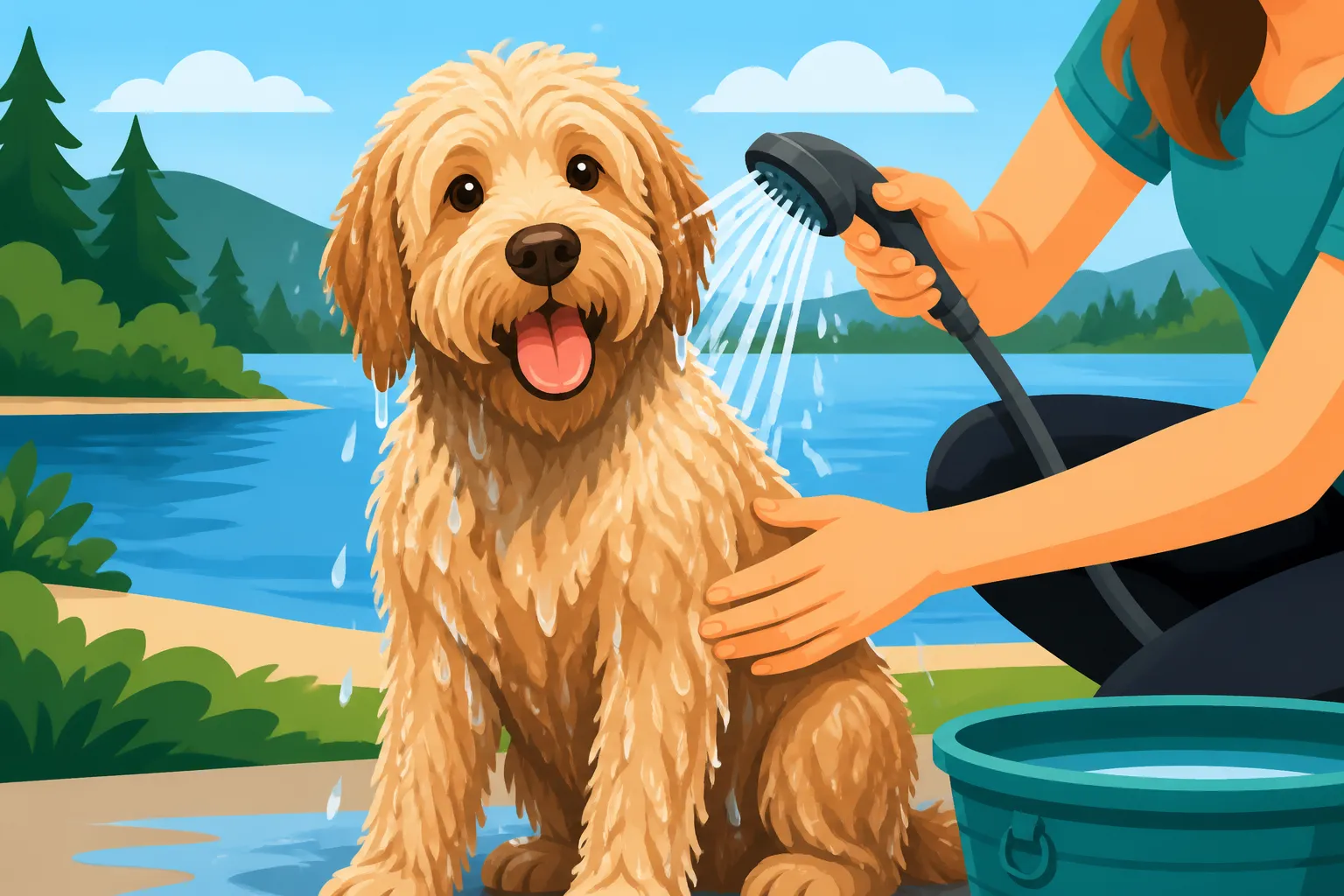
Rinsing a Labradoodle After the Lake
There’s nothing quite like watching your Labradoodle bound through the tall grass, splash into a shimmering lake, and joyfully retrieve a stick. It’s a quintessential summer scene, full of happy memories! But let's be honest, that joy often gives way to a little dread when you think about what comes after the lake: a wet, often smelly, potentially matted, and debris-laden dog. This guide will walk you through the proper way to rinse and care for your Labradoodle’s coat after a swim, ensuring they stay happy, healthy, and tangle-free.
Why Lake Water Poses Unique Challenges for a Labradoodle's Coat
Our beloved Labradoodles, with their delightful "doodle" coats, are often a magnet for everything outdoors. Lake adventures, while incredibly fun for them, can turn their beautiful fur into a matted mess if not handled correctly. Understanding why lake water is particularly tricky for their coat is the first step in effective after-swim care.
The Unique Structure of a Labradoodle's Coat
Unlike the smooth, water-repellent double coat of a Labrador Retriever, or even the single, dense curls of a Poodle, a Labradoodle's coat is a delightful blend that can be a bit more high-maintenance. Most Labradoodles boast a fleece or wool coat, designed to be low-shedding and often described as feeling like soft lamb's wool or a silky fleece blanket. While wonderful for allergy sufferers, this texture also means their hair has a tendency to interlock and trap foreign particles.
Imagine diving into a lake with a thick woolen sweater versus a sleek swimsuit. The sweater is going to absorb more water, pick up more bits of debris, and take much longer to dry. That's essentially what happens with your Labradoodle's coat. The dense, sometimes curly, sometimes wavy texture of their fur acts like a sponge, soaking up water and, more importantly, holding onto whatever is in that water. This density also makes it incredibly easy for small tangles to quickly escalate into serious mats once wet and then allowed to dry naturally. It's a coat type that requires consistent care, and post-lake rinsing is a prime example of when that attention is critical. Many owners find themselves grappling with the nuances of The Three Labradoodle Coats: Hair, Fleece and Wool and how each type responds to water.
What Lurks in Lake Water and Your Dog's Coat
Lakes, ponds, and even slow-moving rivers are far from pure, distilled water. They are living ecosystems teeming with all sorts of natural elements that can adhere to your Labradoodle's coat and even pose health risks. Beyond just plain dirt and mud, which are almost guaranteed after a good romp, there's a host of other things to consider.
One of the biggest concerns is blue-green algae (cyanobacteria), which can be highly toxic and cause severe illness or even death if ingested. Even if not ingested, prolonged contact with the skin can cause irritation. Then there are bacteria, like Leptospira, often found in contaminated water, or E. coli. Microscopic parasites, such as Giardia and Cryptosporidium, are also common residents of freshwater bodies, and while primarily ingested, residues on the coat can still pose a risk if your dog licks themselves. Plant matter, pollen, decaying leaves, and tiny bits of organic debris also hitch a ride in that luscious fur. All these elements not only make your dog smelly but can also create a perfect breeding ground for skin issues.
How Lake Residue Affects Skin and Coat Health
Leaving your Labradoodle's coat to air dry after a lake swim, especially without a thorough rinse, is an open invitation for problems. The combination of trapped water, debris, and microorganisms can quickly lead to a range of uncomfortable and unhealthy conditions. The most immediate and visible concern is matting. As the coat dries, the individual hairs, already entangled with lake residue, will bind together, forming tight, painful mats close to the skin. These mats not only pull on the skin but also prevent air circulation, creating a damp, warm environment.
This humid microclimate is ideal for the proliferation of yeast and bacteria, leading to itchy, inflamed skin, often manifesting as "hot spots" or generalized dermatitis. Many owners notice a distinct, unpleasant odor accompanying these skin issues. Over time, chronic irritation can even affect the texture and health of the coat itself, sometimes leading to changes in quality or even patchy hair loss. Ignoring these signs can lead to more serious skin infections, requiring veterinary intervention. Understanding Whether a Labradoodle's Coat Changes Texture With Age can sometimes help distinguish normal coat evolution from changes brought on by poor health or care.
Essential Supplies for Post-Lake Rinsing
Preparing for post-lake cleanup before your Labradoodle even dips a paw in the water can save you a lot of headache and heartache. Having the right tools on hand makes the entire process more efficient, less stressful for your dog, and ultimately more effective in protecting their skin and coat health.
Choosing the Right Shampoo and Conditioner
When it comes to bathing your Labradoodle after a lake adventure, selecting appropriate grooming products is paramount. You need something that will effectively clean away all the lake gunk without stripping the natural oils from their skin and coat. Look for pH-balanced, gentle shampoos specifically formulated for dogs. Avoid harsh detergents or human shampoos, as these can irritate canine skin. Many owners find success with hypoallergenic formulas, or those containing soothing ingredients like oatmeal or aloe vera, especially if their dog is prone to skin sensitivities or Allergies Behind a Labradoodle's Itching.
A good quality conditioner is not just a luxury for a Labradoodle; it’s a necessity. Conditioners help to restore moisture to the coat, detangle knots, and smooth the hair cuticle, making it less prone to future matting. After a swim, the coat can be particularly dry and prone to tangles, so a rich, moisturizing conditioner applied generously and thoroughly rinsed will make a world of difference. You might also want to keep a detangling spray on hand for those particularly stubborn knots you encounter during brushing. These sprays, often available from retailers like Chewy or Amazon, can make the brush-out process much smoother and less uncomfortable for your pup. Having a good Detangling Sprays for a Labradoodle product is a game-changer.
Brushes and Combs for Post-Swim Care
Effective grooming relies heavily on having the correct brushes and combs for a Labradoodle’s unique coat. Simply surface-brushing won't cut it, especially after a lake swim. You need tools that can penetrate the dense fur and get right down to the skin to address any debris or developing mats.
Your arsenal should include:
- Slicker brush: This brush has fine, wire bristles and is excellent for detangling and removing loose undercoat. Use it gently, in small sections, making sure to reach the skin.
- Metal comb: A sturdy metal comb with both wide and narrow teeth is essential for checking your work after using the slicker. It helps identify any missed tangles or mats that the slicker brush might have glided over. Use the wide-toothed end first, then the finer end.
- Undercoat rake: While less critical for fleece and wool coats compared to thick double coats, a rake can still be useful for working through very dense areas or removing deeply embedded debris.
The key is to use these tools to brush through the coat, not just over it. Pay particular attention to common matting areas like behind the ears, armpits, flanks, and tail. These are the spots where Mats Behind a Labradoodle's Ears often start and quickly worsen. You can find comprehensive sets of these tools, including The Slicker, Rake and Comb a Labradoodle Takes, readily available online.
Drying Tools for a Thorough Job
After rinsing, proper drying is just as crucial as the wash itself, if not more so, for preventing mats and skin issues in a Labradoodle. Air drying, while seemingly natural, is generally not recommended for their dense coats. When a thick coat air-dries, it shrinks and tightens, pulling hairs together and forming mats. This also leaves the skin damp for an extended period, encouraging bacterial and fungal growth.
Your drying setup should include:
- Highly absorbent towels: Start by gently blotting and squeezing excess water from the coat. Avoid vigorous rubbing, as this can create tangles. Microfiber towels designed for pets are particularly effective.
- High-velocity force dryer: This is perhaps the most valuable tool for a Labradoodle owner. A force dryer (not a human hairdryer, which can be too hot and damage their skin) uses a powerful stream of unheated or low-heat air to blast water out of the coat. This significantly reduces drying time, prevents matting by separating the hairs, and ensures the skin is completely dry. While an initial investment, many owners find that Whether a Home Force Dryer Pays for Itself in terms of saved grooming bills and healthier coats. Using a force dryer is the gold standard for achieving Drying a Labradoodle to the Skin After a Bath.
- Hair dryer (optional, low heat only): If you don't have a force dryer, a regular hairdryer on a cool or lowest heat setting can be used in conjunction with brushing, but it will take much longer and might not be as effective at penetrating the dense coat. Always keep the dryer moving to avoid hot spots on the skin.
Remember, the goal is to get the coat and skin bone-dry. Any residual dampness, especially deep in the undercoat, is a breeding ground for problems. This is why Whether Air Drying Mats a Labradoodle is a resounding "yes" for most Labradoodle coats.
Step-by-Step Guide to Rinsing Your Labradoodle
Now that you understand the challenges and have your supplies ready, let's dive into the practical steps for a thorough post-lake rinse. Consistency and technique are key to keeping your Labradoodle's coat in top condition.
Pre-Rinse Prep: The Initial Brush-Out
This step is absolutely critical and often overlooked, but skipping it can turn a simple rinse into a grooming nightmare. Before your Labradoodle even steps into the tub for rinsing, you need to perform a thorough brush-out of their dry coat.
Why dry? Because water tightens mats. If there are any tangles or developing mats in your dog's coat when it gets wet, they will condense and become exponentially harder, if not impossible, to brush out without causing pain or resorting to shaving. Use your slicker brush and metal comb to systematically work through their entire coat, section by section. Start at the skin and brush outwards. Pay extra attention to known trouble spots: behind the ears, armpits, groin, under the collar or harness area, and the tail. These are the areas where debris often accumulates and mats begin to form. Your goal is to remove any loose dirt, leaves, sand, or other lake debris, and to ensure the coat is free of tangles before it gets wet. This pre-emptive strike is your best defense against post-swim matting.
The Rinsing and Washing Process
Once your Labradoodle's coat is brushed out and free of major tangles, it's time for the water. The goal here is a comprehensive wash to remove all traces of lake water, muck, and potential contaminants.
- Saturate the Coat: Use lukewarm water – not too hot, not too cold – to thoroughly wet your dog's entire coat. This means getting down to the skin. Work slowly, ensuring every part of their body is drenched. This is easier if your dog is comfortable in the bath or shower.
- Apply Shampoo: Dilute your chosen dog shampoo slightly with water first; this helps it distribute more evenly and rinse out better. Apply the shampoo, working it deep into the coat and down to the skin. Massage gently, paying close attention to areas that were particularly dirty or prone to matting. Be careful around their eyes and ears.
- Thorough Rinsing: This is arguably the most important part of the entire process when dealing with lake water. You need to rinse, and then rinse again, and then rinse one more time. Any shampoo residue left behind can irritate the skin, lead to dryness, and actually attract more dirt and cause matting. Ensure the water runs clear from every part of their body. Lift legs, check their belly, and feel the coat to make sure it's not slippery with shampoo.
- Condition: Once the shampoo is completely rinsed, apply a generous amount of dog conditioner. Work it through the coat, focusing on the ends and any areas prone to tangles. Allow it to sit for a few minutes as directed on the product, then rinse thoroughly. Again, ensure no conditioner residue remains, as this can also lead to skin issues and a dull coat.
Drying Techniques to Prevent Matting and Skin Issues
After the thorough wash and rinse, proper drying is the final, crucial step to preventing mats and ensuring your Labradoodle's skin remains healthy. Rushing this stage is a common mistake that can undo all your hard work.
- Initial Towel Dry: Immediately after rinsing, use highly absorbent towels to gently squeeze and blot as much water out of the coat as possible. Avoid rubbing vigorously, as this rough treatment can tangle the hair and create new mats. Focus on getting the majority of the dripping water removed, but don't expect the towel to get them completely dry.
- Force Drying (Recommended): This is where your force dryer shines. Set it to a cool or low-heat setting. Work in small sections, starting from the hindquarters and moving forward. Use one hand to direct the airflow and the other to brush the section you're working on with your slicker brush. The force dryer will blast the water out while the brushing helps to straighten the hair and prevent tangles from forming as it dries. Ensure you are getting right down to the skin. Continuously move the dryer to prevent any one area from getting too hot, even on a cool setting. Don't stop until the section is completely dry, and you can feel warm, dry skin beneath the fur.
- Final Comb-Through: Once you believe your Labradoodle is completely dry, go over their entire coat one last time with your metal comb. This is your final check. If the comb glides smoothly from root to tip, you've done a fantastic job. If it snags, you've either missed a damp spot or a developing tangle, and you need to go back with the force dryer and brush. Remember, dampness deep in the coat is an enemy to a Labradoodle's health, promoting skin issues and matting.
| Drying Method | Pros | Cons | Best Use Case |
|---|---|---|---|
| Air Drying | No special equipment, easy | Causes severe matting, leaves skin damp, promotes odor/infections | Only for very short, smooth coats (not recommended for Labradoodles) |
| Towel Drying | Quick initial water removal, inexpensive | Doesn't fully dry, can tangle if rubbed vigorously | First step for all dogs before more thorough drying |
| Human Hair Dryer | Accessible, faster than air drying | Can overheat skin, less efficient at penetrating dense coats | Temporary solution, only on cool/low setting, with constant movement |
| Force Dryer | Fastest, prevents matting, ensures dryness | Initial cost, can be noisy, requires technique | Ideal and most effective for Labradoodle coats |
Special Considerations and Troubleshooting
Even with the best intentions and techniques, sometimes issues can arise after your Labradoodle's lake excursions. Knowing how to troubleshoot common problems and understanding when to seek professional help is vital for your dog's well-being.
Dealing with Persistent Odors or Skin Irritations
You've given your Labradoodle a thorough bath after their lake swim, followed all the drying steps, and yet, a persistent "doggy" odor lingers, or you notice them itching excessively. This often points to deeper issues beyond simple dirt. A musty or yeasty smell, especially in areas like the armpits, groin, or ears, is a classic sign of yeast overgrowth. Redness, bumps, flaky skin, or scabs indicate bacterial dermatitis or other skin irritations.
If these symptoms persist for more than a couple of days, or if they worsen, it's time to consult your veterinarian. They can accurately diagnose the problem and prescribe appropriate treatment. This might include medicated shampoos, oral antibiotics, antifungals, or anti-inflammatory medications. Sometimes, persistent skin issues after water exposure can be a sign of underlying allergies, making your dog more susceptible to secondary infections. If your vet suspects allergies, they may suggest further diagnostics or special diets. Your Labradoodle might need Whether a Labradoodle Needs Medicated Baths to get their skin back on track.
Ear Care After Water Exposure
Labradoodles, like their Poodle parent, have drop ears that hang down over the ear canal. This structure creates a warm, moist environment that unfortunately makes them highly prone to ear infections, especially after swimming. Lake water can introduce bacteria and yeast into the ear canal, and if the ears aren't properly dried, those microorganisms can multiply rapidly. Ear Infections Built Into a Labradoodle's Drop Ear is a common complaint among owners.
After every swim, it's crucial to thoroughly dry your Labradoodle's ears. Gently lift the ear flap and use a soft towel or cotton ball to dry the visible outer ear canal. You can also use a pet-specific ear cleaning solution designed to dry and acidify the ear canal, creating an environment less hospitable to pathogens. Apply it as directed on the packaging, usually by squirting a small amount into the ear and gently massaging the base of the ear before letting your dog shake their head. Wipe away any excess. If you notice redness, a foul odor, excessive head shaking, or discharge from the ear, seek veterinary attention immediately, as these are signs of an infection. Many owners wonder Whether a Labradoodle's Ear Hair Causes Its Infections and if plucking is necessary; consult your vet or groomer for advice on managing ear hair for your individual dog. Proper and regular Drying a Labradoodle's Ears Properly is paramount.
When Professional Grooming is the Best Option
While home grooming is manageable for many Labradoodle owners, there are times when calling in a professional groomer is not just convenient, but absolutely necessary for your dog's health and comfort. If your Labradoodle comes out of the lake and develops severe matting, especially close to the skin, attempting to brush it out yourself can be incredibly painful for your dog and lead to skin trauma. Professional groomers have the specialized tools, expertise, and techniques to safely and efficiently remove mats, even if it means shaving the affected areas.
The Labradoodle coat can also be particularly challenging during its "coat change" phase, typically around 9-14 months of age, when the softer puppy coat is replaced by the denser adult coat. This period is notorious for rapid and severe matting, and even diligent home groomers can struggle. What Happens to a Labradoodle's Coat at Nine Months often catches new owners off guard, and professional help can be invaluable. If you find yourself consistently battling mats, dealing with persistent skin issues you can't manage, or if your dog simply becomes too stressed or aggressive with home grooming, a professional groomer can step in. They can provide a fresh start for the coat, recommend a maintenance schedule, and teach you techniques to make future home grooming easier. Sometimes, the cost of What a Groomer Charges to Dematt a Labradoodle by the Hour is well worth preventing pain and distress for your beloved companion.
Disclaimer
This article is for general informational purposes only and does not constitute professional advice. Laws, prices and regulations vary by location and change over time. Consult a qualified professional for guidance on your specific situation.