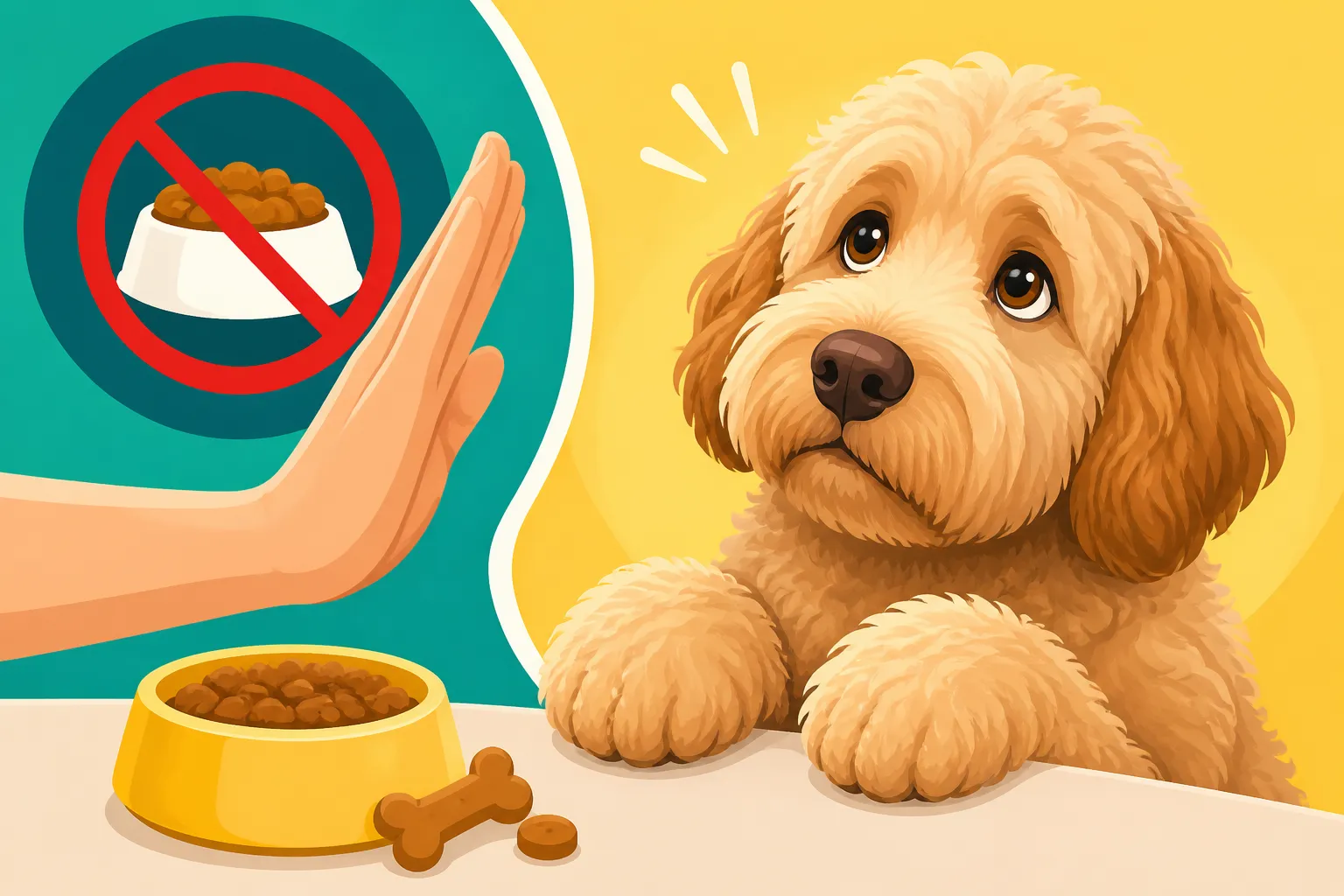
Keeping Weight Off a Labradoodle That Begs
It's a familiar scenario for many Labradoodle owners: you're trying to enjoy your meal, or even just walk past the treat cupboard, and there they are – those big, soulful eyes, fixed intently on you, often accompanied by a gentle paw tap or a soft whine. Our beloved Labradoodles are masters of the art of begging, and their seemingly insatiable appetites can make keeping them at a healthy weight a real challenge. This comprehensive guide is here to help you understand why your Labradoodle might always seem hungry, the risks of letting them get too pudgy, and practical strategies to manage their weight and curb those persuasive begging behaviors.
Understanding the Labradoodle's Propensity for Weight Gain
If you've ever owned a Labradoodle, you've probably noticed their enthusiasm for food. It's not just your imagination; there are some very real reasons why these wonderful dogs seem to have a perpetually empty stomach and a knack for gaining weight. Understanding these underlying factors is the first step toward effective weight management.
Genetic Factors from Parent Breeds
When you bring a Labradoodle into your home, you're essentially getting a delightful mix of a Labrador Retriever and a Poodle. Both parent breeds contribute unique traits, and when it comes to appetite and metabolism, those traits can lean towards a tendency for weight gain. The Labrador Retriever side of your Labradoodle's family tree is well-known for its love of food. Labradors are often described as "food-motivated" – a polite way of saying they'll eat just about anything, anytime, anywhere. This drive for food can be incredibly strong, making them excellent candidates for training with treats, but also highly susceptible to overeating if given the chance. Many Labradors carry a specific gene variant that impacts the brain's signals for satiety, meaning they literally feel less full after eating.
While Poodles are generally more svelte and known for their active metabolisms, they too can put on weight, especially if they're not getting enough exercise or are being overfed. A Poodle's metabolism, while often leaner than a Labrador's, can still slow down with age or if they're spayed or neutered. So, your Labradoodle might inherit the Labrador's strong food drive and a Poodle's tendency to gain weight if their activity levels don't match their calorie intake. This genetic predisposition means that we, as owners, need to be extra vigilant.
The "Always Hungry" Labradoodle Syndrome
It's a common lament among Labradoodle owners: "My dog acts like he's starving, even after a huge meal!" This isn't just a cute quirk; it's often a genuine reflection of their internal wiring. Because of the aforementioned Labrador genetics, your Labradoodle might not experience the same feelings of fullness or satiety that other breeds do. They might eat quickly, vacuuming up their kibble in seconds, and then immediately look at you as if you've forgotten the second course. This intense focus on food can manifest as persistent begging, scavenging for dropped crumbs, or even trying to "counter surf" for unattended snacks.
This constant perceived hunger can be incredibly hard to resist. We want our dogs to be happy, and for many dogs, food equals happiness. However, giving in to every pleading look or nudge can quickly lead to an unhealthy weight. It's a psychological battle for both you and your dog – your dog believes they need more food, and you struggle with feeling like you're depriving them. Understanding that this "always hungry" behavior is often innate, rather than a sign of actual starvation, can help you develop the resilience needed to stick to a healthy feeding plan. You might find yourself saying "no" more often than you'd like, but it's ultimately for their long-term health. Whether a Labradoodle Is Always Hungry delves deeper into this particular trait.
Impact of Spaying/Neutering on Metabolism
Another significant factor contributing to weight gain in Labradoodles, as with many dog breeds, is the impact of spaying or neutering. While these procedures are important for population control and preventing certain health issues, they also lead to hormonal changes that can drastically affect a dog's metabolism. After being spayed or neutered, a dog's metabolic rate typically slows down. This means they require fewer calories to maintain their body weight than they did before the surgery.
Many owners continue feeding the same amount of food as prior to the procedure, unknowingly contributing to a caloric surplus. This excess, even if seemingly small day by day, accumulates rapidly. Over time, this can lead to a gradual but steady increase in weight. It's not uncommon for a Labradoodle to start showing signs of being overweight within a few months to a year post-surgery if their diet isn't adjusted. Discussing proper post-spay/neuter nutrition with your vet is crucial, as is careful monitoring of your dog's weight and activity levels during this transition period.
Recognizing When Your Labradoodle is Overweight
It’s easy for us to overlook a few extra pounds on our furry friends, especially when their plush, curly coats can hide a multitude of sins. But recognizing the subtle signs of weight gain early is paramount to preventing more serious health problems down the line. It's not just about what the scale says; it's about your dog's overall body condition.
The Body Condition Score
One of the most objective and helpful tools for assessing your Labradoodle's weight is the Body Condition Score (BCS). This system, usually a scale from 1 to 9 (where 1 is emaciated and 9 is morbidly obese, with 5 being ideal), helps you evaluate your dog's fat reserves. It’s a visual and tactile assessment that veterinarians use regularly, and you can learn to do it at home too. The goal is for your Labradoodle to be a BCS of 5.
To perform a BCS assessment, gently feel your dog's ribs. At a BCS of 5, you should be able to feel their ribs easily with slight pressure, almost like feeling the back of your hand. If you have to press hard to feel them, or can't feel them at all, your dog is likely overweight. Next, look at your dog from above. They should have a distinct waistline, an hourglass shape, behind their ribs. If they look like a continuous cylinder, or even bulge outwards, they're carrying too much weight. Finally, observe them from the side. An ideal weight Labradoodle will have an abdominal tuck, where the belly slopes up from the rib cage to the hind legs, rather than hanging low. Practicing this regularly will help you understand The Weight a Labradoodle Should Hold.
Visual and Tactile Clues
Beyond the formal BCS, there are several everyday visual and tactile cues that can tip you off to creeping weight gain. Visually, watch how your Labradoodle moves. Do they seem a bit slower or more reluctant to play? Are they panting more easily after moderate activity? Notice the way their coat lays – is it looking a bit "fuller" than usual? A healthy Labradoodle should move with grace and ease, and their musculature should be discernible under their coat. If their legs seem a bit more like tree trunks than athletic limbs, it's a sign.
Tactilely, beyond the ribs, feel along their spine and hips. You should be able to feel the bony prominences of their spine and hip bones without pressing too hard. If these areas are covered by a thick layer of fat, it's a clear indicator of excess weight. Pay attention to the base of their tail as well; a fat deposit here is a classic sign of an overweight dog. Don't be fooled by their fluffy coat; you really need to get your hands on them and feel what's underneath. Sometimes, your grooming routine can be a great time to do this check, as you're already running your hands through their fur. The Weight a Labradoodle Puts On Without Anyone Noticing often starts with these subtle changes.
Subtle Behavioral Changes
It's not just physical changes that signal weight gain; your Labradoodle's behavior can also tell a story. An overweight dog often becomes less enthusiastic about activities they once loved. They might prefer napping over a walk, or seem less inclined to chase a ball. You might notice them lagging behind on walks, needing more breaks, or generally having less energy throughout the day. This isn't necessarily a sign of old age; it could simply be the extra burden they're carrying.
Additionally, a Labradoodle carrying too much weight might struggle with grooming themselves, particularly reaching certain areas, leading to more mats or dirty patches. They may also be more restless at night, struggling to get comfortable, or exhibit changes in their breathing patterns, such as snoring more heavily. These subtle shifts are easy to dismiss as normal aging or personality quirks, but they can be crucial indicators that it’s time to re-evaluate their diet and exercise routine. Observing their energy levels and willingness to engage in play is key.
The Health Risks of Excess Weight in Labradoodles
Allowing your Labradoodle to carry extra weight isn't just about aesthetics; it significantly compromises their health and quality of life. The long-term consequences can be severe, leading to chronic conditions that are painful, expensive to manage, and ultimately shorten their lifespan. It's a heavy price to pay for those extra treats and portions.
Joint Strain and Mobility Issues
Labradoodles, like their parent breeds, can be predisposed to certain orthopedic conditions, particularly hip and elbow dysplasia. When you add excess weight into the equation, you put immense strain on these already vulnerable joints. Imagine carrying a backpack filled with bricks all day, every day – that's what extra pounds feel like to your dog's joints. This constant pressure accelerates the wear and tear on cartilage, exacerbates existing conditions, and can lead to painful arthritis much earlier in life.
An overweight Labradoodle might develop a stiff gait, struggle to get up after lying down, or avoid jumping onto furniture or into the car. What might start as a subtle limp can progress to chronic pain and significantly reduced mobility. Managing joint pain and mobility issues in an overweight dog can involve costly medications, supplements, and even surgery. Preventing the weight gain in the first place is the most effective way to protect their precious joints. Hips and Elbows in a Sixty Pound Labradoodle and Signs a Young Labradoodle's Hips Are Failing offer more insight into these specific joint concerns.
Increased Risk of Chronic Diseases
Beyond joint issues, obesity significantly elevates a Labradoodle's risk for a host of other chronic and debilitating diseases. One of the most common is diabetes mellitus, where the body either doesn't produce enough insulin or can't use it effectively. Overweight dogs are far more prone to developing insulin resistance, making them susceptible to this condition, which requires lifelong management with insulin injections and a carefully controlled diet.
Excess fat also puts a strain on the cardiovascular system, increasing the risk of heart disease and high blood pressure. Their respiratory system can also suffer; the extra fat around their chest cavity makes it harder for their lungs to expand, leading to reduced stamina and increased panting. Certain types of cancer have also been linked to obesity. Furthermore, overweight dogs often have compromised immune systems and are at a higher risk of complications during anesthesia, making even routine veterinary procedures more dangerous. It’s a compounding cycle of health challenges.
Impact on Lifespan and Quality of Life
Ultimately, the most heartbreaking consequence of obesity is its impact on your Labradoodle's lifespan and their overall quality of life. Studies consistently show that dogs maintained at a healthy weight live longer, healthier, and happier lives. An overweight Labradoodle may spend their golden years suffering from aches, pains, and difficulty moving, unable to enjoy walks, play, or even simple cuddles on the couch. Their ability to engage with their family and experience joy is severely limited.
Think about it: a dog that can no longer run and play freely, who struggles to breathe, and is constantly in discomfort, isn't living their best life. While it's tough to deny those pleading eyes an extra biscuit, the kindness is truly in setting firm boundaries and prioritizing their long-term well-being. Ensuring your Labradoodle maintains a healthy weight is one of the most profound ways you can demonstrate your love and commitment, allowing them to enjoy more years of active, comfortable companionship with you. What Shortens a Labradoodle's Life Most often includes obesity as a major factor.
Strategic Feeding: Portion Control and Appropriate Diet
Successfully managing your Labradoodle's weight starts at the food bowl. It's not just about what you feed them, but how much and how consistently. Strategic feeding is a cornerstone of any effective weight management plan, turning meal times from a source of temptation into an opportunity for health.
Calculating Daily Calorie Needs
This is where the science comes in, and it's less daunting than it sounds! The first step is to determine your Labradoodle's ideal weight with your veterinarian's help. Once you have that target weight, you can calculate their daily caloric needs. A general guideline for an adult dog is around 25-30 calories per pound of ideal body weight per day, but this can vary significantly based on their age, activity level, and individual metabolism. For instance, a very active 60-pound Labradoodle might need more than a sedentary one of the same size. Older dogs, especially, require fewer calories as their metabolism slows down, so it's vital to adjust their intake as they age. Feeding an Old Labradoodle That Has Slowed Down will expand on this.
Your veterinarian is the best resource for a precise calculation, especially if your dog needs to lose weight. They can provide a specific calorie target tailored to your dog's unique circumstances. Remember, every calorie counts, and consistency is key. Don't just follow the bag's recommendations blindly; those are often formulated for intact, highly active dogs and can lead to overfeeding for many household pets.
Choosing the Right Food
Not all dog foods are created equal, especially when it comes to weight management. When your Labradoodle is begging for food, you want a diet that keeps them feeling fuller for longer without packing on the calories. Look for foods that are:
- High in protein: Protein helps dogs feel satiated and supports lean muscle mass during weight loss.
- High in fiber: Fiber adds bulk to the food without adding many calories, promoting a feeling of fullness and aiding digestion.
- Lower in fat and calories: Obviously, fewer calories per serving mean you can feed a slightly larger volume, which can be psychologically satisfying for a perpetually hungry Labradoodle.
Many pet food companies offer specific "weight management" or "light" formulas. Read the labels carefully and compare calorie content. Sometimes, a fresh food delivery service like Ollie can offer pre-portioned, nutrient-dense meals that are specifically formulated for weight control, making it easier to stick to a plan without worrying about calculations. Discuss these options with your vet to ensure the food meets all your Labradoodle's nutritional requirements.
Measuring Accurately
This might seem obvious, but it's where many well-intentioned owners go wrong. Scooping kibble directly from the bag with a random cup is incredibly inaccurate. A difference of even a quarter cup per day can add up to significant weight gain over weeks and months. Invest in a proper measuring cup for pet food, or even better, a digital kitchen scale. Measuring food by weight (grams or ounces) is far more precise than by volume.
If your Labradoodle gets two meals a day, measure out the total daily allowance and then divide it. This prevents accidentally overfeeding at one meal. Be mindful of How Much an Adult Labradoodle Eats Daily for their size and activity level. If you feed wet food or a mix of wet and dry, ensure you're accounting for the calorie content of both. Also, consider slow feeder bowls, especially if your Labradoodle inhales their food. These bowls have various obstacles that force your dog to eat more slowly, which can improve digestion and help them feel more satisfied by the time the bowl is empty. You can find many effective slow feeder designs on Amazon or Chewy. This simple step can make a huge difference in controlling calorie intake and preventing that immediate "more, please!" look after meals.
Managing Treats and Snacking Without Giving In to Begging
Let's be honest, treats are a huge part of the joy of dog ownership. But for a Labradoodle who begs with the intensity of an Olympic athlete, they can be a real minefield for weight gain. The good news is you don't have to eliminate treats entirely; you just need to be smarter and more intentional about them.
Healthy, Low-Calorie Alternatives
When your Labradoodle gives you those puppy-dog eyes, instead of reaching for another high-calorie biscuit, consider healthier, low-calorie options. Many vegetables and some fruits can be excellent, guilt-free treats. Think crunchy carrots, green beans, or slices of apple (without seeds, as apple seeds contain cyanide). Plain, air-popped popcorn (without butter or salt) can also be a fun, low-calorie snack. These alternatives offer a satisfying crunch and volume without adding significant calories.
Always introduce new foods slowly to avoid upsetting your dog's stomach. Avoid grapes, raisins, onions, garlic, and anything with xylitol, as these are toxic to dogs. A quick online search or a chat with your vet can confirm what's safe. Keeping a container of pre-cut, dog-safe veggies in the fridge can make it easy to grab a healthy alternative when those begging behaviors start. Your Labradoodle might initially turn up their nose at a carrot stick compared to a meaty treat, but with consistency, many dogs learn to love these healthy options.
Using Treats for Training, Not Just Indulgence
Change your mindset about treats: they are valuable tools for training and positive reinforcement, not just handouts for being cute. If your Labradoodle is constantly begging, you're likely giving them treats without a specific purpose. Start using treats exclusively for rewarding desired behaviors. Did they sit politely when asked? Treat. Did they go to their bed when the doorbell rang? Treat.
Break larger treats into tiny, pea-sized pieces. Your Labradoodle doesn't care about the size of the treat, only the reward itself. This means you can use fewer calories to achieve the same motivational effect. If you're working on a new command or reinforcing good manners, those little pieces add up quickly. Consider using a portion of their daily kibble allowance as training treats during the day. This way, you're not adding extra calories, just redirecting them. This purposeful approach to treats helps manage The Weight a Labradoodle Puts On Without Anyone Noticing while also strengthening their good behavior.
Breaking the Begging Cycle
Begging is a learned behavior, reinforced by us, even unintentionally. Every time you give in to those insistent nudges or whines, you're teaching your Labradoodle that begging works. To break this cycle, you need consistency and a strong will. The golden rule is: never give food from your plate or while you are eating. This creates a clear boundary.
When your Labradoodle starts to beg, completely ignore them. Turn your back, avoid eye contact, and don't speak to them. It will be hard, and they might even escalate their begging at first (this is called an "extinction burst"), but if you remain consistent, they will eventually learn that begging yields no results. Consider teaching them a "place" command, where they go to their mat or bed during mealtimes. Reward them after your meal is finished and they've remained calmly in their place. This teaches them that calm, patient behavior earns rewards, not incessant pestering. It requires patience, but it's vital for their well-being and your peace of mind.
The Role of Exercise in Weight Management
While diet is crucial, exercise is the other half of the weight management equation. A Labradoodle is a naturally active breed, and providing them with adequate physical activity is not only essential for burning calories but also for their mental stimulation and overall happiness. Even a perfectly portioned diet won't keep the weight off if your dog is a couch potato.
Tailoring Exercise to Your Labradoodle's Age and Health
Just like people, not all Labradoodles have the same exercise needs or capabilities. A young, healthy adult Labradoodle might thrive on long hikes and vigorous games of fetch, while an older dog with arthritis or a puppy still developing their joints will need a gentler approach. It's vital to tailor the exercise routine to your individual dog.
For puppies, short, frequent play sessions are better than long, intense runs that could harm their growing bones. For senior Labradoodles, Exercise for a Stiff Old Labradoodle might involve shorter, more frequent walks on soft surfaces, gentle swimming, or even canine massage and physical therapy. If your dog is significantly overweight, start slowly and gradually increase the duration and intensity of exercise to avoid injury or overexertion. Always consult your vet before starting any new exercise regimen, especially if your Labradoodle has underlying health conditions or is quite overweight. They can help you devise a safe and effective plan.
Making Exercise Fun and Engaging
Exercise shouldn't feel like a chore for either of you! Labradoodles are intelligent and playful, so incorporate activities that appeal to their natural instincts. Games of fetch are a classic for a reason, tapping into their Labrador retrieving drive. You can vary it by throwing balls into water (if they love to swim) or hiding toys for them to find. Tug-of-war is another great way to burn energy and engage their minds.
Consider dog sports like agility, flyball, or obedience classes. These activities provide both physical and mental stimulation, which can be incredibly fulfilling for a Labradoodle. Even daily walks can be made more exciting by exploring new routes, letting them sniff around (a great mental workout!), or incorporating short bursts of jogging. Puzzle toys that dispense kibble can also provide mental enrichment and extend meal times, making them work for their food. Check out Amazon for a huge selection of engaging puzzle feeders and interactive toys.
Consistency is Key
The most effective exercise plan is one that you can stick to consistently. It's better to have a moderate, daily routine than sporadic, intense bursts of activity followed by days of inactivity. Aim for at least 60-90 minutes of moderate to vigorous exercise daily for an adult Labradoodle, broken into two or more sessions. This could be a brisk walk in the morning, a play session in the afternoon, and another walk in the evening.
Rain or shine, commitment to the schedule is paramount. On days with bad weather, find indoor alternatives like playing hide-and-seek, training sessions, or using a doggie treadmill if you have one. Consistency not only burns calories but also helps regulate their metabolism and establishes a predictable routine, which can reduce anxiety and contribute to better overall behavior. Remember, a well-exercised Labradoodle is often a happier, calmer, and less inclined-to-beg Labradoodle. What a Labradoodle Needs Daily emphasizes this balance.
Addressing Behavioral Aspects of Begging
Begging is a deeply ingrained behavior for many Labradoodles, often fueled by their genetics and unintentionally reinforced by their loving owners. To truly keep the weight off, you need to tackle the behavior head-on, not just the food itself. This often means changing your habits as much as your dog's.
Ignoring Undesirable Behavior
This is perhaps the hardest but most crucial step in stopping begging. When your Labradoodle starts to beg – whether it's pawing, whining, staring intently, or nudging – you must completely ignore them. This means no eye contact, no talking, no pushing them away, no sighs of exasperation. Any reaction, even a negative one, can be perceived as attention and inadvertently reinforce the behavior.
It takes incredible willpower, especially when those big, expressive eyes are working their magic. Be prepared for an "extinction burst," where the begging might intensify before it gets better. Your dog is thinking, "My usual tactics aren't working, so I'll try harder!" If you stay strong through this phase, they will eventually learn that begging is fruitless. It might feel mean in the moment, but you are teaching them a valuable lesson that benefits their health and your peace of mind in the long run.
Teaching "Place" or "Go to Bed" During Meals
Instead of just ignoring your Labradoodle while you eat, you can proactively give them an alternative, desirable behavior. Teach them a "place" or "go to bed" command. Practice this command outside of mealtimes first, rewarding them generously with a low-calorie treat when they calmly go to and stay on their designated spot (a dog bed, mat, or crate).
Once they understand the command, start applying it during your mealtimes. As you sit down to eat, calmly tell your Labradoodle "place" and direct them to their spot. Initially, you might need to tether them or close them in their crate nearby. Reward them with praise or a small, healthy treat after your meal is over, when they are calm and released from their "place." This teaches them that good behavior during your meal earns a reward, not begging. It helps create a structured routine and removes them from the immediate temptation of your food. A Labradoodle That Waits Outside the Bathroom Door can be an early sign of their velcro nature.
Enlisting the Whole Family
Consistency is the bedrock of behavior modification, and that means everyone in the household needs to be on the same page. If one family member is diligently ignoring the begging while another secretly slips table scraps under the table, your efforts will be undermined, and your Labradoodle will remain confused and continue to beg. Hold a family meeting and explain the importance of a united front.
Discuss what is acceptable and unacceptable behavior around food. Ensure everyone understands the designated "treat" schedule (if there is one) and what constitutes a healthy treat. If children are involved, explain in simple terms why giving human food is bad for the dog's tummy and health. Create a clear rule: no human food from the table, ever. This unity prevents your Labradoodle from "shopping" for the weakest link in the family and helps them learn the rules much faster. It's an investment in their health that requires a collective effort.
| Begging Behavior | What Not to Do | What To Do |
|---|---|---|
| Whining, staring | Make eye contact, say "no," push away, sigh loudly | Turn your back, ignore completely, walk away |
| Pawing, nudging | Pet them, give a little scratch, give a treat | Ignore, move away, stand up if necessary |
| Stealing food | Chase them, yell | Secure food, use "leave it" command (if trained), redirect to toy |
| Jumping on counters | Yell, push down | Train "off" command, secure counters, use baby gates |
| Why it works | Reinforces the behavior, provides attention | Extinguishes the behavior by removing all rewards |
When to Seek Professional Guidance
Sometimes, despite your best efforts, managing a Labradoodle's weight and relentless begging can feel overwhelming. This is where professional guidance becomes invaluable. Don't hesitate to reach out to experts who can provide tailored advice and support.
Consulting Your Veterinarian
Your veterinarian is your primary partner in your Labradoodle's weight management journey. They can perform a thorough physical examination, accurately assess your dog's current Body Condition Score, and help determine their ideal weight. Crucially, they can rule out any underlying medical conditions that might be contributing to weight gain or an insatiable appetite, such as thyroid issues Thyroid Failure in a Labradoodle or other metabolic disorders.
Your vet can also help you calculate a precise daily caloric intake based on your Labradoodle's specific needs, activity level, and health status. They can recommend appropriate weight loss dog foods, whether it's a specific commercial diet, a prescription food, or guidance on fresh food options. They can also advise on safe exercise levels and monitor your dog's progress with regular weigh-ins. Think of them as your chief strategist and medical advisor for this important health goal.
Working with a Canine Nutritionist
For complex cases or if you prefer a highly customized diet plan, consider consulting a certified canine nutritionist. While your vet can provide general dietary advice, a nutritionist specializes in developing detailed meal plans that cater to your Labradoodle's unique requirements, taking into account their breed, age, activity level, any health conditions, and even their individual preferences.
A nutritionist can help you navigate the vast array of dog foods on the market, analyze their ingredients, and guide you on the pros and cons of different feeding styles (e.g., kibble, wet, fresh, raw, homemade). They can also provide strategies for increasing satiety with fewer calories, incorporating healthy snacks, and ensuring your Labradoodle receives all necessary nutrients while shedding pounds. This can be especially helpful if you're exploring fresh food options from services like Ollie, or want to ensure a homemade diet is balanced.
Exploring Prescription Weight Loss Diets
If your Labradoodle is significantly overweight or has struggled to lose weight on conventional diets, your veterinarian might recommend a prescription weight loss diet. These specialized diets are formulated with specific calorie densities, higher fiber content, and precise nutrient balances to facilitate safe and effective weight loss. They are designed to help dogs feel full on fewer calories and preserve muscle mass while burning fat.
These foods are typically only available through a veterinary clinic and are not just "light" versions of regular kibble. They undergo rigorous testing and are proven to aid in weight reduction. While they might be a bit more expensive, the investment in your Labradoodle's health is invaluable. Your vet can explain how these diets work, how to transition your dog onto them, and what results you can expect. They will also provide ongoing monitoring to ensure your Labradoodle is losing weight at a healthy pace and staying well-nourished. It’s a powerful tool in your weight management arsenal.
Disclaimer
This article is for general informational purposes only and does not constitute professional advice. Laws, prices and regulations vary by location and change over time. Consult a qualified professional for guidance on your specific situation.