Whether a Labradoodle Eats Too Fast
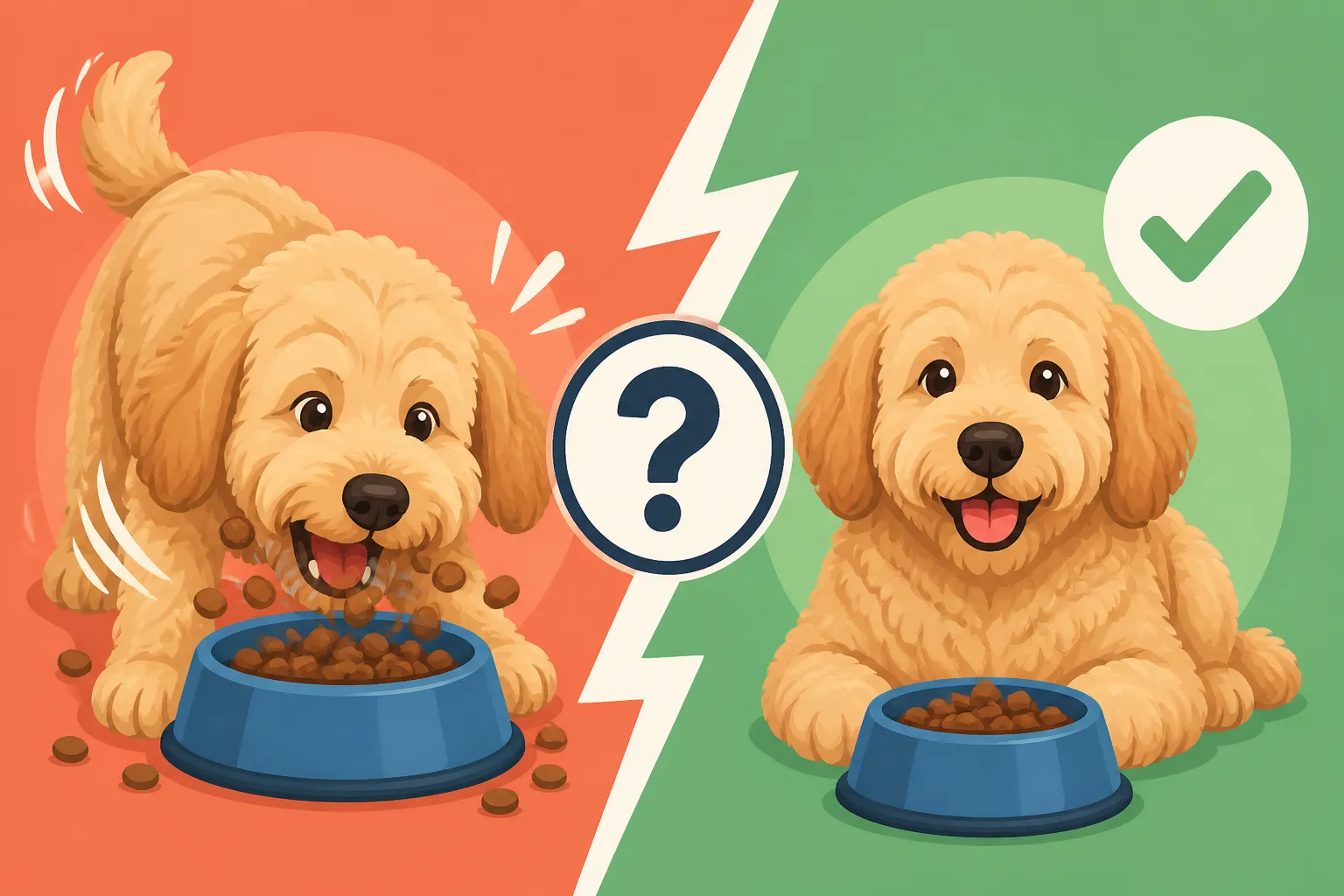
Oh, the sheer joy of watching your beloved Labradoodle inhale their dinner in under sixty seconds, only to look at you with those innocent eyes, begging for more! It's a common, and often frustrating, scenario for many Labradoodle parents, leaving us wondering if our furry friends are truly enjoying their meals or simply participating in a speed-eating contest. This guide is here to unravel the mystery behind fast eating in Labradoodles, explore the potential risks, and offer practical, empathetic solutions to help your dog savor every bite.
The Curious Case of the Speedy Scarfing Labradoodle
You're not alone if you've ever felt like your Labradoodle treats their food bowl like a ticking time bomb. Many dogs, regardless of breed, can be enthusiastic eaters, but with the Labradoodle's lineage, there can be some specific inclinations at play. We'll delve into why this behavior is so common and if there's anything unique to our beloved Doodles.
Why Some Dogs Gobble Their Food
Think about a dog's natural instincts. In the wild, food isn't a guaranteed, regularly scheduled event. It's often a scramble, a competition, and a resource to be consumed quickly before a rival or predator comes along. While our pampered pups certainly aren't living in the wild, those ancient instincts are still hardwired into their brains. If a dog perceives any competition, even from a phantom rival or simply another dog in the household, that urge to "eat it now before it's gone" can kick in. This could be even more pronounced if your Labradoodle grew up in a busy litter where they had to compete with siblings for access to the food bowl.
Beyond instinct, simple hunger is a huge factor. A truly active Labradoodle, burning a lot of calories throughout the day, might genuinely be ravenous by mealtime. Perhaps their previous meals were too small, or they simply have a very high metabolism. Sometimes, the food itself is just too good. Imagine someone placing your favorite gourmet meal in front of you after a long, tiring day – you'd probably dig in pretty fast too! Certain food textures, palatability, or even the meal schedule itself can contribute to a dog's tendency to eat quickly. Maybe the gap between meals is too long, building up an intense hunger. Or perhaps the kibble is just too easy to swallow whole without much chewing.
Is This a Labradoodle Specific Trait?
While not exclusively a Labradoodle trait, our Doodles do carry some genetic predispositions that can make them more prone to fast eating. Remember, the Labradoodle is a cross between a Labrador Retriever and a Poodle. Both parent breeds are known for their intelligence and often, their love of food. Labradors, in particular, are famously food-motivated and can be prone to scarfing down meals. This strong drive to eat, and eat quickly, is deeply embedded in their Labrador heritage. Some studies have even identified a "hunger gene" (specifically, a POMC gene deletion) that is more common in Labradors and can lead to increased appetite and a tendency towards obesity, which naturally encourages faster eating. If your Labradoodle inherited this particular genetic quirk, they might genuinely feel a more intense, constant hunger than other breeds.
Poodles, while often more refined in their eating habits, are still intelligent dogs who can be driven by routine and expectation. If they learn that eating quickly gets them closer to the possibility of more food or treats, they can certainly adapt to that behavior. So, combine the Labrador's hearty appetite and potential genetic hunger with the Poodle's intelligence and adaptability, and you have a recipe for a dog that might very well be a champion speed eater. It's not necessarily a reflection of how much you feed them, but rather a combination of instinct, genetics, and learned behavior. You might find that Whether a Labradoodle Is Always Hungry is a related concern many owners share.
The Potential Risks of Rapid Eating
Beyond the annoyance of a messy mealtime and the fleeting moment of canine culinary enjoyment, there are genuine health risks associated with a Labradoodle that eats too fast. These aren't minor inconveniences; some can be life-threatening. Understanding these dangers is crucial for any responsible Labradoodle owner.
Choking Hazards and Digestive Distress
When a dog eats too quickly, they often don't chew their food properly, if at all. Large pieces of kibble, or even larger chunks of softer food, can be swallowed whole. This immediately presents a choking hazard. Imagine a piece of kibble getting lodged in their throat – it's a terrifying thought and requires immediate intervention. Beyond choking, the digestive system isn't designed to handle large, unchewed pieces of food efficiently.
This lack of proper chewing means the stomach has to work extra hard to break down the food. This can lead to a host of digestive issues. We're talking about indigestion, excessive gas, stomach upset, and even vomiting shortly after eating. It's not uncommon for a fast-eating Labradoodle to throw up undigested food because their stomach was simply overwhelmed or because they've ingested too much air along with their meal. This isn't just unpleasant for you to clean up; it's uncomfortable for your dog and can prevent them from properly absorbing nutrients from their food, even if they're eating a high-quality diet. Over time, chronic digestive distress can weaken their system and make them more susceptible to other health problems.
The Looming Shadow of Bloat
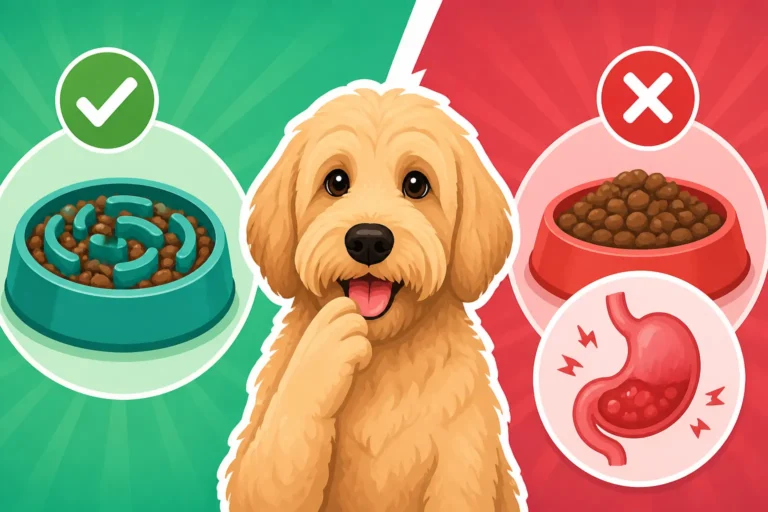
This is perhaps the most serious risk associated with fast eating, especially for a Labradoodle. Gastric Dilatation-Volvulus, commonly known as bloat, is a life-threatening condition where the stomach fills with gas, food, or fluid (dilatation) and then twists (volvulus). This twisting cuts off blood supply to the stomach and can lead to organ damage, shock, and death within hours if not treated surgically.
Labradoodles, particularly the standard-sized varieties, inherit a deep-chested conformation from their Poodle parent. This deep chest is a significant risk factor for bloat. When a dog eats rapidly, they often gulp down a lot of air along with their food. This excess air accumulates in the stomach, contributing to the initial dilatation. While fast eating isn't the only cause of bloat – stress, exercise around mealtime, and genetics also play roles – it is a well-established contributing factor. The combination of a deep chest and rapid eating puts your Labradoodle at a higher risk. You should know The Chest Shape That Puts a Labradoodle at Bloat Risk and The Signs a Labradoodle Is Bloating so you can recognize them. It's a truly frightening condition, and anything we can do to mitigate the risk is worth the effort.
Practical Solutions for Slowing Down Mealtime
The good news is that there are many effective strategies to encourage your Labradoodle to eat at a more leisurely pace. These solutions range from simple adjustments to specialized tools, all aimed at making mealtime a slower, more engaging experience.
Specialized Bowls and Feeders
One of the most straightforward and effective ways to combat fast eating is by using specialized bowls designed to slow a dog down. These are often called "slow feeder bowls" or "puzzle bowls." Instead of a wide-open basin, they feature various ridges, mazes, or pillars inside the bowl. Your Labradoodle has to navigate their kibble around these obstacles, making it impossible for them to gobble large mouthfuls at once. This forces them to pick up smaller portions, which means more chewing and less air gulping.
You can find a wide variety of these bowls on platforms like Chewy or Amazon, ranging from simple plastic designs to more durable ceramic or stainless steel options. Some are more challenging than others, so you might need to experiment to find the right fit for your particular Labradoodle. For instance, some bowls have gentle curves, while others boast intricate patterns that really make your dog work for each piece of food. Beyond bowls, there are puzzle feeders that dispense kibble gradually as your dog manipulates them, or even snuffle mats, which are fabric mats with many folds and pockets where you can hide food. These turn mealtime into a mental exercise, engaging their natural foraging instincts. This type of enrichment is fantastic for their brains and can significantly reduce the speed at which they eat, directly cutting down the risks we just discussed. Whether a Slow Feeder Cuts a Labradoodle's Bloat Risk is a question many owners ask, and the answer is a resounding yes, it can help.
Creative Feeding Strategies
Sometimes, the solution doesn't require a new gadget, but simply a different approach to how you present the meal. Instead of pouring all the food into a bowl at once, consider splitting your Labradoodle's daily food allowance into smaller, more frequent meals. For example, if they usually get two large meals a day, try three or even four smaller meals. This reduces the intense hunger that can lead to rapid eating. How Much a Labradoodle Puppy Should Eat Daily and The Growth Formula a Standard Labradoodle Needs are critical considerations here, as puppies need more frequent, carefully measured meals.
Another fantastic strategy is to make mealtime an active training session. Use your Labradoodle's kibble as rewards for practicing basic obedience commands or learning new tricks. This not only slows down their eating but also provides valuable mental stimulation and strengthens your bond. It's a win-win! You can also scatter their kibble across a clean floor or yard, forcing them to sniff out and pick up each piece individually. This mimics natural foraging behavior and significantly slows down consumption, as well as providing sensory enrichment. For soft food or wet food, consider spreading it thinly on a lick mat. These silicone mats have textured surfaces that dogs have to lick to get the food, which is incredibly soothing and can take a surprisingly long time. Ollie, a fresh dog food brand, often comes in a texture that works well for spreading on such mats.
Environmental Management for Mealtime
The environment in which your Labradoodle eats can play a huge role in their eating speed. If your dog feels rushed, stressed, or like they need to compete, they're more likely to gobble their food. Creating a calm, consistent, and secure mealtime routine is essential.
First, identify a quiet, low-traffic area in your home where your Labradoodle can eat undisturbed. If you have multiple pets, feed them in separate rooms or at a distance from each other to eliminate any perceived competition. Even if your dogs usually get along, the presence of another animal can trigger that instinctive urge to eat quickly. Make sure young children understand not to disturb the dog while it's eating, allowing for a stress-free experience. Some owners also find that ensuring their Labradoodle has a dedicated "eating spot" helps them relax and take their time.
Consider the height of the food bowl. While raised bowls were once thought to reduce bloat risk, current research actually suggests they might increase it for some deep-chested breeds. It's a complex topic, and you might want to read more about Whether a Raised Bowl Suits a Deep Chested Labradoodle. Generally, feeding at floor level is often recommended. Finally, ensure there's a period of calm before and after meals. Avoid strenuous exercise or highly exciting play right before or after your Labradoodle eats. A good rule of thumb is to have a "cool down" period of at least an hour before and after meals to reduce the risk of bloat. This ties directly into Whether a Labradoodle Should Rest After Eating.
| Slow Feeder Type | Pros | Cons | Best For |
|---|---|---|---|
| Puzzle Bowls | Simple to use, many designs, encourages licking/picking | Some can be hard to clean, may not be challenging enough for very fast eaters | Most Labradoodles, easy entry to slow feeding |
| Snuffle Mats | Engages foraging instinct, soft, machine washable | Can get messy, not ideal for wet food, strong chewers might tear | Engaging mental stimulation, dry kibble |
| Lick Mats | Calming, great for soft/wet food, easy to clean | Limited to soft/wet food, can't hold large quantities | Anxiety reduction, extending soft food meals |
| Interactive Toys/Dispensers | High mental stimulation, can be used on the go | Can be noisy, may require supervision, can be expensive | Highly motivated Labradoodles, travel, extra enrichment |
| Muffin Tin/Scattered Feeding | Free, uses existing items, good for mental engagement | Can be messy, requires clean floor/yard, may not be practical for all | Budget-conscious owners, adding variety, large spaces |
When to Seek Professional Guidance
While many instances of fast eating are simply behavioral and can be managed with the strategies above, there are times when it's prudent to involve a professional. Ignoring persistent or extreme fast eating can have long-term health implications or signal an underlying issue.
Persistent Issues and Underlying Health Concerns
If, despite implementing various slow-feeding techniques, your Labradoodle continues to eat at an alarming speed, or if they exhibit other concerning symptoms, it's time for a veterinary check-up. Sometimes, a dog eating excessively fast could be experiencing medical issues that lead to increased hunger or discomfort. For example, certain parasites can cause a dog to feel constantly hungry, even after eating. Conditions like hyperthyroidism, while less common in dogs than cats, or other metabolic imbalances could also affect appetite and eating speed. Thyroid Failure in a Labradoodle is something to be aware of.
Additionally, if your Labradoodle is consistently vomiting after eating, experiencing chronic diarrhea, or showing signs of discomfort such as bloating, lethargy, or changes in behavior around mealtime, these are red flags that warrant immediate veterinary attention. Your vet can perform a thorough examination, including blood tests or fecal analyses, to rule out any underlying medical conditions that might be contributing to their rapid eating and associated digestive issues. Remember, your vet is your primary partner in your Labradoodle's health, and it's always better to be safe than sorry, especially when health risks like bloat are involved. Pancreatitis After a Labradoodle Raids the Trash is another serious health issue that can sometimes stem from rapid, frantic eating or scavenging.
Consulting Your Vet or a Canine Behaviorist
Even if no immediate medical condition is identified, a persistent and problematic fast-eating habit can benefit from professional guidance. Your veterinarian can offer tailored advice based on your dog's individual health profile, weight, and activity level. They might suggest specific dietary changes, such as a different kibble size or a food designed for sensitive stomachs, to help with digestion and slow down eating. They can also discuss preventive measures like gastropexy, a surgical procedure that tacks the stomach to the abdominal wall to prevent it from twisting, which is sometimes considered for breeds at high risk of bloat.
For behavioral aspects, especially if you suspect anxiety, resource guarding, or competitive tendencies are at play, a certified professional dog trainer or a canine behaviorist can be invaluable. They can observe your Labradoodle's eating habits and overall behavior, helping you pinpoint the root cause of the rapid eating. They can then develop a personalized training plan, using positive reinforcement techniques, to address any underlying behavioral issues and teach your Labradoodle to eat more calmly. Sometimes, just a few sessions with a knowledgeable professional can make a world of difference, transforming mealtime from a frantic race into a calm, enjoyable part of your Labradoodle's day. They can help you teach your dog that there's no need to rush, and that their food is secure and always there for them.
Disclaimer
This article is for general informational purposes only and does not constitute professional advice. Laws, prices and regulations vary by location and change over time. Consult a qualified professional for guidance on your specific situation.