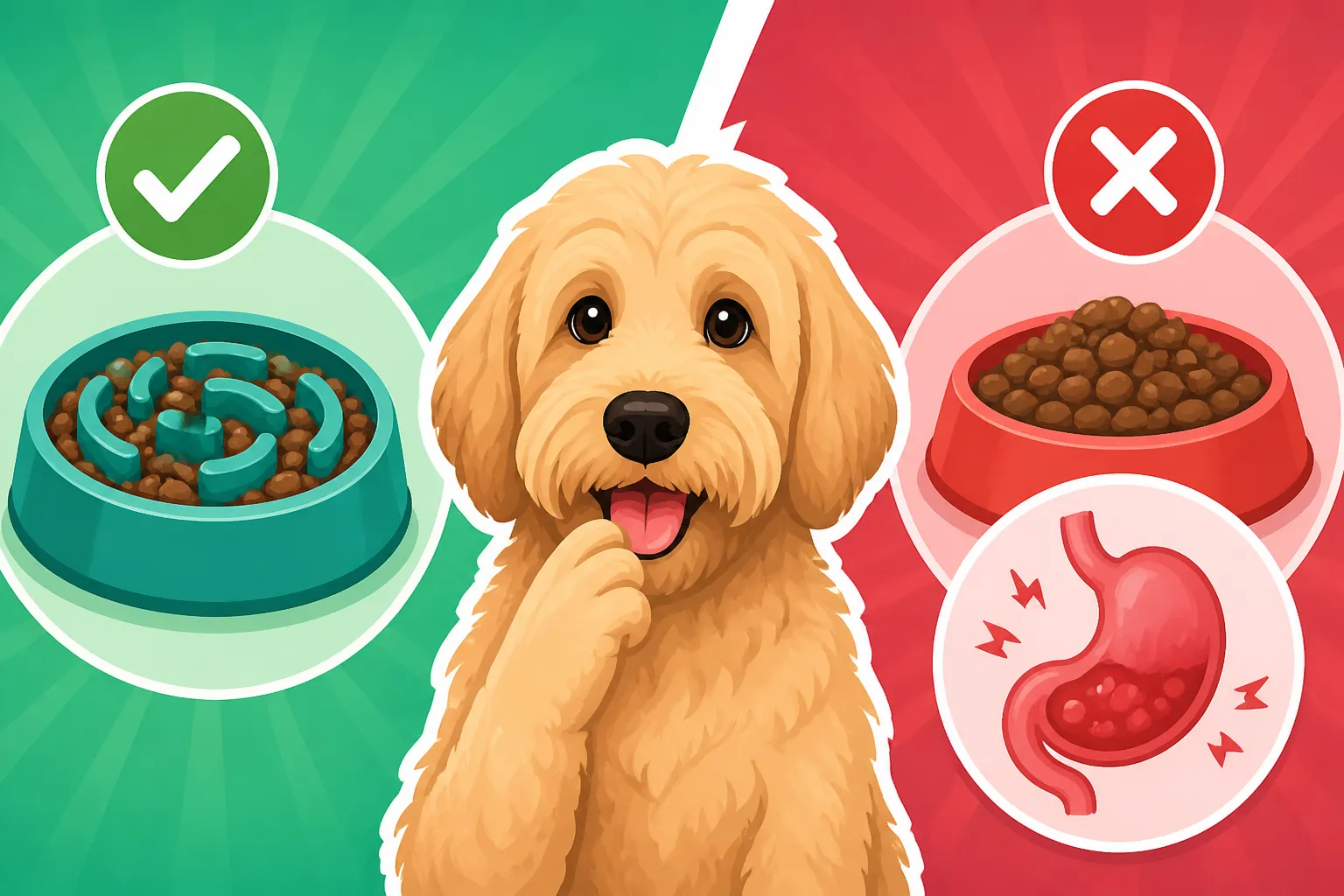
Whether a Slow Feeder Cuts a Labradoodle’s Bloat Risk
The fear of bloat, or Gastric Dilatation-Volvulus (GDV), is a terrifying reality for many Labradoodle owners. It strikes suddenly and can be fatal, leaving us scrambling for any information that might help protect our furry family members. This guide will dive deep into whether using a slow feeder bowl truly reduces a Labradoodle's risk of developing this life-threatening condition, exploring the theories, the evidence, and what a holistic approach to prevention really looks like.
Understanding Bloat and Your Labradoodle's Risk
Bloat is one of those medical emergencies that sends shivers down the spine of any large-breed dog owner, and Labradoodle parents are certainly in that camp. It's not just a bad tummy ache; it's a condition where your dog's stomach fills with gas, food, or fluid, and then twists on itself. This twisting, known as volvulus, traps the contents, cuts off blood supply, and can lead to rapid organ damage and death if not treated immediately.
The Deep Chest a Labradoodle Inherits
One of the primary anatomical risk factors for bloat is a deep, narrow chest. Unfortunately, this is a trait that many Labradoodles inherit from their Poodle lineage. Think of a Poodle's elegant, upright stature – that deep chest cavity provides ample room for the stomach to distend and potentially twist. It's a cruel irony that such a beautiful characteristic can also be a vulnerability. This physical conformation means that simply owning a Labradoodle, especially a standard-sized one, means you're already in a higher risk category compared to a breed with a broader, shallower chest. For more on this, you might find The Deep Chest a Labradoodle Gets From the Poodle illuminating.
The Sudden Onset and Critical Nature
What makes bloat so terrifying is its rapid progression. One minute your Labradoodle might be happy and healthy, and the next, they could be showing severe signs of distress. Symptoms often include unproductive retching or gagging, a distended abdomen that feels hard to the touch, restlessness, pacing, drooling, and signs of pain. These symptoms escalate quickly, and time is of the essence. If you suspect bloat, it's a race against the clock to get your dog to an emergency vet. Every minute counts, as the twisted stomach severely impacts circulation and can lead to shock and organ failure very rapidly. Ignoring these signs, even for a short time, can have tragic consequences. You'll want to be familiar with The Signs a Labradoodle Is Bloating to recognize them immediately.
The Theory Behind Slow Feeder Bowls and Bloat Prevention
The idea behind slow feeder bowls is quite simple and, on the surface, makes a lot of intuitive sense. The theory posits that dogs who eat too quickly gulp down excessive amounts of air along with their food. This swallowed air can contribute to gastric distension, which is the "bloat" part of GDV, and in some cases, could potentially precede the dangerous twisting of the stomach. Slow feeders are designed to make eating a more deliberate process, thereby theoretically reducing the amount of air ingested.
How Slow Feeders Work to Promote Slower Eating
Slow feeder bowls come in a variety of designs, but they all share the common goal of creating physical barriers that force your dog to take smaller bites and eat at a more leisurely pace. Instead of a wide-open basin where a Labradoodle can shovel down a meal in seconds, these bowls feature ridges, mazes, pillars, or other complex patterns. Your dog has to navigate their tongue around these obstacles to get to the kibble, effectively turning mealtime into a bit of a puzzle.
Imagine your Labradoodle, usually inhaling their dinner in under a minute, suddenly taking five to ten minutes to finish. That's the effect these bowls aim for. They make it physically impossible for them to gulp down huge mouthfuls. You can find a huge variety of these bowls on platforms like Chewy or Amazon, ranging from simple designs to more elaborate puzzle feeders that engage your dog even further.
The Hypothesis of Reduced Air Swallowing
The primary mechanism by which slow feeders are believed to reduce bloat risk revolves around minimizing aerophagia, which is the medical term for excessive air swallowing. When dogs eat rapidly, they tend to lift their heads less, take larger gulps, and often don't chew their food thoroughly. This aggressive eating style can lead to a significant amount of air being swallowed along with the food.
This swallowed air then accumulates in the stomach. While not all stomach gas leads to bloat, the theory suggests that a stomach already distended with air might be more prone to twisting. By slowing down the eating process, the dog is encouraged to chew more, take smaller breaths between bites, and thus, theoretically, swallow less air. It seems logical, doesn't it? However, as we'll discuss next, the direct scientific link isn't as clear-cut as we might hope.
The Scientific Evidence: Do Slow Feeders Truly Cut Bloat Risk?
This is where the waters get a little murky, and it's important for Labradoodle owners to approach this topic with a dose of realism. While the theory behind slow feeders seems sound, direct, conclusive scientific evidence specifically linking their use to a significant reduction in GDV incidence in dogs, including Labradoodles, is not as robust as many would hope.
What Research Actually Suggests (and Doesn't Suggest)
Most studies investigating bloat risk factors have identified a range of elements, but few have definitively pinpointed eating speed as the primary or most impactful cause, or slow feeders as a guaranteed preventative measure. Some observational studies have noted that rapid eating can be a risk factor, and it certainly contributes to gastric distension in some dogs. However, these studies often don't isolate slow feeder use as a single variable to prove a direct preventative effect.
The truth is, bloat is a complex condition with multiple contributing factors, and it's difficult to run controlled studies on such a critical, unpredictable event. Many veterinarians and experts recommend slow feeders as part of a general strategy to promote healthier eating habits and reduce some potential risk factors, but rarely do they present them as a standalone "cure" or definitive bloat prevention device. It's more about minimizing a contributing factor rather than eliminating the risk entirely.
Bloat is Multi-Factorial: Beyond Just Eating Speed
It's crucial to understand that bloat isn't caused by one single thing. It's a multi-factorial disease, meaning many elements can converge to create the perfect storm. While rapid eating might play a role, it's far from the only, or even the most significant, factor. Here's a quick look at other recognized risk factors:
| Risk Factor | Description | Impact on Bloat Risk |
|---|---|---|
| Breed Predisposition | Deep-chested breeds like Great Danes, Standard Poodles, and their crosses (Labradoodles) are at higher risk. | High (Anatomical) |
| Genetics / Family History | Dogs with a first-degree relative (parent, sibling) who bloated are at significantly increased risk. | High (Inherited) |
| Age | Risk increases with age, particularly for dogs over 7 years old. | Moderate to High (Physiological changes) |
| Temperament | Anxious, fearful, or highly stressed dogs may be more prone. | Moderate (Behavioral/Physiological) |
| Eating Speed | Rapid eating and gulping air. | Low to Moderate (Behavioral) |
| Single Large Meal | Feeding one large meal per day rather than multiple smaller ones. | Moderate (Dietary habit) |
| Exercise Around Meals | Vigorous exercise or excitement immediately before or after eating. | Moderate to High (Physiological) |
| Elevated Food Bowls | Some studies suggest raised bowls might increase risk in certain breeds, though debated. | Debated / Potentially Moderate |
| Diet Type | Some research suggests certain dry kibble compositions or ingredients may influence risk, but inconclusive. | Debated / Potentially Low |
As you can see from this table, eating speed is just one piece of a much larger puzzle. Focusing solely on a slow feeder without addressing other potential risk factors might give a false sense of security. For instance, Raised Bowls and Labradoodle Bloat explores another feeding-related factor that is often discussed in relation to GDV.
A Holistic Approach to Reducing Your Labradoodle's Bloat Risk
Given that slow feeders alone aren't a magic bullet, it's essential for Labradoodle owners to adopt a multi-faceted approach to reduce the risk of bloat. This means looking at feeding practices, diet, exercise, and even considering preventive surgery, especially if your dog has a high genetic predisposition or other significant risk factors.
Optimized Feeding Practices Beyond the Bowl
Even if the direct scientific link between slow feeders and bloat prevention is complex, promoting slower eating is still a good practice for overall digestive health. Beyond just the slow feeder itself, consider these habits:
- Multiple, Smaller Meals: Instead of one large meal, break your Labradoodle's daily food allowance into two or three smaller meals throughout the day. This reduces the amount of food and gas that can accumulate in the stomach at any one time.
- Quiet Mealtimes: Ensure your Labradoodle eats in a calm, stress-free environment. If you have multiple pets, feed them separately to prevent competition and rushed eating.
- Scheduled Rest Around Meals: This is crucial. Avoid vigorous exercise, running, or high-energy play for at least an hour before and two hours after your Labradoodle eats. The movement can contribute to stomach twisting. This is such an important point that we have a whole article dedicated to Whether a Labradoodle Should Rest After Eating.
- Water Access: Always ensure fresh water is available, but try to prevent your dog from gulping large amounts of water immediately after eating, especially if they've been exercising.
- Puzzle Toys and Interactive Feeders: Beyond just a slow feeder bowl, consider puzzle toys for some meals. These require your dog to work for their food, extending mealtime and mental engagement. Brands like Chewy and Amazon offer a wide array of interactive feeders that can provide enrichment while promoting slower eating.
The Role of Diet Quality and Type
While the definitive link between specific food ingredients and bloat isn't fully understood, a high-quality, digestible diet is generally recommended for overall canine health.
- High-Quality Ingredients: Opt for dog foods with whole, recognizable ingredients. Some fresh dog food options, like those offered by Ollie, focus on human-grade ingredients and tailored nutrition, which might be easier on digestion for some dogs. However, always consult your vet before making significant dietary changes.
- Moisture Content: Some theories suggest that dry kibble that expands significantly in the stomach might contribute to bloat, though evidence is not conclusive. Adding a bit of water or low-sodium broth to kibble might help slow down eating and aid digestion, ensuring the food is already somewhat hydrated before it enters the stomach.
- Avoiding Fermentation: Some ingredients, particularly certain carbohydrates, can ferment in the gut, producing gas. While you shouldn't drastically change your dog's diet without vet advice, being aware of what you're feeding can be beneficial. Understanding How Much an Adult Labradoodle Eats Daily can help you portion correctly for their needs.
Considering Preventive Surgery: Gastropexy
For Labradoodle owners who are particularly concerned about bloat, especially if their dog has multiple risk factors (e.g., deep-chested, family history of bloat, anxious temperament), a prophylactic gastropexy is a significant and often highly recommended preventive measure.
- What is Gastropexy? This surgical procedure involves tacking or stitching the stomach to the abdominal wall, preventing it from twisting. While it doesn't prevent the stomach from distending with gas (bloat itself), it prevents the dangerous torsion (volvulus) that leads to critical illness and death.
- When to Consider It: Many veterinarians recommend combining gastropexy with another scheduled surgery, such as spaying or neutering, especially for large, deep-chested breeds at risk. It can also be performed later in life if bloat risk becomes a greater concern.
- Effectiveness: A gastropexy is currently the most effective way to prevent the life-threatening twisting of the stomach. It significantly reduces the mortality risk associated with bloat. This procedure offers a much higher degree of protection against fatal GDV than any dietary or feeding modification alone. To learn more about this crucial preventive option, read Whether a Labradoodle Should Have a Preventive Gastropexy.
By combining thoughtful feeding practices with an awareness of your Labradoodle's individual risk factors and, potentially, considering preventive surgery, you can take meaningful steps to protect your beloved companion from this devastating condition.
Disclaimer
This article is for general informational purposes only and does not constitute professional advice. Laws, prices and regulations vary by location and change over time. Consult a qualified professional for guidance on your specific situation.