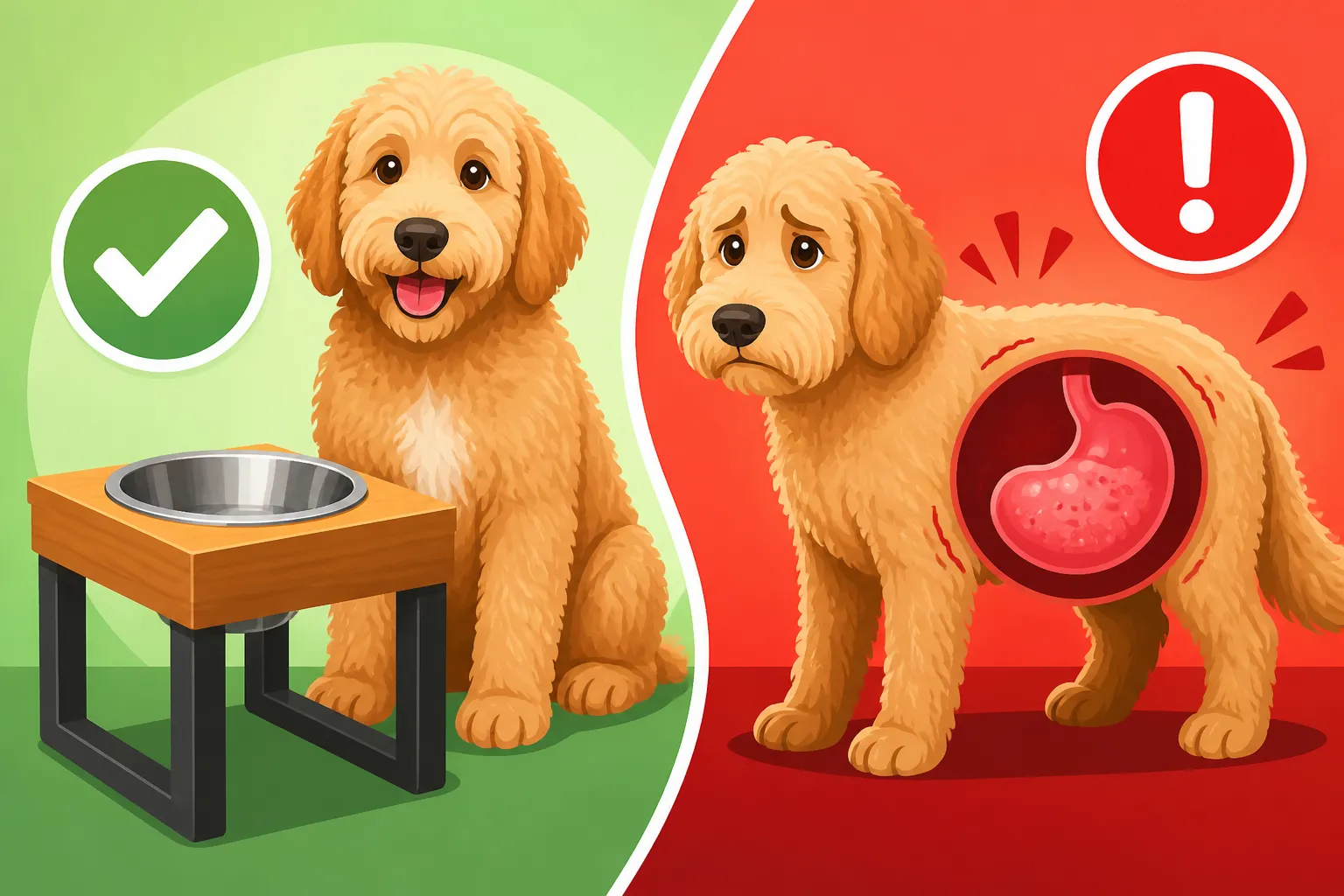
Raised Bowls and Labradoodle Bloat
Many Labradoodle owners find themselves wrestling with conflicting advice when it comes to their beloved dog's mealtime, especially concerning the risk of bloat. It’s a genuine worry, seeing your active, happy Labradoodle suddenly in distress, and navigating all the recommendations, from what to feed to how they eat it, can be overwhelming. This guide is here to untangle the facts about gastric dilatation-volvulus (GDV), commonly known as bloat, and the controversial role that raised food bowls might play in your Labradoodle's health.
Understanding Gastric Dilatation-Volvulus (GDV) in Labradoodles
Gastric Dilatation-Volvulus (GDV), or bloat, is one of the most terrifying emergencies a dog owner can face. It's a condition that comes on suddenly and can be fatal in a matter of hours if not treated immediately. For Labradoodle parents, understanding this risk is paramount because our doodles, particularly larger ones, inherit a predisposition to this life-threatening condition.
What is Bloat and Why is it So Serious?
Imagine your dog's stomach. In GDV, it first fills with gas, food, or fluid, causing it to distend like a balloon – that's the "dilatation" part. This in itself is painful and puts immense pressure on other organs. But the true danger comes with the "volvulus," where the distended stomach then twists on its axis. This twisting cuts off blood supply to the stomach and often the spleen, trapping the gas and preventing anything from passing through the digestive tract. It's an agonizing process that rapidly leads to shock, organ damage, and eventually death if emergency surgery isn't performed.
The speed at which GDV can progress is what makes it so terrifying. A happy, seemingly healthy dog can go from normal to critical in a shockingly short period. The pain is severe, and the dog’s condition deteriorates quickly. Early recognition and immediate veterinary intervention are absolutely crucial for survival. This isn't a "wait and see" situation; it's a "drop everything and go to the vet now" emergency. Even with prompt treatment, the prognosis can be guarded, and recovery is a long road.
The Labradoodle's Unique Risk Factors
Labradoodles, especially those of standard size, unfortunately, carry a higher risk for bloat due to their genetic makeup. This predisposition comes primarily from their Poodle heritage, particularly the Standard Poodle, which is well-known for being a deep-chested breed. A deep chest, often described as having a chest cavity that is longer from spine to sternum than it is wide, creates the anatomical space that allows a distended stomach to twist more easily.
While Labradors are not typically considered a high-risk breed for GDV, the combination of a Labrador's active nature and appetite with a Poodle's body structure means Labradoodles can inherit the worst of both worlds regarding bloat risk. Larger, deep-chested dogs are disproportionately affected, and a standard Labradoodle often fits this description. Even if your Labradoodle is a mixed generation, the underlying genetics for a deep chest can persist. Understanding The Deep Chest a Labradoodle Gets From the Poodle is vital for recognizing why this breed might be more prone to such an alarming condition. Other factors, like a nervous temperament or being an exceptionally fast eater, can further elevate this inherent risk. Owners of these wonderful dogs need to be extra vigilant and proactive in managing potential risk factors.
The Controversy: Raised Bowls and Bloat Risk
For years, it was common wisdom among many dog owners and even some veterinary professionals that elevated food bowls were beneficial, particularly for larger breeds. The idea was simple: if a dog didn't have to bend down, they would eat more comfortably, swallow less air, and thus reduce their risk of bloat. However, scientific research has largely debunked this long-held belief, introducing a significant shift in how we approach feeding our deep-chested companions like Labradoodles.
The Original Hypothesis and Why it Seemed Logical
The initial rationale behind raised bowls certainly made a lot of sense on the surface. People observed their large dogs hunching over to eat from floor-level bowls and reasoned that this posture could lead to discomfort, especially for older dogs with joint issues like hip or elbow dysplasia. It was hypothesized that eating from a more "natural" standing position would aid digestion, perhaps by allowing food to travel more smoothly down the esophagus, and would discourage rapid ingestion of food and air. The thought was that if less air was swallowed, there would be less gas in the stomach, directly reducing one of the precursors to bloat.
Many owners, myself included, saw the logic and invested in aesthetically pleasing raised feeders, genuinely believing we were doing the best for our dogs. It just felt right to offer a more comfortable dining experience. After all, if we humans prefer to eat at a table rather than kneeling on the floor, why wouldn't our dogs? This intuitive appeal made the concept widespread and deeply ingrained in dog care practices for decades.
What the Research Actually Says
Despite the logical appeal, scientific investigation has painted a very different picture. The most significant research on this topic comes from a large-scale study conducted by Purdue University in 2000. This comprehensive study examined various factors associated with bloat, including diet, exercise, genetics, and feeding practices, across a wide range of large and giant breed dogs. The findings were, for many, quite shocking.
The Purdue study actually found that feeding from a raised bowl was associated with an increased risk of GDV in large and giant breed dogs. Specifically, it showed that feeding from an elevated bowl increased the risk by approximately 20% in large breeds and a staggering 110% in giant breeds. While the exact biological mechanism behind this increased risk isn't fully understood, one theory suggests that elevated bowls might encourage faster eating by making it easier for dogs to gulp down food without effort, thereby swallowing more air rather than less. Another possibility is that the angle of the esophagus or stomach changes in a way that makes twisting more likely when eating from a raised position.
This research fundamentally challenged decades of conventional wisdom. For Labradoodle owners, this means that while raised bowls might offer comfort for certain conditions like arthritis, they are generally not recommended as a bloat prevention strategy. In fact, they might even be counterproductive for GDV. Given that bloat is such a serious concern, it's a critical piece of information to consider when deciding on your Labradoodle's feeding setup.
Other Factors Influencing Bloat Risk in Labradoodles
Beyond the bowl height, numerous other factors contribute to a Labradoodle's risk of developing GDV. Understanding these elements can help owners create a comprehensive strategy for prevention and vigilance.
Eating Habits and Speed
How your Labradoodle eats can be just as important, if not more, than what they eat or where their bowl is placed. Fast eaters, those who gulp down their meals in mere seconds, are at a higher risk. This rapid ingestion often leads to swallowing excessive amounts of air, which contributes to the stomach distension that precedes twisting. Imagine a vacuum cleaner sucking up kibble – that's how some dogs eat, and with each gulp comes a significant volume of air. This air then becomes trapped, unable to escape, and starts the chain reaction towards bloat.
Similarly, dogs that eat only one large meal a day might be at increased risk compared to those fed smaller, more frequent meals. A single large meal fills the stomach to its maximum capacity, making it heavier and potentially more prone to twisting. If you've ever watched your Labradoodle devour their food as if it's their last meal, you know the struggle to slow them down. For a Labradoodle, managing eating speed and frequency is a significant step in reducing their bloat risk. Many owners find success by exploring options that force their dogs to slow down, which we'll discuss shortly.
Exercise Before or After Meals
The timing of exercise around meal times is another crucial factor. High-impact activity, vigorous play, or strenuous exercise too close to eating can dramatically increase the risk of bloat. Think about it: a full stomach, sloshing around, while your dog jumps, runs, and rolls. This jostling can physically aid in the stomach twisting. It’s not just intense exercise either; even excessive excitement or stress right before or after eating can be problematic.
Many veterinarians recommend a quiet period before meals and especially for at least an hour, if not two, after eating. This allows the food to settle and begin its digestive journey without the added physical stress of movement. For active breeds like Labradoodles, who often have boundless energy, enforcing this downtime can sometimes feel like a challenge, but it's a simple, effective preventative measure. Planning your Labradoodle's walks and play sessions around their feeding schedule is a small change that can make a big difference.
Diet and Food Type
The type of food and even its texture can play a role in bloat risk. While the definitive link between specific diets and GDV isn't fully understood or agreed upon across all research, some observations have been made. Historically, dry kibble has been implicated more often than canned or raw diets. It's thought that large, light kibble might expand more in the stomach or encourage faster eating and air gulping.
However, it's also important to note that dietary changes should always be made gradually, and owners should consult their vet for personalized advice. Some studies have suggested that diets with a high-fat content listed among the first four ingredients, or those with citric acid, might be associated with increased risk, though these findings are not universally conclusive. It's more about ensuring a balanced, high-quality diet appropriate for your Labradoodle's age and activity level, rather than obsessing over one ingredient. The key is to be mindful of sudden changes in diet and to introduce new foods slowly. For some Labradoodles, adding a small amount of canned food or water to their kibble might encourage slower eating and increase hydration, potentially reducing risk.
Stress and Anxiety
It might sound surprising, but a dog's emotional state can also influence their susceptibility to bloat. Stress and anxiety can affect a dog's digestive system, sometimes leading to changes in gut motility or increased air swallowing. Dogs that are prone to anxiety, or those experiencing a stressful event (like a move, a new pet, or a change in routine), might have an elevated risk.
Labradoodles are generally known for their friendly and adaptable temperaments, but like any dog, they can experience stress. If your Labradoodle is exhibiting signs of anxiety, such as pacing, excessive barking, destructive behavior, or changes in appetite, addressing these underlying emotional issues can contribute to their overall health, including potentially reducing bloat risk. Creating a calm, predictable environment around meal times can also be beneficial. A relaxed dog is likely to eat more slowly and calmly, which reduces the chance of gulping air.
Age, Sex, and Genetics
Some risk factors are simply beyond our control, inherent to the dog itself. Older dogs, particularly those over the age of seven, tend to have a higher incidence of bloat. This could be due to a general weakening of tissues or other age-related physiological changes. Similarly, male dogs appear to be slightly more prone to GDV than females, though females are certainly not immune.
Perhaps the most significant uncontrollable factor is genetics. If a Labradoodle has first-degree relatives (parents, siblings) who have experienced bloat, their own risk increases substantially. This is why responsible breeders emphasize health testing and transparency about their lines. As an owner, if you know your Labradoodle comes from a line with a history of bloat, it should heighten your awareness and prompt you to be extra diligent with preventative measures. Understanding What a Labradoodle Owner Should Watch For After Eight also includes increased vigilance for bloat as they age.
Practical Strategies to Minimize Bloat Risk (Beyond Bowls)
While the debate around raised bowls is important, focusing solely on bowl height means missing the bigger picture when it comes to preventing bloat in your Labradoodle. There are many more effective, evidence-based strategies you can implement right now to significantly lower your dog's risk.
Slowing Down Mealtime
One of the most impactful things you can do is to encourage slower eating. If your Labradoodle inhales their food in under a minute, they're likely swallowing a lot of air. Luckily, there are several excellent tools and techniques for this:
- Slow Feeder Bowls: These bowls have obstacles or labyrinthine designs that force your dog to eat around them, making it impossible to gulp large mouthfuls. They come in various shapes and sizes, often made of durable plastic or ceramic.
- Puzzle Feeders: Similar to slow feeder bowls, these take it a step further, turning mealtime into a mental exercise. Your Labradoodle has to manipulate the feeder to get the food out, extending the eating process considerably.
- Multiple Small Meals: Instead of one or two large meals a day, consider feeding your Labradoodle two or three smaller meals spread throughout the day. This reduces the amount of food in the stomach at any one time, lowering the risk of extreme distension.
- Spread it Out: For some dogs, simply spreading their kibble across a large baking sheet or even a clean floor area forces them to "hunt" for each piece, naturally slowing them down.
Making mealtime a more deliberate activity not only helps reduce bloat risk but can also be a fun, enriching experience for your Labradoodle.
Managing Exercise and Post-Meal Routine
Creating a sensible routine around feeding and exercise is critical. It’s all about giving your Labradoodle's stomach time to do its job without interference.
- Pre-Meal Calm: Ensure your Labradoodle is calm before eating. Avoid vigorous play or high-excitement situations right before mealtime. A short, leisurely walk might be fine, but save the fetch session for later.
- Post-Meal Rest: This is perhaps the most important rule. After your Labradoodle finishes eating, enforce a strict "rest period" of at least 60 minutes, but ideally 90 to 120 minutes. This means no running, jumping, roughhousing, or strenuous activity. A gentle potty break on a leash is fine, but otherwise, encourage them to nap or relax quietly. This waiting period allows the food to settle and begin its digestive process, significantly reducing the chance of the stomach twisting.
- Hydration Control: While fresh water should always be available, try to prevent your Labradoodle from gulping down massive amounts of water immediately after a large meal, especially if they are already prone to fast eating. Some owners find removing the water bowl for a short period after meals, then offering small amounts, can be helpful.
By carefully managing your Labradoodle's activity levels around meals, you're taking a significant proactive step against bloat.
Considering a Preventive Gastropexy
For Labradoodles at exceptionally high risk, a prophylactic gastropexy is a surgical procedure that can be a lifesaver. This procedure involves surgically attaching the stomach to the abdominal wall, preventing it from twisting. It essentially "tacks" the stomach in place. While it doesn't prevent the stomach from dilating (filling with gas), it does prevent the much more dangerous "volvulus" or twisting.
A gastropexy is often performed at the same time as a spay or neuter, especially for deep-chested breeds. It can be done traditionally or laparoscopically, which is less invasive and has a faster recovery time. Discussing this option with your veterinarian is highly recommended, especially if your Labradoodle has multiple risk factors, such as a deep chest, a history of fast eating, or a family history of bloat. This procedure drastically reduces the mortality rate associated with bloat, turning a fatal emergency into a much more manageable (though still serious) condition. It's an investment in peace of mind, knowing you've significantly reduced one of the most terrifying health threats. Many owners wonder Whether a Labradoodle Should Have a Preventive Gastropexy and for good reason, it's a critical decision.
Recognizing the Signs of Bloat
Even with the best preventative measures, it's crucial to know the signs of bloat and act immediately. Early recognition dramatically improves the chances of survival.
Look out for these symptoms:
- Restlessness and Pacing: Your dog might seem uncomfortable, unable to settle, constantly shifting positions.
- Abdominal Distension: The most recognizable sign is a visibly swollen, hard, or tight abdomen, especially on the left side, though it can be subtle at first.
- Non-Productive Retching: Your Labradoodle might try to vomit but nothing comes up, or only foamy saliva. This is a hallmark sign.
- Drooling and Excessive Salivation: Due to nausea and discomfort.
- Pain or Tenderness in the Abdomen: They might whimper if you touch their stomach.
- Rapid, Shallow Breathing: As the distended stomach puts pressure on the diaphragm.
- Weakness or Collapse: As the condition progresses to shock.
- Pale Gums: Another sign of shock.
If you observe any of these symptoms, especially non-productive retching and a distended abdomen, do not wait. Call your vet or an emergency veterinary clinic immediately and head there as quickly as possible. Every minute counts. Remember, conditions like bloat are precisely why comprehensive pet insurance, like plans offered by Healthy Paws, can be incredibly valuable, helping to cover the high costs of emergency treatment and surgery. Dealing with a pet emergency is stressful enough without the added burden of worrying about potentially thousands of dollars in vet bills. Having coverage in place from providers like Healthy Paws can truly make a difference in your ability to make critical, life-saving decisions for your Labradoodle. For general health insights, you might also be interested in The Yearly Screening a Labradoodle Should Get to catch other potential issues early.
Here’s a quick overview of bloat risk factors and mitigation strategies:
| Risk Factor | Description | Mitigation Strategy |
|---|---|---|
| Deep Chest | Inherited anatomical predisposition from Poodle lineage. | Consider prophylactic gastropexy, manage other controllable risks. |
| Fast Eating | Gulping food quickly, swallowing excess air. | Use slow feeder bowls, puzzle feeders, feed multiple small meals. |
| Large, Single Meals | Stomach filled to maximum capacity at once. | Divide daily food into 2-3 smaller meals. |
| Vigorous Exercise Post-Meal | Physical jostling of a full stomach. | Enforce 1-2 hours of rest before and after meals. |
| Stress/Anxiety | Affects digestion, potentially increases air swallowing. | Create calm mealtime environment, address underlying anxiety. |
| Age (>7 years) | General weakening of tissues, increased incidence. | Increased vigilance, consider gastropexy earlier in life. |
| Family History of Bloat | Genetic predisposition from affected relatives. | Consult vet for personalized prevention plan, consider gastropexy. |
| Raised Food Bowls | Purdue study suggests increased risk in large/giant breeds. | Feed from floor-level bowls unless medically necessary for other conditions. |
| Gulping Large Amounts of Water | Especially after exercise or meals, can contribute to stomach distension. | Offer smaller amounts of water periodically around meals/exercise, monitor intake. |
Taking these proactive steps will not only help reduce the risk of bloat for your Labradoodle but also contribute to their overall health and well-being, helping you both enjoy many happy, healthy years together. Remember, vigilance is key, and knowing What Labradoodles Most Often Die Of underscores the importance of being prepared for conditions like bloat.
Disclaimer
This article is intended for informational purposes only and does not constitute veterinary advice. Always consult with a qualified veterinarian for any health concerns or before making any decisions about your Labradoodle's care, diet, or treatment.