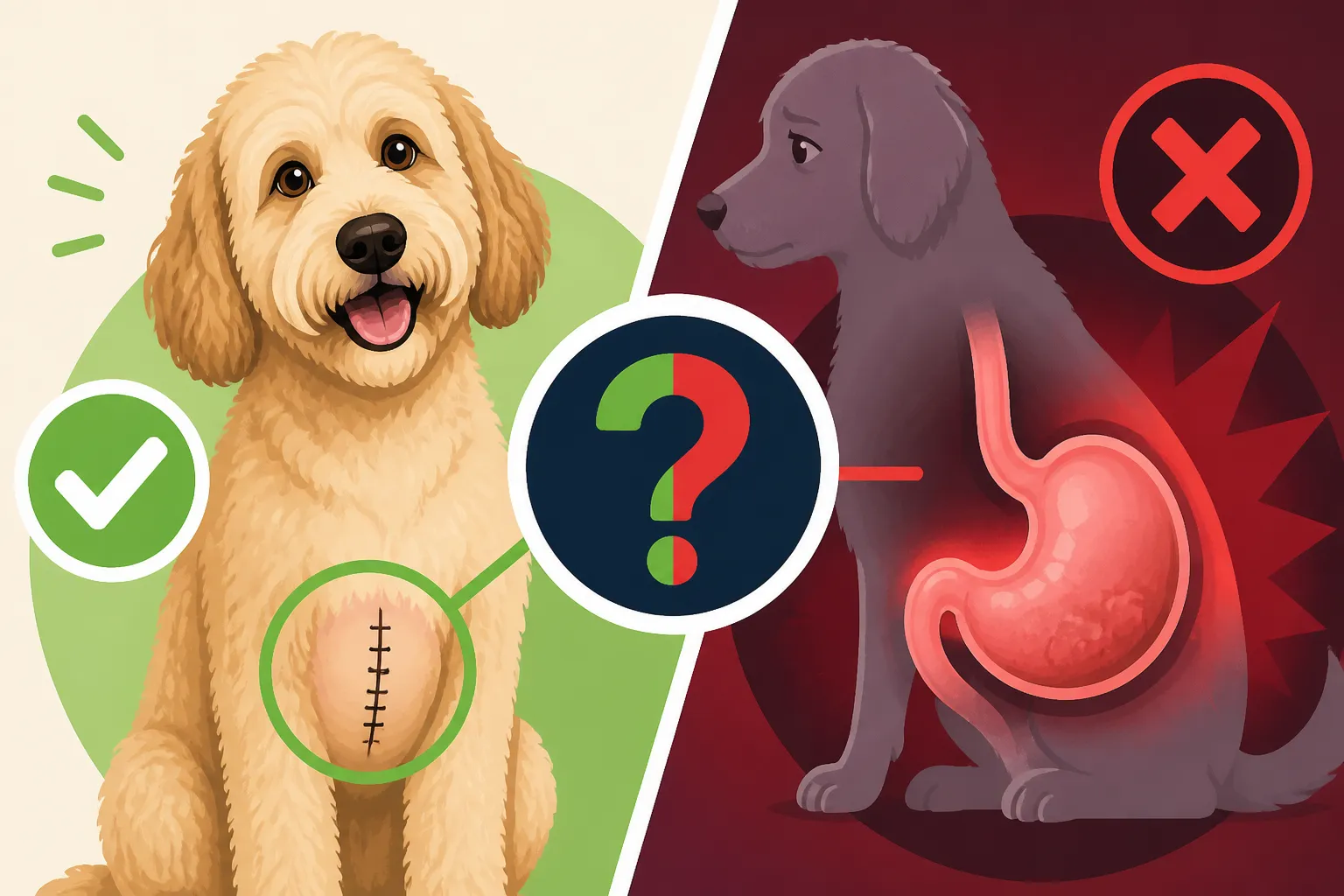
Whether a Tacked Stomach Ends a Labradoodle’s Bloat Risk
One of the most terrifying things a Labradoodle owner can face is the sudden, life-threatening emergency of bloat, or Gastric Dilatation-Volvulus (GDV). This condition strikes without much warning and can turn a perfectly happy day into a frantic rush to the emergency vet. While many of us have heard about a preventative surgery called a gastropexy, there's often confusion about exactly what it does and if it completely eliminates the risk. This guide will clarify the realities of bloat and whether a tacked stomach truly puts an end to your Labradoodle's bloat worries.
Understanding Bloat and Why Labradoodles Are at Risk
Bloat, or Gastric Dilatation-Volvulus (GDV), is a condition that sends shivers down the spine of many dog owners, and for good reason. It’s a rapid and often fatal disease where a dog’s stomach fills with gas, food, or fluid, and then twists on its axis. This twisting cuts off blood supply to the stomach and can compress major blood vessels, leading to shock and organ damage. It’s an incredibly painful and terrifying experience for your beloved Labradoodle, and it requires immediate, emergency veterinary intervention. The speed at which it progresses is what makes it so dangerous; what starts as a slightly uncomfortable tummy can escalate to a critical situation in mere hours.
The Silent Threat of GDV
The insidious nature of GDV is that it can appear so suddenly, often when you least expect it. One moment your Labradoodle might be happily playing, and the next they could be exhibiting signs of distress. Initially, the signs can be subtle: restlessness, pacing, trying to vomit but nothing comes up (known as non-productive retching), and a distended or hard abdomen. As the condition progresses, your dog might start drooling excessively, show signs of pain, collapse, or have pale gums. It's truly a race against time, as every minute counts when it comes to survival. If you ever suspect bloat, don’t hesitate; get your dog to an emergency veterinary clinic immediately. Ignoring these signs, even for a short period, can have tragic consequences. Recognizing The Signs a Labradoodle Is Bloating quickly is absolutely critical for saving their life.
Genetic Predisposition in Labradoodles
Unfortunately, Labradoodles, by virtue of their Poodle and Labrador ancestry, carry a genetic predisposition to bloat. It's not a guarantee that every Labradoodle will experience it, but certain factors increase the risk significantly. The most prominent risk factor is a deep, narrow chest conformation, a trait often inherited from the Poodle side. Think of it like a bowling pin shape – it's easier for the stomach to swing and twist within that kind of body cavity. Larger, active breeds tend to be more susceptible, and Labradoodles, especially standard-sized ones, certainly fit that description. Additionally, eating quickly, exercising vigorously right after eating, stress, and even genetics related to stomach ligament laxity can play a role. It’s a complex interplay of factors, but the deep chest shape is a major player. For more on this, you might want to read about The Deep Chest a Labradoodle Gets From the Poodle.
What a Gastropexy Really Does for Your Labradoodle
Given the terrifying nature of bloat, it's natural for owners to seek ways to prevent it. This is where a gastropexy comes in. A gastropexy is a surgical procedure where the stomach is permanently attached, or "tacked," to the abdominal wall. It's often performed preventatively, especially in at-risk breeds like Labradoodles, and can be done during another surgical procedure, such as a spay or neuter. The idea behind it is simple yet effective: by fixing the stomach in place, you prevent it from being able to twist.
How a Stomach Tack Prevents Twisting
Imagine your dog's stomach like a sack floating freely inside its abdomen. When bloat occurs, this sack not only fills with gas but can then rotate, much like a hammock flipping over. A gastropexy fundamentally changes this dynamic. During the procedure, the outer wall of the stomach is sutured directly to the inner wall of the body cavity. This effectively anchors the stomach, preventing it from rotating. It’s important to understand that the gastropexy doesn't stop the stomach from filling with gas (dilatation), but it does prevent the far more dangerous twisting (volvulus) that leads to loss of blood flow and rapid deterioration. Without the volvulus, the gas can often be relieved, either naturally or by a vet, without the life-threatening emergency of a twisted organ.
Surgical Options: Traditional vs. Laparoscopic
When considering a gastropexy for your Labradoodle, you'll generally find two main surgical approaches: traditional open surgery and laparoscopic surgery.
-
Traditional Open Surgery: This involves a larger incision in the abdomen, allowing the surgeon direct visual and manual access to the stomach and abdominal wall. It's a very effective method and is often performed at the same time as a spay or neuter. While it's a more invasive procedure, it's a well-established and successful technique for securing the stomach. Recovery typically involves a few weeks of restricted activity.
-
Laparoscopic Surgery: This is a minimally invasive option that uses a few small incisions, a camera, and specialized instruments. The surgeon views the internal organs on a monitor and performs the gastropexy with less tissue trauma. This approach can lead to a quicker recovery time, less post-operative pain, and smaller scars. However, it often requires specialized equipment and training, so not all veterinary clinics offer it. Sometimes, a "laparoscopic-assisted" gastropexy is performed, where a small incision is made to allow for external manipulation while the internal work is done via laparoscopy.
Both methods aim to achieve the same crucial outcome: a securely attached stomach that cannot twist. Discussing the pros and cons of each with your vet, considering your dog's age, overall health, and your vet's expertise, is essential. Knowing What Gastropexy Adds to a Labradoodle's Neuter can also help you plan this procedure financially and logistically.
The Remaining Risks: Why Vigilance Is Still Key Post-Gastropexy
It's a huge relief to know your Labradoodle's stomach is tacked, and many owners feel a significant burden lifted. However, it's crucial to understand that while a gastropexy dramatically reduces the risk of fatal GDV (the twisting part), it doesn't entirely eliminate all risk related to bloat. Think of it like a seatbelt in a car – it greatly improves safety in an accident, but it doesn't prevent the accident itself. Your Labradoodle can still experience gastric dilatation, where the stomach fills with gas but doesn't twist.
Bloat Without Torsion: It Can Still Happen
Even with a tacked stomach, your Labradoodle's stomach can still dilate, meaning it can fill with excessive gas, food, or fluid. This is still uncomfortable and can be quite painful for your dog. When the stomach distends significantly, it puts pressure on surrounding organs and the diaphragm, making breathing difficult and potentially leading to shock if not addressed. The key difference is that because the stomach is anchored, it's highly unlikely to twist, which is the most immediately life-threatening aspect of GDV.
Signs of bloat without torsion might include:
- Distended abdomen: The belly might look swollen or feel hard.
- Restlessness and discomfort: Pacing, unable to settle, looking at their side.
- Non-productive retching: Trying to vomit but bringing nothing up. This is still a serious sign!
- Excessive drooling.
- Pain: Whining, reluctance to move, hunched posture.
While not immediately fatal in the same way GDV is, gastric dilatation still warrants a prompt vet visit. Your vet can assess the situation, potentially relieve the gas, and rule out other abdominal issues. The good news is that the prognosis for simple dilatation is much better than for GDV. You still need to be observant of your Labradoodle's behavior and physical condition. Insurance providers like Healthy Paws are often a lifeline in these situations, helping to cover unexpected vet costs for conditions like bloat, even if it's "just" dilatation.
The Importance of Post-Surgery Care and Lifestyle
A gastropexy isn't a "set it and forget it" solution; it's a vital preventative measure that should be supported by ongoing diligent care and a smart lifestyle. Just like any surgical recovery, there will be specific instructions from your vet regarding incision care, activity restrictions, and medication. Following these to the letter is paramount to ensure the surgical site heals properly and the stomach tack holds securely.
Beyond the immediate post-operative period, consider these lifestyle factors:
- Feeding Habits: Even after a gastropexy, encouraging slower eating habits is beneficial. Consider using a slow-feeder bowl or spreading meals across a puzzle toy. Feeding smaller, more frequent meals rather than one large meal can also help.
- Exercise Timing: Avoid intense exercise immediately before or after meals. Give your Labradoodle at least an hour of rest before and after eating to allow for proper digestion. Whether a Labradoodle Should Rest After Eating is a concept that remains important, even with a gastropexy.
- Stress Reduction: High-stress situations can sometimes trigger digestive upset. While harder to control, try to minimize stressors for your dog.
- Diet: While diet isn't a direct cause of bloat, a high-quality, easily digestible diet is always a good idea for overall gut health. Discuss appropriate food choices with your veterinarian.
- Hydration: Ensure constant access to fresh water, but avoid allowing your Labradoodle to gulp down large quantities of water right after eating or heavy exercise.
- Regular Vet Check-ups: Maintaining regular veterinary check-ups allows your vet to monitor your Labradoodle’s overall health and discuss any concerns. The Yearly Screening a Labradoodle Should Get is important for catching any potential issues early.
By combining the surgical protection of a gastropexy with responsible daily care, you provide your Labradoodle with the best possible defense against the anxieties and dangers of bloat.
Making an Informed Decision for Your Labradoodle's Health
Deciding whether to pursue a gastropexy for your Labradoodle is a personal choice, but it's one that should be made with a full understanding of the procedure and its implications. It involves weighing the benefits against the risks and considering your specific circumstances. For many owners of deep-chested breeds, the peace of mind offered by a gastropexy far outweighs the surgical risks.
Weighing the Pros and Cons of Gastropexy
Let's break down the advantages and disadvantages to help you make an informed decision for your furry family member.
Pros of Gastropexy:
- Significantly Reduces Life-Threatening GDV Risk: This is the primary and most compelling benefit. By preventing the stomach from twisting, you eliminate the most immediately fatal aspect of bloat.
- Peace of Mind: Knowing your Labradoodle has this preventative measure can reduce the constant anxiety many owners of at-risk breeds feel.
- Often Done Concurrently: For young Labradoodles, a gastropexy can often be performed at the same time as their spay or neuter, minimizing the need for an additional anesthetic event.
- Increased Survival Rate if Bloat Occurs: If your dog's stomach still dilates, but cannot twist, the emergency is less severe, giving you more time to get to a vet and improving the chances of a positive outcome.
Cons of Gastropexy:
- Surgical Risks: Like any surgery, there are inherent risks associated with anesthesia and the procedure itself, such as infection, bleeding, or complications from anesthesia. These risks are generally low but should be acknowledged.
- Cost: While it's a preventative measure, there's a cost associated with the surgery. This cost is significantly less than emergency GDV surgery, which can run into thousands of dollars, especially after-hours. Compare this to What Emergency Bloat Surgery Runs After Hours to see the potential savings.
- Does Not Prevent Gastric Dilatation: As discussed, the stomach can still fill with gas, causing discomfort and requiring veterinary attention, though it’s not typically life-threatening.
- Recovery Period: Your dog will need a period of restricted activity and careful monitoring after the surgery to ensure proper healing.
Ultimately, for many Labradoodle owners, the significant reduction in the risk of a fatal twist makes the gastropexy a worthwhile investment in their dog's long-term health and their own peace of mind.
| Feature | Without Gastropexy (High Risk) | With Gastropexy (Reduced Risk) |
|---|---|---|
| Risk of Gastric Torsion | High | Extremely Low |
| Risk of Gastric Dilatation | Present | Present |
| Severity of Bloat Episode | Life-threatening emergency | Serious, but typically not fatal |
| Emergency Vet Urgency | Immediate, critical | Prompt, but less critical |
| Survival Rate (GDV) | 50-80% (if treated quickly) | Near 100% (for dilatation) |
| Procedure Cost | High (emergency surgery) | Moderate (preventative surgery) |
Beyond Surgery: Holistic Bloat Prevention Strategies
Even if you choose to go ahead with a gastropexy, or if your Labradoodle is not a candidate, a multi-faceted approach to bloat prevention is always the best strategy. Surgery is a powerful tool, but it's not the only piece of the puzzle. Combining a preventative gastropexy with smart management practices creates the strongest defense for your Labradoodle.
Here are some additional holistic strategies:
- Mindful Eating: Encourage your Labradoodle to eat slowly. This means using slow-feeder bowls, puzzle feeders, or even spreading their kibble out on a baking sheet. Avoid gulping large amounts of water after eating. The practice of Raised Bowls and Labradoodle Bloat has been a topic of debate; some studies suggest they may increase risk, so it's often best to feed at ground level.
- Appropriate Exercise: Ensure exercise is timed well, avoiding strenuous activity for at least an hour before and after meals. A gentle walk is fine, but intense running or jumping should be reserved for when their stomach is empty or has had plenty of time to digest. Remember that The Weight a Labradoodle Puts On Without Anyone Noticing can also contribute to overall health risks, including bloat.
- Stress Management: While hard to quantify, chronic stress can impact digestive health. Provide a calm, consistent environment for your Labradoodle.
- Regular Health Monitoring: Pay close attention to your Labradoodle’s behavior and appetite. Any sudden changes, especially involving their abdomen or eating habits, should prompt a call to your vet. Don’t ignore subtle signs like repeated licking of the lips or pacing.
- Nutrition: Feed a high-quality diet appropriate for your Labradoodle's age and activity level. While there’s no specific “anti-bloat” diet, good nutrition supports overall health. If your Labradoodle is constantly ravenous, you might wonder Whether a Labradoodle Is Always Hungry, which could affect how quickly they eat.
By taking a comprehensive approach that includes preventative measures like gastropexy alongside diligent daily care, you're doing everything you can to safeguard your Labradoodle against the threat of bloat. It's about being proactive and informed, ensuring your beloved companion lives a long, healthy, and happy life.
Disclaimer
This guide provides general information and should not be considered a substitute for professional veterinary advice. Always consult with a qualified veterinarian for any health concerns or before making any decisions about your Labradoodle's medical care.