The prcd-PRA Test Both Labradoodle Parents Need
Bringing a Labradoodle into your life is incredibly exciting, but it's also natural to worry about their future health. One of the most significant concerns for many prospective owners is the possibility of inherited diseases, particularly those that can affect their beloved companion's eyesight. This comprehensive guide will walk you through everything you need to know about progressive rod-cone degeneration (prcd-PRA), a genetic eye condition, and why testing both Labradoodle parents for it is absolutely non-negotiable for any responsible breeding program.
Understanding Progressive Retinal Atrophy prcd-PRA in Labradoodles
The thought of your energetic, playful Labradoodle eventually losing their sight is heartbreaking. Progressive Retinal Atrophy, or PRA, is a general term for a group of genetic diseases that cause the degeneration of the retina, leading to blindness. Among these, progressive rod-cone degeneration (prcd-PRA) is a specific form that is common in Poodles and, by extension, Labradoodles. It's a condition that every prospective Labradoodle owner should be aware of, and every breeder should actively test for.
What is prcd-PRA and How Does It Affect Vision?
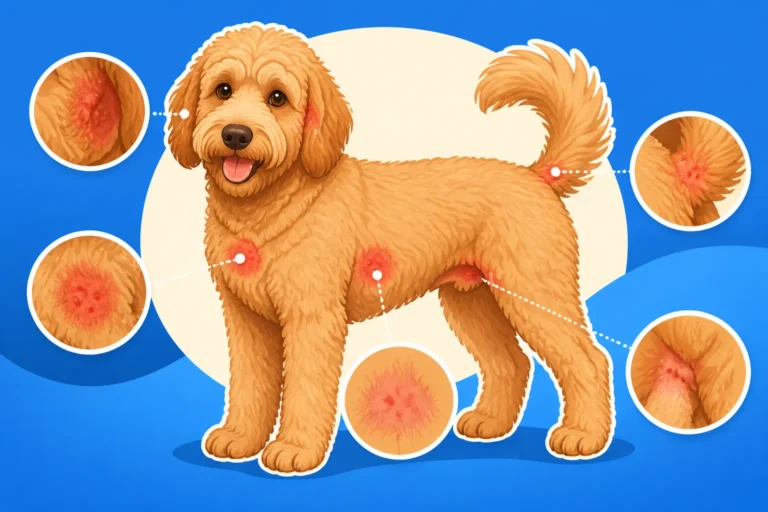
Imagine trying to navigate your home in the dark, bumping into furniture, feeling disoriented. That's a bit like what a dog with prcd-PRA experiences, particularly in its early stages. The disease is characterized by the gradual deterioration of the photoreceptor cells in the retina – specifically the rods first, then the cones. Rods are responsible for vision in low light (night vision) and detecting motion, while cones handle bright light vision and color perception.
The progression of prcd-PRA is typically slow and insidious. The initial symptom often goes unnoticed by owners because it manifests as night blindness. Your Labradoodle might become hesitant to go out at dusk or in dimly lit areas, or they might bump into things in familiar surroundings when the lights are low. As the disease advances, their daytime vision will also start to decline, eventually leading to complete blindness. This can happen over several years, giving both the dog and the owner time to adapt, but it's still a devastating diagnosis. The age at which The Age prcd-PRA Takes a Labradoodle's Night Vision typically begins to show varies, but it's often in middle age, around 3-5 years, though it can appear earlier or later.
The Genetics Behind prcd-PRA Inheritance
Understanding how prcd-PRA is inherited is crucial to appreciating why parent testing is so important. This particular form of PRA is an autosomal recessive disorder. This means that a dog must inherit two copies of the mutated gene – one from each parent – to actually develop the disease and be "affected."
Here's a simplified breakdown:
- Clear Dog: Has two normal copies of the gene. Will not develop prcd-PRA and cannot pass the mutated gene to offspring.
- Carrier Dog: Has one normal copy and one mutated copy of the gene. Will not develop prcd-PRA themselves (they are asymptomatic), but can pass the mutated gene on to 50% of their offspring.
- Affected Dog: Has two mutated copies of the gene. Will develop prcd-PRA and will pass a mutated gene to all of their offspring.
Think of it like a puzzle. If you need two specific "bad" pieces to complete the "disease" puzzle, a carrier only has one, so the puzzle can't be completed in them. But they can definitely pass that one bad piece on. This recessive inheritance pattern is why breeders sometimes mistakenly think that if one parent is healthy, they're in the clear. However, a "healthy" dog could still be a carrier, silently passing on the risk.
Why Labradoodles Are at Risk for prcd-PRA
Labradoodles inherit their genetic predispositions from their parent breeds: the Labrador Retriever and the Poodle. Both Standard Poodles and Miniature Poodles, which are commonly used in Labradoodle breeding, are known to carry the prcd-PRA gene mutation. While Labrador Retrievers also have various forms of PRA, prcd-PRA is primarily a concern from the Poodle side of the family tree.
Because the Labradoodle is a hybrid, a "designer breed," there isn't the same stringent, centralized health testing registry that you might find in purebred lines (though reputable Labradoodle associations are working towards this). This lack of universal oversight means that some breeders, whether out of ignorance or negligence, might not be performing the necessary health screenings on their breeding stock. Consequently, the prcd-PRA gene can quietly circulate within Labradoodle populations, potentially leading to affected puppies if both parents are carriers and are bred together. It's a stark reminder that even wonderful, sweet-natured dogs can harbor hidden genetic risks.
The Critical Role of prcd-PRA Genetic Testing
For anyone involved in breeding Labradoodles, or for families considering bringing one home, genetic testing for prcd-PRA isn't just a suggestion; it's a fundamental responsibility. It's the most effective tool we have to prevent this devastating disease from impacting future generations of Labradoodles.
What the prcd-PRA Test Screens For
The prcd-PRA test is a simple, non-invasive DNA test, usually performed using a cheek swab or a small blood sample. This test doesn't look for the disease itself, but rather for the specific gene mutation associated with prcd-PRA. Scientists have identified the exact genetic marker responsible for this form of Progressive Retinal Atrophy.
When a breeder sends a sample to a reputable genetic testing laboratory (such as Optigen, Animal Genetics, or Embark), the lab analyzes the dog's DNA to determine if it carries one or two copies of the mutated gene, or if it has two normal copies. The result will clearly state whether the dog is "Clear," a "Carrier," or "Affected." This definitive result provides invaluable information, allowing breeders to make informed decisions about pairing dogs to ensure no affected puppies are produced. It really is a game-changer for genetic health management.
Why Both Parents Must Be Tested
This is the absolute cornerstone of preventing prcd-PRA in Labradoodle puppies: both prospective parents must be tested. You simply cannot rely on the assumption that if one parent is "healthy" and shows no signs of vision problems, the litter will be safe. Remember, prcd-PRA is a recessive trait. A carrier dog looks completely normal and healthy, but they carry one copy of the mutated gene.
Here's why testing both is essential:
- Preventing Affected Puppies: If you breed two carriers together (Carrier x Carrier), statistically, 25% of the puppies will be Clear, 50% will be Carriers, and critically, 25% will be Affected and will eventually go blind. This is a gamble no responsible breeder should ever take.
- Identifying Hidden Risks: If only one parent is tested and comes back "Clear," but the other (untested) parent is a carrier, 50% of the puppies will still be carriers. While these puppies won't go blind from prcd-PRA themselves, they can still pass the gene on to their offspring if they are later bred without proper testing. This perpetuates the cycle of risk within the breed.
- Responsible Breeding Ethics: The goal of ethical breeding is to improve the health and well-being of the breed. Consciously or unconsciously breeding a litter with a 25% chance of developing a debilitating disease goes against this principle. Prospective owners should always insist on seeing health certificates for both parents. If a breeder cannot provide proof for both, it's a significant red flag. You should be Asking a Breeder for Labradoodle Eye Certificates as a standard part of your due diligence.
The Impact of Untested Parents on a Litter
The consequences of failing to test both Labradoodle parents for prcd-PRA can be devastating, not just for the puppies but for the unsuspecting families who welcome them into their homes. Imagine the scenario: A loving family brings home an adorable Labradoodle puppy, completely unaware that its parents weren't properly screened. The puppy grows, brings immense joy, and then, around middle age, starts exhibiting signs of night blindness. Visits to the vet confirm the heartbreaking diagnosis of prcd-PRA.
This situation is entirely avoidable with proper screening. Without testing, a breeder is essentially playing Russian roulette with the health and future of their puppies. They are allowing a known, preventable genetic disease to be propagated. This not only causes immense suffering for the affected dogs and their families but also casts a shadow over the entire breed's reputation. It’s why organizations like the Orthopedic Foundation for Animals (OFA) list recommended health clearances, and genetic eye tests are often on that list for breeds like the Poodle and Labrador. Getting a puppy from Whether a Labradoodle From Untested Parents Is a Risk carries a burden of unknown future health challenges.
Interpreting prcd-PRA Test Results for Breeders and Owners
Once a Labradoodle has been tested for prcd-PRA, understanding the results is paramount. These results not only inform breeding decisions but also offer clarity and peace of mind to potential puppy buyers.
Decoding "Clear," "Carrier," and "Affected" Results
Genetic test results, while sometimes sounding technical, are quite straightforward once you know what each term signifies:
- "Clear" (or "Normal" or "Homozygous Normal"): This is the best possible result. A clear dog has two normal copies of the prcd-PRA gene. This means they will never develop prcd-PRA themselves, and they will never pass the mutated gene to any of their offspring. For breeders, a clear dog is an ideal candidate for breeding as they are guaranteed to produce clear puppies when bred with another clear dog, or at worst, carrier puppies if bred with a carrier.
- "Carrier" (or "Heterozygous" or "Not Affected, Carries Gene"): A carrier dog has one normal copy and one mutated copy of the prcd-PRA gene. Crucially, carrier dogs will not develop prcd-PRA themselves; their vision will remain healthy throughout their lives. However, they will pass on the mutated gene to approximately 50% of their puppies. This is why managing carriers in a breeding program is so important – they can be bred, but only to clear mates.
- "Affected" (or "Homozygous Affected"): An affected dog has two copies of the mutated prcd-PRA gene. This dog will develop prcd-PRA and will eventually lose its sight. They will also pass one copy of the mutated gene to all of their offspring, meaning all their puppies will at least be carriers (if bred with a clear dog) or affected (if bred with another carrier or affected dog). Responsible breeders would never breed an affected dog.
Understanding these distinctions helps breeders responsibly plan pairings and allows puppy buyers to assess the genetic health guarantees of their potential new family member.
Breeding Strategies for prcd-PRA Carriers
While breeding an "affected" dog is unequivocally irresponsible, a "carrier" dog can still be a valuable part of a responsible breeding program, provided they are bred strategically. The key is to ensure that a carrier is always paired with a mate that has been tested and is "Clear" for prcd-PRA.
Here’s why this works and what the outcome would be:
- Carrier (C/m) x Clear (C/C) Mating:
- C = Normal gene copy
- m = Mutated gene copy
- Offspring will be approximately: 50% Clear (C/C) and 50% Carrier (C/m).
- In this scenario, none of the puppies will be affected by prcd-PRA. While half of the litter will be carriers, they will not develop the disease, and future generations can be managed through continued testing. This approach allows breeders to retain valuable genetic diversity and desirable traits from a carrier dog without risking affected puppies. However, it places the ongoing responsibility on the buyers of those carrier puppies to also test their dogs if they plan to breed them. It's a testament to ethical breeding when you see a breeder openly discussing these genetic strategies.
When a Labradoodle Is Clear by Parentage
Sometimes, a puppy's health certificate might state "Clear by Parentage" for a specific genetic condition like prcd-PRA. This means that the puppy itself was not directly tested, but both of its parents were tested and found to be "Clear" for prcd-PRA. Since both parents are clear, they could not have passed on a mutated gene, and therefore, all their offspring are guaranteed to be clear as well.
This concept is reliable and widely accepted in canine genetics. If you see a "Clear by Parentage" designation, it generally offers the same assurance as a direct "Clear" test result for that particular puppy. However, it's always wise for prospective owners to request documentation of the parents' clear test results to verify this claim. Reputable breeders will be more than happy to provide these certificates. While it offers good peace of mind, some owners might still opt for direct testing if they have any doubt or plan to breed their own dog in the future, just to have a personal, definitive record. You can learn more about this by checking out Whether a Labradoodle Clear by Parentage Still Needs Testing.
Life with a prcd-PRA Affected Labradoodle
Despite all the best efforts in genetic testing, sometimes a prcd-PRA affected dog might come into an owner's life, perhaps through rescue or due to previous, less rigorous breeding practices. Living with a vision-impaired dog requires patience, understanding, and some adjustments, but it's entirely possible to provide a high quality of life.
Recognizing the Signs of Vision Loss
The progression of prcd-PRA is often slow, which can be a blessing and a curse. It means your Labradoodle has time to adapt, but it also means early signs can be subtle and easily missed. The first noticeable symptom is typically night blindness, also known as nyctalopia. Your dog might:
- Be reluctant to go outside in the dark.
- Hesitate at the top or bottom of stairs in low light.
- Bump into furniture or walls when the lights are dim.
- Become more clingy or anxious after sunset.
As the disease progresses to affect daytime vision, you might observe:
- Bumping into objects even in familiar, well-lit environments.
- Startling easily when approached from the side.
- Dilated pupils that don't respond normally to light, giving their eyes a reflective "glow."
- Cloudiness in the eyes (secondary cataracts can develop in PRA-affected eyes).
It's crucial to consult your veterinarian if you notice any of these signs. They can perform initial eye exams and may refer you to a veterinary ophthalmologist for a definitive diagnosis and to rule out other eye conditions such as Cataracts in a Middle Aged Labradoodle. Early detection allows for more proactive adaptation strategies.
Adapting Your Home for a Blind Dog
Once vision loss is confirmed, adapting your home environment becomes essential. The good news is that dogs are incredibly resilient and can adapt remarkably well to blindness, especially with their keen senses of smell and hearing.
Here are some practical tips:
- Maintain Consistency: Do not rearrange furniture, food bowls, or water dishes once your dog starts losing its sight. Consistency provides a mental map they can rely on.
- Safety First: Block off stairs or dangerous areas with baby gates. Pad sharp corners of furniture. Supervise outdoor time closely, especially near pools or busy roads.
- Tactile Cues: Place different textured mats (e.g., a rough mat before a step, a smooth mat near their water bowl) to give them tactile information about their surroundings.
- Scent Marking: Use essential oils (diluted and dog-safe, like lavender or chamomile) on furniture legs or doorways to provide scent markers for navigation.
- Verbal Cues: Start using consistent verbal cues like "step up," "watch out," "this way," to guide them. Always talk to them as you approach so they aren't startled.
- Enrichment: Focus on activities that use their other senses, like scent games (hide-and-seek with treats), puzzle toys, or toys that make noise.
- Harness vs. Collar: A harness can be better for walking a blind dog, as it provides more control and prevents pressure on the neck if they bump into something.
Many dogs learn to navigate their familiar environment with surprising grace. The challenge is often more for the owner in remembering to accommodate their dog's altered perception.
Supporting Your Dog Through Vision Impairment
Beyond environmental adaptations, emotional and veterinary support is vital for a Labradoodle losing its sight. Your dog will pick up on your anxiety, so staying calm and confident will help them adjust.
- Emotional Support: Provide extra reassurance and affection. Maintain a consistent daily routine for feeding, walks, and playtime, as predictability reduces stress. Continue to engage them in play, modifying games to suit their abilities. A blind dog can still enjoy walks, just on a leash in familiar, safe areas.
- Veterinary Care: Regular vet check-ups are still important. Your vet can monitor for secondary complications, like cataracts or glaucoma, which can sometimes occur in dogs with PRA. While there's no cure for prcd-PRA, managing secondary issues can improve comfort. Discuss any changes in behavior or health with your vet.
- Insurance Considerations: If you have pet insurance, understanding your policy's coverage for genetic or hereditary conditions is important. Some policies, like those from Healthy Paws, may cover treatments for secondary conditions or related veterinary visits, provided the condition wasn't diagnosed before policy enrollment. Always review your specific policy details with your provider. It’s also worth considering how Whether a Labradoodle Loses Its Sight Slowly impacts the timeline of care.
Remember, a blind dog is still a dog, capable of immense love and joy. With your support, they can continue to live a fulfilling life.
Beyond prcd-PRA: Comprehensive Eye Health for Labradoodles
While prcd-PRA testing is essential, it's just one piece of the puzzle when it comes to ensuring your Labradoodle's overall eye health. A holistic approach includes regular veterinary check-ups and being aware of other potential eye issues.
The Importance of Regular Eye Exams
Even if your Labradoodle's parents were cleared for prcd-PRA, regular eye examinations by your veterinarian are a non-negotiable part of their preventative healthcare routine. These exams are usually part of the annual check-up and allow your vet to spot any potential issues early.
A general veterinary eye exam includes:
- Visual Inspection: Checking the eyelids, conjunctiva (the lining of the eyelids), and cornea (the clear front surface of the eye) for redness, discharge, or injury.
- Pupillary Light Reflex: Checking how the pupils respond to light, which can indicate neurological or retinal issues.
- Ophthalmoscopy: Using a special light to look inside the eye at the retina, optic nerve, and lens for abnormalities.
For breeds at higher risk of certain eye conditions, or if your vet suspects an issue, they might recommend a specialized examination by a board-certified veterinary ophthalmologist. These specialists perform more advanced procedures, such as a CAER (Companion Animal Eye Registry) exam, formerly known as CERF. A CAER exam is a comprehensive eye evaluation that screens for a wide range of inherited and non-inherited eye diseases. Many reputable breeders will have their breeding stock undergo these yearly exams, in addition to genetic testing, to ensure the health of their lines. Make sure your Labradoodle gets The Yearly Eye Exam a Labradoodle Should Have.
Other Eye Conditions Labradoodles Can Face
Beyond prcd-PRA, Labradoodles, inheriting genetics from both Poodles and Labradors, can be predisposed to several other eye conditions. It's important for owners to be aware of these possibilities:
- Cataracts: This is a clouding of the eye's lens, leading to blurry vision and eventually blindness. While cataracts can occur due to old age or injury, certain types are hereditary and can appear in younger dogs. Labradors are particularly prone to hereditary cataracts.
- Retinal Dysplasia: This condition involves abnormal development of the retina. It can range from small, localized folds (which may not affect vision significantly) to more severe detachments leading to blindness. It's often diagnosed in puppies.
- Glaucoma: This is a painful condition caused by increased pressure within the eye, which damages the optic nerve and leads to blindness. It can be primary (inherited) or secondary (caused by another eye condition). Prompt treatment is crucial to preserve vision.
- Distichiasis/Ectopic Cilia: These involve extra eyelashes growing from abnormal locations, which can rub against the cornea and cause irritation, pain, and corneal ulcers.
- Entropion/Ectropion: These are conditions where the eyelids roll inward (entropion) or outward (ectropion), leading to irritation, discomfort, and potential damage to the eye.
While genetic tests exist for some of these conditions, others are identified through regular clinical eye exams. A responsible breeder will screen for multiple eye conditions, not just prcd-PRA.
Choosing a Responsible Labradoodle Breeder
The best defense against inherited diseases like prcd-PRA and other eye conditions is to choose a truly responsible Labradoodle breeder. This means doing your homework, asking tough questions, and being prepared to walk away if a breeder can't meet your standards.
Here's what to look for:
- Transparency with Health Testing: A reputable breeder will openly share the genetic health test results for both parents of the litter. This should include prcd-PRA, hip and elbow evaluations, and other breed-specific tests. They should provide official documents, not just verbal assurances. Don't be shy about asking to see The Health Tests a Labradoodle Breeder Should Show.
- Comprehensive Eye Certifications: Beyond genetic tests, ask for proof of recent (within the last year) CAER/CERF eye exams performed by a board-certified veterinary ophthalmologist on both parents.
- Knowledge and Experience: A good breeder understands the genetic risks in their lines and actively works to mitigate them. They should be able to explain the various health tests and why they perform them.
- Lifetime Support: Responsible breeders stand by their puppies. They will be a resource for you throughout your dog's life and often have clauses in their contracts regarding what happens if a genetic disease develops.
- No Red Flags: Be wary of breeders who offer multiple "doodle" breeds, have many litters concurrently, cannot show you where the puppies are raised, or pressure you into a sale without thorough vetting. They should also not offer a puppy from Whether a Labradoodle From Untested Parents Is a Risk.
Choosing a puppy is a huge commitment; take the time to find a breeder who prioritizes the health and welfare of their dogs above all else. This initial investment in due diligence can save you immeasurable heartache and veterinary bills down the line, potentially even impacting Whether Health Tested Parents Add Years to a Labradoodle.
The Value of Genetic Health Information
In today's world, we have unprecedented access to genetic information that can empower us to make better decisions for our pets. Embracing genetic health testing, like the prcd-PRA test, isn't just about avoiding a single disease; it's about contributing to the overall health and future of the Labradoodle breed.
Peace of Mind for Prospective Owners
For families eagerly anticipating the arrival of a Labradoodle puppy, the journey can be filled with a mix of excitement and apprehension. There's so much to think about – training, grooming, feeding, and of course, health. Knowing that a puppy's parents have been thoroughly health-tested, especially for debilitating conditions like prcd-PRA, provides an immense sense of relief and confidence.
When a breeder can present clear genetic test results for both parents, it indicates a commitment to ethical practices and the well-being of their dogs. This transparency allows prospective owners to:
- Make Informed Decisions: You can confidently choose a puppy with a significantly reduced risk of developing a specific inherited disease.
- Reduce Future Heartache: While no guarantee against all health issues exists, preventing a known, preventable cause of blindness removes a major source of potential distress.
- Focus on Joy: With genetic health concerns largely addressed, families can focus on the pure joy of raising and bonding with their new Labradoodle, knowing they've done their best to ensure a healthy start.
This peace of mind is invaluable. It’s why organizations recommend transparent health screenings, and why potential owners should always seek breeders who prioritize these protocols.
Advancing the Health of the Labradoodle Breed
The widespread adoption of genetic testing for conditions like prcd-PRA isn't just beneficial for individual puppies and their families; it has a profound positive impact on the entire Labradoodle breed. Every responsible breeder who tests their dogs and uses those results to make informed breeding choices contributes to a healthier genetic pool.
- Reducing Disease Prevalence: As more breeders systematically test and avoid breeding affected dogs or pairing two carriers, the frequency of the mutated gene within the breed population naturally decreases. Over generations, this can significantly reduce the overall incidence of prcd-PRA.
- Maintaining Genetic Diversity: By understanding carrier status, breeders can responsibly use carrier dogs that possess other excellent traits (temperament, conformation) in their breeding programs by pairing them with clear mates. This prevents the unnecessary removal of valuable dogs from the gene pool, helping to maintain genetic diversity while still safeguarding health.
- Setting a Standard: When ethical breeders lead by example, it encourages others to adopt similar practices, raising the overall standard of breeding within the Labradoodle community. It fosters a culture of transparency and accountability that ultimately benefits all dogs and their future owners.
Ultimately, investing in genetic testing is an investment in the long-term health and vitality of the Labradoodle breed. It reflects a commitment to responsible animal husbandry and ensures that these wonderful companions can live their fullest, healthiest lives.
prcd-PRA Test Results and Breeding Implications
Let's break down what each genetic test result means for both the individual dog and its role in a breeding program. This table provides a quick reference for understanding the outcomes.
| Test Result | Dog's Health Status | Breeding Implications (when bred with a Clear dog) | Risk of Affected Puppies (when bred with a Carrier dog) |
|---|---|---|---|
| Clear | Will NOT develop prcd-PRA. | All offspring will be Clear. | All offspring will be Clear or Carrier (50/50 split). No Affected puppies. |
| Carrier | Will NOT develop prcd-PRA. | 50% of offspring will be Clear, 50% will be Carrier. | 25% of offspring will be Affected. 50% Carrier, 25% Clear. |
| Affected | WILL develop prcd-PRA and go blind. | All offspring will be Carrier. | 50% of offspring will be Affected. 50% Carrier. |
Note: Responsible breeders never breed Affected dogs. Carrier dogs should only ever be bred to Clear dogs to avoid producing Affected puppies.
Disclaimer
This article is for general informational purposes only and does not constitute professional advice. Laws, prices and regulations vary by location and change over time. Consult a qualified professional for guidance on your specific situation.