Whether a Labradoodle Loses Its Sight Slowly
It can be heartbreaking to notice subtle changes in your beloved Labradoodle's eyes. You might catch them hesitating on stairs, bumping into familiar furniture in dimmer light, or simply seeming a little less confident on their evening walk. These small observations often spark a worrying question: Is my Labradoodle slowly losing its sight? This comprehensive guide is here to shed light on the various eye conditions that can lead to gradual vision loss in Labradoodles, how to recognize the signs, and crucially, how you can support your furry companion every step of the way.
Understanding Progressive Retinal Atrophy (PRA) in Labradoodles
One of the most concerning causes of gradual vision loss in Labradoodles is a group of inherited eye diseases known as Progressive Retinal Atrophy, or PRA. This isn't a single condition but rather a blanket term for several genetic disorders that cause the retina's photoreceptor cells to deteriorate over time. For Labradoodles, a specific type called progressive rod-cone degeneration (prcd-PRA) is particularly relevant, given their Poodle and Labrador lineage, both breeds known to carry this gene.
The Genetics Behind PRA and Slow Vision Loss
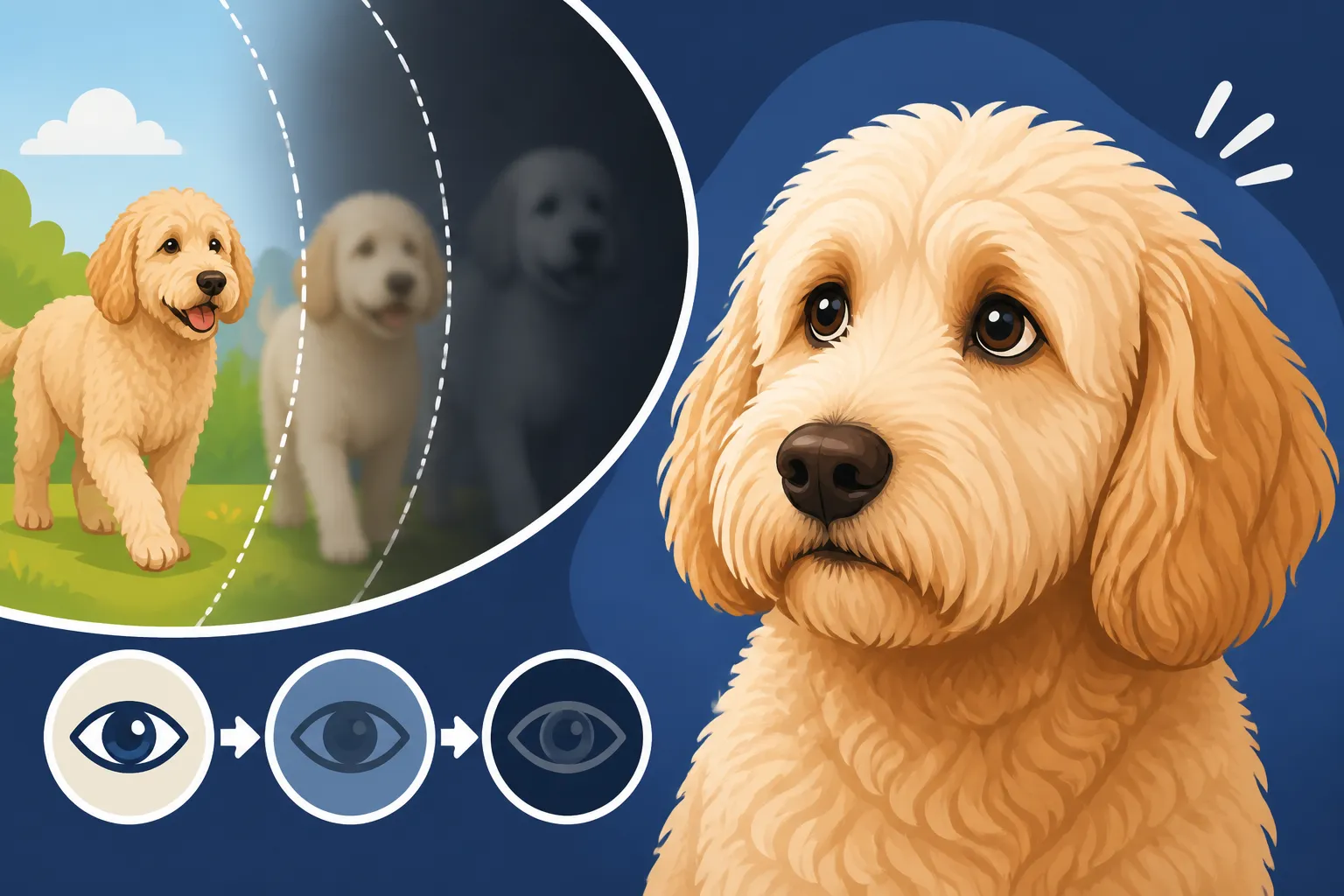
At its core, PRA in Labradoodles, especially prcd-PRA, is a genetic disease that targets the light-sensing cells in the retina – the rods and cones. Rods are responsible for vision in low light (night vision), and cones handle bright light and color vision. With prcd-PRA, these cells gradually break down, starting with the rods and eventually affecting the cones. This means that the disease typically begins by robbing a dog of its night vision, slowly progressing to day blindness over months or even years. It’s a truly insidious condition because it often advances without pain or discomfort, making it difficult for owners to detect in its earliest stages without careful observation or genetic testing. This is precisely why responsible breeders conduct The prcd-PRA Test Both Labradoodle Parents Need to ensure they're not passing on this gene to future generations.
The mechanism is quite fascinating, if disheartening. Genes carry the instructions for building and maintaining every cell in the body. In dogs with prcd-PRA, a mutation in a specific gene means that these retinal cells don't develop or function correctly. Initially, the cells might seem fine, but as the dog ages, they begin to degenerate. The dog might be born with normal vision, but the degenerative process starts, leading to the gradual symptoms we observe. If you're wondering about the specific genetics, understanding The Progressive Retinal Atrophy Labradoodles Are Tested For can provide even deeper insight into this complex issue.
Early Signs and Progression of PRA
The very first sign an owner might notice with PRA is a reluctance in their Labradoodle to go out into dimly lit areas, or perhaps they start bumping into furniture when the lights are low. This "night blindness" is a critical early indicator because the rod cells, which enable vision in low light, are the first to be affected. Imagine trying to navigate your own home in the dark after a lifetime of perfect vision – it’s disorienting and a little frightening. For a Labradoodle, this can manifest as hesitation, stumbling, or increased anxiety when night falls.
As the disease progresses, often over a period of 1 to 3 years, the cone cells also begin to fail. This leads to a gradual loss of vision even in daylight. You might observe your Labradoodle becoming more cautious during walks, struggling to locate thrown toys, or having difficulty finding their food bowl if it's moved slightly. Their pupils might appear more dilated than usual, especially in bright light, as their eyes try to gather every last bit of available light. It's a slow, unyielding process that eventually leads to complete blindness. Many owners report that The Age prcd-PRA Takes a Labradoodle's Night Vision can vary, but it often becomes noticeable in young to middle-aged dogs. Despite the profound impact on their vision, dogs with PRA are generally not in pain, which is a small comfort, but it underscores the importance of our vigilance.
Managing Life with a PRA-Affected Labradoodle
The diagnosis of PRA can be devastating, but it's important to remember that a blind Labradoodle can still lead a full and happy life with the right support. Empathy and patience become your greatest tools. Their world might shrink visually, but their other senses – smell, hearing, and touch – become incredibly heightened. This means you’ll need to adapt how you interact and manage their environment. Establishing a consistent routine is paramount. Try to avoid moving furniture around, and if you must, do it slowly and guide your dog around the new layout.
For walks, a consistent route can help build their confidence. Verbal cues become incredibly important: "step up," "watch out," "this way." Many owners find that using distinctive scents, like a dab of essential oil on furniture legs or at doorways, can help their Labradoodle navigate their surroundings. Their reliance on you will increase, but this can also strengthen your bond. Remember that a blind dog still loves to play! Squeaky toys, balls with bells inside, or even just a game of "find the treat" using their powerful nose can keep them engaged and mentally stimulated. While it's a significant adjustment, a Labradoodle losing its sight slowly can still enjoy many happy years as part of your family.
Cataracts in Labradoodles: A Common Cause of Gradual Blindness
Beyond genetic retinal degeneration, cataracts are another widespread culprit behind progressive vision loss in Labradoodles. A cataract is essentially a clouding of the eye's lens, which normally works to focus light onto the retina. When the lens becomes opaque, light cannot pass through clearly, leading to blurry vision and, eventually, blindness if the entire lens is affected.
How Cataracts Develop and Affect Vision
Cataracts can develop for a variety of reasons in Labradoodles, making them a condition that can appear at different life stages. Hereditary cataracts are a significant concern, passed down through certain lines of Poodles and Labradors, and thus, Labradoodles. These can sometimes appear in puppies or young adults, progressing slowly over time. However, age-related cataracts are also very common, much like in humans, often appearing as a dog enters its senior years. Beyond these, cataracts can also be secondary to other health issues, such as diabetes (diabetic cataracts) or eye injuries and inflammation.
When a cataract begins, it might be very small and localized, causing minimal disruption to vision. Over time, however, these opaque areas tend to grow and spread, covering more of the lens. The impact on vision depends on the size and density of the cataract. A small, peripheral cataract might only cause slight blurring, whereas a complete cataract covering the entire lens will result in total blindness in that eye. Owners often first notice a grayish or bluish haze in their dog's eye, which becomes more pronounced as the cataract matures. It's a progressive change, and while the visual effect can be profound, it's typically not a painful process for the dog itself, unless secondary complications like glaucoma arise. Many owners start to notice Cataracts in a Middle Aged Labradoodle, which is a common age for them to develop.
Recognizing the Subtle Signs of Cataract Progression
Catching cataracts early can be tricky because the initial clouding can be subtle, and dogs are remarkably good at compensating for vision loss. You might initially see just a faint, milky appearance in the pupil, almost like a blue-gray film. As the cataract progresses, this cloudiness becomes denser and more noticeable. Beyond the physical appearance, behavioral changes are your biggest clue. Your Labradoodle might start hesitating at the top or bottom of stairs, misjudging distances when jumping on or off furniture, or bumping into things they previously navigated with ease.
They might also become more reliant on their hearing and smell, turning their head more to listen or sniff out objects. In unfamiliar environments, their anxiety levels might increase significantly, and they may stick closer to you. Perhaps they start missing treats thrown to them, or they can't seem to find their favorite toy right away. These aren't necessarily signs of pain but rather indications that their visual world is becoming increasingly murky. It's important not to confuse a genuine cataract with nuclear sclerosis, a normal aging change that causes a bluish haze but typically doesn't impair vision significantly. We’ll delve into Telling Nuclear Sclerosis From Cataracts in a Labradoodle a little later.
Treatment Options and Supportive Care for Cataracts
When it comes to cataracts, the primary and most effective treatment option is surgical removal. This procedure, performed by a veterinary ophthalmologist, involves removing the clouded lens and, in most cases, replacing it with an artificial intraocular lens. The success rate for cataract surgery is generally high, offering a dramatic improvement in vision for many dogs. However, surgery isn't suitable for all Labradoodles. Factors such as the dog's overall health, the presence of other eye conditions, the severity of the cataract, and the owner's financial considerations all play a role in the decision-making process. Discussing Whether Cataract Surgery Suits a Labradoodle with your vet is a crucial step.
If surgery isn't an option or you choose not to pursue it, supportive care becomes key. Just as with PRA, creating a safe, consistent environment is vital. Keep furniture in place, use baby gates to block off dangerous areas like stairs, and maintain a predictable routine for feeding, walks, and playtime. Remember that your Labradoodle will rely more heavily on its other senses, so engaging them with scent games, vocal cues, and textured toys can keep them mentally stimulated and happy. Regular veterinary check-ups are still important to monitor for any secondary complications like glaucoma, which can arise even after vision is lost.
Other Conditions Contributing to Gradual Vision Decline
While PRA and cataracts are perhaps the most well-known causes of gradual vision loss in Labradoodles, they aren't the only ones. Several other conditions can silently, or sometimes painfully, erode your dog's sight over time. Being aware of these can help you and your vet identify issues earlier.
Glaucoma: A Painful Cause of Vision Loss
Glaucoma is a serious and often painful eye condition caused by increased pressure within the eye. This pressure damages the optic nerve and retina, leading to irreversible vision loss. While glaucoma can sometimes present as an acute, sudden emergency, it can also develop gradually over time, especially in its chronic forms. In these cases, the vision loss is indeed slow, but often accompanied by discomfort.
Symptoms of chronic glaucoma can be subtle at first, including a slightly cloudy cornea, a dilated pupil that doesn't react normally to light, and redness in the white of the eye. Your Labradoodle might squint, rub at their eye, or seem generally lethargic due to persistent headaches caused by the pressure. Unlike PRA or cataracts, glaucoma is often painful, and early diagnosis and intervention are critical to preserving any remaining vision and managing discomfort. Without treatment, the ongoing pressure will slowly but surely lead to complete blindness in the affected eye, and often spreads to the other eye. Prompt veterinary attention for any eye discomfort or visual changes is always warranted, as timely treatment can make a significant difference.
Secondary Vision Loss from Diabetes and Other Illnesses
Sometimes, vision loss isn't a primary eye condition but rather a symptom or complication of another systemic illness. Diabetes mellitus is a prime example. Uncontrolled diabetes often leads to the rapid development of cataracts, which we've already discussed. These diabetic cataracts can mature very quickly, sometimes within weeks, leading to sudden or very rapid vision loss. However, if diabetes is poorly managed over time, even if cataracts aren't the primary issue, the fluctuating blood sugar levels can damage the retina and optic nerve, contributing to a slower, more insidious decline in vision.
Beyond diabetes, other systemic health issues can also play a role. Conditions like high blood pressure (hypertension) can cause retinal detachment, leading to sudden or progressive vision loss depending on the extent of the detachment. Certain autoimmune diseases or chronic inflammatory conditions can also affect eye health over time. This highlights the crucial importance of regular, comprehensive veterinary check-ups for your Labradoodle. A routine physical exam and blood work can often uncover underlying health issues before they significantly impact your dog's eyes. It's another reason why What a Labradoodle Owner Should Watch For After Eight often includes increased vigilance for signs of systemic disease.
Nuclear Sclerosis vs. Cataracts: Telling Them Apart
One common point of confusion for Labradoodle owners (and even some general practice vets!) is distinguishing between nuclear sclerosis and cataracts. They both present as a bluish-gray haze in the pupil, making it easy to mistake one for the other. However, their impact on vision is vastly different. Nuclear sclerosis is a normal, age-related change where the lens fibers in the center of the eye become denser and compress over time. This results in a hazy, often bluish appearance, but it typically causes very little, if any, vision impairment. It's like looking through a slightly frosted window – you can still see outlines and general shapes.
Cataracts, on the other hand, involve an actual clouding or opacity of the lens tissue, which actively blocks light from reaching the retina. If you shine a light into an eye with nuclear sclerosis, you can usually see through the haze to the back of the eye. With a cataract, the light is blocked, and the back of the eye isn't visible. Only a veterinary ophthalmologist or an experienced veterinarian can definitively Telling Nuclear Sclerosis From Cataracts in a Labradoodle through a thorough eye examination, often using specialized equipment like an ophthalmoscope. If you notice any cloudiness in your Labradoodle's eyes, don't jump to conclusions, but do schedule a vet visit to get an accurate diagnosis.
Proactive Eye Care and Early Detection Strategies
When it comes to your Labradoodle's vision, an ounce of prevention is truly worth a pound of cure. While some conditions are genetic and unavoidable, proactive care and vigilance can significantly impact early detection, management, and ultimately, your dog's quality of life.
Regular Veterinary Examinations and Eye Screenings
This cannot be stressed enough: regular veterinary check-ups are the cornerstone of proactive eye care. Even if your Labradoodle seems perfectly healthy, an annual or biannual visit to the vet allows for a comprehensive physical examination, which always includes a basic eye check. Your general veterinarian can often spot early signs of cataracts, glaucoma, or other issues before they become visually apparent to you at home.
For breeds like the Labradoodle, which are predisposed to certain eye conditions, specific screenings are highly recommended. A Certified Canine Ophthalmologist can perform a more detailed eye exam, known as a CAER (Canine Eye Registration Foundation) exam. These evaluations are particularly important for breeding dogs to prevent the passing on of inherited eye diseases. This is why when considering a puppy, Asking a Breeder for Labradoodle Eye Certificates is a non-negotiable step. These certificates confirm that the parents have been screened and cleared of common inherited eye conditions, providing a much higher assurance of good eye health in the offspring. Make sure your Labradoodle receives The Yearly Eye Exam a Labradoodle Should Have to monitor for any changes.
Genetic Testing for Inherited Eye Diseases
Genetic testing is a powerful tool in preventing and understanding inherited vision loss, especially for conditions like prcd-PRA. Reputable Labradoodle breeders will always screen their breeding stock for relevant genetic diseases to ensure they are not unknowingly perpetuating these conditions. A simple DNA test can determine if a dog is clear, a carrier, or affected by the gene responsible for prcd-PRA.
If both parents are clear, the puppies will be clear. If one parent is a carrier and the other is clear, the puppies will be either clear or carriers, but none will be affected by the disease. It's crucial to understand that even if a dog is a carrier, it will not develop the disease itself; it merely has the potential to pass the gene on if bred to another carrier. Therefore, Whether One Clear Parent Is Enough for a Labradoodle to ensure puppies won't be affected by PRA is a critical question for prospective owners and breeders alike. This proactive testing can effectively eradicate some inherited eye conditions from breeding lines. While you're at it, considering other genetic health concerns, like The DNA Test That Clears a Labradoodle of EIC, shows a holistic approach to your dog's overall well-being.
Home Observation and Environmental Adjustments
Beyond professional screenings, your daily observations as an owner are invaluable. You spend the most time with your Labradoodle, so you're in the best position to notice subtle changes in their behavior that might indicate vision problems. Pay attention to:
- Hesitation: Do they pause more before going up or down stairs, jumping on the couch, or entering a dimly lit room?
- Bumping: Are they bumping into furniture, walls, or objects they used to navigate easily, especially in new or low-light situations?
- Eye Appearance: Do their eyes appear cloudy, hazy, red, or watery? Do their pupils seem unusually dilated?
- Confidence: Are they less confident on walks, sticking closer to you, or startled more easily by sudden movements or noises?
- Play: Do they struggle to find toys, especially if they’re not squeaky or scented?
If you notice any of these signs, don't hesitate to contact your veterinarian. Even if it's nothing serious, peace of mind is priceless. If your Labradoodle is diagnosed with a progressive vision condition, early environmental adjustments can make a huge difference. Try to keep furniture in consistent locations, use distinct mats or rugs to indicate steps or transitions, and use verbal cues clearly. These small changes can greatly improve their safety and confidence as their vision slowly fades.
Supporting Your Labradoodle Through Vision Loss
Watching your cherished Labradoodle slowly lose its sight is undeniably challenging, but it doesn't mean their quality of life has to diminish. Dogs are incredibly resilient and adapt remarkably well to blindness, especially when their owners provide thoughtful support and care. Your patience, love, and proactive efforts will be their guiding light.
Creating a Safe and Predictable Home Environment
The most crucial step in helping a Labradoodle with progressive vision loss is to ensure their environment is safe and predictable. Dogs thrive on routine and familiarity, and for a visually impaired dog, this becomes even more vital.
- Maintain Consistency: Avoid moving furniture or obstacles. If you must rearrange, introduce changes slowly and guide your dog around the new layout repeatedly until they’ve mapped it out with their other senses.
- Block Hazards: Use baby gates to block access to stairs, swimming pools, or any other potentially dangerous areas. This prevents falls and allows you peace of mind.
- Pad Sharp Edges: Consider covering sharp corners of tables or furniture with padding to prevent painful bumps and bruises.
- Outdoor Safety: A securely fenced yard is essential. If your yard isn't fenced, your Labradoodle should always be on a leash when outside. Keep outdoor walking routes consistent and predictable. Remember, even familiar paths can hold new dangers if they can't see them.
Creating a "safe zone" or specific bed where they can retreat and feel completely secure is also a wonderful idea. It helps them build confidence in navigating their main living spaces, knowing there’s always a familiar, comfortable spot to return to.
Enhancing Other Senses and Communication
When vision fades, a Labradoodle's other senses – hearing, smell, and touch – become remarkably acute. You can leverage these senses to enhance their navigation and overall well-being.
- Verbal Cues: Develop a consistent set of verbal cues. "Step up," "watch out," "stop," "this way," "treat" – spoken clearly and consistently, these commands become their ears and eyes. Always speak to your dog as you approach so they aren't startled.
- Scent Markers: Try dabbing a unique, pet-safe essential oil (like vanilla or lavender, heavily diluted) on furniture legs or at doorways. These scent "landmarks" can help your dog orient themselves in your home. Special textured mats at the top and bottom of stairs can also serve as tactile warnings.
- Auditory Cues: Use noisy toys that squeak or have bells. If you have other pets, consider attaching a small bell to their collar so your blind Labradoodle knows where they are, preventing accidental collisions.
- Increased Tactile Interaction: More physical touch, gentle petting, and consistent grooming can provide reassurance and comfort. They rely on your touch more than ever to feel connected and safe.
Engaging their powerful sense of smell through scent work or "find the treat" games can be incredibly enriching and mentally stimulating, replacing some of the joy they once got from visual exploration.
Maintaining Quality of Life and Emotional Well-being
Perhaps the most important aspect of supporting a Labradoodle with vision loss is to prioritize their emotional well-being and maintain their quality of life. It’s easy to feel sad for them, but our dogs pick up on our emotions. Remaining positive and patient will help your dog adjust with confidence.
- Reassurance and Affection: Offer plenty of verbal praise and gentle physical affection. They need to feel safe and loved.
- Continue Activities: Don’t stop doing the things your Labradoodle loves! Walks can still be enjoyable with a leash and consistent routing. Playtime can be adapted with auditory and scented toys. Many blind dogs still love car rides, feeling the wind on their face.
- Consult Professionals: Don't hesitate to consult with your veterinarian or a veterinary ophthalmologist for ongoing advice and support. They can monitor for any secondary issues and offer guidance on pain management or enrichment. Additionally, investing in good pet insurance, like Healthy Paws, can provide significant peace of mind when facing potentially costly diagnostics, treatments, or ongoing care for chronic eye conditions. It can ease the financial burden, allowing you to focus purely on your Labradoodle’s well-being.
- Patience is Key: The adjustment period can be challenging for both of you. There will be days of frustration, but with consistency and unwavering love, your Labradoodle will learn to navigate their world anew, often surprising you with their resilience and joy.
Remember, a blind Labradoodle is still your cherished companion. Their heart and personality remain fully intact. By adapting and offering unwavering support, you can ensure they continue to live a happy, fulfilling life.
| Condition | Primary Cause | Typical Onset | Progression | Key Symptoms (Behavioral) | Prognosis (Vision) |
|---|---|---|---|---|---|
| Progressive Retinal Atrophy | Genetic degeneration of photoreceptor cells | Young to Middle Age | Slow, over months/years | Night blindness, bumping in low light, hesitation | Eventual complete blindness |
| Cataracts | Genetic, age, diabetes, trauma, inflammation | Variable (puppy to senior) | Slow to rapid | Hazy eye appearance, bumping, hesitant on stairs | Partial to complete blindness |
| Glaucoma | Increased intraocular pressure (optic nerve damage) | Middle to Senior Age | Slow or acute | Eye redness, cloudy cornea, dilated pupil, pain | Eventual complete blindness, often painful |
| Nuclear Sclerosis | Normal age-related lens density change | Senior Age | Very slow | Bluish-gray haze in pupil, minimal vision impact | Minimal or no vision impairment |
Disclaimer
The information provided in this article is for educational purposes only and is not intended to be a substitute for professional veterinary advice, diagnosis, or treatment. Always seek the advice of your veterinarian or other qualified health provider with any questions you may have regarding a medical condition. Never disregard professional veterinary advice or delay in seeking it because of something you have read in this article.