Asking a Breeder for Labradoodle Eye Certificates
When you're ready to bring a beautiful Labradoodle into your home, the excitement is palpable! But that joy can quickly turn to anxiety as you navigate the sometimes-confusing world of breeder health claims. It’s easy to feel overwhelmed, wondering if you're asking the right questions or if the answers you're getting truly protect your future furry family member. This guide will walk you through exactly how to confidently ask a breeder for Labradoodle eye certificates, ensuring you understand what these crucial documents mean for your puppy's long-term health.
Why Eye Health is So Crucial for Your Labradoodle
Bringing a puppy home means committing to a lifetime of care, and nothing impacts a dog's quality of life quite like their vision. Imagine your playful Labradoodle, so full of zest, suddenly struggling to see their favorite toy or navigate familiar surroundings. It’s heartbreaking to consider, which is why understanding and verifying their ocular health from the start is non-negotiable.
Understanding Inherited Eye Conditions
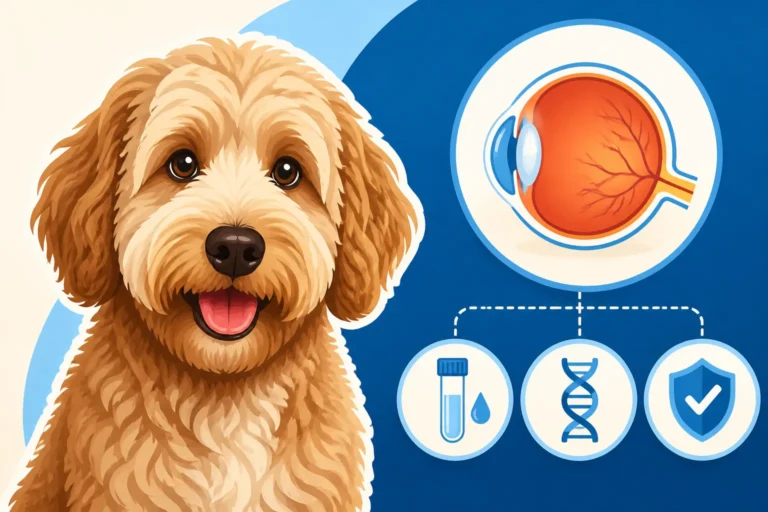
Labradoodles, being a mix of Labrador Retrievers and Poodles, can inherit genetic predispositions to various eye conditions from both sides of their family tree. One of the most talked-about is Progressive Retinal Atrophy (PRA), particularly progressive rod-cone degeneration (prcd-PRA). This condition is a group of genetic diseases that cause the degeneration of the retina, leading to a gradual loss of vision and eventually blindness. It often starts with difficulty seeing in low light or at night, progressing to total blindness over time. Learning about the specific types can help you understand The Progressive Retinal Atrophy Labradoodles Are Tested For and how it might impact your dog.
Beyond PRA, Labradoodles can also be susceptible to other eye issues. Cataracts, for instance, can form in a Labradoodle's eyes, sometimes at a younger age if inherited, or later in life. These are opacities on the lens of the eye that obstruct vision, making the world appear cloudy or blurry. Other less common but still concerning conditions include retinal dysplasia, glaucoma, and even entropion or ectropion (where the eyelids roll in or out). While some eye problems can be caused by injury or age, many of the most serious and debilitating ones are genetic, passed down from parent dogs.
The Importance of Proactive Screening
It's a common misconception that if a parent dog looks healthy, their puppies will be too. Unfortunately, with many genetic eye conditions, affected dogs may not show any symptoms until they are well into adulthood, sometimes even after they've already been bred multiple times. This is why proactive screening and genetic testing are absolutely critical. Relying solely on a breeder's word that "the parents have good eyes" simply isn't enough to safeguard your puppy's future.
Without proper health testing, you could unknowingly adopt a puppy genetically destined for blindness or other painful eye conditions. The emotional toll of watching your beloved companion lose their sight, coupled with the potential financial burden of specialized veterinary care, medications, or even surgery, can be immense. Pet insurance providers like Healthy Paws often cover unexpected illnesses, but preventing a foreseeable genetic issue through responsible breeding is always the best first step for both you and your dog. Investing the time now to verify health clearances can save you untold heartache and significant expenses down the line, ensuring your Labradoodle enjoys a full, sighted life.
Decoding Labradoodle Eye Certificates: What to Look For
When a breeder assures you their dogs have "clear eyes," it's vital to know what that truly means and what documentation proves it. There are specific certifications and DNA tests that provide concrete evidence of a dog's ocular health status. Understanding these will empower you to discern a reputable breeder from one who might cut corners.
The Canine Eye Registry Foundation (CERF) / OFA Eye Certification
For many years, the Canine Eye Registry Foundation (CERF) was the gold standard for certifying a dog's eyes. Now, the baton has been passed to the Orthopedic Foundation for Animals (OFA) through their Eye Certification Registry (CAER, formerly Companion Animal Eye Registry). This certification involves a board-certified veterinary ophthalmologist conducting a thorough eye examination on the parent dogs. They look for evidence of various inherited and non-inherited eye diseases, including those that might not be immediately obvious to a general vet.
A CAER (or older CERF) certificate indicates that at the time of examination, the dog's eyes were free of observable, inheritable eye disease. These examinations are not a one-and-done deal; they need to be performed annually because some conditions can develop later in life. A reputable breeder should be able to provide copies of current, annual certificates for both parent dogs, ideally dated within the last 12-18 months of the litter's conception. The certificate will list any abnormalities found, and you want to see "Normal" or "No evidence of inherited eye disease" for breeding dogs. This type of exam helps catch conditions like cataracts in a middle-aged Labradoodle before they are passed on.
Understanding PRA DNA Test Results
While physical eye exams are crucial, they can't detect if a dog is a carrier for a genetic eye disease that might not yet be manifesting. This is where DNA testing comes in, particularly for specific forms of Progressive Retinal Atrophy like prcd-PRA. A simple cheek swab or blood sample can determine a dog's genetic status for these conditions.
The results of a prcd-PRA DNA test will typically fall into one of three categories:
- Clear: This means the dog does not carry the gene mutation for prcd-PRA and cannot pass it on to its offspring.
- Carrier: This dog carries one copy of the gene mutation. They are not expected to develop prcd-PRA themselves, but they can pass the mutation on to approximately 50% of their offspring.
- Affected: This dog carries two copies of the gene mutation and is expected to develop prcd-PRA.
For breeding pairs, ideally, both parents should be clear. If one parent is a carrier, the other must be clear to ensure no puppies are "affected." Breeding two carriers together runs a high risk of producing affected puppies. This understanding is key when considering Whether a Labradoodle Clear by Parentage Still Needs Testing – often, a breeder can prove "clear by parentage" if both parents were genetically clear, meaning the puppy inherited two clear genes. Always ask for copies of these DNA test results for both parents.
How to Confidently Ask Your Breeder for Eye Documentation
Approaching a breeder about health testing might feel a bit intimidating, but remember, you are doing your due diligence as a responsible pet owner. A transparent and ethical breeder will welcome your questions and be prepared to provide all necessary documentation. Don't be shy; this is about the well-being of your future companion.
What Specific Documents to Request
When you're communicating with a Labradoodle breeder, make it clear that you want to see proof of eye health testing for both parent dogs. Don't just accept a verbal "they're clear" or "the vet checked them." Here's a clear list of what to ask for:
- OFA Eye Certification (formerly CAER/CERF) certificates: Request copies of the most recent annual eye exam certificates for both the dam (mother) and sire (father). Look for the "Normal" or "No observable inherited eye disease" status. Check the date to ensure it's current – ideally within the last year.
- PRA DNA Test Results: Specifically ask for copies of the prcd-PRA DNA test results for both parents. You want to see "Clear" for both, or at least one "Clear" and one "Carrier" (never two carriers or an affected dog).
- Other relevant DNA panels: While less common for only eye issues, some comprehensive DNA panels might include other relevant eye conditions. A good breeder should be able to provide these too. You can learn more about comprehensive health checks by looking into The Health Tests a Labradoodle Breeder Should Show.
When you receive these documents, take the time to carefully review them. Cross-reference the dog's registered name, microchip number, or tattoo with the information on the certificates. Ensure the dates are current and the results are indeed "Clear" or "Normal." If anything looks inconsistent or outdated, it's time to ask follow-up questions.
Red Flags and Follow-Up Questions
Sometimes, a breeder might be less than forthcoming, or their answers might raise more questions than they resolve. Here are some red flags to watch for and how to approach them:
- "We don't do those tests; our vet just checks them." A general vet check-up is not the same as an examination by a board-certified veterinary ophthalmologist for a CAER/OFA certificate. It also doesn't provide genetic clearance. This is a significant red flag.
- "The parents are clear by parentage." This can be legitimate if the grandparents were DNA tested and found clear. However, you should still ask for copies of the grandparents' DNA results to verify this claim. Don't just take their word for it.
- "We lost the paperwork." While accidents happen, reputable breeders keep meticulous records. This is a major red flag, as copies can usually be obtained from the OFA database or the testing laboratory.
- Evasiveness or defensiveness: If a breeder gets defensive, tries to change the subject, or dismisses your concerns, it’s a strong indication that they may not be performing adequate health testing.
If you encounter any of these red flags, it's perfectly acceptable to politely but firmly press for the information. Ask if the results are publicly verifiable on the OFA website (www.ofa.org). Many reputable breeders list their dogs' OFA results there. If they continue to be uncooperative or provide unsatisfactory answers, it might be wise to consider looking for another breeder who prioritizes transparency and the health of their puppies. Your goal is to find a puppy whose parents had clear, verifiable eye health, not just promises.
Beyond the Certificates: Continuous Eye Care for Your Labradoodle
Securing those coveted clear eye certificates for your Labradoodle's parents is a fantastic start, but it's important to remember that it’s not the end of your journey in protecting their vision. Just like humans, dogs can develop eye issues throughout their lives, even if they started with excellent genetics. Ongoing care is crucial.
Routine Veterinary Eye Exams
Even with the best genetic testing and parental clearances, annual eye examinations by your regular veterinarian are a cornerstone of preventative care. While your breeder's tests cover specific inherited conditions, a yearly check-up can catch other issues like infections, injuries, allergies, or early signs of non-inherited cataracts that might develop with age. Your vet can perform a general ocular examination and often recommend specialized care if they spot anything concerning. This proactive approach is part of keeping your dog healthy and happy.
Remember, a "clear" certificate from a specialized ophthalmologist is generally valid for one year. This doesn't mean your dog is immune to all eye problems forever, but it significantly reduces the risk of inherited diseases. Discuss with your vet if they recommend specialized ophthalmologist check-ups as your Labradoodle ages, particularly after they reach their senior years. Regular check-ups are also crucial to monitor for conditions like Dry Eye in a Labradoodle, which isn't always genetic but can be a nuisance if not managed.
Recognizing Signs of Eye Trouble
As a loving Labradoodle owner, you'll become attuned to your dog's normal behavior and appearance. Being observant of any changes in their eyes or vision can help you catch potential problems early, leading to better outcomes. Here are some signs of eye trouble to watch for:
- Redness or inflammation: The whites of the eyes or surrounding tissues appearing redder than usual.
- Discharge: Excessive tearing, thick, colored discharge, or crustiness around the eyes.
- Squinting or pawing at eyes: Indications of pain, irritation, or foreign objects.
- Cloudiness or changes in eye appearance: Any haziness, blue tint, or visible changes to the pupil or iris. For example, knowing the difference between normal aging changes like nuclear sclerosis and true cataracts can be helpful, which you can learn more about with Telling Nuclear Sclerosis From Cataracts in a Labradoodle.
- Difficulty seeing: Bumping into furniture, hesitating on stairs, or being disoriented in familiar environments. This can sometimes be a sign of The Age prcd-PRA Takes a Labradoodle's Night Vision starting to show its effects.
- Sensitivity to light: Excessive blinking or squinting in bright conditions.
If you notice any of these symptoms, don't wait! Contact your veterinarian immediately. Early diagnosis and treatment are often key to managing eye conditions effectively and preserving your Labradoodle's vision. Dealing with unexpected veterinary care can be stressful, but having a good pet insurance plan from providers like Healthy Paws can certainly help ease the financial burden, allowing you to focus on your dog's recovery.
| Eye Health Test/Certificate | What it Screens For | Who Performs It | Frequency | What to Look For on Certificate |
|---|---|---|---|---|
| OFA Eye Certification (CAER) | Inherited and non-inherited eye diseases (e.g., cataracts, glaucoma, retinal dysplasia) | Board-certified veterinary ophthalmologist | Annually for breeding dogs | "Normal" or "No evidence of inherited eye disease" |
| prcd-PRA DNA Test | Genetic mutation for Progressive Rod-Cone Degeneration (a form of PRA) | Approved genetic testing lab | Once in a dog's lifetime (for breeding status) | "Clear," "Carrier," or "Affected" |
| General Vet Eye Exam | Overall eye health, infections, injuries, general vision | General veterinarian | Annually during routine check-ups | Vet's notes on overall eye health |
Disclaimer
This article is for general informational purposes only and does not constitute professional advice. Laws, prices and regulations vary by location and change over time. Consult a qualified professional for guidance on your specific situation.